
Promotional shopping bags connect a retail reward with something customers already need: a convenient way to carry their purchases. For grocery brands, the strongest designs bring the bag, qualifying products, and in-store message together.
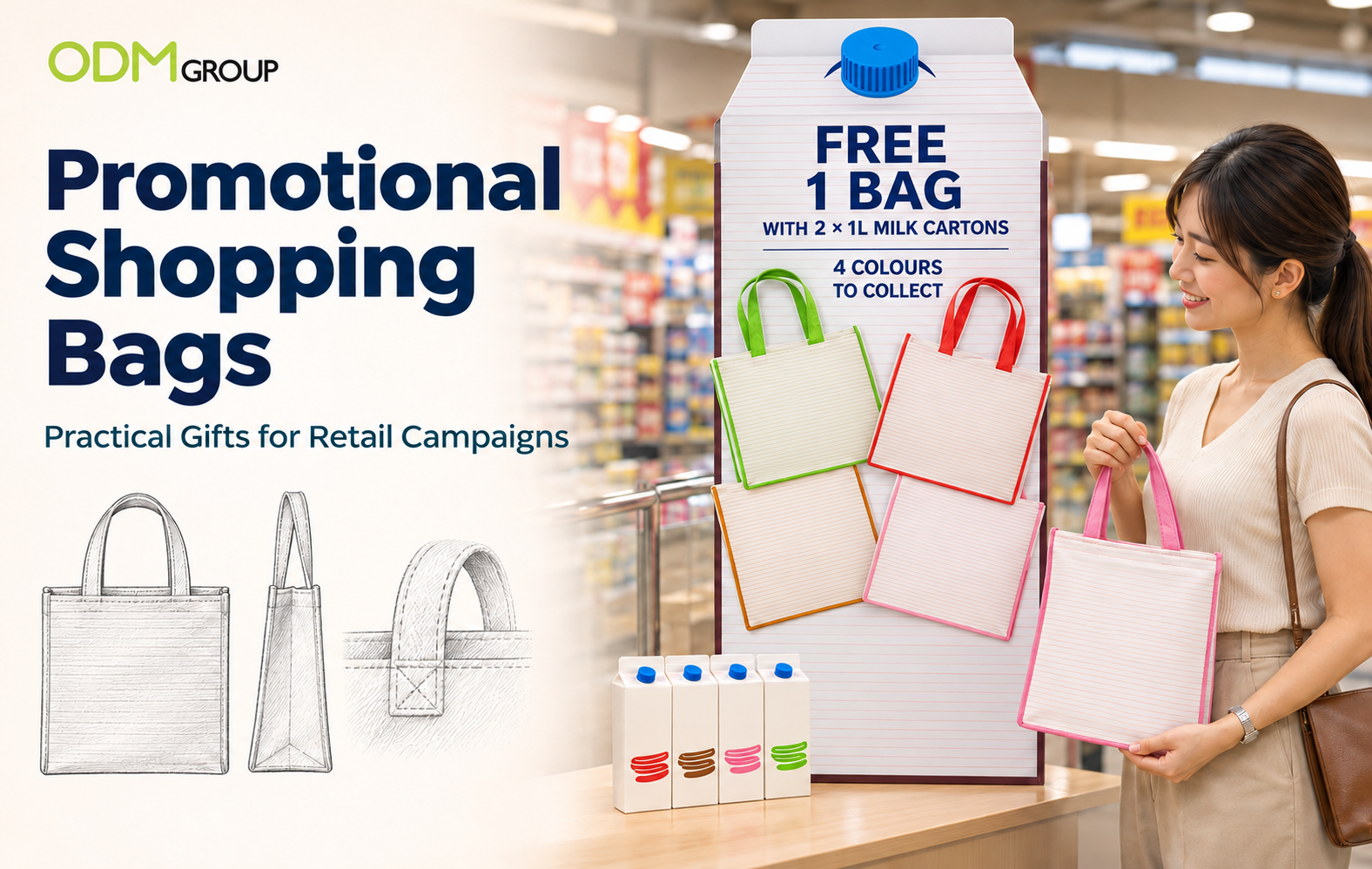
Marigold HL Milk’s bag promotion offers a useful example. A clear purchase requirement, four color options, and a recognizable milk-carton-shaped display made the campaign easy to understand.
For brands developing a similar idea, the important questions extend beyond the artwork. The bag must suit the intended contents, the reward must fit the promotion budget, and customers need a straightforward way to claim it.
Disclaimer: This article reviews a third-party retail promotion for marketing analysis and inspiration. No ODM design or manufacturing involvement is claimed.
How the Marigold HL Milk Promotion Worked
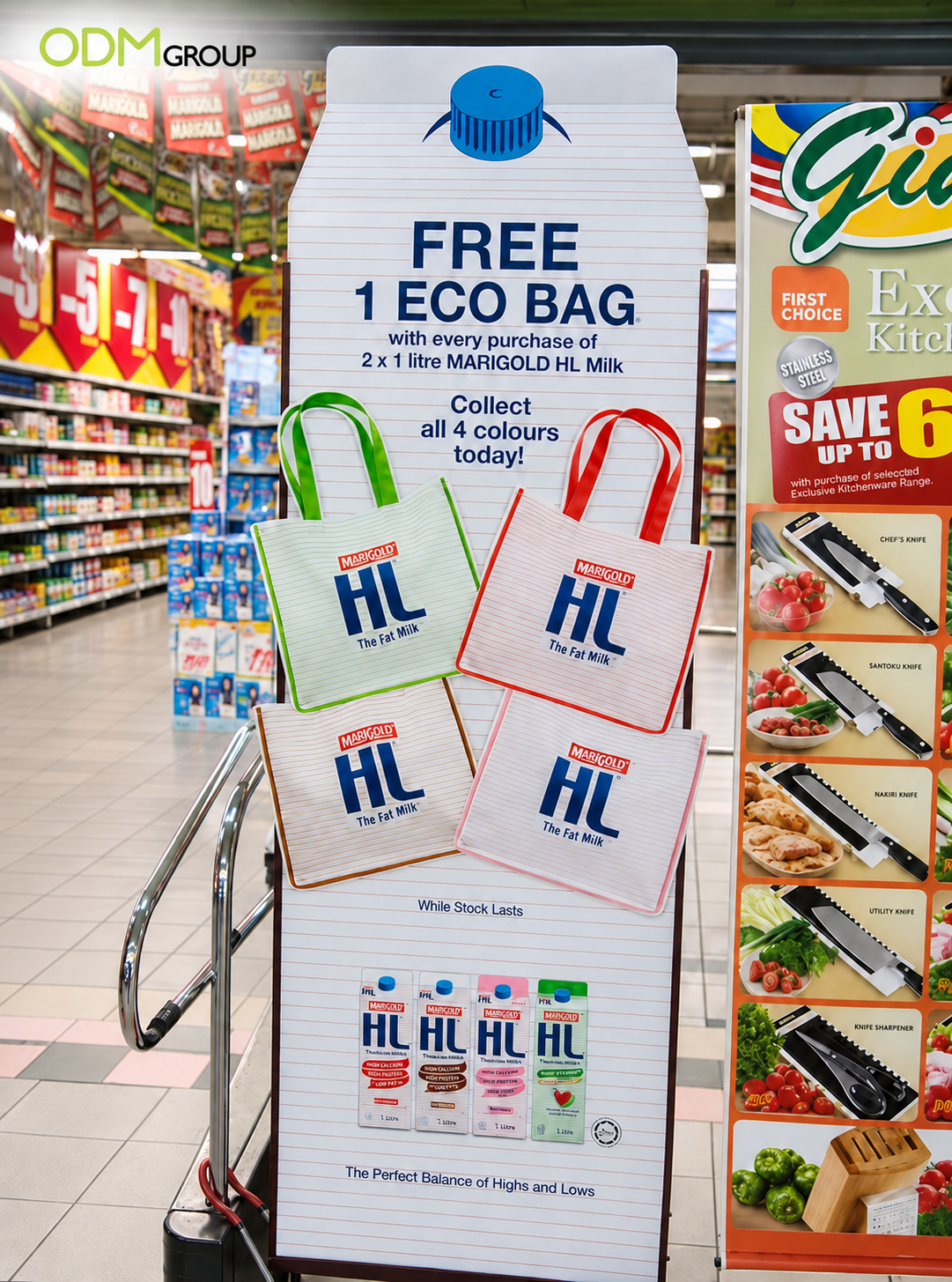
The original campaign display offered one bag with the purchase of two 1-liter Marigold HL Milk cartons. It also invited shoppers to collect four colors, with availability subject to stock.
The bags featured light striped panels, prominent HL branding, and contrasting handles and trim. A freestanding sign shaped like a milk carton brought the offer and merchandise together at the supermarket entrance. These are historical campaign details, rather than a current offer.
Why the Campaign Makes a Useful Design Reference
The Gift Fits the Shopping Occasion
A shopping bag has a direct connection to a supermarket purchase. Customers do not need a lengthy explanation of its purpose.
For a new campaign, define that purpose more precisely. Should the bag carry only the qualifying products, accommodate a larger grocery purchase, or fold away for another shopping trip?
That decision should guide the dimensions, handle length, and construction.
Four Colors Create Choice Within One Design
The campaign used color variations within a consistent bag format. This provides a way to offer choice while keeping the collection visually connected.
For future promotions, decide whether customers can choose their color or receive whichever version is available. Communicate that clearly and plan stock allocation accordingly.
A collectible range can form part of the campaign idea, but repeat purchases should be measured rather than assumed.
The Display Explains the Offer
The carton-shaped sign links the promotion to the product category. Its large headline establishes the reward, while the purchase requirement explains how shoppers qualify.
The transferable lesson is to organize the message around three questions:
- What do customers receive?
- What must they buy?
- Where and how do they collect the gift?
For broader campaign planning, explore our gift-with-purchase ideas.
Designing Promotional Shopping Bags Around Real Use
Establish Capacity Before Approving Dimensions
Begin with the products the bag needs to carry. Place the intended carton combination inside a prototype and check the base width, opening, and balance.
A bag that looks spacious when empty may become awkward once filled. Review whether the handles meet comfortably and whether the contents press against seams or distort the shape.
ODM design insight: Specify the intended contents and carrying conditions in the brief. These provide a better starting point for sample assessment than exterior dimensions alone.
Compare Construction Options
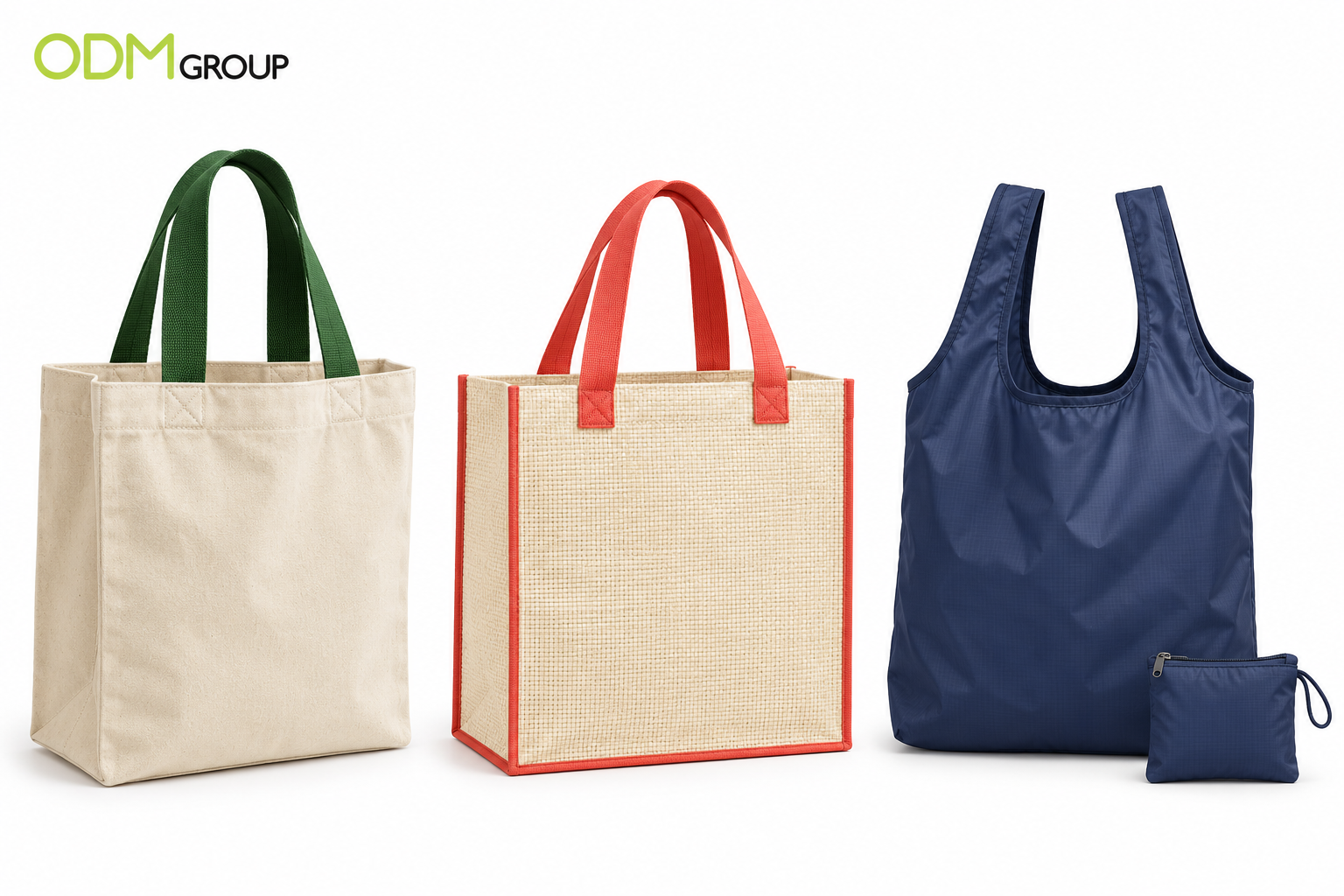
| Design option | Potential use | What to assess |
|---|---|---|
| Flat tote | Compact giveaways and light purchases | Capacity and comfort when filled |
| Gusseted shopper | Cartons and mixed groceries | Base dimensions and loaded stability |
| Foldable bag | A bag customers can store between trips | Folding method and storage-pouch usability |
| Structured shopper | A more defined retail presentation | Packed volume and shape retention |
These are development options, not confirmed specifications for the original Marigold bags.
Review Handles, Seams, and Materials Together
Evaluate the complete construction rather than choosing by material name alone.
Check handle attachment points, seam finishing, base construction, and carrying comfort using representative loads. Agree on appropriate sample checks and acceptance criteria before proceeding.
If the bag is intended to carry chilled cartons, include condensation exposure in the assessment. Confirm any cleaning instructions against the proposed construction.
A shopping bag should not be presented as an insulated carrier unless that function has been specifically developed and assessed.
Give Branding a Defined Space
Establish the main artwork area before finalizing the pattern. Keep important lettering clear of folds, seams, and handle attachments.
Review the decorated sample both empty and filled. A large graphic may look balanced on a flat panel but become distorted when the bag takes shape.
ODM development insight: Approve the artwork on the physical sample, not only on a digital layout. This helps reveal issues with placement, contrast, and alignment.
Use Environmental Language Carefully
The original campaign used “eco bag” messaging, but the available record does not establish the bags’ exact material composition, recycled content, or environmental performance.
For a new project, separate the intended use from any environmental claim. A bag designed for repeated use still needs appropriate evidence before being described as recycled, recyclable, or environmentally beneficial.
Build the brief around practical questions: Will customers find it convenient to carry? Can it withstand its intended use? Is it easy to store between trips?
Avoid treating a green color scheme or leaf graphic as evidence of environmental performance.
Plan Redemption and Stock Before Launch
Decide whether bags will be packed with the products, handed out at checkout, or collected from a separate counter.
Each arrangement affects storage, staff instructions, and the customer experience. Confirm the qualifying products, redemption limits, color availability, and process for handling depleted stock.
The total budget should account for the bag, decoration, packaging, display materials, distribution, and any sampling or setup requirements.
Assess campaign performance against a defined objective. Useful measures may include redemption rate, qualifying basket value, cost per redeemed gift, and customer feedback.
Develop Your Promotional Bag Concept with ODM
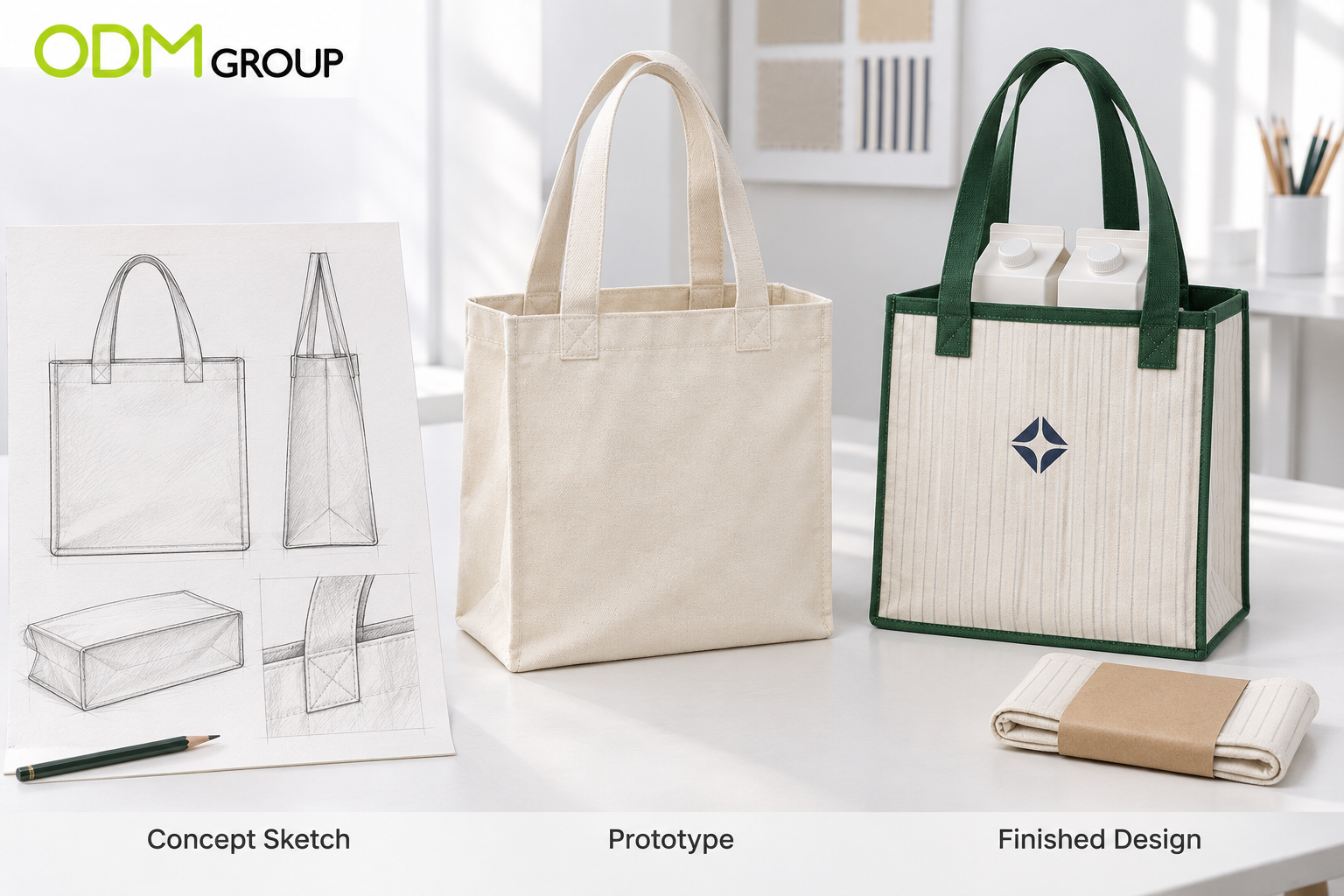
At ODM, we help brands turn campaign objectives into merchandise concepts. For promotional shopping bags, that means considering the format, artwork, carrying function, and retail presentation together.
Our sketch design process provides a starting point for comparing directions before physical sampling.
Share your project brief with our team, including the intended contents, audience, quantity, launch market, campaign mechanic, budget, and target date.
More Ideas
w


Latest Blogs
Custom Collectible Figures for Brand Marketing and Merchandise
Custom collectible figures give brands a physical way to [...]
Bulk Corporate Gifts: How to Plan Your Order
A welcome kit for new hires and a thank-you [...]
Cardboard Box Printing: How to Choose the Right Method and Finish
Your packaging design can look perfect on screen and [...]
Promotional Product Trends 2027: 6 Innovations Beyond the Ordinary
Promotional products are evolving beyond logo-printed giveaways. In 2027, [...]
Promotional Red Packets Lunar New Year: Order For Success!
As the Lunar New Year approaches, it's time to [...]
Cafe Promotion Ideas: How Seasun Cafe Uses Merchandise to Reward Loyalty
A memorable cafe experience does not have to end [...]