
Promotional bags are everywhere, but few give customers a reason to stop, smile, and remember the brand behind them. Plush tote bags change that by combining everyday usefulness with the charm of a custom character, mascot, or product-inspired design.
The plush pouch becomes part of the experience, unfolding into a practical reusable bag while keeping the campaign visually distinctive. For businesses, this creates a promotional product that can support gift-with-purchase campaigns, retail activations, events, and collectible merchandise programs.
Why Plush Tote Bags Work in Marketing Campaigns
Promotional merchandise competes for attention long before it reaches the customer’s home. It must be easy to understand, attractive enough to pick up, and useful enough to keep. Plush tote bags address all three requirements.
The character creates the first point of interest. The foldable shopping bag provides the practical value. Together, they give the customer a reason to engage with the product and continue using it after the campaign ends.
This makes the format suitable for several promotional objectives:
- Increasing the perceived value of a gift-with-purchase offer
- Bringing a brand mascot into everyday customer routines
- Supporting product launches and seasonal campaigns
- Creating collectible promotional merchandise
- Encouraging repeat purchases through multiple character designs
- Adding a visible branded item to events, retail activations and loyalty programs
A standard promotional tote bag typically depends on a logo or graphic to communicate the brand. A plush tote can communicate through shape, color, expression, and interaction. That gives the design more opportunities to build recognition without relying on oversized branding.
From Plush Character to Foldable Shopping Bag
The product idea works because the two parts are designed as one connected system.
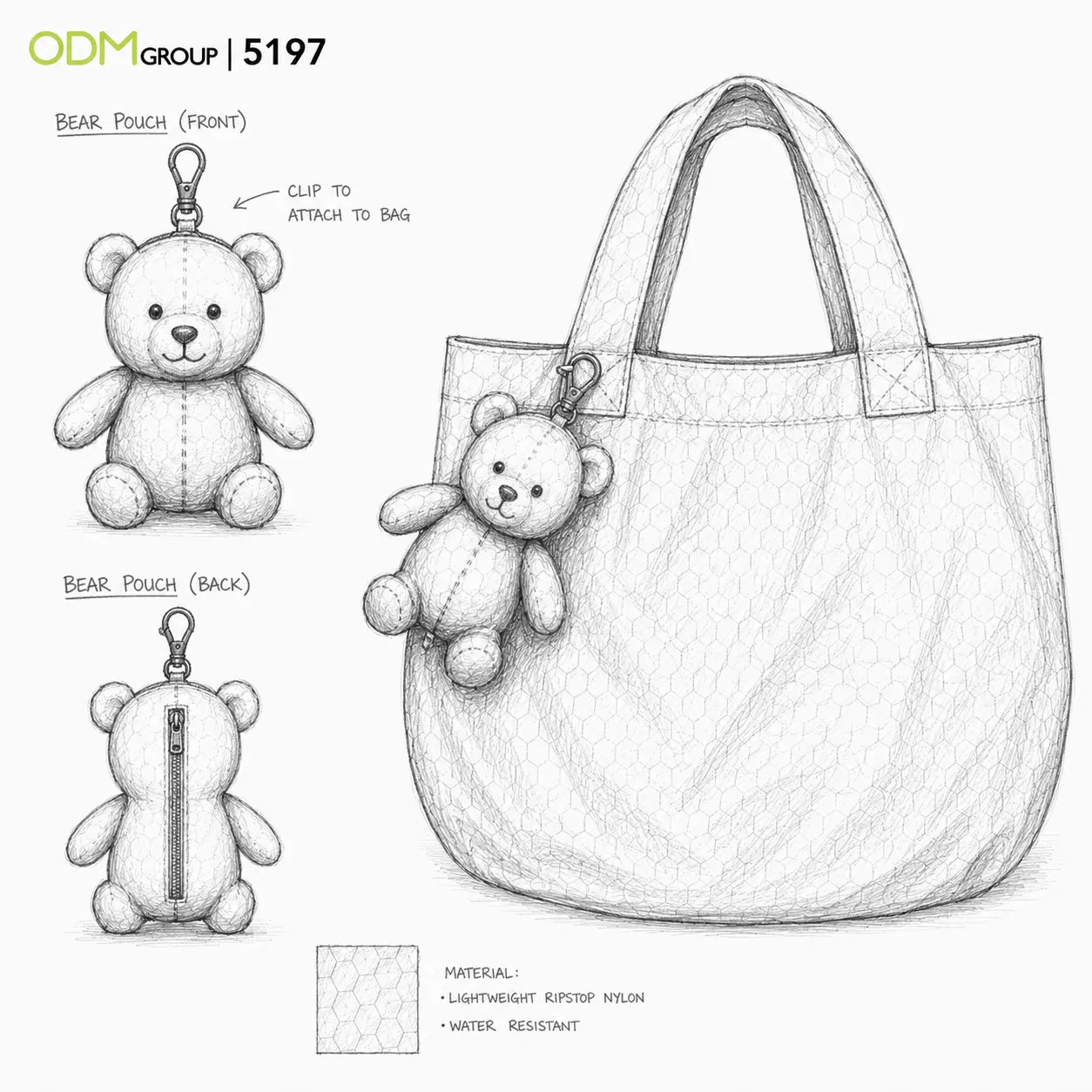
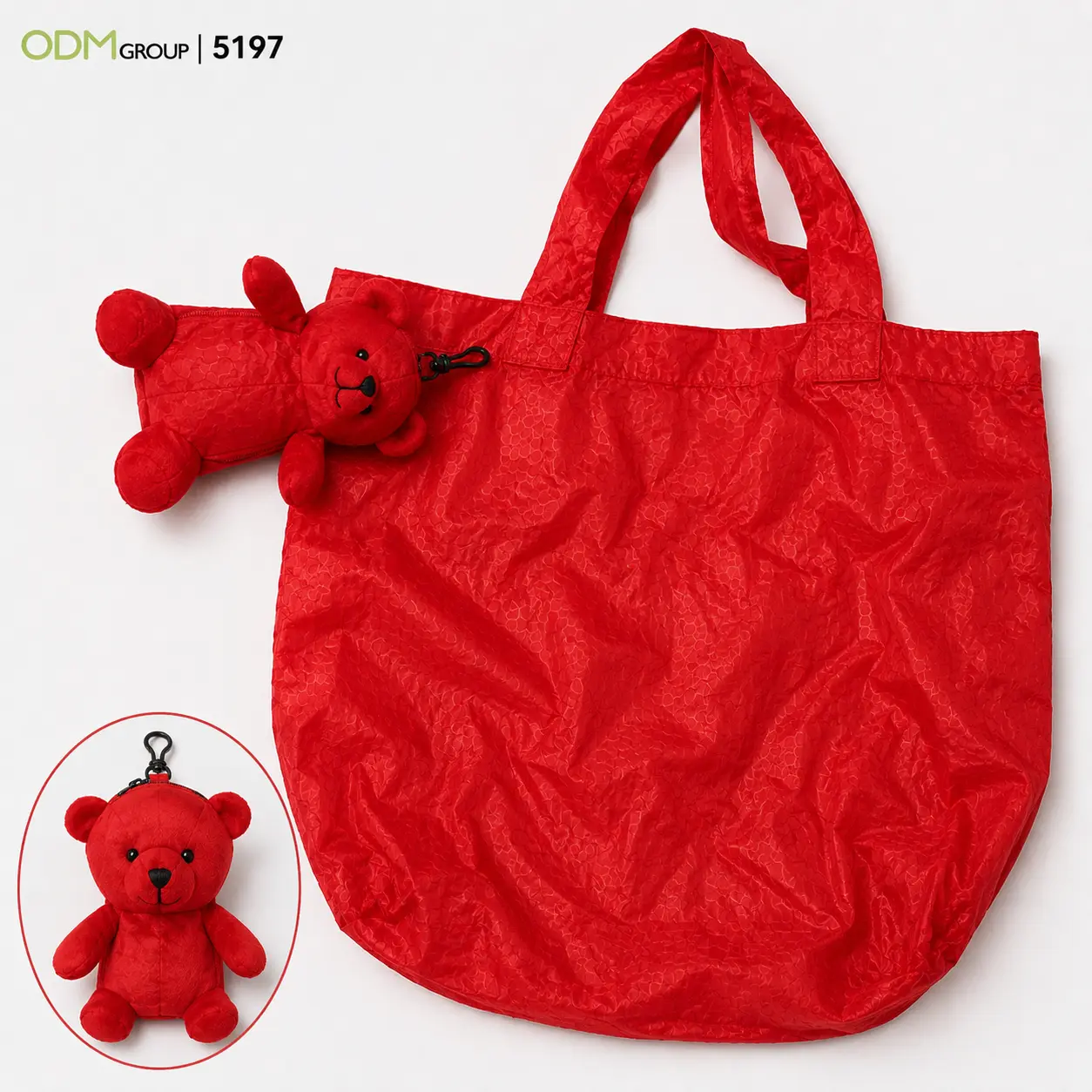
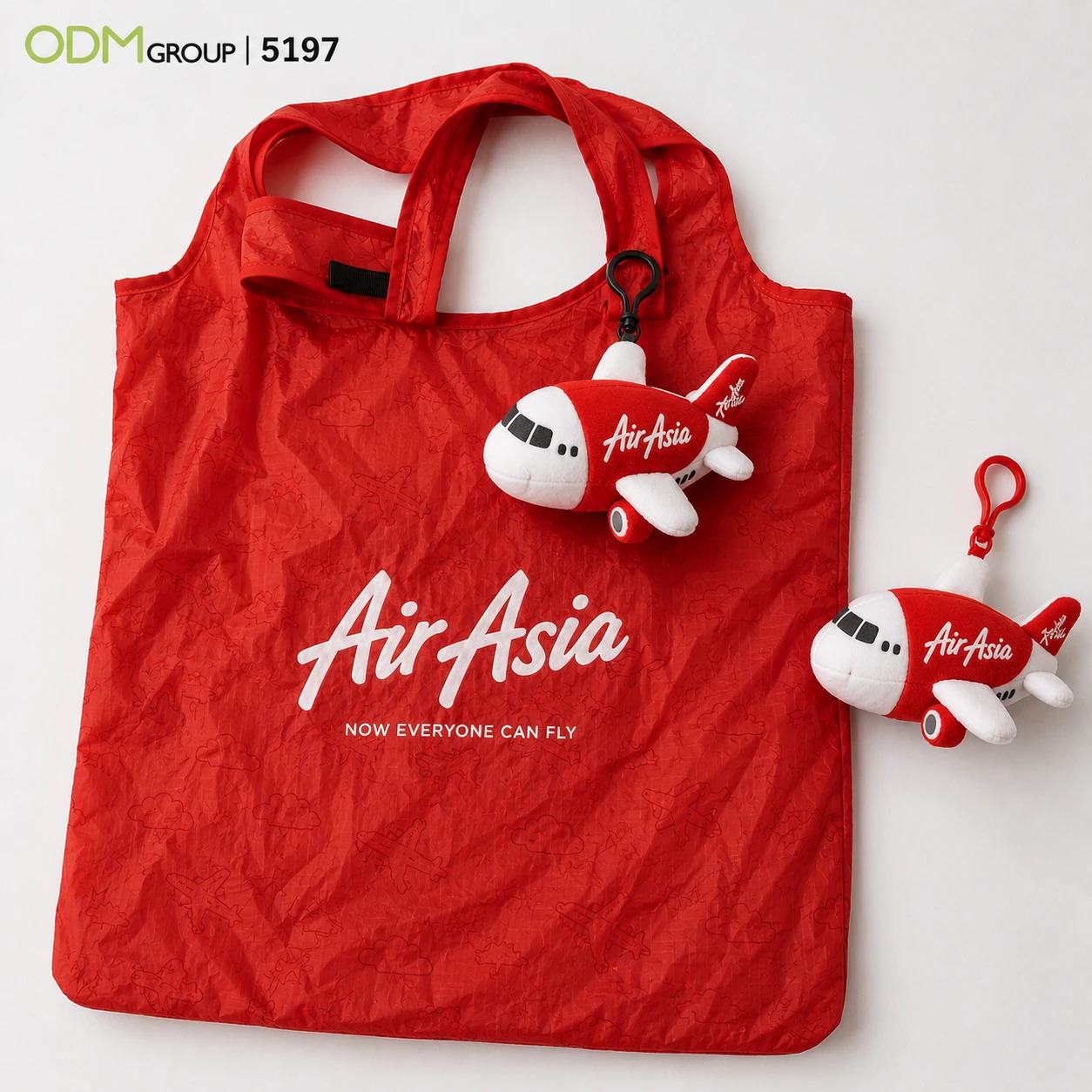
When folded, the shopping bag sits inside the plush pouch. The pouch may resemble a mascot, fruit, product, animal or campaign character. A zipper, hook or fabric loop keeps the format secure and portable.
When the customer needs the bag, the tote unfolds from the pouch. The plush character remains attached and can sit near the handle, inside the bag or along one side, depending on the construction.
Fruit-inspired concepts demonstrate the idea clearly. A soft tomato character can store a red tote printed with a subtle tomato pattern. A banana-shaped pouch can contain a coordinated yellow shopping bag. The color, form and graphics all support the same visual story.
This transformation makes the product enjoyable to demonstrate. It can also make campaign content more engaging, particularly in short videos, product demonstrations and in-store displays.
Promotional Opportunities Beyond a Simple Giveaway
Plush tote bags can support a broader campaign strategy rather than serving as an isolated free gift.
1. Gift With Purchase Campaigns
A custom plush tote bag can help justify a higher purchase threshold by offering both functional and emotional value. Customers receive a reusable item, but the plush component makes the reward feel more developed than a basic bag.
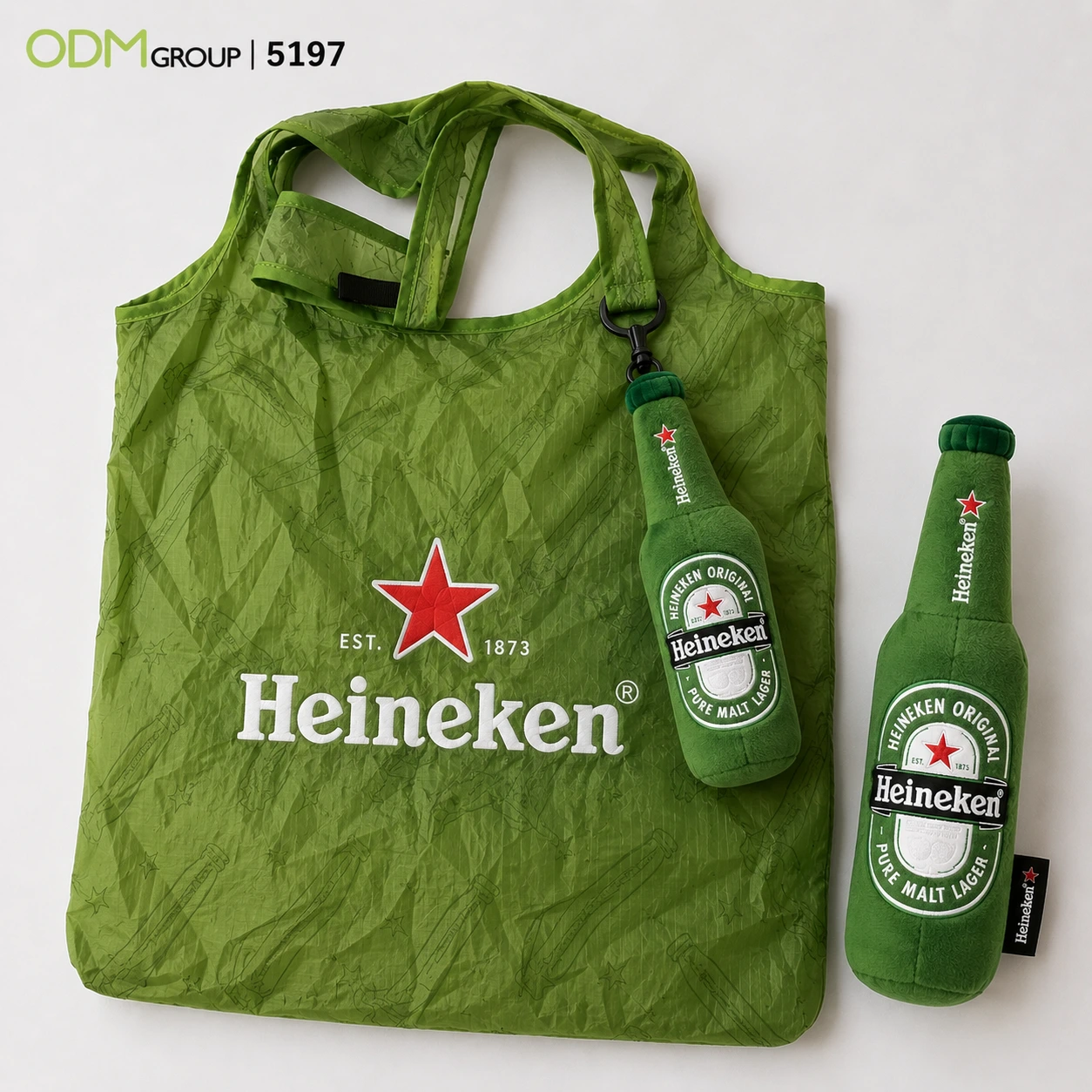
Brands can connect the design directly to the qualifying product.
A beverage company might create a fruit character based on a flavor.
A snack brand could turn its product packaging into a soft pouch.
A restaurant chain could use a recognizable food character or brand mascot.
2. Collectible Character Series
One design can drive awareness. A series can encourage repeat participation.
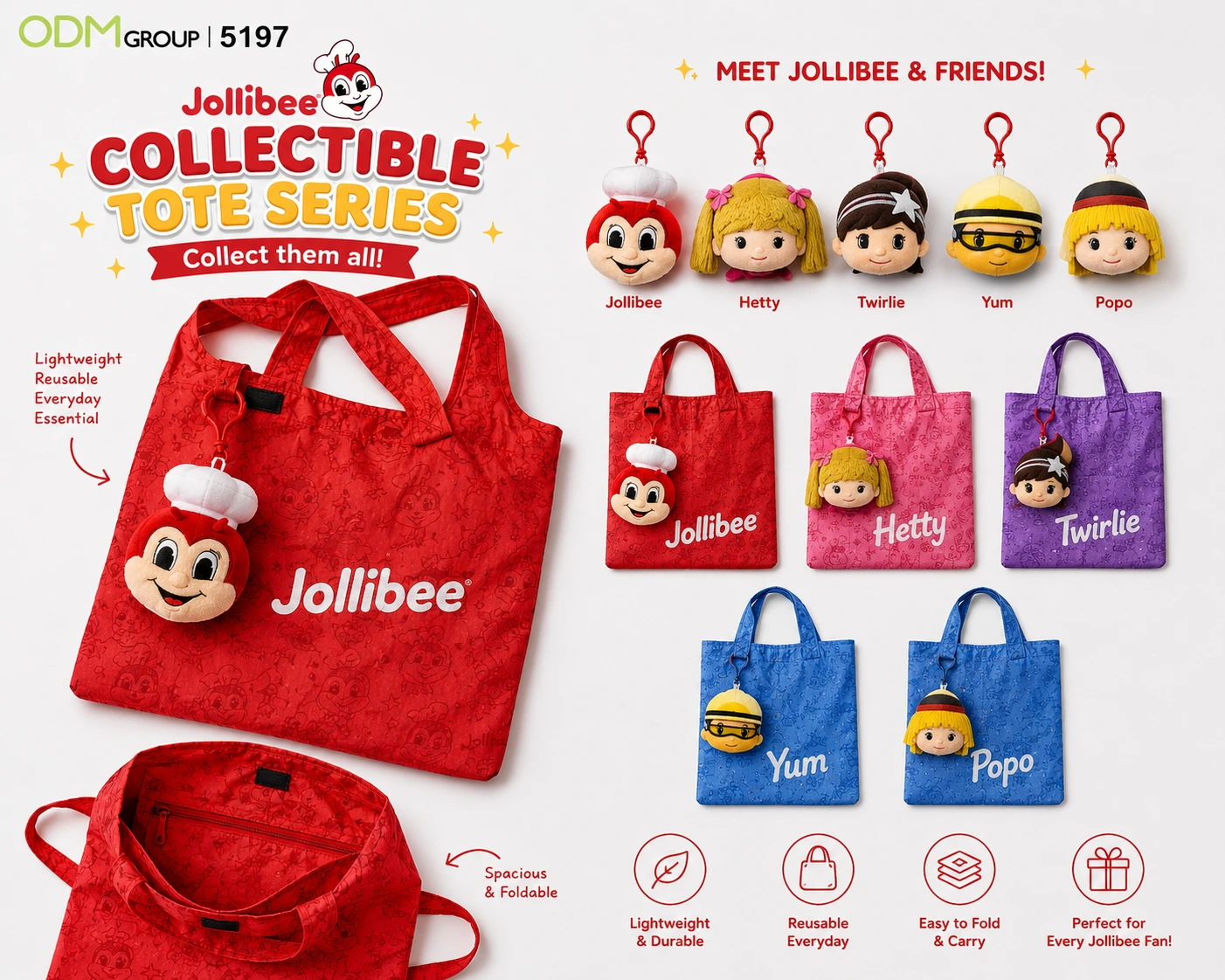
Businesses can release different characters, colors, or expressions across several campaign periods.
The collection may be linked to product variants, store locations, seasons, or loyalty milestones.
The designs still need a common system. Consistent bag dimensions, construction, and packaging can make production more manageable while allowing the plush characters to change.
3. Event and Exhibition Merchandise
At an event, the custom-designed tote bags can be distributed as a compact gift. Attendees can then open the tote and use it to carry brochures, samples, and other merchandise collected throughout the day.
This creates an immediate practical role for the product while increasing brand visibility around the venue.
4. Children and Family Promotions
The soft character format can appeal to families, but the product should still be developed with age suitability in mind. Detachable components, zipper pulls, clips, embroidery, and small decorative details must be reviewed carefully.
A child-friendly appearance does not automatically make an item suitable for young children.
The campaign brief, product labeling, and relevant testing requirements should reflect the intended user group.
5. Travel and Hospitality Campaigns
Hotels, tourism boards, airlines and destination retailers can turn local icons into compact foldable tote bags.
The plush pouch might represent a landmark, regional food, animal or cultural symbol.
The result can function as both a practical travel accessory and a souvenir with a stronger sense of place.
What Makes a Strong Plush Tote Bag Design?
The character may receive most of the attention, but the bag’s long-term value depends on thoughtful product development.
1. An Easy Folding System
Customers should be able to open and repack the bag without complicated instructions. The pouch opening must be large enough for the tote, while the internal construction should prevent fabric from catching in the zipper.
A prototype is essential because a concept that appears simple in a sketch may behave differently once fabric thickness, seams, and lining are introduced.
2. A Useful Tote Size
The plush pouch should not make the unfolded bag too small or too thin. The final tote needs enough capacity for its intended use, whether that involves groceries, event materials, travel essentials, or retail purchases.
Handle length also matters. A bag intended for shoulder carrying requires different proportions from a compact hand-carried tote.
3. A Recognizable Character Shape
The plush form needs to remain clear even at a compact size. Too many small details can increase production complexity without improving recognition.
4. Coordinated Materials
The plush character and shopping bag do not need to use the same material, but they should feel like parts of the same product.
Soft velour, short-pile plush, or polyester fabric may be used for the character. The tote may use polyester, ripstop fabric, or another lightweight material that folds into a small volume. Material selection should consider print quality, durability, weight, and the desired retail positioning.
More tote bag ideas to try!
We have two foldable designs to feature: the roll-up bag design and the foldable bag ideas. Take a look at these two custom design bags.
These branded reflective bags are not your ordinary bags. They are made out of light-reflective fabric material that will shine when a light source is directed to it.
Sturdy and machine-washable, nylon fabric is the best choice of material for shopping bags. They are waterproof, meaning groceries are kept dry and in good condition. This also means that the bags are reusable and eco-friendly.
How ODM Develops Custom Plush Tote Bags
ODM Group supports businesses that want to turn a character, mascot, or product idea into custom promotional merchandise. Our role is to coordinate the design and development process rather than offer a fixed catalog item.
Product Sketching
The project can begin with a campaign theme, brand mascot, packaging reference, or rough product idea.
Through Mindsparkz, our product design studio, we develop sketches that explore the character shape, tote configuration, folding method, branding areas, and attachment details. Multiple directions can be reviewed before the design moves forward.
This stage helps the marketing and procurement teams evaluate the idea as a product rather than relying on a general visual reference.
3D Development
Once a concept is selected, the design can be refined through 3D modeling and detailed product development. Where hard components or shaped accessories are involved, mold development can also be assessed.
For the plush section, pattern construction, panel divisions, embroidery positions, and internal capacity need to be defined. For the tote, the team reviews dimensions, handle length, printing and folding behavior.
The goal is to ensure that the character and bag work together as one product.
Prototype Development
A physical prototype allows the team to check proportions, softness, stitching, zipper access, and ease of use.
It also shows whether the tote can be folded back into the pouch consistently. Adjustments may include changing the pouch opening, reducing fabric bulk, repositioning the clip or refining the character’s facial features.
Factory Selection
Different factories have different strengths. A project combining plush construction, printed fabric, zippers and plastic clips may require more coordination than a conventional tote bag.
ODM evaluates suitable manufacturing partners based on the required materials, construction methods, order volume and target quality. Factory selection is guided by the product brief rather than forcing the design into an unsuitable production setup.
Quality Control
Quality control can cover fabric consistency, stitching, embroidery placement, zipper operation, printing, attachment strength, and finished dimensions.
The folding and storage function also needs to be checked. A plush tote bag may look correct when displayed but still create a poor customer experience if the tote is difficult to remove or repack.
Packing Design and Delivery
Packaging should protect the plush shape while showing customers what the product does. Options may include printed boxes, paper sleeves, hangtags, display cards, or transparent packaging with clear folding instructions.
ODM can coordinate packing requirements, shipment planning, and delivery so the final merchandise arrives ready for the intended promotion.
Build a Product Customers Will Want to Keep
Plush tote bags offer more than an alternative to a conventional reusable bag. They give brands a platform for character development, product storytelling, and repeat customer engagement.
The strongest concepts connect the plush pouch, tote design, campaign message and customer experience from the beginning. That requires more than selecting a shape and adding a logo. It requires design thinking, prototyping, suitable manufacturing, quality control and delivery planning.
Planning a plush tote bag for a retail promotion, event or gift-with-purchase campaign? Contact ODM Group to develop the concept from initial sketches and 3D design through prototyping, factory selection, quality control and final delivery.
More Product Ideas


FAQs about Plush Tote Bags
Can a plush tote bag be based on our actual product packaging?
Yes. A pouch can reference a bottle, carton, snack pack or other recognizable product form. The design may need to simplify fine details so the plush version remains clear, soft and practical to manufacture.
Can customers collect several characters while using the same tote design?
Yes. A modular campaign can use one standard tote construction with different plush characters. This approach creates a collectible series while helping maintain consistent dimensions, folding methods and packaging across the range.
What happens when the character looks good but the bag does not fit inside it?
The proportions must be adjusted during prototyping. This may involve increasing the pouch depth, using a lighter tote material, changing the folding sequence or redesigning the zipper opening. The storage function should never be treated as an afterthought.
Could the plush pouch be detached and used separately?
It can, but the decision changes the construction and risk assessment. A detachable pouch may work as a coin purse, keychain or small accessory. The attachment system must be secure, appropriate for the intended user and tested for repeated handling.
What to Read Next?
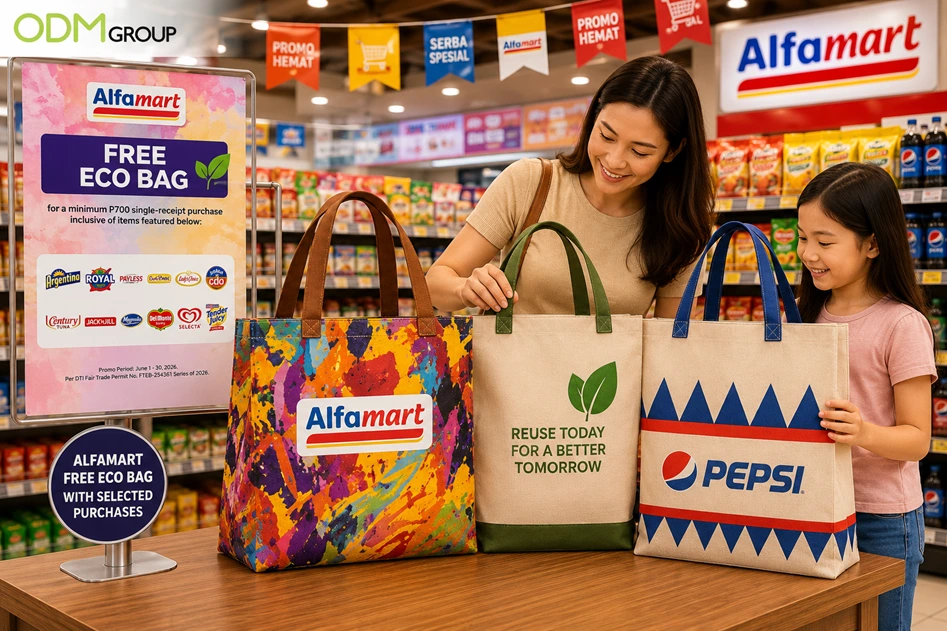
Custom Reusable Bags That Keep Your Brand in Motion
A promotion ends at checkout. A useful bag does not. [...]
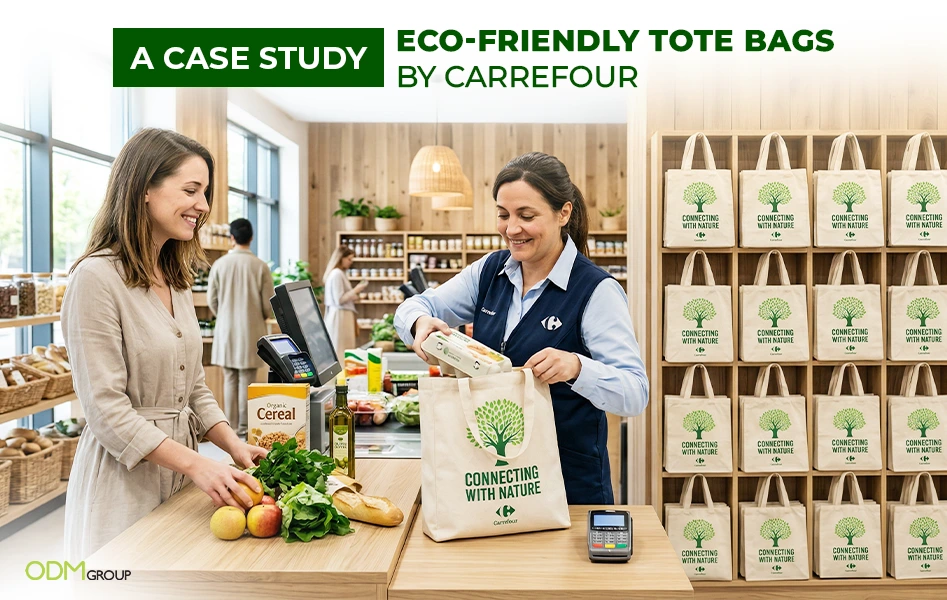
Custom Eco-Friendly Tote Bags for Retail: Carrefour Case Study
Replacing plastic bags sounds simple until you try to [...]
Printed Canvas Tote Bags: 5 Ways to Promote Your Brand In Style
Tote bags are popular because they can be used [...]
Custom Design Tote Bags: 7 Easy Ways to Market Your Business!
Bags are arguably the most popular promotional products of [...]
Customized Eco-Friendly Bags: Steal-Worthy Brand Activation Ideas
Let's say that you've already defined your brand activation [...]
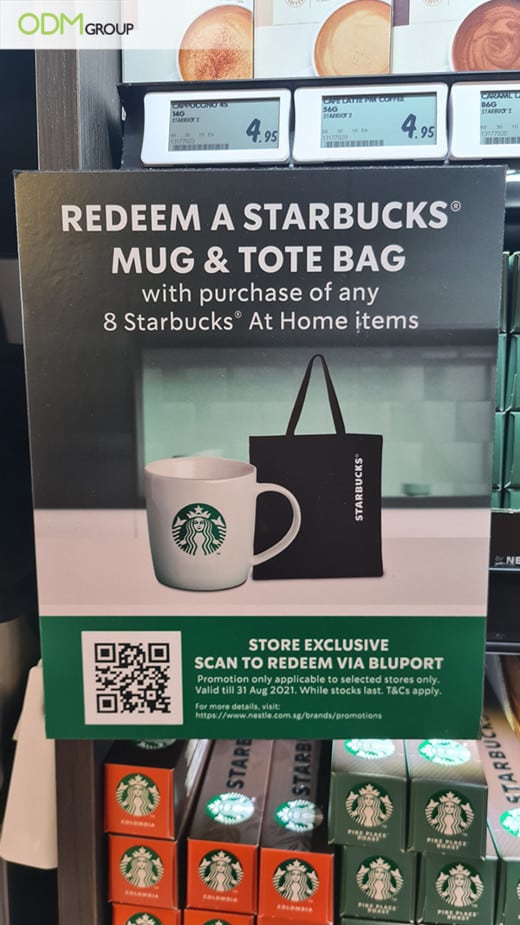
How Starbucks Takes Over Retail with These Clever Merchandise Ideas?
Indeed, Starbucks never gets tired of surprising its valued customers. [...]