A cosmetic pouch gift with purchase gives beauty brands a practical way to connect a promotional reward with customers’ everyday routines. The pouch can hold makeup, organize small essentials, or accompany a travel kit, giving it a purpose beyond the original transaction.
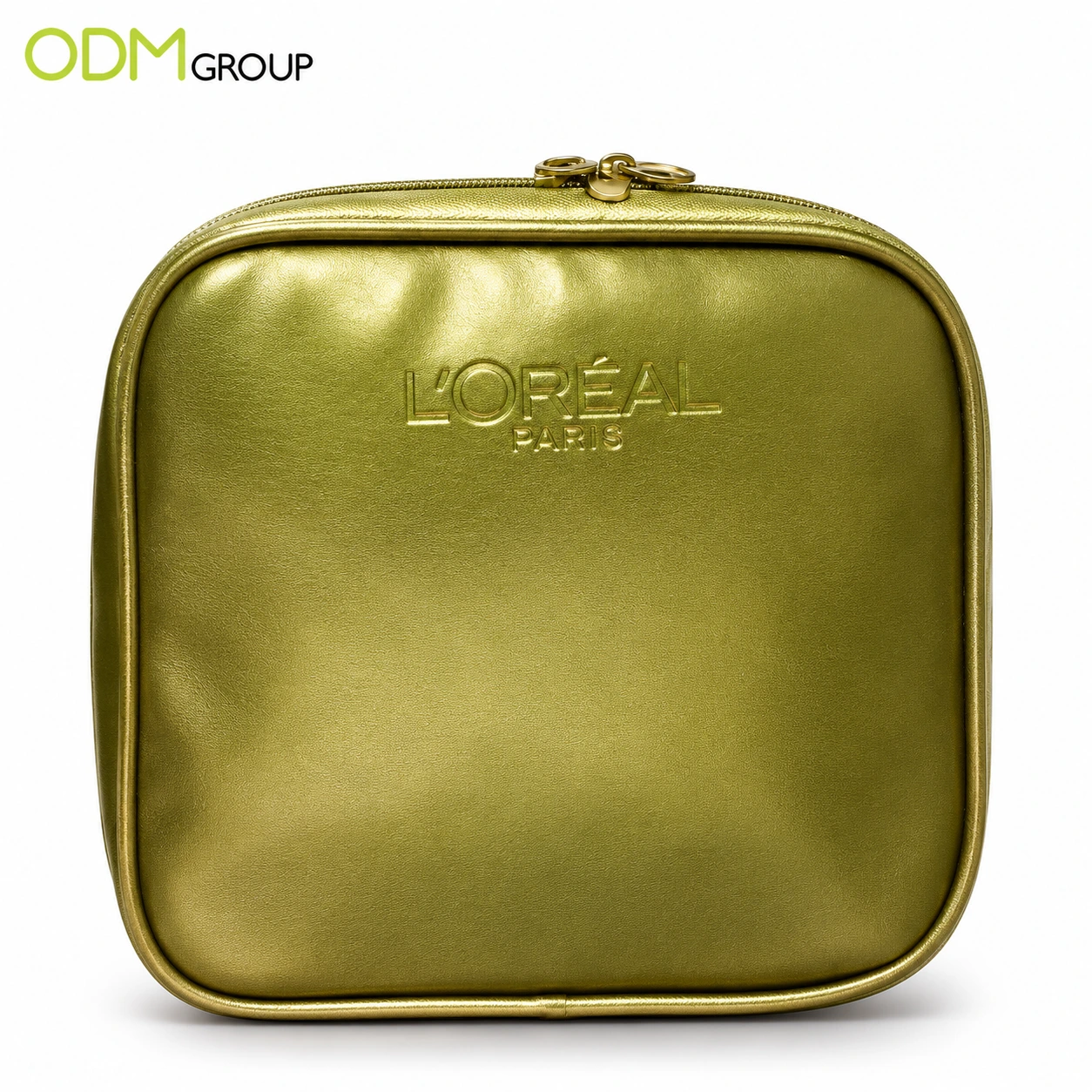
L’Oréal’s gold cosmetic pouch provides a useful example. Its compact shape, metallic finish, and understated branding offer a starting point for brands developing their own beauty merchandise.
The opportunity lies in bringing the gift, qualifying purchase, and customer experience together. A pouch should feel relevant to the products being promoted and useful enough to keep.
Disclaimer: ODM Group did not design or manufacture this L’Oréal promotion. It is featured solely for independent marketing analysis and inspiration.
Inside L’Oréal’s Cosmetic Pouch Promotion
Our original coverage, published in November 2012, recorded a L’Oréal promotion at Landmark department stores in the Philippines. Customers purchasing PHP 1,500 worth of qualifying products could receive a cosmetic pouch.
These are historical campaign details, rather than a current offer. The original article described the pouch as synthetic leather, although its precise material specification was not documented. Promotional Products, ODM Group
The pouch features a rounded rectangular profile, a metallic gold exterior, a perimeter zipper, and a subtle L’Oréal Paris logo.
What Beauty Brands Can Learn from the Design
Give the Reward a Clear Connection to the Purchase
A beauty pouch complements the products customers are already buying. That connection makes the gift easy to explain at the counter: customers receive an accessory they can use to organize their beauty essentials.
When developing a similar promotion, decide which routine the pouch should support. A compact makeup pouch, skincare organizer, and brush case require different dimensions and layouts.
Start with the intended contents, then develop the shape around them.
Use the Finish to Establish the Design Direction
The gold exterior gives this pouch a distinctive visual identity. Its restrained decoration leaves the finish and silhouette to carry much of the design.
For a new concept, compare metallic, matte, textured, and textile finishes against the campaign’s product packaging. Choose the combination that feels consistent with the brand rather than adding decoration simply to fill space.
A reflective surface also deserves a physical sample review. Examine its appearance under retail lighting and check how clearly marks, creases, or uneven stitching are visible.
Make Branding Part of the Accessory
A cosmetic pouch does not need a large logo to establish its identity. Consider the relationship between the logo, surface texture, zipper hardware, and overall proportions.
Depending on the selected material, explore printing, embroidery, a woven label, or a pressed logo treatment. Confirm the method on the actual material before approving the artwork.
ODM design insight: Review branding at the finished pouch’s actual size. A logo that looks balanced on a large screen may feel oversized on a compact accessory.
How to Develop a Cosmetic Pouch Gift With Purchase
1. Define What Needs to Fit
List the items the pouch should accommodate, including their packaging.
If the gift accompanies a skincare range, test it with the intended bottles and jars. For makeup, consider longer items such as brushes and pencils alongside smaller compacts.
Check the opening as well as the interior. Customers should be able to insert and retrieve the products without forcing the zipper or stretching the seams.
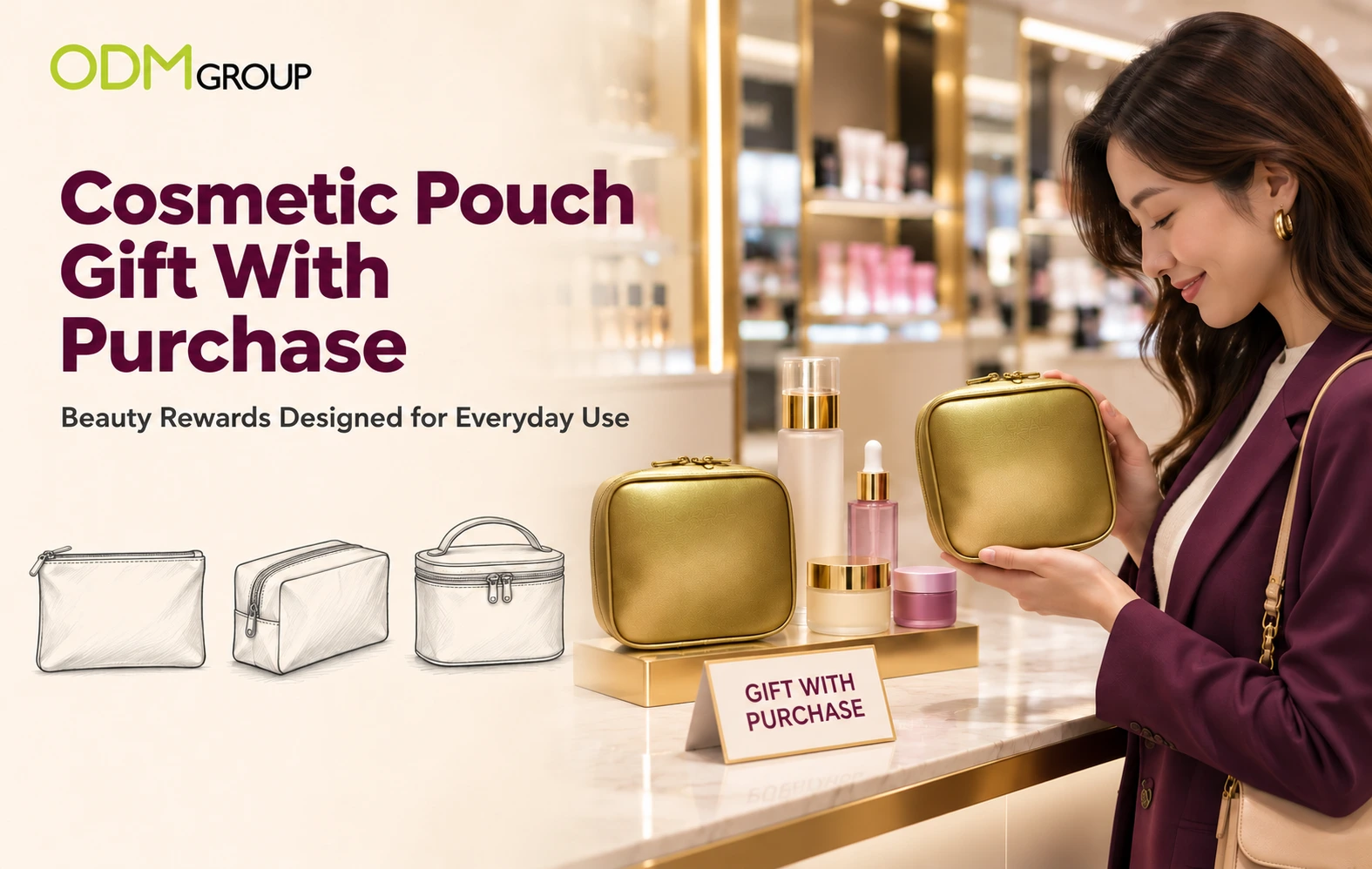
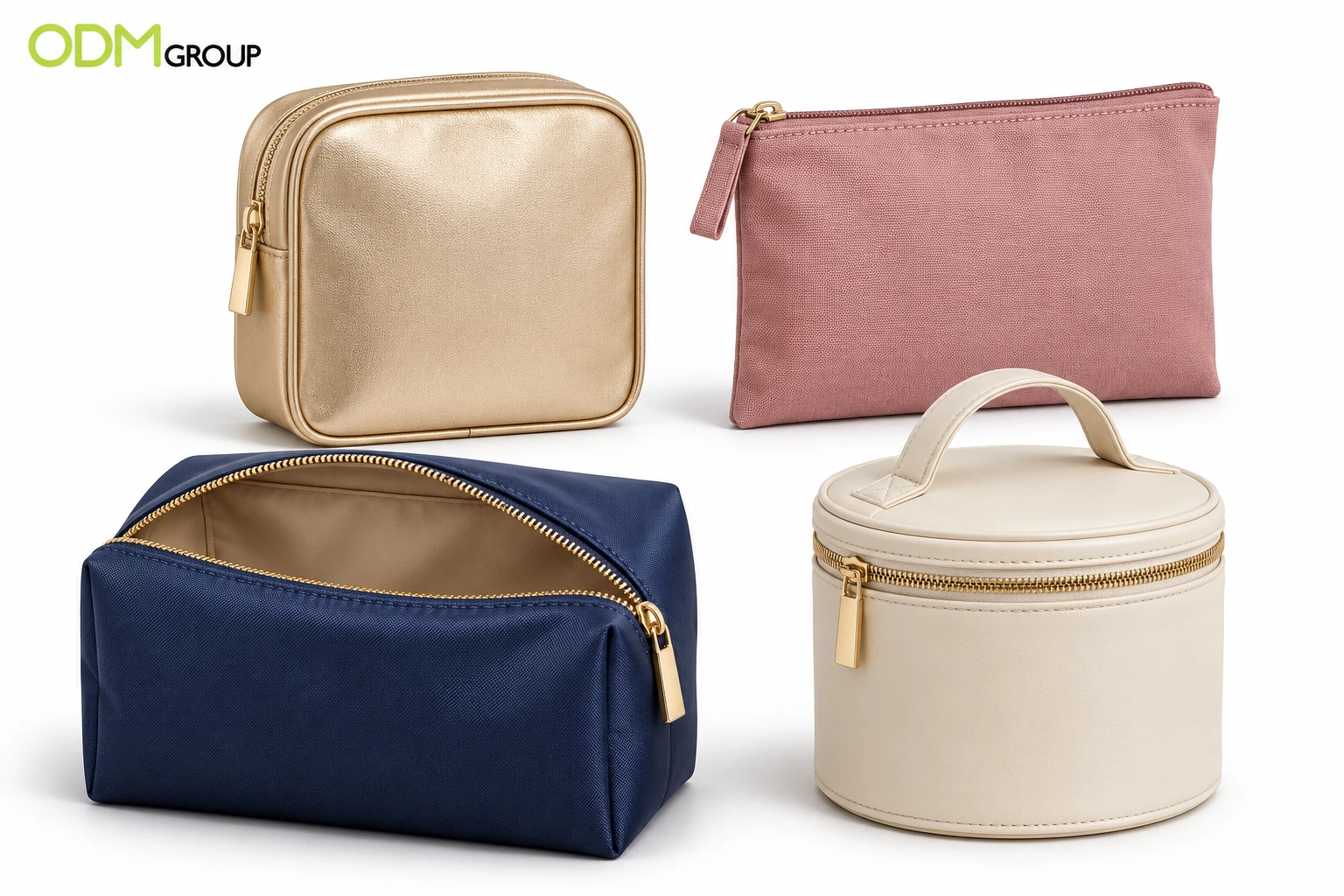
2. Compare Useful Pouch Formats
| Pouch format | Potential application | What to evaluate |
|---|---|---|
| Flat zippered pouch | Small accessories and compact giveaways | Capacity once filled |
| Box-shaped pouch | Mixed beauty essentials | Base depth and opening width |
| Structured vanity case | A more substantial gift presentation | Shape retention and packed volume |
| Brush organizer | Makeup tools | Brush length and internal separation |
| Divided travel pouch | Several product categories | Access, compartment layout, and added bulk |
Choose the simplest construction that delivers the intended experience. Extra compartments should solve an organization problem rather than make the pouch unnecessarily complicated.
3. Review Materials and Lining Together
Evaluate the exterior, lining, reinforcement, and seams as one construction.
Ask for material samples and a finished prototype. Assess the surface feel, flexibility, color, and how the pouch behaves when filled.
If easy cleaning is part of the brief, agree on the expected cleaning method and assess it on the sample. Avoid describing a pouch as waterproof, washable, or spillproof without appropriate evidence for the finished construction.
4. Pay Attention to the Zipper
The zipper is a small component with a significant effect on the experience.
Check that it moves smoothly around corners, that the lining stays clear of the teeth, and that the pull is comfortable to grip. Repeat the review with the intended contents inside.
ODM development insight: An empty pouch can conceal capacity and closure problems. Review the filled sample before approving its dimensions.
Make the Promotion Easy to Understand in Store
A gift-with-purchase campaign needs clear communication alongside an appealing gift.
Display one pouch where customers can inspect its size and finish. Place the offer beside the qualifying products and explain:
- Which purchases qualify.
- The required spend or product combination.
- Where customers collect the gift.
- Any applicable campaign dates or availability conditions.
For future campaigns, set the qualifying threshold using basket data, margins, and the total promotion budget. The historical L’Oréal threshold should not be treated as a recommendation for another brand.
Measure redemption, qualifying basket value, and campaign cost against the original objective. The pouch alone cannot establish whether a promotion increased sales or delivered a positive return.
Plan Packaging Around the Redemption Experience
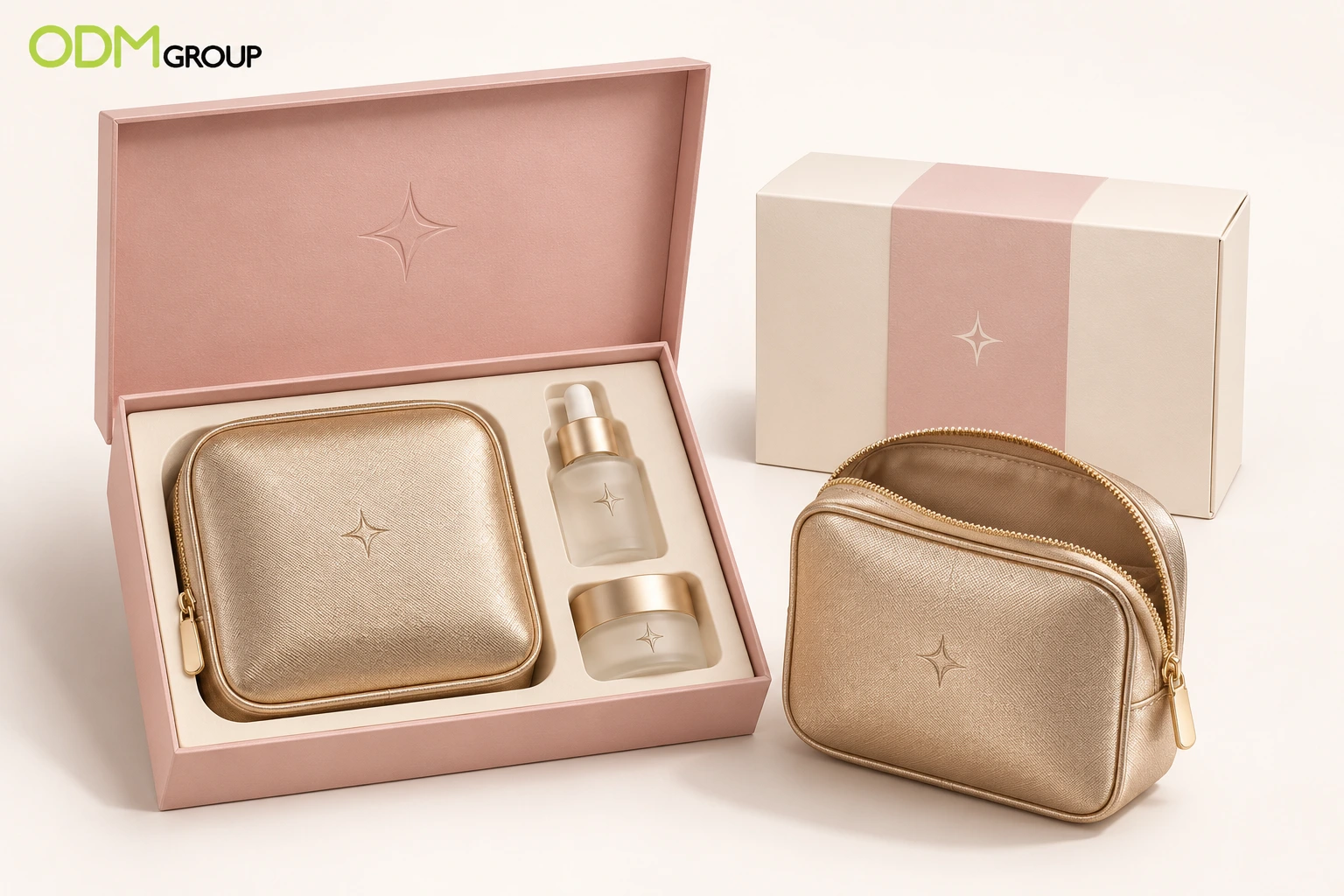
Decide whether customers receive the pouch empty, filled with products, or presented inside a gift box. An empty reward may need straightforward protective packaging and a branded insert. A pouch containing products needs a fit check, sufficient protection, and a clear indication of what is included.
Confirm the packed dimensions early. A structured pouch may look appealing on display while requiring more storage space behind the counter. For another beauty-category reference, explore the Lancôme cosmetic pouch promotion.
Bring Your Cosmetic Pouch Concept to ODM
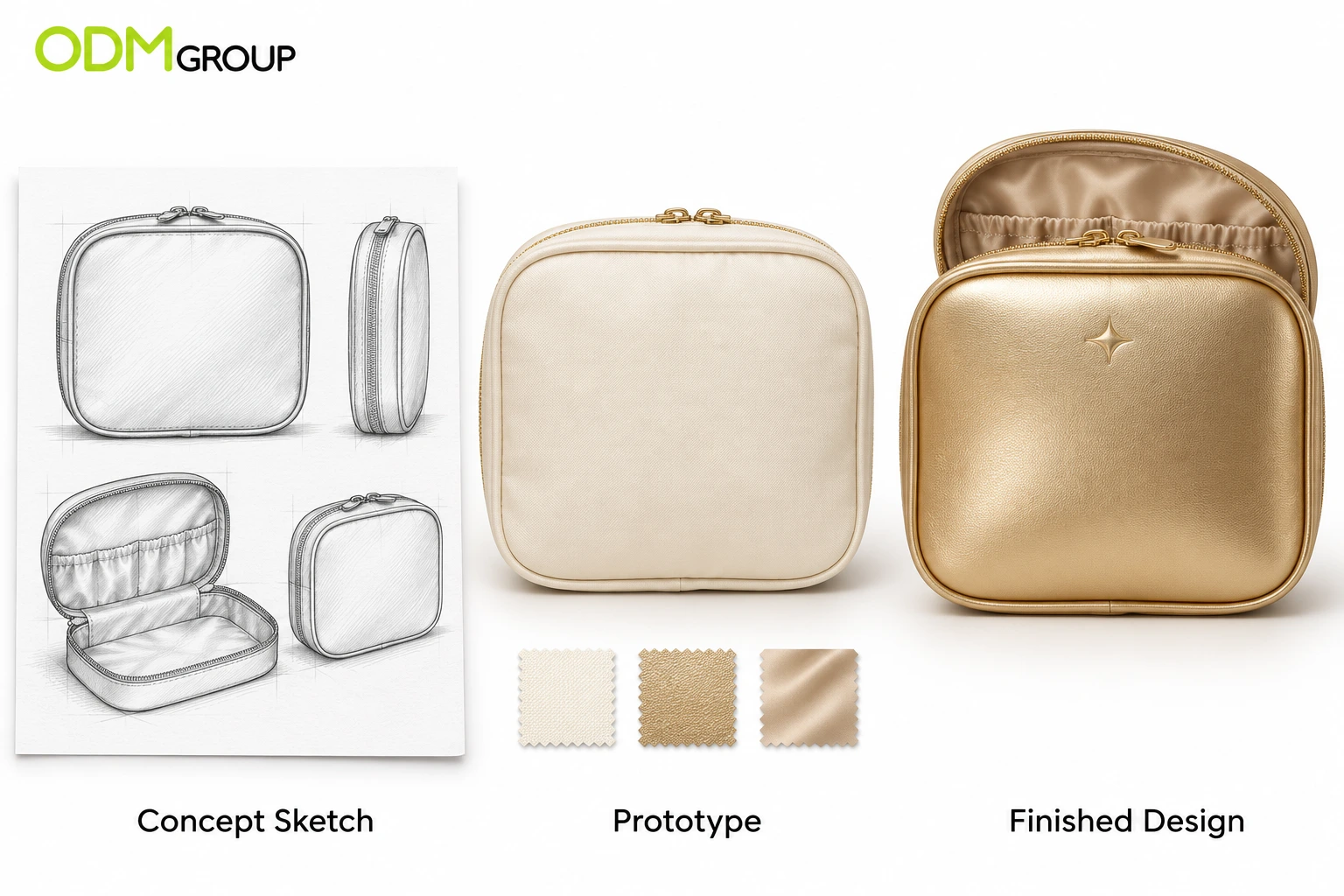
At ODM, we develop promotional merchandise concepts around the campaign, audience, and intended use. For a cosmetic pouch, that means considering the format, materials, branding, and presentation together.
Our prototyping process supports the transition from an initial design to a physical sample that can be reviewed and refined.
Share your project brief with our team, including the intended contents, quantity, launch market, budget, campaign mechanic, and target date.
More Ideas


Frequently Asked Questions
How can we make the pouch feel distinctive without adding expensive features?
Start with proportions, a coordinated color palette, and well-positioned branding. Compare a focused design with more detailed alternatives before committing to extra panels, hardware, or compartments.
Should the pouch match our product packaging exactly?
It should feel connected to the campaign, but it can use selected colors or design details rather than repeat the complete packaging artwork. Review both together during development.
Can one pouch work across several beauty ranges?
Potentially. Test it with a representative selection from each range and confirm that the largest intended combination fits comfortably.
What affects minimum quantities and development time?
Material availability, custom colors, decoration methods, hardware, construction, and sample revisions can affect the requirements. Confirm these against the selected design rather than relying on a standard estimate.
What to Read Next?
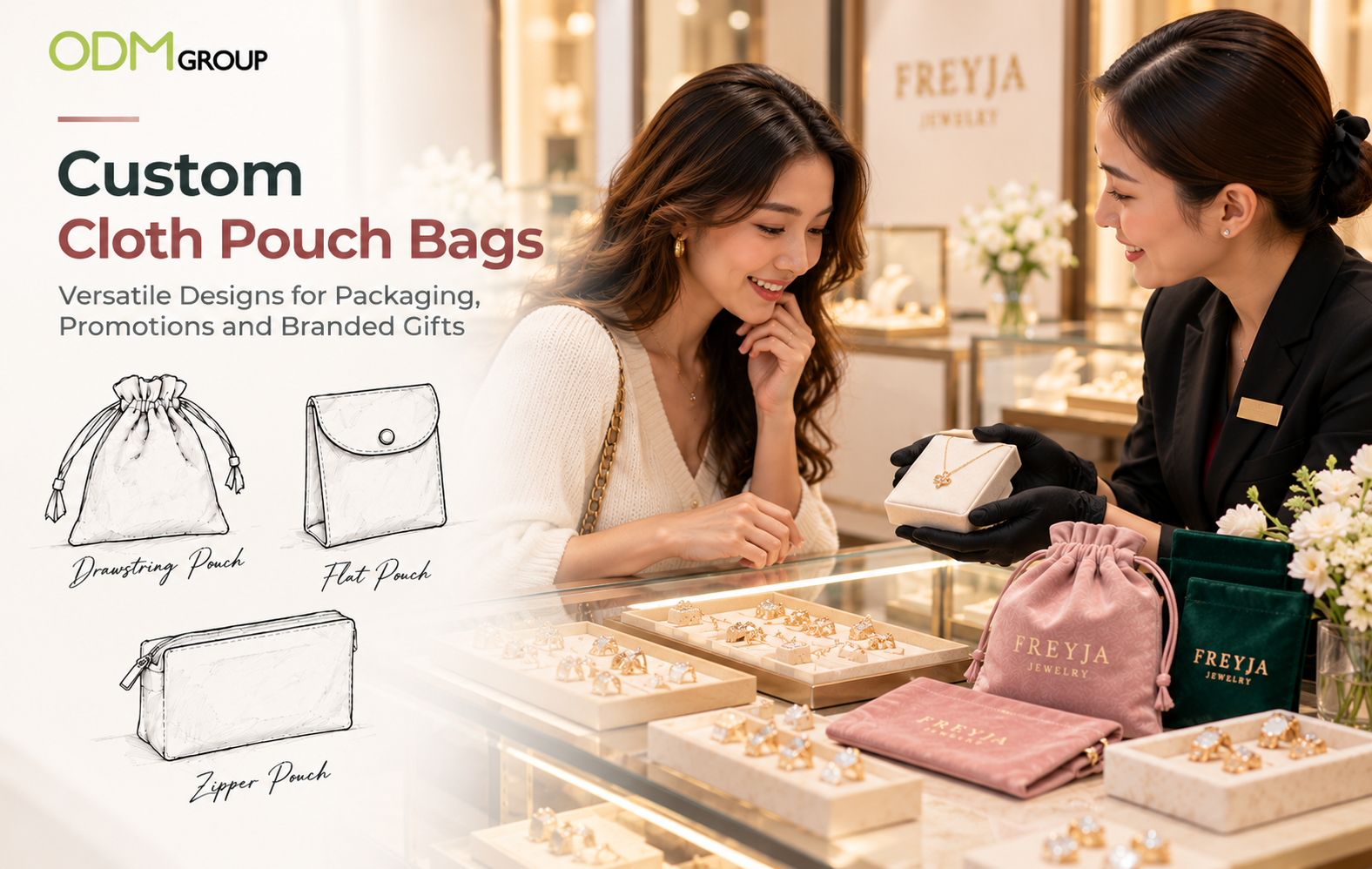
Cloth Pouch Bags: How to Choose the Right Design for Your Brand
Cloth pouch bags can do more than package a [...]
Cosmetic Spout Pouch: A Packaging Guide for Beauty Brands
A cosmetic spout pouch gives beauty and personal-care [...]
Mini Handbag Keychain: A Stylish Promotional Product for Brands
Not every promotional product leaves a lasting impression. Customers [...]
Why Fashion and Beauty Brands Choose Transparent Packaging
Customers often decide whether a product feels desirable before [...]

4 Tips To Make the Most Out of Your Bespoke Branded Pouch
Looking for ways to design and display your promotional [...]

Roku Gin Adopts Sustainability With its Custom Fabric Packaging Bag Idea
Sustainable packaging has been a buzzword over the last [...]