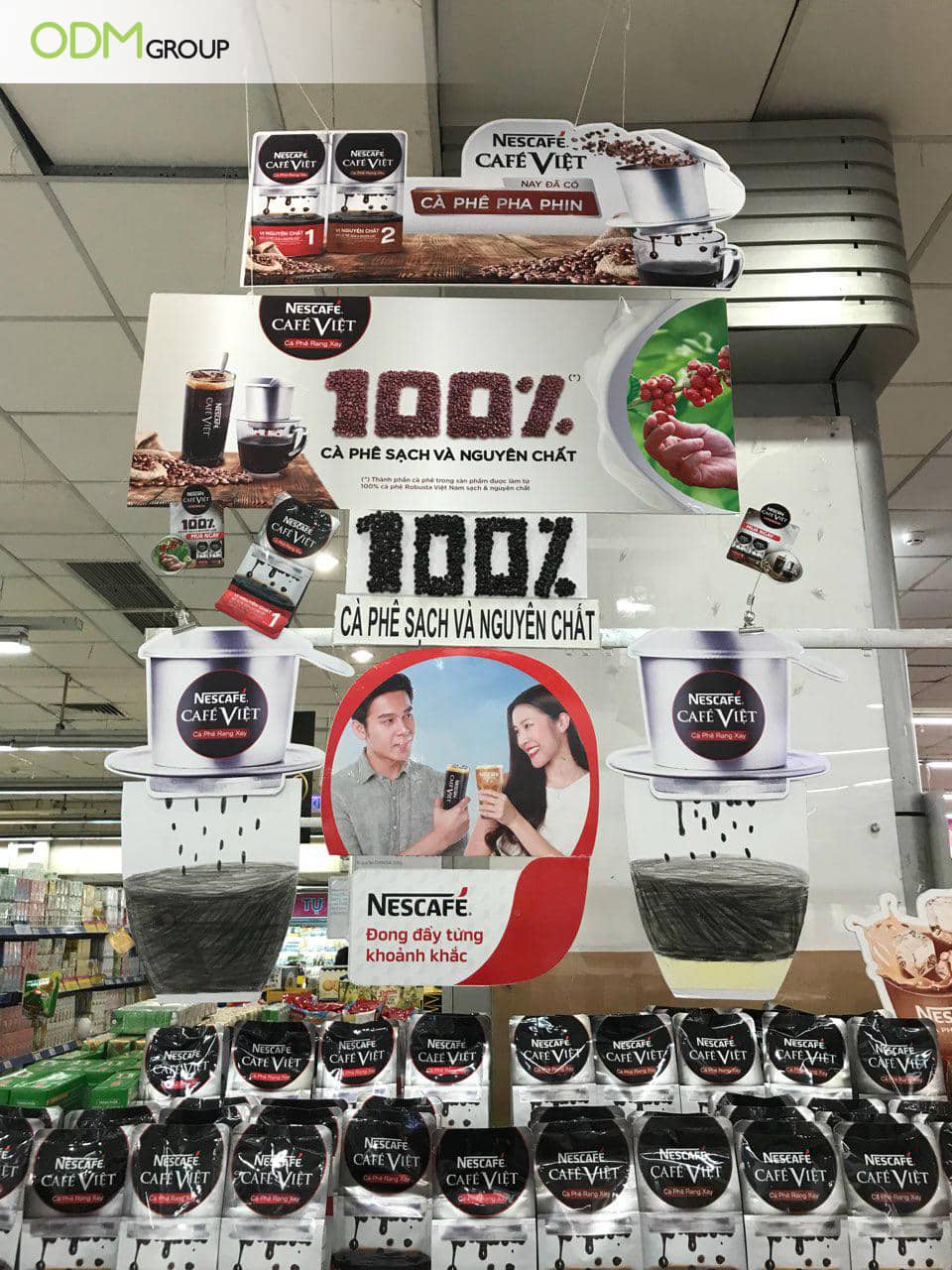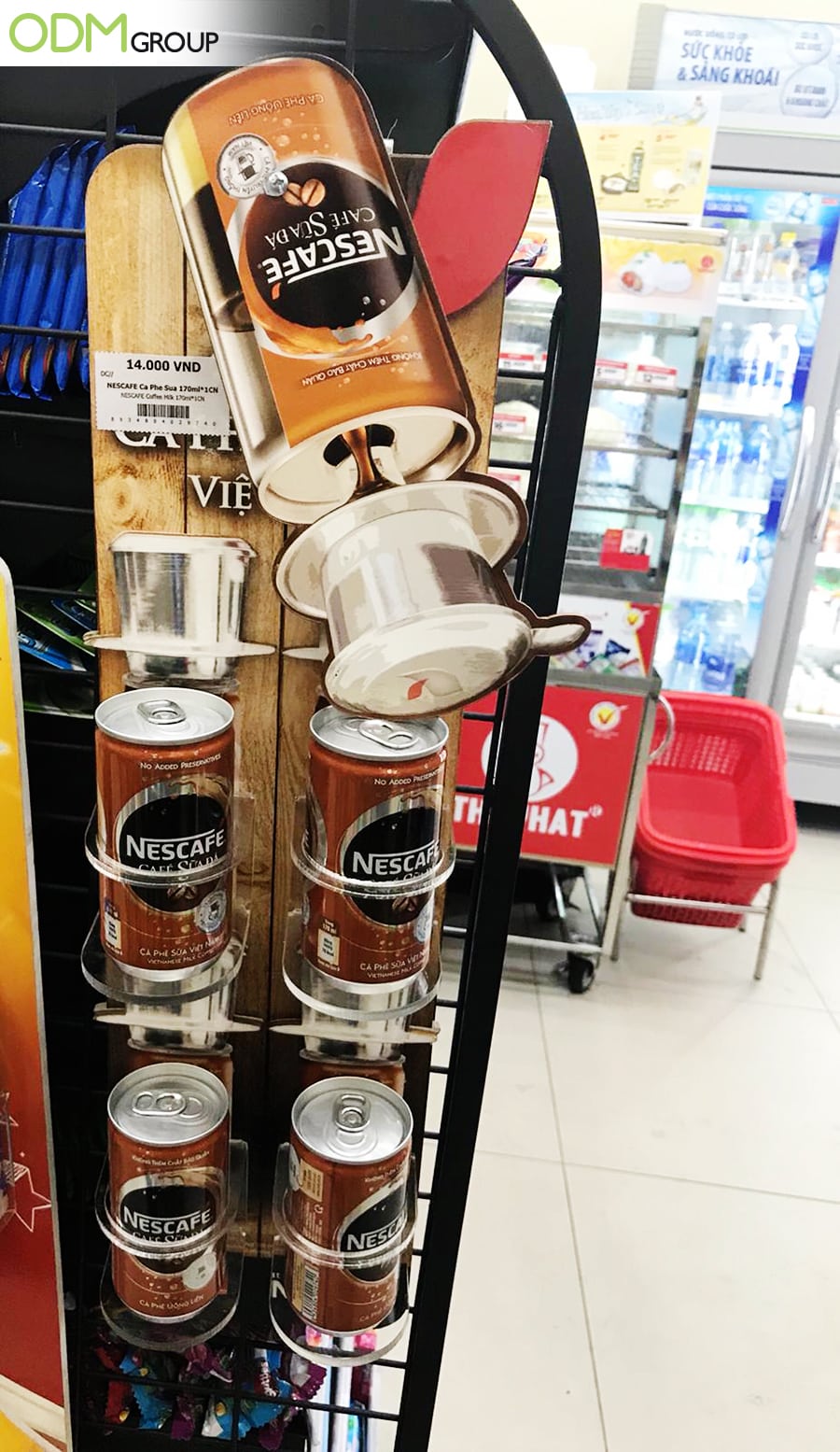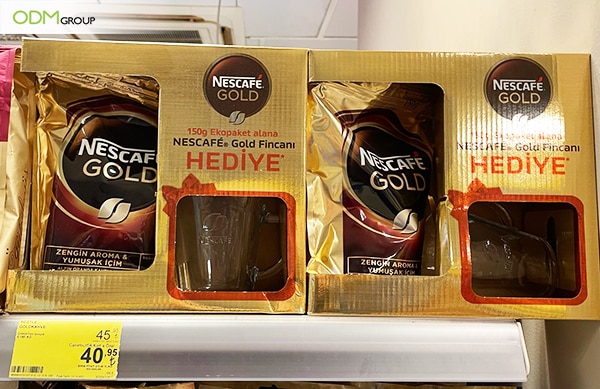
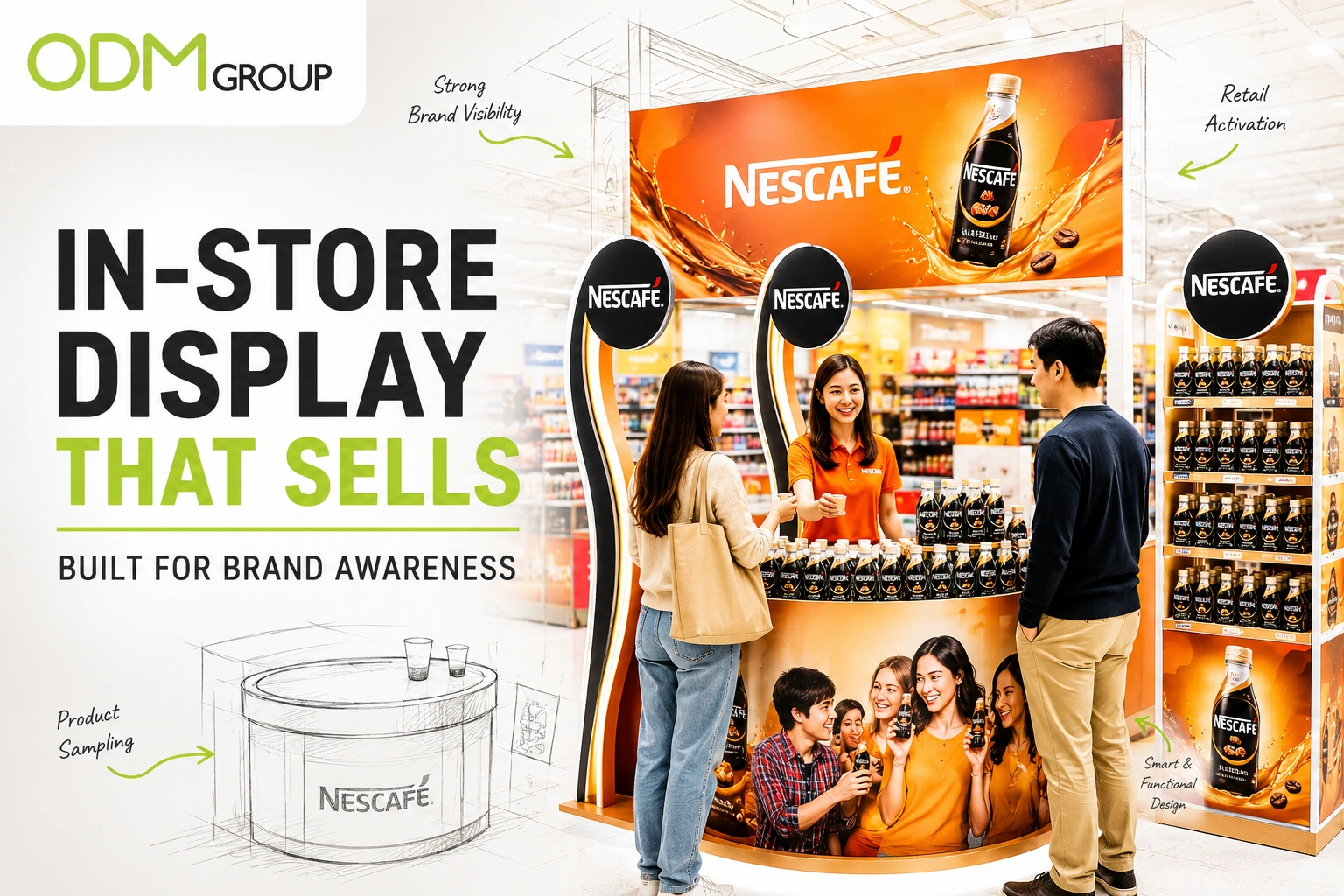
Nescafé used a creative in-store display in Changde, Hunan, China, to promote its cold coffee drink and increase brand awareness in the local market. As one of the world’s most recognised coffee brands, Nescafé already has strong brand visibility. However, in a crowded retail environment, even established brands still need to compete for attention at the point of sale.
The Swiss coffee brand Nescafé is using sensory branding in their marketing approach though a creative in-store display to evoke customers’ emotions and then increase total brand recognition. This campaign shows how an in-store display can do more than hold products. It can create a branded space, invite customers to interact, support sampling, and make the buying decision easier. For food and beverage brands, this kind of retail activation is especially powerful because shoppers often decide what to buy while they are already inside the store.
The Nescafé display uses strong brand colours, large visual panels, product counters, and clear product placement to make the cold coffee drink stand out. Instead of relying only on shelf visibility, the brand created a small retail experience around the product.
Nescafé’s In-Store Display Case Study
Nescafé, the Swiss coffee brand, used this in-store promotion as part of its strategy to increase awareness in the Chinese market. The display was seen in Changde, a city in Hunan province, and was designed to promote the brand’s cold coffee drink.
The setup featured large branded counters, product stacks, banners, and visual panels with Nescafé branding. Bottles of the cold coffee drink were placed clearly across the counter area, making the product easy to see from different angles. The display also included brand ambassadors, which helped create a more active and human shopping experience.
This is important because many retail promotions fail when the display looks attractive but does not support product interaction. In this case, the product remained central. Shoppers could see the drink, understand the promotion, and engage with the brand staff at the display.
For a cold coffee product, this approach makes sense. Customers may be curious about the flavour, temperature, or drinking occasion. A display like this gives Nescafé the chance to introduce the product directly instead of depending only on packaging or shelf placement.

In-stores displays like the above appeal to create attention. Large desks and banners help to boost sales of the focus product, that the company wants to advertise. The coffee brand therefore benefits from this display by boosting its new cold coffee drink.
Why In-Store Displays Matter in Competitive Retail
Retail is crowded. Supermarkets, shopping malls, convenience stores, and hypermarkets are full of competing products. Many brands fight for the same shopper attention, especially in fast-moving categories such as drinks, snacks, cosmetics, and personal care.
An in-store display gives a brand its own space inside that environment. It helps separate the product from the usual shelf and gives shoppers a reason to stop.
For brands, this matters because shoppers often make quick decisions. A product may only have a few seconds to catch attention. If the packaging is hidden on a crowded shelf, the chance of being noticed becomes much lower.
A well-designed display can solve this problem by:
- Placing the product at eye level
- Using bold brand colours
- Creating a stronger promotional message
- Supporting demonstrations or sampling
- Guiding shoppers toward a purchase
- Making the product feel more important
For Nescafé, the display helped the cold coffee product feel like the focus of the retail space. That is much stronger than simply placing bottles in a refrigerator or on a standard shelf.
In-Store Display that stimulates senses in relation to Nescafé.
Food and beverage companies can benefit from in-store displays like the one above. It is meant to evoke senses in order to increase sales and brand recognition. In-store displays are therefore a must-have for companies which are competing in this kind of market. Customers can taste the product, which makes the buying decision a lot easier. This thus helps customers to purchase impulsively and thereby boost sales in the short run.
An in-store display gives the brand a chance to answer these questions through experience. Instead of only telling shoppers about the product, the brand lets them interact with it.
For food and beverage brands, this is one of the biggest advantages of retail activation. Sampling can reduce hesitation. Visual displays can create an appetite appeal. Brand ambassadors can explain the product quickly. Together, these elements turn a simple product display into a stronger shopper experience.
How does Nescafé benefit from this In-Store Display?
In-store displays are great marketing ideas when planning your complete marketing approach. All businesses will find in-store displays useful. For authentic drinks brands like Nescafé, it is equally important to launch promotions like this. The company is competing in a red ocean market, with a lot of suppliers. This naturally means that promotions like this will make them more special than others. The first impression is often one of the most important things and therefore, is a in-store display like this beneficial. It will help your company to create more brand awareness and help to increase sales of the product.
How This In-Store Display Helps Increase Brand Awareness
Brand awareness is not only about being known. It is about being remembered at the right moment.
Nescafé already has strong global recognition, but this display helps reinforce the brand in a specific retail setting. It reminds shoppers of the brand, introduces a specific product, and connects the product with a real shopping experience.
Stronger Product Visibility
The display moves the product away from ordinary shelf space and gives it a more noticeable position. The large counters, product stacks, and branded panels make the promotion visible even from a distance.
This helps shoppers notice the product before they reach the shelf.
Faster Shopper Understanding
A good in-store display should explain the promotion quickly. Shoppers should not need to spend time figuring out what is being promoted.
In the Nescafé display, the product is repeated across the setup. The bottle visuals, physical bottles, and brand colours all work together to tell shoppers that the campaign is about Nescafé cold coffee.
Higher Impulse Purchase Potential
Cold drinks are often impulse purchases. A shopper may not enter the store planning to buy bottled coffee, but a strong display can change that.
When the product is placed in front of them, supported by sampling or brand staff, the purchase feels easier and more immediate.
Better Brand Recall
A display creates a stronger memory than a normal shelf placement. Customers are more likely to remember the product because they saw it in a branded environment, not just as one item among many competitors.
For brands launching new products, this can be especially valuable.
Industries That Can Use In-Store Displays Like This
The Nescafé case study is focused on coffee, but the same strategy can work across many industries. Any brand that needs retail visibility, product education, or shopper engagement can benefit from a custom in-store display.
1. Food and Beverage Brands
Food and beverage brands are one of the best fits for in-store displays. Products in this category often rely on taste, freshness, packaging appeal, and impulse buying.
A display can be used for:
- New flavour launches
- Seasonal drink promotions
- Snack campaigns
- Instant coffee or tea promotions
- Dairy and yogurt campaigns
- Health drink launches
- Supermarket sampling events
For F&B brands, the goal is usually simple: get shoppers to notice, try, and buy. A strong display can support all three.
2. Alcohol and Beverage Brands
Alcohol brands can also use in-store displays to increase visibility and promote premium positioning. This can include wine, beer, spirits, ready-to-drink cocktails, and festive gift packs.
In this industry, displays are useful for:
- Bottle glorifiers
- Tasting counters
- Limited-edition packaging
- Gift-with-purchase campaigns
- Duty-free promotions
- Holiday gift sets
- Bar and retail activations
For alcohol brands, the display should feel premium and well-structured. Materials, lighting, and finishing matter because they influence how shoppers perceive the product.
3. Beauty and Personal Care Brands
Beauty brands can use in-store displays to support product testing, gifting, and premium storytelling.
Displays work well for:
- Skincare launches
- Fragrance testers
- Cosmetic collections
- Haircare promotions
- Gift-with-purchase campaigns
- Limited-edition beauty sets
For beauty and personal care products, the display needs to feel clean, attractive, and easy to explore. Shoppers often want to touch, test, compare, and understand the product benefits before buying.
4. Health and Wellness Brands
Health and wellness products often require explanation. Shoppers may want to know what the product does, how to use it, and why it is different from alternatives.
In-store displays can help promote:
- Supplements
- Functional drinks
- Nutrition products
- Wellness kits
- Personal care products
- Health-focused snacks
A display can include simple benefit messaging, product samples, QR codes, brochures, or educational panels. This helps turn a complex product into something easier to understand.
5. Travel Retail and Duty-Free Brands
In travel retail, shoppers move quickly. They may not have time to compare products carefully, so displays need to communicate value fast.
In-store displays can help promote:
- Premium drinks
- Beauty gift sets
- Souvenirs
- Travel kits
- Seasonal campaigns
- Limited-edition products
A strong display can make products feel more giftable and easier to purchase, especially for international travellers looking for something memorable or convenient.
6. Lifestyle and Consumer Goods Brands
Lifestyle and consumer goods brands can also benefit from in-store displays, especially when the product needs demonstration.
This includes:
- Small appliances
- Tech accessories
- Home products
- Fashion accessories
- Stationery
- Everyday-use promotional items
For these products, a display can show how the item works, where it fits into daily life, and why shoppers should choose it over another product.
What Makes a Good In-Store Display?
A good in-store display needs more than strong graphics. It must be practical, durable, and easy for shoppers to understand.
Here are the key elements brands should consider:
Clear Brand Message
The display should tell shoppers what the product is and why they should care. Avoid too much text. A short, strong message often works better than a crowded design.
Strong Product Visibility
The product should never be hidden behind decoration. In the Nescafé display, the bottles are placed clearly across the counters. This helps keep the product at the centre of the campaign.
Good Shopper Flow
The display should be easy to approach. If shoppers feel blocked or confused, they may walk past. The layout should support natural movement inside the store.
Durable Display Structure
Retail displays must survive transport, installation, customer interaction, and campaign duration. The material should match the campaign timeline, product weight, and store environment.
Space for Sampling or Demonstration
For food, beverage, beauty, and wellness brands, interaction matters. A sampling counter, tester area, or demonstration space can make the display more effective.
Simple Call-to-Action
The shopper should know what to do next. Try the product. Scan the QR code. Buy the bundle. Redeem the gift. Join the promotion. Clear action helps improve conversion.
Common Mistakes Brands Should Avoid
Many brands invest in displays, but not all displays perform well. Some look impressive in design files but fail inside the store.
Here are common mistakes to avoid:
Making the Display Too Crowded
Too many images, claims, colours, and product messages can confuse shoppers. A clean message is easier to remember.
Hiding the Product
The display should support the product, not overpower it. If shoppers cannot quickly see what is being sold, the display is not doing its job.
Using Weak Materials
A display that bends, scratches, fades, or breaks during the campaign can damage the brand image. Material choice should match the campaign’s real conditions.
Ignoring Store Space
A display must fit the retail environment. A large display may work in a mall atrium but fail in a small convenience store. Size and structure should be planned early.
Forgetting Logistics
Brands should think about packing, shipping, installation, and store handling before production begins. A beautiful display is only useful if it arrives safely and can be set up correctly.
How ODM Can Help Brands Create Custom In-Store Displays
A strong in-store display needs a balance of creativity, engineering, branding, and production planning. It is not only about making something attractive. It must also be practical for retail use.
The ODM Group can help brands develop custom in-store displays from concept through production. This includes creative display ideas, structure planning, material selection, prototyping, branding, printing, manufacturing, quality control, packing, and logistics.
For brands planning product launches, sampling campaigns, seasonal promotions, or retail activations, ODM can support the full process and help turn the idea into a market-ready display.
ODM can help with:
- Custom POS display design
- Retail display manufacturing
- Branded counters and sampling stations
- FSDU and floor display production
- Shelf talkers and product display units
- Promotional packaging and retail gift sets
- Quality control and shipment coordination
The goal is to make sure the final display does not only look good in concept, but also works properly in the retail environment.
Final Thoughts
Nescafé’s in-store display shows how retail space can become a powerful brand awareness tool. The campaign used product visibility, bold branding, and shopper interaction to promote its cold coffee drink in the Chinese market.
For food and beverage brands, the value of an in-store display goes beyond decoration. It creates a direct connection between the product and the shopper. It can help customers see, taste, understand, and remember the product.
The same idea can be adapted for many industries, from beauty and alcohol to wellness, travel retail, and lifestyle goods.
Planning an in-store display for your next product launch or retail campaign? Contact ODM to explore custom POS display solutions designed around your brand, product, target market, and retail goals.
Explore our promotional products




FAQs
What is an in store display?
An in store display is a branded retail display used inside stores to showcase products, promote campaigns, and attract shopper attention. It can appear as a counter display, floor display, shelf display, tasting station, or promotional stand.
Why do brands use in store displays?
Brands use in store displays to increase product visibility, support new launches, encourage impulse purchases, and create stronger brand awareness inside retail environments.
What industries benefit most from in store displays?
Food and beverage, beauty, health and wellness, electronics, fashion, lifestyle, and FMCG brands can all benefit from in store displays, especially when launching new products or running seasonal promotions.
What materials are commonly used for custom in store displays?
Common materials include cardboard, acrylic, metal, wood, plastic, and mixed materials. The best option depends on the display location, product weight, campaign duration, budget, and desired brand image.
Discover our latest promotional insights
Discover more creative product solutions and branding ideas to elevate your next promotional campaign.
Multi-Purpose Takeout Packaging: Catering to Food Industry’s Diverse Need
Imagine providing your customers with a convenient and stable makeshift table, allowing them to enjoy their meals anywhere, from outdoor events to crowded spaces. With this multi-purpose takeout packaging, [...]
Green To Go: Custom Sustainable Take Out Containers For Your Brand
People live in a fast pace world nowadays. They're always on the run with things to do and finish which can be a reason for people skipping a meal [...]
What Made This Creative Food Packaging Idea A Hit For Travelers?
Designing food packaging can be a daunting task because it has to appeal to its target market, be safe for food containing and at the same time, take the [...]
How Does Nestlé x Avatar Use Promotion Packaging in Movie Marketing?
We've already tackled how important product packagings are since they're the first point of contact of the brand with the consumers. To add to that, we'll talk about promotion [...]
Go Green with Molded Paper Pulp Packaging!
Going green is all the rage these days. People want to be more environmentally conscious and businesses are trying to find ways to reduce their carbon footprint. Be economically [...]
How to Nail Your Business Advertising with this Food Delivery Caddy?
In this era where the food delivery business is on the rise, how can you make your brand the go-to place of every food lover? As every business is competing [...]
Takeout Food Packaging Idea: 5 Ways to Intensify Your Food Business
There is no denying that the food delivery industry has skyrocketed due to the seismic changes brought by the pandemic. And this means that there is an increased need for [...]
 Gallery
The Future of Food Delivery Services: Branded Insulated Lunch Bags
Branded promotional products, Custom packaging, Custom Products, Drinks promotional products, Household promotional gifts, Marketing, Mergers & Acquisition, On-pack promotions, Outdoor promotional items, Premium promotional products, promotional gift, Promotional gifts for food industry, Promotional Products, Purchase with purchase, Trending innovative promotions-
-
The Future of Food Delivery Services: Branded Insulated Lunch Bags
Did you know that the most common complaint that consumers have about food delivery is their food not being warm enough when it arrives? As food delivery owners, end this [...]
- Gallery
Kellogg’s On Pack Promotion: Custom Cereal Bowl Drives Impulse Buys!
Branded promotional products, Custom plush toys and mascots, FMCG Food, Gift with purchase, Giveaway promotional items, In-pack promotions, Kids promotional products, Marketing, On-pack promotions, Promotional gifts for food industry, Promotional Products -
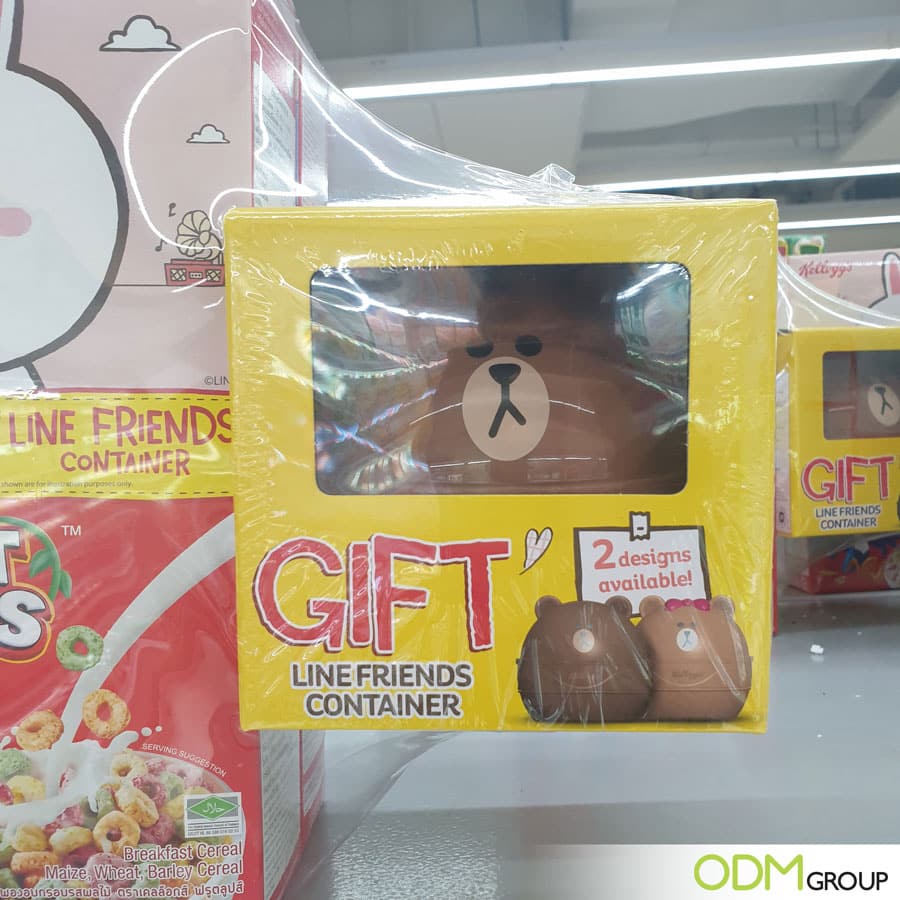
Kellogg’s On Pack Promotion: Custom Cereal Bowl Drives Impulse Buys!
Recently, I came across this on-pack promotion in Singapore by Kellogg's for their various cereals. If shoppers buy 2 boxes of cereal, shoppers can get a Line Friends licensed branded [...]
Gift with Purchase Marketing: How to Advertise with Storage Jars
When it comes to gift with purchase marketing, you want your freebies to be useful to your customers. Personal items and kitchen products make a great complimentary gift with purchase [...]