
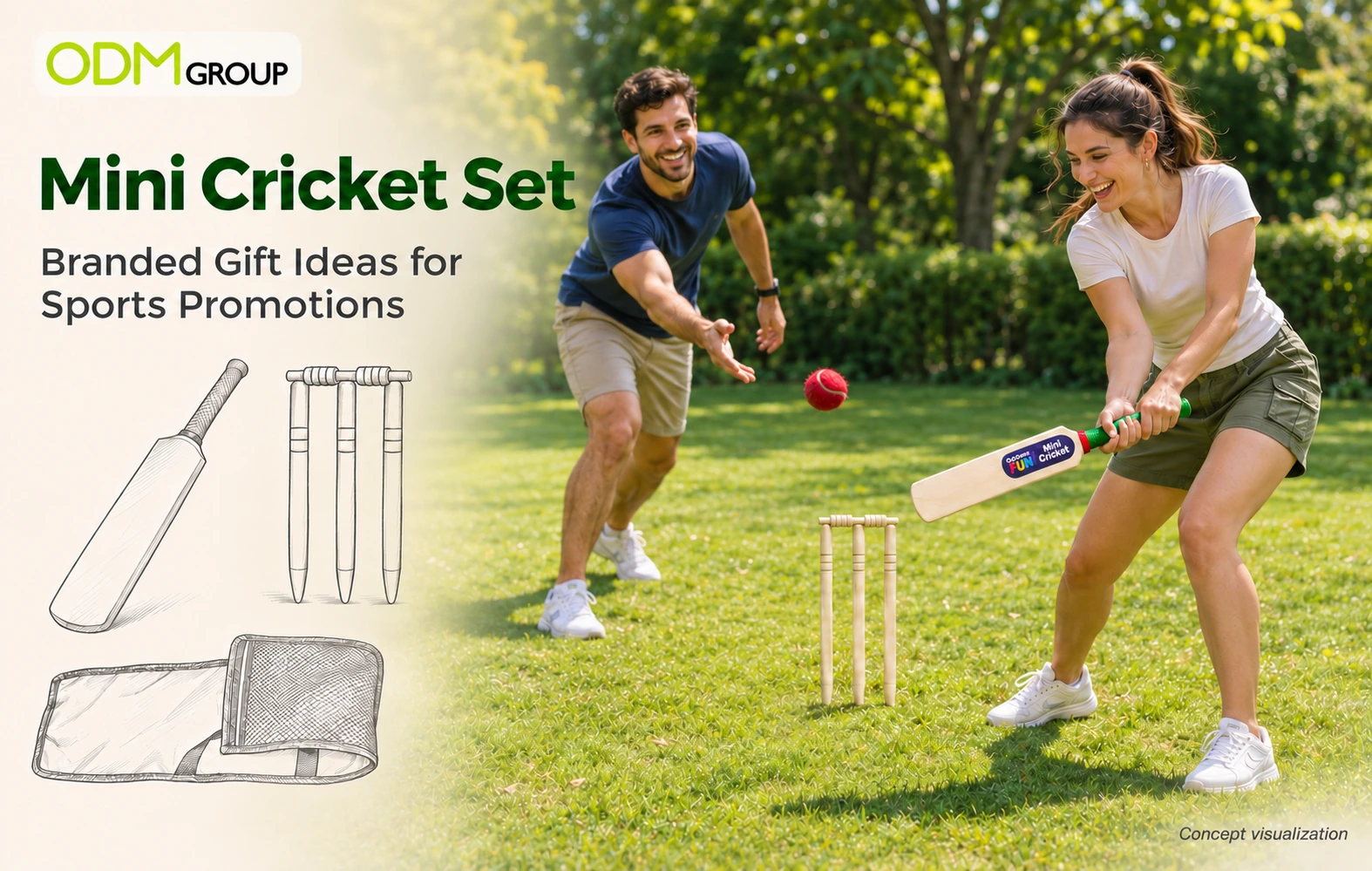
A mini cricket set gives brands a practical way to build a promotion around participation. Combining a small bat, ball, and wickets in a carry bag creates opportunities for gifts with purchase, community activities, and cricket-themed customer rewards.
For brand teams, the key is choosing a format that fits the audience and distribution channel. A set intended for play needs a different design brief from a miniature bat made for display. Size, construction, branding, and packaging should follow that decision.
A Closer Look at the Mini Cricket Set
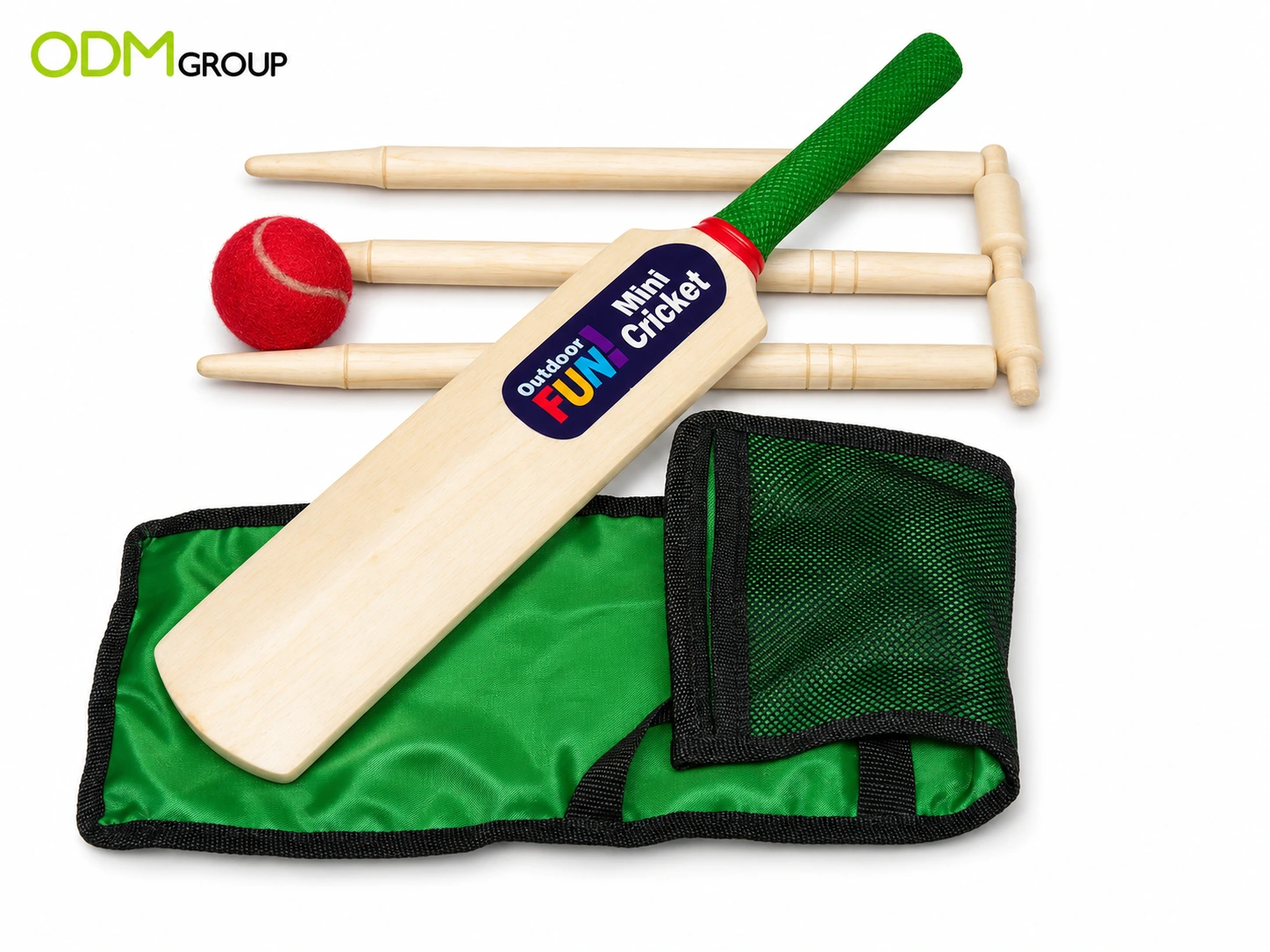
The photographed example includes a pale, wood-look bat with a green grip, a red ball, wicket components, and a green-and-black carry bag. A large label on the bat shows where campaign graphics could sit.
The bag is a useful part of the concept: it keeps the components together and provides another potential branding surface. Exact materials, dimensions, intended age group, and product availability should be confirmed against a current specification and sample.
How Brands Could Use a Mini Cricket Set
Cricket merchandise works best when the activity connects naturally with the campaign. Rather than adding a sports theme to an unrelated giveaway, define what customers will do with the set and how they will receive it.
| Campaign format | Proposed application | Design priority |
|---|---|---|
| Gift with purchase | A family grocery or snack promotion offering a set after a qualifying purchase | Clear redemption instructions and packaging that fits the collection point |
| Community activation | A supervised cricket activity at a family event or club open day | Suitable play space, audience-appropriate components, and easy setup |
| Employee engagement | A company sports day with branded team kits | Consistent graphics and a bag that keeps each set complete |
| Customer reward | A cricket-themed reward for a defined loyalty tier | Presentation, perceived value, and practical delivery dimensions |
These are proposed applications, not documented campaigns for the pictured product. For retail planning, explore how different gift-with-purchase formats connect the reward to the qualifying purchase.
Relevant Ideas
A customized chess set can do more than display a brand—it can invite customers to pause, play, and interact.
With customizable branding options, including logo placement and personalized packaging, you can enhance your brand visibility and leave a lasting impression on your target audience.
Monopoly is a classic board game that involves players moving around a board, buying and trading properties, and aiming to become the wealthiest player by bankrupting opponents.
Design the Branding Around How the Set Is Used
Keep the bat graphics clear
The bat face offers space for a logo, campaign message, or original cricket illustration. Keep the main artwork away from the grip and check its placement on a physical sample. Printed graphics and applied labels should be evaluated for adhesion, rubbing, and appearance during intended use.
Make the carry bag part of the concept
Use the bag for the main campaign identity, especially when the bat is packed away. Coordinate its colors with the handle grip and packaging, and check that every component fits without making the bag difficult to close.
ODM Insight: Review the packed set as carefully as the assembled product. Customers first encounter the gift in its packaging, while event teams handle it in cartons or stacks.
Add a reason to start playing
A short activity card could explain setup and suggest a simple challenge suited to the intended audience. A QR code could link to brand-created instructions or a campaign page. Keep essential use and safety information available on the product or packaging as required.
Choose Construction and Packaging Together
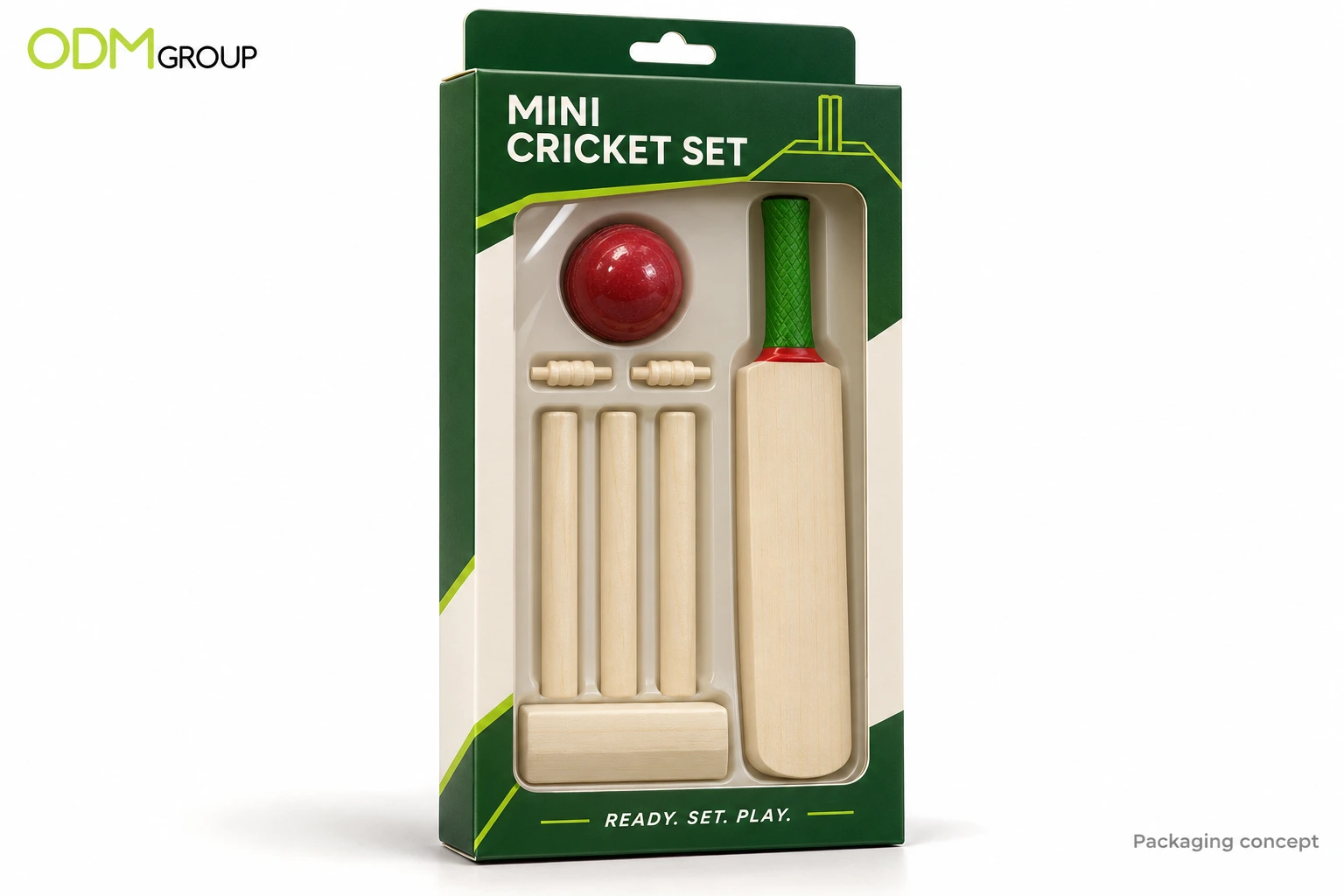
Brief potential material options against the intended use. A wood-based bat concept needs attention to weight, surface finish, and edges; a molded plastic version needs assessment of rigidity, joints, and impact behavior. Ball selection also affects the play experience. Material choice alone does not establish safety or durability.
For packaging, consider a printed sleeve around the carry bag, a compact carton, or a presentation box for a higher-value reward. Compare the packed dimensions, component retention, graphics, and storage requirements before selecting a format.
ODM Insight: Start with the distribution method. A gift handed over at a supermarket counter has different space constraints from a reward shipped individually to customers.
What to Confirm Before Launch
Build the project brief around the audience, launch market, quantity, budget, delivery date, and proposed redemption method. Ask for confirmation of:
- Product specification: dimensions, weight, materials, component count, and intended use.
- Sampling: an assembled and packed sample showing the proposed graphics and finish.
- Cost variables: existing versus custom components, decoration, packaging, testing, and freight.
- Minimum order quantity: how requirements change with custom colors, tooling, and packaging.
- Schedule: design approval, sampling, testing, production, inspection, transit, and local distribution.
A miniature format does not automatically make a product suitable for children. Establish the intended age group and review the ball, detachable components, edges, grips, and packaging with a qualified testing partner for the destination market. For US campaigns, the CPSC’s toy safety and small-parts guidance is a useful starting point.
Planning Around a Cricket World Cup
Separate a general cricket theme from an officially licensed tournament promotion. The ICC’s brand and content protection guidelines restrict unauthorized commercial use of its names and marks. Confirm the rights and approvals for the specific event before developing tournament-linked merchandise or advertising.
For a brand-owned cricket concept, begin with original artwork and your own identity, and review the complete execution before release. Team crests, player imagery, and other third-party assets also need a rights check.
Develop Your Cricket Merchandise Concept with ODM
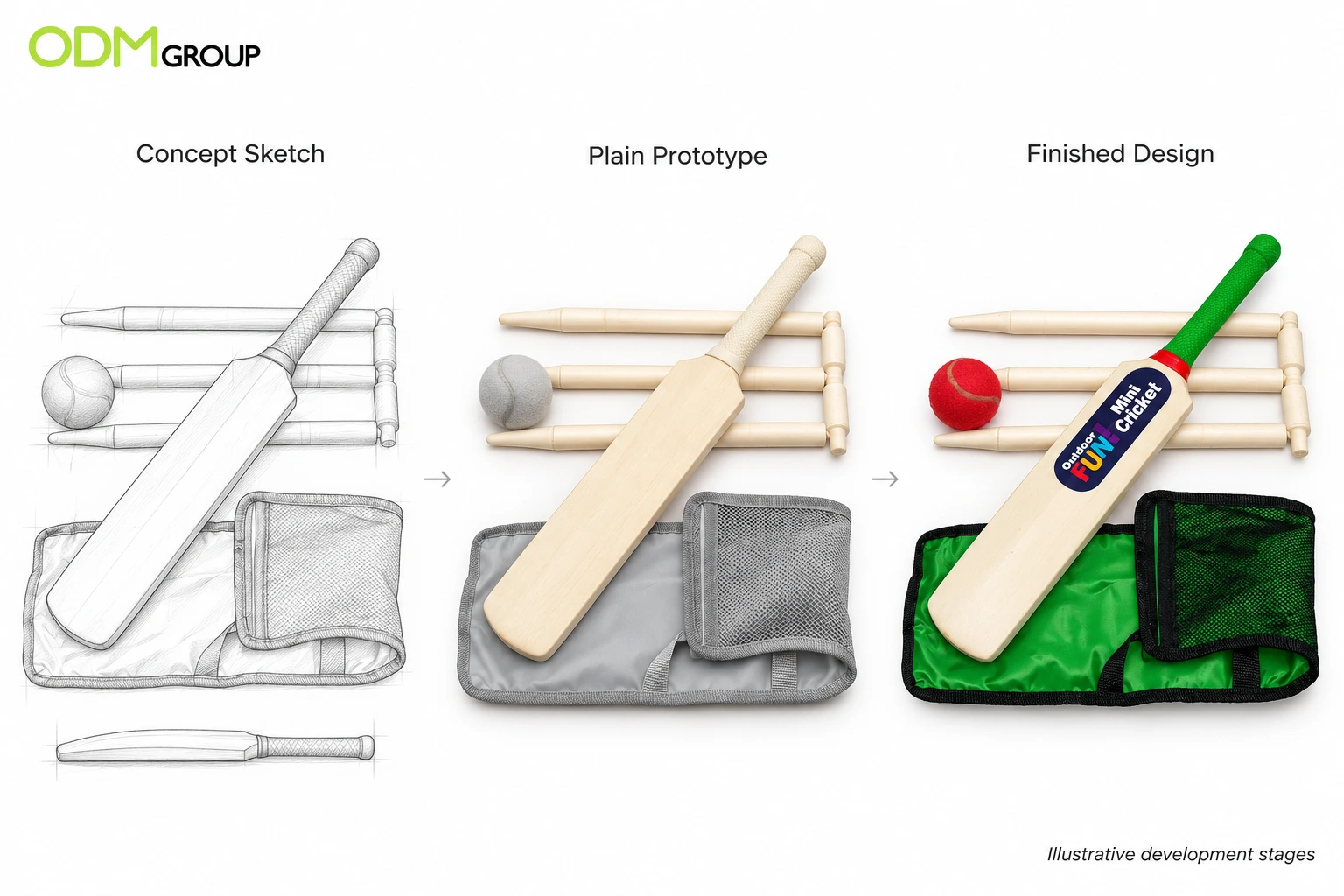
ODM develops creative merchandise ideas around campaign objectives, audience needs, and brand identity. For a mini cricket set, the concept could bring together bat graphics, bag design, packaging, and an activity mechanic.
Starting with product concept sketches helps teams compare layouts before moving to a physical sample. You can also explore broader sports merchandise ideas when deciding whether a cricket set is the best fit.
Share your cricket campaign brief with ODM, including your target audience, launch market, quantity, budget, and required delivery date, to discuss a relevant merchandise concept.
More Product Ideas


Frequently Asked Questions
Can we customize only the bat and keep the other components standard?
That is a useful option to explore. Ask which existing components are available and whether the proposed bat decoration affects minimum quantities, testing, or the approval schedule.
Should the logo go on the bat or the bag?
Use the bat for visibility during play and the bag for visibility when the set is carried or stored. If budget permits only one decoration area, choose it around how recipients will encounter the gift most often.
How can we make the set feel more valuable without adding more items?
Focus on coordinated colors, clear graphics, a well-fitting bag, and tidy presentation. A useful instruction card can also make the gift feel more complete without adding another play component.
Can a mini cricket set be offered on-pack?
Assess the packed size and weight against the main product first. If attachment creates an awkward or unstable pack, consider a separate redemption gift or a shelf-adjacent promotional display.
What should we include in the first design brief?
Provide the recipient profile, intended use, destination market, campaign mechanic, target quantity, budget, deadline, artwork, and any licensed rights. Include retailer packaging limits if the gift will be distributed in-store.
What to Read Next?

4 Practical Custom Sports Products That Boost Brand Visibility
Sports equipment is a popular choice of marketing used [...]

Motorsport Merchandise Ideas That Drive Brand Performance
Motorsport merchandise ideas are no longer just about souvenir [...]
Custom Backpacks with Logo for Promotional Campaigns
Promotional products work best when they are both practical [...]

Mastering the Swing: Comprehensive Guide to Custom Golf Gloves
Looking for a niche yet impactful promotional product that [...]

How to Choose the Perfect Gift for a 10-Year-Old Boy Who Loves Sports: A Guide for Parents and Relatives
Choosing the perfect gift is never a simple task. [...]


The Power of Sports Marketing: How to Use Sports to Boost Your Brand, Product, or Service
Do you love sports? Do you want to grow your [...]