
A car tissue holder can be more than a practical accessory. With a distinctive character design and additional storage, it can also become a memorable promotional gift that reflects a brand’s personality.
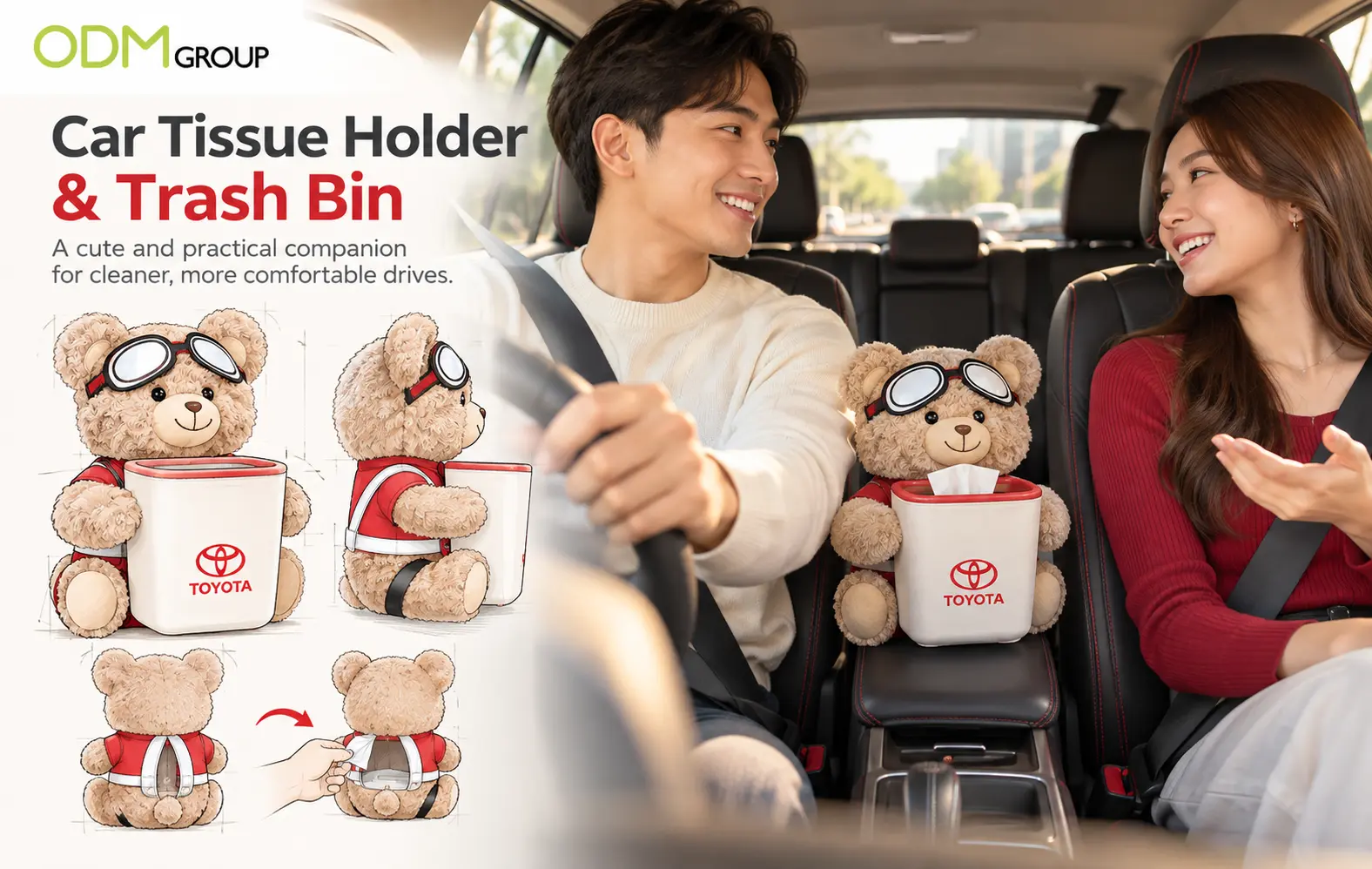
This plush car tissue holder features a teddy bear character with a front container for tissues or small pieces of rubbish, depending on the intended use. An opening at the back lets you pull out tissues, combining everyday convenience with a playful look.
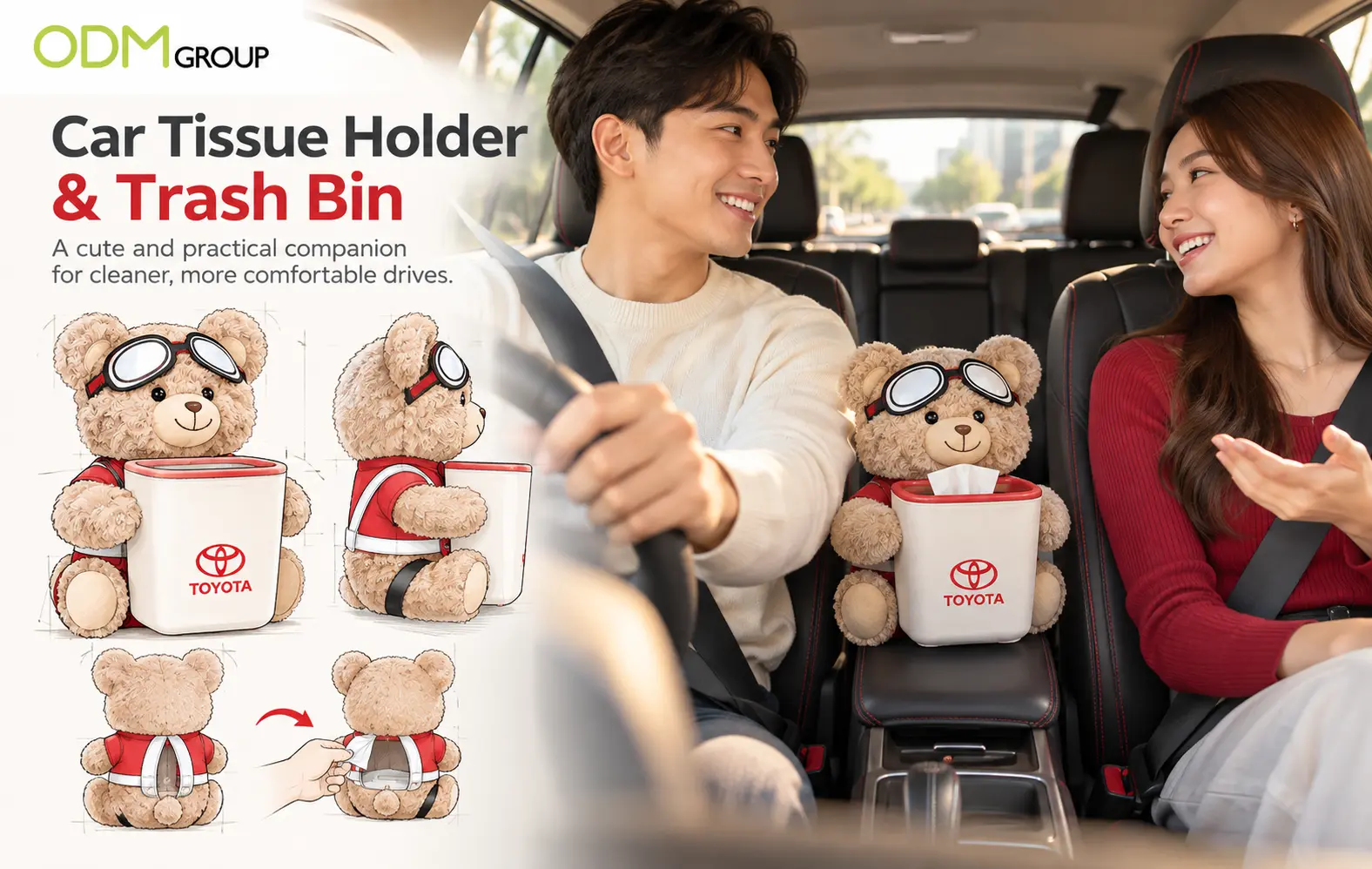
For automotive brands, dealerships and businesses planning customer appreciation campaigns, this design offers an alternative to conventional car accessories. With the right materials, custom details and packaging, the concept could be developed into a branded gift that balances practical use with character-led design.
What Makes This Car Tissue Holder Different?
Traditional car tissue holders tend to prioritise storage and accessibility. This design adds a character element, giving the product a decorative role alongside its practical purpose.
The teddy bear sits behind a container positioned at the front. Tissues can be dispensed through an opening at the back, while the front compartment provides space for tissues or small pieces of waste, depending on how the product is used.
Several features make the concept worth exploring for custom product development:
- Character-led design: The teddy bear gives the accessory a friendly appearance that differs from standard automotive storage products.
- Tissue-dispensing function: An opening at the back allows tissues to be pulled out without removing them from the holder.
- Additional storage: The front container provides space for small items or rubbish, subject to the final product specification.
- Soft exterior: The plush covering creates a tactile finish and offers opportunities to develop different characters, colours and clothing details.
- Custom branding potential: Embroidery, colour changes and packaging variations could help adapt the concept to a brand’s visual identity, depending on manufacturer capabilities.
The value of this design is not limited to its appearance. It demonstrates how a familiar product category can be reworked through material choices, character design and the combination of functions.
Why Consider a Plush Car Tissue Holder for Promotional Merchandise?
Promotional products are most useful when their design suits the audience and gives people a reason to keep them. For automotive businesses, this means looking beyond logo placement and considering how a product fits into customers’ everyday routines.
A plush car tissue holder offers a different approach to automotive merchandise. Instead of a purely functional object, it combines utility with a character that could be developed around a brand or campaign.
1. Develop a More Memorable Customer Gift
A conventional tissue box serves its purpose, but a character-based design adds another dimension. The teddy bear can make the product feel more like a lifestyle accessory than a standard car essential.
This could appeal to car dealerships, vehicle leasing businesses, and automotive service providers looking for customer appreciation gifts. A playful design may also suit campaigns aimed at families or customers who respond well to character-based merchandise.
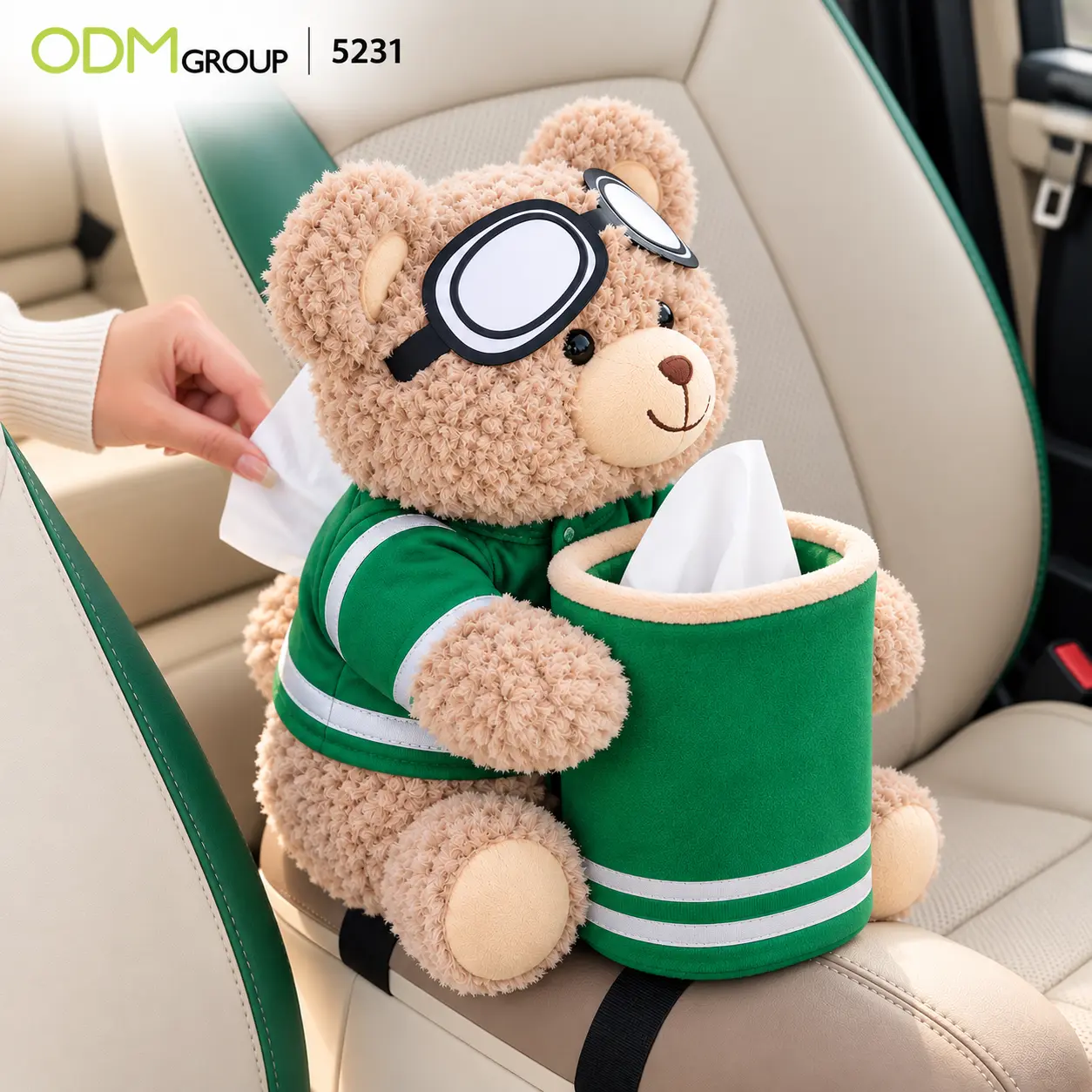
The design should still reflect the intended audience. A colourful plush character may suit a family-oriented campaign, while a more restrained design could be better aligned with a premium automotive brand.
The objective is to create a product that feels appropriate to the brand, rather than choosing an unusual shape simply to stand out.
2. Combine Practicality With Brand Personality
Useful merchandise can give a brand repeated opportunities to remain visible. A car tissue holder has a clear purpose, while its character design creates additional possibilities for visual branding.
For example, a brand could explore a custom character wearing a miniature version of its uniform, using colours from its identity or incorporating a campaign-specific design detail.
The branding does not need to dominate the product. Subtle embroidery, a custom clothing detail or coordinated packaging may be enough to connect the item to the campaign.
For product developers, this is an important distinction. Effective customisation considers how branding and product design work together, rather than treating the product as a blank surface for a logo.
3. Explore New Ideas for Automotive Promotional Products
Automotive promotional products can include everything from keyrings and travel accessories to practical items used inside a vehicle. A character-led tissue holder gives buyers another option when conventional merchandise does not match the campaign brief.
Potential applications include:
- Customer appreciation gifts at vehicle handovers
- Gifts for dealership loyalty programmes
- Promotional merchandise for automotive service centres
- Seasonal gifts for vehicle leasing or insurance customers
- Gift sets for family-oriented automotive campaigns
These are possible applications rather than proven campaign outcomes. Suitability will depend on the target audience, budget, quantity and the product’s final design.
4. Create a Distinctive Addition to a Branded Gift Set
A car tissue holder could also be developed as part of a wider customer gift set rather than used as a standalone item.
For example, a business might explore a coordinated set of vehicle accessories packaged for new customers or a seasonal campaign. The tissue holder could be the main character-led item, with other products selected based on the intended audience and budget.
A gift set also creates opportunities to coordinate colours, packaging and messaging across several products. However, buyers should consider the package’s overall size and cost, and whether every item adds meaningful value.
Car Tissue Holder With Trash Can: Design and Functional Considerations
The combination of tissue dispensing and rubbish storage is a key part of this product concept. A car tissue holder with trash can functionality may help keep small pieces of waste contained while keeping tissues accessible.
However, the two functions need to work together. A visually appealing design will have limited practical value if tissues are difficult to remove or the container is awkward to empty.
Before developing a custom version, buyers should consider several details.
Tissue Access
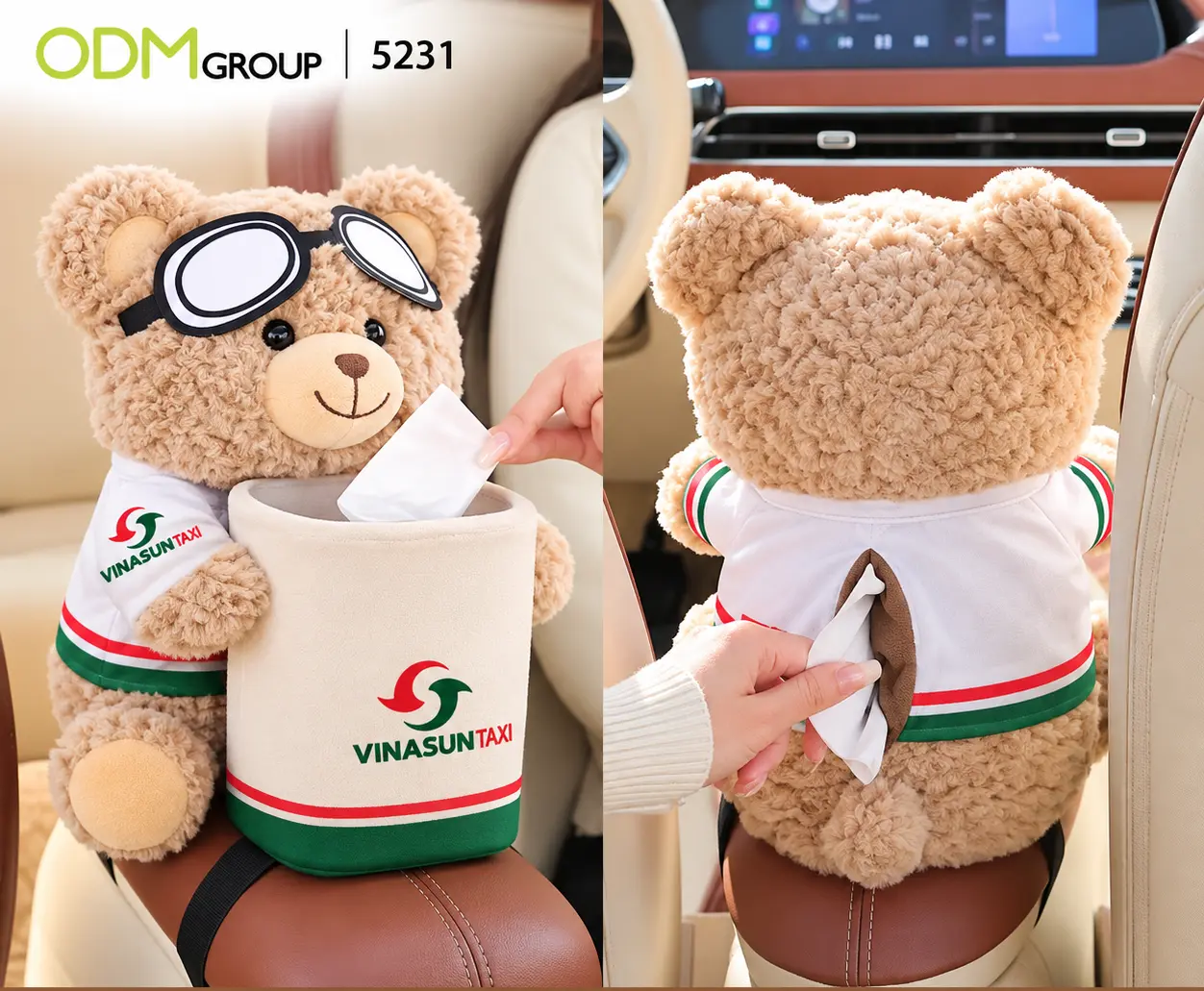
The tissue opening should accommodate the intended tissue pack and allow individual tissues to be pulled out with minimal effort.
The opening’s position matters, too. Buyers should assess whether it remains accessible when the product is placed in its intended position inside the vehicle.
Waste Compartment Design
The front container should be assessed for its capacity, stability and ease of cleaning. Buyers should confirm whether the inner section is removable and whether the material is suitable for collecting the intended type of waste.
The product brief should also clarify whether the container is primarily intended for used tissues, small wrappers or other lightweight rubbish. This helps establish realistic requirements for the final design.
Size and Placement
A plush character can add visual interest, but it also occupies space. The overall dimensions need to suit the intended location inside the vehicle.
The development team should consider the product’s width, height, depth and stability, including whether it can be positioned without interfering with the driver’s view, controls, pedals or other essential vehicle functions.
Cleaning and Maintenance
The combination of fabric and a storage container introduces different cleaning requirements. The plush exterior and inner compartment should be assessed separately to determine how they can be maintained.
If the inner container is removable, its design should allow convenient emptying and cleaning. Care instructions should be established for the finished product rather than assumed from its appearance.
Custom Car Accessories: How Can Brands Adapt the Design?
The reference product provides a starting point for developing custom car accessories, but a branded version should be designed around the campaign’s objectives and manufacturing requirements.
Several elements could be explored during product development.
Character and Shape
The teddy bear could be retained, adapted or used as inspiration for a different character. A brand with an existing mascot may want to explore whether its character can be translated into a plush accessory.
Alternative animals, clothing details or character proportions could also be considered. The design should remain recognisable and practical, with particular attention to how the tissue holder and storage compartment fit together.
Colors and Branding
Colour selection is one way to connect the product to a brand’s identity. Buyers could explore alternative fabric colours, clothing colours and decorative details.
Possible branding methods include embroidery, printed details, woven labels and custom packaging. The available options will depend on the fabric, surface area, design complexity and supplier capabilities.
The final specification should establish the logo’s placement, size and production method before sampling begins.
Materials and Construction
The reference images show a plush exterior and a filled character, but they do not establish the exact fabric composition, filling material or inner-container specification.
These details should be confirmed with the manufacturer. Buyers should also review stitching, seam strength, the attachment of decorative components and the durability of the tissue-dispensing opening.
Material selection should account for the intended use, appearance, cleaning requirements and target cost.
Packaging
Packaging can help turn a practical accessory into a more considered promotional gift. A custom box, printed sleeve or branded insert could communicate the campaign message while protecting the product during storage and transport.
For a character-based product, the packaging could introduce the design story or explain the tissue-dispensing and storage functions. The final format should be chosen according to the product’s dimensions, shipping requirements and budget.
How ODM Group Can Help Develop Branded Automotive Gifts
Turning a product reference into a custom promotional item requires decisions across design, materials, functionality, branding and manufacturing.
ODM Group works with brands on product development, helping bring ideas from concept towards production. Depending on the project requirements, the process can involve design development, prototyping, packaging and manufacturing coordination.
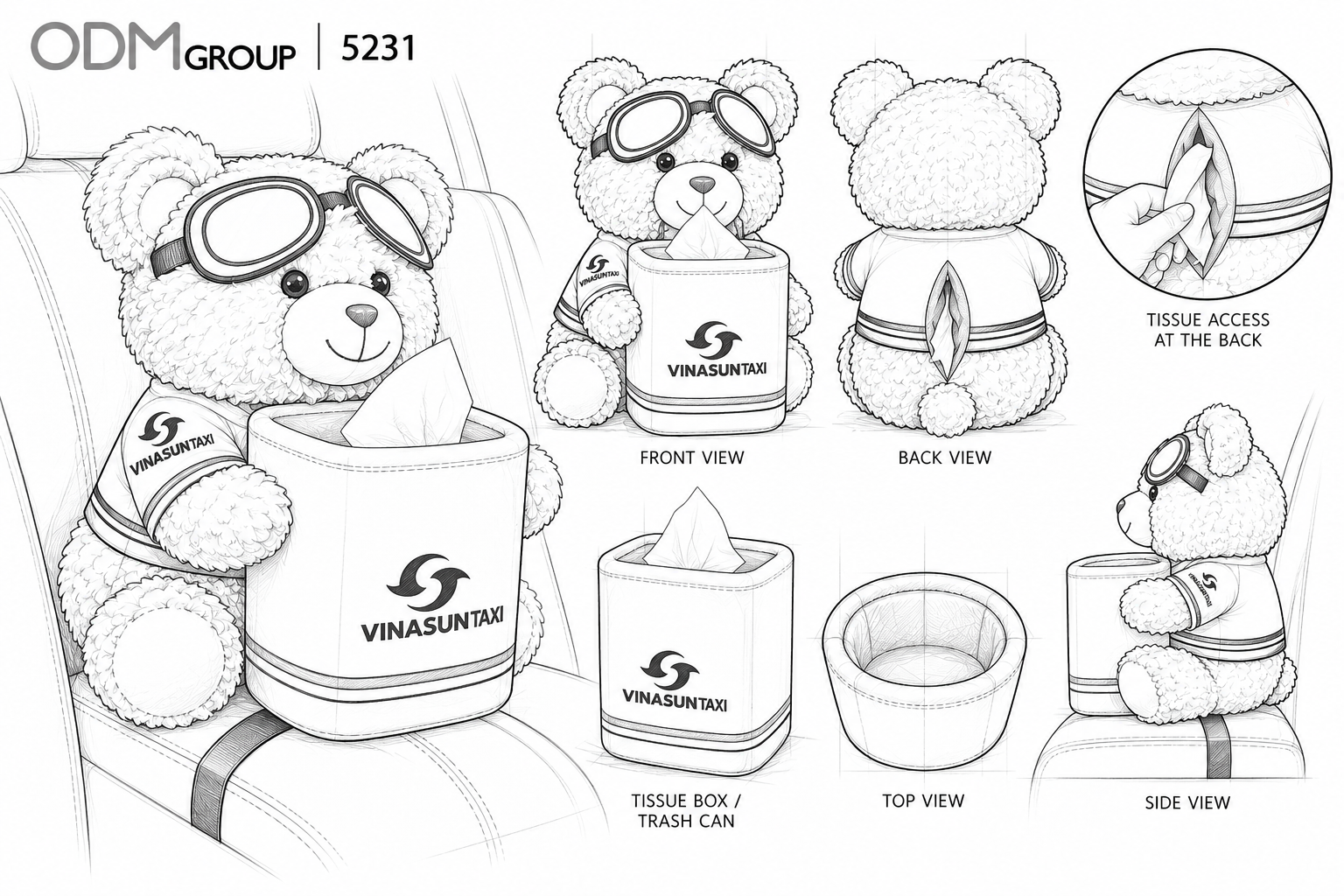
For a car tissue holder, development could begin by defining the target audience, intended use, budget and branding objectives. From there, the design could be reviewed to determine how the character, tissue opening and storage compartment should work together.
A prototype can then help buyers assess the product’s dimensions, construction and functionality before finalising the specification.
This approach is useful when the reference product needs to be adapted to meet a particular campaign brief. Rather than treating customisation as a final branding step, it makes design and function part of the development process from the beginning.
Is a Car Tissue Holder Right for Your Brand?
A car tissue holder combines everyday practicality with a distinctive design, making it an interesting option for automotive promotional products. With custom colours, character designs and branding, it can be developed into a thoughtful customer gift that reflects your brand identity.
Looking to create custom automotive merchandise? Contact ODM Group to explore product development options tailored to your brand.
Frequently Asked Questions
What makes a plush car tissue holder different from a standard tissue box?
A plush car tissue holder combines tissue storage with a soft, character-led design. This gives brands more opportunities to develop distinctive automotive merchandise that reflects a campaign theme or brand personality.
Which businesses can use branded car tissue holders?
Car dealerships, automotive service centers, vehicle leasing companies and insurance providers could consider branded car tissue holders for customer appreciation gifts, loyalty programs and promotional campaigns.
What should buyers consider when sourcing a custom car tissue holder?
Buyers should check the product's dimensions, materials, tissue capacity, storage function, branding options, minimum order quantity and production lead time. They should also assess stability and placement to ensure the accessory is suitable for use inside a vehicle.
Can ODM Group help develop custom automotive promotional products?
ODM Group supports product development for brands, from concept development and prototyping to packaging and manufacturing coordination. The process depends on the project brief, product requirements and production specifications.
Latest Blogs
Car Tissue Holder: A Creative Automotive Promotional Gift
A car tissue holder can be more than a [...]
6 Tips for a Sustainable and Functional Promotional Travel Kit
A promotional travel kit combines practical travel essentials with [...]
Promotional Products for Pets: Ideas Inspired by SmartHeart Pet’s Homie
During a visit to Vietnam, the ODM team came [...]
15 Promotional Products for Universities to Celebrate World Students’ Day
Promotional products for universities work best when they support [...]
Promotional Beer Bottle Opener: A Bottle-Shaped Gift for Brewery Campaigns
bottle shaped bottle opener, automatic bottle opener, promotional product for beer, beer promos
3D Memo Pads: Sculptural Designs for Brand Campaigns
3D memo pads combine an everyday office product with [...]