
Plastic toys don’t get filed away. They go on desks, shelves and display cases. People keep them, collect them and show them off. But the wrong material ruins the result. A brittle figurine cracks. A soft one loses its detail. Changing material after the mould is cut costs real money. This guide helps you choose before you commit. You’ll see six plastic materials used in toy and product manufacturing. You’ll also find five plastic toy ideas for your next promotional campaign.
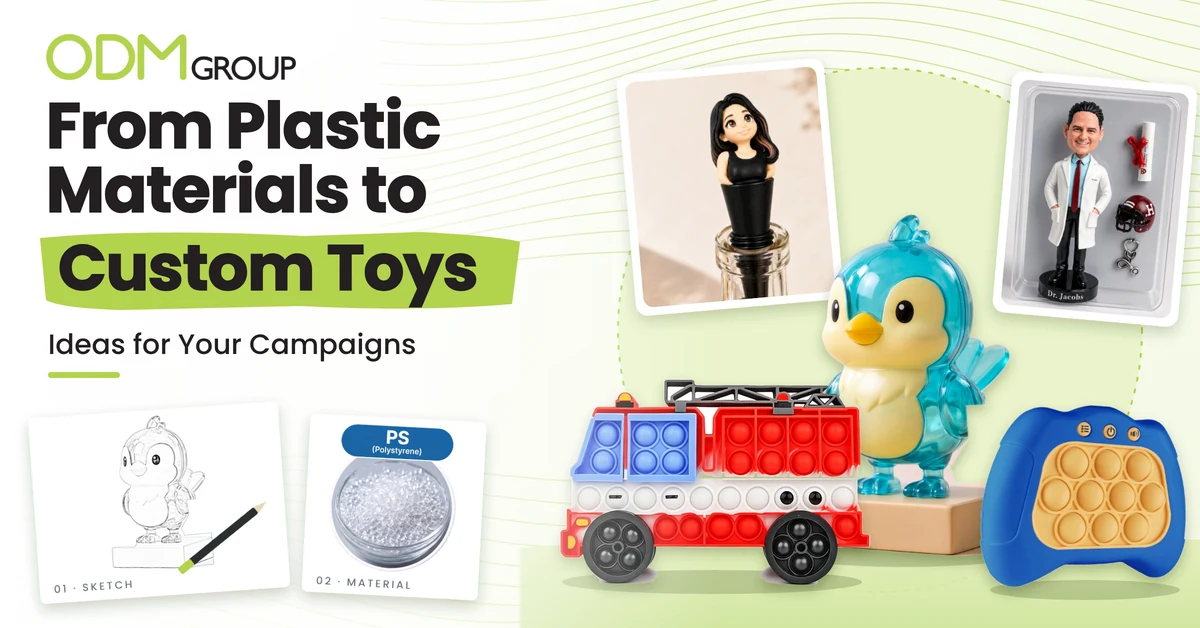
Table of Contents
6 Types of Plastic Materials Used in Toy and Product Manufacturing
Flexibility, impact resistance, weight, surface finish and production cost all shape the final result. Here are six plastic materials commonly used in promotional product and consumer goods manufacturing, and where each can fit in plastic toys projects.
1. Polyethylene (PE)
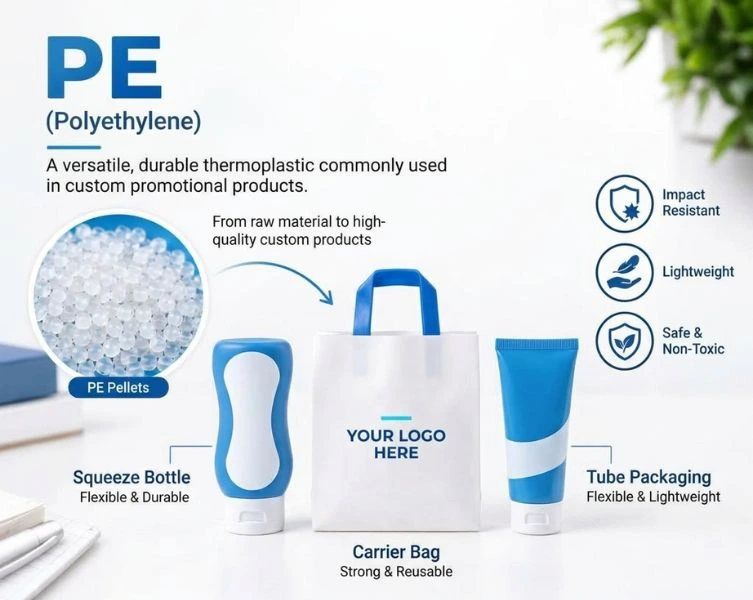
Polyethylene (PE) is light, flexible and resistant to moisture and chemicals. Depending on its density, it ranges from soft and flexible to more rigid. Selected PE grades suit flexible components, soft accessories and certain toy parts.
Key advantages:
- Lightweight and flexible.
- Good resistance to moisture and chemicals.
- High impact strength in suitable grades.
- Cost-effective and widely available.
Potential applications: flexible toy components, lightweight accessories, toy packaging, and product containers.
2. Polypropylene (PP)
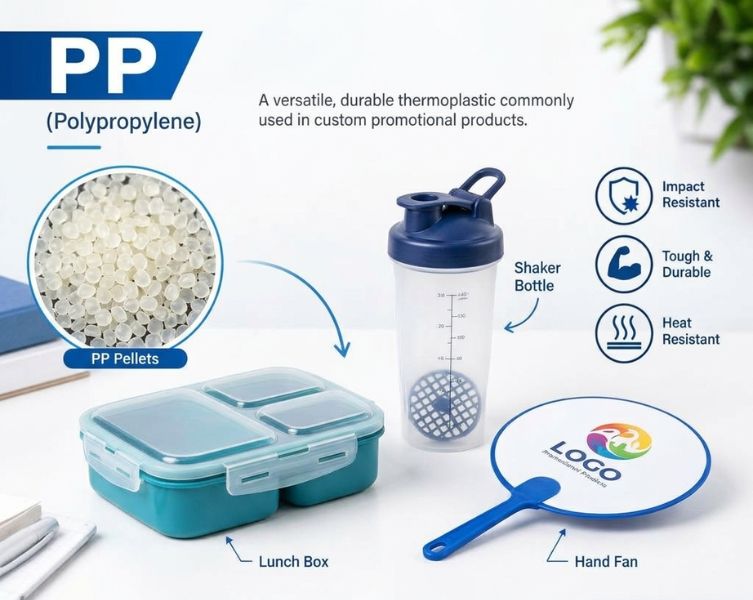
Polypropylene (PP) is durable, light and resistant to fatigue. It survives repeated bending without easily losing its shape. You find it in containers, packaging and household goods. In custom toy projects, it suits lightweight components, accessories and parts that people handle often.
Key advantages:
- Lightweight and durable.
- Good resistance to moisture and chemicals.
- Handles repeated flexing.
- Good chemical and heat resistance compared with some other common plastics.
Potential applications: toy accessories, lightweight components, containers, and certain interactive toy elements.
3. Polystyrene (PS)
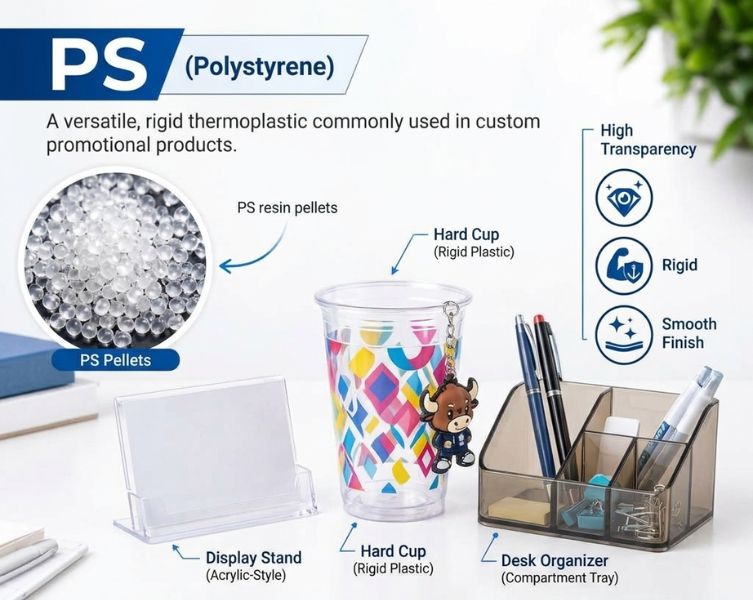
Polystyrene (PS) is light, affordable and easy to mould. It comes in clear and solid colours. It also takes detailed printing well, which suits decorative pieces. Conventional PS is brittle, though. It can crack on impact, so avoid it for products that need flexibility or heavy-duty use.
Key advantages:
- Lightweight and affordable.
- Available in transparent and coloured forms.
- Easy to mould into different shapes.
- Suitable for detailed printing and decorative designs.
Potential applications: decorative toy components, display accessories, miniature product parts, and clear packaging.
4. Polyvinyl Chloride (PVC)
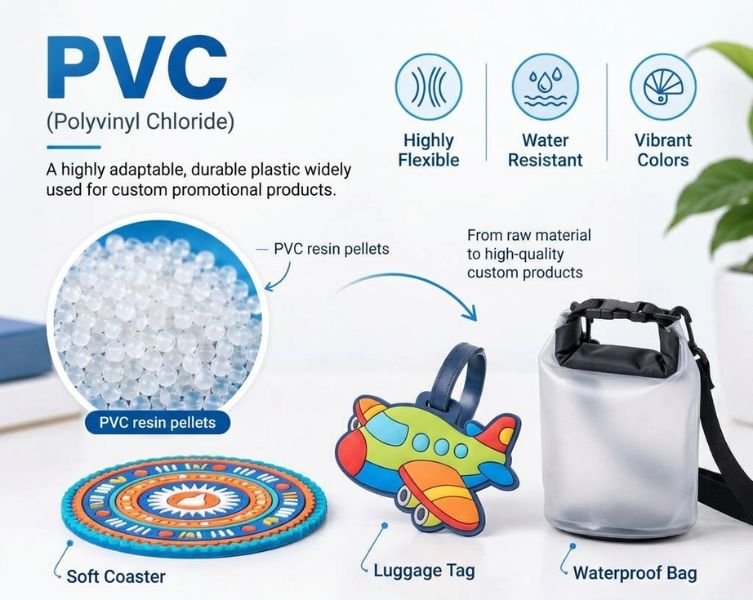
Polyvinyl chloride (PVC) can be made rigid or flexible. That lets manufacturers vary texture, shape and structure to suit the design. Flexible PVC works for character accessories and soft components. Rigid PVC suits some decorative or structural parts.
For children’s products, assess the formulation, additives and chemical safety requirements before production.
Key advantages:
- Available in rigid and flexible formulations.
- Adaptable to different shapes and designs.
- Good durability in suitable formulations.
- Supports various colours and finishing options.
Potential applications: flexible character accessories, decorative toy components, novelty merchandise, and certain figurine designs.
5. Acrylonitrile Butadiene Styrene (ABS)
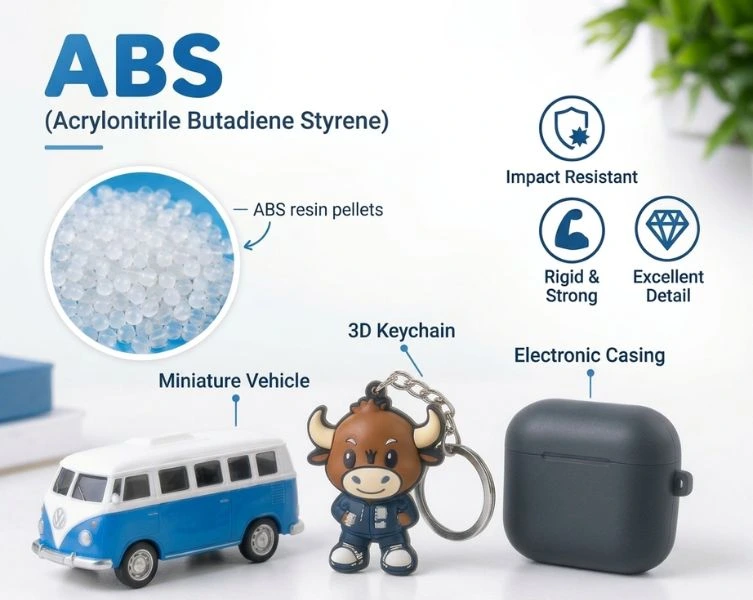
Acrylonitrile butadiene styrene (ABS) is strong, tough and impact-resistant. It holds a solid structure, precise shapes and fine surface detail. Its smooth surface takes colour, printing and decorative finishes well. That makes ABS a suitable option for many concepts of custom plastic toys, especially rigid figurines and character merchandise.
Key advantages:
- Good impact resistance and structural strength.
- Suitable for detailed and complex moulded designs.
- Smooth surface for printing and decoration.
- Available in a wide range of colours.
Potential applications: character figurines, collectible toys, miniature models, and rigid toy components.
6. Polyethylene Terephthalate (PET)
Polyethylene terephthalate (PET) is strong, light and transparent. It is widely used in packaging, beverage containers and consumer products.
It is not usually the first choice for solid toy bodies. PET does play an important role in presenting and protecting plastic toys, especially collectibles. Transparent PET packaging, for example, lets customers see a figurine while protecting it in storage and distribution.
Key advantages:
- Good clarity and transparency.
- Lightweight with good strength.
- Suitable for protective and display packaging.
- Recyclable where appropriate collection and processing facilities are available.
Potential applications: clear toy packaging, blister packs, transparent display components, and protective product containers.
How to Select the Right Plastic Material for Your Project
Each material has trade-offs. The right one depends on your product. Ask these questions before you finalise:
- Design requirements: Does the product need a rigid structure, flexible components, or a transparent finish?
- Durability: Will the toy be handled frequently, displayed as a collectible, or used as an interactive accessory?
- Manufacturing requirements: Can the material accommodate the desired shape, level of detail, and production method?
- Budget: Consider material costs, mould development, finishing, and expected production quantities.
- Product safety: For toys intended for children, assess age suitability, small-part hazards, material composition, and relevant safety standards in the target market.
Choosing the right material at the start protects both appearance and function. It also keeps production on track.
5 Custom Plastic Toy Ideas for Your Next Promotional Campaign
Plastic toys are not only for play. Businesses use them as customised promotional merchandise. A brand mascot, product concept or campaign character becomes something customers can hold, interact with and collect.
Here are five ideas of plastic toys worth considering.
1. Custom plastic figurines
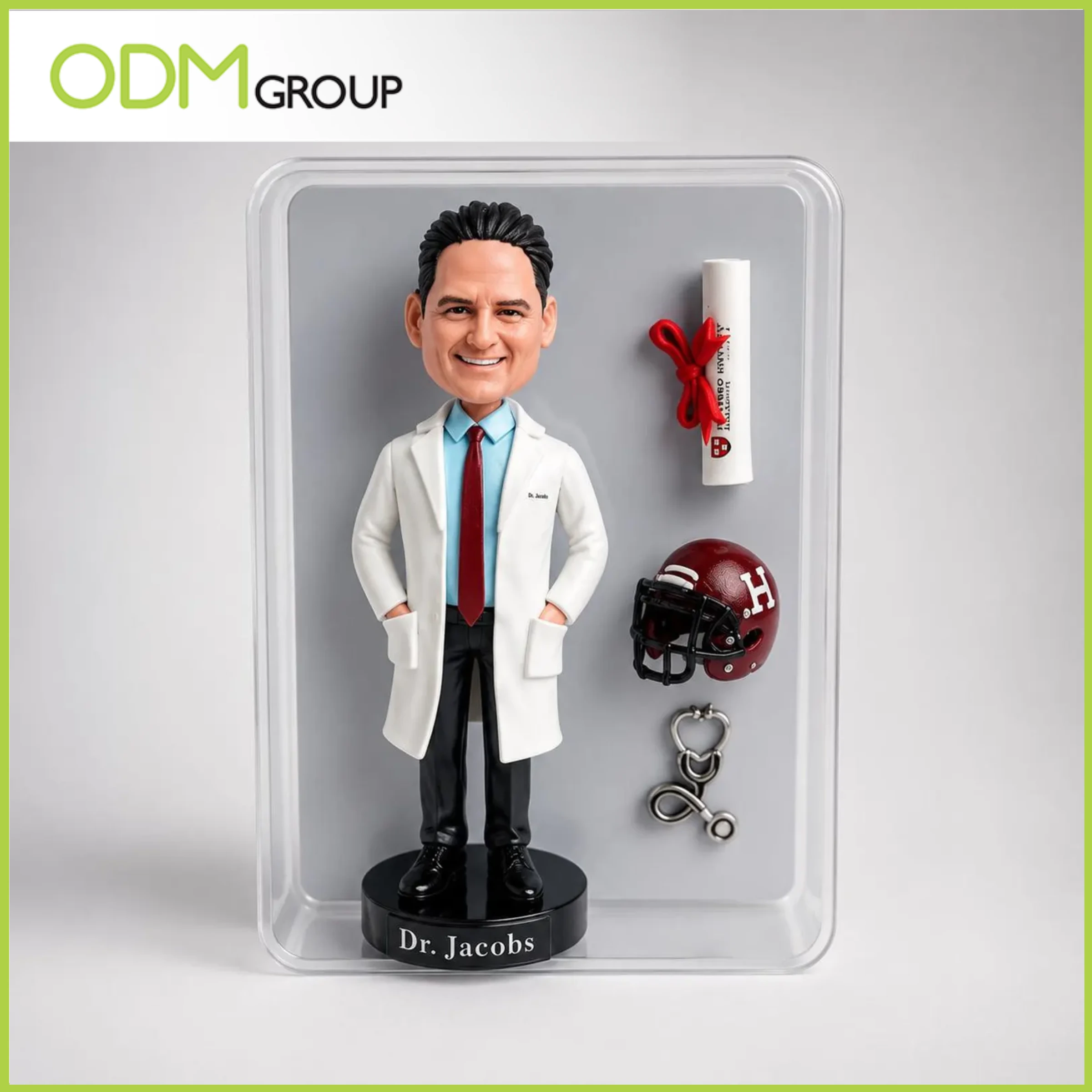
Custom plastic figurines are the most recognisable promotional toy. They can show brand mascots, fictional characters, animals, celebrities or designs inspired by a campaign. You control the size, colours, facial expressions, poses, clothing and accessories.
A food and beverage brand could make miniature characters for each product in its range.
An entertainment company could release collectible figures of its campaign characters.
Customers often want the full set, which encourages repeat engagement with your brand.
Marketing opportunities:
- Create limited-edition collectible series.
- Offer figurines as gifts with purchase (GWP).
- Develop character collections for seasonal campaigns.
- Use branded figurines as event giveaways or retail promotions.
Because customers may want to collect multiple designs, figurines can also encourage repeat engagement with a brand.
2. Capsule toys
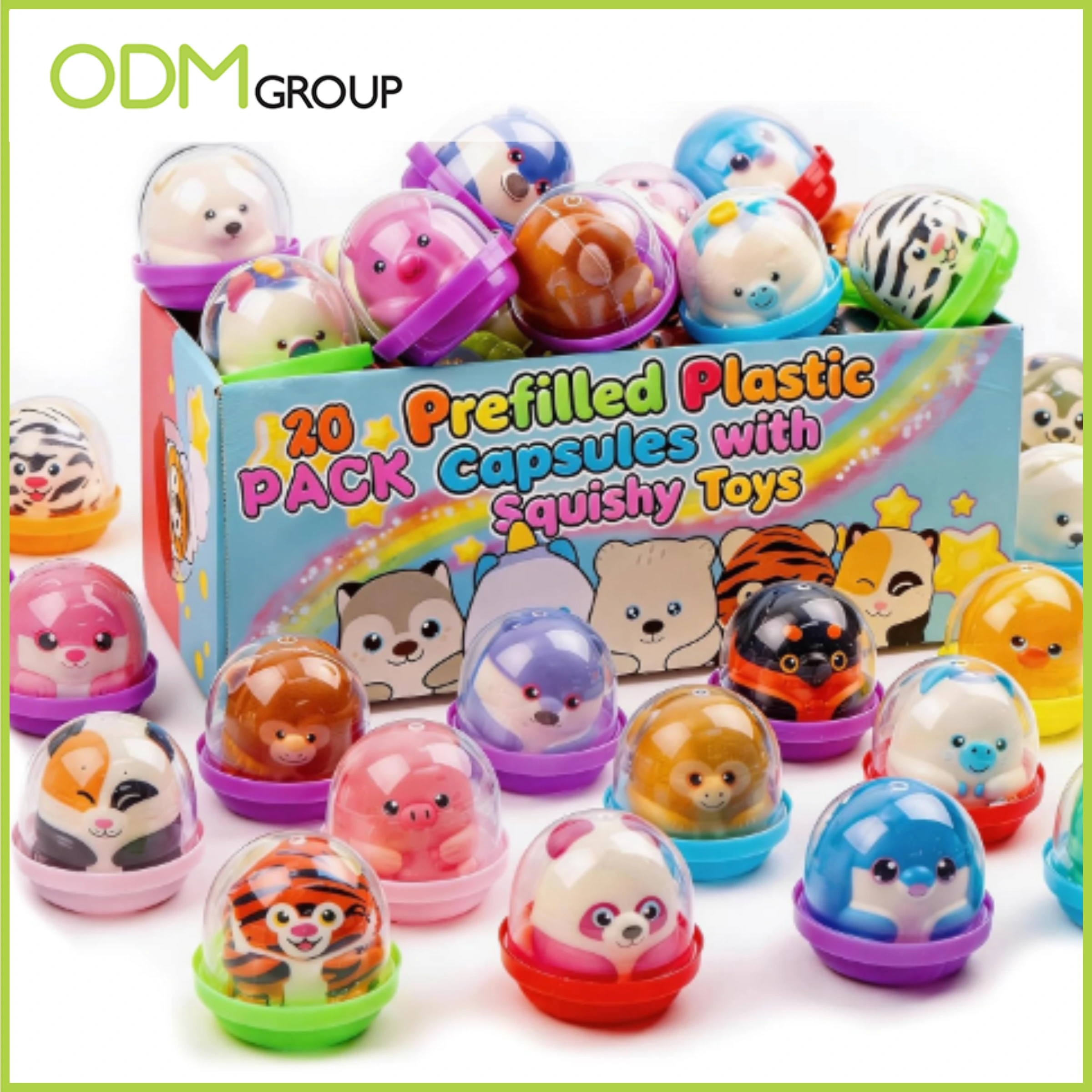
Capsule toys add surprise. Brands distribute them through vending machines, retail promotions or special campaigns. Each capsule holds a small toy or collectible. You can fill them with miniature characters, brand mascots, themed accessories or exclusive designs.
A retail brand, for example, could launch five miniature characters, one per capsule. Customers then collect the full series. Capsule toys work best when the designs share a recognisable theme or collection.
Marketing opportunities:
- Create surprise-based promotional campaigns.
- Encourage repeat purchases through collectible series.
- Introduce exclusive designs for special events.
- Increase customer engagement through limited-edition releases.
Capsule toys work particularly well when the designs are part of a recognisable theme or collection.
3. Custom bottle toppers
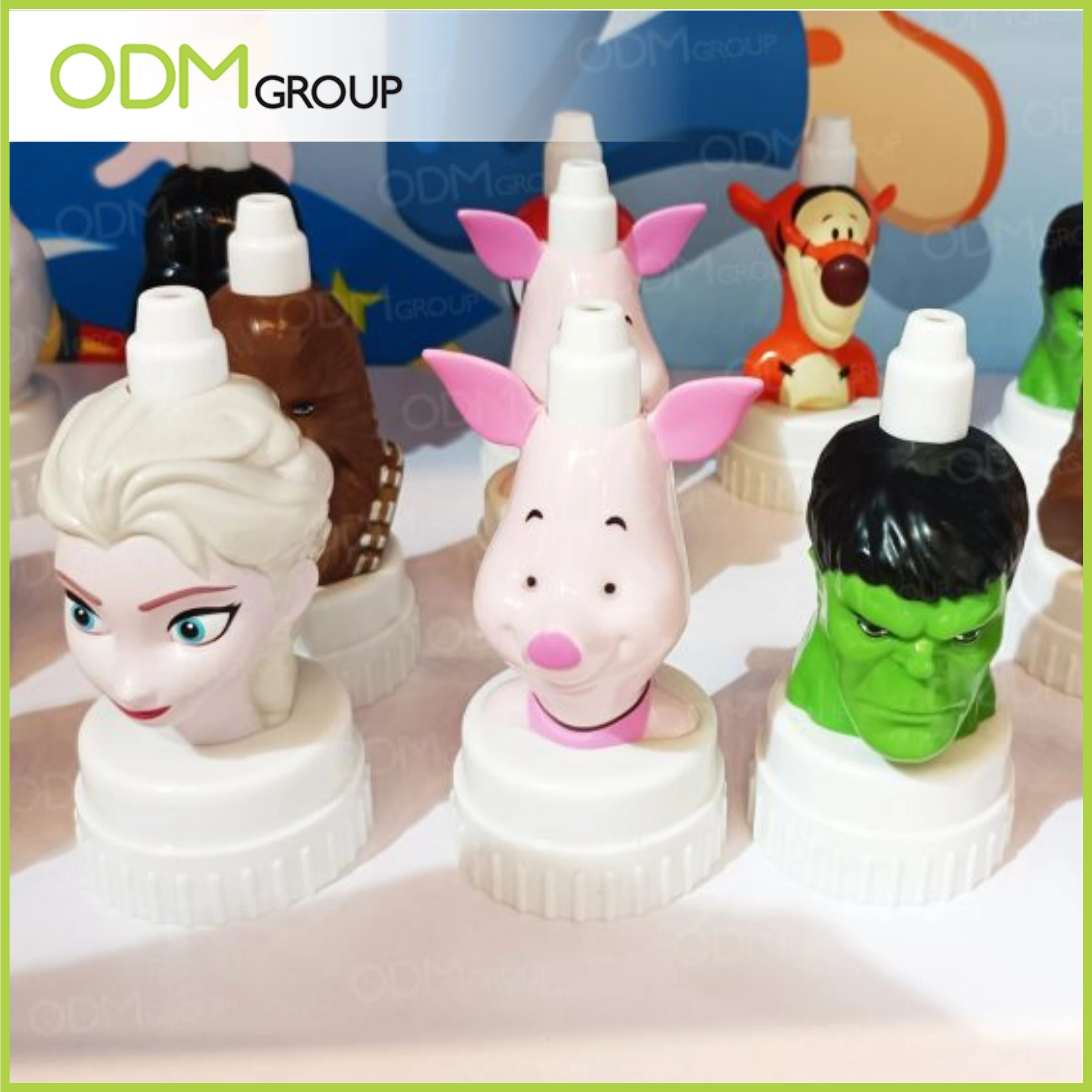
Bottle toppers make ordinary beverage packaging stand out. A customised plastic character or decorative piece on the cap adds a feature that draws attention. Base the design on a brand mascot, product flavour, campaign character or seasonal theme.
A beverage company could give each flavour its own character topper. Customers collect different designs while enjoying their favourite drinks. This idea ties the promotional item directly to the product, which suits food and beverage marketing.
Marketing opportunities:
- Add value to on-pack promotions.
- Differentiate products on retail shelves.
- Introduce collectible characters across product variations.
- Create seasonal or limited-edition packaging campaigns.
Design and material choices must also account for fit, hygiene and applicable packaging requirements.
4. Interactive and sensory toys
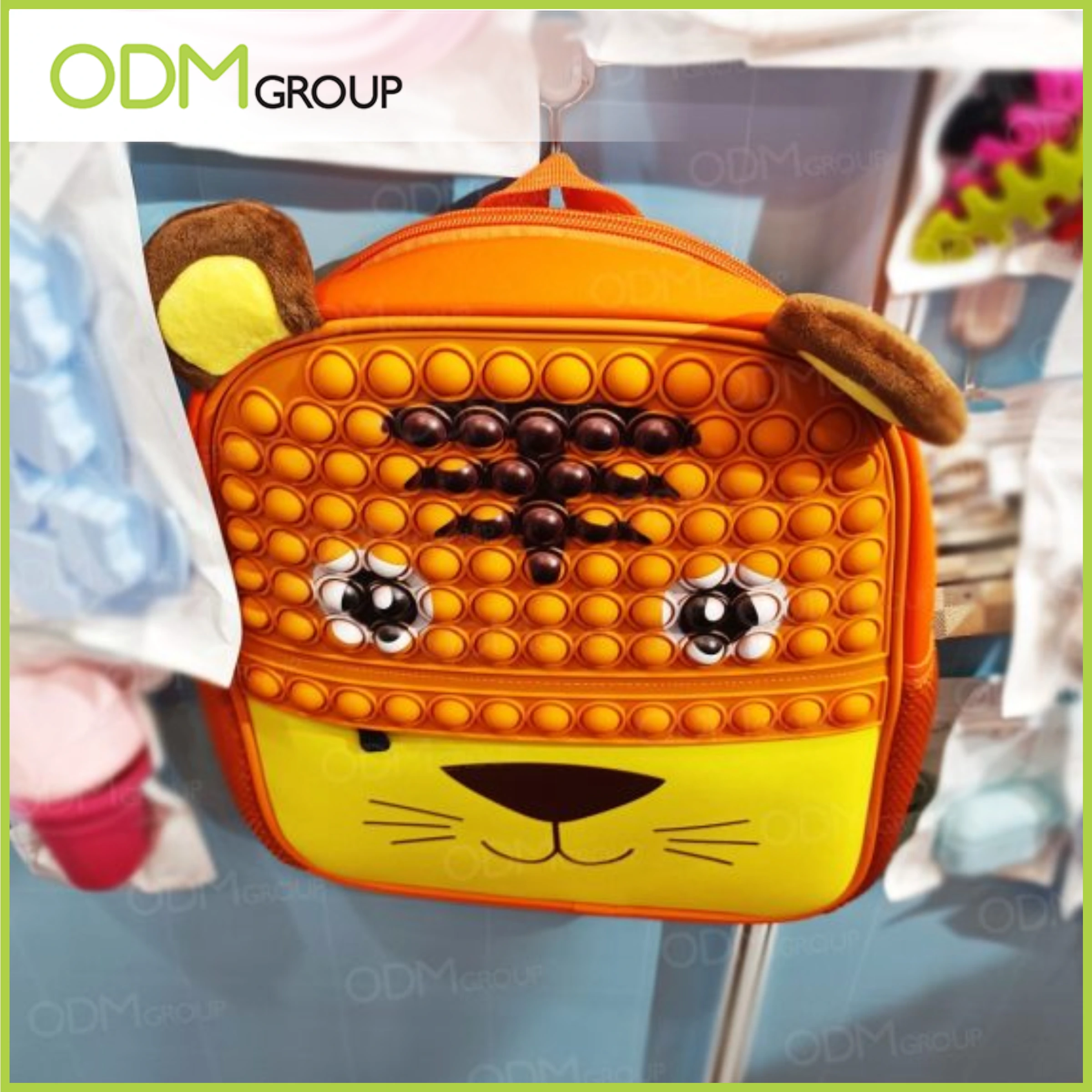
Interactive and sensory toys go beyond looks. They invite touch through movement, texture and tactile features. Examples include Pop It toys, fidget accessories and products with movable parts. You can customise the shape, colour, pattern and branding.
A company could, for instance, develop a Pop It toy featuring its mascot or logo for events, retail campaigns or customer giveaways.
Marketing opportunities:
- Develop engaging event merchandise.
- Create branded giveaways for younger audiences.
- Incorporate campaign colours and visual identities.
- Encourage product interaction and brand recall.
Function and material flexibility matter most here. The material must deliver the intended tactile experience and meet relevant safety requirements.
5. Custom container toys
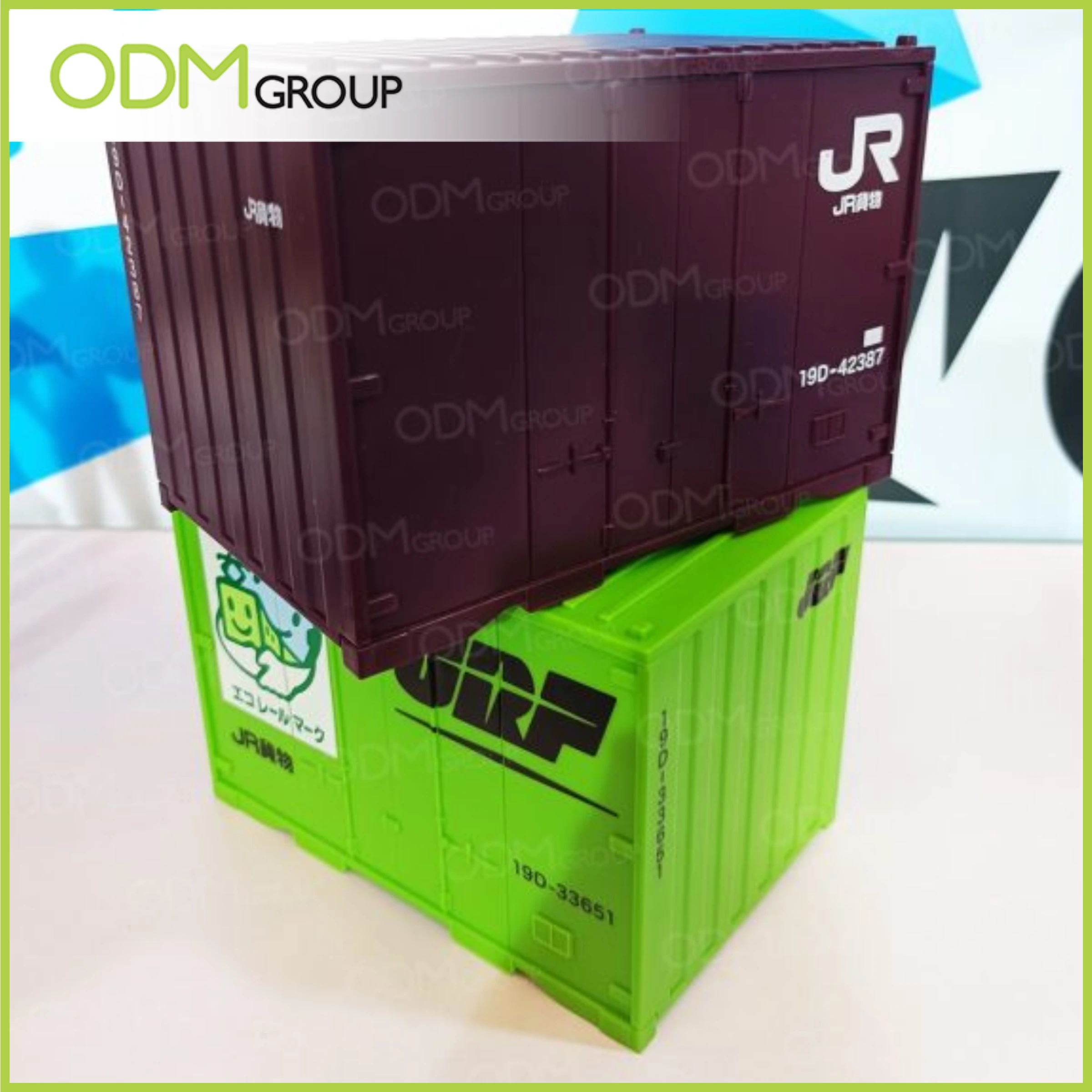
Custom container toys turn everyday business objects into miniature collectibles. Instead of a character figurine, you make a small-scale replica of a product, piece of equipment, vehicle or industry object.
A logistics company could produce miniature shipping containers. An automotive brand could make collectible vehicle models. These work as desk accessories, promotional gifts or event merchandise.
Marketing opportunities:
- Turn business-related objects into memorable merchandise.
- Showcase a company’s products or industry identity.
- Create customized corporate gifts.
- Use miniature replicas as trade show giveaways or display items.
Pick an object that represents your brand. Then turn it into a miniature that people recognise at a glance.
Final Thought
Developing custom plastic toys requires coordination from materials, design, concept development, 3D modelling, mould creation, manufacturing, to finishing.
The ODM Group supports businesses in turning creative ideas into customized promotional products. Our services cover different stages of product development, including:
- Sketch design and concept development
- 3D CAD and mould development
- Prototyping
- Manufacturing and quality control
- Packaging and logistics, etc.
Whether you are planning collectible figurines, customised bottle toppers, capsule toys, or miniature product replicas, ODM Group can help explore the possibilities for your next project.
Have a custom plastic toy idea in mind? Contact ODM Group to discuss your concept and turn it into a promotional product your audience will remember.
Latest Blogs from ODM:
From Plastic Materials to Custom Toys: 5 Ideas for Your Next Products
Sourcing Plastic Products, which type of Plastic to use, Recycling Plastics.
Starbucks Traditions 2027: How Loyalty Merchandise Keeps Customers Coming Back
Loyalty merchandise gives customers an added reason to stay [...]
Custom Wine Goblets for Premium Gifts and Collectible Merchandise
Some promotional gifts are practical. Others become conversation pieces. [...]
From Waste to Worthwhile: Creative Recycling Promotional Items
National Recycling Day, observed on November 15 in the [...]
Custom Shaped Bags: How MLB Turned a Jersey into a Promotional Gift
Promotional merchandise can become more memorable when brands turn [...]
Related posts:
 Custom Plastic Toys – Branded Merchandise for China Airlines
 Why Use Promotional Plastic Construction Toys for Your Next Project?
 Essential promotional products for summer holidays: Plastic Sun Visor
 Custom Promotional Toys: This On-Pack Gift Just Keeps On Giving!
 Sustainable Marketing: 5 Wheat-Based Products to Break Free from Plastic