
Custom collectible figures give brands a physical way to bring characters, stories, and communities into the real world. For entertainment companies, gaming studios, sports organizations, and businesses with recognizable mascots, a figure can become a display piece, retail product, fan reward, or part of a merchandise collection.
Collectors notice proportions, expression, paint application, material, pose, accessories, base, and packaging. Successful projects need a clear creative direction and a manufacturing plan that protects those details from sketch to delivery.
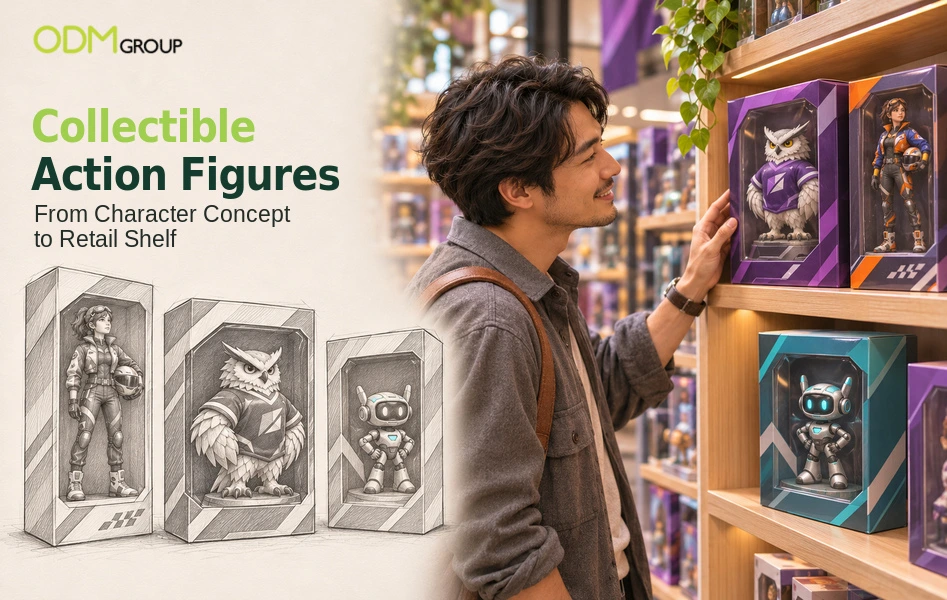
Action Figures, Collectible Figurines and Display Statues
The term “action figure” is often used broadly, but different formats have different design and production requirements. Articulated action figures include movable joints and are intended for posing or play. Collectible figurines are usually fixed in one pose, while display statues place greater emphasis on sculptural detail, dynamic composition, and a decorative base.
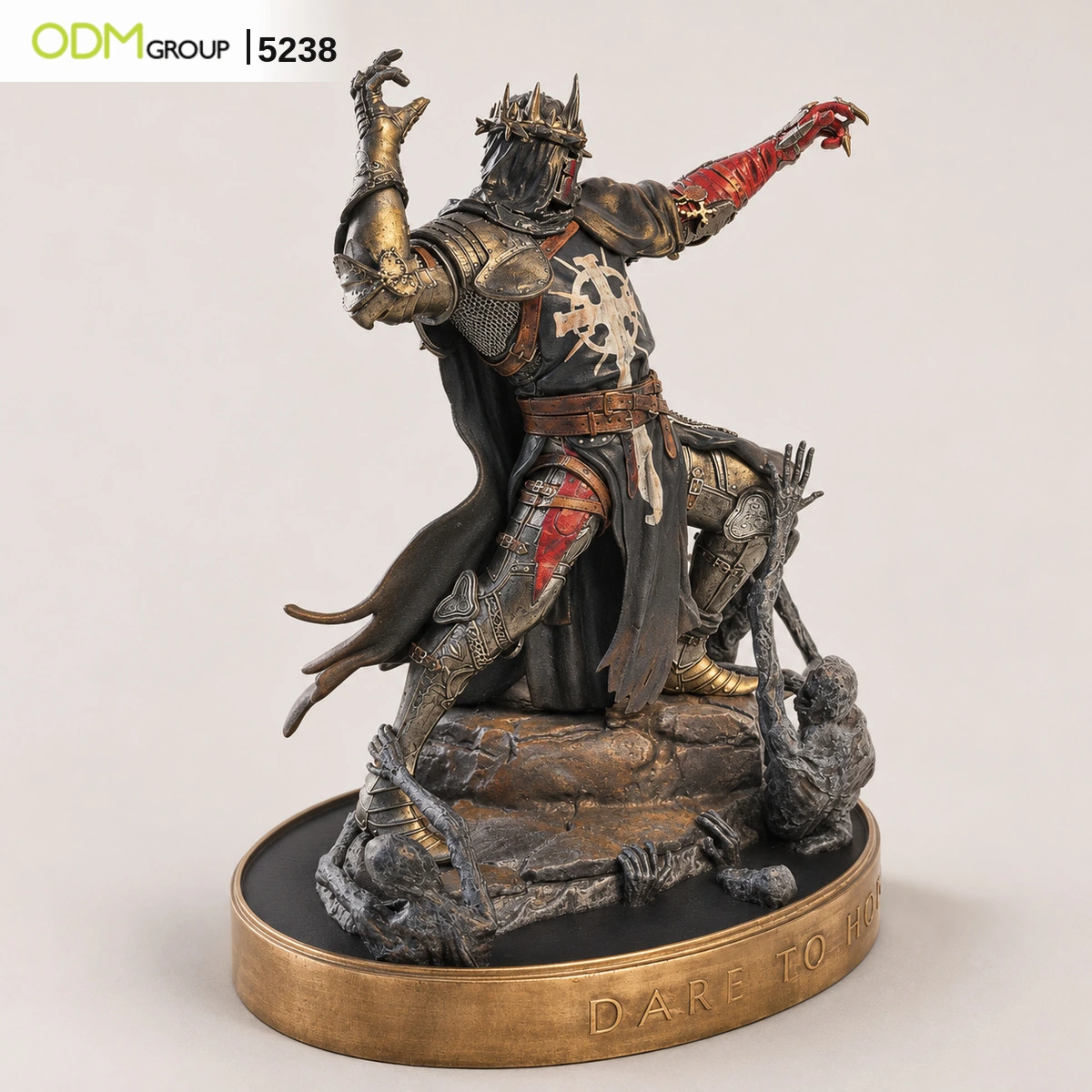
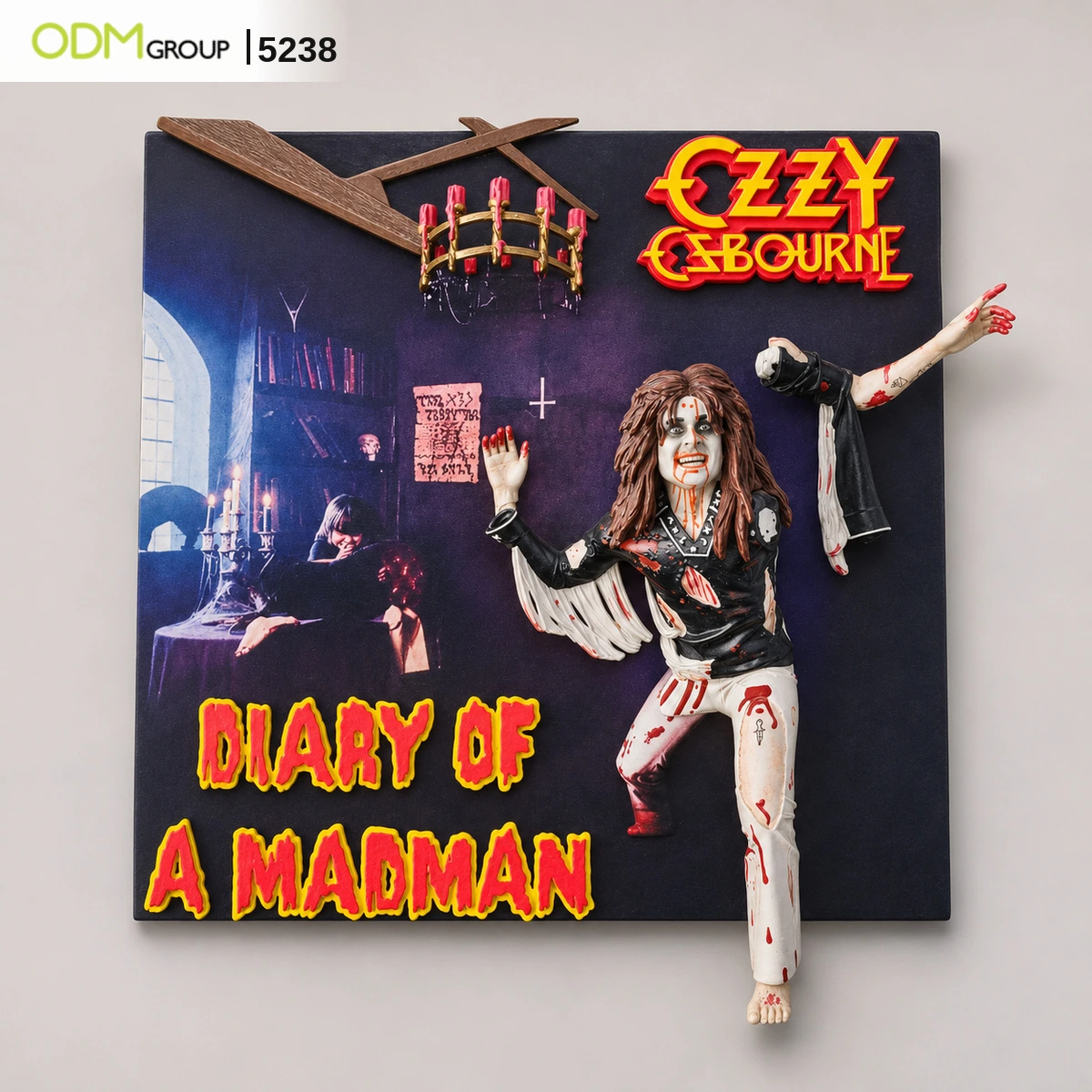
The right format depends on the audience, character, price point, and use. A sports mascot may suit a compact fan-promotion figurine, while a music collectible may need a detailed likeness, signature costume, and display packaging. A game character with distinctive armor may need a larger statue.
Where Businesses Can Use Collectible Figures
Designed as a series, collectible figures can give audiences a reason to engage with a brand, team, title, or campaign over time.
1. Entertainment, Music and Film
Studios, music labels, streaming platforms, and talent companies can develop figures based on approved characters, performers, costumes, or memorable scenes. Releases can coincide with premieres, album anniversaries, tours, streaming launches, or fan conventions.
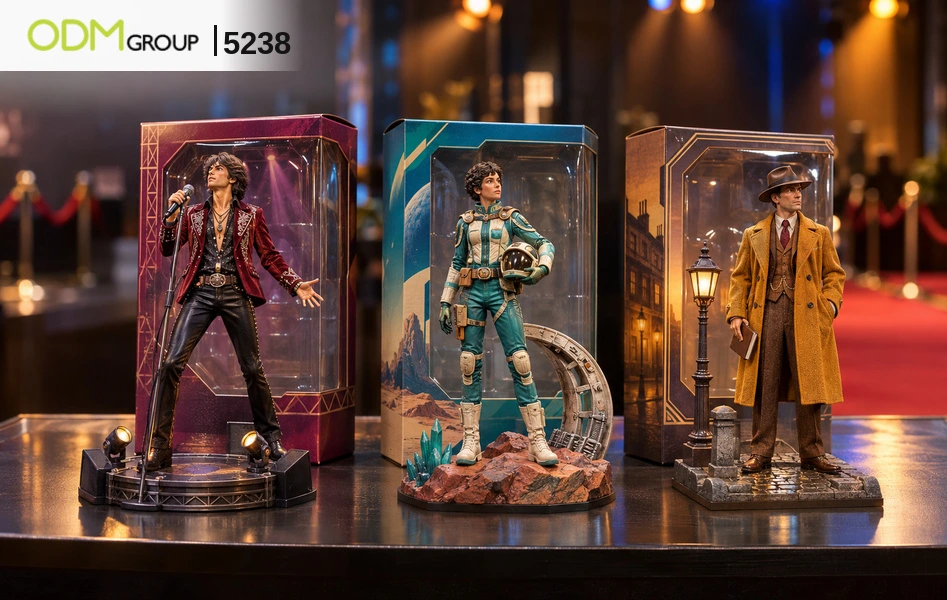
2. Gaming and Esports
Game developers and esports organizations can translate in-game characters, player avatars, team mascots, or iconic equipment into physical collectibles. They may feature in online stores, tournament merchandise, launch bundles, or fan rewards. Designs should preserve the character details fans recognize.
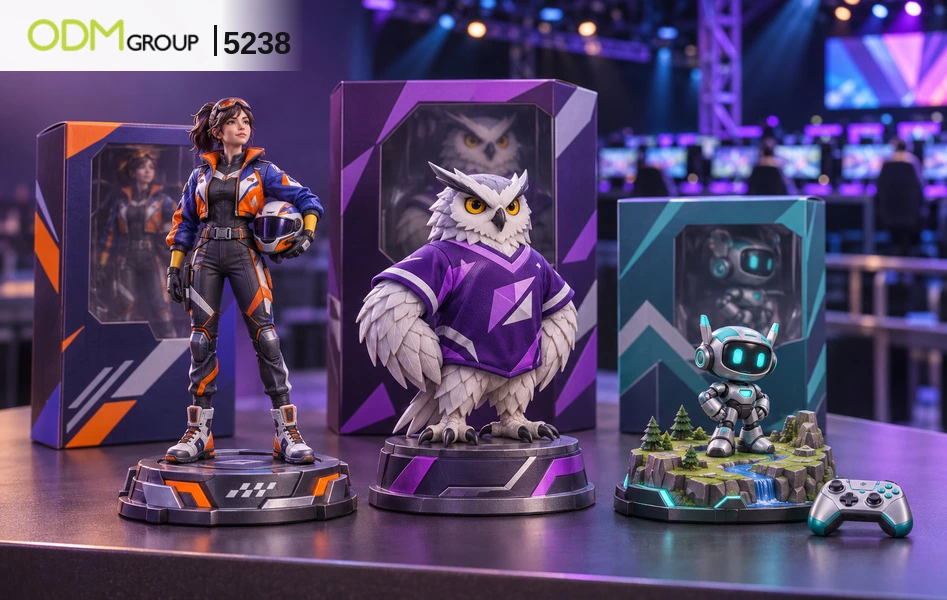
3. Sports Teams and Leagues
Teams and leagues can use figures as season merchandise, match-day gifts, membership rewards, or limited editions. Projects should account for likeness rights, uniform accuracy, approvals, and the sports calendar.
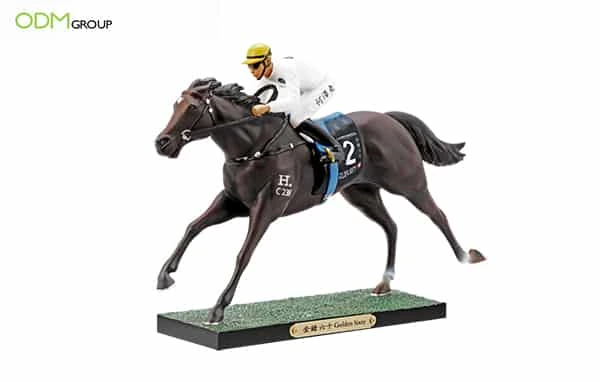
4. Retail and Consumer Brands
Retailers can create figures around mascots or campaign characters for gift-with-purchase offers, loyalty programmes, on-pack promotions, or seasonal collections. Other businesses can develop mascot figures for anniversaries, exhibitions, and partner gifts.
For more promotional toy formats, see ODM’s article on interesting promotional toys for marketing campaigns.
Related Reads
The Chinese zodiac is built on a 12-year cycle, with each year represented by a specific animal. Each zodiac sign carries distinct traits, values, and symbolism. For recipients, this makes zodiac figurines feel personal.
Flocked vinyl figurines combine a soft-touch feel with a solid, controlled structure. This makes them a reliable choice for scalable collectibles and branded merchandise.
Solar dancing figurines continuously move under sunlight or indoor lighting, creating subtle motion that repeatedly catches attention throughout the day.
Light up figurines combine collectible character design with integrated lighting effects, creating a more dynamic alternative to conventional display figures.
Design Decisions That Shape a Collectible
A strong brief explains who the character represents, who will collect it, how it will be distributed, and what the project must achieve. Reference artwork, approved brand assets, dimensions, budget, quantity, and delivery date help guide design and sourcing.
Character accuracy and proportion: Identify the features that make the character recognizable, such as facial structure, hairstyle, costume, colors, accessories, or signature gestures. For real people and licensed characters, establish likeness rights and approval requirements before development.
Pose and construction: A figure should read clearly from the front, sides, and back. Dynamic poses may need a carefully designed base for stability. Articulated formats require joint placement and movement to be considered alongside appearance.
Materials and finish: Depending on the concept, options may include PVC, ABS, vinyl, resin, or other suitable materials. Material choice affects weight, surface detail, durability, tooling, and cost. Finishes can include matte or gloss paint, metallic effects, translucent components, or fabric accessories.
Accessories and packaging: Props, interchangeable parts, bases, and nameplates can add context, but each component also affects tooling, assembly, inspection, and cost. Window boxes, collector cartons, or presentation boxes protect the figure and communicate the story.
For collection-based concepts, ODM’s article on custom blind box toys explores how packaging can contribute to the collecting and reveal experience.
From Sketch Design to a Production-Ready Figure
Turning artwork into a physical collectible requires the design to be translated into dimensions, components, materials, mold requirements, assembly instructions, and finish specifications.
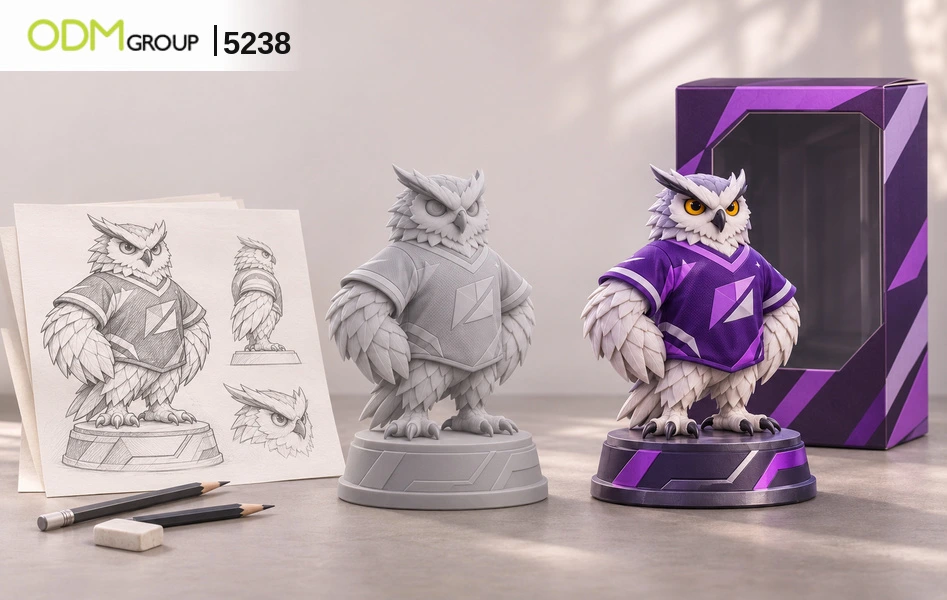
1. Concept Development and Sketch Design
The process begins with the brief and visual references. Designers explore silhouette, pose, proportions, accessories, base design, and possible variations. Sketches help stakeholders compare directions before committing to detailed development. Front, side, and back views are useful for checking a character as a three-dimensional object.
2. 3D Modelling and Engineering
An approved concept is developed into 3D CAD or sculpted geometry. This stage resolves dimensions, part separation, joints, connection points, and mould considerations. Details that look effective in artwork may be too fragile or difficult to reproduce at the chosen scale.
3. Prototyping and Sample Approval
A physical prototype allows review of likeness, proportions, balance, surface detail, colour, assembly, and accessory fit before tooling and mass production.
This stage is particularly important for detailed collectible figures. Small differences in facial features, costume proportions, or paint application can change how recognizable the finished character looks.
ODM’s article on custom plastic toys and material choices provides further context on material and development decisions for custom toy projects.
4. Factory Selection and Production
Not every factory suits every collectible. Sculpting, paint applications, articulated joints, resin casting, and complex packaging require different capabilities. Factory selection should consider relevant experience, tooling, decoration quality, capacity, quality systems, and communication.
5. Quality Control and Logistics
Agree quality requirements before mass production. Checks can cover dimensions, sculpt details, colour matching, paint coverage, component fit, joint movement, stability, surface defects, and packaging condition.
Packaging must also protect delicate parts, projecting accessories, and painted surfaces during storage and transport. Carton design, packing configuration, labelling, shipment planning, and destination requirements should be considered early.
How ODM Supports Collectible Figure Development
ODM Group is a promotional merchandise and product development agency, not a figure factory. We help businesses turn campaign objectives, character artwork, and product ideas into manufacturable merchandise by coordinating the creative, sourcing, production, and delivery stages.
For collectible figure projects, ODM can support concept development and sketch design, 3D CAD and mold development, prototype coordination, packaging design, factory selection and audit, production follow-up, quality control, and logistics. Our Mindsparkz design team can help explore character direction and product visuals before sampling. Manufacturing partners are selected according to the figure’s materials, complexity, finish, quantity, and production requirements.
Design decisions affect tooling, cost, quality, packaging, and lead time. Addressing them early helps reduce avoidable changes after sampling.
Develop a Collectible Figure for Your Brand
A memorable collectible is built through the details: a recognizable silhouette, accurate character features, a well-considered pose, suitable materials, careful finishing, and packaging that feels part of the product. Whether the brief involves a licensed entertainment character, a game figure, a sports mascot, or an original brand character, the development process must balance creative ambition with manufacturing realities.
Planning a collectible figure or merchandise series? Contact ODM Group to discuss your concept, target audience, quantity, and launch schedule. Our team can help develop the design direction, coordinate prototypes, identify suitable manufacturing partners, and manage quality and delivery from concept to market. Use code ODM-5238 when requesting a quote.
More Ideas


FAQs about Custom Collectible Figures
What is the difference between an action figure and a collectible figurine?
An action figure typically includes movable joints and is designed for posing or play. A collectible figurine is usually fixed in one pose, while a display statue focuses on sculptural detail and presentation.
Can businesses create figures from their own characters or mascots?
Yes. Businesses can develop figures based on original mascots, brand characters, or approved intellectual property. The brief should include relevant artwork, usage rights, and approval requirements.
What materials are used to manufacture collectible figures?
Depending on the design and production needs, figures may use PVC, ABS, vinyl, resin, or other suitable materials. Material choice affects detail, durability, weight, finish, tooling, and cost.
What affects the cost and MOQ of a custom collectible figure?
Cost and minimum order quantity depend on size, material, number of components, mold complexity, paint applications, accessories, packaging, and production method. A defined brief helps establish realistic options.
Latest Blogs
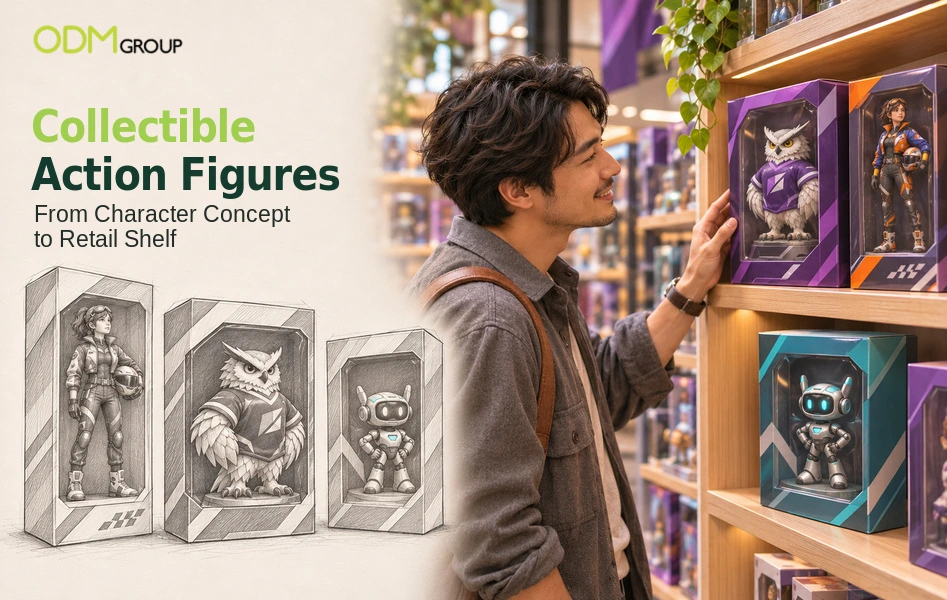
Custom Collectible Figures for Brand Marketing and Merchandise
Custom collectible figures give brands a physical way to [...]
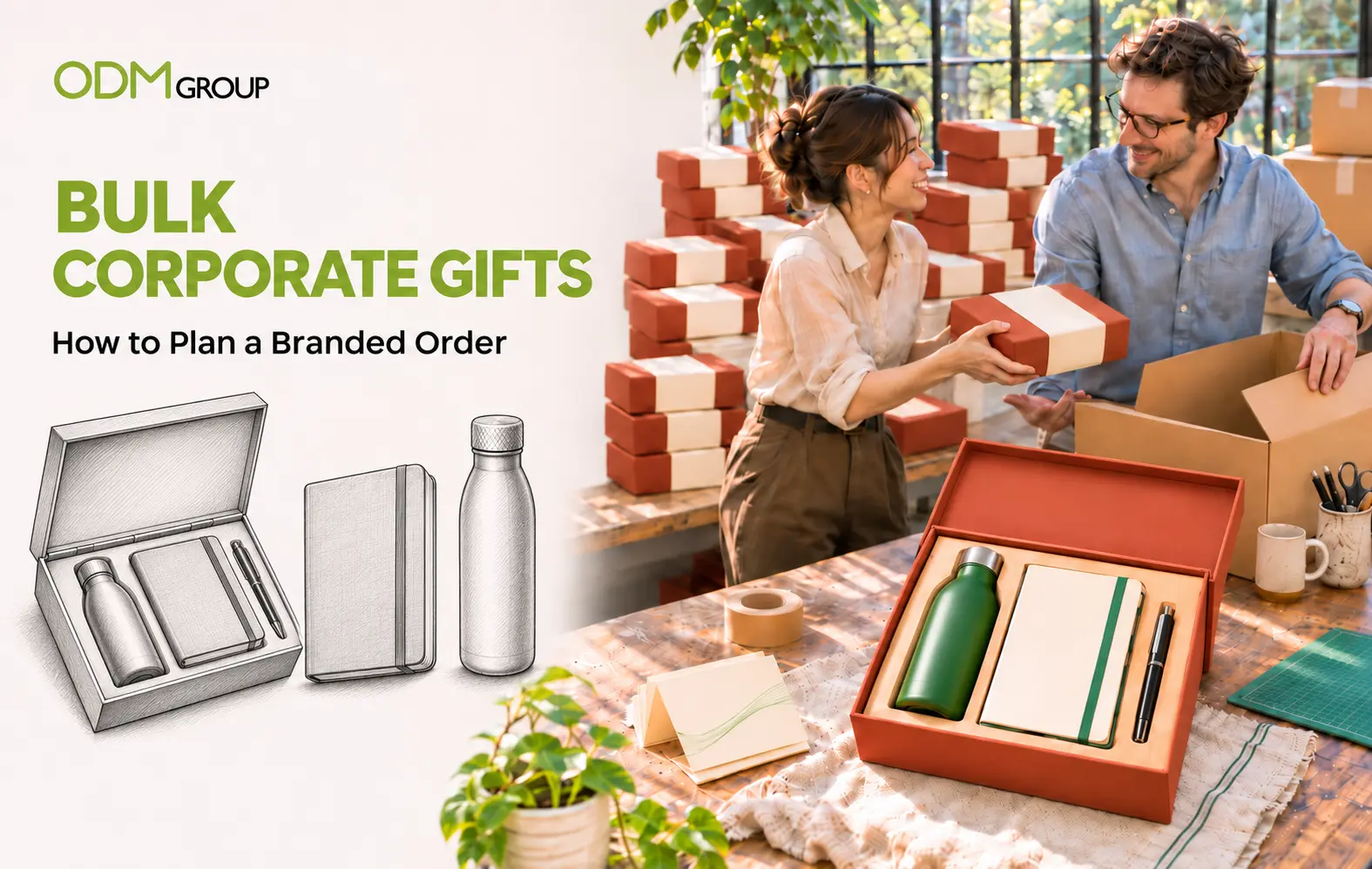
Bulk Corporate Gifts: How to Plan Your Order
A welcome kit for new hires and a thank-you [...]
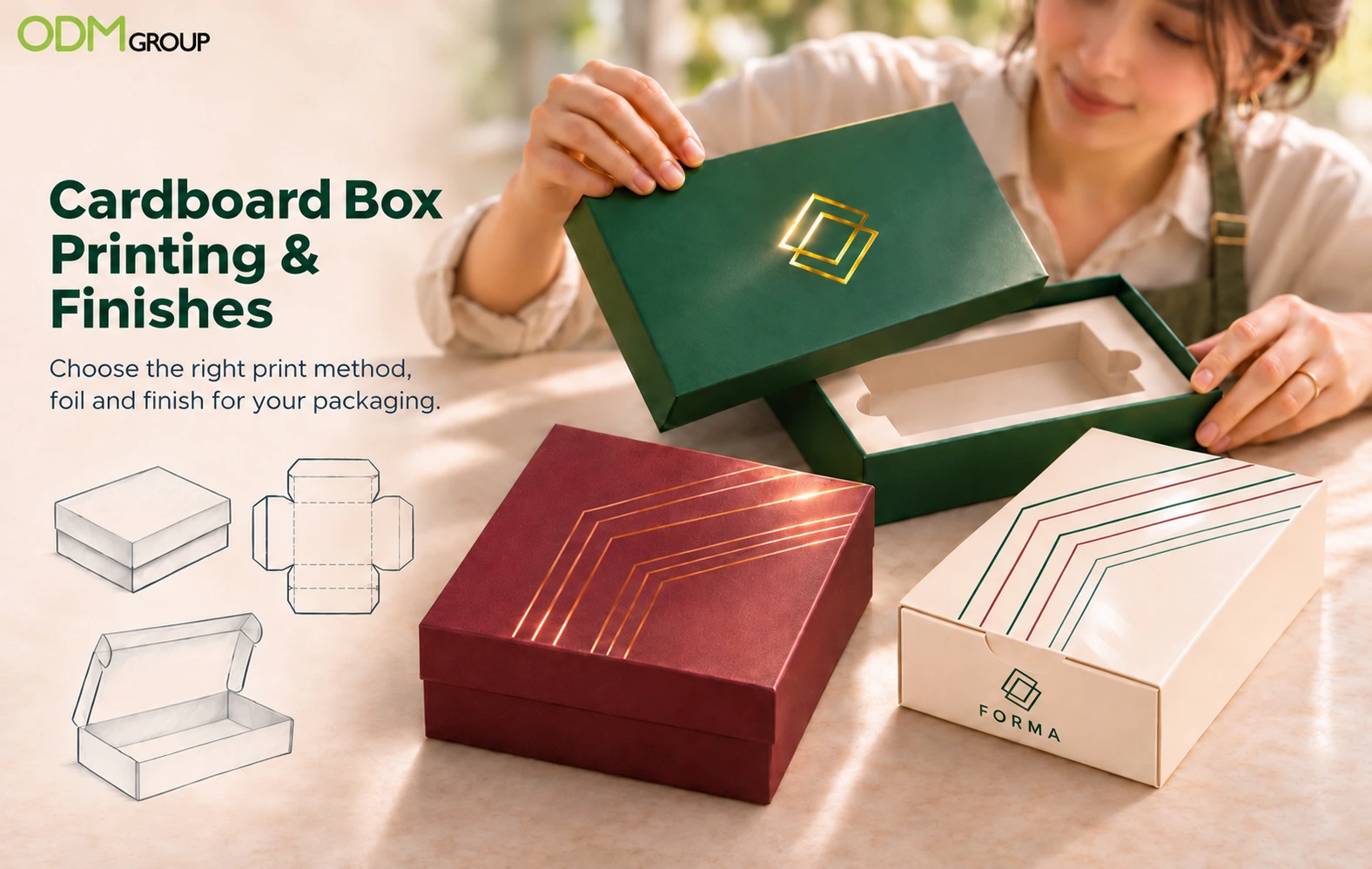
Cardboard Box Printing: How to Choose the Right Method and Finish
Your packaging design can look perfect on screen and [...]
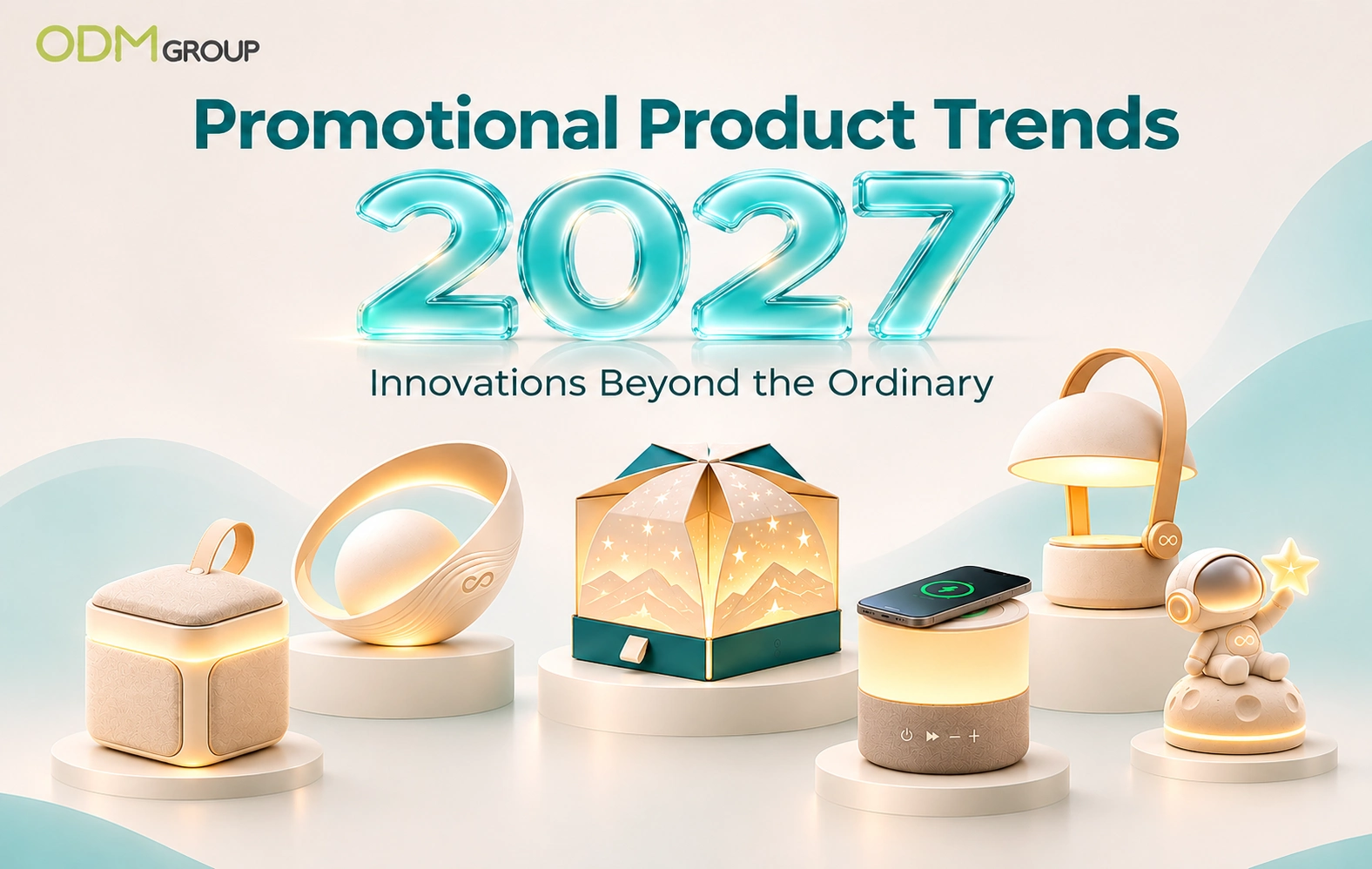
Promotional Product Trends 2027: 6 Innovations Beyond the Ordinary
Promotional products are evolving beyond logo-printed giveaways. In 2027, [...]
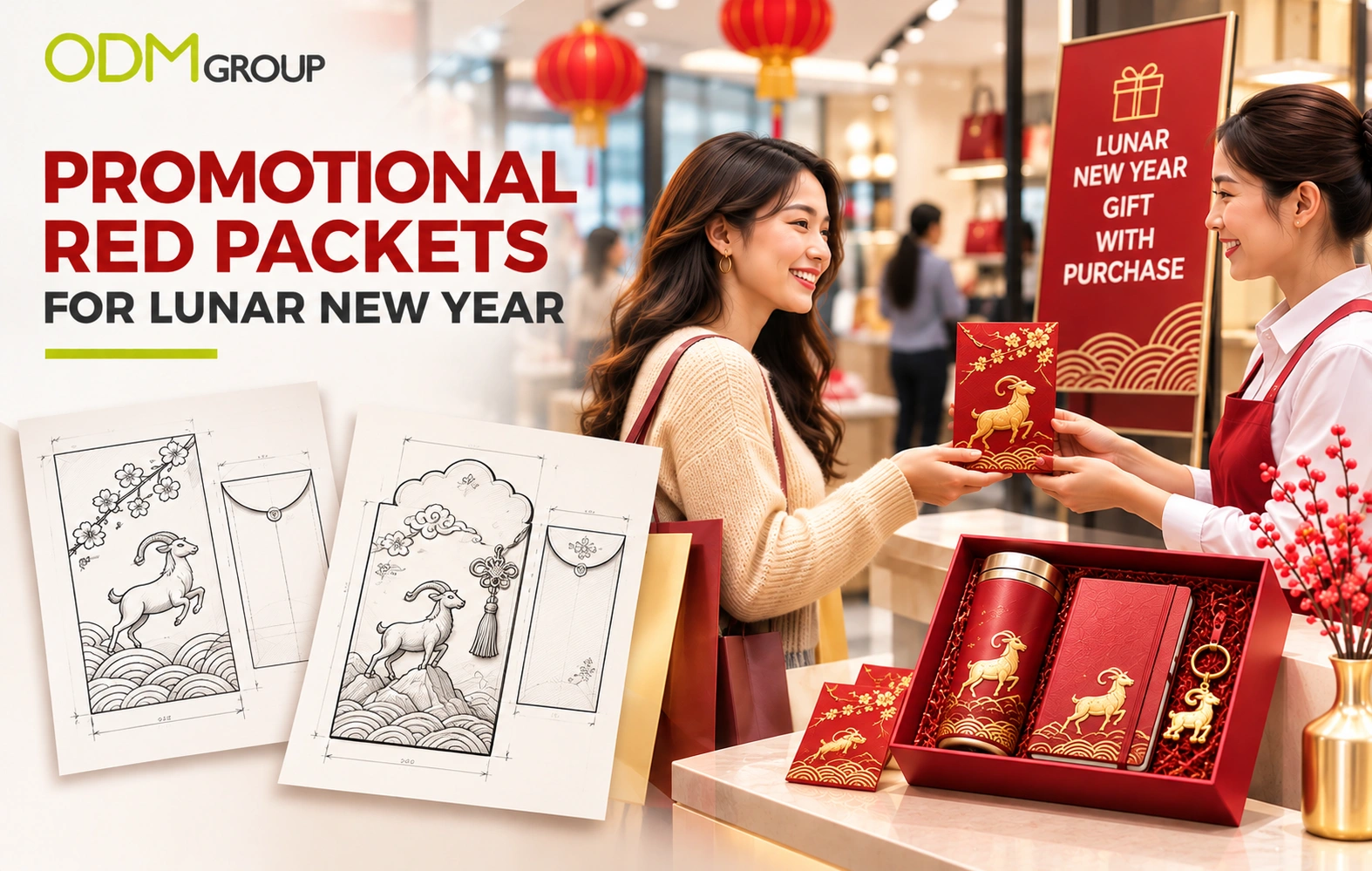
Promotional Red Packets Lunar New Year: Order For Success!
As the Lunar New Year approaches, it's time to [...]

Cafe Promotion Ideas: How Seasun Cafe Uses Merchandise to Reward Loyalty
A memorable cafe experience does not have to end [...]