
Your packaging design can look perfect on screen and disappoint in your customer’s hands. Gold lettering loses its definition. A brand color looks dull on kraft. A matte surface shows scratches before the box is opened.
Good cardboard box printing starts with matching the artwork, material, and production process. This guide explains the main printing methods and finishes, including foil stamping, embossing, and spot UV, so you can make better decisions before approving your packaging.
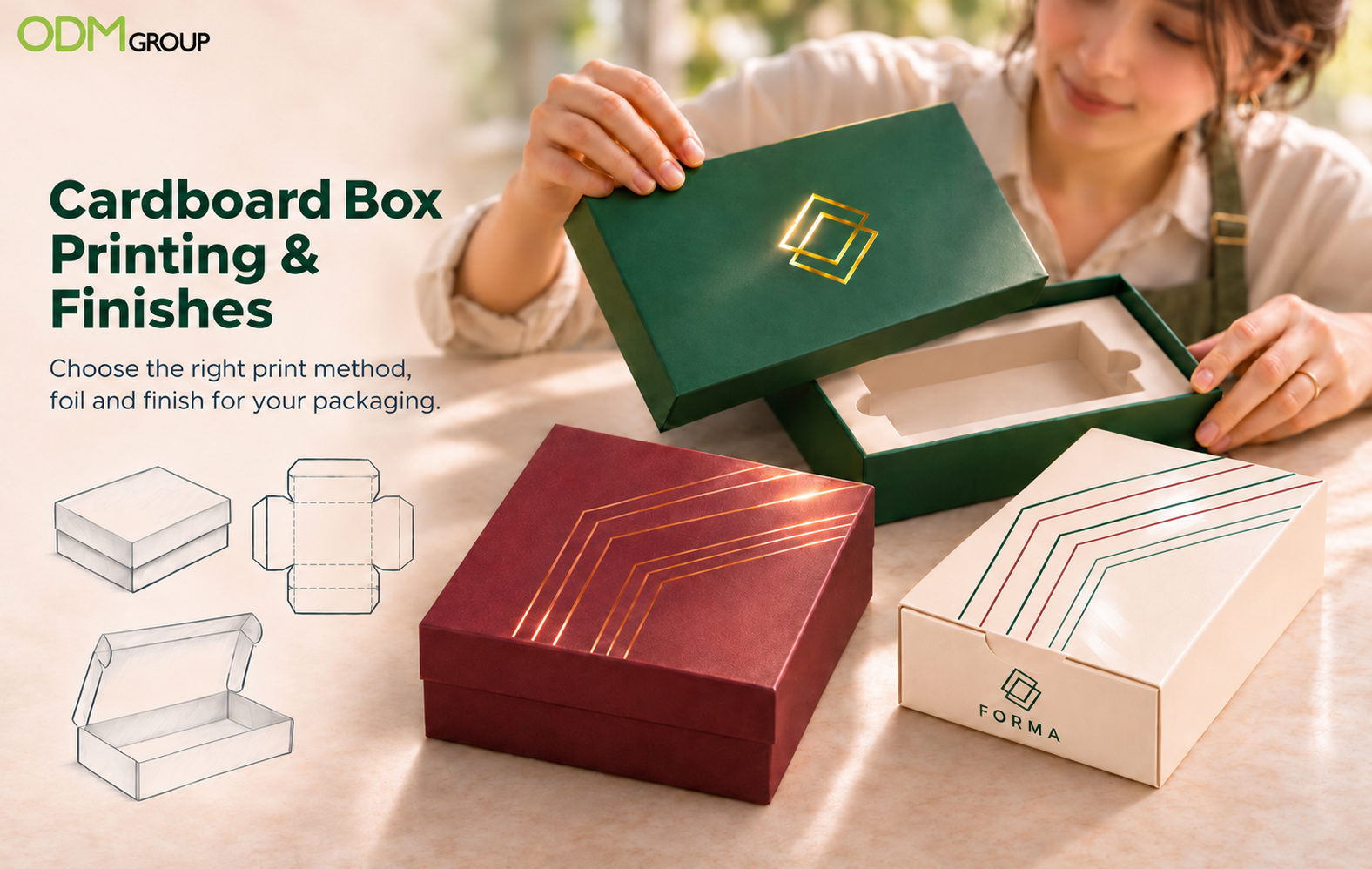
Printing and Finishing: Two Different Decisions
Printing creates the graphics on your box. Finishing changes how selected areas, or the whole surface, look and feel.
For example, a cosmetic carton might use offset printing for its background and product information, hot foil for its logo, and a matte coating or laminate for its surface. Those are separate specifications that must work together.
It helps to divide your brief into three parts:
- Construction: A folding carton, corrugated box, or wrapped rigid box.
- Printing: The process used to reproduce colors, text, and images.
- Finishing: Foil, relief, coatings, or lamination added for a particular effect.
Choosing these together gives the design team and factory a clearer starting point.
The Box Surface Determines What Is Possible
“Cardboard” describes several packaging constructions. The surface receiving the decoration matters as much as the thickness of the finished box.
Folding Cartons
Folding cartons are made from paperboard that is cut, creased, and folded into shape. Smooth coated grades provide a suitable starting point for detailed graphics and selected decorative finishes.
The printed areas still need to survive creasing and assembly. A finish that looks excellent on a flat sheet must also work across the finished structure.
Corrugated Boxes
Corrugated board has fluted material between liners. For direct printing, the outer liner’s color, smoothness, and condition affect the result.
Brown kraft becomes part of the design because ordinary process inks do not hide it completely. If the artwork depends on a bright white background or particularly clean color reproduction, assess a suitable white liner or a separately printed facing sheet.
Rigid Presentation Boxes
Many rigid boxes consist of thick board covered with a separate paper wrap. Printing and decoration are often applied to that wrap before assembly.
This distinction is important when discussing embossing or foil. The factory may be decorating the covering paper rather than pressing the effect directly into the assembled box.

Which Cardboard Box Printing Method Should You Choose?
| Method | Worth considering for | What to confirm |
|---|---|---|
| Offset lithography | Detailed imagery, gradients, fine text, and repeat carton designs | Printable stock, plate costs, color requirements, and finishing |
| Flexographic printing | Corrugated boxes and repeat packaging runs | Liner quality, plate requirements, and achievable detail |
| Digital printing | Shorter campaigns, multiple versions, and personalization | Material compatibility, color capability, and total box cost |
| Screen printing | Selected bold graphics and relatively opaque ink coverage | Ink system, number of colors, surface suitability, and throughput |
There is no universal quantity at which one method becomes the cheapest. Compare quotations for the same construction, artwork, finish, and order quantities.
Offset Printing: For Detailed Graphics and Color Control
Offset lithography transfers the image from a printing plate to a rubber blanket and then onto the sheet.
It is a useful option for packaging with photographs, detailed illustrations, gradients, and fine typography. Full-color artwork commonly uses CMYK: cyan, magenta, yellow, and black. Dedicated spot inks can also be specified for selected brand colors.
For corrugated boxes, an offset-printed sheet can be bonded to corrugated board. This is called litho-lamination. In this context, lamination means attaching the printed facing sheet to the board, rather than applying a protective plastic film.
The commercial consideration is setup. Plates and press preparation contribute to the order cost, so compare the complete job at your intended quantities.
Flexographic Printing: For Corrugated Packaging
Flexography uses flexible relief plates to transfer ink onto the surface. It is widely used for corrugated packaging.
Although simple logos and shipping information are familiar applications, modern flexographic equipment can also reproduce more demanding multicolor designs. The result depends on the press, plates, inks, and liner.
Ask to see comparable work if your artwork includes small reversed text, delicate gradients, or large solid areas. A successful sample on a smooth white liner does not establish what will happen on brown kraft.
Digital Printing: For Changing Artwork and Multiple Versions
Digital printing produces graphics from a digital file without conventional printing plates.
It is worth evaluating when you need different artwork for regional campaigns, product variants, personalized messages, or variable codes. It also avoids committing to a separate conventional plate set for each version.
However, digital printing does not remove every production cost. Cutting tools, foil dies, materials, finishing, and assembly may still be required.
Check how the approval sample will be produced. A digitally printed mockup can demonstrate layout and structure without necessarily representing the color or surface of a later offset or flexographic run.
Screen Printing: For Selected Bold Designs
Screen printing pushes ink through a stencil supported by mesh. Each color generally requires its own screen, with separate application and registration.
On compatible paperboard and wraps, it can be considered for bold artwork and relatively opaque ink coverage.
Its suitability depends on the ink, material, artwork, and production requirements. For a simple mark on a dark surface, compare screen printing with foil using physical samples rather than assuming either will deliver the desired effect.
Foil Printing for Cardboard Boxes
Foil decoration transfers a decorative layer onto the packaging surface. Although commonly called foil printing, it differs from reproducing graphics with ink.
The main options are hot foil stamping, cold foil transfer, and digital foil embellishment.
Hot Foil Stamping
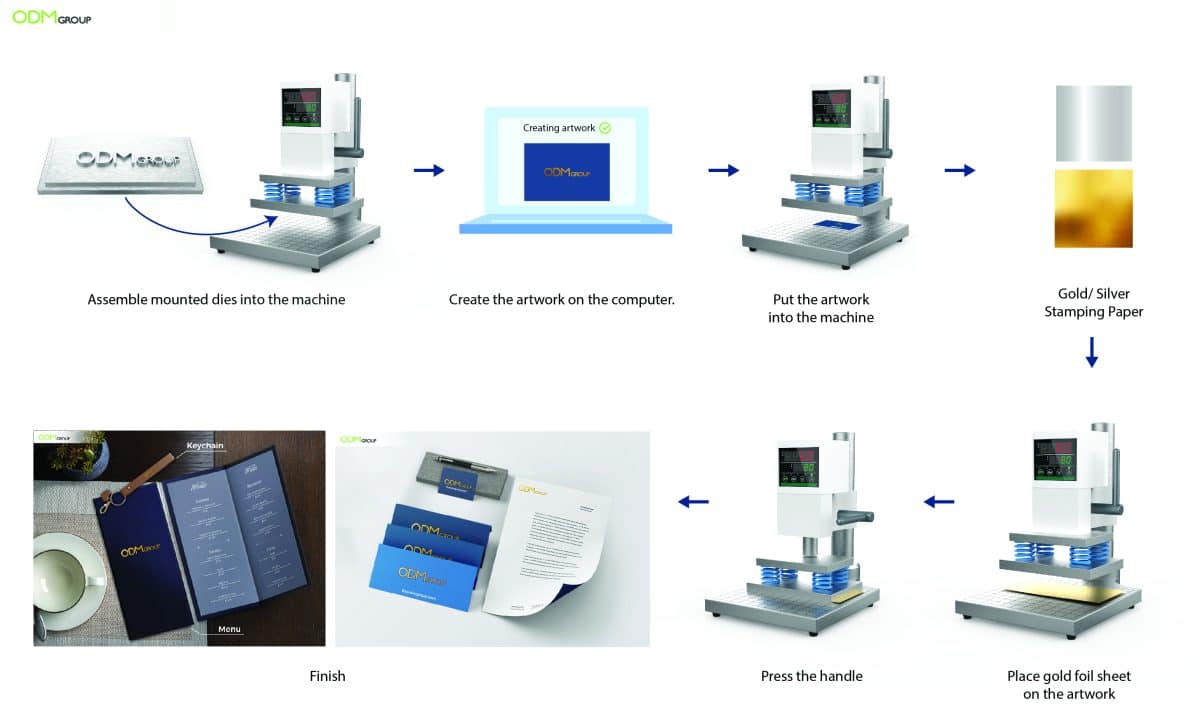
Hot foil stamping uses a heated die and pressure to transfer the decorative layer from a carrier onto the surface.
Gold and silver are familiar choices, but foil decoration also includes colored, pigmented, and holographic effects. It is particularly worth exploring for a wordmark, emblem, or selected detail on presentation packaging.
The foil grade must suit the surface. A textured wrap, printed paper, and laminated sheet may require different combinations of materials and production settings.
When reviewing samples, look for incomplete coverage, filled-in gaps, and loss of definition in thin lettering. A small logo can demand careful preparation precisely because its details leave little room for variation.
Choose the foil shade from a physical reference, then approve it on the proposed packaging material. The same decorative color can appear different against white, green, or textured black.
Cold Foil Transfer
Cold foil transfer uses printed adhesive to define where the decorative layer bonds, without a heated stamping die.
In compatible sheet-fed offset workflows, the foil transfer can be integrated into printing and overprinted to produce different metallic colors.
The transferred decoration in this process is flat. A tactile relief effect requires an additional operation.
Cold transfer is worth discussing when metallic decoration forms a larger part of the graphics. Suitability still depends on the surface, adhesive, transfer material, and equipment.
Digital Foil Embellishment
Selected digital systems can apply metallic effects without a conventional stamping die.
This can be useful for changing designs, personalization, and limited editions. However, digital embellishment covers different technologies, so establish which system is proposed and what it can achieve on your chosen stock.
Assess its own production samples. A digital foil effect should not be assumed to reproduce every characteristic of hot stamping.
Is Metallic Ink the Same as Foil?
No. Metallic ink and foil produce different optical effects.
Metallic ink contains reflective particles, while foil transfers a decorative layer. Foil can provide a more mirror-like reflection; metallic ink has a different sheen that is influenced by the surface beneath it.
A gold color on a monitor cannot communicate that difference. If reflection is central to the design, compare decorated samples under realistic lighting.
Embossing, Spot UV, and Other Box Finishes
Embossing and Debossing
Embossing raises a design above the surrounding surface. Debossing presses it into the surface.
A blind emboss or deboss uses relief without corresponding ink or foil. Light and shadow reveal the mark, making it worth considering for understated packaging.
Foil and embossing can also be combined to add reflection and dimension to the same element.
Confirm the achievable depth, detail, and reverse-side impression. The construction determines how the effect can be produced, particularly when a rigid box uses a separate wrap.

Spot UV and Raised UV
Spot UV applies a UV-cured coating to selected areas. A common use is gloss detail against a matte background.
It can highlight a logo, photograph, or pattern that becomes more visible as the box moves under the light. Raised UV creates a more pronounced tactile effect, depending on the equipment and specification.
Check registration, adhesion, and compatibility with the underlying surface. Finishes near folds and creases need particular review.
Varnishes and Film Lamination
A varnish or coating can adjust sheen and provide a specified level of surface protection. Film lamination bonds a thin film to the printed sheet.
These options should be evaluated against the handling conditions. A retail carton, presentation box, and shipping mailer face different demands.
Avoid treating “matte” or “gloss” as a complete specification. Confirm what material creates the effect and how the finished surface performs.
Soft-Touch Finishes
Soft-touch effects can be achieved using selected coatings or laminating films.
The term describes a surface feel rather than one standardized construction. Ask which process is proposed, whether later foil or coating operations are compatible, and how the surface behaves after handling.
Check dark samples for visible rubbing, fingerprints, and scratches before approving them.
Adding finishes also changes the complete material specification. Recyclability should be assessed for the finished packaging, including coatings, films, and adhesives. FEFCO’s industry guidance is a relevant reference for corrugated packaging; it does not certify an individual box.
More Packaging Ideas
Custom product packaging boxes do more than protect products. They help brands communicate their identity, attract customers, and create a memorable first impression.
Tin boxes offer more design possibilities than many buyers initially expect. A standard container can be customized with printed artwork, while a bespoke shape can give a product a more recognizable identity.
Collapsible magnetic boxes are rigid-style packaging boxes designed to fold flat for storage and transportation, then assemble into a structured presentation box when needed.
Unlike typical two-piece rigid boxes, a slide box is designed for interaction. The motion of sliding creates a sense of discovery, and when paired with continuous artwork that aligns across both parts, it produces a striking visual effect.
How to Choose a Combination That Supports the Campaign
Start with the detail the customer should notice first.
For a corporate gift, that may be a restrained logo on a textured lid. For a retail product, it may be clear product imagery and readable information. For a promotional collection, it may be several artwork versions sharing the same construction.
Consider these design directions:
| Packaging objective | Combination to explore |
|---|---|
| A restrained presentation box | Textured wrap with one foil or blind relief detail |
| A colorful product carton | Offset printing with a suitable protective finish |
| A campaign with many artwork versions | Digital printing, with decoration assessed separately |
| A boldly branded corrugated box | Flexographic printing on the intended liner |
| A subtle pattern revealed by movement | Spot gloss against a compatible matte surface |
These are design starting points, subject to material and factory review.
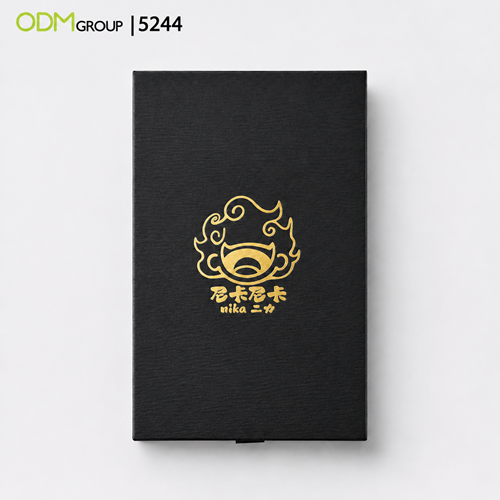
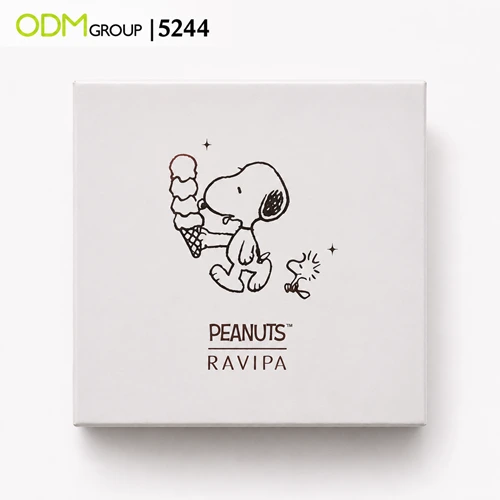
The supplied green, white, and black boxes illustrate different visual approaches: reflective lettering, sparse illustration, and a metallic-looking emblem. Their exact decoration processes have not been confirmed, so they should be presented as observed references rather than technical or ODM production case studies.
What Affects the Cost of Printed Cardboard Boxes?
The total cost extends beyond the ink on the surface.
Box size, material, order quantity, artwork versions, printed coverage, tooling, finishing operations, and assembly all influence the quotation.
To compare options properly, request the same specification and separate one-time costs from repeat-order costs. Clarify whether existing plates or dies can be reused and which artwork changes would require replacements.
If the budget needs reducing, preserve the design’s strongest feature first. A carefully placed foil logo may contribute more than several decorative operations competing for attention.
The useful question is: Which specification delivers the intended appearance consistently within the campaign budget?
Approve the Finished Box, Not Just the Artwork
A screen proof can confirm content and layout. It cannot establish reflection, tactile depth, adhesion, or performance across a crease.
Before production approval, check:
- Artwork: Use the factory-approved dieline and confirm bleed, safe areas, folds, glue zones, and separate finishing artwork.
- Color and surface: Review the intended material with the proposed printing and finish.
- Decoration: Inspect foil coverage, lettering, alignment, coating adhesion, and relief consistency.
- Construction: Assemble the box and check folds, corners, closure, product fit, and visible rubbing.
- Codes: Check contrast, dimensions, clear space, and placement, then verify the finished barcode. GS1’s barcode quality guidance identifies the relevant checks.
Agree which physical sample becomes the production reference and what variation is acceptable. If the packaging has food-contact or other sensitive-use requirements, establish the applicable conditions before materials and inks are selected.
Turn the Packaging Idea Into a Clear Design Brief
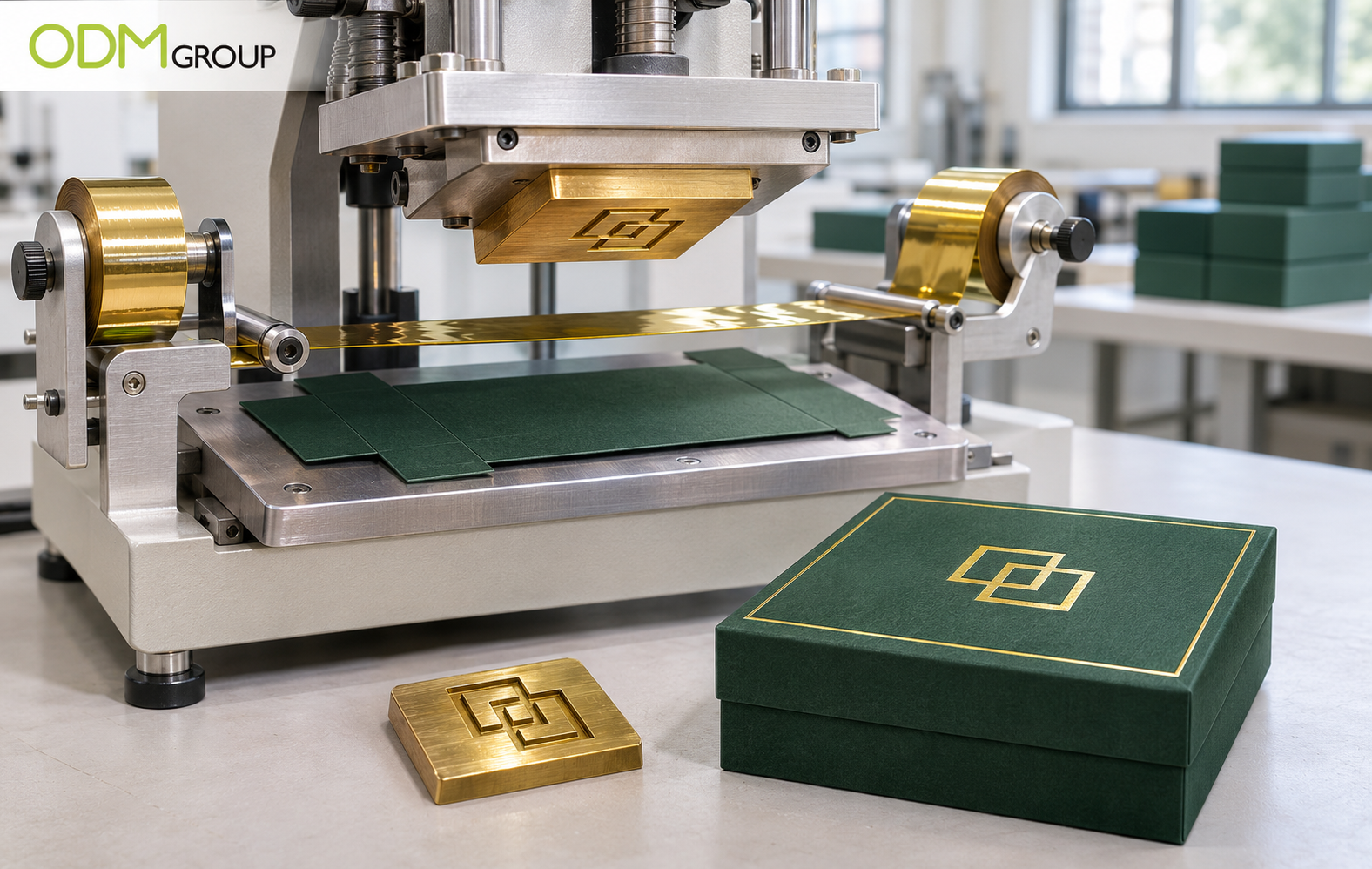
The strongest cardboard box printing decisions happen before production. Choose a surface that suits the graphics, specify finishes with a clear purpose, and approve a complete physical sample.
ODM develops packaging concepts and designs around your product, brand, and campaign. Design development and prototyping help turn the visual direction into something that can be evaluated, with production suitability confirmed against the proposed materials and factory processes.
Share your packaging brief with ODM to explore a print and finish direction for your project. Send your artwork or reference images, product dimensions, quantity, budget range, and launch date. Ask for a comparison between your preferred design and a simpler alternative, so you can assess where additional decoration adds value before committing to the specification.
More Ideas


FAQs about Carboard Box Printing
Can we print white onto brown kraft?
Yes, where the chosen process supports a suitable white ink. Coverage and the kraft surface affect the appearance. Approve a sample on the intended stock, especially when other colors will be printed over the white.
Can our logo match its exact brand color?
A brand color can be specified, but its appearance depends on the ink system, material, and finish. Agree on the color reference, proofing method, and acceptance criteria before production. A monitor display should not be the sole approval reference.
Can we combine foil, embossing, and spot UV?
Potentially, but compatibility, placement, and production order need review. Combining effects also adds cost and alignment requirements. Ask the factory to assess the complete artwork rather than approving each effect independently.
Can we print inside and outside the box?
Often, although the construction and production sequence determine the options. Interior printing may add operations, while rigid boxes can require separately decorated lining material.
Latest Blogs
Cardboard Box Printing: How to Choose the Right Method and Finish
Your packaging design can look perfect on screen and [...]

Promotional Product Trends 2027: 6 Innovations Beyond the Ordinary
Promotional products are evolving beyond logo-printed giveaways. In 2027, [...]
Promotional Red Packets Lunar New Year: Order For Success!
As the Lunar New Year approaches, it's time to [...]

Cafe Promotion Ideas: How Seasun Cafe Uses Merchandise to Reward Loyalty
A memorable cafe experience does not have to end [...]
Exclusive Merchandise Ideas Inspired by Watsons’ Holiday Promotion
Exclusive Merchandise Can Give Customers Another Reason to Shop. [...]
5 Creative NFC Keychain Ideas for Smarter Brand Marketing
NFC (Near Field Communication) is a short-range wireless technology [...]
Related posts:
 Say Yes to Laser Engraving on Plastic: A Unique Printing Method
 Screen Printing: Why It Is the Go-to Print Method in Branding Merchandise
 New Advertisement Idea: Custom Cardboard Stool with Full Color Printing
 Cost-Effective Offset Printing Method for Branded Merchandise
 Vietnam Printing Supplier – Business Card Printing