
Some packaging gets thrown away after opening. Other designs are worth keeping. Custom tin box packaging gives brands a way to stand out through distinctive shapes, creative artwork, and reusable containers.
From chocolate gift boxes to beauty sets and promotional merchandise, the challenge is creating a design that looks good on the shelf and makes sense to manufacture. Here’s what to consider when developing custom tin packaging.
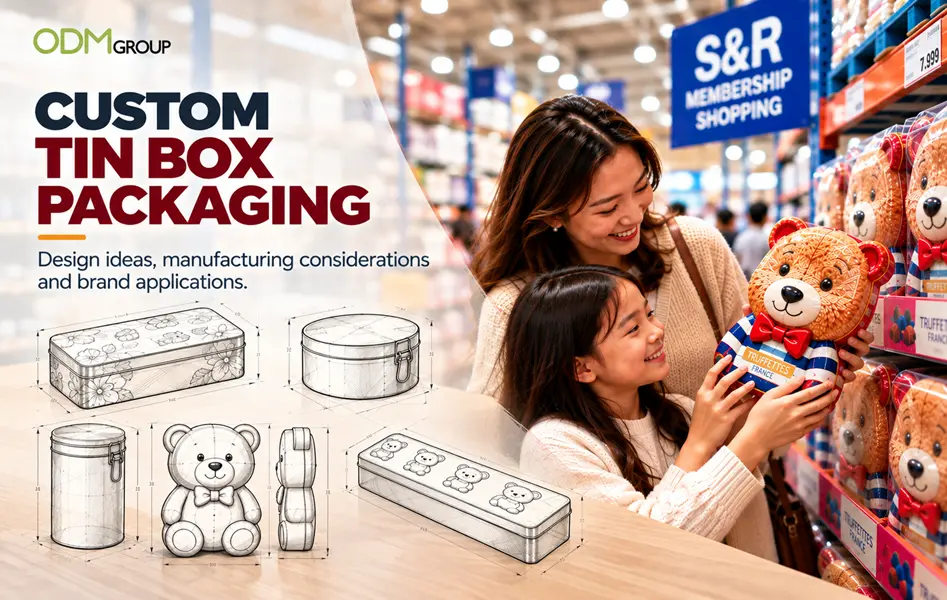
Thinking Outside the Box: Creative Tin Packaging
As a Product Development house for the marketing industry, our buying office is committed to doing our part and leading the change towards sustainable materials. From sustainable promotional products and displays to sustainable packaging, we always strive to deliver the best merchandise to our clients.
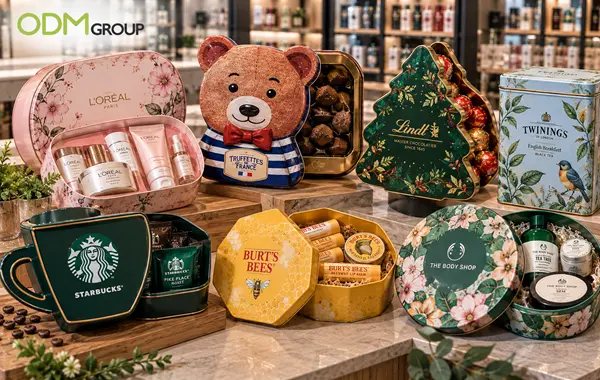
Presented below are a collection of creative tin packaging designs that cater to enterprises seeking inventive and functional solutions for their product packaging requirements.

Our extensive assortment of tin boxes encompasses a diverse selection of shapes and sizes. However, in addition to their inherent variety, we offer customization options tailored to our client’s specific requirements.
For instance, we excel at adapting our tin container packaging to cater to confectionery brands. These creative boxes don’t just help store delicacies but also make the goodies more irresistible.
Aside from rectangular and square boxes, we also provide cylinder and bespoke tin box packaging. But not just for food, these tin boxes also make perfect storage for cosmetics products and gift set ideas.
Why Do Brands Use Custom Tin Packaging?
Tin boxes offer more design possibilities than many buyers initially expect. A standard container can be customized with printed artwork, while a bespoke shape can give a product a more recognizable identity.
1. Make Products Stand Out on the Shelf
Packaging can influence how customers perceive a product before they even try it.
A chocolate brand might use a decorative tin for a holiday collection, while a tea company could create a series of illustrated containers for different blends. Beauty brands can also use coordinated colors, metallic finishes, or embossed details to give gift sets a more premium look.
Not every product needs a complicated shape. Sometimes, a strong design on a simple tin is enough to distinguish it from competing products.
2. Give Customers a Reason to Keep the Packaging.
A tin that is useful after the original product is gone has a better chance of being reused.
Customers might keep it for small accessories, stationery, or other household items. This can extend the life of the packaging and keep the brand visible beyond the initial purchase.
Of course, this depends on the design. A container that is attractive but awkward to open or difficult to reuse may end up being discarded anyway. Think about how customers might use the tin once it’s empty, not just how it will look on the shelf.


3. Create More Interesting Gift Sets
Custom tins work well for products that are sold as gifts or bundled into promotional sets.
A chocolate company could develop a festive tin for a seasonal collection. A skincare brand might use one to organize several travel-size products, while a business could package branded merchandise in a custom container for a client event.
These projects require more planning than simply choosing an outer box. The contents need to fit properly, and any inserts or dividers must hold them in place during transport.
Custom Tin Packaging Ideas for Different Industries
The best tin designs start with the product and the people who will buy it. Here are a few ways brands can approach packaging for different markets.
1. Confectionery and Chocolate
Chocolate packaging can do more than hold the product. A distinctive tin can turn a familiar treat into a gift, souvenir, or collectible. ODM Group has featured two examples: Daiana’s gold-finished tin with an embossed design of Kuala Lumpur’s Twin Towers, and Kit Kat’s Mickey Mouse-themed confectionery tin, which uses a character-inspired shape, bright colors, and embossed details. These designs show how brands can use custom tin packaging to connect with a destination, appeal to fans, or make a product more memorable.
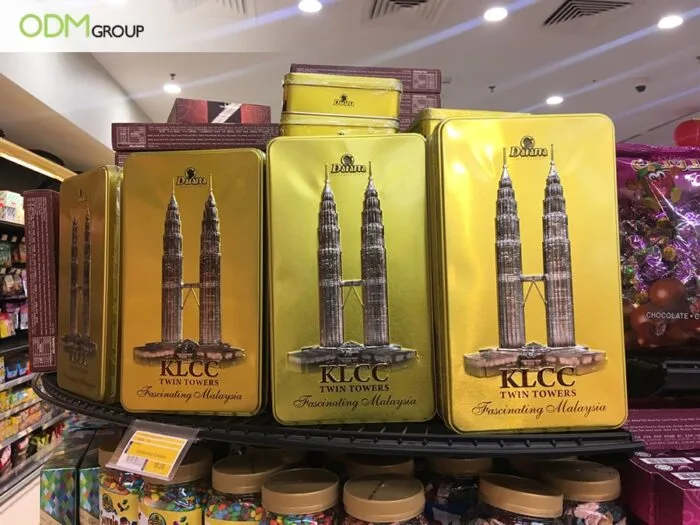
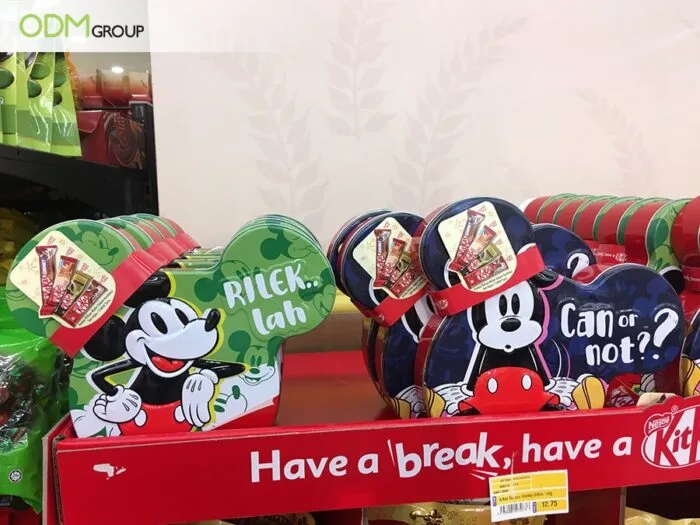
When developing a similar design, brands need to consider more than appearance. Custom shapes may require specialized tooling, while embossing, printing, and decorative finishes can affect production costs. The tin’s dimensions must also fit the product properly and provide adequate protection. Choosing the right combination of shape, artwork, and finish early in the process helps balance visual appeal with production requirements and budget. See more ideas in ODM Group’s article on customized tin packaging.
2. Beauty and Personal Care
Custom tins can work for selected beauty gift sets, solid personal care products, accessories, and travel collections.
Imagine a floral tin containing hand cream, soap, and a small body-care product. A fitted insert could keep everything organized, while matching artwork across the container and products would give the set a coordinated appearance.
There are a few practical details to settle before production. Measure the actual products, allow enough room for inserts, and check that the contents won’t move around during shipping.
The container’s material also matters. A metal tin isn’t automatically suitable for direct contact with every cosmetic formulation, so the intended use and any required inner packaging should be confirmed first.
3. Tea, Coffee, and Specialty Foods
Tins can help food brands create a consistent look across several products.
A tea company might use different illustrations for each blend while keeping the same basic container. A coffee brand could choose a minimalist design, while a cookie company might develop a decorative tin for a gift assortment.
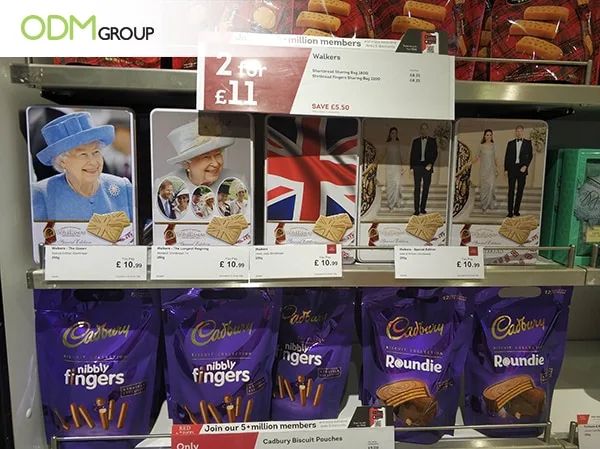
4. Corporate Gifts and Promotional Merchandise
For corporate gifts, the packaging can be part of the gift rather than just something used to ship it.
A business might develop a branded tin for an employee welcome kit, an anniversary giveaway, or a collection of merchandise for a product launch.
Custom shapes can make these packages more distinctive, but they also add complexity. If the campaign has a limited budget or a short lead time, a standard tin with well-designed graphics may be the more sensible option.
5. Seasonal and Collectible Packaging
Holiday products and limited-edition releases give brands a reason to experiment with packaging.
Christmas tree-shaped tins, heart-shaped chocolate boxes, and containers inspired by a brand mascot are just a few possibilities. A business could also keep the same tin shape and introduce new artwork for different campaigns.
Before investing in a new shape, consider how long the design will be used and how many units you expect to sell. Dedicated tooling may make sense for a product that returns every year, but it may be harder to justify for a short promotional run.
What to Consider When Designing a Custom Tin Box
A design can look great in a concept presentation and still run into problems once manufacturing begins. These are the details worth discussing early with your product development and manufacturing partners.
Shape, Size, and Construction
Start with the product that will go inside the tin.
Measure its dimensions and account for any wrapping, trays, or protective inserts. If the tin will hold several items, work out how they will be arranged before finalizing the exterior dimensions.
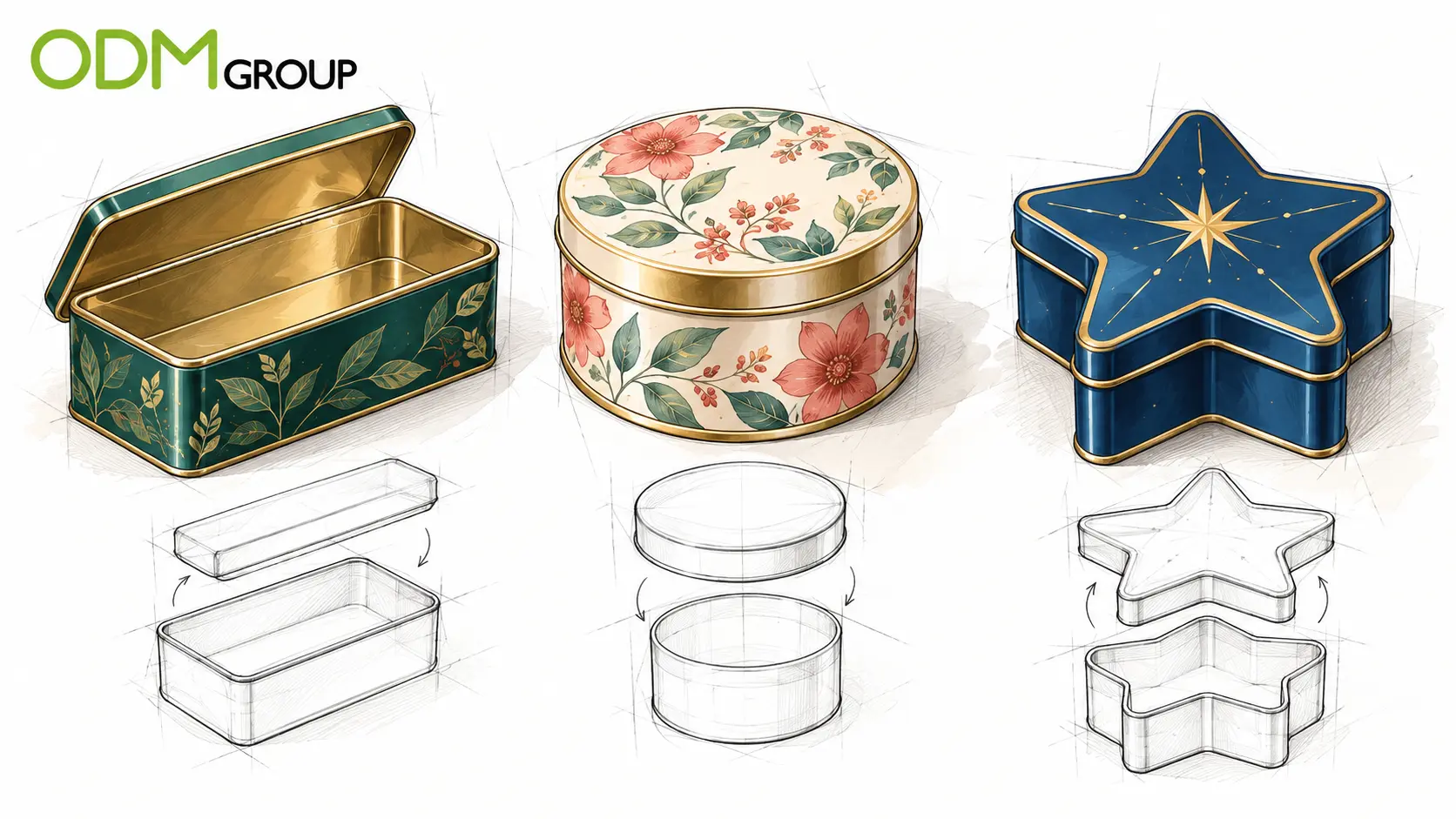
Standard rectangular, square, and cylindrical tins can be practical starting points. If you need a more unusual shape, ask the manufacturing partner to assess the design before committing to it.
Artwork and Finishing
Printed graphics, metallic effects, embossing, and debossing can all be considered, depending on the tin’s construction and production method.
Artwork placement needs attention, particularly around corners, edges, seams, and the lid. A design that looks balanced on a flat layout may not line up as expected once the tin is assembled.
Reviewing the artwork alongside the actual construction can help avoid unnecessary revisions later.
Tooling and Minimum Order Quantities
A custom-shaped tin may require dedicated tooling to form its components. This can increase the initial investment compared with using an existing container.
Ask the manufacturer what tooling is needed, how the cost is calculated, and whether the design can be adapted from an existing format. It’s also worth confirming minimum order quantities before spending too much time on a concept that doesn’t fit the project’s budget.
For some campaigns, a custom lid or printed exterior may achieve the desired look without requiring a completely new shape.
Sampling and Quality Checks
If sampling is part of the agreed process, use it to check more than appearance.
Make sure the lid fits properly, the dimensions match the specifications, and the finish and printed artwork meet expectations. Test the arrangement of the contents, too, especially if the package includes several products or fragile items.
Agree on the quality requirements before mass production, including how defects will be assessed and who approves the final sample.
Shipping and Storage
Packaging decisions can affect transportation costs and warehouse space.
An unusually shaped tin may look distinctive but use more space than a standard container. The finished dimensions, weight, stacking arrangement, and outer carton configuration should all be considered before confirming the design.
These details become especially important for larger orders shipped internationally.
Material and Product Requirements
Tinplate is commonly used for metal packaging, but the material and construction still need to suit the application.
Food products may have specific contact and preservation requirements, while cosmetics need appropriate material compatibility. Additional components, coatings, liners, and closures may also affect the final design.
Tinplate can be recycled where suitable collection and processing facilities are available. However, recyclability depends on the complete package and local infrastructure, so avoid making broad environmental claims without supporting information.
How Did Other Brands Utilize the Tin Box Packaging?
During our visit to Ibiza, we are able to spot these stunning packaging concepts from two different brands, Lindt and Oreo. The first packaging comes from Lindt, which comes in the form of a suitcase. The second one comes from Oreo, which is an Oreo-shaped tin container.
We totally love how Bull Dog continues to bring its customers straightforward skincare options since 2005. We found Bulldog’s travel kit packed in a high-quality tin packaging container as we visited one of the Boots flagship stores in the UK.
Some companies such as Kit Kat and Daiana have launched customized tin packaging in Kuala Lumpur, Malaysia. Let’s discover why it gives brand distinction.
Milka’s bespoke packaging design was indeed remarkable. The brand used their official brand colours and they really ‘popped’ from the shelf.
Here’s a perfect example of a creative souvenir packaging design in a gift shop located in France. The packaging is embellished with the image of the Papal Palace, one of the popular places in the country.
Benedictine D.O.M offered an exclusive product for the Chinese New Year. Aside from its product, what set this promotion apart was the custom-branded packaging used.
These custom tin containers from DV France we’ve seen are the perfect examples of excellent product packaging ideas. Take a look at these creative tin packaging ideas.
During our travel to France, we are able to catch sight of this simple yet captivating point-of-sale display showcasing Alziari’s olive oil cans. Take a look at Nicolas Alziari’s excellent product packaging and uncover the reasons why it is the best of its kind.
How ODM Group Can Help Develop Custom Packaging
Turning a packaging idea into a finished product involves more than choosing a design. The concept needs to be developed, checked for manufacturing feasibility, and coordinated with the production requirements.
ODM Group works with businesses on product development and promotional merchandise, with services that include sketch design, 3D CAD and mold development, prototyping, packaging design, factory selection, quality control, and logistics.
Planning a new packaging project? Contact ODM Group to discuss your product requirements, customization options, target order quantity, and budget. Start with a clear brief and explore a packaging solution designed around your brand and campaign goals.
More Ideas


FAQs about Tin Box Packaging
What are some creative ideas for custom tin box packaging?
Brands can explore unusual shapes, embossed patterns, metallic finishes, illustrated designs, and reusable containers. Seasonal tins, collectible packaging, gift sets, and branded merchandise are also worth considering. The best idea depends on the product, target audience, campaign goals, and intended use of the packaging.
How do I develop a custom tin packaging concept?
Start by defining what the packaging needs to achieve. Consider your product, audience, budget, brand identity, and where the packaging will be used. From there, explore different shapes, artwork, finishes, and functional features. Working with a product development partner early can help turn an initial idea into a concept that is practical to manufacture.
Can ODM Group help develop a tin packaging design from scratch?
ODM Group supports brands with product development and customized merchandise projects, helping turn ideas into concepts for production. Depending on the project, this can involve exploring design directions, customization options, materials, and manufacturing considerations to develop a solution aligned with the brand's requirements.
Should I choose a standard tin or create a custom shape?
A standard tin can be a practical option when cost, production time, and straightforward packaging are priorities. A custom shape may be more suitable when distinctive packaging is central to a product launch, gift set, or promotional campaign. Compare the expected sales volume, tooling investment, and design requirements before deciding.
How can I make custom tin packaging suitable for repeat campaigns?
Consider using a consistent tin shape and changing the artwork, colors, or finishing details for different seasons, product launches, or promotional events. This approach can help maintain brand recognition while introducing fresh designs. If you are planning recurring campaigns, discuss the potential for reusing tooling and standardizing dimensions during the initial development stage.
Latest Blogs from ODM:
Custom LED Magnetic Lights: Turn Brand Ideas into Illuminated Gifts
A small decorative sign can do more than brighten a space. With the right design, it can become a [...]

Gifts with Purchase Benefits and How Brands Can Make Them Work
Gifts with purchase benefits go beyond adding a free item to a customer’s shopping basket. When planned well, [...]
From Plastic Materials to Custom Toys: 5 Ideas for Your Next Products
Sourcing Plastic Products, which type of Plastic to use, Recycling Plastics.
Starbucks Traditions 2027: How Loyalty Merchandise Keeps Customers Coming Back
Loyalty merchandise gives customers an added reason to stay connected with a brand. From collectible drinkware to practical lifestyle [...]
Custom Wine Goblets for Premium Gifts and Collectible Merchandise
Some promotional gifts are practical. Others become conversation pieces. These custom wine goblets combine both qualities, blending decorative craftsmanship [...]
From Waste to Worthwhile: Creative Recycling Promotional Items
National Recycling Day, observed on November 15 in the United States, is a timely opportunity for brands to highlight [...]
Custom Shaped Bags: How MLB Turned a Jersey into a Promotional Gift
Promotional merchandise can become more memorable when brands turn familiar products or visual identities into something unexpected and practical. [...]
Embedded Toy Soap Bars: A Fun and Creative Promotional Gift
Promotional gifts do not always need to be complicated to make an impression. Sometimes, a simple everyday product with [...]
Meet Gary the Fire Goat. Icarus was a fanboy, so legend has it. A Chinese Zodiac Socks Collection
Here’s Gary’s story. Normally gentle, creative and peace-loving guy, in 2027 he gets into a bold, passionate and [...]
Innovative Mall Advertising Display Ideas That Capture Attention
An innovative mall advertising display can do more than showcase products. It can capture shoppers' attention, create memorable brand [...]
Surprise Money Gift Boxes: A Creative Idea for Festive Promotions
A gift does not have to be expensive to make an impression. Sometimes, how it is presented makes the [...]
10 Reasons Customized Plush Toys Are Great Marketing Gifts
Happy Plush Day! Today is a great opportunity to celebrate plush toys and explore how brands can turn these familiar [...]