
Custom product packaging boxes do more than protect products. They help brands communicate their identity, attract customers, and create a memorable first impression. From beverage gift sets and FMCG products to cosmetics and retail merchandise, the right packaging can influence how customers see and experience a product.
However, good packaging involves more than choosing a box and adding a logo. Its structure, materials, appearance, and functionality must all work together. This guide explores packaging styles, materials, design ideas, and development considerations to help businesses create packaging that works for both their products and their brands.
Why Do Brands Invest in Custom Product Packaging Boxes?
A standard box may be enough to transport a product from one place to another. However, when that product reaches a retail shelf, an e-commerce customer, or a gift recipient, packaging becomes part of the brand experience.
There are several reasons businesses choose custom packaging.
1. Build a Recognizable Brand Identity
Packaging gives brands another opportunity to communicate their identity. Color, typography, graphics, patterns, textures, and structural details can all contribute to a recognizable presentation.
Think about a premium chocolate collection. A simple rectangular box with a printed label may do the job, but a carefully developed box with distinctive artwork, an elegant opening mechanism, and an organized product arrangement can create a much stronger impression.
The same applies to FMCG products competing for attention in crowded retail environments. Consistent packaging across a product range helps customers recognize the brand, even when different flavors, sizes, or variants are introduced.
2. Improve Product Presentation and Perceived Value
The packaging can change how customers perceive what is inside.
A carefully designed rigid box, for example, can make an ordinary product feel more suitable for gifting. A well-organized insert can turn several individual products into a complete collection.
This is particularly relevant to:
-
Premium drinks and spirits gift sets.
-
Skincare and cosmetic collections.
-
Seasonal food and confectionery promotions.
-
Corporate gifts and branded merchandise.
-
Limited-edition product launches.
The important point is that premium presentation does not always require an expensive box. A well-designed folding carton with appropriate printing and finishing can look just as considered when it suits the product and target market.
3. Protect Products During Handling and Transportation
Packaging must perform its basic job before anything else: protecting the product.
A beautiful box is of little use if the contents move around, break, leak, or arrive damaged.
The structure, board strength, internal inserts, and closure system should all be considered in relation to the product’s weight, dimensions, fragility, and distribution route.
For example, a glass beverage bottle may need a fitted insert to prevent movement, while an electronic accessory might require a compartment that keeps the device and its components organized.
4. Support Marketing Campaigns and Promotions
Packaging can also become part of a marketing strategy.
Brands can use custom boxes for gift-with-purchase campaigns, product bundles, influencer mailers, seasonal collections, and limited-edition releases.
Instead of simply placing several products together, the packaging can communicate the campaign theme and make the entire set feel like one coordinated offer.
A promotional box might include a main product, a complimentary gift, printed campaign messaging, and a specially designed insert. Each element contributes to the experience.
This is where packaging design and promotional product development often come together.
Types of Custom Product Packaging Boxes
Before discussing artwork and materials, businesses should consider the actual box structure. Different structures serve different purposes, and the best option depends on the product, budget, presentation requirements, and sales channel.
Here are some common formats worth considering.
1. Folding Carton Boxes
Folding cartons are among the most widely used packaging formats in retail. They are commonly made from paperboard and supplied flat before being folded into their final shape.
They are suitable for:
-
Food and confectionery.
-
Cosmetics and skincare.
-
Pharmaceuticals and personal care.
-
Small electronics and accessories.
-
FMCG products.
Their biggest advantage is flexibility. Brands can customize the dimensions, graphics, printing, and finishing without necessarily needing an elaborate structure.
Folding cartons are particularly useful for products sold in multiple variants. A brand can maintain one packaging structure while changing the artwork to distinguish different flavors, colors, or product lines.
2. Rigid Boxes
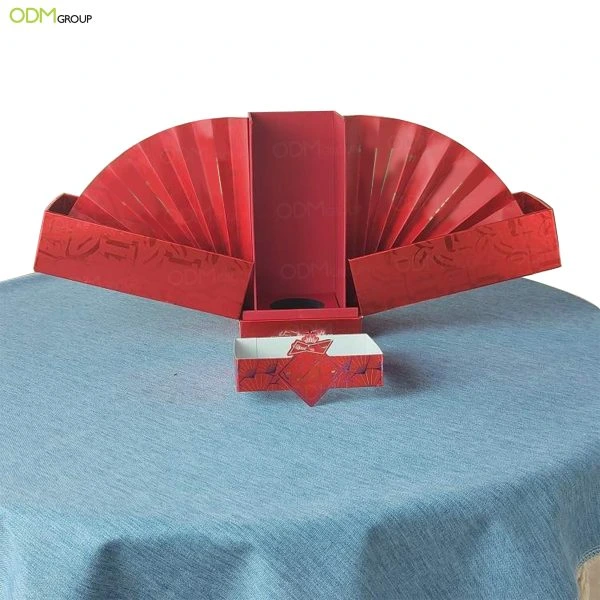
Rigid boxes are constructed from thicker, sturdy board and generally retain their shape rather than being supplied as flat folding cartons.
They are often used for:
-
Luxury cosmetics and skincare.
-
Premium beverages.
-
Jewelry and accessories.
-
Corporate gift sets.
-
Limited-edition collections.
Magnetic closures, ribbon pulls, textured wraps, foil stamping, and custom inserts can all be incorporated into the design.
Rigid boxes are an attractive choice when presentation is a major part of the product’s value. However, they usually require more material, storage space, and shipping consideration than folding cartons.
3. Corrugated Boxes
They are commonly used for:
-
E-commerce shipments.
-
Electronics and household products.
-
Subscription boxes.
-
Product bundles.
-
Larger promotional kits.
Corrugated packaging can also be customized with printed graphics, branded interiors, inserts, and different opening styles.
For businesses selling online, the packaging needs to withstand the journey to the customer. The design should consider stacking, handling, and the protection required during delivery.
4. Sleeve and Drawer Boxes
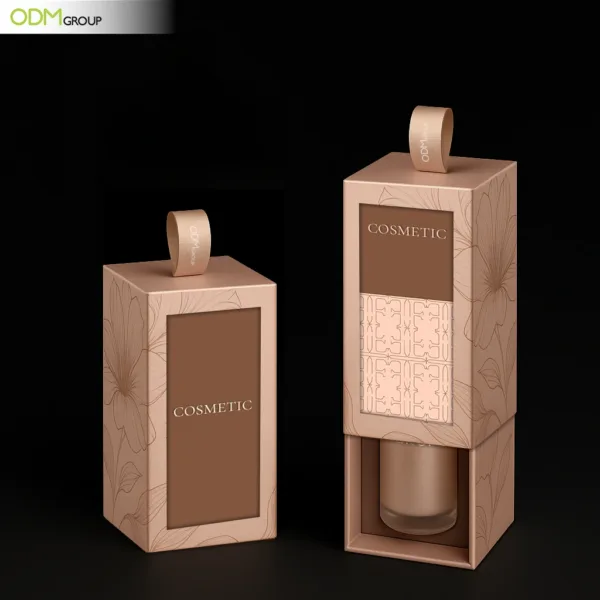
A sleeve slides over an inner tray, or a drawer pulls out from an outer casing. The structure provides space for layered branding and an organized product presentation.
These formats are suitable for:
-
Chocolate and confectionery collections.
-
Beauty gift sets.
-
Small accessories.
-
Premium promotional merchandise.
-
Product launch kits.
They are particularly useful when the opening experience is part of the intended presentation.
5. Window Boxes
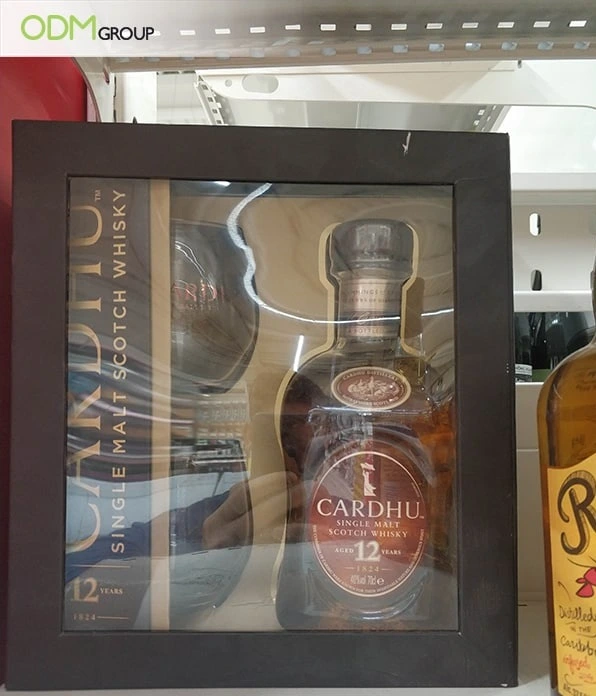
They are often used for:
-
Toys and collectibles.
-
Food and confectionery.
-
Cosmetics and personal care.
-
Household accessories.
-
Retail gift sets.
The window can help shoppers understand what they are buying, especially when the product’s appearance is an important selling point.
However, the window’s size and position should be carefully planned. It should reveal enough of the product without compromising the box’s structure or protection.
6. Custom-Shaped and Die-Cut Boxes
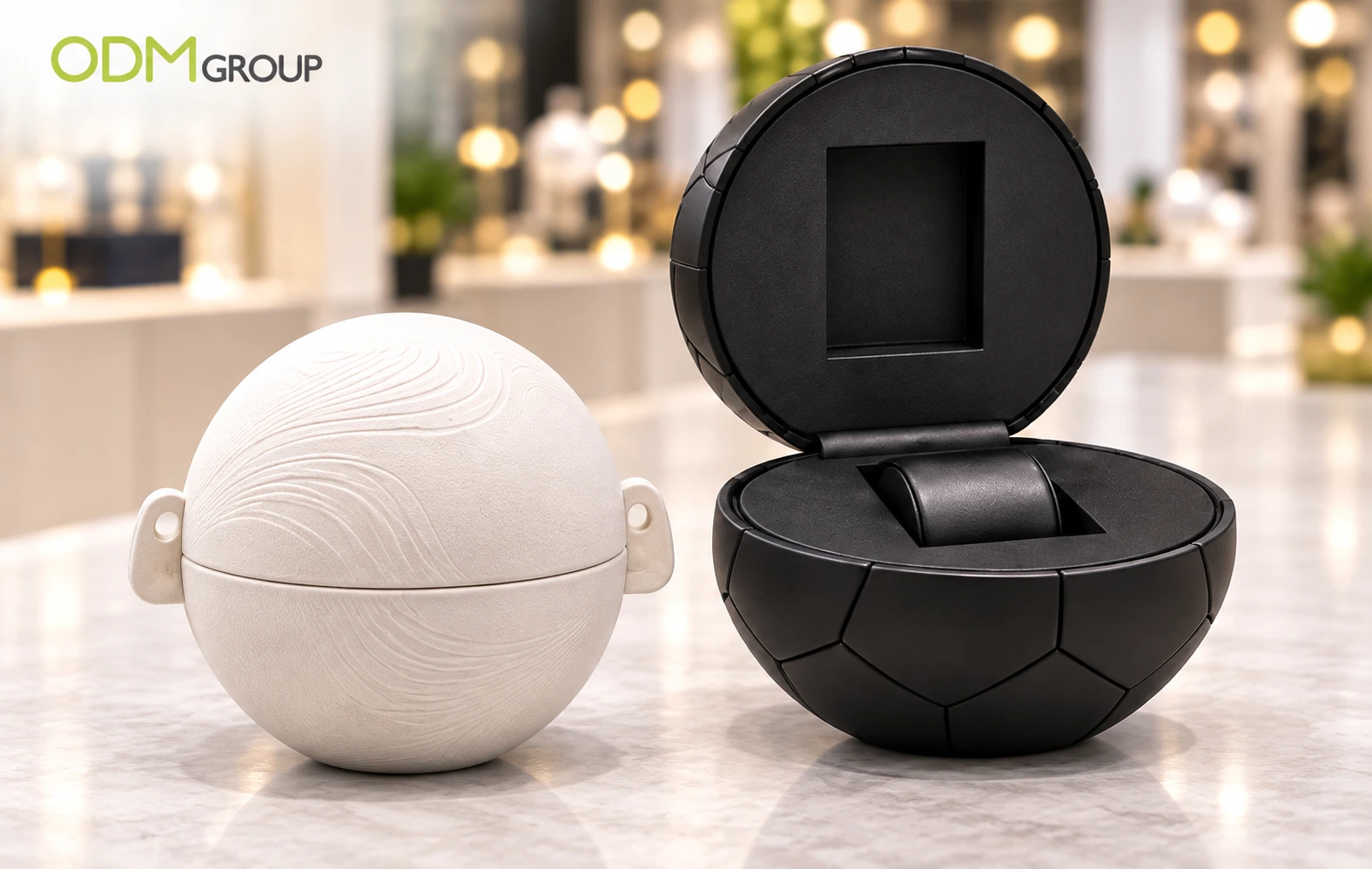
Custom-shaped packaging can follow a brand’s visual identity, product silhouette, or campaign theme. Die-cut windows, unusual folding structures, and specially designed compartments can make a package more distinctive.
These formats are worth exploring for limited-edition products, promotional merchandise, special collections, and products that need a memorable retail presentation.
The trade-off is complexity. More unusual structures may require additional tooling, sampling, and manufacturing adjustments. The design should therefore be checked for production feasibility before final approval.
Custom Product Packaging Boxes for Different Industries
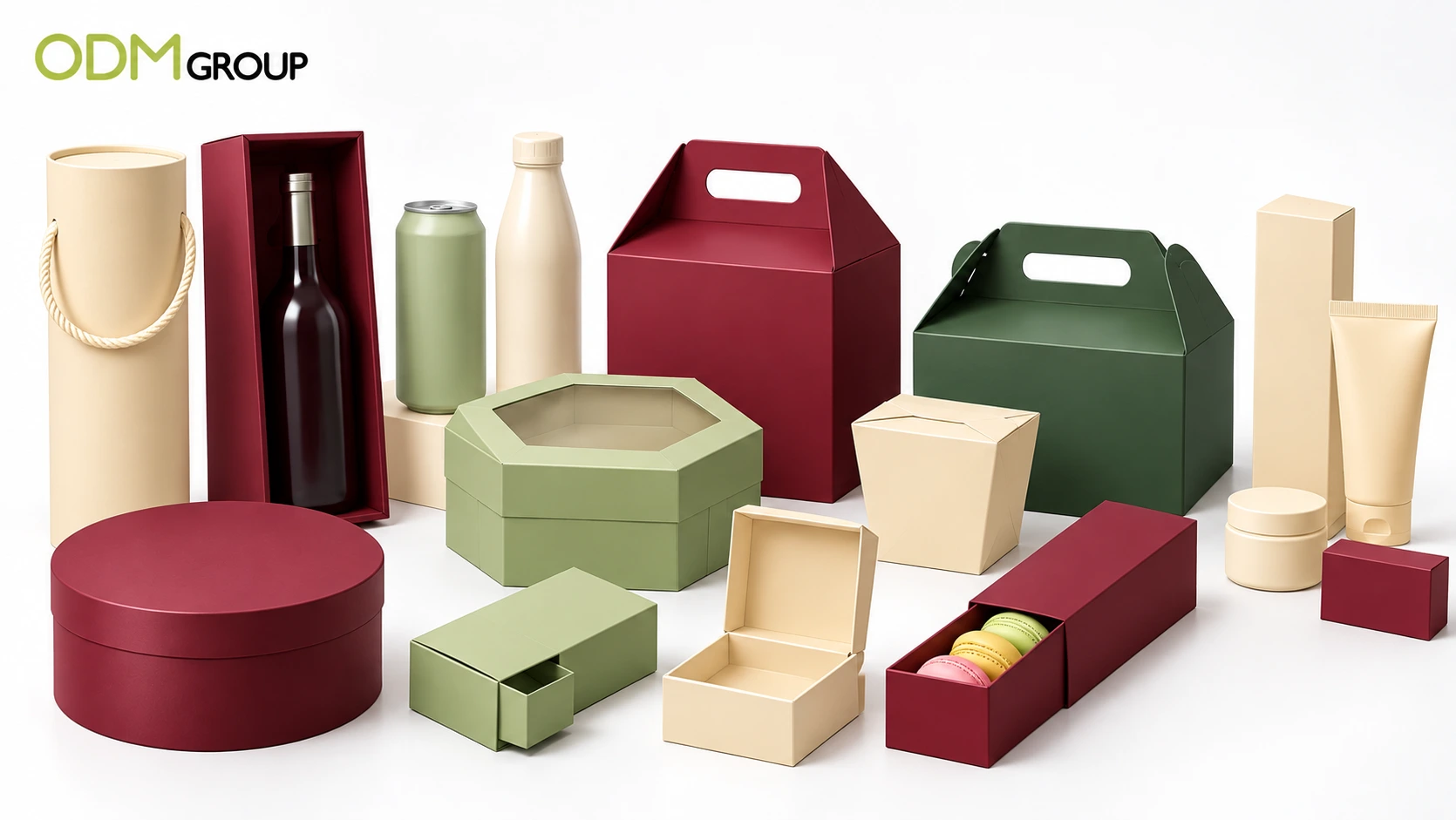
The best packaging ideas come from understanding what the product needs and how customers will interact with it.
Let’s look at how different industries can approach packaging development.
1. Drinks and Beverage Packaging
Some ideas worth exploring include:
-
Single-bottle gift boxes: Custom-designed boxes with fitted inserts for wine, spirits, or specialty beverages.
-
Bottle and glass sets: Packaging that accommodates a bottle alongside branded glasses or accessories.
-
Multi-pack boxes: Structured packaging for several cans or bottles, with a convenient carrying format.
-
Limited-edition presentation boxes: Special artwork and finishes for festive releases, anniversaries, or collaborations.
-
Promotional gift boxes: Beverage packaging combined with complimentary merchandise for a gift-with-purchase campaign.
For beverage brands, the internal structure deserves as much attention as the exterior. Bottles must remain secure, accessories should have their own compartments, and the completed package must be suitable for transportation.
A useful example is a premium wine gift set. Rather than developing a box around the bottle alone, the design team can plan the bottle, wine goblet, protective insert, and presentation together.
2. FMCG Packaging
For these products, consistency and practicality are particularly important. Brands may have several SKUs, different product sizes, and frequent promotional campaigns.
Custom packaging can help through:
-
Consistent box structures across product variants.
-
Clear differentiation between flavors, formulas, and sizes.
-
Promotional sleeves and limited-edition outer boxes.
-
Multi-buy and bundle packaging.
-
On-pack gift compartments and promotional inserts.
For example, a personal care brand launching a new product range might use the same basic carton structure across several items, with different colours and graphics for each variant.
This creates a coherent product family without requiring an entirely different packaging structure for every item.
3. Food and Confectionery Packaging
Some packaging directions include:
-
Chocolate boxes with individual compartments.
-
Cookie and biscuit gift boxes with protective trays.
-
Tea and coffee sampler boxes.
-
Seasonal confectionery collections.
-
Bakery boxes with viewing windows.
-
Gift packaging for regional or specialty food products.
For example, a chocolate brand could develop a box with individual cavities for different flavors. The arrangement keeps the chocolates organized while allowing the artwork and internal presentation to reinforce the brand.
One important distinction: decorative outer packaging and food-contact packaging are not necessarily the same thing. Any material that directly touches food must be assessed against the requirements of the intended market.
4. Cosmetics and Beauty Packaging
A skincare gift set, for instance, might contain a cleanser, serum, moisturizer, and complimentary accessory. Simply placing everything inside a large box can make the presentation feel unfinished.
A better approach is to develop an internal layout that gives each item a defined position.
Packaging possibilities include:
-
Rigid boxes for premium skincare collections.
-
Folding cartons for individual cosmetic products.
-
Drawer boxes for beauty gift sets.
-
Custom inserts for perfume bottles and glass containers.
-
Seasonal boxes for limited-edition beauty collections.
Material texture, color matching, embossing, foil stamping, and matte or gloss finishes can all influence the final appearance.
The design should also account for the actual product containers. A box developed around approximate dimensions may not fit properly once the bottles, caps, or accessories are finalized.
5. Retail and Consumer Products
That means considering shelf dimensions, product visibility, barcode placement, product information, hanging requirements, and how customers will access the contents.
For electronics and accessories, internal compartments can keep cables, devices, and manuals organized. For household products, a practical folding carton may be more appropriate than a premium rigid box.
Retail packaging should also be considered alongside the wider point-of-sale presentation. The product box, shelf display, promotional materials, and campaign graphics should feel like parts of the same brand experience.
6. Promotional Merchandise and Corporate Gifts
This is an area where packaging can become part of the gift itself.
Businesses often combine several items into one package for product launches, employee welcome kits, trade shows, customer appreciation campaigns, and influencer mailers.
The challenge is to make different items feel like one complete collection.
A well-developed gift box might include:
-
A main promotional product.
-
Branded accessories.
-
Printed campaign cards.
-
Protective or decorative inserts.
-
A coordinated outer box.
The box should be designed around the complete contents, not selected first and filled with products afterwards.
This is particularly important when merchandise comes in different shapes and sizes. An internal layout developed early can make the entire set look more organised and professional.
Choosing the Right Materials for Custom Packaging Boxes
Once the box structure is established, material selection becomes the next important decision.
The material influences the box’s appearance, strength, weight, print quality, cost, and suitability for different applications.
Here are some commonly considered options.
| Material | Typical applications | Key considerations |
|---|---|---|
| Paperboard | Cosmetics, FMCG, food cartons | Lightweight, printable, versatile |
| Corrugated board | Shipping, e-commerce, product bundles | Cushioning, stacking strength, protection |
| Rigid board | Luxury gifts, premium product sets | Sturdy structure and premium presentation |
| Kraft paperboard | Natural-looking retail and gift packaging | Appearance, board strength, print requirements |
| Recycled paperboard | Selected retail and promotional boxes | Recycled content, performance, market requirements |
| Molded pulp | Protective inserts and product compartments | Shape, fit, cushioning, material suitability |
There is no universally best material. A material that works well for a lightweight cosmetic carton may not be suitable for a heavy glass bottle.
The choice should be based on the product’s weight, dimensions, fragility, distribution conditions, target price, and desired appearance.
Should Brands Choose Sustainable Packaging Materials?
Sustainability is increasingly relevant to packaging decisions, but it should be approached with care.
Choosing a material simply because it is labeled recyclable or eco-friendly does not automatically make the entire packaging solution sustainable.
Brands should consider:
-
Whether the material is recyclable in the intended market.
-
How much material the structure actually requires.
-
Whether different components can be separated easily.
-
Whether recycled or responsibly sourced materials are suitable for the application.
-
Whether the box can be reused or repurposed.
-
Whether the packaging can be simplified without compromising protection.
For example, replacing an unnecessary plastic insert with a suitable paper-based alternative may be worth exploring. Another option is reducing excess space in a box so that less material is used and more units can fit into a shipping carton.
The goal should be to make a practical improvement that can be explained and supported, rather than relying on broad environmental claims.
Printing and Finishing Options That Make Packaging Stand Out
A good packaging structure provides the foundation. Printing and finishing give the box its visual identity.
The right combination depends on the brand, product category, target audience, and budget.
| Printing or finishing | What it adds | Suitable applications |
|---|---|---|
| Full-color printing | Detailed graphics and product imagery | FMCG, food, retail |
| Foil stamping | Metallic highlights and emphasis | Luxury gifts, cosmetics, beverages |
| Embossing | Raised design elements | Premium packaging and logos |
| Debossing | Pressed-in details | Minimalist and luxury packaging |
| Spot UV | Gloss contrast on selected areas | Branded retail boxes |
| Matte lamination | Smooth, understated appearance | Cosmetics, electronics, premium goods |
| Gloss lamination | Brighter surface and visual impact | Retail and promotional packaging |
| Textured paper | Tactile detail and material character | Premium gift boxes |
It is tempting to combine several finishes to make a box look more impressive. However, more finishing does not automatically mean better design.
Sometimes a simple color palette, carefully positioned logo, and well-selected paper texture create a more distinctive result than a box covered in decorative effects.
The best approach is to select finishes that support the brand’s identity rather than compete with it.
How to Design Custom Product Packaging Boxes That Are Ready for Production
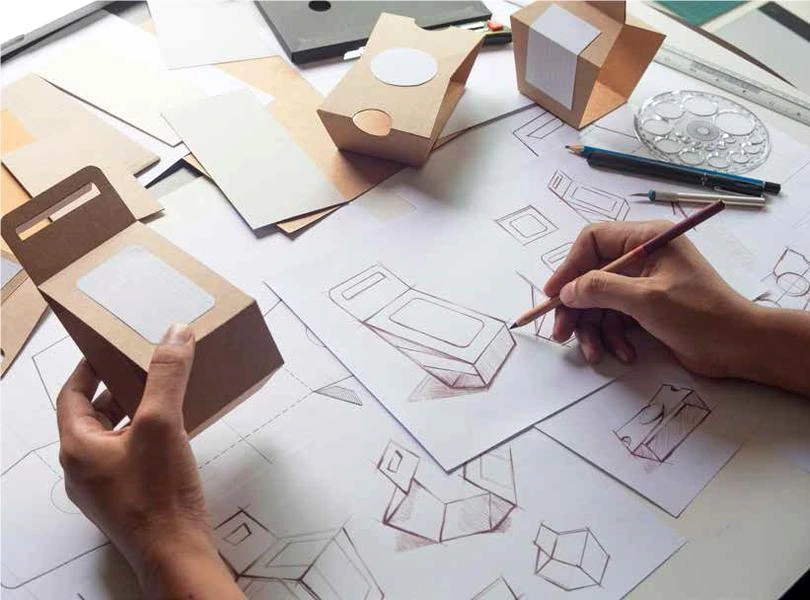
This is where many packaging projects become more complicated than expected.
A design may look excellent on a computer screen, but that does not mean it can be produced exactly as imagined. The box needs to be structurally sound, correctly sized, visually consistent, and practical to manufacture.
Here is a development process worth following.
Step 1. Define the Product and Packaging Requirements
Start with the product itself.
Before choosing a box, establish:
-
Product dimensions and weight.
-
Whether the product is fragile, liquid, or irregularly shaped.
-
Number of items inside the box.
-
Whether the packaging needs internal compartments.
-
Intended sales channel: retail, e-commerce, gifting, or distribution.
-
Target market and applicable packaging requirements.
It is also useful to establish the intended customer experience. Is the box designed to be opened quickly in a store, presented as a gift, or shipped directly to a customer?
These details influence almost every decision that follows.
Step 2. Develop the Packaging Concept and Structure
Once the requirements are clear, explore different packaging directions.
This may involve hand sketches, reference images, structural concepts, and 3D visualizations.
At this stage, consider:
-
Box shape and opening mechanism.
-
Overall dimensions and proportions.
-
Internal compartments and inserts.
-
Product visibility.
-
Branding placement.
-
Material and finishing direction.
A few well-developed concepts are generally more useful than dozens of random ideas. Each should have a reason for its structure and appearance.
Step 3. Create the Artwork and Technical Design
After selecting a direction, the concept needs to be translated into a more detailed design.
This includes the box layout, artwork, dimensions, folding lines, cutting lines, glue areas, and other technical details required for production.
The artwork should account for practical elements such as:
-
Brand logos and color specifications.
-
Product information and instructions.
-
Barcode and QR code placement.
-
Required warnings and regulatory information.
-
Bleed, safe areas, and print alignment.
For retail packaging, these details should be reviewed before the design is finalized. Making changes after a sample or production run has started can create unnecessary delays and costs.
Step 4. Develop a Physical Sample
A physical sample is an important part of the development process.
It allows the team to assess details that are difficult to judge from a drawing or 3D rendering alone.
Check the following:
-
Does the product fit comfortably?
-
Is the box easy to open and close?
-
Does the insert hold the contents securely?
-
Are the dimensions suitable for retail display?
-
Does the printed artwork match the approved design?
-
Are the materials and finishes consistent with the intended quality?
If something does not work, make the necessary adjustments before approving the final sample.
For more complex packaging, additional sampling rounds may be required to refine the structure, fit, or finishing.
Step 5. Confirm Manufacturing Feasibility and Quality Requirements
A production-ready design must be realistic to manufacture.
The selected manufacturing partner should be able to work with the required material, printing method, structure, finishing, and order quantity.
It is also important to establish quality expectations before production begins.
Depending on the packaging application, this may include checks for:
-
Box dimensions and construction.
-
Color and print consistency.
-
Surface finishing.
-
Adhesion and folding quality.
-
Insert fit and product retention.
-
Packaging durability during handling and transportation.
For larger projects, factory selection, production monitoring, and quality control should be considered part of the overall development plan.
Step 6. Plan Production, Packing, and Delivery
The final stage is not simply making the boxes.
The packaging needs to arrive at the right destination, in the right quantity, and in suitable condition for its intended use.
Consider how finished boxes will be packed into master cartons, whether they will be shipped flat or assembled, how much storage space they require, and when they need to reach the filling or distribution facility.
These details can affect both project costs and delivery schedules.
A useful reminder: Packaging design should not end with an attractive visual. It should end with a solution that works for the product, the customer, and the business.
What Should You Prepare Before Requesting a Custom Packaging Design?
A clear project brief makes packaging development more efficient. It helps designers understand what needs to be achieved and gives manufacturing partners the information needed to assess feasibility.
If your business is planning new packaging, prepare the following:
| Information | What to provide |
|---|---|
| Product details | Product photos, dimensions, weight, and description |
| Packaging purpose | Retail sale, shipping, gifting, promotion, or product launch |
| Target audience | Intended customer and market positioning |
| Box quantity | Estimated order volume and number of product variants |
| Brand guidelines | Logo, colors, fonts, and visual references |
| Design direction | Preferred box styles, references, and inspiration |
| Budget | Target packaging cost or overall project budget |
| Timeline | Required sample approval and delivery dates |
| Special requirements | Inserts, windows, closures, labeling, or protective features |
You do not need to have every technical detail worked out before approaching a design partner. In fact, part of the development process is exploring what is possible.
However, the more clearly you can explain the product and its purpose, the easier it becomes to develop a relevant packaging concept.
How ODM Group Helps Brands Develop Custom Product Packaging Boxes
Developing custom product packaging boxes often involves several different disciplines. A brand may have a clear marketing idea but need help turning it into a workable structure, visual concept, and production-ready design.
This is where ODM Group can support the process.
ODM Group is a promotional products and creative marketing agency, not a packaging factory or box manufacturer. We work as a strategic development partner, helping businesses turn packaging ideas into practical solutions that can be developed with suitable manufacturing partners.
Through our design partner, Mindsparkz, we can help with early-stage creative development and visualization.
Depending on the project, our support can include:
-
Packaging concepts and sketches: Exploring box structures, visual directions, and creative ideas based on the product and campaign objectives.
-
3D design and visualization: Developing more detailed representations to help brands review the proposed packaging before sampling.
-
Structural and packaging development: Refining dimensions, inserts, closures, and other design details.
-
Prototype coordination: Helping move an approved concept into physical sampling for evaluation.
-
Factory selection and audit: Identifying suitable manufacturing partners based on project requirements.
-
Quality control and logistics: Coordinating production checks and delivery arrangements.
Our approach is to consider the complete project rather than treating the box as an isolated design task.
Whether you are developing a new cosmetics collection, a beverage gift set, an FMCG product range, or a promotional merchandise package, the starting point is understanding what the packaging needs to achieve.
With more than two decades of experience in promotional product development and a network of manufacturing partners in Asia, ODM helps businesses bridge the gap between creative ideas and production requirements.
Final Thoughts: Start with the Product, Then Design the Box
The most effective custom product packaging boxes are not necessarily the most elaborate. They are the ones that make sense for the product, communicate the brand clearly, protect the contents, and work within the realities of production and distribution.
A folding carton may be the right solution for a retail product range. A rigid box might suit a premium gift set. A custom insert could make all the difference to a fragile product. The decision should come from the product requirements and the intended customer experience, not simply from what looks attractive in a reference image.
If your business is planning a new packaging project, start by looking beyond the box itself. Consider the product, the audience, the sales channel, and the experience you want to create.
Have a packaging idea but need help developing it? Talk to ODM Group. Our team can help you explore design concepts, create sketches and 3D visuals, refine packaging structures, coordinate prototypes, and connect your project with suitable manufacturing partners. Let’s turn your packaging idea into a well-developed solution for your brand.
Latest Blogs
Custom Tape Dispensers: When Everyday Stationery Becomes Brand Merchandise
A tape dispenser is probably not the first product [...]
5 Chinese New Year Products to Wish Customers a Prosperous New Year!
Keep your business at the forefront of your customers' minds in the new year with these Chinese New Year products! [....]
Custom Product Packaging Boxes: More Than Just a Box
Custom product packaging boxes do more than protect products. They [...]
Custom LED Magnetic Lights: Turn Brand Ideas into Illuminated Gifts
A small decorative sign can do more than brighten [...]
Gifts with Purchase Benefits and How Brands Can Make Them Work
Gifts with purchase benefits go beyond adding a [...]

From Plastic Materials to Custom Toys: 5 Ideas for Your Next Products
Sourcing Plastic Products, which type of Plastic to use, Recycling Plastics.
Related posts:
 Custom Tin Packaging by Milka: 3 Secrets Behind Stunning Product Packaging
 Why You Should Invest In High Quality Custom Branded Wooden Boxes
 Promotional Product Packaging by Aussie Winter Miracle Draws Attention
 Product Packaging Factory: 3 Tips for an Effective In-Pack Promotion
 6 Reasons Custom Branded Product Packaging is Crucial for Business