
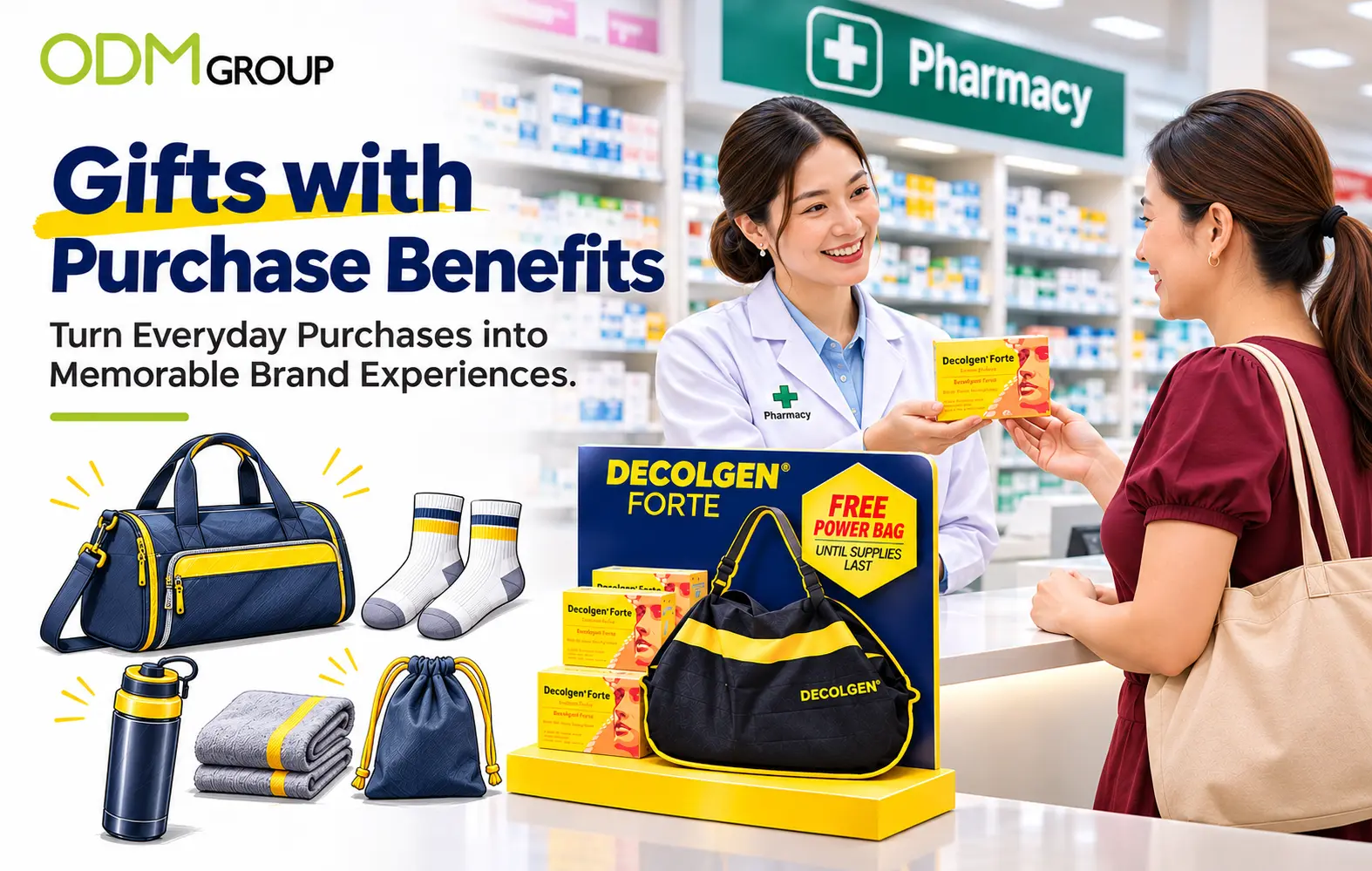
Gifts with purchase benefits go beyond adding a free item to a customer’s shopping basket. When planned well, a gift with purchase (GWP) promotion can encourage customers to choose a brand, increase purchase value, and create a stronger connection with a product. The right promotional gift also gives customers something useful or enjoyable that extends the brand experience beyond the initial purchase.
For brands, a successful GWP campaign starts with more than choosing an attractive freebie. The gift should fit the target audience, complement the main product, and support a clear marketing objective. This article explores the key benefits of gifts with purchase, looks at how brands use them in real campaigns, and explains what to consider when developing merchandise for a GWP promotion.
What Is a Gift with Purchase (GWP)?
A Gift with Purchase (GWP) is a promotional marketing strategy in which customers receive a complimentary item after purchasing a qualifying product or spending a specified amount.
For example, a customer purchasing selected breakfast cereals may receive a promotional gift, while a shopper buying beauty products may receive a complimentary cosmetic pouch. Some campaigns offer a gift with a specific product purchase, while others require a minimum spend.
Unlike a conventional price discount, GWP promotions give customers something additional rather than reducing the price of the main product. This allows brands to introduce new merchandise, reinforce their identity, and make an offer more appealing without relying entirely on price reductions.
Brands looking for merchandise inspiration can explore these creative Gift with Purchase ideas to see how different product categories can support promotional campaigns.
5 Benefits of Gifts with Purchase for Brands
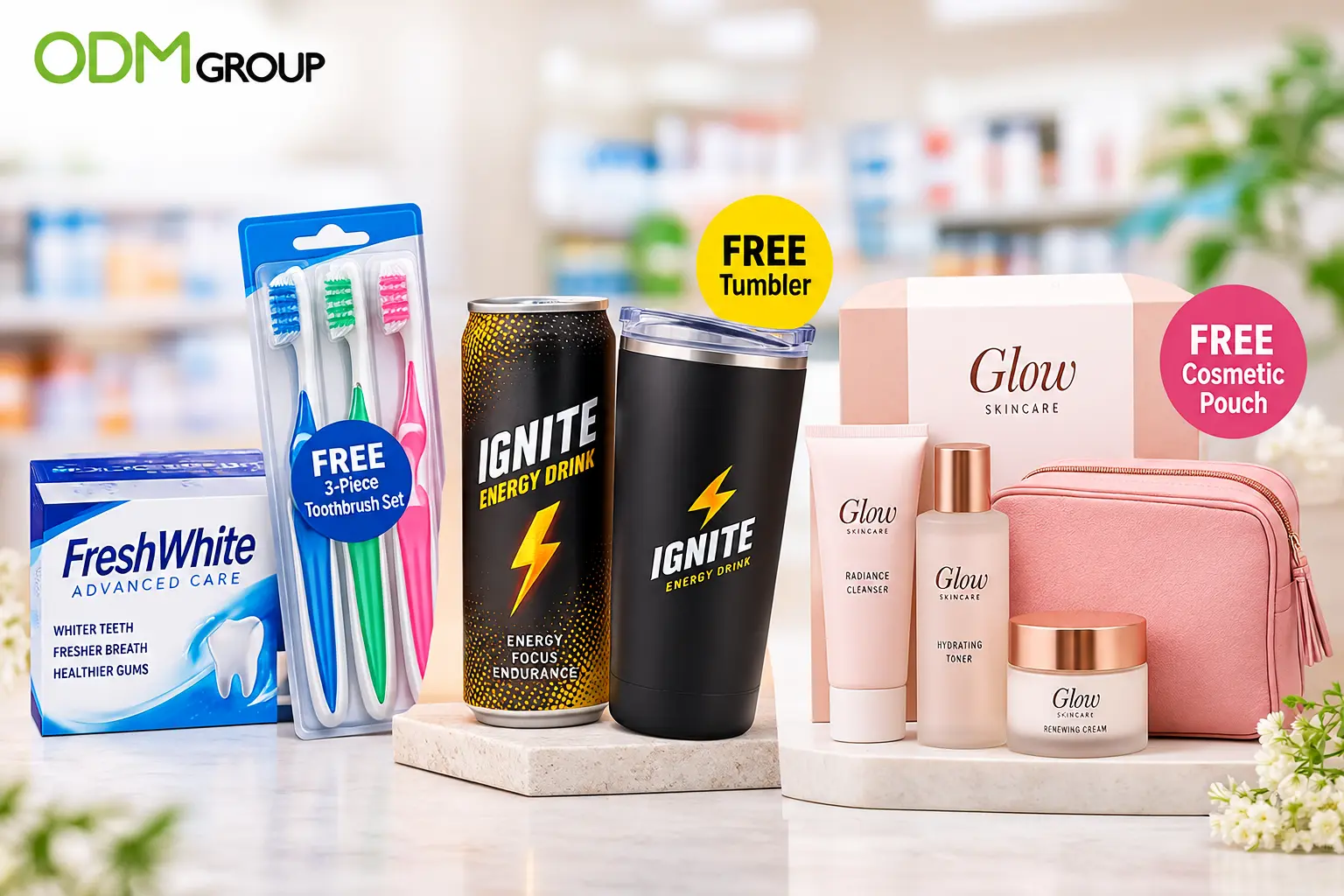
GWP promotions can support several marketing objectives. Their effectiveness depends on the gift, the purchase conditions and how well the offer fits the target audience.
1. Encourage Purchase Decisions
A complimentary gift can give customers an additional reason to choose one product over another. This is particularly useful in competitive retail environments where several brands offer similar products.
For example, a customer comparing two breakfast cereal brands may be more interested in the one offering an appealing promotional gift. The additional item gives the promotion a point of difference and can influence the final purchase decision.
The gift should be relevant and attractive enough to make the offer worthwhile, rather than simply being an inexpensive item added to the transaction.
2. Increase Average Transaction Value
GWP promotions can encourage customers to spend more to qualify for a gift.
Consider a campaign that offers a complimentary item when customers spend a minimum amount. A shopper who initially intends to purchase one product may add another item to reach the qualifying threshold.
This approach can increase average transaction value, provided the spending requirement is realistic and the gift’s value justifies the additional purchase.
Brands should carefully calculate the purchase threshold against product margins, gift costs, and campaign expenses to ensure the promotion remains commercially viable.
3. Strengthen Brand Awareness Beyond the Purchase
A promotional gift can continue communicating a brand’s identity after customers leave the store.
Items such as reusable bags, drinkware, stationery, and household accessories can become part of everyday routines. When customers regularly use these products, the branded merchandise creates additional opportunities for exposure.
The choice of product matters. A useful item with appropriate branding is more likely to remain in use than a gift that has little relevance to the recipient.
4. Encourage Repeat Purchases and Customer Engagement
Collectible merchandise and limited-edition gifts can give customers a reason to return to a store or purchase another qualifying product.
For instance, a campaign featuring several collectible designs may encourage customers to collect the full series. Other promotions can introduce different gifts over several weeks, giving shoppers a reason to follow the campaign.
This approach works particularly well when the gifts have genuine appeal, and the collection is clearly communicated. However, brands should keep purchase conditions straightforward and ensure the promotional items are available as advertised.
5. Improve the Customer Experience
A thoughtful gift can make an ordinary shopping transaction feel more rewarding.
More than the product itself shapes the experience. Attractive packaging, clear promotional messaging, and convenient gift distribution all contribute to how customers perceive the offer.
A well-presented GWP can also make a campaign more noticeable at the point of sale. For brands, this creates another opportunity to communicate their identity and strengthen the connection between the customer and the product.
Real-World Examples of Gifts with Purchase Campaigns
Looking at real retail promotions shows how brands use complimentary gifts to support their marketing efforts. The following campaigns from the Philippines provide two examples of GWP promotions.
1. Nestlé Cereals Philippines
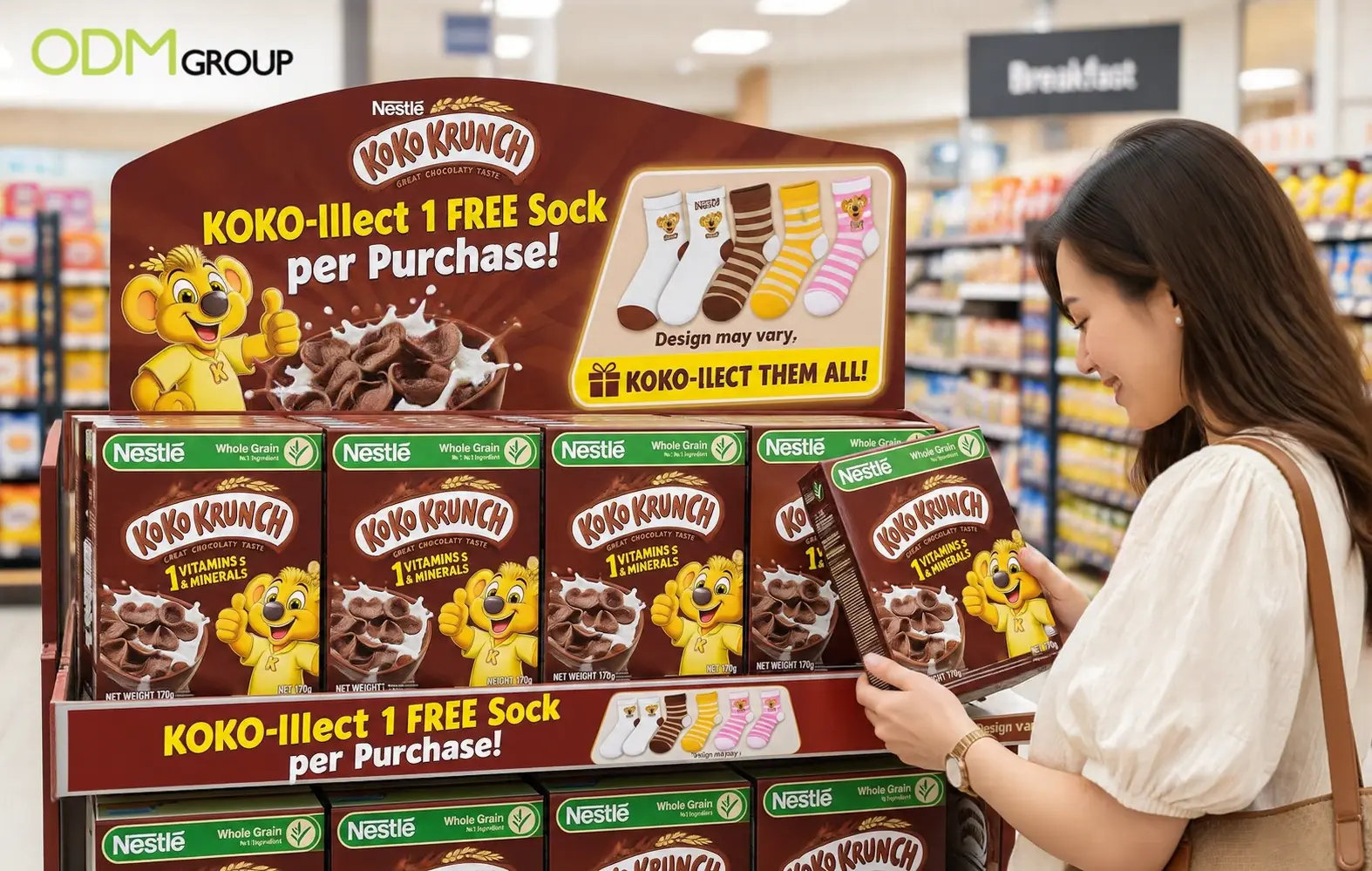
The Nestlé Cereals Philippines promotion provides an example of how a consumer food brand can use a promotional gift to add value to a retail purchase.
The promotion offers customers a FREE collectible sock with every qualifying purchase of Koko Krunch. The campaign also encourages shoppers to complete the collection, with the message: “One purchase closer to completing the set.”
For breakfast and grocery brands, promotional merchandise can create a connection between the product and consumers’ daily routines. A gift that appeals to families or complements the breakfast occasion can make the promotion more relevant to its intended audience.
The important consideration is product relevance. A promotional item should offer something customers appreciate while maintaining a clear connection to the main brand or product.
2. Decolgen Philippines – Free Power Bag Promotion
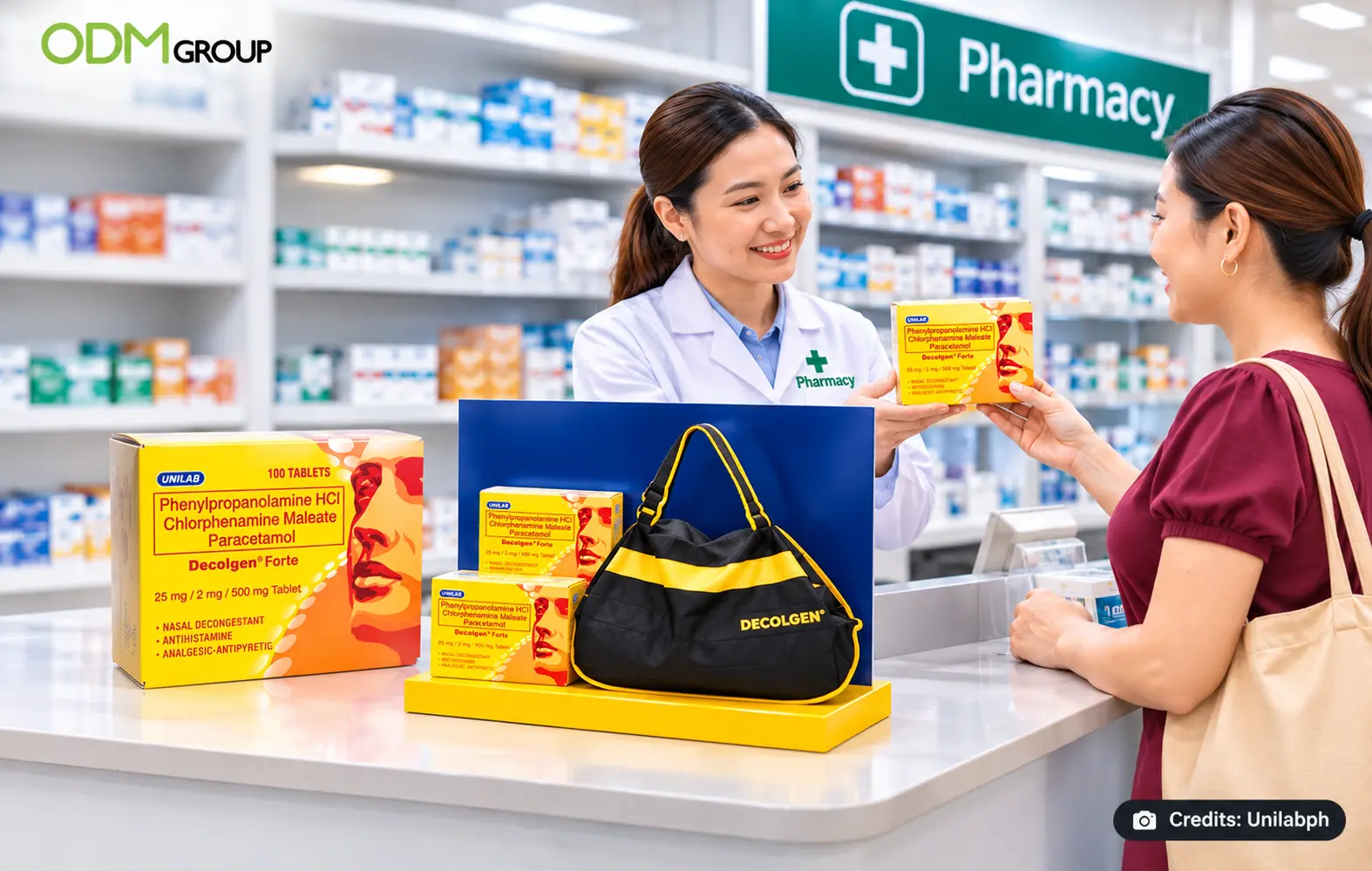
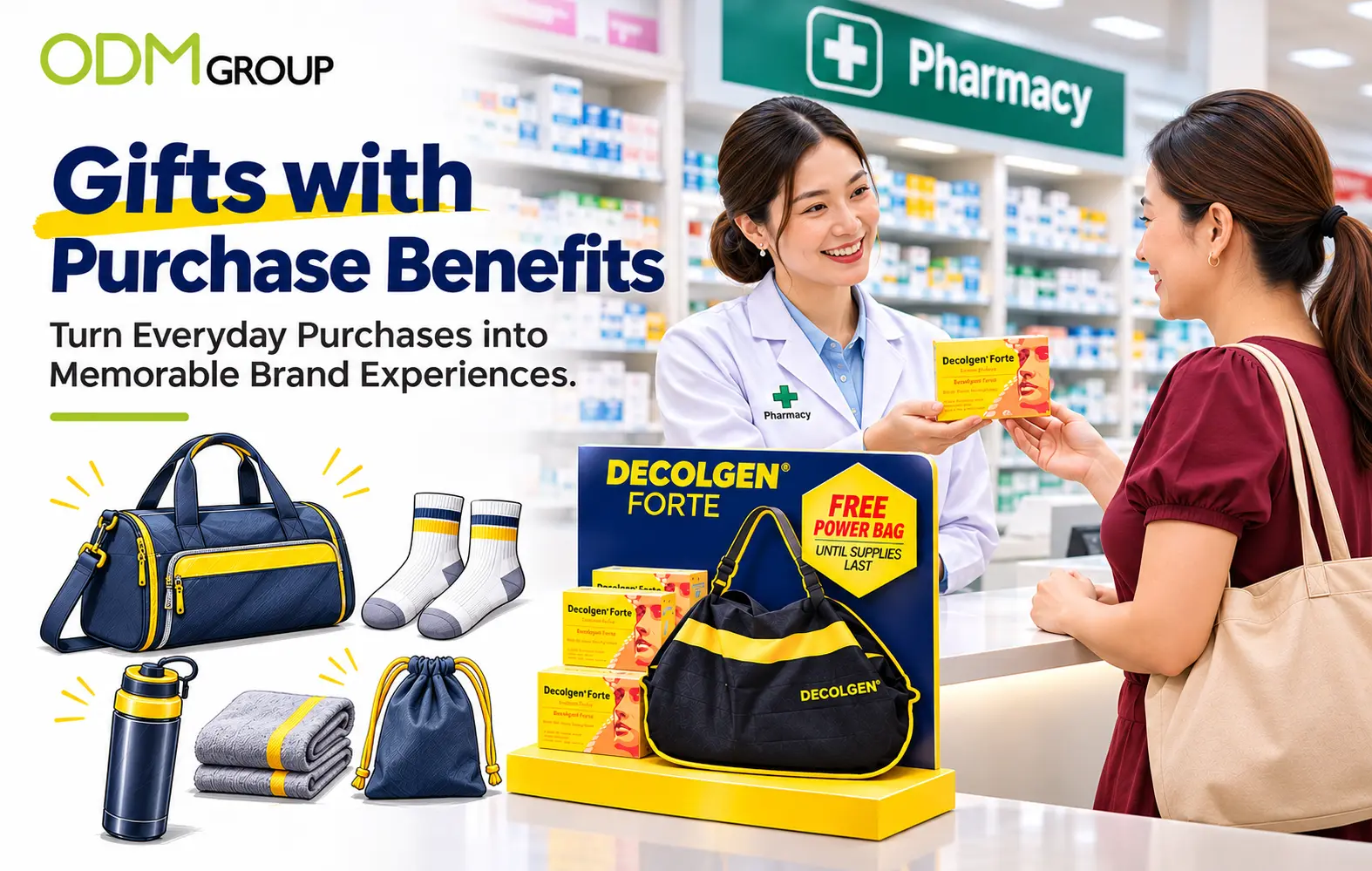
Decolgen Philippines takes a more practical approach by offering a FREE Power Bag with a qualifying purchase of Decolgen Forte.
The promotion encourages customers to stock up on Decolgen Forte, which contains Phenylpropanolamine Hydrochloride, Chlorphenamine Maleate, and Paracetamol. The complimentary Power Bag is available while supplies last.
Unlike collectible merchandise, this campaign uses a functional promotional gift to add value to a qualifying purchase. A bag is a practical everyday accessory that can remain useful beyond the promotional period.
For brands, this illustrates how useful merchandise can complement a product promotion. Choosing an item with everyday appeal gives customers an additional reason to appreciate the offer while creating opportunities for continued brand visibility.
Note: These are third-party promotional campaign examples and are not projects designed or produced by The ODM Group.
How to Choose the Right Gift for a GWP Campaign
Choosing a promotional gift takes more thought than simply picking an attractive product. The right merchandise should appeal to customers, complement the main product, and remain practical within the campaign budget.
Here are five considerations brands should evaluate before developing a GWP item.
1. Understand the Target Audience
Start by identifying who will receive the gift. Consider customers’ age groups, interests, lifestyles, and shopping habits.
A practical household item may appeal to family shoppers, while younger consumers may respond better to collectible accessories or lifestyle merchandise.
Brands should also consider whether the gift fits the occasion and the product being promoted. Understanding the intended recipient makes it easier to shortlist merchandise with genuine appeal.
2. Match the Gift to the Main Product
The promotional item should make sense alongside the product being purchased. A relevant gift creates a more coherent offer and helps customers understand the connection between the merchandise and the brand.
For example:
- Breakfast products: Kitchen accessories, lunch containers or dining merchandise.
- Beverage brands: Customized drinkware, bottle holders or reusable accessories.
- Beauty products: Cosmetic pouches, mirrors or travel organizers.
- Household products: Practical home accessories, storage items or cleaning-related merchandise.
- Lifestyle brands: Collectible accessories, bags or everyday carry items.
These are starting points, not fixed product combinations. The best choice depends on the campaign’s audience, budget, and objectives.
3. Balance Perceived Value and Campaign Budget
The gift should be appealing enough to influence a purchase decision, but its development and distribution costs must remain commercially realistic.
Brands should consider more than the unit price. The overall campaign budget may include:
- Product design and development.
- Materials and customization.
- Mould or tooling costs, where applicable.
- Individual and retail packaging.
- Sampling and quality checks.
- Production and logistics.
Also evaluate purchase thresholds against product margins and expected customer spending. A gift that encourages additional purchases but costs too much to develop or distribute may not deliver the intended commercial result.
4. Make the Product Worth Keeping
A promotional gift should offer value beyond its branding. Customers are more likely to appreciate an item when it is practical, attractive, or enjoyable to use.
Consider the following product characteristics:
- Functionality: Can customers use it in their everyday lives?
- Durability: Will it withstand regular use?
- Design: Does it look appealing and reflect the brand appropriately?
- Branding: Is the logo visible without overwhelming the product?
- Uniqueness: Does it offer something customers would not normally expect from the brand?
A well-developed promotional gift should feel like a considered merchandise item, not simply an advertising object.
5. Consider Packaging and Retail Presentation
Packaging influences how customers perceive a promotional gift and how easily it can be distributed in-store.
Depending on the campaign, the gift may be attached to the main product, packed inside a combined gift set, or displayed separately at the point of sale.
Brands should consider packaging dimensions, product protection, storage requirements, and retail display arrangements during development. Clear promotional messaging is equally important so customers understand which purchases qualify for the offer.
For more insight into the role of presentation and branding, explore ODM’s work in brand packaging design and development.
GWP vs PWP: What Is the Difference?
Gift with Purchase (GWP) and Purchase with Purchase (PWP) are two promotional approaches that encourage customers to buy. Although both provide additional value, their mechanics and marketing objectives differ.
| Comparison | GWP | PWP |
|---|---|---|
| Promotional offer | Complimentary gift | Additional item at a special price |
| Customer payment | Meets the qualifying purchase condition | Pays an additional amount for the promotional item |
| Main objective | Increase perceived purchase value | Encourage additional spending |
| Suitable for | Purchase incentives and customer engagement | Increasing basket value and product attachment |
GWP works well when a brand wants to reward customers with something extra or make a purchase more attractive. PWP is useful when the objective is to encourage customers to purchase an additional item at a promotional price.
The right approach depends on the campaign budget, target audience, product margins and marketing objectives.
How The ODM Group Helps Brands Develop GWP Campaigns
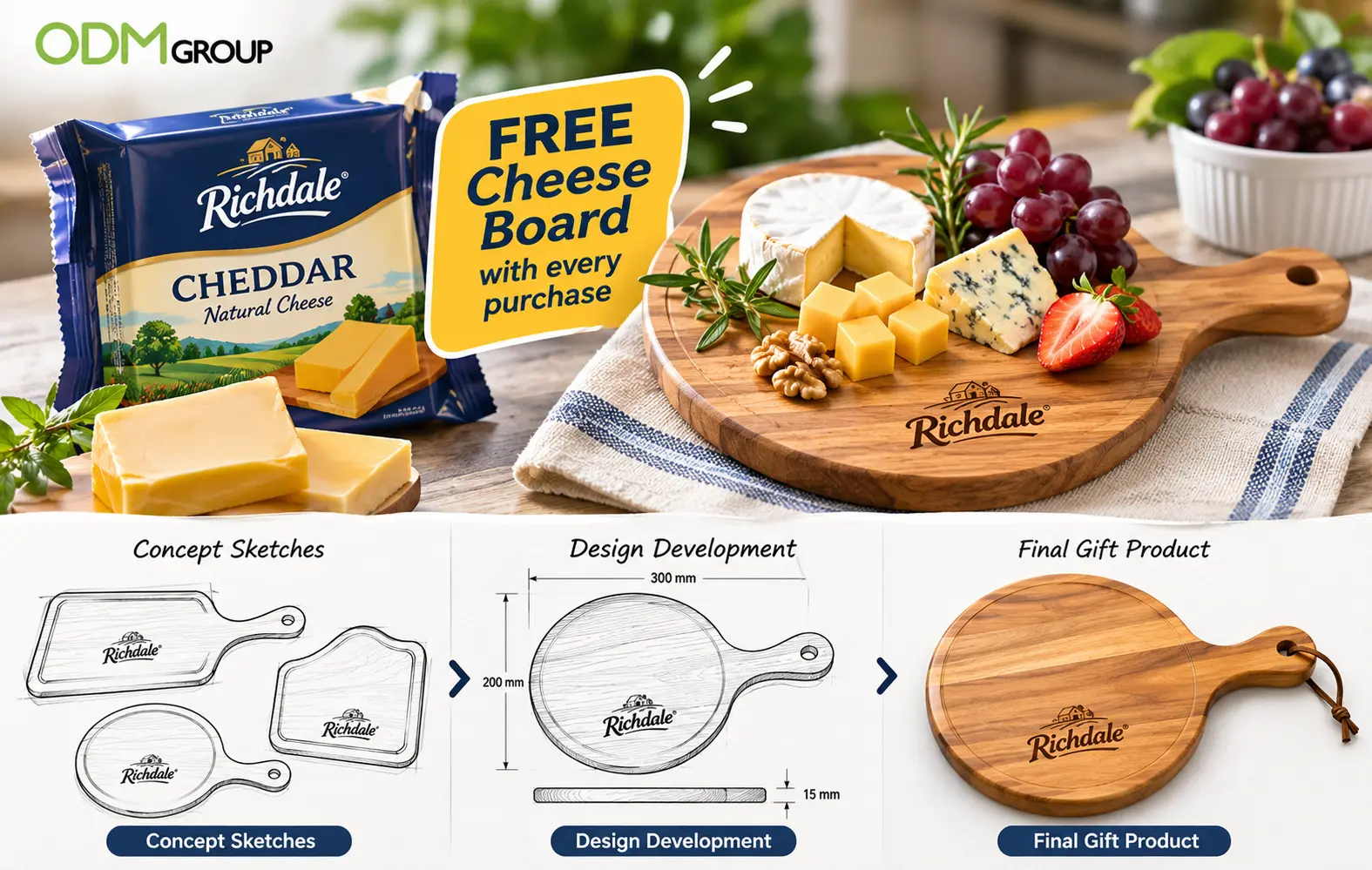
A successful GWP campaign starts with a relevant idea and requires careful coordination to turn it into a practical promotional solution.
The ODM Group works with brands as a strategic promotional merchandise partner, helping businesses explore product concepts that support their marketing objectives. Rather than operating as a factory or manufacturer, ODM connects creative ideas with suitable manufacturing partners.
Its support can include:
- Campaign and product concepts: Exploring merchandise ideas that complement the main product, campaign objectives, and target audience.
- Product design and visualization: Developing design directions, industrial design sketches, and 3D visuals through Mindsparkz. Learn more about ODM’s product development process.
- Specifications and packaging: Defining materials, dimensions, branding requirements and packaging concepts.
- Factory selection: Identifying suitable manufacturing partners based on product requirements and production capabilities.
- Sampling and quality control: Coordinating prototypes, factory audits, and product quality checks.
- Production and delivery coordination: Supporting the process from approved samples through production and shipment.
ODM’s creative work and promotional merchandise projects show how campaign objectives can translate into merchandise concepts across industries.
From an initial campaign idea to a developed merchandise concept, ODM helps brands evaluate the practical considerations involved in creating promotional gifts for retail campaigns. To understand ODM’s wider capabilities and approach, visit the About The ODM Group page.
Final Thoughts
Gifts with purchase promotions let brands add value to everyday purchases while creating more meaningful customer interactions. However, an effective campaign requires more than an attractive free item. The gift should reflect the campaign objective, appeal to the intended audience, and be practical to develop, produce, and distribute.
For brands planning their 2027 promotional campaigns, now is a good time to explore new merchandise concepts and evaluate potential product ideas. Contact The ODM Group to discuss your next GWP campaign. From creative concepts and product design to factory selection, quality control, and delivery coordination, ODM can help turn your promotional ideas into practical brand experiences.
More Product Ideas


FAQs About Gifts with Purchase
What are the main benefits of gifts with purchase?
Gifts with purchase can encourage customers to buy, increase average transaction value and improve perceived product value. They can also strengthen brand awareness, encourage repeat purchases and create a more engaging retail experience.
How do gifts with purchase encourage customers to spend more?
Brands can set a minimum spending requirement to qualify for a complimentary gift. Customers who are close to the threshold may add another product to their basket to receive the offer, potentially increasing the average transaction value.
What makes a gift with purchase appealing to customers?
An appealing GWP item offers practical, emotional or collectible value. Its usefulness, design, quality and relevance to the main product all influence whether customers consider it worth receiving.
How early should brands plan a GWP campaign?
Brands should begin planning several months before the intended launch, particularly when the gift requires custom design, tooling, sampling or specialized packaging. The exact development timeline depends on product complexity, order quantities, production requirements and shipping arrangements.
Related Blogs
Gifts with Purchase Benefits and How Brands Can Make Them Work
Gifts with purchase benefits go beyond adding a [...]
Beer Swag Ideas: Lessons from Heineken Silver’s Taiwan Campaign
Beer swag is evolving beyond traditional bottle openers and [...]
Snack Bag Clips: A Gift With Purchase Idea Inspired by Hair Accessories
Snack bag clips do far more than simply reseal [...]

Top 11 Branded Cooler Bags For Your Beverage Business
Are you tired of blending in with your competition [...]
Take Your Outdoor Marketing to New Heights with Custom Dry Bags!
The allure of outdoor activities, from adventurous hikes to [...]



Freebie Marketing Strategy: A Winning Technique to Increase Sales
Freebie marketing strategy has become a prominent tool in [...]