
A promotional travel kit combines practical travel essentials with branded merchandise to create a memorable customer experience. From airline amenity kits to corporate gifts and event giveaways, these kits help businesses connect with their audiences through useful, travel-friendly products.
A successful kit balances functionality, comfort, and brand identity with thoughtful material selection. By incorporating reusable accessories, sustainable packaging, and customized designs, businesses can create promotional travel kits that reflect their brand values while delivering lasting practical value.
Table of Contents
What Is a Promotional Travel Kit?
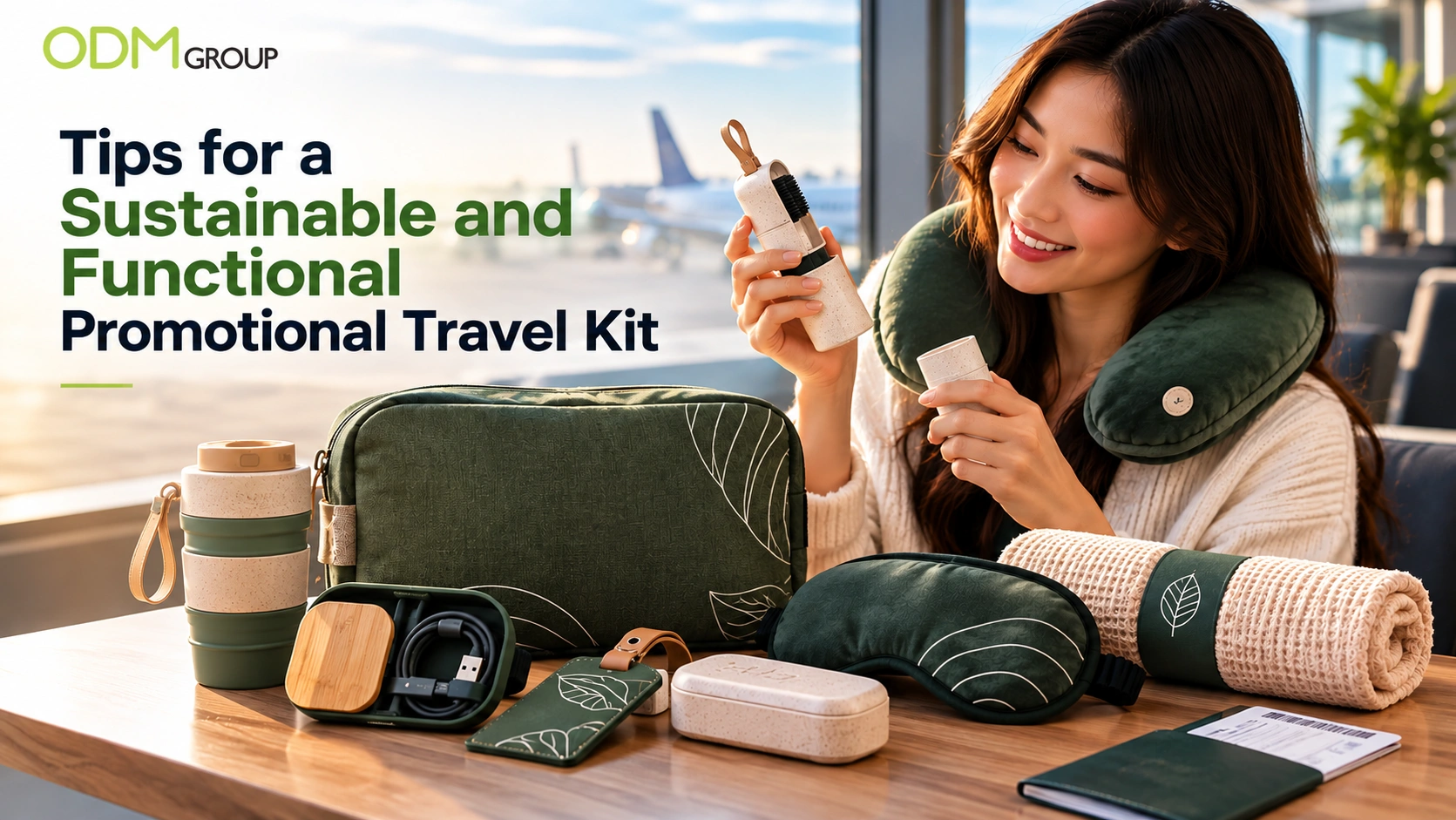
A promotional travel kit is a collection of travel-related products packaged together and customized with a company’s branding. Depending on the intended audience, it may contain comfort accessories, personal care items, luggage organizers, reusable drinkware, or other travel essentials.
Unlike a single promotional giveaway, a travel kit brings complementary products together into one coordinated package. This allows businesses to create a more complete experience while incorporating multiple branded touchpoints.
What Can a Promotional Travel Kit Include?
Common options include:
- Comfort accessories: Eye masks, neck pillows, earplugs, and travel blankets.
- Travel organizers: Drawstring bags, toiletry pouches, luggage tags, and compact packing organizers.
- Personal care essentials: Travel-size toiletry containers, hand towels, and suitable personal care accessories.
- Reusable products: Water bottles, foldable shopping bags, and durable travel essentials.
- Technology accessories: Cable organizers and compact charging accessories where appropriate.
- Custom packaging: Branded pouches, coordinated bags, or presentation boxes.
The ideal combination depends on the recipient, campaign objectives, budget, and distribution method. An airline amenity kit may prioritize comfort during a flight, while a corporate travel gift set may focus on organization and everyday convenience.
Why Are Promotional Travel Kits Appealing to Businesses?
A promotional travel kit offers more than a collection of branded products. When designed around the recipient’s needs, it can support customer experience, brand recognition, and long-term product use.
Improve the Customer Experience
For airlines, travel-related businesses, and hospitality brands, comfort accessories can make a journey more convenient. Eye masks, earplugs, neck pillows, and towels are examples of products that may be useful during long journeys.
Malindo Air’s “Get Comfy Kit” demonstrates this approach by combining several comfort-oriented products in one branded bag.
The lesson for businesses is straightforward: promotional merchandise becomes more relevant when it addresses a genuine customer need.

Promotional travel kit by Malindo Air
Create Multiple Branding Opportunities
A branded travel kit can feature a logo on the main bag, individual accessories, product labels, or packaging. These elements can be coordinated through colors, typography, and design details to create a consistent brand identity.
Unlike a disposable promotional item, a durable travel accessory may continue to be used after the campaign ends. This creates additional opportunities for brand exposure, although actual results depend on product quality, recipient preferences, and frequency of use.
Support Corporate Gifting and Event Marketing
Promotional travel kits are suitable for several B2B applications, including:
- Corporate gifts for employees and business partners.
- Conference and trade show giveaways.
- Travel essentials for incentive trips and company retreats.
- Welcome kits for employees who travel for work.
- Branded merchandise for airlines, hotels, and tourism businesses.
For event organizers, a coordinated travel kit can also help differentiate a gift package from conventional single-item giveaways.
6 Tips for Creating a Sustainable and Functional Promotional Travel Kit
Developing an effective travel kit requires a balance between practical value, visual appeal, material selection, and production feasibility. These six considerations can help businesses create a kit that supports both customer needs and brand objectives.
Tip 1: Choose Materials That Suit the Product’s Intended Use
Material selection affects durability, appearance, comfort, and maintenance requirements. For a promotional travel kit, each material should be appropriate for the product’s function.
For example, a drawstring bag may use cotton, recycled polyester, or another suitable textile. A toiletry pouch may require a material that is easy to clean, while an eye mask should prioritize comfort and skin contact.
Businesses exploring more sustainable options can consider:
- Recycled textile materials where suitable.
- Reusable fabrics selected for the application.
- Durable materials that support repeated use.
- Materials with relevant environmental certifications or documented sourcing information.
However, a material should not be considered environmentally preferable solely because it is labeled natural or recycled. Durability, manufacturing, transportation, maintenance, and end-of-life disposal can all affect environmental impact.
The objective is to select materials that meet functional requirements while supporting the brand’s sustainability commitments.
Explore more ideas for branded eco-friendly products.
Tip 2: Replace Unnecessary Single-Use Packaging
Packaging contributes to the overall presentation of a promotional travel kit, but excessive packaging can increase material use and shipping volume.
Instead of automatically using multiple disposable wrappers or plastic bags, consider whether the main travel pouch can serve as the product’s packaging.
For example, a reusable drawstring bag can hold an eye mask, a luggage tag, and other lightweight accessories. A structured pouch may be more appropriate for personal care products or items that require better organization.
Other considerations include:
- Choosing packaging dimensions that fit the products closely.
- Reducing unnecessary inserts and decorative layers.
- Selecting packaging materials compatible with the intended disposal or recycling system.
- Ensuring that packaging protects the products during transportation.
Materials such as paperboard, bamboo-based materials, or compostable alternatives may be suitable in specific applications, but their benefits depend on product requirements and local disposal infrastructure.
Case Study: ANA Reduces Disposable Packaging in Amenity Kits
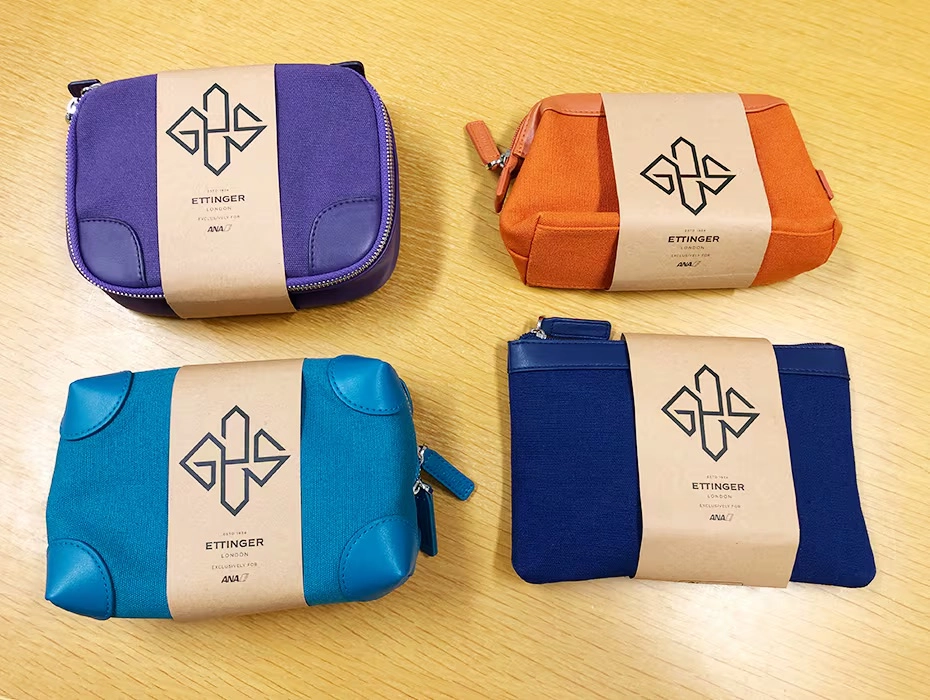
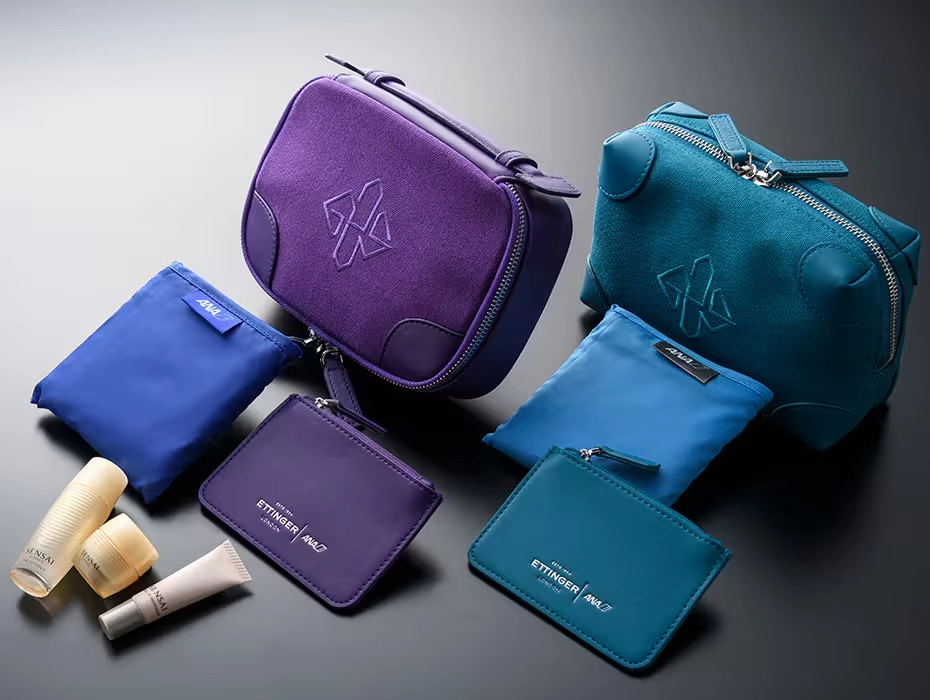
In April 2024, All Nippon Airways (ANA) announced new First and Business Class amenity pouches developed in collaboration with ETTINGER. The airline replaced plastic packaging around the kits with FSC-certified paper strips.
According to ANA, this change was expected to reduce disposable plastic use by approximately 1.7 tonnes per year compared with fiscal year 2019.
Tip 3: Prioritize Reusable Products Over Disposable Giveaways
A promotional travel kit should offer products that recipients can realistically use more than once.
Reusable accessories can provide continued utility, particularly when they are compact, easy to maintain, and suitable for everyday travel. Examples include fabric travel pouches, luggage tags, eye masks, reusable shopping bags, and durable organizers.
When choosing products, consider whether they are:
- Practical for the intended journey.
- Easy to pack and carry.
- Durable enough for repeated use.
- Simple to clean or maintain where necessary.
- Relevant to the recipient’s lifestyle.
A larger kit is not automatically more valuable. A smaller collection of well-selected products may be more useful than a package filled with items recipients are unlikely to need.
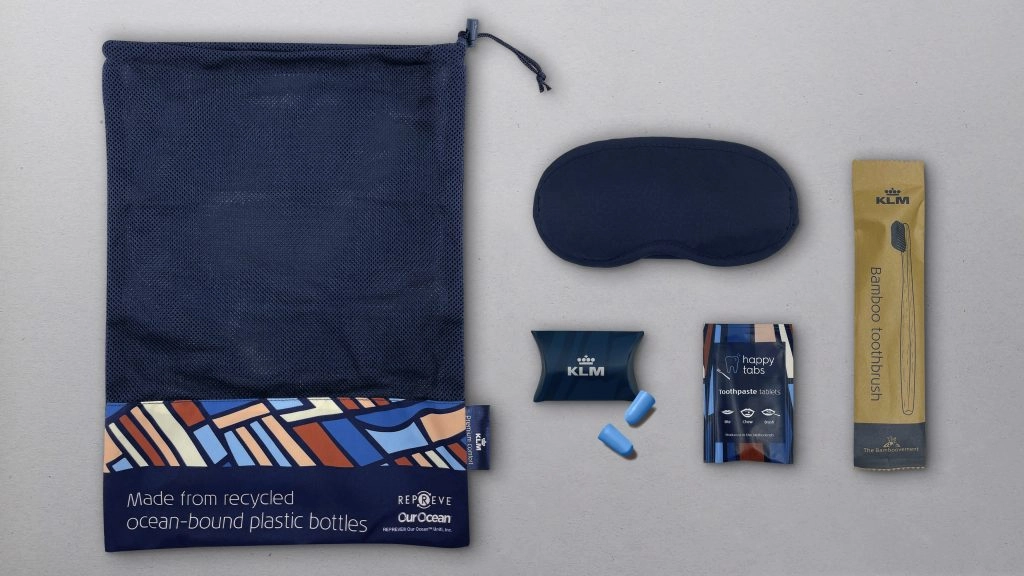
Case Study: KLM Designs an Amenity Kit for a Second Life
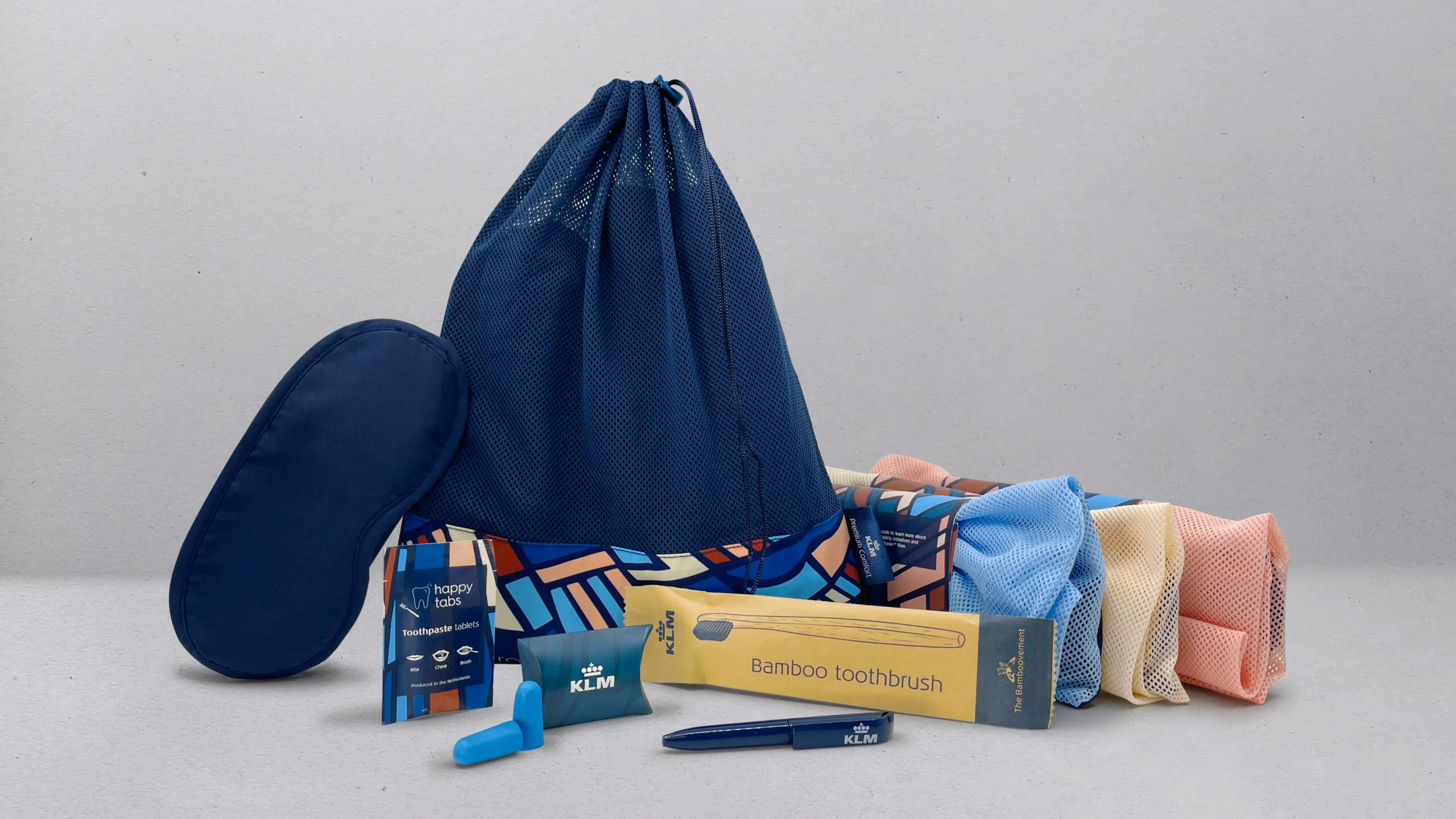
KLM worked with deSter to develop a Premium Economy amenity kit featuring fabric made from REPREVE Our Ocean recycled material. The material uses recycled plastic collected from coastal communities.
The kit was designed with reuse in mind: the bag could be used as a laundry bag after the flight. The contents also included a bamboo toothbrush and toothpaste tablets.
Rather than treating the bag as disposable packaging, this approach gave it a second function beyond its original purpose.
Tip 4: Focus on Comfort, Hygiene, and Product Quality
Comfort is particularly important when developing promotional travel kits for airlines, hospitality businesses, and corporate travelers.
Malindo Air’s example illustrates how complementary accessories can support the travel experience. An eye mask may help block light, earplugs may reduce surrounding noise, and a neck pillow may provide additional support.
When developing a similar kit, consider the following requirements:
- Comfort: Choose appropriate dimensions, textures, and product designs.
- Hygiene: Consider clean packaging, appropriate product protection, and clear care instructions.
- Quality: Assess material consistency, construction, stitching, and product functionality.
- Safety: Verify applicable product requirements, especially for electronic accessories and products intended for personal care.
- Maintenance: Consider whether recipients can clean or reuse the products easily.
Product quality should be evaluated against the intended application and relevant specifications. A promotional product represents the brand that distributes it, so poor construction or unsuitable materials can undermine the overall experience.


Tip 5: Develop an Attractive and Consistent Design
Visual design is an important part of a branded travel kit. The main bag, accessories, and packaging should work together rather than appearing to be unrelated promotional items.
Malindo Air’s “Get Comfy Kit” uses a plum-colored textile bag with contrasting print, giving the package a recognizable appearance while keeping the products together.
Businesses can apply the same principle by coordinating:
- Brand colors and logo placement.
- Printing, embroidery, or other suitable decoration methods.
- Materials and finishes across different accessories.
- Packaging and product presentation.
- Product shapes, sizes, and visual details.
Customization does not need to be complicated. A well-designed pouch with a clear logo and a few complementary accessories can create a more cohesive impression than a large collection of inconsistently branded products.
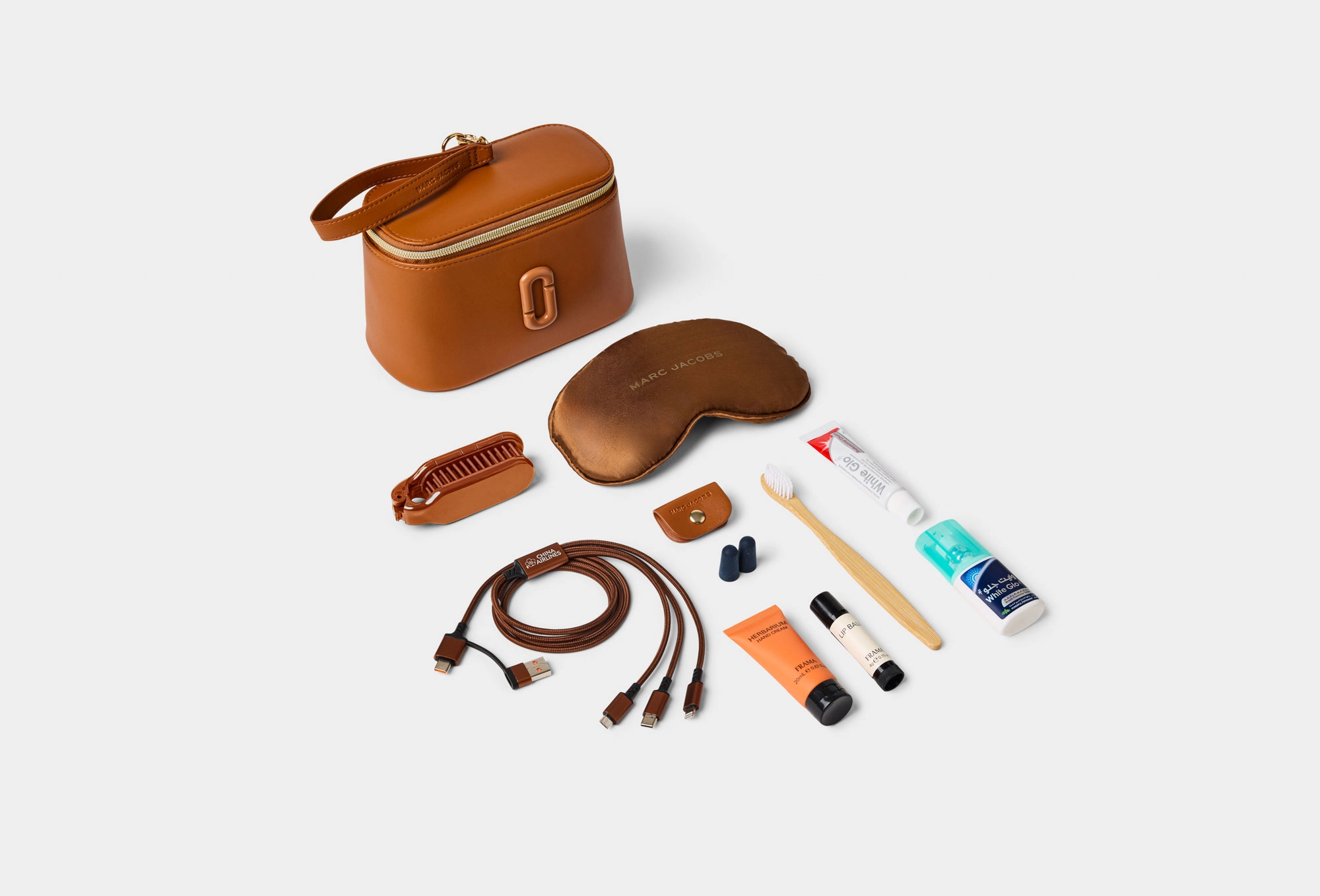
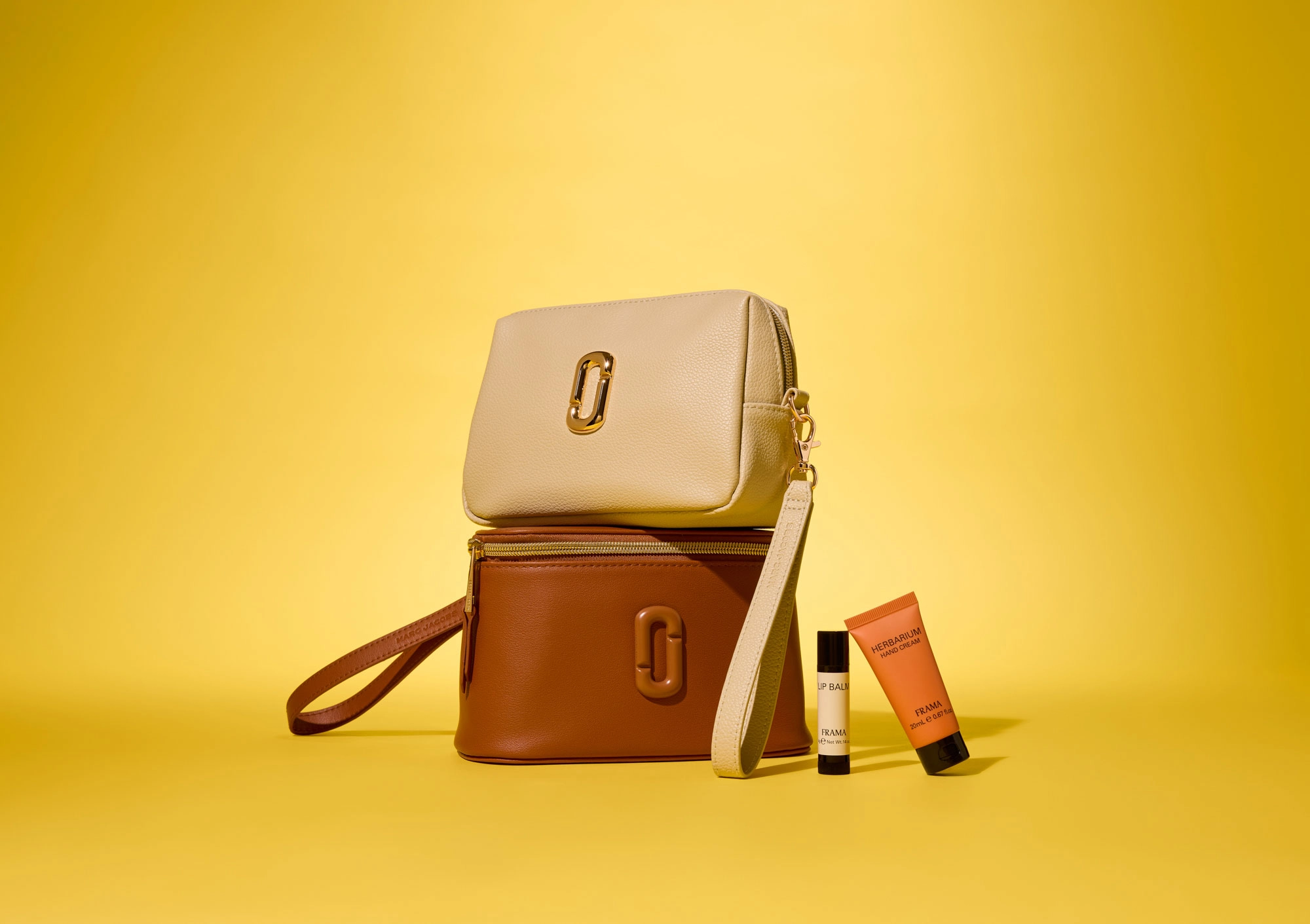
Case Study: China Airlines Collaborates With Marc Jacobs and FRAMA
In March 2026, China Airlines announced a travel kit collaboration involving Marc Jacobs and FRAMA. The concept combines recognizable design with curated travel amenities intended to extend the brand experience beyond the aircraft cabin.
This example illustrates how a travel kit can become more than a functional collection of products. The visual identity, product selection, and overall presentation can work together to create a distinctive branded experience.
Tip 6: Make Portability a Core Design Requirement
A travel kit should be easy to carry, pack, and access. Excessive weight, bulky packaging, or poorly organized contents can reduce its practical value.
Portability is especially important for airline amenity kits, event giveaways, and corporate gifts distributed to recipients who are already carrying luggage or work equipment.
Consider the following design factors:
- Weight: Keep the overall package manageable for its intended use.
- Dimensions: Ensure the kit fits conveniently into a suitcase, backpack, or carry-on bag where relevant.
- Organization: Use compartments, pouches, or separate sections when they improve accessibility.
- Durability: Choose construction and closures suited to repeated handling.
- Product compatibility: Ensure that the selected accessories fit comfortably inside the main bag.
Businesses should also consider the practical requirements of the distribution environment. Products intended for airline passengers may have different size and packaging requirements from travel gifts distributed at corporate events.
A compact, well-organized promotional travel kit can offer greater practical value than a larger package that is difficult to transport.
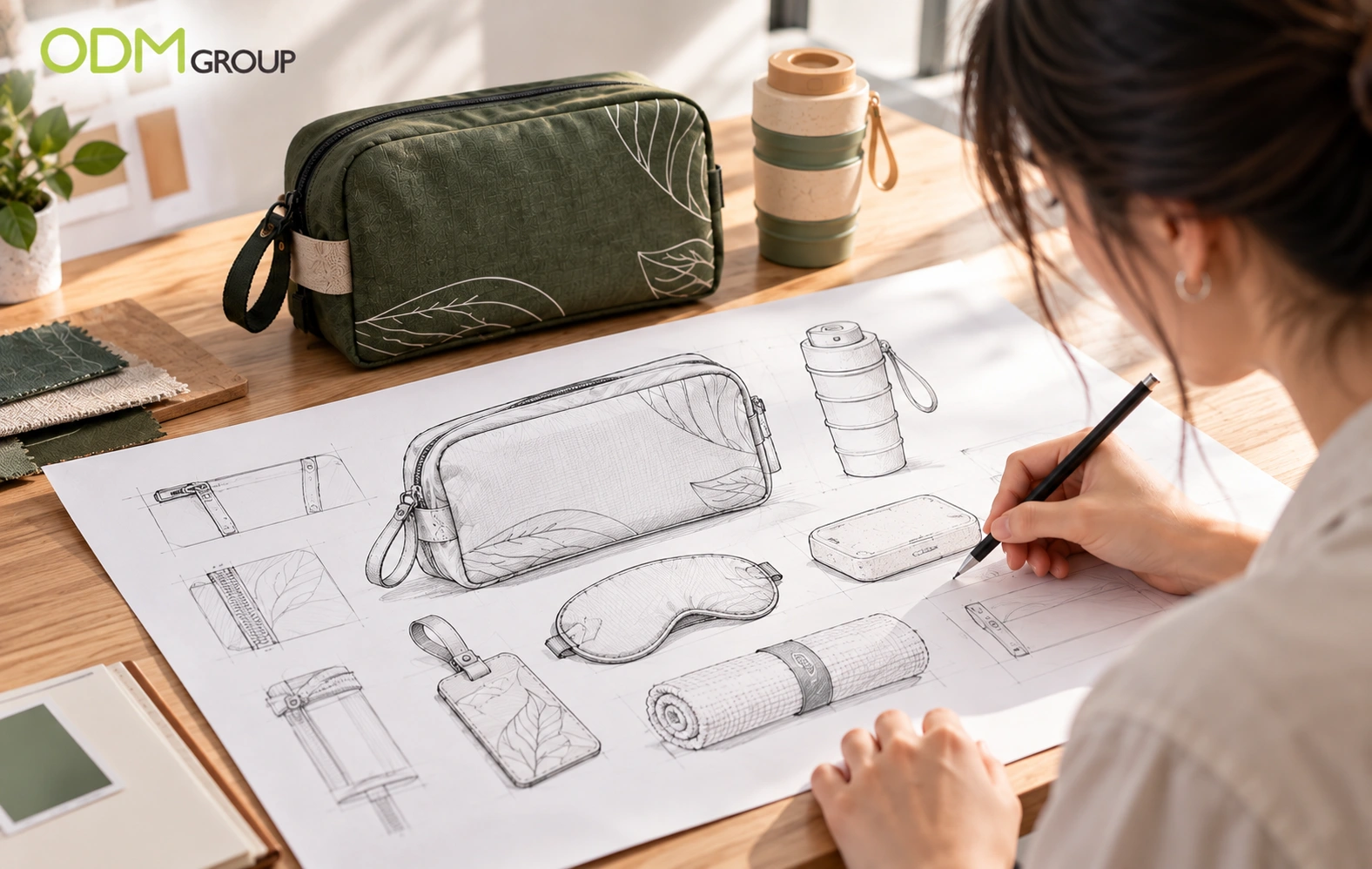
How to Customize a Branded Promotional Travel Kit
Once the product selection is established, the next step is to translate the concept into a coordinated branded package.
Customization can range from adding a logo to an existing travel pouch to developing a complete set of products with matching materials, colors, and packaging.
Select Products Around Your Audience
Begin by defining who will receive the kit and how they are likely to use it.
| Target audience | Potential product combination |
| Airline passengers | Eye mask, earplugs, neck pillow, and compact pouch |
| Corporate travelers | Toiletry bag, luggage tag, cable organizer, and travel pouch |
| Conference attendees | Drawstring bag, reusable bottle, notebook, and luggage tag |
| Employee incentive trips | Travel organizer, eye mask, reusable accessories, and custom packaging |
| Hospitality guests | Toiletry pouch, hand towel, and selected personal care accessories |
These are illustrative combinations rather than fixed packages. The final selection should reflect the recipient’s needs, the available budget, and the intended distribution method.
Choose the Right Branding Method
Different products require different customization techniques.
Textile bags may support printing or embroidery, while hard-surface accessories may use suitable printing, engraving, or other decoration methods. The appropriate choice depends on the material, product geometry, design complexity, durability requirements, and production quantity.
For a consistent result, establish the logo artwork, color specifications, placement, and decoration method before production begins.
Coordinate the Kit and Packaging
The main bag is often the most visible part of a promotional travel kit. Its color, material, size, and construction should complement the accessories inside.
Packaging can also help communicate the campaign’s purpose. A corporate gift set may require more presentation-focused packaging, whereas an airline amenity kit may prioritize compactness and easy distribution.
For inspiration, explore the branded travel kit example and related promotional drawstring bag ideas.
Final thought
A thoughtfully developed promotional travel kit combines practical products, consistent branding, and suitable packaging to create a useful experience for customers, employees, and business partners.
From airline amenity kits to corporate travel gifts and event giveaways, the right product combination depends on the target audience, campaign objectives, budget, and intended use. By prioritizing functionality, durability, thoughtful design, and responsible material selection, businesses can develop promotional merchandise that supports their brand identity while providing lasting practical value.
The ODM Group supports custom product development, design, sourcing, and manufacturing for promotional merchandise. If you are planning a branded travel kit, begin with a clear product concept and define the accessories, materials, customization requirements, and delivery timeline.
Ready to develop your next promotional travel kit? Contact The ODM Group to discuss your product concept and explore customization options.
At The ODM Group, we specialize in transforming creative concepts into market-ready merchandise through precision printing, professional design, and global manufacturing expertise. Contact us today to learn how we can help you design, source, and manufacture high-quality promotional products that elevate your brand awareness.
- Website: www.theodmgroup.com
- Email: info@theodmgroup.com
Frequently Asked Questions
What should be included in a promotional travel kit?
A promotional travel kit can include an eye mask, neck pillow, earplugs, travel pouch, luggage tag, or toiletry bag. Choose products based on the recipient, budget, and intended use.
How can a promotional travel kit be customized?
Customize a travel kit with branded bags, printed or embroidered logos, coordinated colors, matching accessories, and custom packaging.
What makes a promotional travel kit sustainable?
Choose durable, reusable products, reduce unnecessary packaging, and select materials suited to the intended use.
Who can benefit from promotional travel kits?
Airlines, hotels, corporate gifting teams, event organizers, and businesses with traveling employees can use promotional travel kits.
What should businesses consider before ordering custom travel kits?
Define the budget, quantity, product specifications, branding, packaging, quality standards, and delivery timeline before ordering.
Can a promotional travel kit include eco-friendly promotional bags?
Yes. Reusable fabric bags and suitable recycled materials can be considered based on durability, sourcing, cost, and intended use.
Blogs about airline promotions:
Ever heard of a flight simulation? Emirates Airline, one of the two flag carriers of UAE, built buzz around itself through a flight simulation consumers can book to experience for 15 to 45 minutes!
In this promotion, Emirates also offered its passengers a variety of promotional merchandise according to their preferences. Find inspiration in their airline gift ideas here:
6 airline promotional items to inspire customer loyalty
Gift with purchase : spirits promotional campaign for airlines
Some ideas of inflight merchandise
Great idea of custom plastic toys
Promotional products for kids by airline companies
Sustainable ideas to get inspired from
Learn how eco-friendly branded products can boost your brand. We have here notebooks, notepads, and recyclable pens.
Here are innovative bar products made from cork. We love the style and artistry of all the featured products. Learn the potential of cork products and how to attract conscious consumers.
Do you want to develop sustainable promotional pens? Have a look at this blog: