
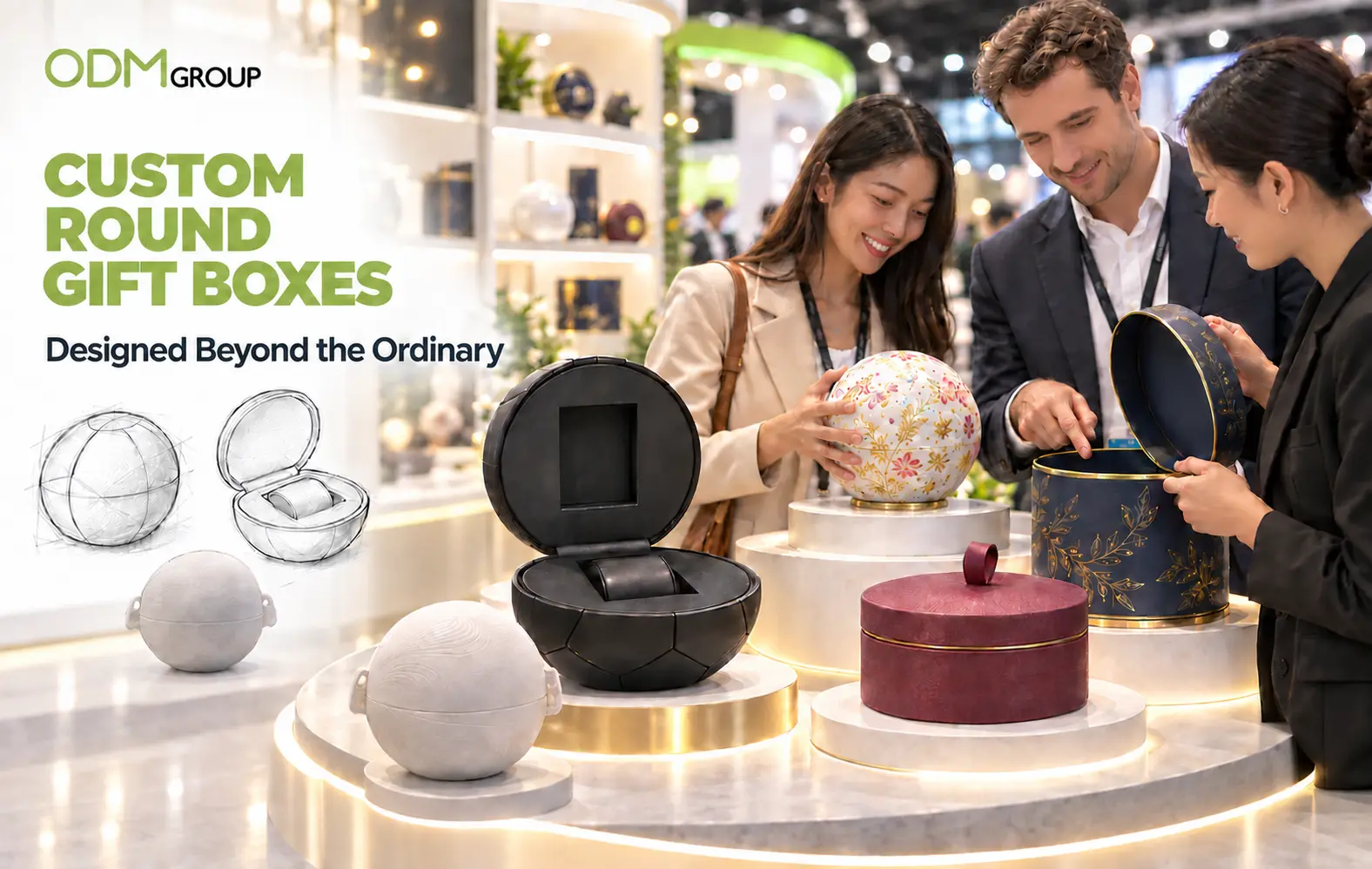
Packaging does more than protect a product. Its shape, structure, and presentation can influence how customers perceive what is inside before they even open it.
Round gift boxes offer brands an alternative to conventional square and rectangular packaging. Their distinctive shape can create a more premium presentation while providing opportunities for custom graphics, structural details, inserts and branded finishes.
But choosing an unusual shape should serve a purpose. For brands planning custom packaging, the right design needs to balance visual impact with product protection, manufacturability, packing, transport, and the overall customer experience.
Why Choose Round Gift Boxes?
The biggest advantage of round packaging is differentiation. Most retail and gift packaging uses straight-edged formats because they are practical to manufacture, pack, stack, and transport. A circular structure immediately changes the pack’s silhouette, helping a product stand out alongside conventional packaging.
Round gift boxes can work particularly well when the packaging itself forms part of the gift experience. Instead of being something customers immediately discard, a well-designed box may also be suitable for storage or reuse.
However, shape alone does not make packaging effective. Brands should consider how the round format supports the product, campaign, and intended customer before committing to the design.
What Products Work Well in Round Gift Packaging?
Round packaging works for many products, but it is especially suitable when the shape complements the product or the desired presentation.
Potential applications include:
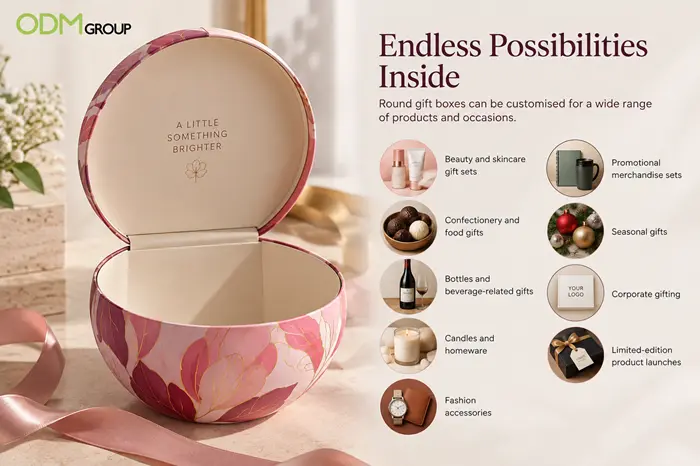
- Beauty and skincare gift sets
- Confectionery and food gifts
- Bottles and beverage-related gifts
- Candles and homeware
- Fashion accessories
- Promotional merchandise sets
- Seasonal gifts
- Corporate gifting
- Limited-edition product launches
The internal dimensions should be designed around the actual contents rather than choosing a box first and trying to make the product fit afterwards.
For sets containing several products, a custom insert can help organise the contents and improve the unboxing experience.
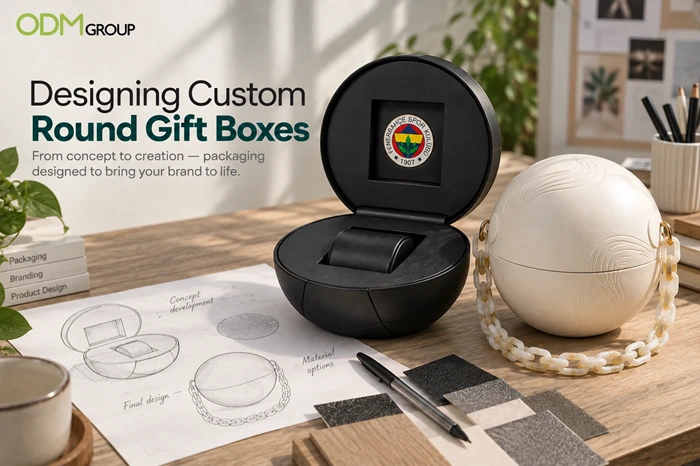
Designing Custom Round Gift Boxes
A round box gives brands plenty of creative freedom, but its curved construction requires a different design approach from a standard folding carton.
1. Start With the Product
The product should determine the dimensions and internal structure of the packaging.
Brands need to consider the diameter and height of the items, how much movement is acceptable inside the box, and whether additional protection is necessary.
For multi-product gift sets, the layout is particularly important. An insert can give each item a defined position rather than allowing products to move around inside the packaging.
2. Consider How the Box Opens
Opening style can significantly change how a round box looks and feels.
Depending on the design and manufacturing method, options may include removable lids, two-piece structures, and other custom opening mechanisms.
The right choice depends on the product, desired presentation, budget, and production requirements.
3. Design for a Curved Surface
Branding a circular box requires careful artwork preparation because graphics wrap around a curved surface.
Position logos, text, and key visual elements so they remain easy to read when the packaging is assembled. Large patterns can work around the circumference, while key branding may be more effective on the lid or another prominent viewing area.
This is where packaging design needs to consider the final three-dimensional product rather than only the flat artwork.
Materials for Round Gift Boxes
Material selection affects the appearance, durability, weight, and cost of custom packaging.
The right material depends on factors such as product weight, required protection, desired finish, and the packaging’s intended use.
For premium gift applications, brands may choose a more rigid construction where presentation and structural strength are priorities. Paper-based outer wraps can then provide the printed or decorative surface. Determine material specifications during development rather than assuming them from appearance alone.
If sustainability is part of the brief, brands should also assess material composition, recyclability, coatings, laminations, inserts, and decorative components rather than relying on broad environmental claims.
Branding and Finishing Options
The circular structure provides a useful canvas for branding.
Depending on the material and production process, customization could involve printed graphics, branded labels, textured papers, or specialist decorative finishes.
The objective should not simply be to add as many finishes as possible. Each element should reinforce the intended brand positioning and remain practical for the production quantity and budget.
For example, a luxury launch may benefit from a restrained design with a strong tactile finish, while a colorful promotional campaign might use bolder graphics around the box’s circumference.
Discover decoration methods for different promotional products, packaging, and POS displays.
Custom Inserts Can Improve the Presentation
The outside of the box attracts attention, but the inside determines how the products are presented when the customer opens it.
Custom inserts can:
- Hold products in position
- Separate multiple items
- Reduce movement during handling
- Create an organized presentation
- Make individual products easier to reveal and remove
The insert needs to be developed alongside the outer packaging because its dimensions depend on both the products and the internal diameter of the box.
Material choice also matters. The appropriate insert should be selected according to the weight, fragility, presentation requirements, and packaging objectives of the project.
Round Packaging Has Practical Trade-Offs
A distinctive shape can strengthen presentation, but brands should also consider the operational implications.
Square and rectangular cartons generally use space efficiently when packed together. Circular boxes can leave unused space between units, which may affect carton configuration, storage, and shipping efficiency.
Other considerations include:
- Finished box dimensions
- Product weight
- Number of units per shipping carton
- Assembly requirements
- Insert complexity
- Protection during transportation
- Retail shelf or display space
- Packing method at the fulfilment stage
These factors are especially important for larger promotional campaigns, where a small difference in the dimensions of each pack can become significant across an entire production run.
This is why packaging should be developed as part of the complete product and logistics plan rather than treated purely as a graphic-design exercise.
Unconventional Food Packaging from Matilde Vicenzi
Matilde Vicenzi, renowned for its delectable Italian pastries, continues to captivate the culinary world with its innovative approach to food packaging. Their latest concept showcases a truly exceptional design, featuring a circular shape that perfectly complements their well-established brand.
MOQ, Sampling and Lead Times
No single minimum order quantity or production timeline applies to every custom round gift box.
MOQ and lead time vary by box dimensions, material, construction, printing method, finishing, inserts, tooling requirements, production complexity, and factory.
Sampling is therefore an important stage of custom packaging development. A physical sample can help confirm dimensions, product fit, artwork positioning, opening experience and overall presentation before mass production.
Brands working towards a fixed launch or promotional date should allow sufficient time for design development, sampling, revisions, production, quality control and shipping.
MOQ is important when ordering a product. Read this guide to learn more about MOQ and tips for lowering it.
Using Round Gift Boxes for Promotional Campaigns
Custom packaging becomes especially valuable when you design it as part of the campaign rather than adding it at the end.
For a gift-with-purchase campaign, for example, the packaging may need to hold several promotional items while reinforcing the campaign identity. A seasonal gift may require a completely different visual treatment, while premium corporate gifting may place greater emphasis on presentation and reusability.
Brands should therefore define the objective before finalizing the packaging:
Who will receive it? How will it be distributed? What products need to fit inside? Where will customers first see it? Does it need to survive individual delivery or bulk transport? What should happen to the packaging after opening?
The answers can influence everything from diameter and material to artwork, inserts, and outer shipping cartons.
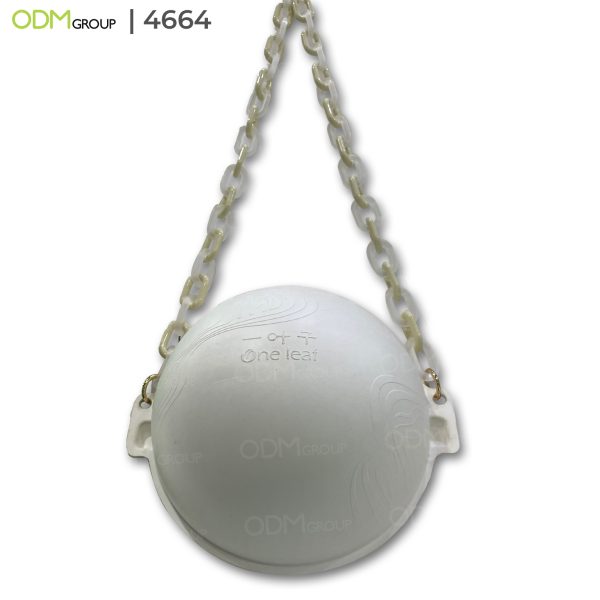
Take a look at these round gift boxes you might consider. Use the product codes to get a detailed quote for each.
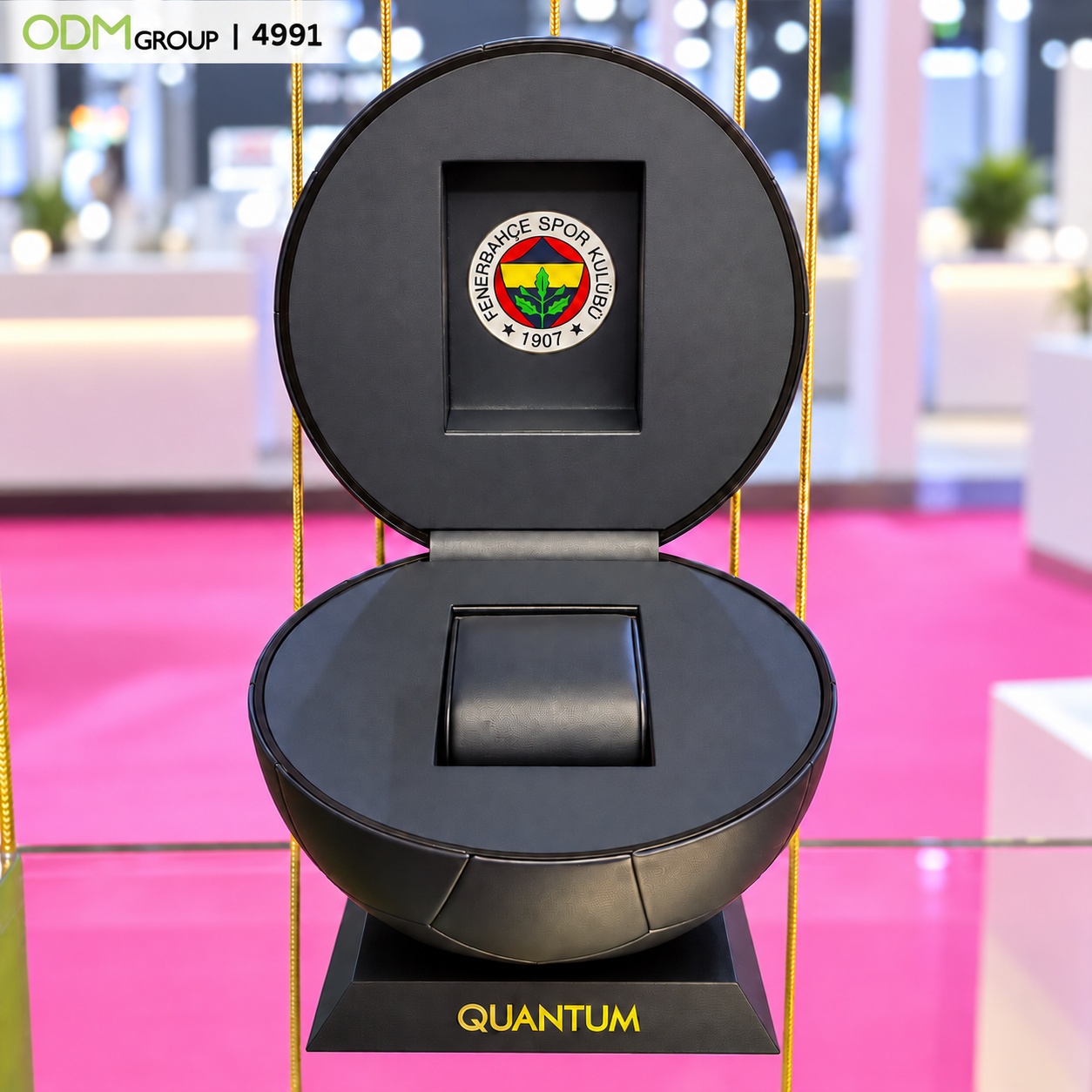
From Packaging Idea to Finished Product
Developing unusual packaging requires coordination between creative design and manufacturing.
A typical development process may include defining the campaign brief, establishing product dimensions, exploring the packaging structure, preparing artwork, developing samples, reviewing product fit and presentation, finalizing production specifications, and conducting quality control before shipment.
ODM’s broader product-development capabilities include concept development, design, prototyping, factory management, quality control, packaging, and logistics.
Showing the development process is particularly valuable because a finished round box only shows the result. The design decisions behind it demonstrate how a packaging concept becomes a manufacturable product.
Develop Custom Packaging With ODM
Round gift boxes can give a product or promotional campaign a distinctive presentation, but successful packaging needs to work beyond appearance. Consider structure, materials, product fit, branding, manufacturing, and logistics during development.
If you are developing custom packaging for a product launch, gift-with-purchase campaign, or branded merchandise project, send ODM your product dimensions, quantity, target market, budget range, desired packaging style, and delivery date. Our team can use the brief to explore the design, prototyping, production, quality control, and delivery requirements for your project.
Discover how ODM can help you. Explore more of our services.
FAQs About Round Gift Boxes
Can round gift boxes be customized?
Yes. Dimensions, graphics, internal presentation and other design elements can be developed according to the product and campaign requirements. The available customization will depend on the selected construction, materials, production process and quantity.
What products can be packed in round gift boxes?
Round boxes can be used for products including cosmetics, confectionery, candles, accessories, promotional merchandise and multi-item gift sets. Suitability depends on the product's dimensions, weight, fragility and distribution requirements.
Are round gift boxes more expensive than standard boxes?
They can be, but there is no universal price difference. Cost depends on size, material, construction, printing, finishing, inserts, tooling, quantity and production method. A quotation based on the actual packaging brief is more useful than a generic price comparison.
What should I provide when requesting custom gift packaging?
A useful starting brief includes the product dimensions and weight, required quantity, target market, desired packaging style, branding requirements, budget range and required delivery date. Reference images can also help communicate the intended direction.
What to Read Next?
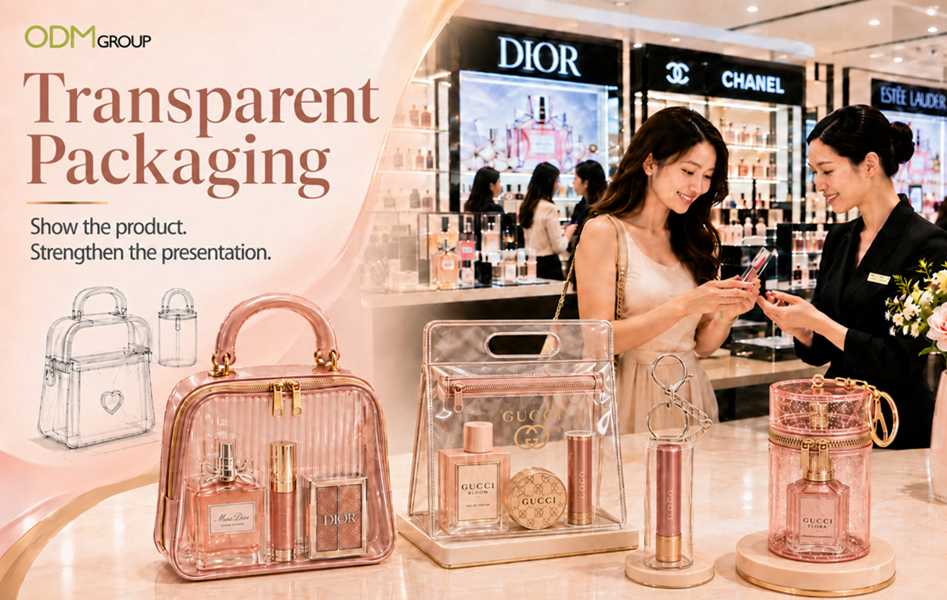
Why Fashion and Beauty Brands Choose Transparent Packaging
Customers often decide whether a product feels desirable before [...]
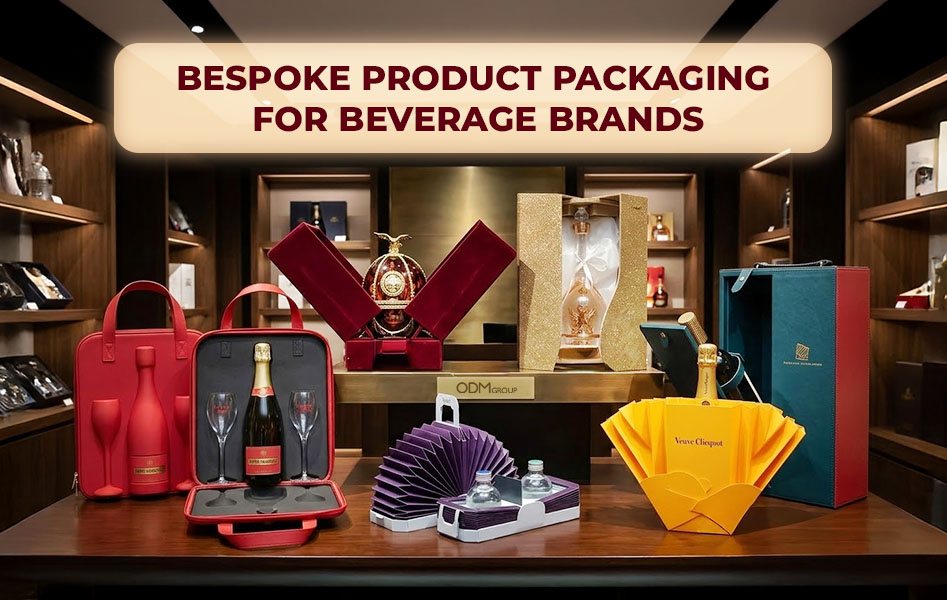
Bespoke Product Packaging Ideas for Beverage Brands
Product packaging plays a vital role in product merchandising. [...]
How Aluminum Tube Cosmetic Packaging Are Made and Tested
As sustainability becomes a core focus in the cosmetics [...]
Sparkle on a Budget: Affordable Jewelry Packaging Ideas
When it comes to launching a jewelry business, presentation [...]
Custom Rigid Boxes: Innovative Packaging Solutions in Beverage Industry
Custom rigid boxes, known for their strong build and [...]
Dual-Purpose Packaging Ideas That Add Lasting Value
Dual-purpose packaging protects and presents a product before becoming [...]