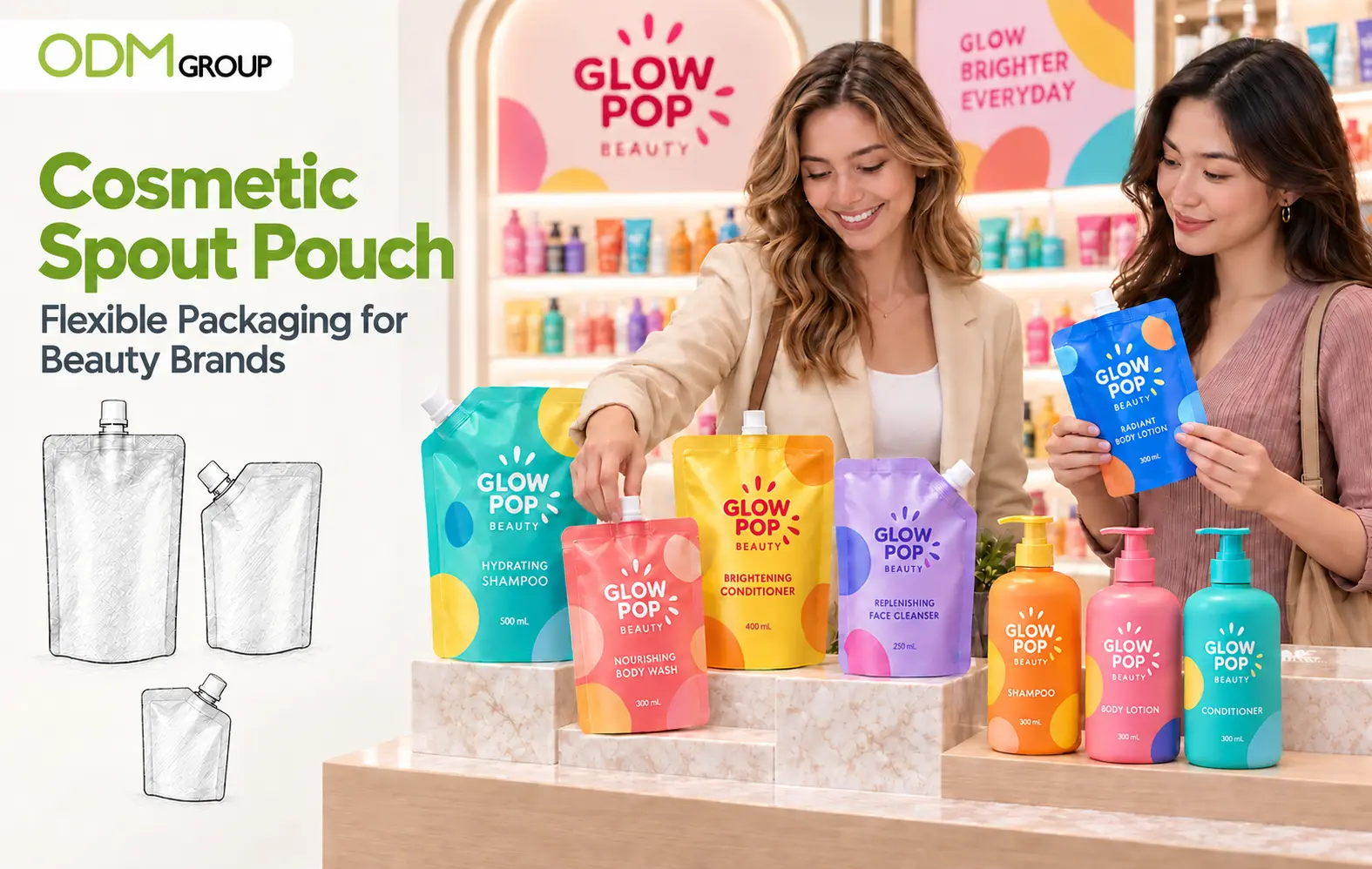
A cosmetic spout pouch gives beauty and personal-care brands a lightweight way to package refills, professional-size formulas, and travel-friendly products. Its flexible body uses less space than a rigid bottle, while the resealable spout helps users pour or dispense the formula with greater control.
The stand-up format can also provide a broad printable surface for brand artwork, product instructions, and regulatory information. However, the pouch must be developed around the formula, not selected for appearance alone. Film compatibility, barrier performance, sealing, cap security, and transport testing can all affect the finished pack.
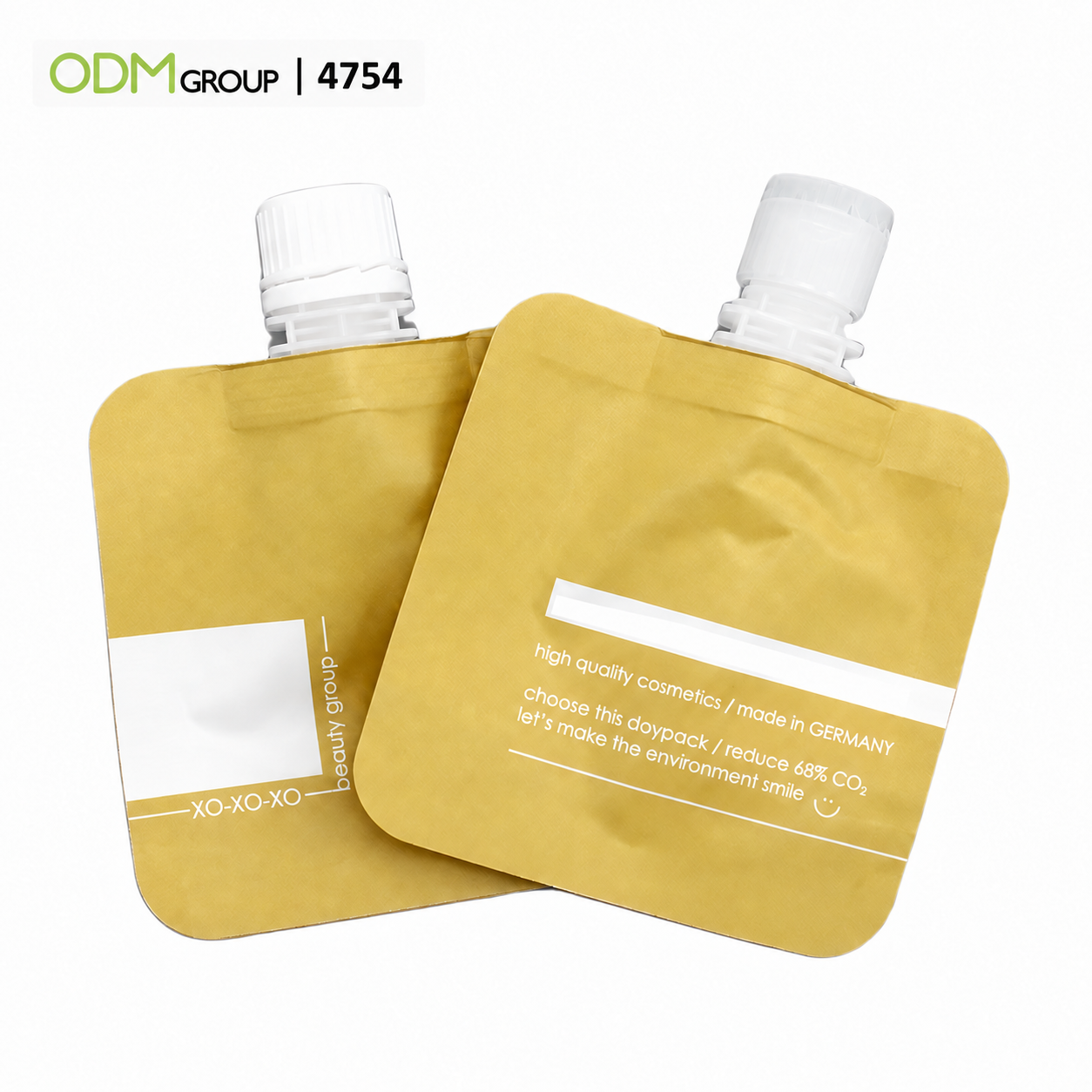
This guide examines a kraft-finish stand-up pouch with a spout and explains what beauty brands should consider before production.
What Is a Cosmetic Spout Pouch?
A cosmetic spout pouch is a flexible pack fitted with a reclosable plastic spout and cap. A bottom gusset allows the pouch to stand on a shelf when filled. Depending on the design, the spout can sit in the center or at one corner.
The format can hold liquid, gel, and cream products, including:
- Shampoo and conditioner refills
- Shower gel and liquid soap
- Body lotion
- Hair masks and salon treatments
- Massage products
- Cosmetic creams
- Spa and hotel amenities
- Professional back-bar products
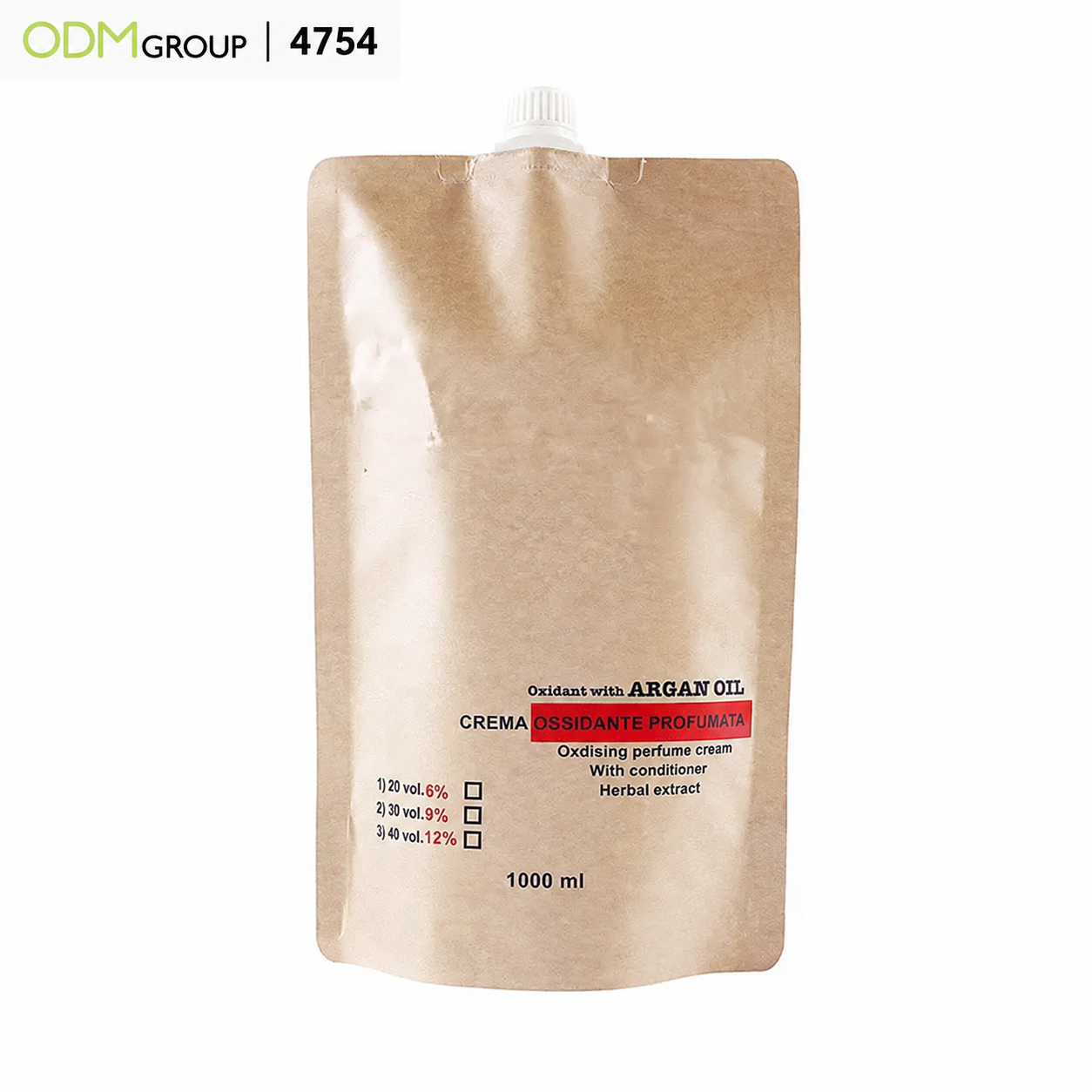
The correct structure depends on the formula’s viscosity, oil content, fragrance, active ingredients, and intended storage conditions. A pouch suitable for shampoo may not automatically suit an oil-rich treatment or an oxidative hair product.
Why Beauty Brands Use Spout Pouches
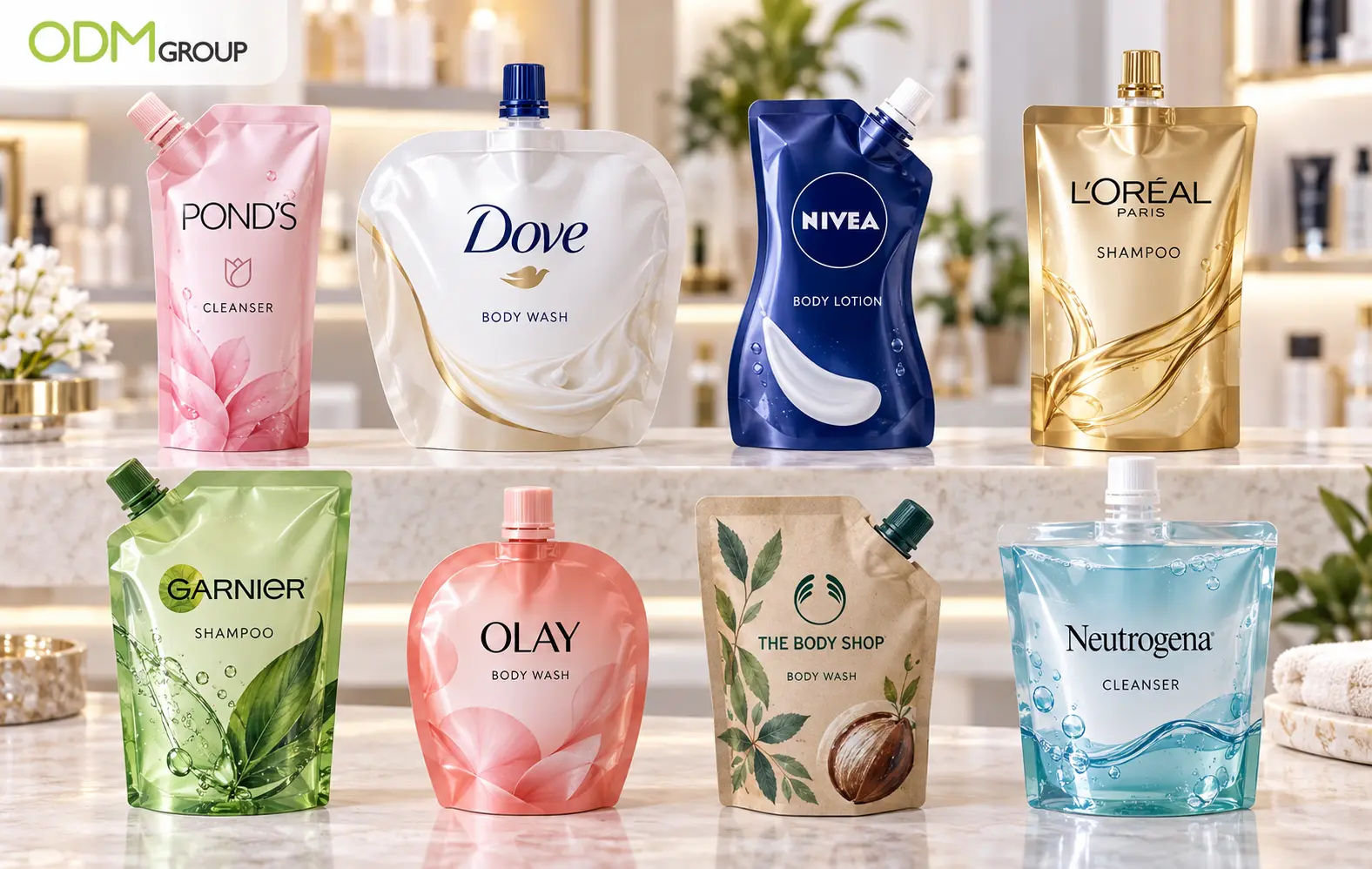
1. They support refill-led product systems
Brands can use a spout pouch as a refill for an existing pump bottle, jar, or salon dispenser. This creates a clear role for the pack and can reduce the amount of rigid packaging used per refill.
The strongest refill programs explain how customers should clean, dry, and reuse the original container. The pouch should also provide clear dosage, storage and disposal instructions.
2. They are efficient for storage and transport
Unfilled pouches lie relatively flat, which can reduce incoming packaging volume compared with assembled rigid bottles. Filled pouches can also offer a favorable product-to-packaging ratio.
Brands should still assess secondary cartons, case packing, pallet stability and leakage risk. A lightweight primary pack provides little benefit if excessive protective packaging is required during transport.
3. They offer a large branding area
The front and back panels can carry product artwork, directions, ingredients, batch information, and campaign messaging. Custom printing can cover most of the pouch surface, subject to sealing and registration tolerances.
A kraft appearance can support a natural or understated visual direction. It should not, however, be used as proof that the complete package is biodegradable or recyclable.
4. They can suit both retail and professional use
Smaller capacities can work for sampling, travel retail, and consumer refills. Larger formats can suit salons, spas, hotels and professional beauty services. Select capacity, spout diameter, and handle features based on how the product will be poured and stored.
Understanding the Proposed Material Structure
The proposed construction uses kraft paper, VMPET and PE. Each layer has a different role.
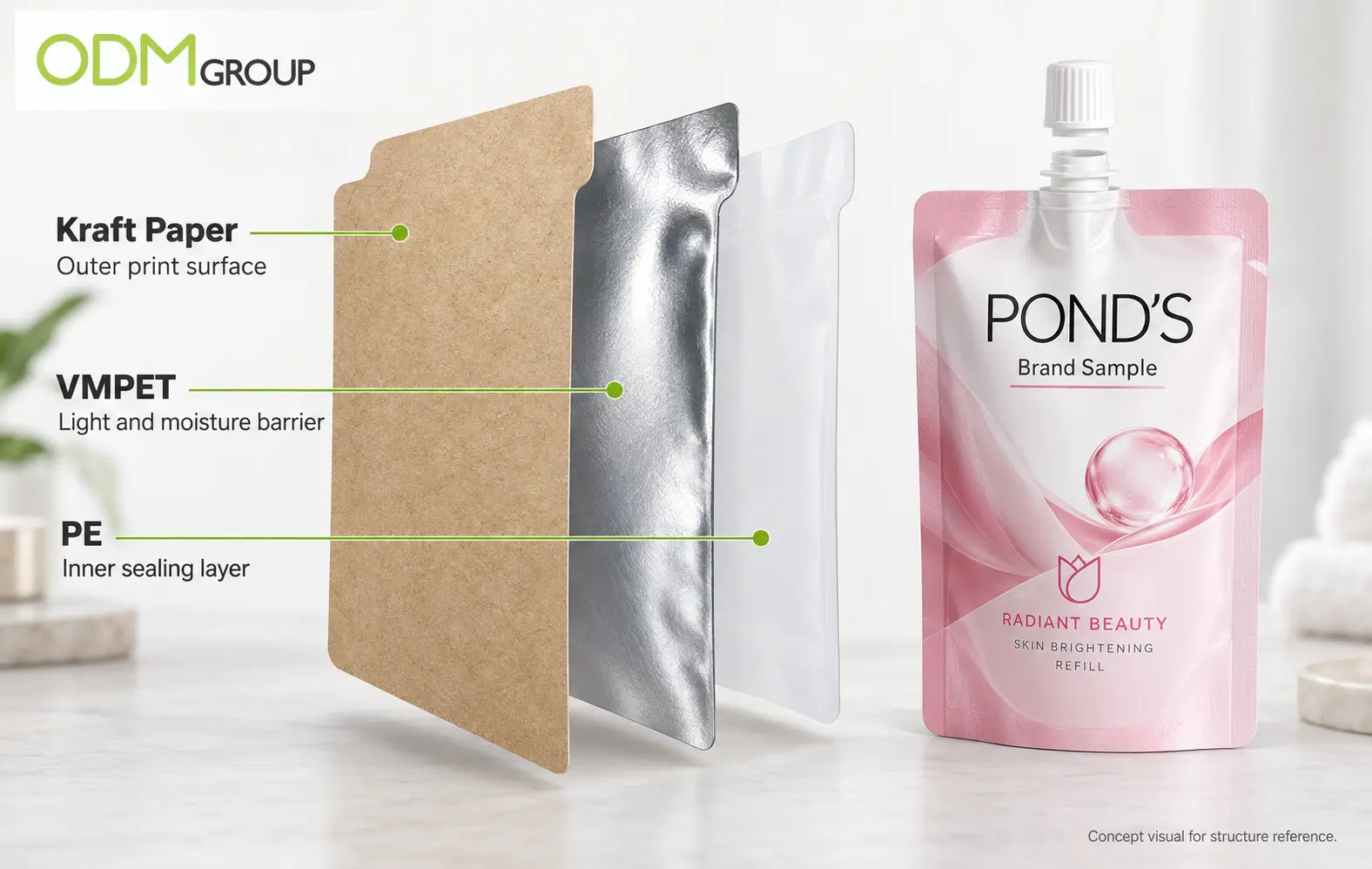
| Layer | Typical role |
|---|---|
| Kraft paper | Provides the natural outer appearance and printable surface |
| VMPET | Metalized polyester layer that can improve light, moisture, and oxygen barrier performance |
| PE | Inner sealant layer that forms the pouch and contacts the formula |
This multilayer approach can combine visual appeal, barrier performance, and heat sealing. It also creates an important end-of-life challenge: bonded paper, metalized PET, and polyethylene are difficult to separate through standard recycling systems.
Before approving the structure, ask for technical data covering:
- Total film thickness and thickness by layer
- Oxygen and moisture barrier values
- Seal strength
- Drop and compression performance
- Spout and cap material
- Adhesive and ink specifications
- Migration or compatibility documentation relevant to the target market
- Recycling or compostability certification, if any environmental claim is proposed
Important Note About the Biodegradability Claim
The supplied description states that the pouch is “100% biodegradable into carbon dioxide and water in three months.” That statement should not be used for a kraft paper + VMPET + PE pouch unless independent test reports certify the complete finished package—including films, adhesive, ink, spout, and cap—for a clearly defined disposal environment.
VMPET and conventional PE are plastic-based materials. A paper-look exterior does not make the complete laminate biodegradable. Disposal conditions also matter: industrial composting, home composting, soil, marine environments, and landfill are not interchangeable.
For the US market, the Federal Trade Commission advises businesses to use clear, specific, and substantiated environmental claims. An unqualified degradable claim requires evidence that the entire product or package will completely break down and return to nature within the relevant disposal timeframe. The European Commission likewise expects voluntary green claims to be reliable and verifiable.
Safer options include:
- Remove the biodegradability statement until certification is available.
- Describe only verified attributes, such as the exact percentage of paper or reduced packaging weight.
- Request a certified compostable structure designed for the intended waste stream.
- Explore a mono-material PE pouch where local flexible-plastic collection supports it.
- Conduct a comparative packaging assessment before making carbon-reduction claims.
Specific, measurable language protects the brand and gives customers more useful disposal information.
Can the Pouch Store Cosmetics for 12 Months?
The proposed storage period is up to 12 months in a sealed environment. Treat this as a development target rather than a universal shelf-life guarantee.
The final result depends on:
- Formula composition and pH
- Oils, solvents, fragrance, and active ingredients
- Product viscosity
- Filling temperature
- Headspace and residual oxygen
- Light and moisture sensitivity
- Seal quality
- Spout and cap compatibility
- Warehouse temperature and humidity
- Distribution conditions
Brands should complete compatibility and stability testing using the actual formula, final pouch, closure and production process. Tests may include accelerated ageing, leakage, seal integrity, drop testing, compression, temperature cycling and dispensing trials.
Cosmetic businesses remain responsible for ensuring that the finished product is safe and correctly labelled in the intended market. The US Food and Drug Administration notes that cosmetic companies are responsible for marketing safe, properly labelled products, even though most cosmetics are not pre-approved by the agency.
Customization Options
The pouch can be customized with an MOQ of 5,000 pieces. Final feasibility and price will depend on the selected structure and artwork.
Size and capacity
Possible formats range from compact consumer refills to larger professional packs. The dimensions should account for fill volume, headspace, product density and the amount of space needed for sealing.
Spout position and diameter
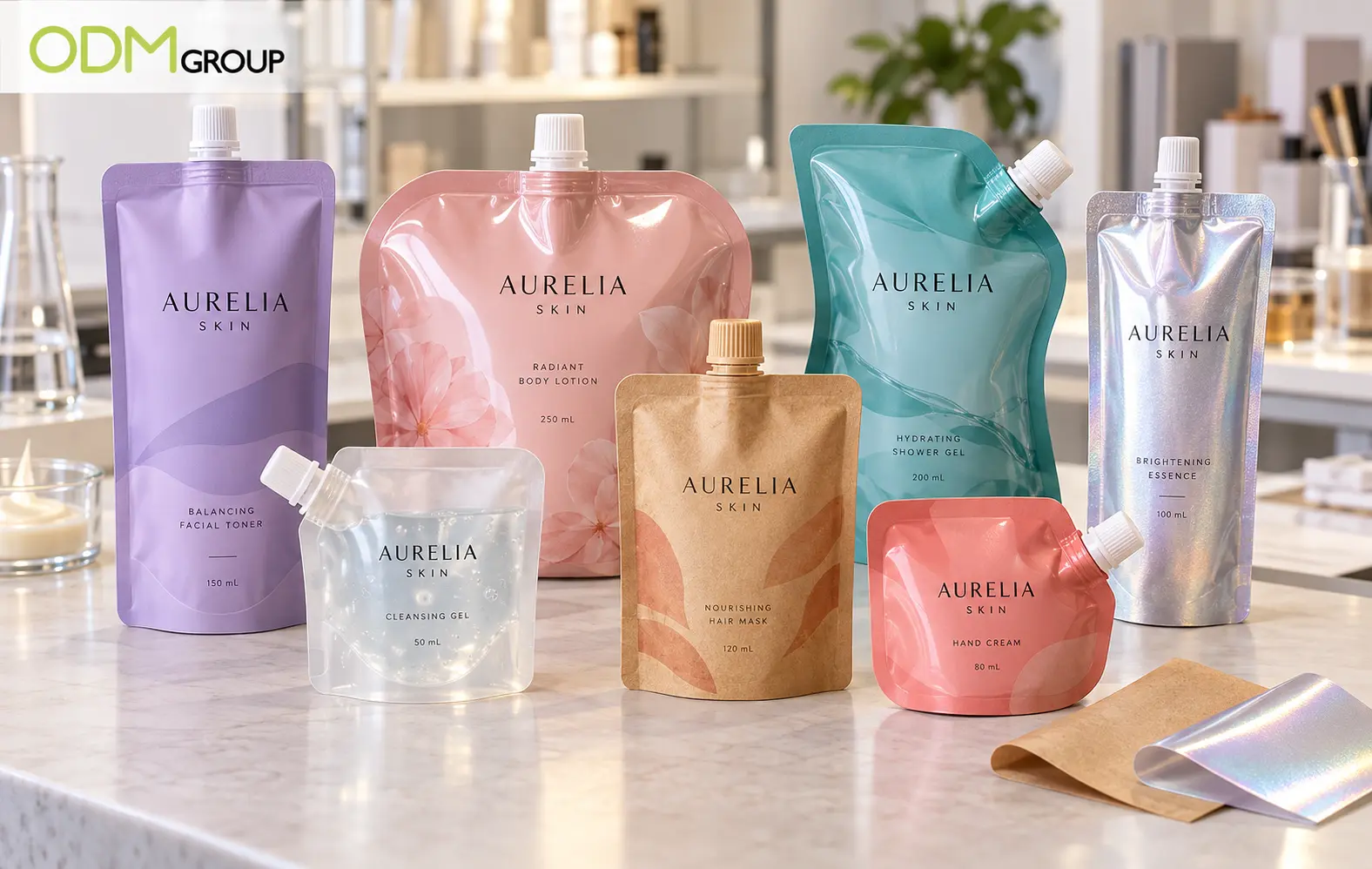
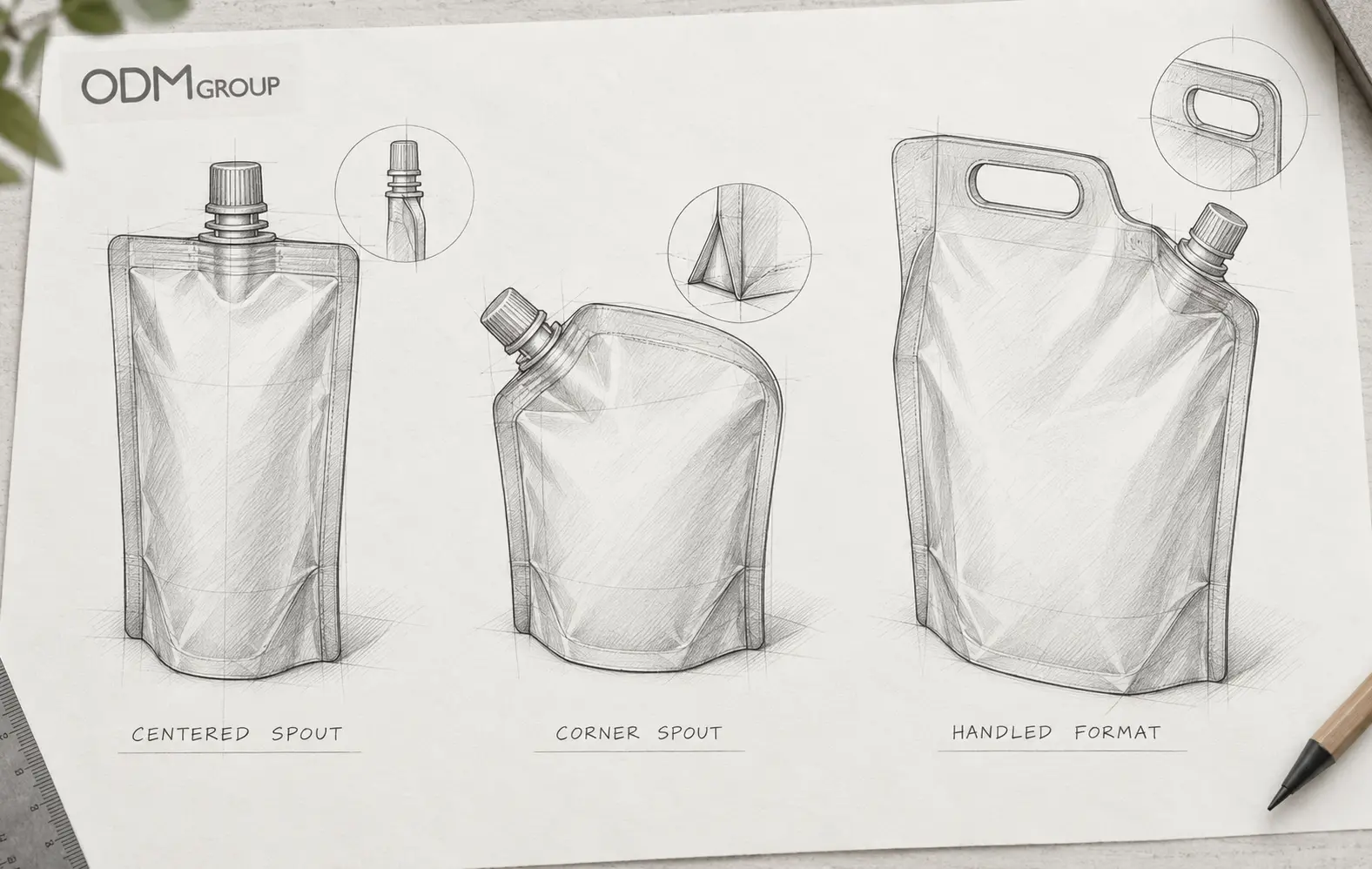
A centered spout creates a balanced appearance. A corner spout can make controlled pouring easier. Thicker creams may require a wider opening than shampoo or liquid soap.
Shape
Brands can use a conventional rectangular profile or develop shaped corners and custom silhouettes. Complex die-cut forms may affect stability, usable volume, tooling and material efficiency.
Color and surface appearance
Options can include natural kraft, white, coloured panels, matte or gloss areas and clear windows where the laminate permits. A window should only be used when light exposure will not affect the formula.
Artwork printing
Custom artwork can include brand graphics, instructions, ingredients and refill guidance. Printing options depend on order volume, color requirements, and the converter’s equipment. Artwork should account for bleed, seal zones, gussets, spout placement, distortion and registration tolerances.
Functional additions
Depending on the format, brands may consider:
- Hang holes
- Carry holes for larger capacities
- Tamper-evident cap features
- Measurement marks
- Batch-code areas
- Rounded corners
- Anti-slip or grip areas
Each additional feature should solve a genuine user, retail or operational need.
Questions to Resolve Before Requesting a Quote
Provide the following information to reduce revisions and improve quotation accuracy:
1. Product type and ingredient profile
2. Target fill volume and product density
3. Formula viscosity
4. Required shelf life
5. Filling temperature and filling method
6. Target sales markets
7. Expected order quantity
8. Preferred pouch dimensions and spout position
9. Artwork and color requirements
10. Desired environmental claim and supporting certification
11. Retail, e-commerce, or professional distribution channel
12. Launch date and delivery destination
The factory may request product samples or technical details to assess film and closure compatibility. Do not send confidential formulas without an appropriate confidentiality agreement and a defined testing process.
Explore more cosmetic packaging ideas
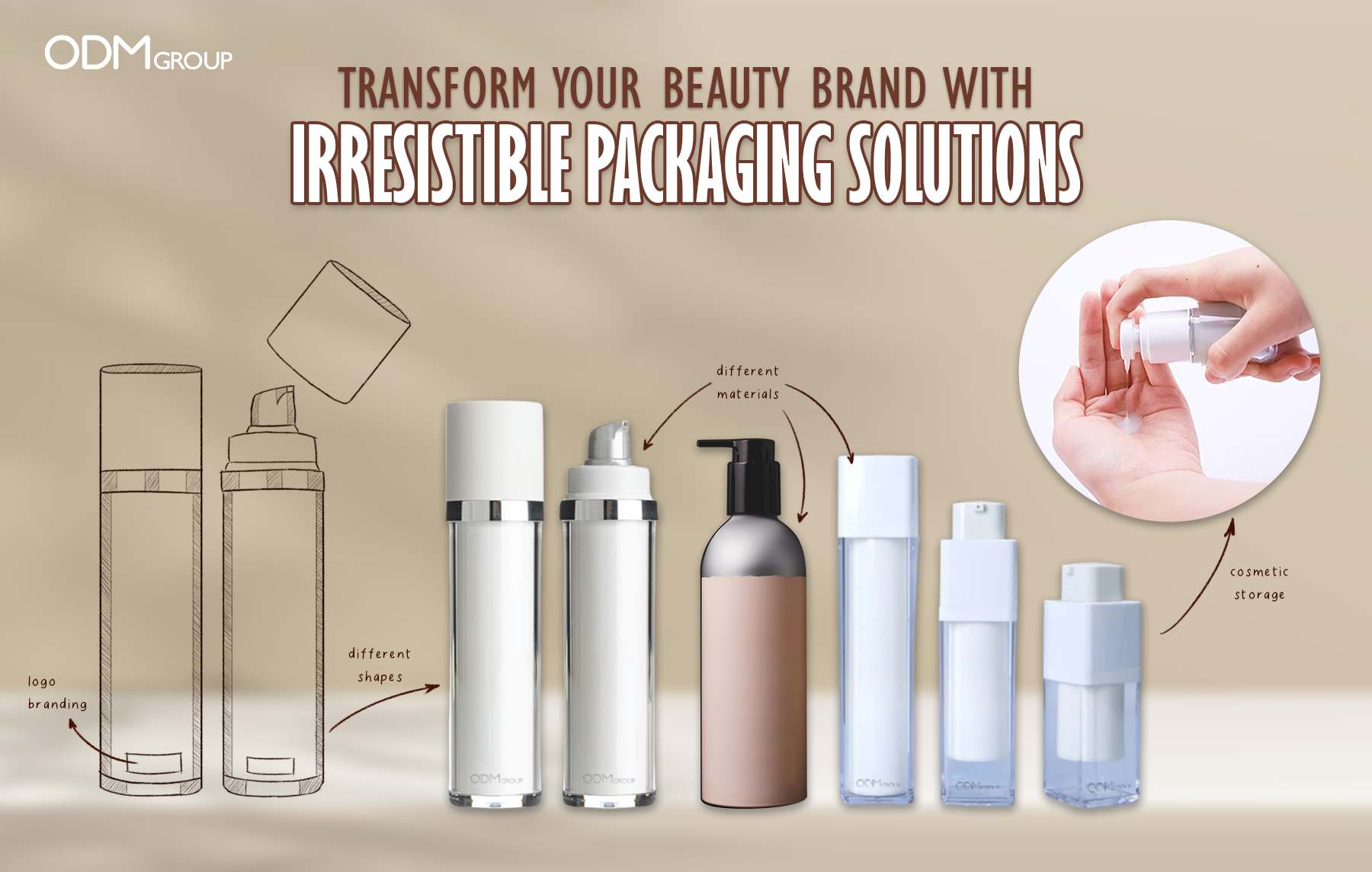
Cosmetic products come in a diverse range of packaging options, each designed to cater to specific needs and preferences. Here are some common types of cosmetic packaging:
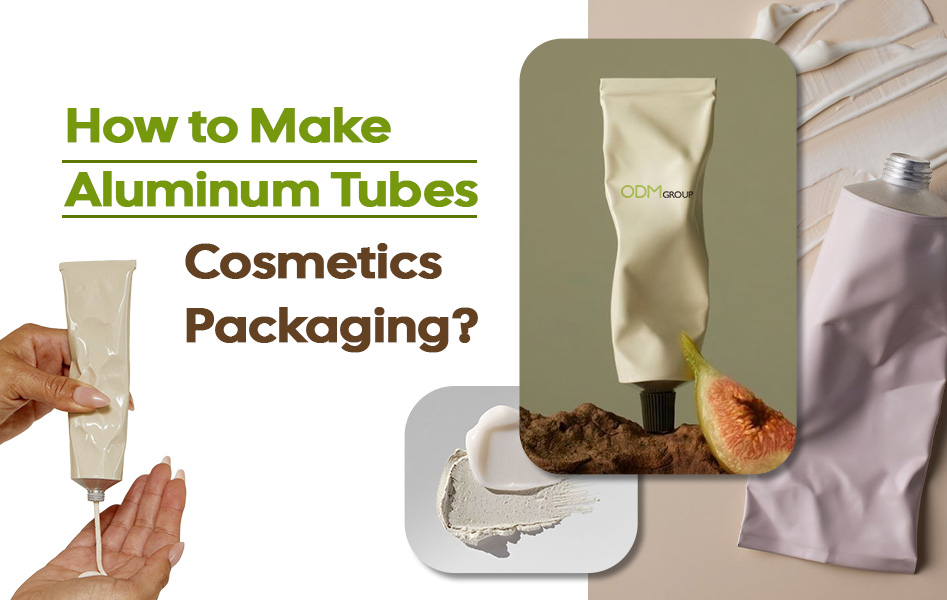
From luxury skincare to personal care essentials, aluminum tubes are reshaping how brands present their products. It offers a sleek appearance and strong barrier protection, enhancing both product shelf life and brand appeal.
As a player in the cosmetics industry, it is important to understand the importance of investing in packaging. Read on to find out more!
From Packaging Brief to Production
ODM Group can coordinate the packaging programme as a product-development partner rather than simply selecting a stock pouch.
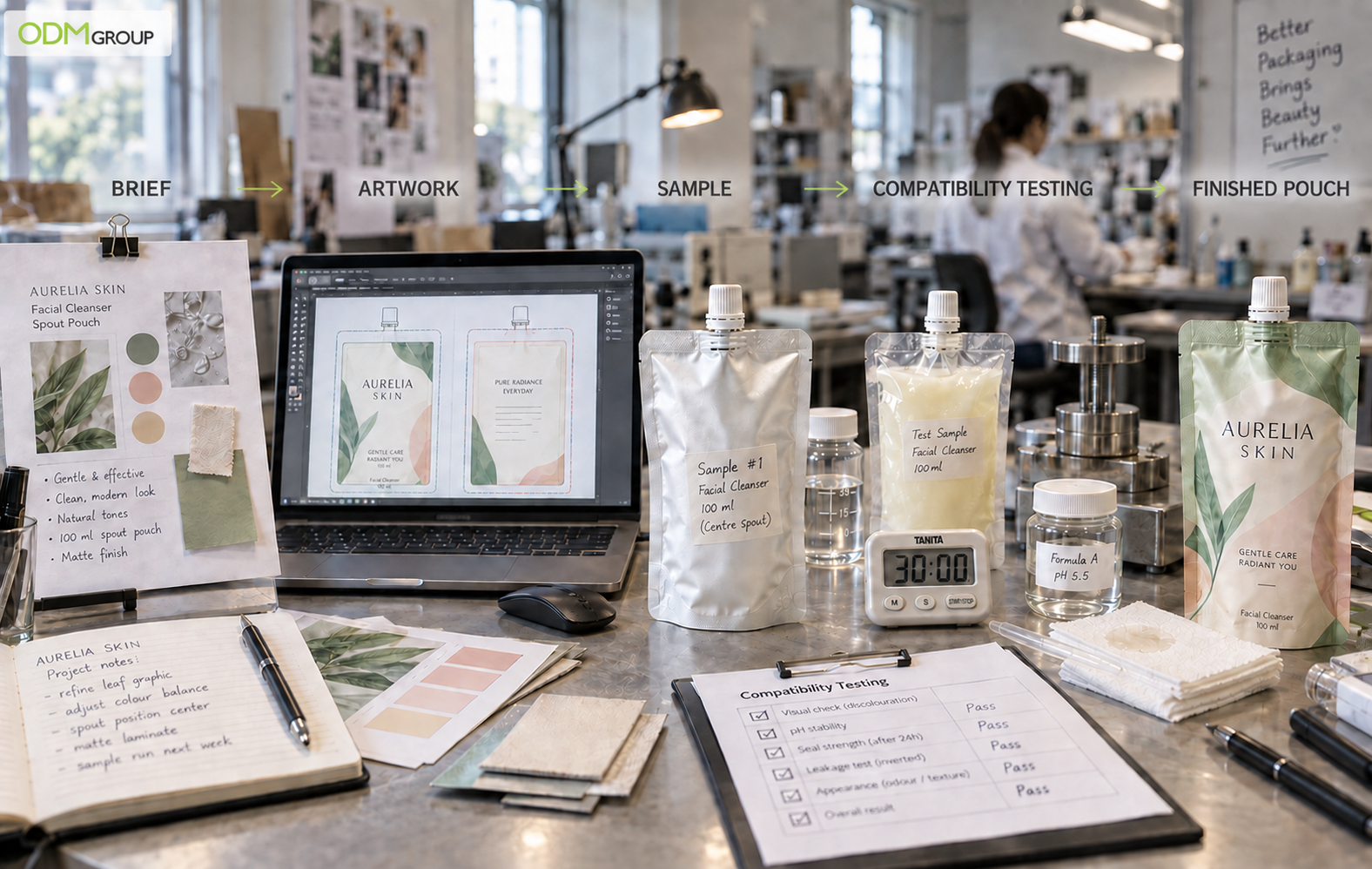
1. Brief and format planning
We define the formula type, capacity, user, retail channel, positioning, target cost, and launch schedule.
2. Structural and graphic development
Our team can prepare pouch proportions, spout placement, artwork zones, and visual mock-ups. See our packaging design services.
3. Material and factory selection
We compare proposed laminates, printing methods, closure systems, and factory capabilities. Material claims should be checked against certificates and the requirements of the target market.
4. Sampling and compatibility review
Physical samples allow the brand to assess appearance, filling, pouring, cap operation, and handling. Formula compatibility and shelf-life validation remain essential before mass production. Learn more about ODM’s prototyping process.
5. Production and quality control
Checks can cover dimensions, print color, registration, seal condition, spout alignment, cap fit, leakage, and packing. Our quality control team can coordinate inspections against the approved specification.
6. Packing and delivery
Carton configuration and transport protection should be planned alongside the pouch. ODM can also coordinate global logistics and shipping.
Develop a Cosmetic Pouch for Your Brand
A successful cosmetic spout pouch must balance brand presentation with formula protection, dispensing performance, and realistic environmental claims. Begin with the product and user experience, then define the material structure and artwork around those needs.
ODM Group can help beauty brands develop custom pouch packaging from the initial brief through sampling, production, and delivery. To start a project, share your formula type, desired capacity, quantity, target market, artwork direction, and required launch date with our team.
More Product Ideas


FAQs about Cosmetic Spout Pouch
What products can be packed in a cosmetic spout pouch?
Spout pouches can be considered for shampoo, conditioner, shower gel, liquid soap, lotion and selected creams. Suitability depends on formula compatibility, viscosity, barrier requirements and testing.
What is the MOQ for a custom cosmetic spout pouch?
The MOQ for custom colors, sizes, capacities, shapes and printed artwork starts at 5,000 pieces. The final MOQ can vary with the material, printing method and closure design.
Can a spout pouch hold thick creams?
Potentially, but the spout diameter and pouch structure must suit the viscosity. A wider opening and dispensing test may be required for thick formulas.
How long can cosmetics remain in the pouch?
The proposed sealed storage target is up to 12 months. The actual shelf life must be confirmed through compatibility and stability testing with the finished formula and package.
Is a kraft paper spout pouch biodegradable?
Not automatically. A structure containing VMPET and conventional PE should not be described as 100% biodegradable without certification covering the entire pouch, including the spout, cap, inks and adhesives.
What to Read Next?
Beauty Product Launch Strategies That Convert
A successful beauty product launch is no longer built [...]
Branded Manicure Set for Beauty and Travel Promotions
Pampering yourselves is never going to get old; it’s [...]
How Aluminum Tube Cosmetic Packaging Are Made and Tested
As sustainability becomes a core focus in the cosmetics [...]
The Art of Packaging for Beauty Products: Elevate Brand’s Visuality
When it comes to the beauty industry, packaging is [...]
Cosmetics Marketing Strategy: What To Learn For Your Promotion?
When people see cosmetics and skincare brands, they collectively [...]
Beauty Promotional Items: High End Brows Remover for Refined Marketing
Eyebrows are an essential part of facial beauty and self-expression. [...]