
A successful beauty product launch is no longer built around one reveal date. It is a coordinated campaign that lets customers discover, test, and remember a product across several touchpoints.
For cosmetic brands, that means connecting the hero product with gift-with-purchase offers, free samples, point-of-sale displays, and digital engagement in a way that feels intentional rather than promotional.
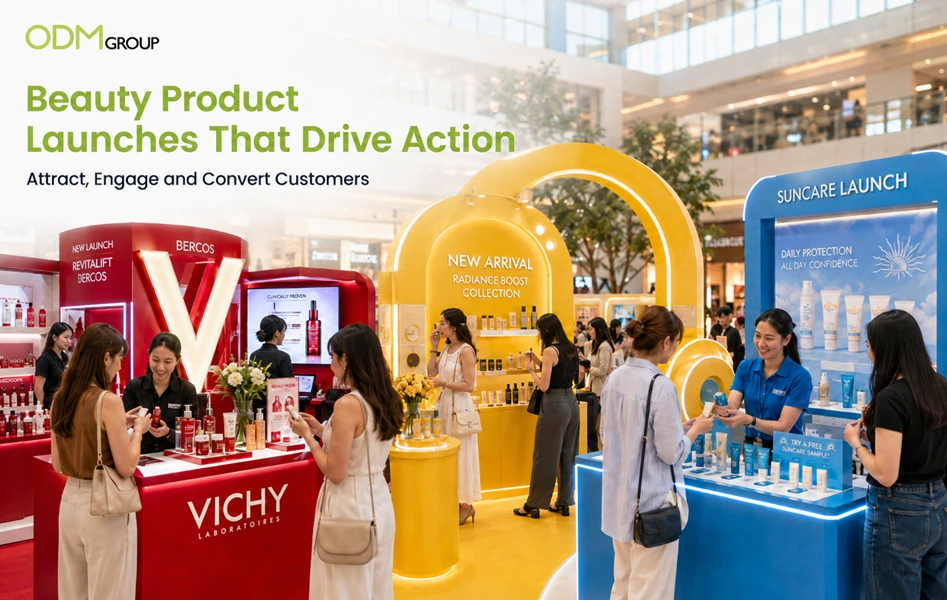
The Real Challenge Is Not Awareness. It Is Adoption.
Beauty is one of the most crowded consumer categories. New serums, lip products, fragrances, and haircare ranges enter the market constantly, often making similar claims.
As a result, awareness alone has limited value.
A customer may notice a product without understanding why it is different. They may understand the benefit but hesitate to try the formula. They may test it once but never return to purchase the full-size version.
The role of the launch campaign is to reduce friction at every stage.
It should answer four questions:
- Why should customers notice this product?
- What gives them confidence to try it?
- What motivates them to purchase now?
- What encourages them to continue using it?
Packaging, samples, promotional gifts and retail displays are not separate extras. Each one should help answer these questions.
This video showcases how beauty brands can create impactful product launches through custom packaging, premium gift-with-purchase (GWP) merchandise, eye-catching POS displays, oversized retail installations, and immersive customer activations.
Beauty Product Launch Strategies
To have a successful cosmetic product launch, you need the right strategy in place. Here’s a practical guideline for every beauty brand.
1. Start With the Customer Behavior You Want to Create
Before developing physical campaign assets, beauty brands should define the behavior they want the launch to influence.
A new skincare company may need to generate first-time trials. An established cosmetics brand may want customers to trade up to a premium range. A fragrance launch may focus on gifting, while a retailer-exclusive collection may prioritize foot traffic and basket value.
Each objective requires a different combination of tools.
- Trial-focused launches should prioritize sampling and product education.
- Conversion-focused launches need clear messaging and strong calls to action.
- Premium launches may benefit from elevated packaging and exclusive gifts.
- Routine-building launches should show how the product works with complementary items.
- Loyalty-focused campaigns can use collectible gifts, refills, or member-only rewards.
The strongest campaign is not necessarily the one with the most components. It is the one where every component supports the same customer action.
2. Use Sampling to Remove Uncertainty
Beauty products are highly personal. Customers want to know how a formula feels, how a shade looks, how a fragrance develops, or whether the product suits their routine.
Sampling reduces this uncertainty.
However, brands should stop treating free samples as simple miniature versions of the full-size product. A sample should have a clear role within the conversion journey.
A sachet may be suitable for high-volume distribution, but it often provides only one use. A mini tube or bottle may cost more but allows customers to experience the product over several days. A discovery kit can introduce a complete routine rather than a single formula.
Here are examples from Kiehl’s and Vichy. We found these beauty brands’ promotions in Hong Kong during their product launch and activation. The brands provide product samples for customers to try.
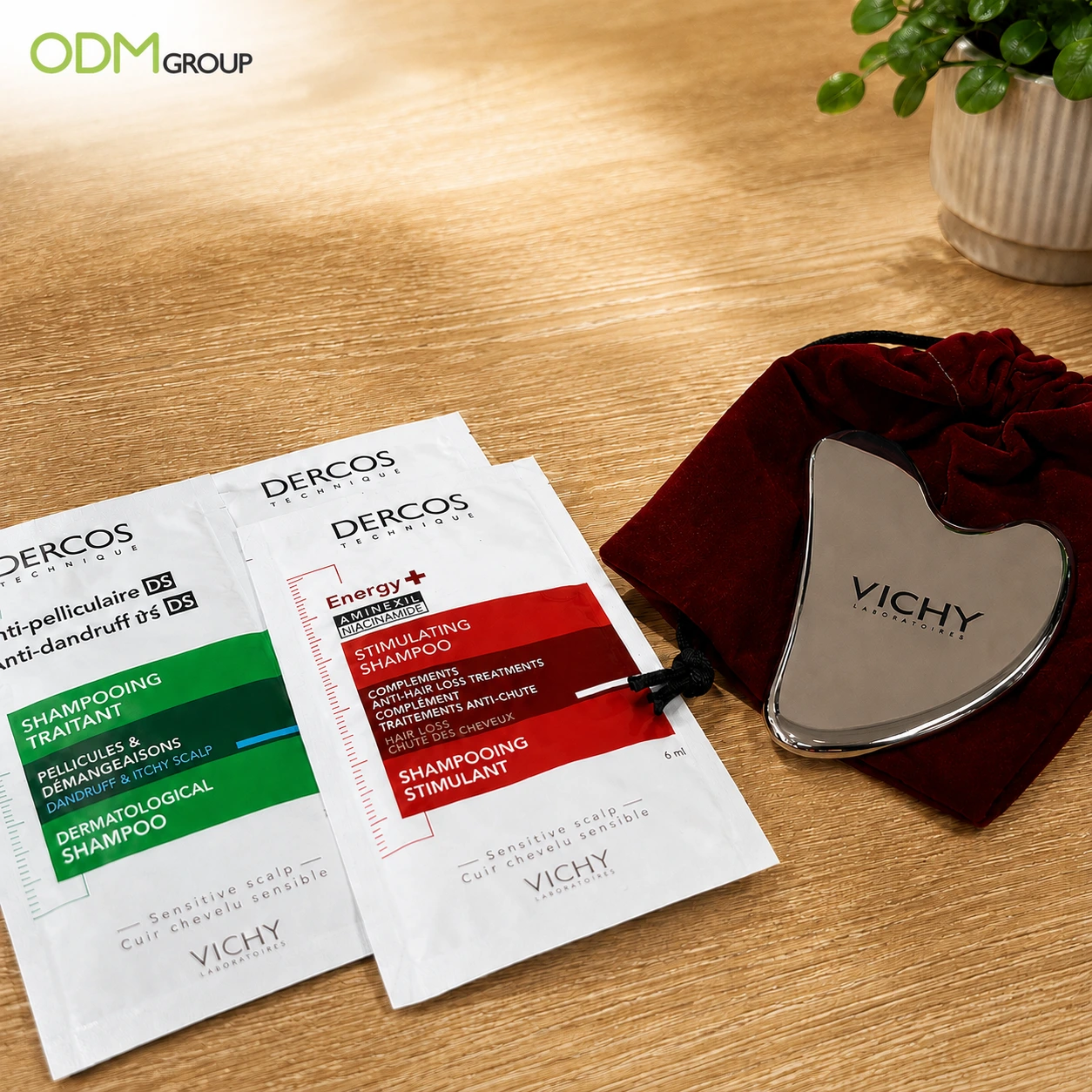
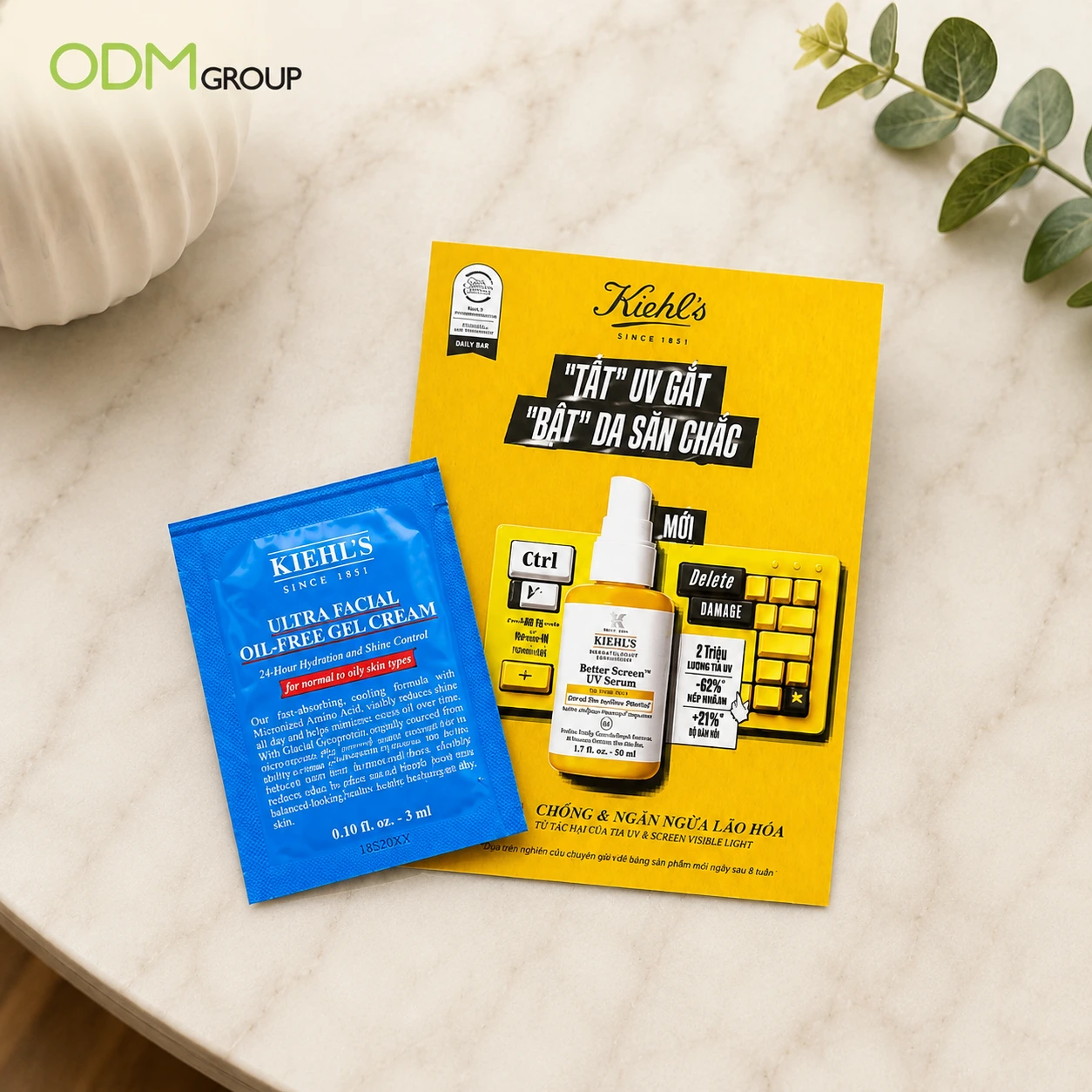
The format should follow the product and the campaign objective.
Brands should also consider the context in which the sample will be received. A sample distributed at a retail counter can be supported by an adviser. A sample included in an e-commerce order must explain itself. A sample sent to influencers may need packaging designed for presentation and content creation.
Effective sample packaging should communicate:
- What the product does
- How and when to use it
- How much to apply
- What result to expect
- Where to buy the full-size version
- What action to take next
That next action might be scanning a QR code, joining a waitlist, redeeming an offer, or completing a product consultation.
Without a clear next step, sampling creates exposure but not necessarily conversion.
3. Make Gift With Purchase Part of the Product Strategy
Gift-with-purchase promotions are often used to create urgency, increase average order value, and protect pricing.
But the gift must feel relevant.
A generic item may increase short-term participation, yet contribute little to the brand story. A well-designed gift can become part of the customer’s routine and extend the campaign long after the transaction.
A skincare launch might include a headband, facial tool, or travel organizer. A makeup launch could include a compact mirror, a brush case, or a cosmetic pouch. A fragrance launch may pair naturally with a miniature atomizer or travel case.
The best gifts usually perform one of three functions:
- They make the main product easier to use.
- They reinforce the launch’s positioning.
- They create lasting visibility beyond the campaign.
Brands should also consider how the offer is structured.
A single gift can support a minimum purchase. Tiered gifts can encourage customers to spend more. Retailer-exclusive gifts can help secure stronger in-store visibility. Limited-edition gifts can create urgency without discounting the main product.
Before approval, the gift should be evaluated against perceived value, customer usefulness, branding, production cost, packaging volume, and delivery requirements.
The objective is not to add a free item. It is to strengthen the purchase decision.
4. Design POS Displays Around Decision-Making
Beauty retail is visually competitive. A display must do more than attract attention. It must help customers make a decision quickly.
The most effective POS displays communicate three things:
- What the product is
- Why it is relevant
- What the customer should do next
For makeup, that may mean organizing shades clearly and making testers accessible. For skincare, the display may explain a routine, ingredient, or clinical benefit. For fragrance, the focus may be on mood, story, and trial.
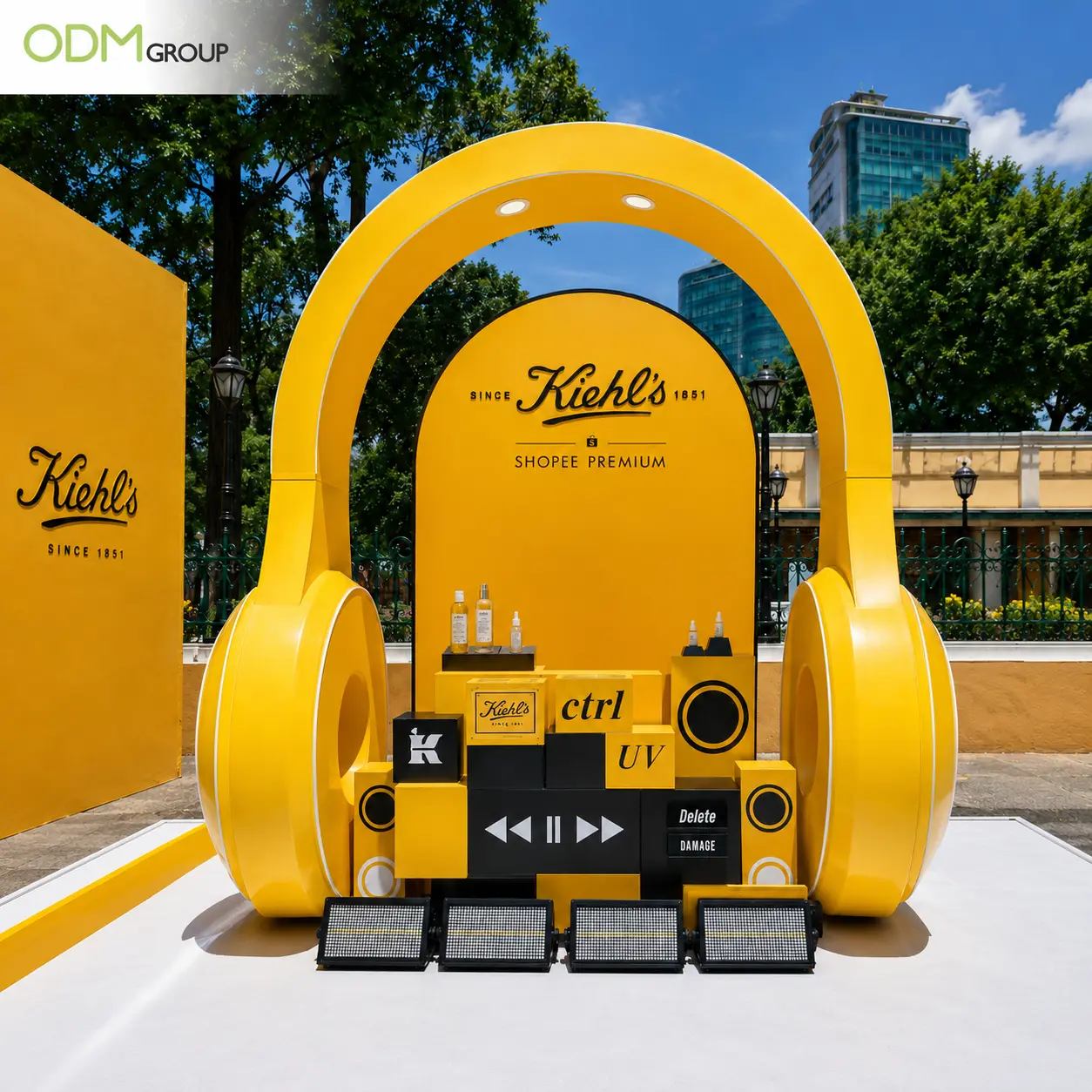
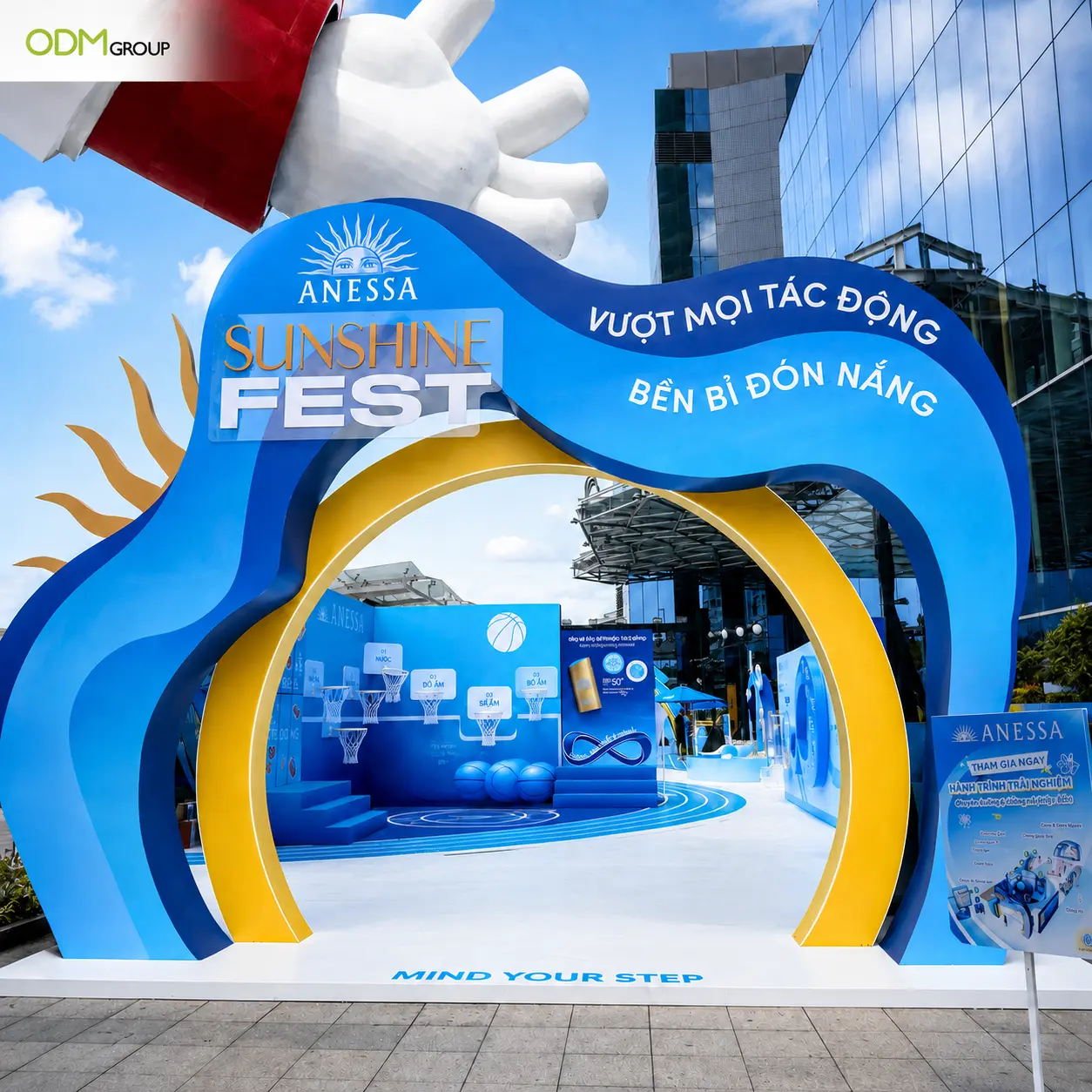
The right structure depends on the sales environment. Countertop units work well for smaller launches and tester-led products. Shelf displays improve visibility within an existing category. Freestanding units can create a stronger, more brand-focused destination. Digital screens, mirrors, lighting, and QR codes may help demonstrate products that require explanation.
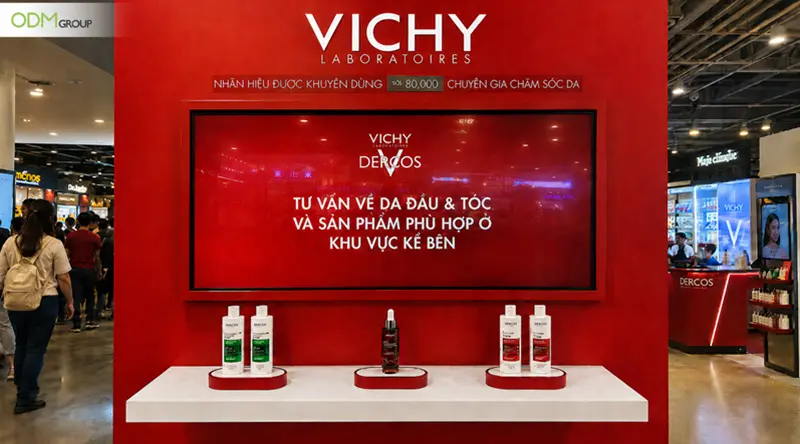
Operational details are equally important.
Brands need to consider:
- Retail footprint
- Product capacity
- Tester placement
- Restocking
- Cleaning
- Assembly
- Security
- Shipping efficiency
- Retailer restrictions
A display that is difficult for store teams to maintain will lose impact quickly. Industry-leading execution balances creative ambition with retail practicality.
5. Connect Physical and Digital Touchpoints
Customers do not experience launches in isolated channels. They may discover a product on social media, test it in-store, read reviews online and complete the purchase through e-commerce.
Campaign assets should support this movement.
A QR code on a display can lead to a shade finder, consultation tool, ingredient explanation, or tutorial. A sample can link to a full-size product page. A gift can unlock loyalty points or exclusive content.
The call to action must be specific.
“Scan to learn more” places the burden on the customer. “Find your shade,” “Build your routine,” or “Claim your launch offer” gives them a reason to engage.
The digital experience should also continue the same campaign story. Visual inconsistency or irrelevant landing pages weaken trust.
6. Add Interactive Activities That Turn Attention Into Participation
A POS display creates visibility, but an interactive activity gives customers a reason to stop, participate, and spend more time with the brand.
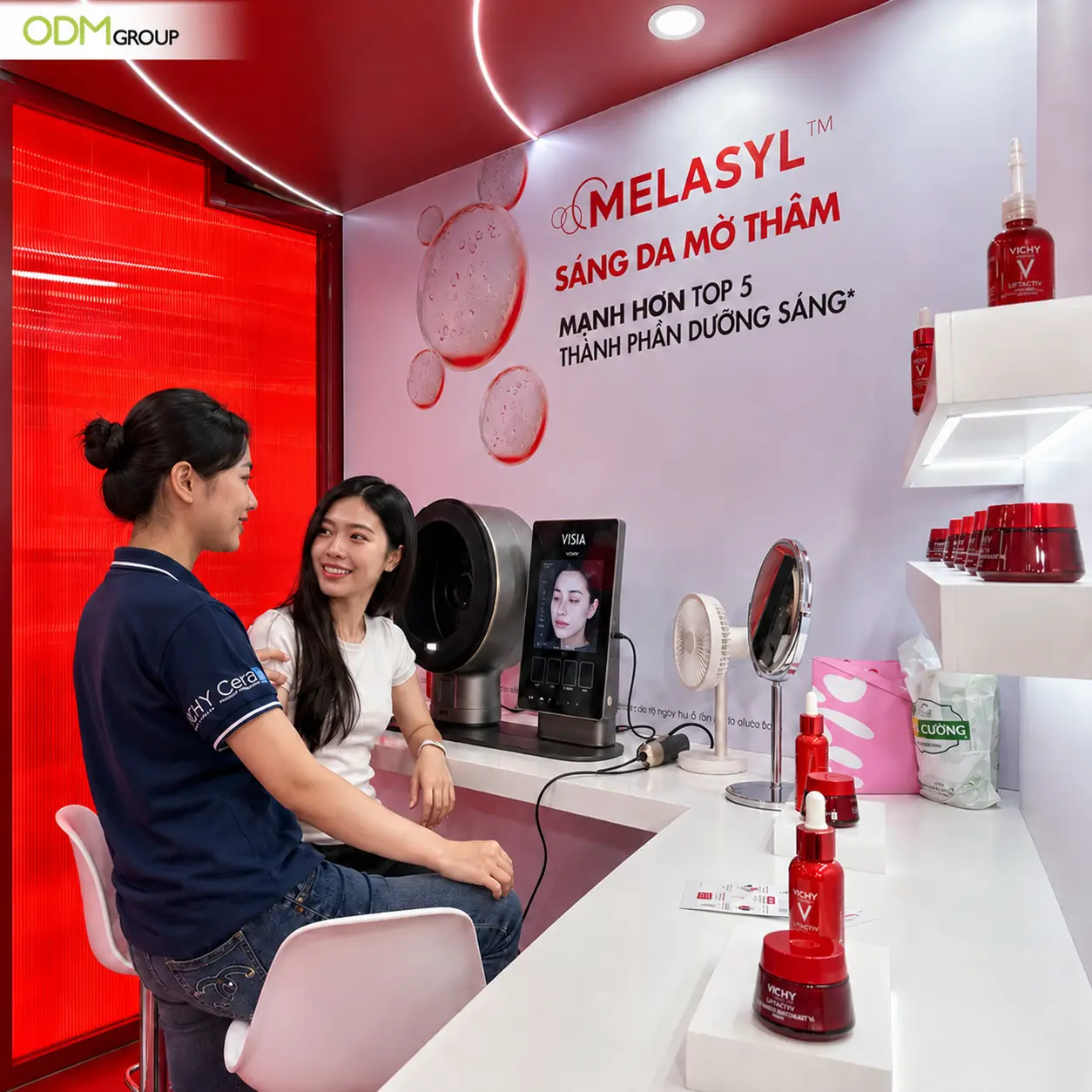
For skincare launches, face analysis tools can make the experience more useful and personal.
These systems may help assess concerns such as hydration, oiliness, texture, visible pores, or pigmentation, and then guide the customer toward a more relevant product or routine.
This gives beauty advisers a stronger basis for consultation and helps customers understand why a particular product may suit their skin.
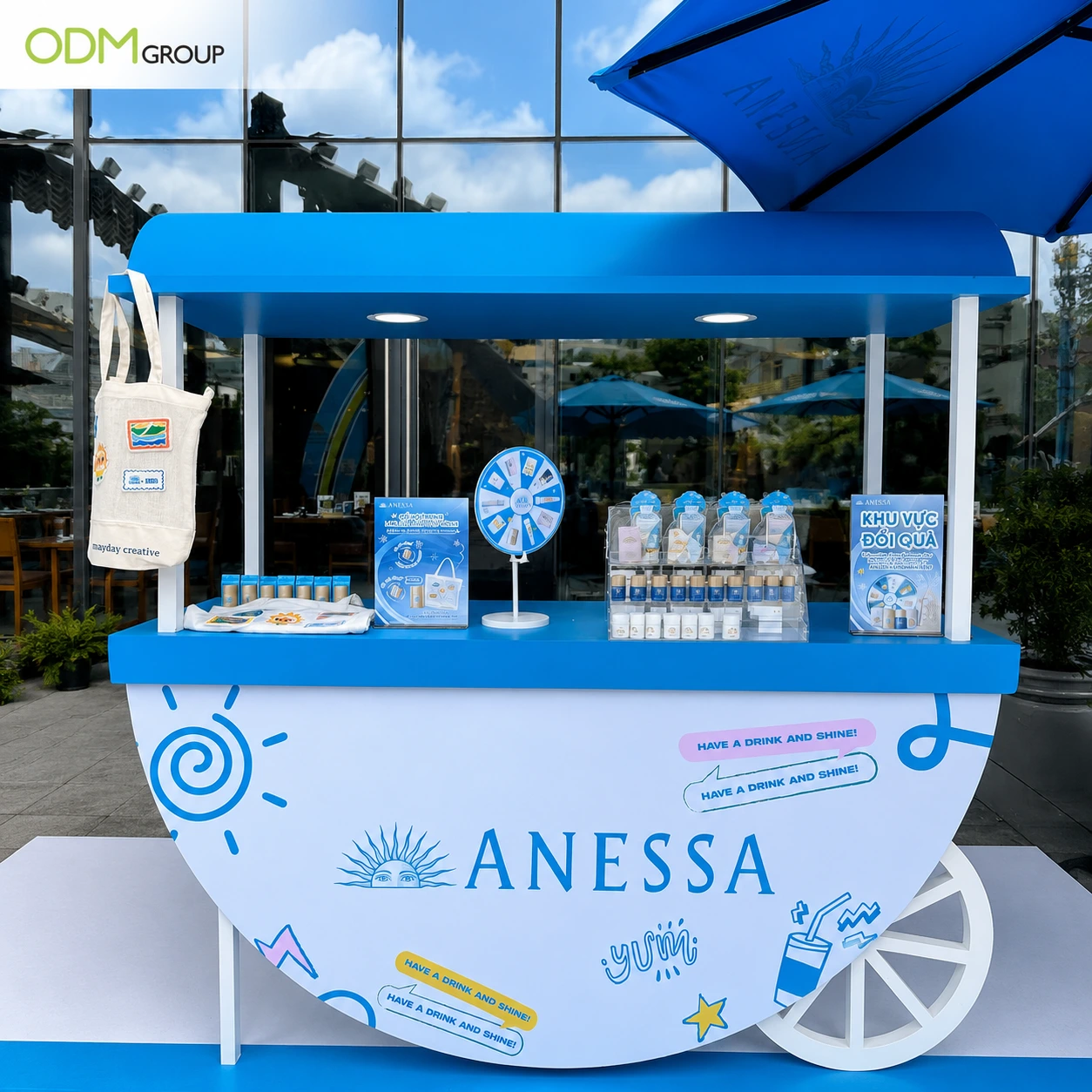
Spin-the-wheel activities can support a different objective.
They add energy to the launch and can be used to distribute samples, discount vouchers, trial-size products, branded gifts, or consultation rewards.
When integrated properly, interactive activities help transform a static beauty display into a guided brand experience—one that educates customers, supports purchase decisions, and creates stronger campaign recall.
7. Plan Development Earlier Than the Advertising Campaign
Physical launch assets require time to develop correctly.
A typical process may involve:
- Concept development
- Sketches
- Packaging and structural design
- Material selection
- Prototypes
- Testing and revisions
- Factory selection
- Production
- Quality control
- Packing and delivery
Custom molds, electronic features, unusual finishes and complex display structures require additional lead time.
When development begins too late, brands are often forced to simplify the idea, use generic products or accept compromises in materials and finish.
Early planning protects the creative concept and gives marketing, procurement, design and retail teams time to align on cost, functionality and delivery.
9. Measure the Entire Launch Funnel
Sales remain important, but they should not be the only measure of success.
Useful launch metrics include:
- Sample-to-purchase conversion
- Gift redemption rate
- Average order value
- Retail sell-through
- Tester interaction
- QR code engagement
- Loyalty sign-ups
- Repeat purchase
- Cost per trial
- Customer feedback
- Retail staff feedback
These results help brands understand not only whether the launch worked, but which parts of the campaign created the strongest response.
Discover how other beauty brands promote their products
We spotted an excellent cosmetic product display by Watsons at a shopping mall and we absolutely love the set up. Their display is very engaging and customers were able to personally try their products.
The Cosmetic Display Counter has successfully grasped the attention of makeup lovers. Besides their bright aesthetics, which showcase their lipsticks perfectly, they also have an interactive iPad to engage potential buyers.
We found out that Clarins is currently promoting its Double Serum Eye product, which explains the words “Now for your eyes” on the wall-mounted advertising display.
We’ve seen Nivea’s promotion in a Serbian store wherein customers can purchase Nivea’s beauty gift set along with branded cosmetic bags.
How ODM Group Supports Beauty Brands
ODM Group helps beauty brands develop cosmetic packaging, gift-with-purchase items, POS displays and interactive retail installations.
Support can include concept development, sketches, structural design and prototypes, allowing brand teams to review materials, dimensions, branding and functionality before production.
ODM Group can also help select suitable factories, manage quality control and coordinate delivery. This gives beauty brands one strategic partner to connect creative campaign ideas with practical production and retail execution.
Final Thoughts
A beauty product launch should not be treated as a collection of unrelated promotional items. It should be designed as a connected system.
Packaging creates the first physical impression. Samples reduce uncertainty. POS displays simplify decisions. Gift-with-purchase items increase perceived value. Digital tools continue the relationship after the customer leaves the store.
When these elements work together, the launch becomes more than a moment of visibility. It becomes a structured path toward trial, conversion, and long-term customer value.
Planning a new beauty product launch? Contact ODM Group today, and we’ll make things happen for you!
FAQs about Beauty Product Launch
Should a beauty brand invest more in sampling or gift with purchase?
It depends on the main purchase barrier. If customers need to experience the formula first, sampling may create more value. If the product is already understood but needs stronger purchase motivation, a GWP may be more effective.
Can packaging be too premium for the product?
Yes. Packaging should match the product price, positioning and customer expectations. Overly elaborate packaging can create a mismatch, increase costs and make the product feel less credible.
What happens if the GWP becomes more desirable than the product?
The campaign may attract customers who are interested only in the gift. The GWP should increase the relevance and perceived value of the main product rather than become the sole reason to buy.
Should brands pilot launch assets before a national rollout?
Yes. A limited retail or e-commerce pilot can reveal issues with packaging, tester layout, gift appeal, display maintenance and customer understanding before the campaign is expanded.
What to Read Next?
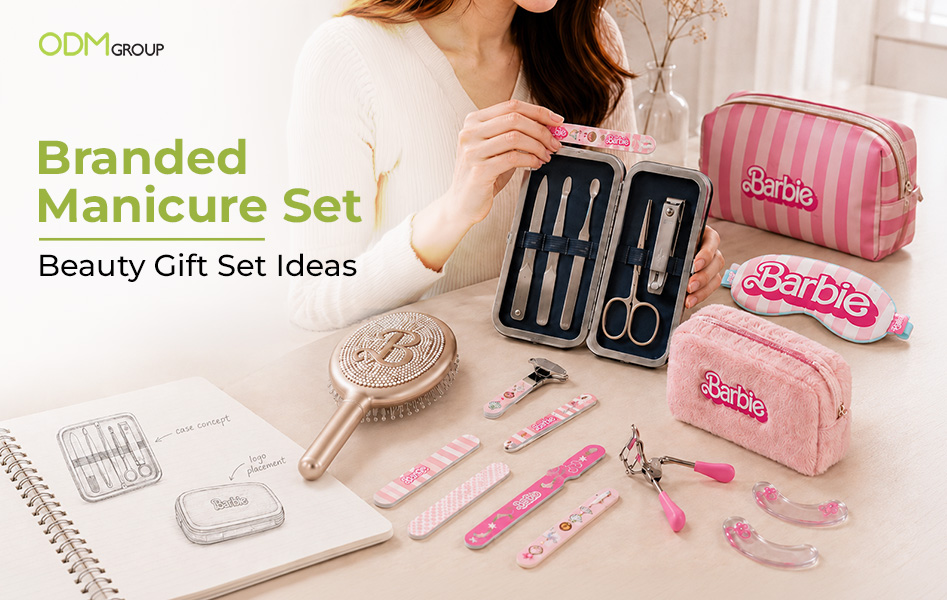
Branded Manicure Set for Beauty and Travel Promotions
Pampering yourselves is never going to get old; it’s [...]
How Aluminum Tube Cosmetic Packaging Are Made and Tested
As sustainability becomes a core focus in the cosmetics [...]
Cosmetics Marketing Strategy: What To Learn For Your Promotion?
When people see cosmetics and skincare brands, they collectively [...]
How Olivos Brings Excitement In-Store with its Gift Box Marketing Idea?
Olivos Soaps excites its customers in a Duty-Free shop [...]
Beauty Promotional Items: High End Brows Remover for Refined Marketing
Eyebrows are an essential part of facial beauty and self-expression. [...]
Cosmetic Bag With Logo: 9 Ways Businesses Can Use It in Marketing
A cosmetic bag with logo can do much more than [...]