
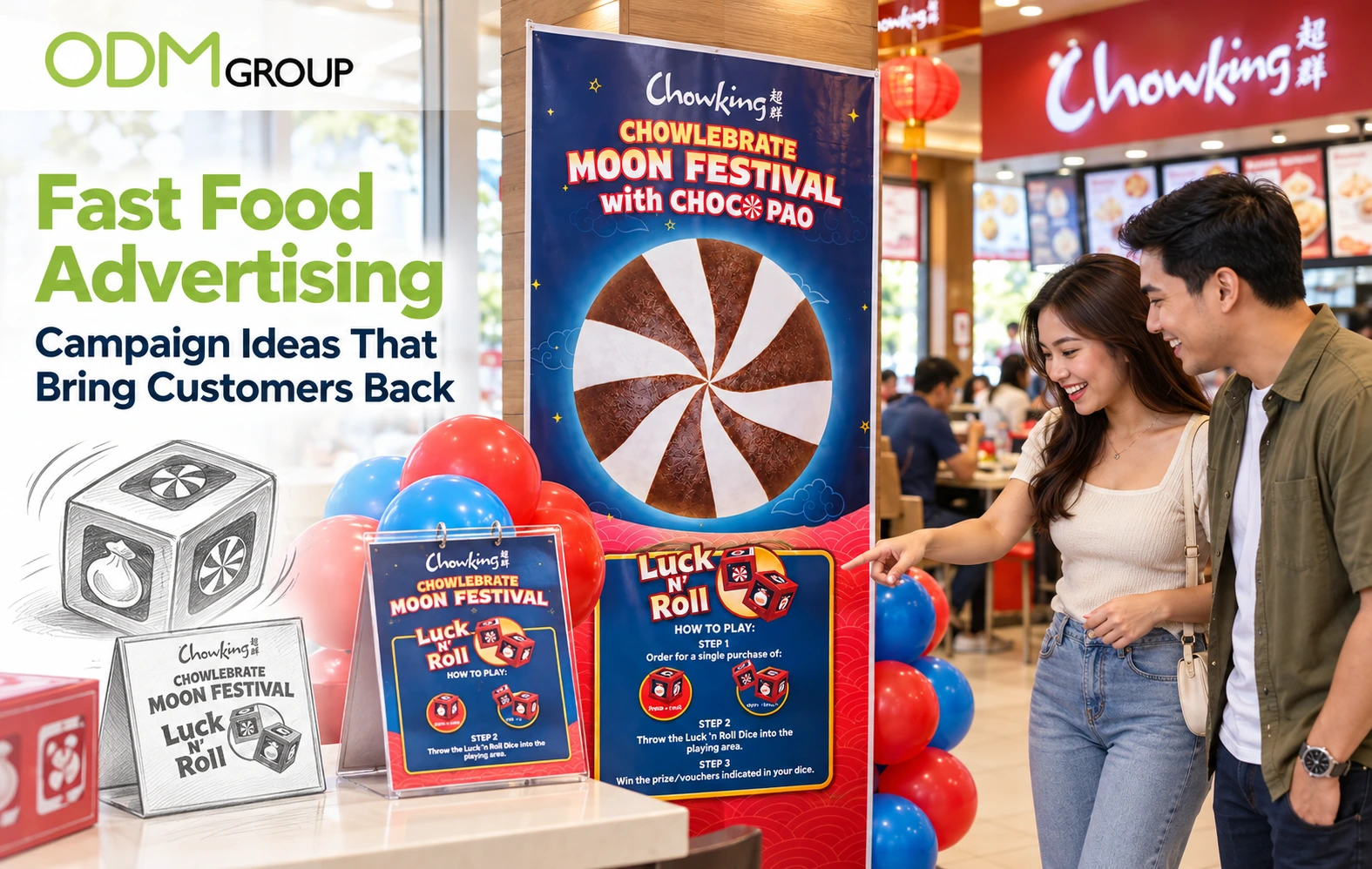
Fast food advertising works best when it gives customers a clear reason to choose a restaurant now and a reason to come back. A limited-time meal, an in-store game, or a collectible can make an offer more engaging than another price message. For restaurant marketing teams, the challenge is to connect the advert, the purchase, and the customer experience without slowing service or confusing staff.
This guide looks at practical advertising formats for quick-service restaurants, the decisions behind them, and an observed Chowking promotion that shows how an in-store activity can bring a seasonal campaign to life.
What Does Fast Food Advertising Need to Achieve?
The goal depends on the campaign. A new menu item needs trial. A quieter daypart needs traffic. A meal bundle may aim to lift order value. A seasonal promotion may build awareness and encourage repeat visits. Those are different jobs, so they should not all use the same offer.
Before choosing a giveaway or display, agree on one primary customer action: try, upgrade, return, join, or share. Then make that action easy to understand wherever the customer sees the campaign—from social posts and menu boards to the order counter and packaging.
| Campaign goal | Suitable advertising mechanic | What to check |
|---|---|---|
| Drive trial | Limited-time item with a clear menu-board message | Availability, staff explanation, and whether the item is easy to photograph |
| Increase order value | Qualifying meal bundle with a gift, game entry, or upgrade | Threshold clarity and cost per qualifying order |
| Encourage repeat visits | Collectible series or progressive reward | Stock allocation, redemption rules, and fair access across stores |
| Build seasonal relevance | Themed menu, packaging, and in-store activity | Cultural fit, campaign timing, and consistent creative across channels |
| Grow loyalty engagement | Receipt code, app reward, or QR-based participation | Simple customer journey and privacy requirements in each market |
Fast Food Advertising Ideas Beyond Price Discounts
1. Make the meal the entry point
A qualifying meal gives customers a clear way to join a campaign. The reward could be a small branded item, a game attempt, or a voucher for a future visit.
Show the qualifying spend or menu items wherever the offer appears, and make any exclusions easy to find. A mechanic that takes too long to explain at the till will be harder to run at scale.
2. Add a short in-store interaction
A dice game, prize wheel, or reveal card can make ordering feel like an occasion. Keep the interaction quick, visible, and safe for a busy restaurant. Define who hands out the game piece, where customers play, how you record prizes, and what happens when stock runs out. A compact tabletop or counter format often makes more sense than a large installation where floor space is tight.
3. Offer a gift people would keep
Collectible cups, character items, and useful food-related accessories can extend a campaign beyond the meal. The design should suit the audience and the brand story.
For a family-focused promotion, a series may encourage another visit; for an adult audience, useful drinkware or a well-designed accessory may feel more relevant. Start with the desired behavior, then choose the item—not the other way around.
4. Use packaging as campaign media
A takeaway bag, sleeve, or box can carry the same message customers saw online. It can explain a reward, show a collectible series, or direct people to the next step. The packaging still has to protect food, work with existing service routines, and remain legible at actual print size. Any item that contacts food needs appropriate material and testing review for the destination market.
5. Connect the in-store moment to the next visit
A voucher, app offer, or next-item teaser can give customers a reason to return after their current meal. Set a clear validity period and a measurable redemption path. If the promotion runs through several channels, align the terms across posters, digital ads, receipts, and staff scripts.
Chowking Example: A Seasonal Game Customers Can See and Play
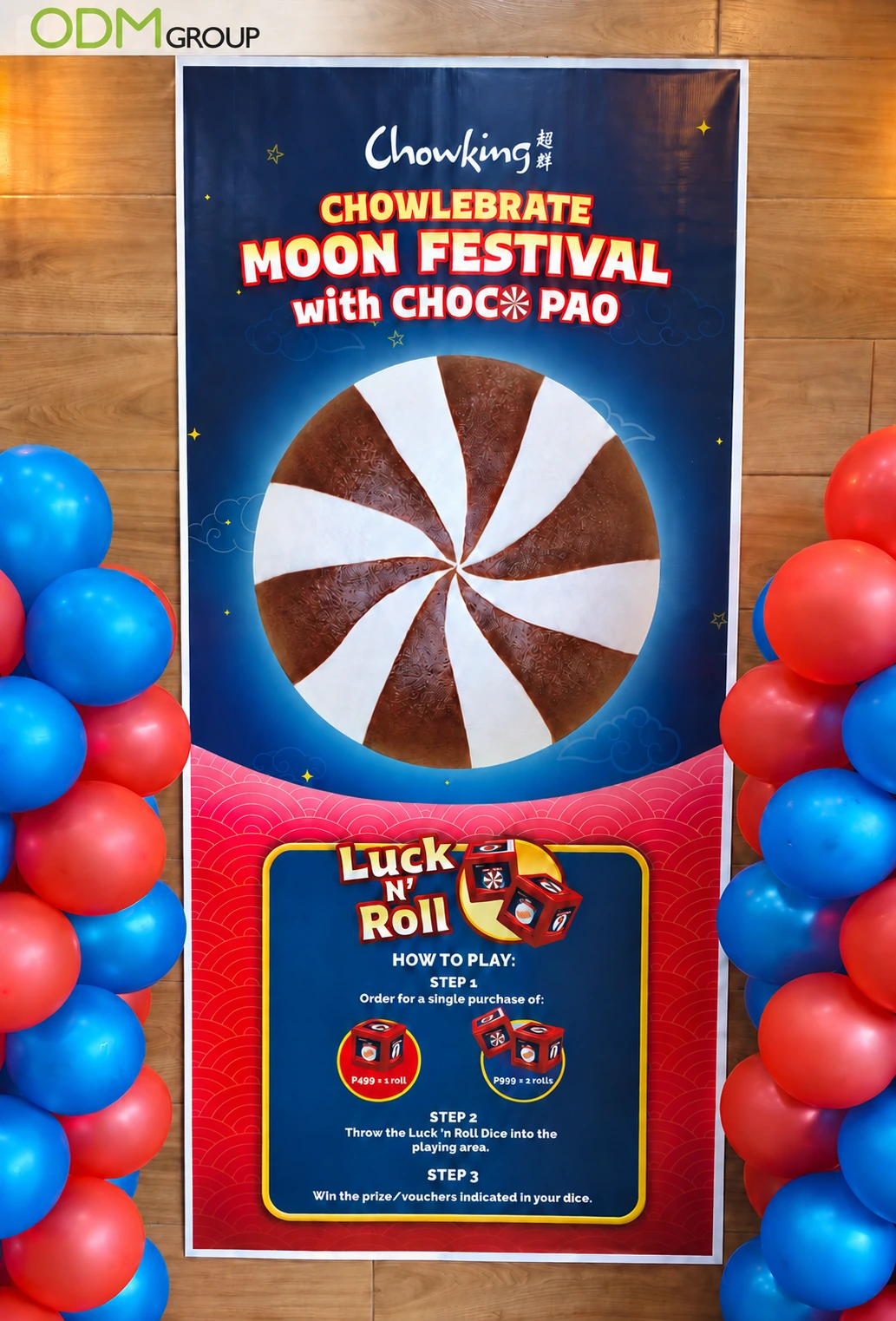
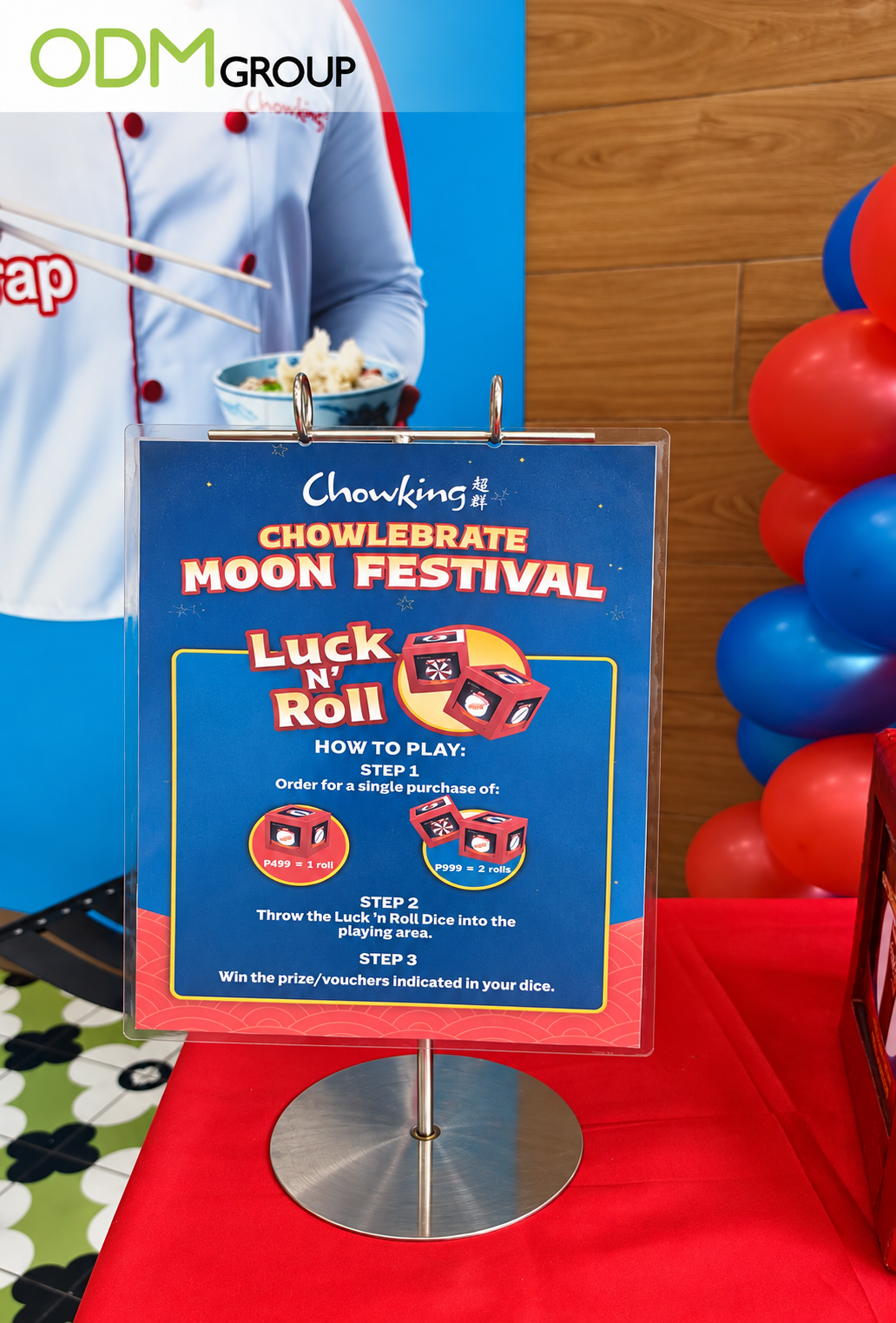
The supplied photographs show Chowking’s “Luck N’ Roll” promotion as part of its Moon Festival campaign in the Philippines. A red physical die, a marked play area, campaign posters, and a counter sign carry the same visual theme. The offer connects a qualifying order with a chance to roll for the prize or voucher indicated on the die.
Why is it a useful example for restaurant marketers?
- The qualifying action is explicit. Customers can see how a meal purchase connects to the activity.
- The physical prop makes the idea visible. The oversized die and play area turn a printed offer into something customers can notice while ordering.
- The touchpoints reinforce one campaign. The sign, game piece and seasonal creative belong to the same experience.
- The game has an operational job. Its value depends on quick play, clear prizes and a process restaurant teams can repeat consistently.
The images show the execution, not its sales results. To judge whether a similar campaign works, a restaurant would need its own data on qualifying orders, average order value, prize cost, redemption, repeat visits and service time.
How Other Fast Food Chains Have Promoted Their Restaurants
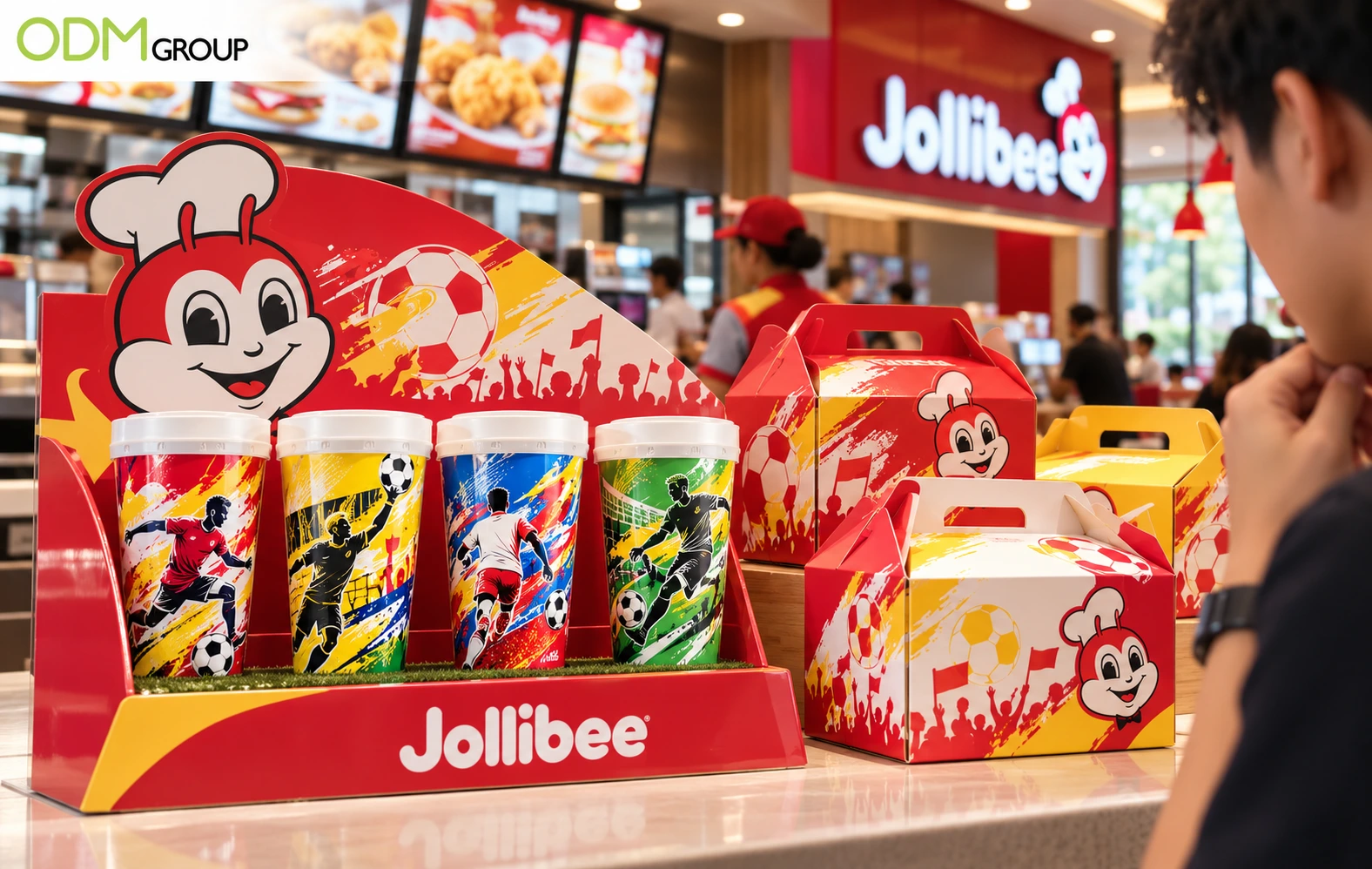
Chowking’s in-store game is one route. ODM Magazine has also documented restaurant campaigns built around gifts and collections. These are historical examples, not current offers or evidence of sales uplift.
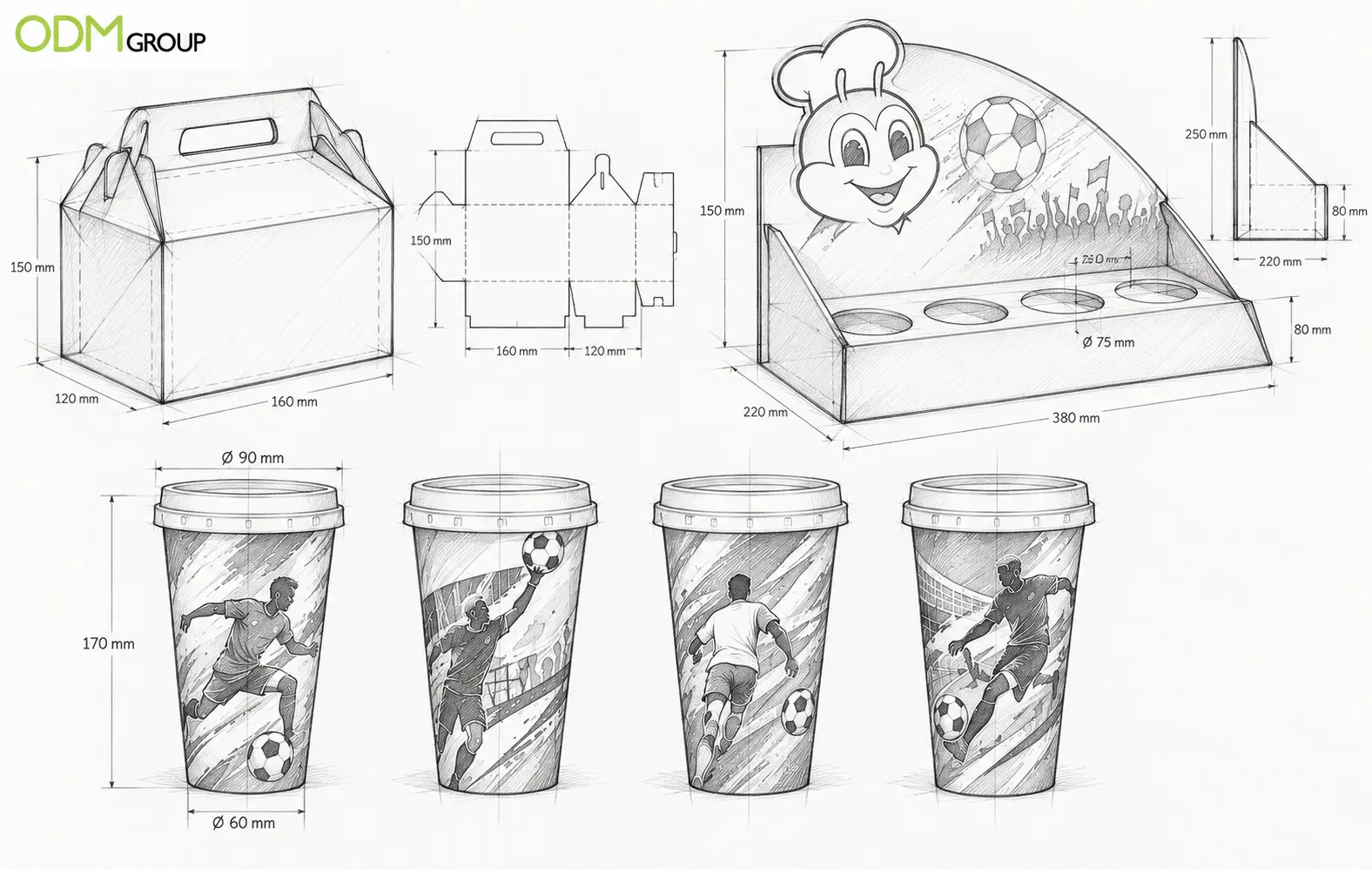
A potential campaign for McDonald’s Philippines could connect participating meals with a limited-edition FIFA World Cup collectible cup series.
1. Define the commercial objective.
Pick a primary metric, such as trials of a new item or an increase in qualifying meal orders. Set a baseline before launch so you can compare campaign performance fairly.
2. Map the customer journey.
Decide where someone first encounters the offer, what they must buy, what happens at the counter, and what they take away. Test the explanation on someone who has never seen the campaign.
3. Design for the real restaurant.
Check counter footprint, queue flow, cleaning, storage, staff handoff, and accessibility. A prop that looks good in a presentation still has to survive daily use and fit the approved store layout.
4. Build the physical elements as a set.
Signs, game pieces, giveaways, and packaging should use consistent branding and instructions. Choose materials based on handling, durability, cleaning, and intended campaign length. Prototype any custom structure or moving part before rollout.
5. Plan quantities and timing.
Base production on participating stores, estimated qualifying transactions, campaign length, and a sensible reserve. Minimum order quantity depends on the item, material, tooling, and print method. Lead time depends on design approval, sampling, testing, production, and distribution; a custom molded giveaway usually takes longer to develop than a printed counter sign. Confirm these variables before promising a launch date.
6. Review rules and product requirements.
Giveaways, prize games, claims, promotional terms, and food-contact components may require different approvals in different markets. Have the local legal and operations teams review the mechanics and materials before production. If children are the intended audience, give particular attention to age grading, small parts, and the applicable local requirements.
7. Measure what happened.
Track qualifying orders, participation rate, average order value, reward redemption, and stock-outs by location. Check staff feedback and queue impact alongside sales numbers. Use what you learn to improve the next promotion.
How ODM Can Help Develop the Physical Campaign
ODM Group works with brands to turn a marketing objective into a coordinated physical experience. For a restaurant campaign, this may include developing gift or game concepts, designing branded props and point-of-sale materials, creating prototypes, reviewing materials and packaging, selecting and managing production partners, conducting quality checks, and coordinating delivery. The exact scope depends on the brief; the brand and its advisers retain campaign rules and local approvals.
For more planning detail, explore ODM’s guides to restaurant promotion examples, gift-with-purchase campaigns, collectible cups for repeat visits and promotional stand-up displays. Each addresses a different part of the journey from offer to in-store execution.
Planning a restaurant promotion? Send ODM your campaign brief with the objective, audience, target markets, participating store count, expected quantity, budget range, and launch date. We can help develop the merchandise and in-store materials around the experience you want customers to have.
ODM Product Ideas


FAQs about Fast Food Advertising
What are effective fast food advertising ideas for a limited-time campaign?
Start with a clear offer tied to one goal. A limited-time menu item can encourage trial; a qualifying meal and game can drive participation; a collectible or voucher can support return visits. Choose the mechanic your stores can explain and fulfill consistently.
How can a restaurant advertise without relying on discounts?
Give customers added value through a seasonal experience, useful gift, collectible, menu collaboration or simple in-store game. The added value still needs a clear purchase path and a cost that fits the campaign economics.
What should appear on an in-store promotional display?
Show the offer, qualifying action, dates and next step in a readable hierarchy. Put the short message where customers decide what to order. Keep full terms accessible without crowding the main sign.
How early should a restaurant plan custom promotional items?
Begin as soon as the launch window and participating markets are known. Custom design, tooling, sampling, testing, approvals and distribution all affect the schedule. Share quantity and delivery locations with the development team to obtain a realistic production plan.
How do you measure a fast food promotion?
Compare campaign outcomes with an appropriate baseline: qualifying orders, average order value, participation, reward redemption, repeat visits and cost per incremental order. Also watch stock-outs and service time, which can hide problems behind strong headline participation.
Latest Blogs
15 Promotional Products for Universities to Celebrate World Students’ Day
Promotional products for universities work best when they support [...]
Promotional Beer Bottle Opener: A Bottle-Shaped Gift for Brewery Campaigns
bottle shaped bottle opener, automatic bottle opener, promotional product for beer, beer promos
3D Memo Pads: Sculptural Designs for Brand Campaigns
3D memo pads combine an everyday office product with [...]
Bottle Necker Design: Creative Ideas for Your Next Promotion
A bottle necker gives a brand a little extra [...]
Press-and-Spin Toy: A Playful Twist on Custom Promotional Products
Promotional products are more memorable when they offer more [...]
Customized Cluster Bells: Inspiring Promotional Gift Ideas for Baby Brands
Customized Cluster Bells offer an interesting example of how [...]