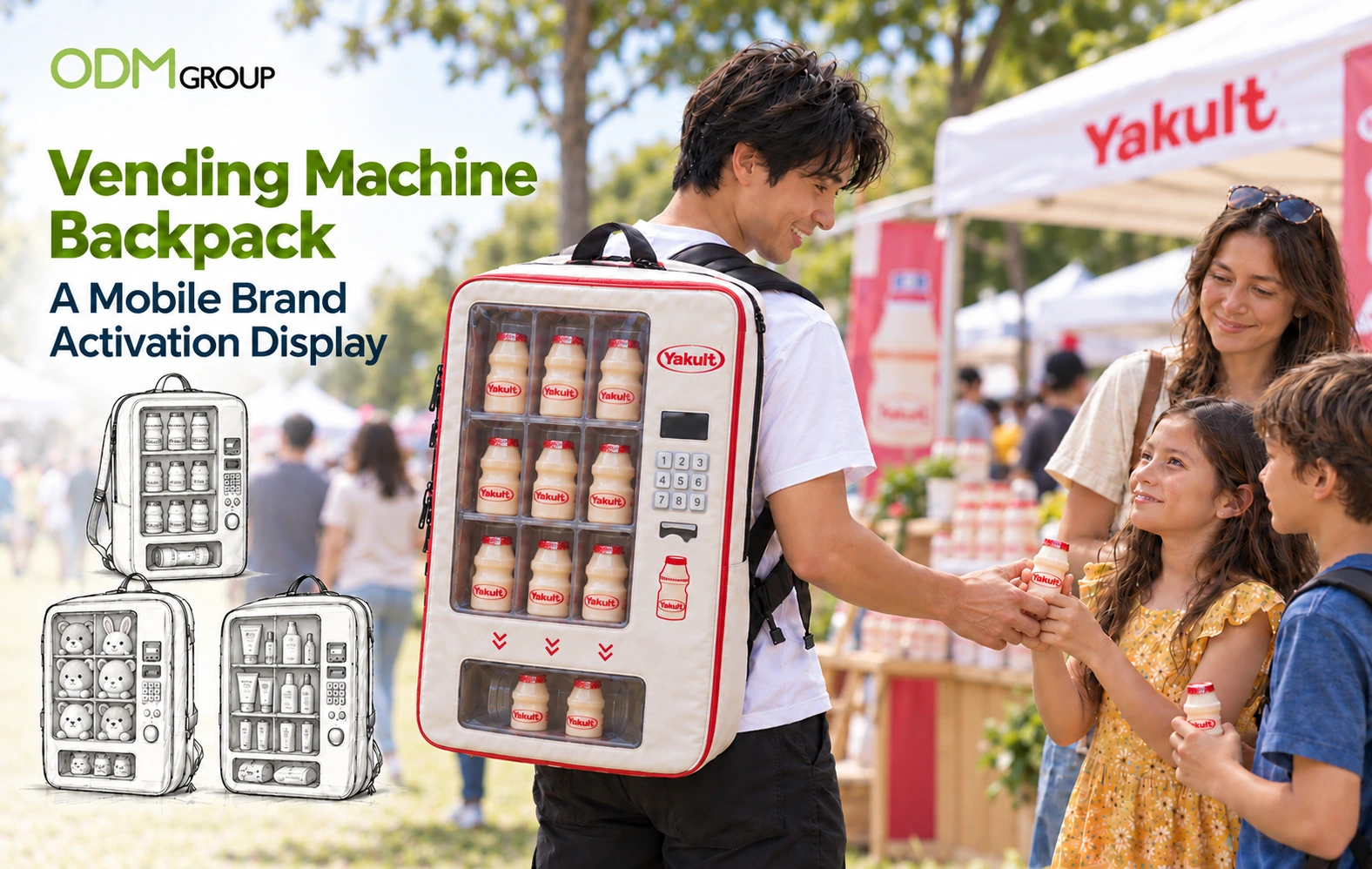
A vending machine backpack turns a brand ambassador into a moving product display. Its clear front shows the merchandise, while separate compartments and vending-inspired graphics invite people to take a closer look. For a launch, giveaway, or pop-up event, the format can take a small collection directly to the audience—provided the display is designed around the products, the wearer, and the campaign mechanics.
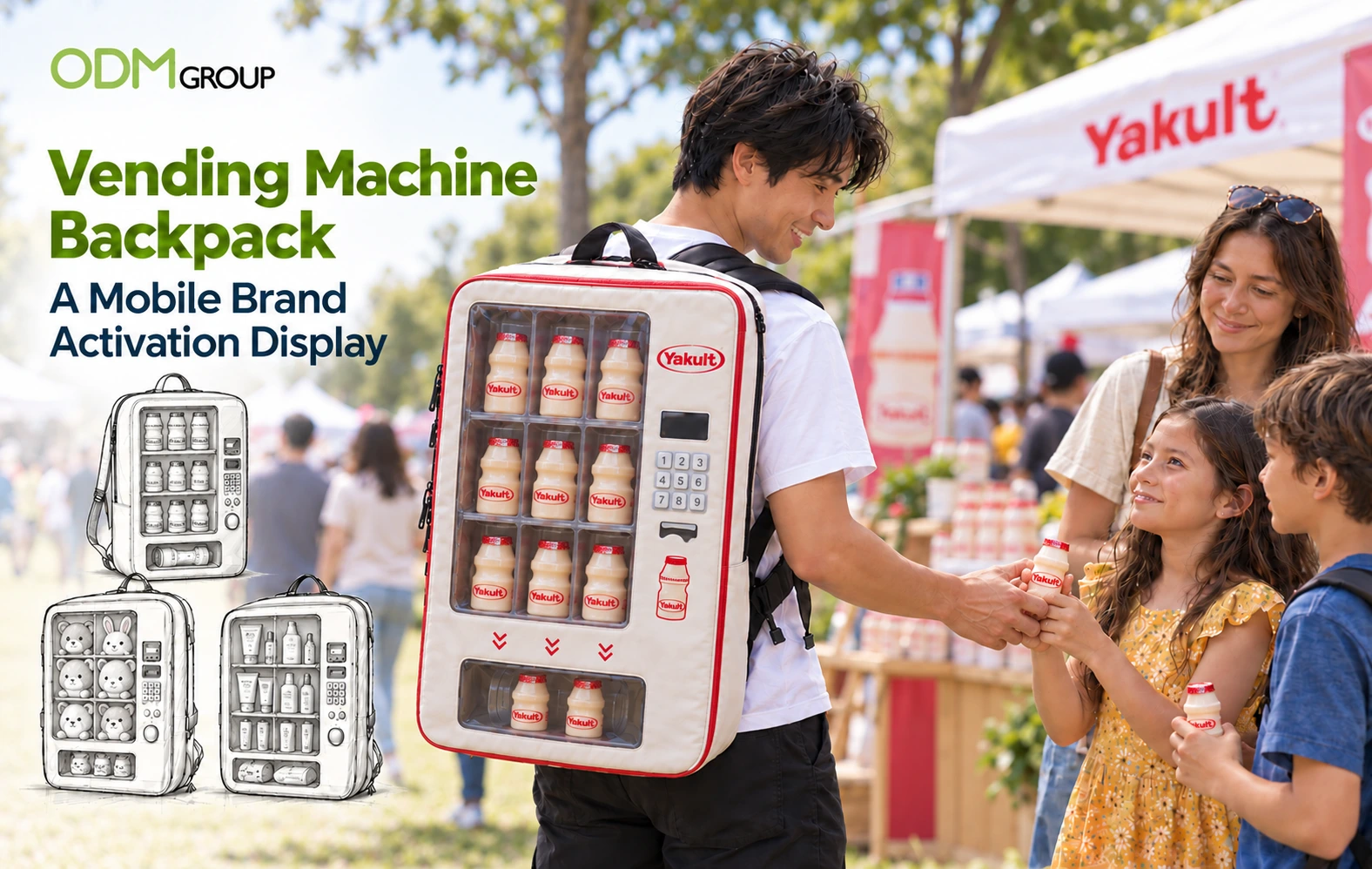
Campaign idea: A vending machine that comes to you.
Brands can customize the compartments, graphics and exterior to present a specific product range. An ambassador can then help visitors choose an item and hand it to them directly.
Why use a wearable display?
A conventional booth stays in one place. A wearable display lets ambassadors bring featured products to approved areas of an event and start face-to-face conversations. The visible compartments also help visitors see the available designs before deciding which sample or reward to ask for.
This format is most useful when a campaign has small, light items that look good on display: collectible toys, packaged snacks, beauty minis, cards or small accessories. It could introduce a product range at a festival, bring samples through a permitted exhibition space, or support a timed giveaway at a retail activation.
The backpack creates an unusual visual moment, but the campaign still needs a clear next action. Should people scan a QR code, try a sample, make a purchase elsewhere or choose a reward? That decision determines the graphics, staffing, and whether any dispensing function is necessary.
Choose the right level of interaction
| Activation format | How it works | Best use |
|---|---|---|
| Display only | Products stay behind the clear front; an ambassador directs visitors to a counter or landing page. | Showing a collection without carrying giveaway stock. |
| Ambassador-led sampling | Display pieces stay visible; the ambassador hands out separate, approved sample stock. | Fast, controlled distribution at events. |
| Select a giveaway | Visitors choose from the visible range; the ambassador retrieves and hands over the item. | Collectibles, color variants and prize choices. |
| Interactive selection | Printed controls, a QR experience or a non-dispensing button adds a playful selection step. | A campaign that needs a stronger story or digital interaction. |
| Working dispenser | A purpose-built mechanism releases products through a pick-up area. | A project with sufficient time and budget for engineering, testing and servicing. |
A printed keypad and pick-up window can communicate the vending concept without electronics. If visitors are promised a working button, payment feature or automatic delivery, those functions must be specified and validated as part of the product design. The simple versions may offer the clearest customer experience: choose a product, speak to the ambassador and receive it directly.
Where could brands use it?
Collectibles and entertainment
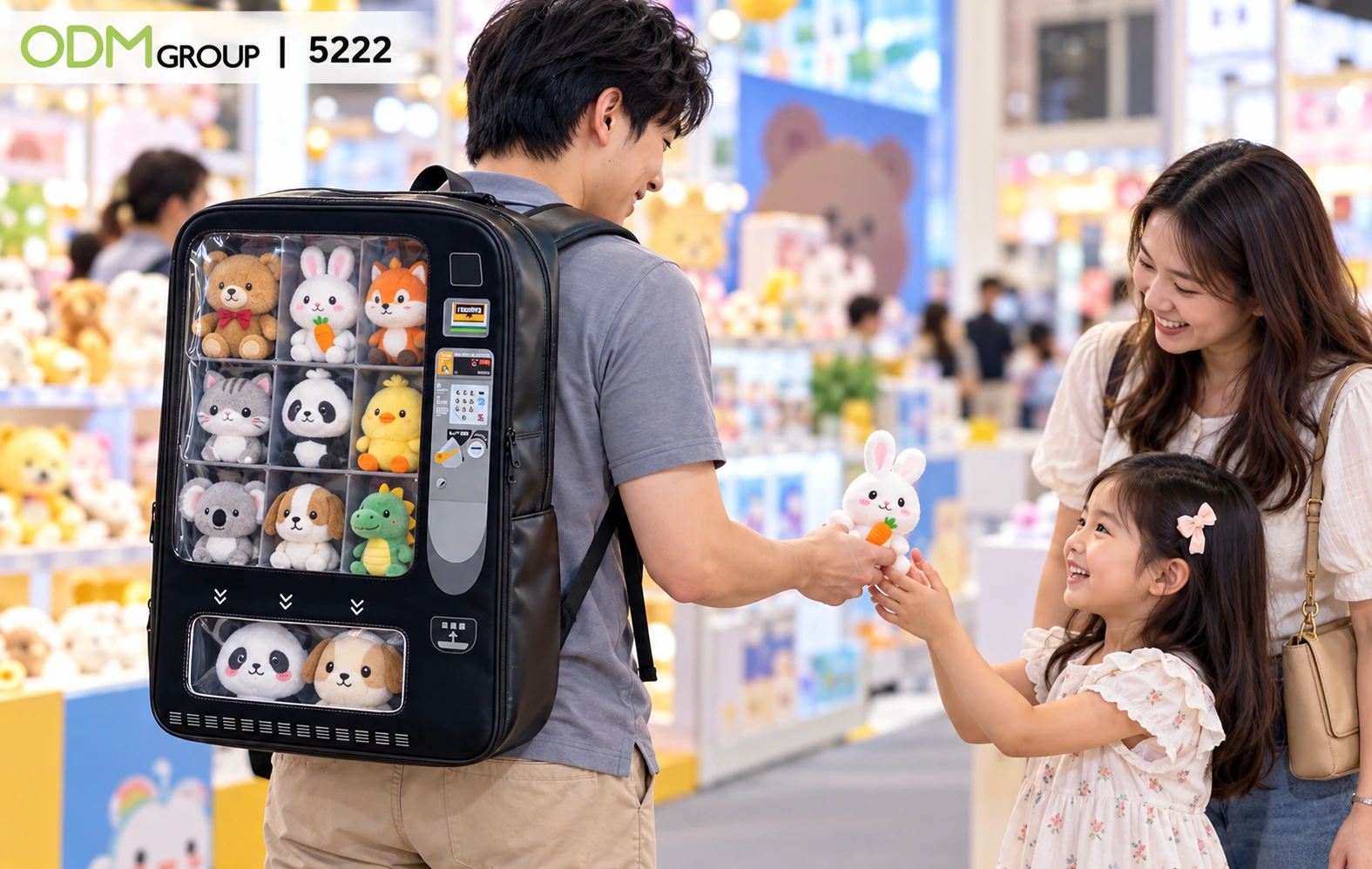
Put different plush characters or card packs in separate windows and invite visitors to choose their favorite. A limited-edition reveal can add a reason to visit the activation.
Food and beverage sampling
Show lightweight, sealed snack packs or mock product packs, then distribute stock kept separately under suitable handling conditions. Drinks, chilled products and heavy packs need a different carrying and storage plan.
Trade shows and festivals
Give roaming staff a compact display that connects people with a nearby booth, product trial or giveaway. Check venue rules for roaming promotions and handouts before finalizing the route.
Beauty launches
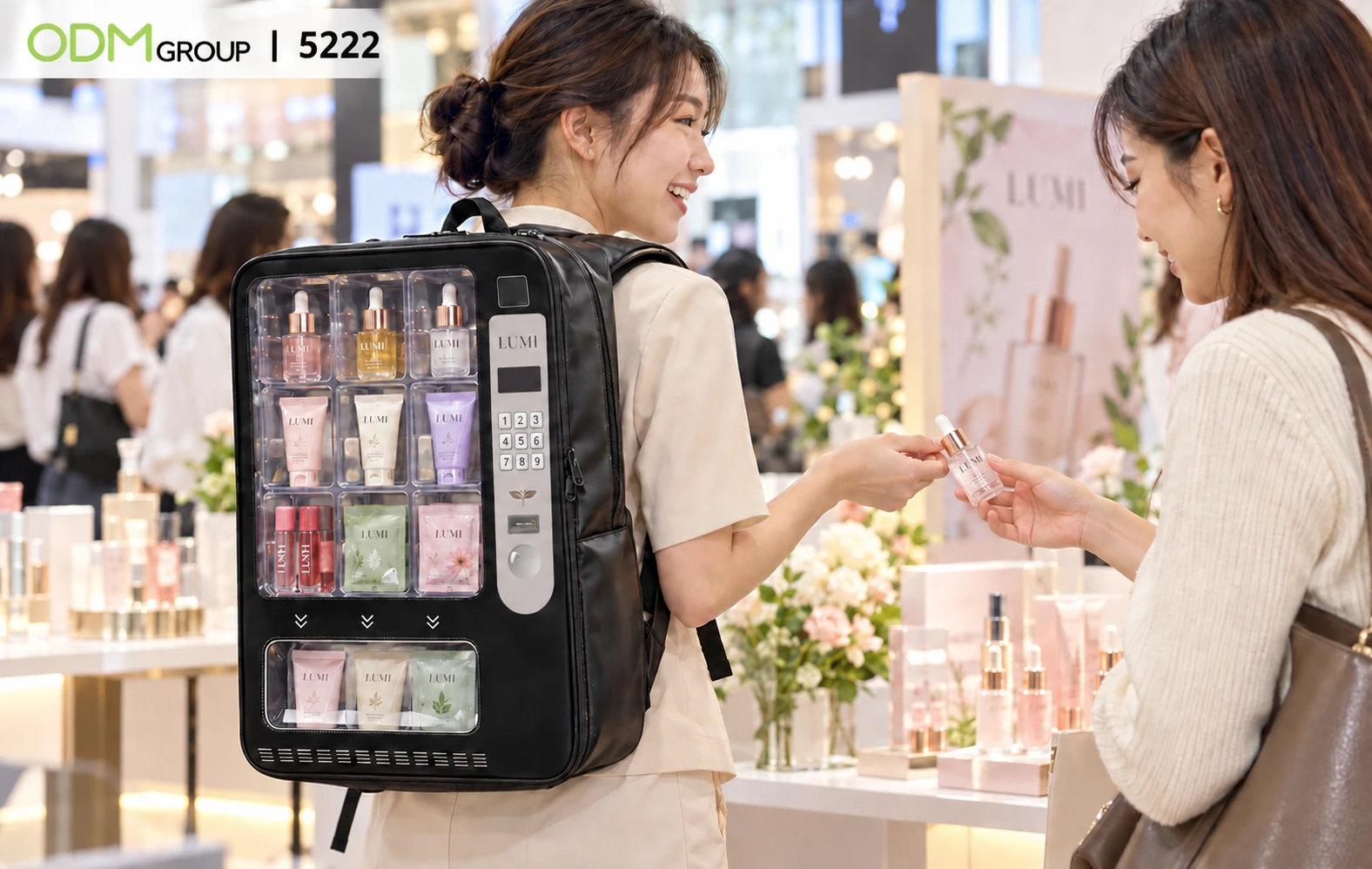
Present travel-size makeup or fragrance packs by shade or scent. Let the ambassador explain the range and hand out sealed samples under the campaign’s hygiene rules.
Retail pop-ups
Use the backpack to announce a launch or direct shoppers to a fixed activation point, subject to retailer approval. Keep the message short enough to understand while the wearer is moving.
- Display size and layout: Define the actual SKU dimensions, quantities, and viewing angle. Use removable inserts if the brand plans to change the assortment between campaigns.
- Weight and comfort: Prototype the bag fully loaded. Review strap adjustment, back support, load distribution, and how easily the wearer can move and turn.
- Clear front and protection: Select a window material and construction suitable for the expected handling. Test clarity, scratching, cleaning, and whether products remain in place while walking.
- Access and replenishment: Give staff a secure way to reach stock without exposing the entire display or dropping its contents. Decide whether display pieces and handout stock are separate.
- Branding: Use the outer shell, compartment labels, graphics, and interface area to carry a recognizable campaign identity. A QR code should lead to a specific action, such as an offer or product page.
- Safety and venue fit: Check protruding corners, closures, visibility in crowded spaces, and any organizer requirements. For food, cosmetics, or electronics, assess the relevant product and market requirements before sampling.
An automatic dispenser would introduce further design work: product feed, jam prevention, power, access for repairs, repeatable delivery and testing with each SKU. Avoid adding the mechanism unless it improves the actual customer journey.
From campaign brief to wearable prototype
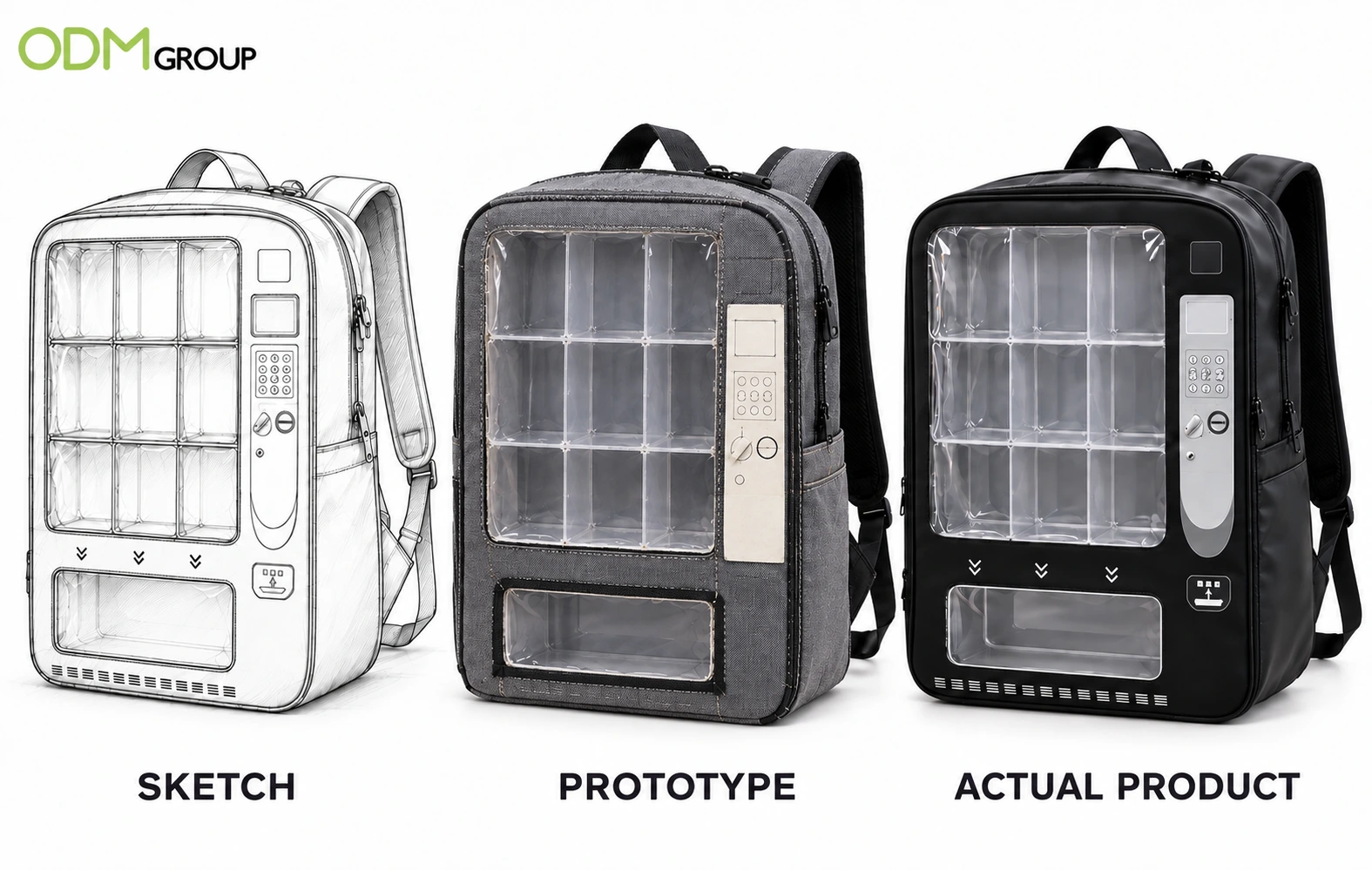
ODM can help develop the concept as a mobile brand activation display, starting with the campaign goal, audience, distribution method, and products to carry. The design team can explore the exterior form, graphics, and compartment layout, then prototype and test the idea with real products and a wearer in motion. ODM can coordinate factory selection, production checks, packaging and delivery planning once the design is approved.
The approval sample should answer practical questions: Can visitors recognize the products at a glance? Can an ambassador wear the loaded unit comfortably? Does it hold up to opening, replenishing, and walking? Are the giveaway instructions clear? These checks are more valuable than approving a render alone.
ODM has also covered related formats, including branded usherette trays for retail and event promotions and advertising backpack banners. A vending machine backpack suits campaigns where seeing a range of small products is central to the interaction.
Similar Backpack Advertising Ideas
Backpack advertising banners are flag banners attached to a backpack. You can easily disassemble the banner parts and store them in the bag. The poles are made of aluminum alloy, and the banner is made of polyester.
Commercial billboards are undoubtedly good investments, but their cost prevents businesses, especially small ones, from getting all their marketing benefits. And here’s where human backpack billboards for advertising come to play!
Bring the activation to your audience
A vending machine backpack works best when its unusual shape serves a clear purpose: show the product, invite a choice and make the next step easy. ODM can help turn that idea into a wearable concept that fits the campaign and can be tested before production. Share your activation brief with ODM—including the products, event setting and intended interaction—to start the design discussion.
ODM Services
FAQs about the Vending Machine Backpack
What products can go inside a vending machine backpack?
Small, lightweight items that remain visible behind the clear front work best, such as mini cosmetics, sealed snack packs and collectibles. Share actual product dimensions and weights so the compartments can be designed around the assortment.
Can it carry canned drinks?
It may display a limited number of cans, but a fully loaded bag must be tested for comfort and safe wear. For a beverage sampling campaign, it may be better to display a few cans and keep the handout stock at a nearby station, especially if the drinks need chilling.
Can we customize the design for our brand?
Yes. The exterior colors, graphics, compartment labels and vending-style panel can be designed around your campaign. If you want to reuse the bag, plan removable inserts and replaceable graphics before the prototype is made.
Where can brand ambassadors use it?
Possible settings include approved trade-show floors, festivals, retail pop-ups and product launches. Check the organizer's rules for roaming staff, sampling and promotional handouts before choosing the activation route.
What to Read Next?
Vending Machine Backpack: A Mobile Display for Brand Activations
A vending machine backpack turns a brand ambassador into [...]
Experiential Marketing Activations: Turn Store Visits to Brand Experiences
Experiential marketing activations give customers a reason to do [...]
6 Reasons Branded Tents Should Be Part of Your Outdoor Marketing
Promotional tents POS display outdoors events supplies branded
20 Outdoor Marketing Ideas for Your Drinks Business
For drinks businesses, especially those with a penchant for [...]
5 Ways to Elevate Brand Engagement Thru Custom Outdoor Chairs
When it comes to ingenious marketing strategies, sometimes all [...]

What Are The Advantages of Arch Advertising Gate for Your Brand?
Right from the start, before their step inside the [...]