
The best advertising space in a restaurant is not always on the wall, the menu, or the entrance display. Sometimes, it is right in front of the customer.
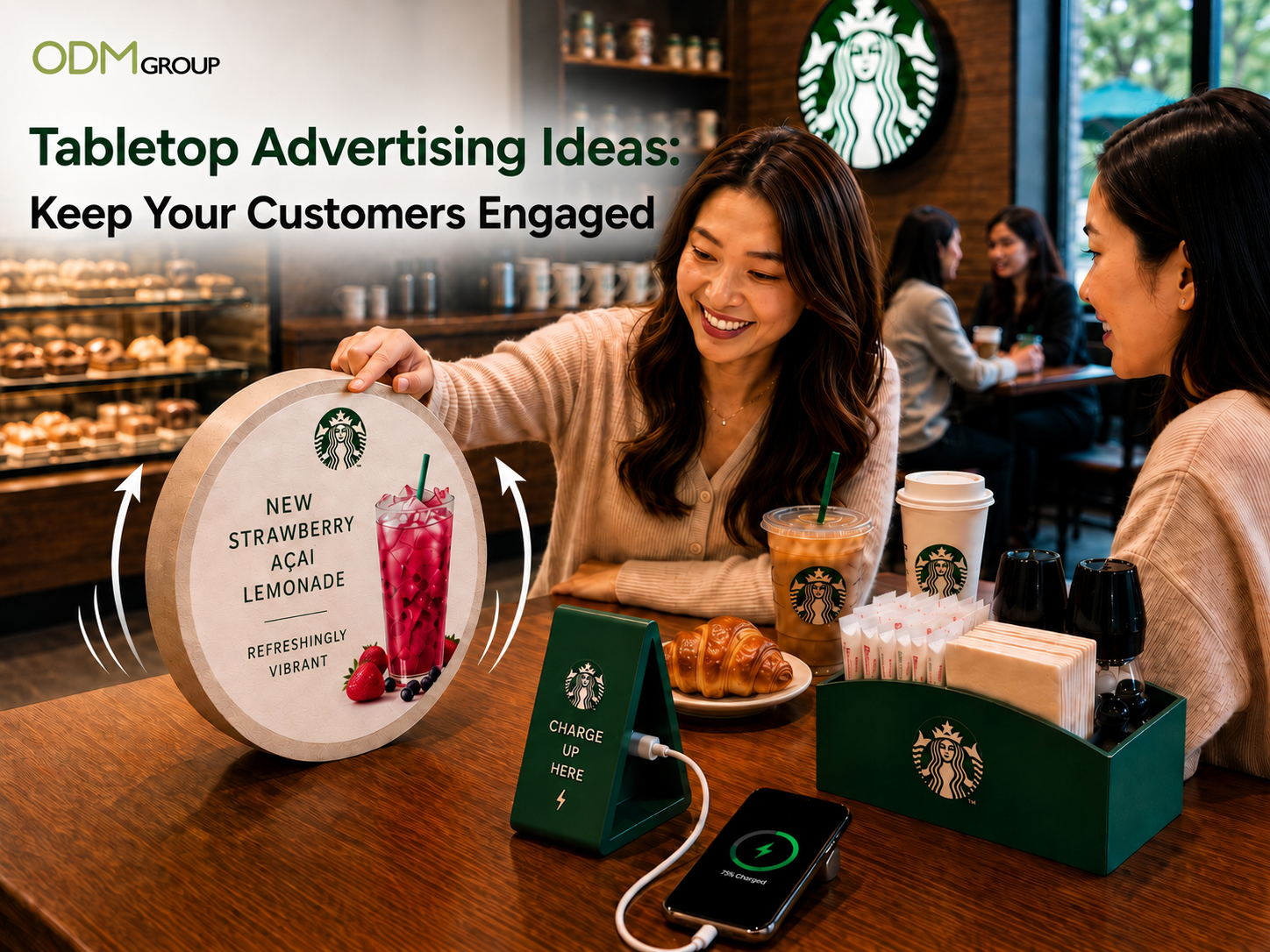
Tabletop advertising ideas help brands turn waiting time into engagement. From branded coasters and QR code stands to moving displays, charging stations, and interactive table pieces, these small touchpoints can influence what customers order, scan, remember, and share while they are already seated and paying attention.
Why Tabletop Advertising Still Works
Tabletop advertising works because it appears at a moment when customers are already paying attention.
In a restaurant, customers may be waiting for their food, deciding on drinks, checking the menu, or looking for dessert options. In a bar, they may be considering another round. At a retail counter, they may be open to a last-minute purchase. At an event booth, they may need a simple reason to scan, ask, or try the product.
Unlike large posters or wall displays, tabletop advertising sits close to the customer. It does not need to fight for attention from across the room. When designed well, it becomes part of the experience.
The best tabletop advertising does at least one of these things:
- Helps customers discover something useful
- Makes ordering or buying easier
- Encourages interaction
- Reinforces the brand visually
- Supports a campaign message
- Connects the physical space to digital content
This is why brands should think of tabletop advertising as a small-format media space, not just a printed item.
Start With the Marketing Goal
Before choosing a tabletop display, brands should first define what they want the item to do.
A table tent for a restaurant promotion has a different purpose from a branded coaster for a beer launch. A QR code stands for a hotel breakfast table is different from an interactive game used at a trade show booth.
Here are common goals and the tabletop formats that can support them:
Marketing Goal |
Suitable Tabletop Advertising Ideas |
|---|---|
| Promote a new product | Table tents, mini product displays, menu inserts |
| Increase food or drink orders | Appetite-led table cards, coaster promotions, and dessert displays |
| Drive QR scans | QR code stands, NFC table displays, and branded scan cards |
| Build brand recall | Branded napkin holders, condiment holders, and coasters |
| Encourage interaction | Mini games, scratch cards, spinning displays, puzzles |
| Support sampling | Tabletop trays, tasting cards, and product information stands |
| Improve customer experience | Menu holders, charging stands, table organisers |
| Promote loyalty | QR loyalty cards, stamp card holders, sign-up displays |
| Create photo moments | Shaped props, mini product replicas, themed table décor |
When the format matches the goal, the tabletop item becomes more useful for both the customer and the brand.
Turn Everyday Table Items Into Branded Touchpoints
Some of the best tabletop advertising ideas are items customers already expect to see on a table.
These can include napkin holders, tissue boxes, condiment holders, cutlery stands, straw holders, menu holders, coaster sets, and table organisers. Because these items are functional, they are less likely to be removed from the table after a short promotion.
For restaurants, cafés, and bars, this is a practical way to keep brand visibility present throughout the customer experience. A beverage brand, for example, can use a branded coaster holder or napkin caddy to remain visible throughout the meal. A sauce brand can use a condiment caddy to organise different flavours while making the product part of the table setup.
This type of tabletop advertising works best when the branding feels natural. The logo should be clear, but the item should still look suitable for the venue. Premium restaurants may need wood, metal, ceramic, or subtle finishes. Casual dining and fast food brands may benefit from brighter colours and bolder graphics.
Use QR Codes to Make Tabletop Advertising Measurable
QR codes have changed how brands use tabletop advertising. A printed display can now lead customers to a digital menu, an ordering page, a loyalty sign-up, a product story, a campaign video, a feedback form, or a limited-time offer.
This is useful because tabletop advertising no longer needs to be purely visual. It can become a measurable campaign touchpoint.
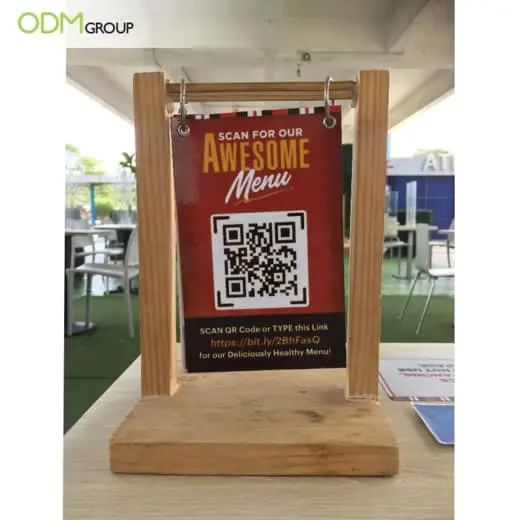
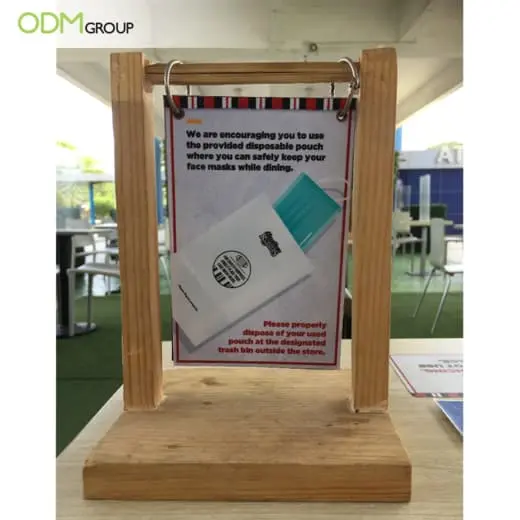
Brands can use QR tabletop displays to:
- Let customers view a menu
- Promote a limited-time offer
- Collect feedback
- Drive loyalty programme sign-ups
- Share product information
- Link to a campaign landing page
- Encourage social media followers
- Support event registration
- Track scans by location or campaign period
For better results, the QR code should be easy to see, easy to scan, and supported by a clear call to action. Instead of only placing a code on the design, tell customers what they will get after scanning.
Examples:
- “Scan to view today’s specials”
- “Scan to join the rewards programme”
- “Scan to unlock a drink pairing”
- “Scan to vote for your favourite flavour”
- “Scan to see the product story”
The message around the QR code matters as much as the code itself.
Use Coasters as Mini Campaign Media
Coasters are small, but they are one of the most natural tabletop advertising tools for beverage brands.
They can carry logos, drink pairings, QR codes, event information, campaign messages, collectible artwork, or limited-edition designs. They are also easy to distribute across bars, restaurants, hotels, clubs, and tasting events.
Coasters can be made from paperboard, cork, silicone, rubber, leatherette, wood, ceramic, or recycled materials, depending on the campaign. A short-term bar activation may only need printed paperboard coasters, while a premium spirits brand may prefer a more durable coaster set that customers can keep.
For stronger engagement, brands can create a series of coaster designs. This works well for campaigns involving sports teams, music events, destination themes, flavor ranges, or collectible brand artwork.
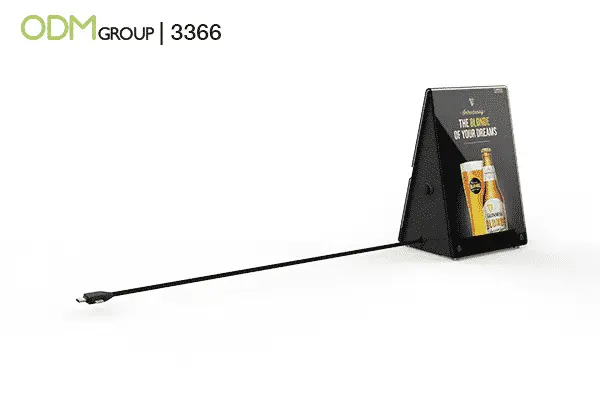
Add Utility With Charging Stands and Phone Holders
Functional tabletop items can extend brand visibility because customers actually use them.
Phone holders, charging stands, wireless charging pads, and small table organisers are useful in cafés, hotels, lounges, coworking areas, event spaces, and airport hospitality zones.
A branded phone stand can hold a menu QR code. A charging pad can carry a sponsor message. A table organiser can combine napkins, QR codes, and promotional cards in one clean display.
This approach is useful for brands that want to offer convenience rather than only show an advertisement. The more useful the item is, the longer it can stay in the environment.
How ODM Helps Brands Develop Custom Tabletop Advertising Ideas
ODM works with brands that want more than an off-the-shelf promotional item. Our team helps develop tabletop advertising products from the early idea stage through design, sourcing, sampling, production, quality control, and delivery.
This can include simple printed table tents, branded coasters, acrylic menu stands, interactive tabletop games, premium display holders, QR code stands, seasonal table décor, sampling kits, and fully customized tabletop displays.
Through our in-house design team, Mindsparkz, we can help visualize concepts, refine product structure, create presentation artwork, and develop ideas that fit the campaign environment. Once the concept is approved, ODM can support material selection, factory sourcing, prototyping, manufacturing, inspection, packaging, and logistics.
For brands, this means the tabletop advertising item is not treated as a last-minute print job. It becomes part of the wider campaign strategy.
Whether the goal is to increase menu sales, launch a new beverage, support a hotel promotion, improve product sampling, or create a more interactive customer experience, ODM can help turn the idea into a practical branded product.
Final Thoughts
Tabletop advertising is effective when it respects the customer experience. It should not interrupt the table setting or feel like clutter. It should add value, guide action, or create a small branded moment that feels natural in the environment.
For brands, the opportunity is to use the table as a high-attention touchpoint. With the right format, material, message, and production planning, a small tabletop item can support product discovery, digital engagement, upselling, sampling, and brand recall.
ODM helps brands develop tabletop advertising ideas that are creative, practical, and ready for real-world use. From sketch design to manufacturing and delivery, our team can support custom solutions for restaurants, cafés, hotels, beverage brands, retail counters, events, and promotional campaigns.
If your brand is planning a tabletop advertising campaign, speak with the ODM team. We can help you explore suitable formats, materials, customization methods, and production options for your next promotion.
More Ideas


FAQs about Tabletop Advertising Ideas
What is tabletop advertising?
Tabletop advertising is the use of branded items, displays, cards, holders, or interactive tools placed on tables or counters to promote a product, campaign, offer, or brand message. It is commonly used in restaurants, cafés, bars, hotels, retail counters, events, and trade shows.
What are the best tabletop advertising ideas for restaurants?
Some of the best options for restaurants include table tents, QR code menu stands, coasters, napkin holders, condiment caddies, menu holders, dessert promotion cards, and seasonal tabletop displays. The best format depends on whether the restaurant wants to promote a new item, increase orders, collect feedback, or improve customer convenience.
Can tabletop advertising include QR codes?
Yes. QR codes can be added to table tents, coasters, menu holders, napkin holders, and tabletop displays. They can link customers to digital menus, loyalty programs, ordering pages, product information, campaign videos, feedback forms, or limited-time offers.
How can brands make tabletop advertising more interactive?
Brands can add QR codes, NFC tags, scratch cards, trivia games, spinning displays, mini puzzles, voting cards, product sampling trays, or collectible coaster sets. The interaction should be simple and easy to understand in the table environment.
What to Read Next?
Event Branding Ideas: Make Every Touchpoint a Brand Experience
Event branding ideas turn separate venue elements into one [...]
Waterproof Camping Blanket: Take Your Brand Into the Outdoors
A waterproof camping blanket gives brands a useful role [...]
Custom Letter Envelope Opener Ideas for Corporate Gifts
A letter envelope opener may be a simple desk [...]
LED Screen Backpack: Smart Walking Billboards for Campaigns
Static outdoor signage and traditional promotional merchandise [...]
Marketing Gift Game Ideas to Connect Teams Through Play
A marketing gift game can offer much more than [...]

Food Cooling Fan: Make Your Brand Mascot Part of the Meal
A food cooling fan may seem like a simple [...]