
The best promotional products often reflect the business behind them. For freight forwarders, shipping lines, port operators, and supply chain companies, a branded shipping container box creates an immediate connection between the gift and the industry.
Designed to resemble a miniature cargo container, the product can be used as desktop storage, reusable gift packaging, a collectible model, or part of a larger logistics-themed campaign. More importantly, it gives logistics businesses an alternative to generic corporate gifts.
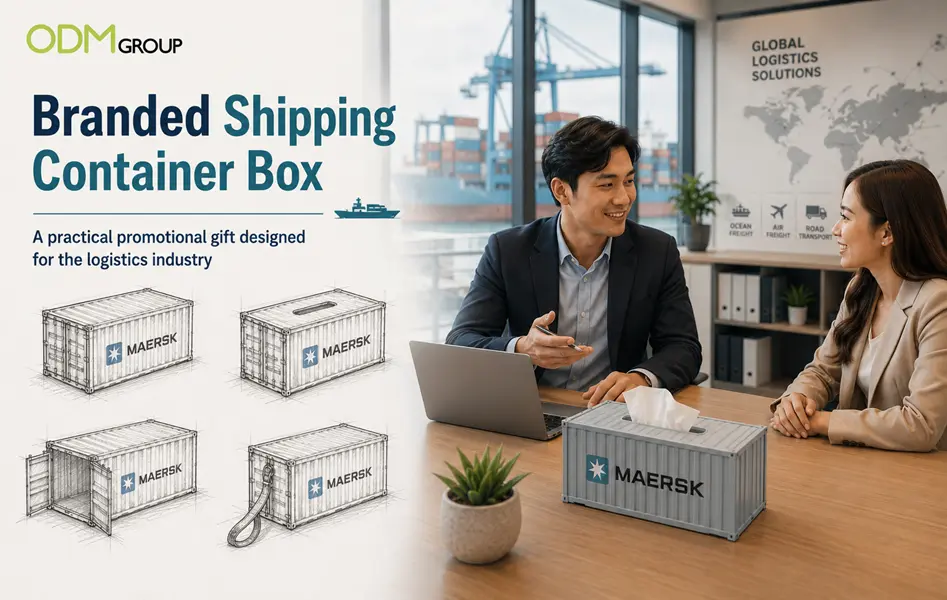
Why Industry-Shaped Promotional Products Work
Promotional merchandise becomes more memorable when its form communicates something about the brand.
A miniature container immediately suggests shipping, cargo, transportation, international trade, and global supply chains. The recipient does not need to study the logo to understand the connection.
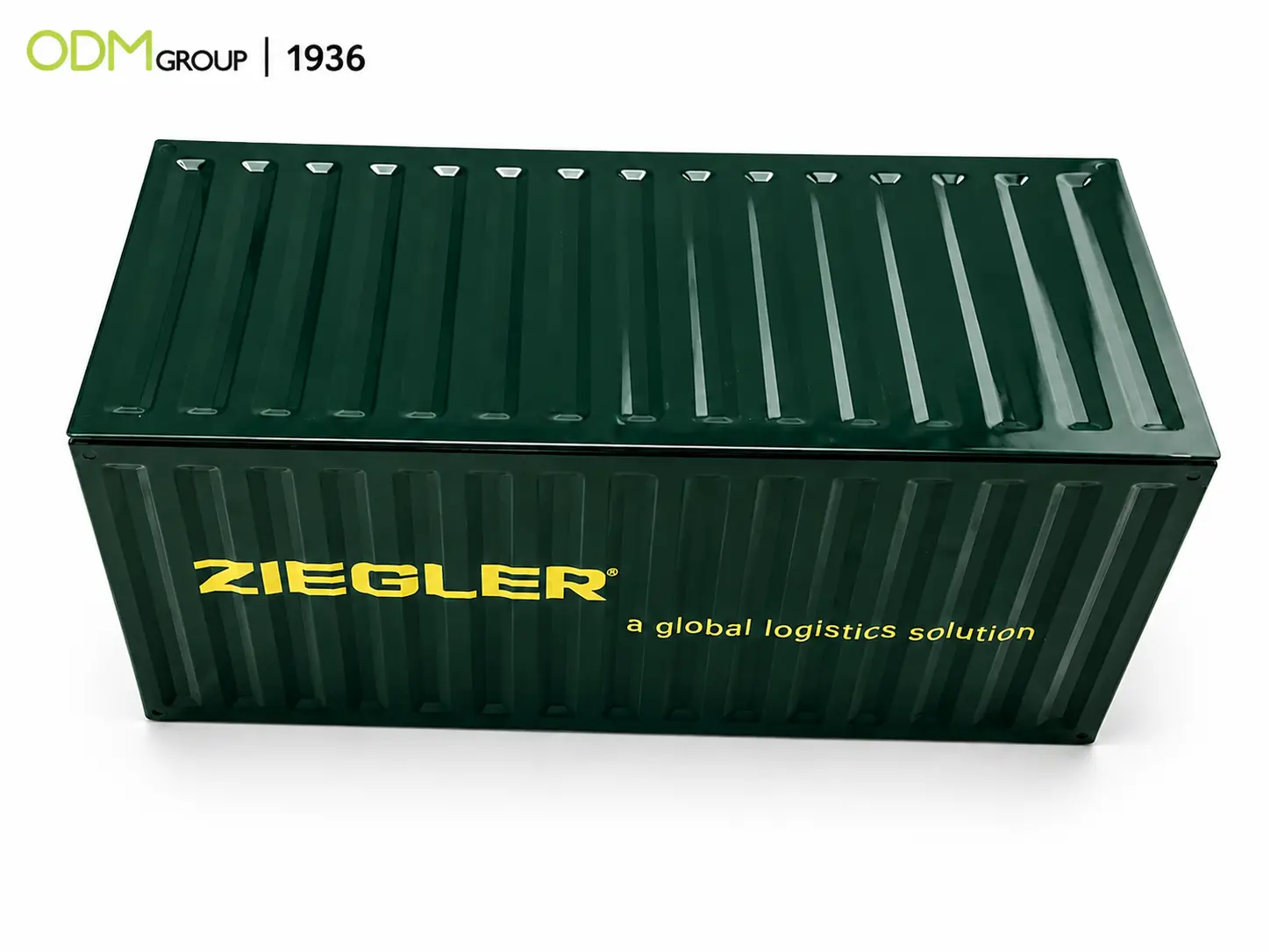
This makes the product particularly relevant for:
- Freight and logistics companies
- Shipping lines
- Port and terminal operators
- Warehousing businesses
- Import and export companies
- Supply chain technology providers
- Courier and delivery services
The container format also provides a starting point for storytelling. Brands can use it to communicate a new route, celebrate a business milestone, welcome employees, recognize clients, or introduce a new logistics service.
A Practical Product With Long-Term Brand Visibility
The container box is not limited to display. It can also function as a practical storage solution for small office and personal items.
Depending on its size and internal layout, it may hold business cards, USB drives, charging cables, keys, pins, stationery, samples, or event materials.
This everyday functionality can extend the life of the campaign. Instead of being discarded after an event, the product may remain on a desk, reception counter, shelf, or workstation.
That continued use gives the brand repeated visibility without requiring additional media spending.
Use the Container as Reusable Gift Packaging
One of the strongest ways to develop the concept is to use the container as both the promotional product and the packaging.
The box can hold another branded item while also becoming part of the gift itself. This provides a more considered presentation than disposable packaging and gives the recipient a second useful product after the contents have been removed.
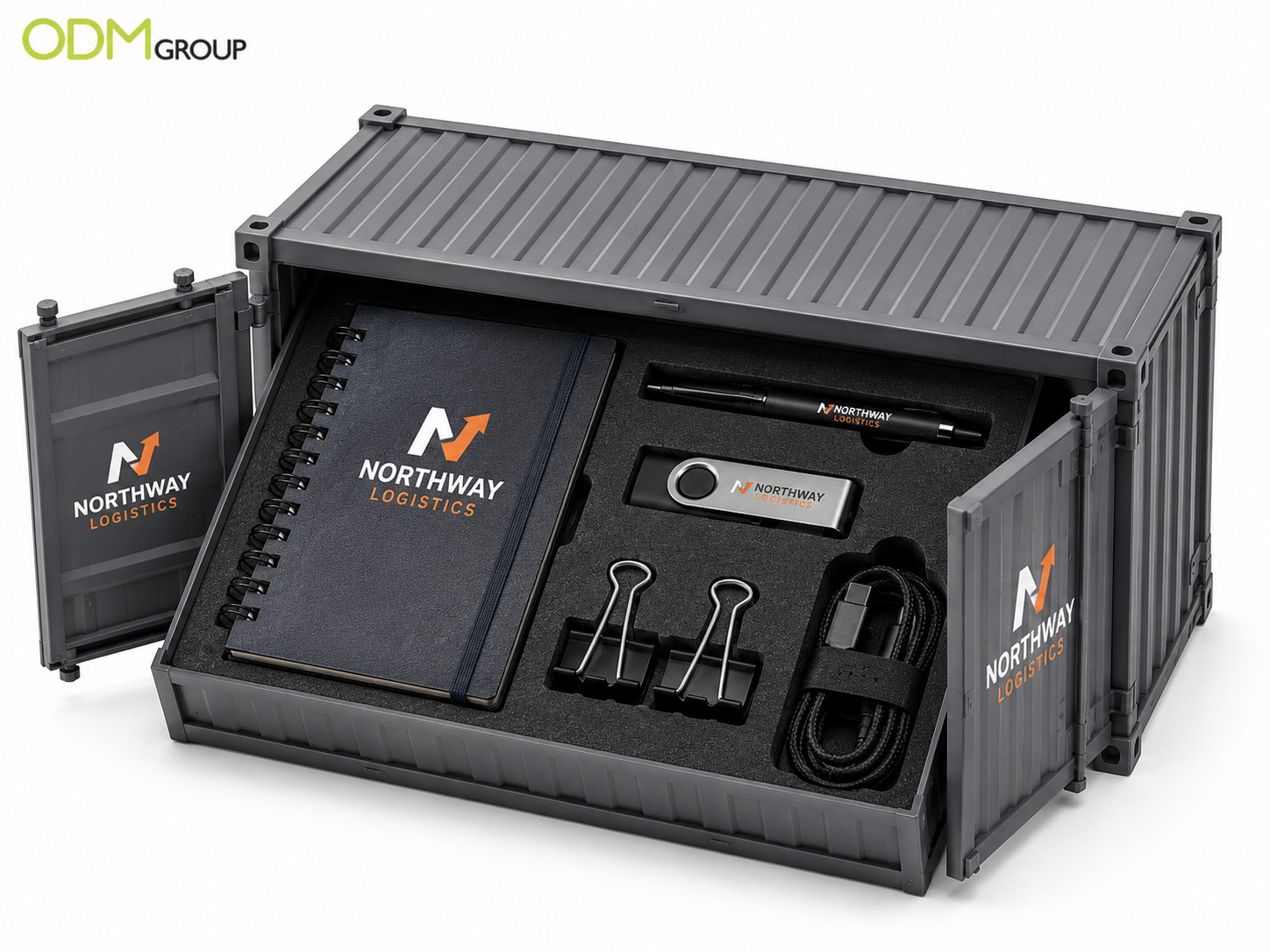
Possible contents include:
- A container-shaped USB drive
- A miniature truck or forklift
- Branded stationery
- Enamel pins
- A notebook and pen
- Confectionery
- Employee welcome materials
- Event passes or information cards
A fitted insert can keep the contents organized and improve the unboxing experience. The inside of the box can also feature a printed message, campaign story, route map, anniversary timeline, or QR code.
This approach works particularly well for client appreciation gifts, employee onboarding kits, company anniversaries, trade shows, and new-service launches.
Creative Ways to Customize the Design
A branded shipping container does not need to look like a generic model. The shape can remain familiar while the graphics, details, and functions are developed around the campaign.
Recreate the Company’s Real Containers
Shipping lines and freight companies can reproduce the appearance of their actual containers, including corporate colors, logos, identification numbers, safety markings, and door details.
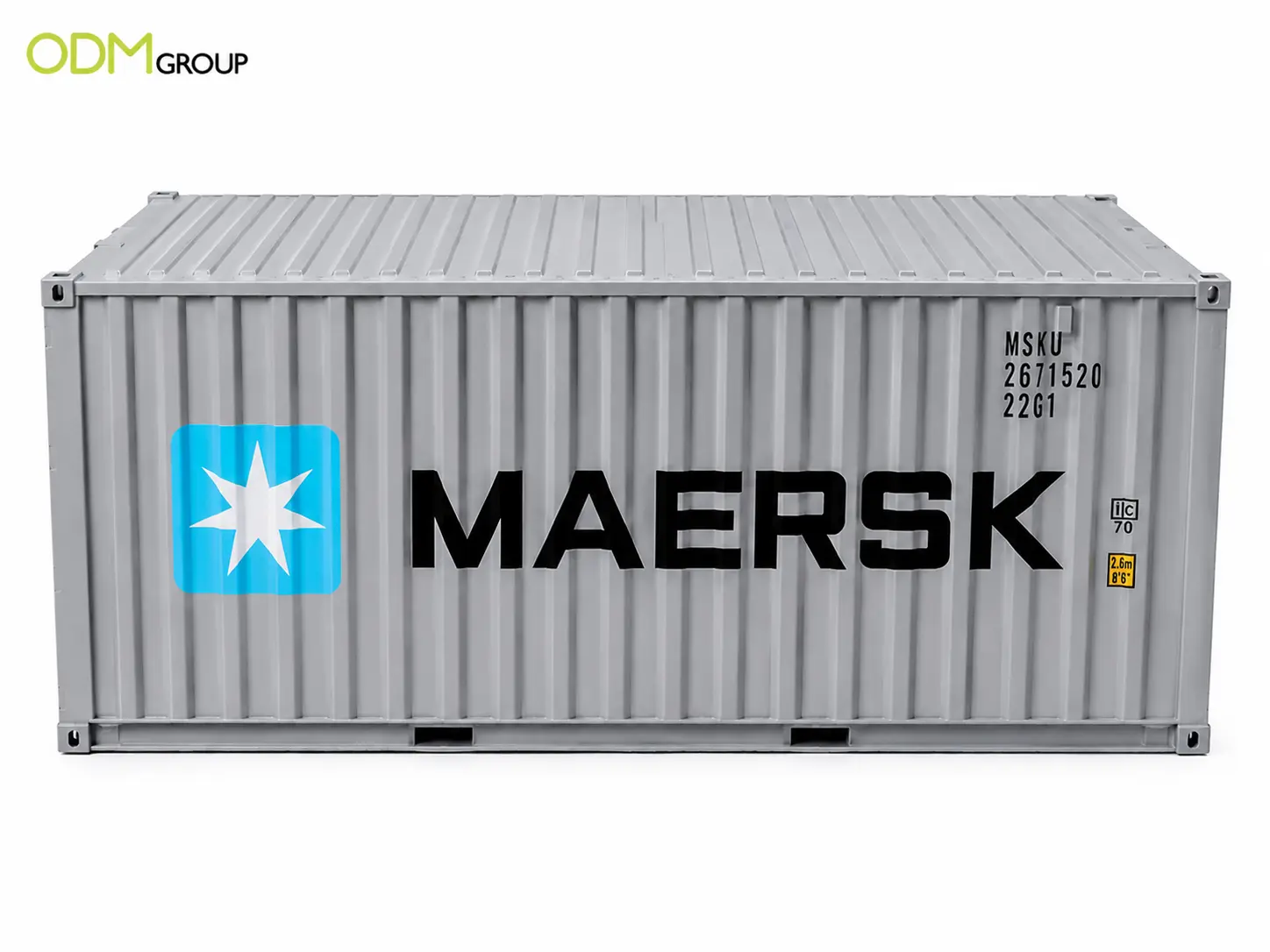
This creates a miniature version of a recognizable company asset and gives the gift a stronger connection to daily operations.
Highlight Routes and Destinations
A container series can represent different cities, ports, airports, countries, or freight routes.
Each edition could include a destination code, route map, local pattern, landmark, or launch date. This gives companies an opportunity to create collectible merchandise around their international network.
Celebrate Business Milestones
The product can be developed for an anniversary, new warehouse, fleet expansion, partnership, completed project, or regional launch.
Adding the founding year, milestone number, historical logo, or commemorative message can turn the box into a keepsake rather than a simple giveaway.
Personalize Key Client Gifts
Names, company details, partnership dates, and route information can be added for selected customers or business partners.
This level of personalization can make the product more appropriate for executive gifting, client recognition, and long-term partnership programs.
Introduce Interactive Features
The container can also include movable doors, removable panels, internal drawers, puzzle components, or modular sections.
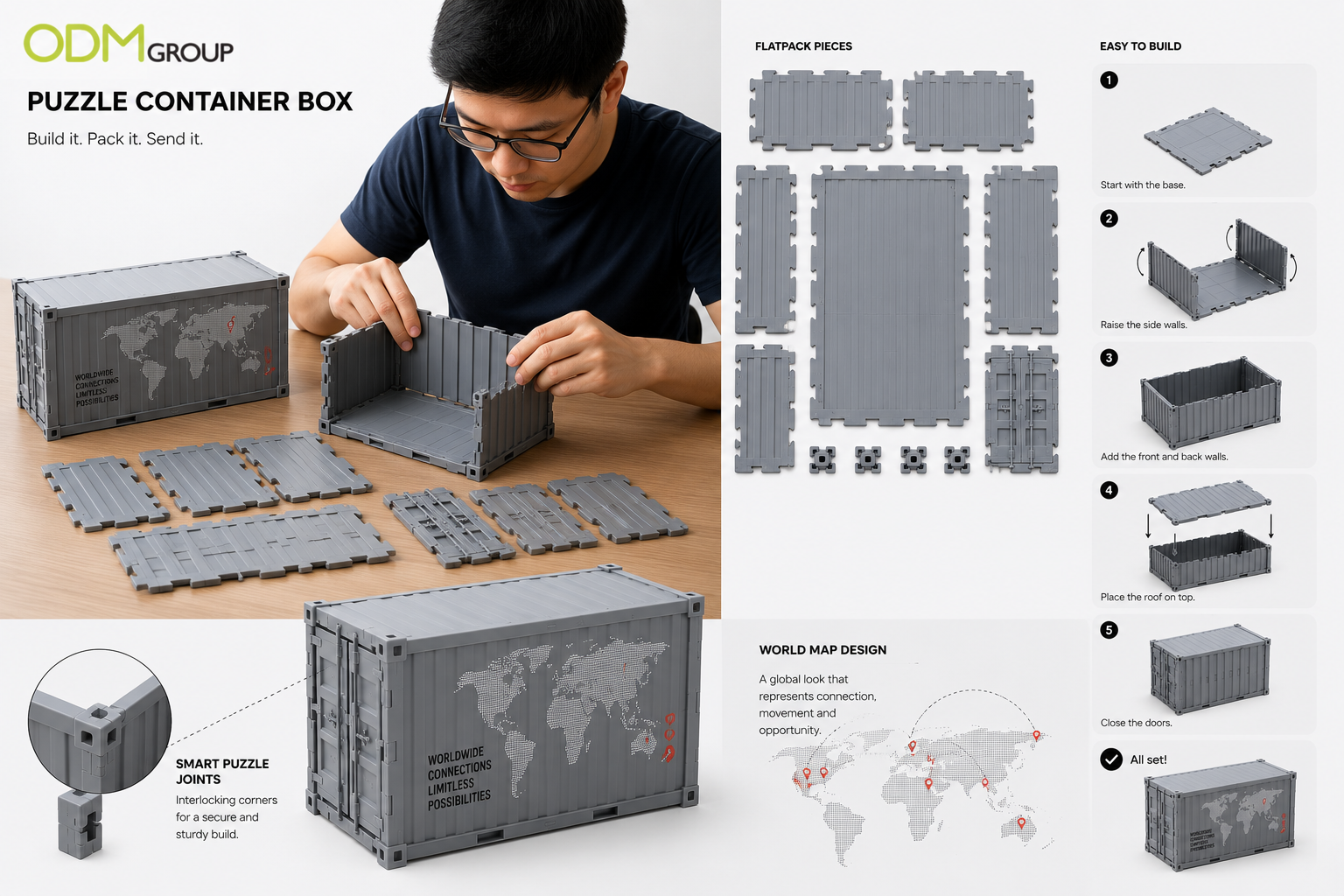
These features can make the product more engaging for family events, educational campaigns, port open days, and trade exhibitions.
Match the Product Format to the Campaign
The right material and level of detail should be guided by the campaign rather than selected in isolation.
An EVA foam puzzle may be suitable for family events, school programs, or high-volume educational campaigns. The assembly process adds an interactive element and helps explain how shipping containers are constructed and used.
A tin version offers a practical balance between cost, durability, and presentation. It works well for desktop storage, trade show gifts, employee merchandise, and reusable packaging.
Plastic allows for more detailed structural features, including realistic doors, locking bars, internal compartments, and movable components. This makes it suitable for interactive models, toys, coin banks, and functional desk products.
A premium metal model can be developed for executive gifts, anniversaries, and major client programs. Engraved branding, serialized numbering, fitted interiors, and presentation packaging can increase its perceived value.
The objective should be to choose the simplest format that delivers the required experience. A high-volume event giveaway does not need the same construction as a limited-edition client gift.
Campaign Applications for Logistics Brands
A container-shaped product becomes more valuable when it supports a specific business objective.
Trade Shows and Industry Exhibitions
The box can hold brochures, USB drives, business cards, or samples while attracting attention to the company’s booth.
Its distinctive shape can also make the giveaway easier to remember after the event.
Employee Welcome Programs
A container box can be filled with stationery, access-card accessories, pins, and onboarding materials for new employees.
Using an industry-related format helps connect the welcome gift to the company’s culture and business from the first day.
New-Route or Service Launches
Logistics companies can customize the box with the origin, destination, route map, launch date, vessel name, or service details.
The product then becomes a physical reminder of the new offering and can be distributed to customers, agents, employees, and business partners.
Client Appreciation
A premium version can be created for major clients and long-term partners. The contents and design may be personalized according to the recipient, market, or length of the relationship.
Company Anniversaries
A limited-edition container can feature the company’s history, major milestones, previous branding, or plans for future growth.
Numbered pieces can add exclusivity and increase the product’s value as a commemorative gift.
Build a Coordinated Logistics Merchandise Collection
The shipping container box can also become the centerpiece of a wider freight-themed collection.
It may be paired with miniature trucks, forklift models, cargo-label luggage tags, route-map notebooks, pallet-inspired coasters, vehicle-shaped speakers, or container USB drives.
A coordinated collection allows the same campaign idea to be adapted across different audiences and budgets.
For example, key clients may receive a premium metal model, employees may receive a functional tin storage box, and visitors at a family event may receive an EVA construction kit.
Although the products differ, a consistent design system can make the campaign feel connected.
From Initial Sketch to Working Prototype
A successful custom product requires more than applying a logo to an existing shape. The proportions, opening mechanism, internal capacity, structural details, branding areas, and user experience must be considered together.
ODM helps brands translate an initial campaign idea into a product concept that can be reviewed and developed.
The process can begin with sketch design, where different shapes, functions, opening methods, and branding locations are explored. These sketches help the team compare several directions before committing to a final concept.
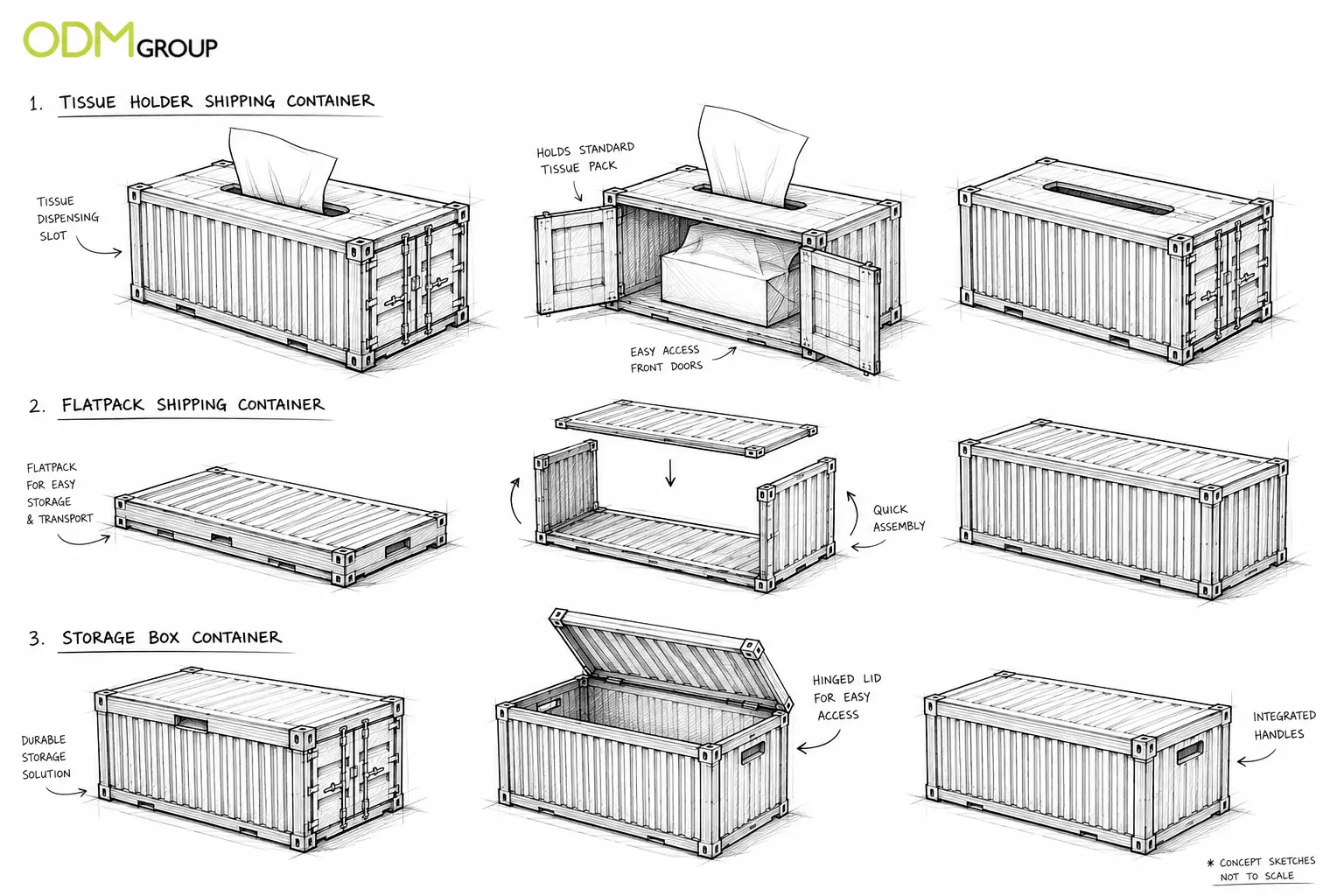
The selected design can then be developed through 3D modeling. This provides a clearer view of the product’s proportions, construction, internal layout, and individual components. It also allows potential design issues to be identified before physical development begins.
A prototype can then be produced to evaluate the size, material, color, branding, storage capacity, opening mechanism, and overall presentation. This stage gives the brand an opportunity to refine the product before the final version moves forward.
By connecting the campaign strategy with sketching, 3D development, and prototyping, ODM helps brands create promotional products that are both visually distinctive and practical for real-world use.
Create a Gift That Reflects the Logistics Industry
A branded shipping container box offers a clear connection to freight, cargo, and global trade. It can provide practical storage, reusable packaging, brand storytelling, and long-term visibility within one product.
The strongest versions are developed around a clear objective. Whether the goal is to recognize clients, launch a new route, welcome employees, or celebrate a milestone, the design should reflect the audience and the campaign.
Contact ODM and reference product code 1936 to discuss sketch design, 3D modeling, prototyping, and product development for your next logistics promotion.
and credible.
More Product Ideas


Frequently Asked Questions
What should brands define before developing the product?
Start with the campaign goal, target audience, quantity, budget, and intended use. These factors will guide the size, material, structure, branding, and packaging.
Can the box be designed around the items inside?
Yes. The internal dimensions can be developed to hold USB drives, stationery, confectionery, miniature models, or welcome-kit items. Custom inserts can also improve presentation.
Can the same concept be adapted for different audiences?
Yes. Premium versions can be created for key clients, practical tin boxes for employees, and EVA puzzles for family or educational events.
What to Read Next?

Shipping Merchandise to USA: Vietnam Import Tariff Rates Vs. China
Trade between the United States and Vietnam continuously grows, [...]
Shipping Merchandise: Custom Aeroplane Models to Skyrocket Your Sales!
Shipping merchandise comes in a vast variety of forms [...]
What Are Delivery Notes? A Clear Guide for Importers and Brand Managers
A delivery note is one of the most important [...]


Shipping Merchandise: Why are Shipping Costs from China Soaring?
Sea Freight is a popular option for shipping promotional products [...]

COVID-19 Hammers Air Freight from China – Expect Delays
Let us know how reduced air freight from China is [...]



Shipping Healthcare Products from China – 10 Pitfalls
The recent coronavirus outbreak has created a tremendous demand for [...]