
Eco promotional products are becoming a bigger part of brand, procurement, and product-development discussions. However, selecting a product made with bamboo, recycled plastic, or paper does not automatically make a campaign sustainable.
At the 137th Canton Fair, ODM Group’s sourcing team explored new materials, product formats, packaging concepts, and manufacturing techniques. One of the clearest trends was the growing focus on green and low-carbon product development.
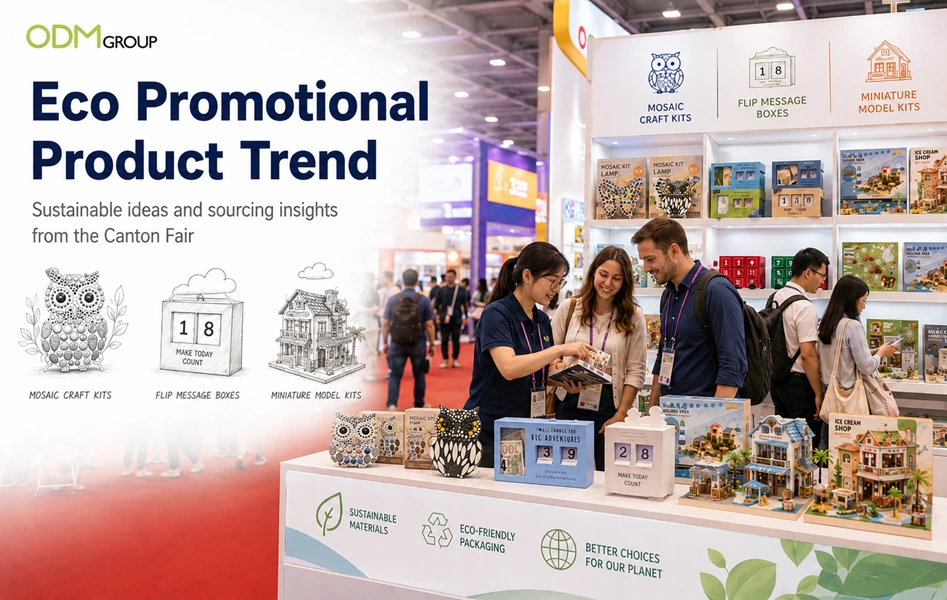
About the 137th Canton Fair
Held in Guangzhou from April 15 to May 5, 2025, the 137th China Import and Export Fair welcomed 288,938 overseas buyers from 219 countries and regions. Attendance increased by 17.3% compared with the 135th session.
Approximately 4.55 million products were exhibited, including:
- 1.02 million new products
- 880,000 green and low-carbon products
- 320,000 smart products
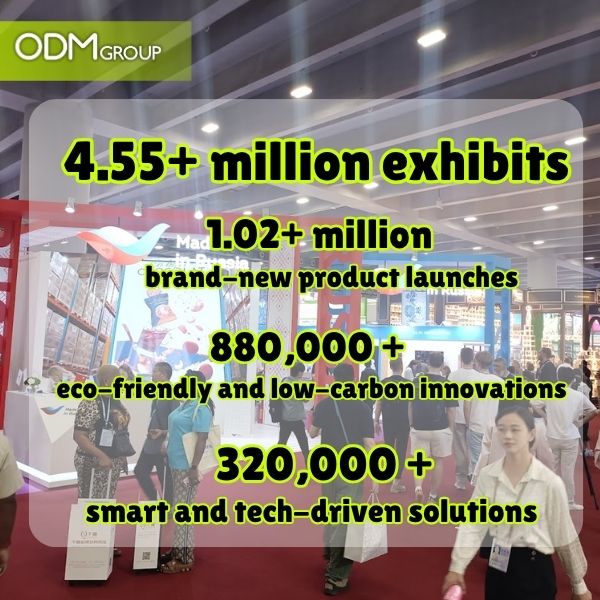
These figures show that environmental considerations are moving beyond a specialist category. They are increasingly being integrated into mainstream product design, manufacturing, packaging, and international sourcing.
For promotional-product buyers, this creates opportunities to develop merchandise that combines brand visibility with measurable material, packaging, durability, or reuse benefits.
Why Eco Promotional Products Are Gaining Attention
Promotional merchandise is often produced in large quantities, making material selection and product lifespan important considerations.
Brands are also under greater pressure to explain how their sustainability claims are supported. A product should not be described as environmentally friendly simply because one component contains bamboo, recycled plastic, or another material associated with sustainability.
The US Federal Trade Commission advises marketers to avoid broad, unqualified claims such as “green” or “eco-friendly.” Instead, environmental benefits should be clearly defined, specific, and supported by appropriate evidence.
For example, a brand could communicate that a notebook cover contains a documented percentage of recycled paper. That is more credible than describing the entire notebook as good for the planet.
This shift encourages companies to look beyond surface-level material changes and consider the complete product.
Eco Promotional Product Trends Observed at Canton Fair
1. Recycled and Recovered Materials
Recycled paper, recycled plastic, recycled textile fibers, and manufacturing offcuts appeared across multiple product categories.
These materials can be used in products such as:
- Notebooks and stationery
- Tote bags and pouches
- Desk accessories
- Drinkware components
- Packaging and presentation boxes
- Event merchandise
However, the percentage and source of the recycled material matter. Buyers should ask whether the content is pre-consumer or post-consumer, how it is verified, and whether other product components affect recyclability.
A notebook with a recycled-paper cover, for example, may still include plastic lamination, metal binding, synthetic fabric, adhesives, and mixed-material inserts. These details should be reviewed before making a product-wide environmental claim.
2. Plant-Based and Renewable Material Composites
Bamboo fiber, wheat straw, cork, wood, and other plant-based materials continue to be popular alternatives for promotional merchandise.
They can be incorporated into:
- Pen barrels
- Coasters
- Desk organizers
- Food containers
- Phone stands
- USB casings
- Personal-care accessories
These materials can support a specific product story, but their presence alone does not determine the overall impact.
For composite products, brands should check what percentage of the material is plant-based and what type of resin or binder holds it together. Manufacturing location, durability, coatings, packaging, and shipping requirements should also be considered.
3. Products Designed for Repeated Use
Many exhibitors emphasized reusable formats, including drinkware, lunch containers, shopping bags, storage products, and travel accessories.
Repeated use can help extend brand visibility while reducing the likelihood that merchandise is immediately discarded.
However, reusability depends on product quality and recipient behavior. A poorly designed reusable bottle that leaks or retains odors may be replaced quickly. A durable product that is easy to clean, comfortable to use, and visually appealing is more likely to remain in use.
That is why functionality should be evaluated alongside material selection.
4. Packaging With Less Material
Packaging was another important area of development.
Instead of relying on oversized boxes, plastic windows, foam inserts, and multiple layers, brands can explore:
- Recycled paper sleeves
- Molded pulp inserts
- Compact folding cartons
- Paper belly bands
- Reusable pouches
- Packaging that becomes part of the product
- Right-sized boxes that reduce shipping volume
Packaging should be developed at the same time as the product rather than added at the end of production.
This allows designers to reduce unnecessary material, improve product protection, and optimize the number of units packed into each shipping carton.
5. Products Made From Manufacturing Waste
Some suppliers demonstrated how production scraps could be collected and incorporated into new product lines.
Possible examples include:
- Textile offcuts turned into patchwork bags
- Wood waste used for small desk accessories
- Recycled glass incorporated into decorative products
- Paper scraps converted into pulp packaging
- Plastic production waste remolded into new components
These concepts can create a more distinctive product story. However, brands should still ask for clear information about material composition, consistency, manufacturing processes, and quality control.
“Made from waste” should not be treated as a complete environmental claim without supporting details.
Creative Product Ideas From the Canton Fair
The Canton Fair also presented several creative product formats that could be adapted for more responsible promotional campaigns.
The formats themselves are not automatically sustainable. Their environmental value depends on the materials, manufacturing process, durability, packaging, and expected use.
Branded Mosaic Tile Sets
Small tiles can be arranged into coasters, desk displays, decorative artwork, or collaborative installations.
For a stronger sustainability story, brands could explore recycled glass, recovered ceramic material, plastic-free packaging, and modular designs that encourage recipients to reuse or rearrange the pieces.
This format could work well for employee engagement, construction companies, interior-design brands, hotels, cultural events, and creative workshops.
Wooden Flip Message Boxes
A flip message box includes multiple panels that can display quotations, campaign messages, countdowns, reminders, or branded illustrations.
To improve the concept, brands can consider responsibly sourced wood or verified recycled wood fiber, replaceable printed panels, water-based finishes, compact packaging, and a timeless design that remains useful beyond the original campaign.
It could be developed for employee recognition, conferences, hospitality promotions, educational programs, or seasonal campaigns.
Industry Applications: More Than Just a Trend
- F&B and Beverage Brands → Custom bamboo coasters, biodegradable straws
- Retail and Beauty → Cork vanity pouches, eco-friendly mirror sets
- Tech & Startups → Wheat straw power banks, bamboo USBs
- Corporate Gifting → Recycled desktop kits, seed-embedded thank-you cards
Regardless of industry, eco-friendly promo items position your business as thoughtful, progressive, and trustworthy.
Miniature Branded Buildings
Miniature houses, stores, offices, hotels, and landmarks can be developed as display pieces, storage boxes, gift packaging, or interactive promotional items.
This is particularly relevant for real estate, architecture, hospitality, tourism, retail, and corporate anniversary campaigns.
Material selection is important. Brands could compare certified wood, recycled paperboard, molded pulp, recycled plastic, resin, and mixed-material construction before selecting the most appropriate option.
The product should also provide a lasting function rather than becoming a short-term decorative item.
Expert Tips on Implementing Sustainable Swag Strategies
1. Choose Eco-Friendly Materials
Opt for items made from sustainable materials such as bamboo, recycled plastic, organic cotton, or biodegradable materials.
2. Focus on Utility and Longevity
Select promotional items that are practical, useful, and built to last. Items that serve a purpose and have longevity are less likely to end up in landfills quickly, reducing waste.
3. Promote Reusability
Consider items like reusable water bottles, tote bags, or coffee cups that can replace disposable alternatives and promote eco-conscious habits.
4. Measure and Communicate Impact
Share this information with your audience to demonstrate your commitment to sustainability and inspire others to adopt eco-friendly practices.
5. Educate and Raise Awareness
Include messaging or educational materials that highlight the eco-friendly features of your promotional products.
6. Offer Eco-Friendly Packaging
Use recycled or recyclable materials for packaging, and minimize excess packaging wherever possible.
7. Support Ethical and Transparent Supply Chains
Transparent supply chains help ensure that your promotional products are produced responsibly from start to finish.
8. Customise Thoughtfully
Choose printing methods that use non-toxic, eco-friendly inks, and consider minimalist designs that prioritize product longevity.
Why Choose Eco-Friendly Gifts from The ODM Group?
Eco-friendly gifts from The ODM Group offer several benefits:
Sustainability commitment:
By choosing eco-friendly gifts from The ODM Group, you can showcase your commitment to sustainability.
Positive brand image:
Gifting eco-friendly products demonstrates your company’s dedication to environmental responsibility, helping to enhance your brand image and reputation.
Impactful messaging:
Eco-friendly gifts send a strong message to recipients that your brand is focused on making a positive impact on the planet and promoting sustainable practices.
Customisation options:
The ODM Group offers a wide range of customizable eco-friendly gift options, allowing you to align the gifts with your brand and deliver a unique and memorable experience
How ODM Supports Sustainable Product Development
Developing eco-promotional products involves more than choosing an item from a catalog.
ODM Group works with brands to define the campaign objective, research material options, compare manufacturing methods, identify suitable factories, and manage production from concept to delivery.
Our design studio, Mindsparkz, can create product sketches, 3D CAD, packaging designs, and prototypes. This allows brands to review the product’s appearance, construction, dimensions, branding, components, and packaging before committing to mass production.
During sourcing and production, ODM can also help coordinate material documentation, product testing, factory selection, quality control, and logistics.
This structured process helps brands develop promotional merchandise that is creative, functional, manufacturable, and supported by more precise environmental information.
Make Sustainability Specific
The growth of green and low-carbon exhibits at the 137th Canton Fair shows how quickly sustainability considerations are entering mainstream product development.
However, the strongest promotional campaigns will not rely on a bamboo appearance, a recycling symbol, or a broad “eco-friendly” label.
They will define a clear environmental objective, examine the complete product, request supporting evidence, improve durability, reduce unnecessary packaging, and communicate benefits accurately.
Planning an eco promotional product campaign? Contact ODM Group to discuss product ideation, material research, sketch design, prototyping, packaging, manufacturing, quality control, and international delivery.
ODM Services
Frequently Asked Questions
What makes a promotional product more sustainable?
A product may offer specific environmental benefits through verified recycled content, responsibly sourced materials, reduced packaging, repeated use, replaceable components, improved durability, or more efficient shipping. The benefit should be clearly defined rather than expressed through a broad claim.
Is bamboo always an environmentally preferable material?
Not necessarily. Buyers should consider how the bamboo was sourced, processed, combined with other materials, coated, packaged, and transported. The durability and intended lifespan of the final product also matter.
What documentation should brands request?
Documentation may include material composition reports, recycled-content verification, chain-of-custody records, test reports, factory audits, and packaging specifications. Requirements depend on the product and destination market.
Can electronic promotional products support sustainability goals?
They can, but they require careful evaluation. Brands should consider battery safety, energy efficiency, repairability, component quality, useful lifespan, and disposal—not only the material used for the casing.
How can brands reduce promotional packaging?
Brands can use right-sized cartons, recycled paper, molded pulp, paper sleeves, reusable pouches, and packaging designed to become part of the product. Packaging should be planned during product development.
What to Read Next?
Rice Husk Packaging for Daily Use Products and Brand Visibility
Most sustainable packaging looks good in a presentation, but [...]
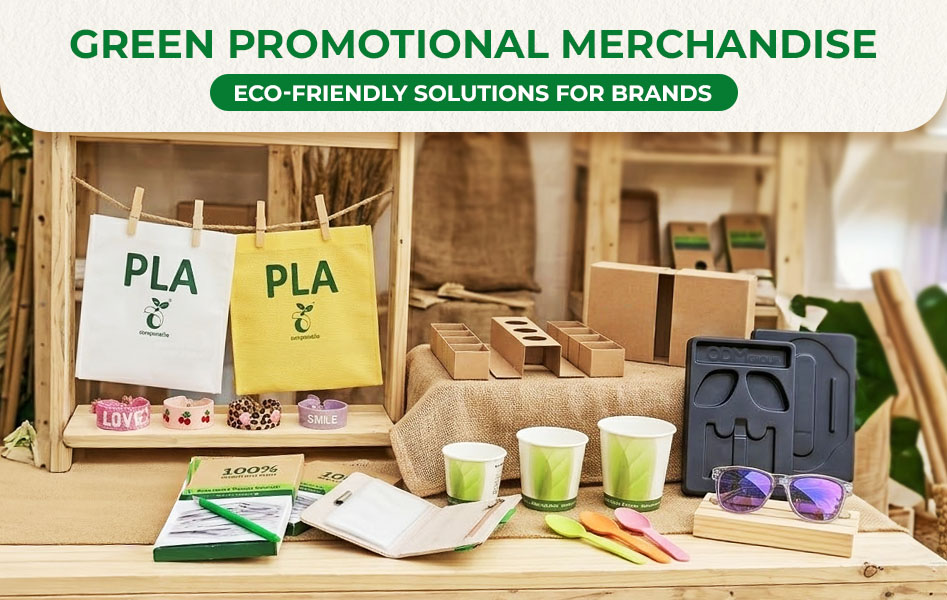
Green Promotional Merchandise for Smarter Campaigns
If your company regularly runs events, launches campaigns, or [...]
Are Self-Healing Fabrics a Sustainable Option for Premium Brands?
Self-healing fabrics are gaining momentum among high-end brands for [...]
How Recycled Bracelets Help Brands Go Sustainable
Have you noticed how consumers are increasingly mindful of [...]

Bamboo Fiber Cup: A Recycled Product from Farm Wastes
Nowadays, more companies are asking critical questions: Where do [...]

How do Companies Brand Windows with Custom Wooden Blinds?
Aesthetics play a vital role in creating a favourable [...]