
A well-designed promotional tote bag can do more than carry products. It can strengthen a seasonal campaign, increase the perceived value of a purchase, and keep a brand visible long after the promotion ends.
Chinese New Year is an especially strong occasion for tote bag promotions. Consumers are shopping for gifts, visiting family, attending gatherings, and carrying more items than usual. A practical bag fits naturally into these activities while giving brands room to express festive ideas through color, artwork, materials, and packaging.
However, adding a logo to a standard bag is rarely enough. The most effective promotional tote bags are developed around the campaign objective, customer profile, purchase mechanic, and retail environment.
Why Promotional Tote Bags Work During Chinese New Year
Chinese New Year promotions often compete for attention through red packaging, festive displays, limited-edition products, and gift-with-purchase offers. A tote bag gives brands a practical way to bring these elements together.
Unlike a discount, a physical gift continues creating value after the transaction. Customers may use the bag for grocery shopping, work, travel, family visits, or festive gift exchanges. Each reuse extends the campaign beyond the store.
Tote bags also offer a large branding area without forcing the design to feel overly commercial. Seasonal illustrations, zodiac animals, traditional patterns, campaign slogans, or subtle brand elements can turn the bag into something customers genuinely want to carry.
The strongest designs balance three considerations:
- Relevance to the occasion
- Usefulness after the campaign
- Clear but tasteful brand visibility
When these elements work together, the tote becomes part of the customer experience rather than simply an add-on.
What Baskin-Robbins Got Right With Its Festive Promotion
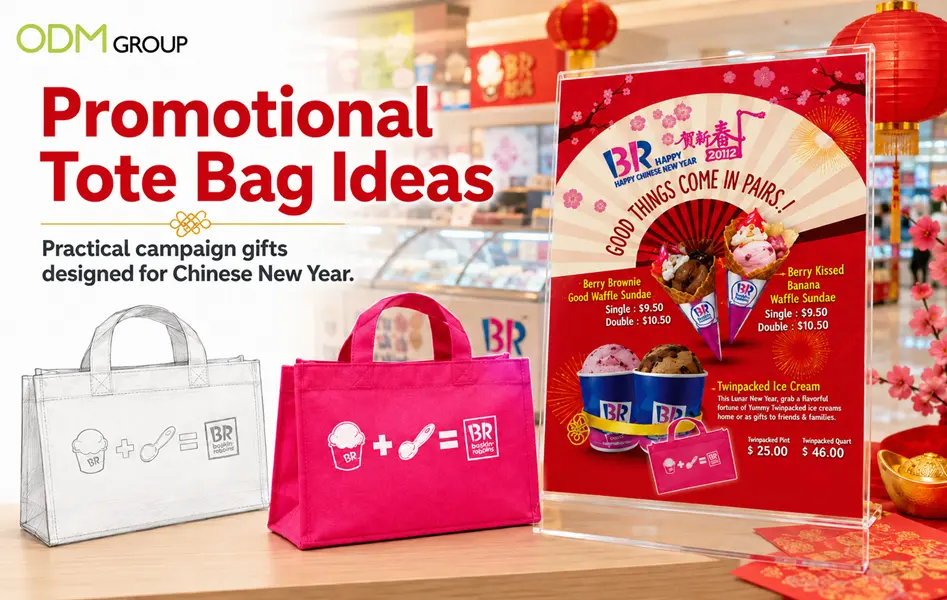
A previous Baskin-Robbins Singapore campaign offered a branded tote bag with selected twin-packed ice cream purchases. The promotion used the Chinese New Year message “Good Things Come in Pairs,” connecting the two-product purchase format with the festive theme.
The bag reflected the brand’s recognizable blue and pink colors, helping it stand out from the predominantly red campaign artwork. It also gave customers a convenient way to carry the products or use the bag after the promotion.
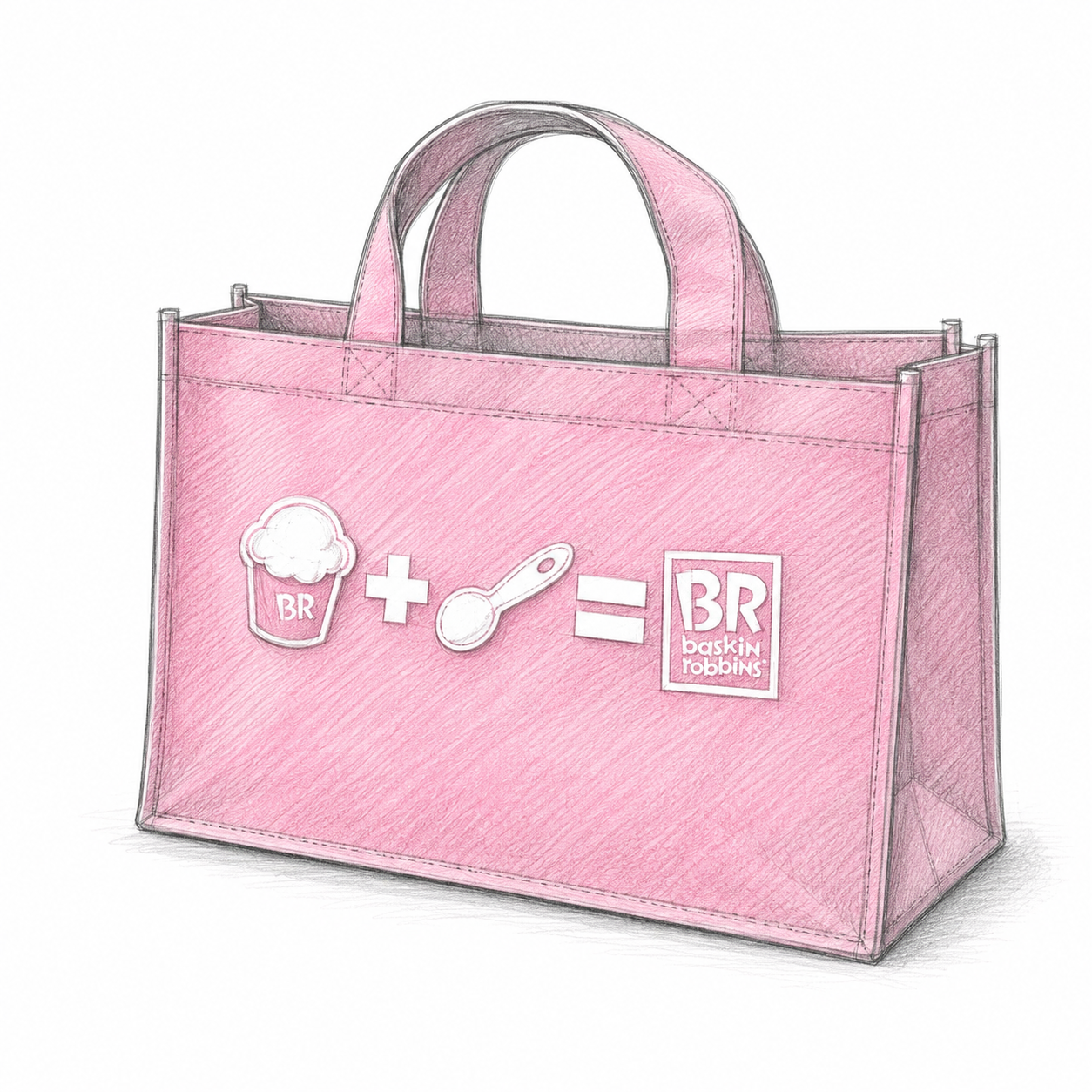
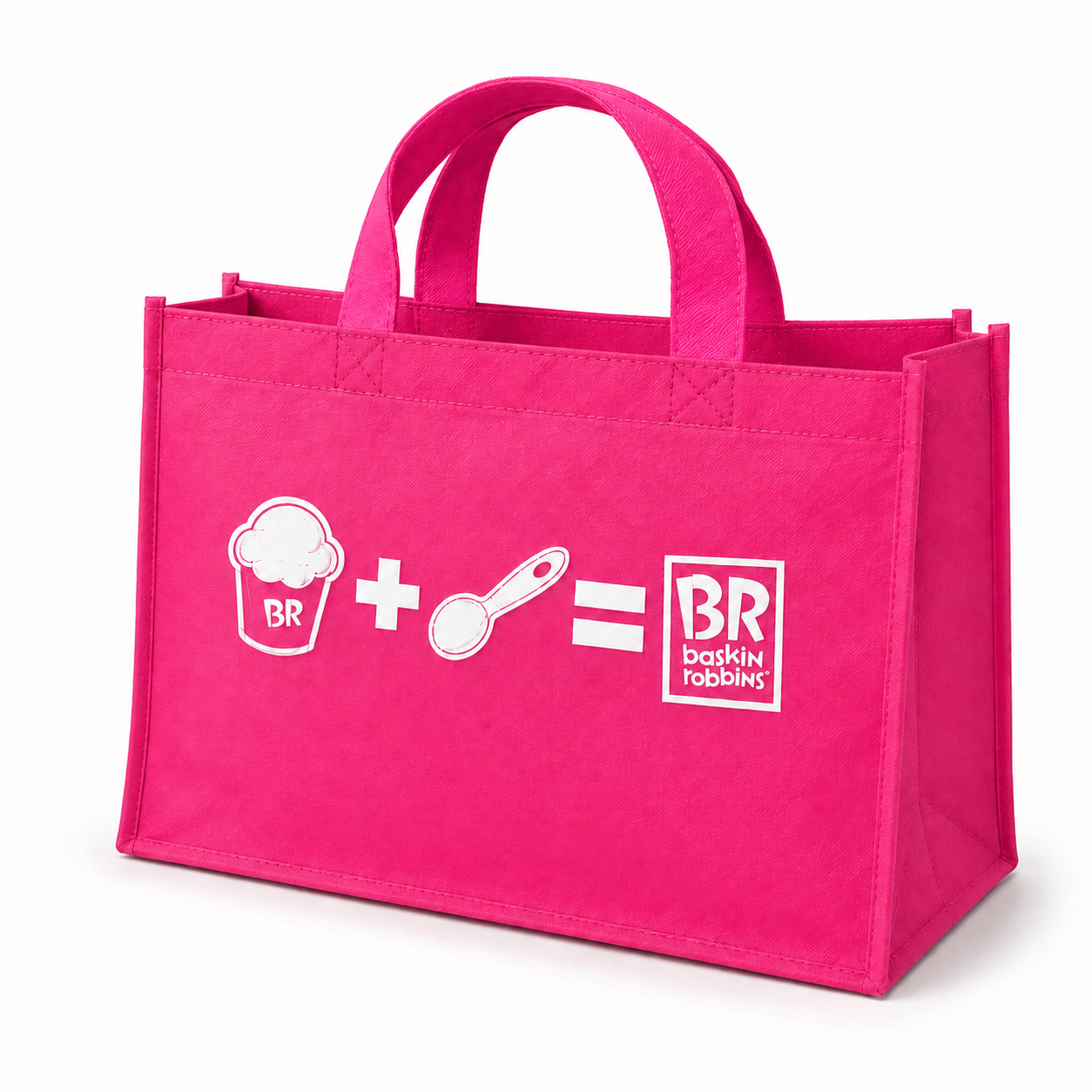
The example highlights an important lesson: the promotional gift should support the campaign story.
The tote bag was not presented in isolation. It was tied to a larger purchase, a seasonal message, and a product format that encouraged customers to buy more than one item.
An insulated tote could have created an even closer connection to ice cream by helping protect products during short journeys. However, the right choice would depend on campaign budget, retail storage, order volume, expected usage, and the desired gift value.
Promotional Tote Bag Ideas for Chinese New Year
There is no single tote bag format that works for every campaign. The design should reflect what customers are buying, how they will receive the gift, and how the brand wants to be remembered.
1. Reversible Festive Tote Bags
A reversible tote gives customers two designs in one product.
One side might feature bold Chinese New Year artwork, while the other uses a simpler pattern or neutral brand design. This makes the bag suitable for the holiday period while remaining useful throughout the year.
Reversible construction can also support collaborations. One side can represent the main brand, while the other highlights a retail partner, artist, character, or campaign theme.
2. Insulated Tote Bags
Insulated totes are well suited to food, beverage, grocery, dairy, and frozen-product campaigns.
They can be designed to carry festive meal ingredients, chilled drinks, desserts, or gift sets. A structured interior, zipper closure, and reinforced handles make the bag feel more valuable than a basic shopping tote.
For Chinese New Year, the bag could also be positioned as a practical accessory for transporting food to family gatherings.
3. Foldable Shopping Totes
A foldable promotional tote bag is easy to store in a handbag, backpack, car, or desk drawer.
This format works particularly well for supermarket, retail, banking, travel, and lifestyle promotions. The bag can fold into a small pouch shaped like a lantern, orange, gold ingot, zodiac character, or branded product.
The compact format gives brands an opportunity to make the folding mechanism part of the campaign idea.

Foldable Shopping Bag with Silicone Pouch 2
4. Premium Canvas Totes
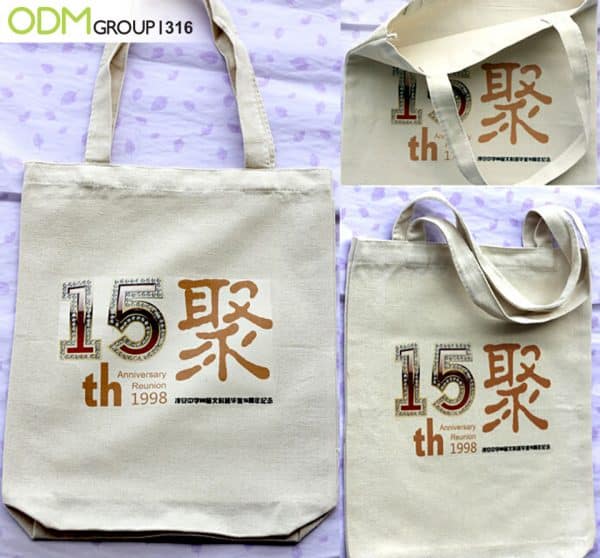
Canvas bags are a good choice when the campaign needs to feel more refined.
Heavyweight fabric, reinforced handles, internal pockets, metal details, embroidery, and structured panels can elevate the product. Instead of covering the entire bag with festive graphics, brands can use a smaller embroidered symbol, woven label, or limited-edition patch.
This approach suits beauty, fashion, hospitality, financial services, premium food, and corporate gifting campaigns.
5. Gift-Carrying Tote Bags
The tote itself can become part of the product packaging.
Rather than placing a gift set inside a disposable paper bag, brands can use a reusable tote to hold products such as snacks, beverages, cosmetics, household goods, or wellness items. The customer receives both the products and a practical gift in one presentation.
This can reduce unnecessary packaging layers while improving the perceived value of the bundle.
6. Tote Bags With Modular Pockets
External or internal pockets make tote bags more functional and visually distinctive.
A beverage brand might add bottle compartments. A beauty brand could include smaller sections for personal-care products. A travel campaign might add a passport pocket, luggage sleeve, or detachable pouch.
For Chinese New Year gifting, a small red envelope pocket can become a subtle seasonal feature without dominating the entire design.
7. Artist-Designed Limited Editions
Collaborations can turn a promotional tote bag into a collectible campaign item.
Brands can work with illustrators to reinterpret zodiac animals, festive food, family traditions, city landmarks, or cultural patterns. Different designs can be released across purchase tiers or campaign periods.
This approach can encourage repeat purchases, especially when customers can choose or collect multiple designs.
Cultural references should be handled thoughtfully. Artwork should feel relevant and contemporary without relying on generic symbols or overcrowded decoration.
8. Personalizable Tote Bags
Personalization adds emotional value to a relatively simple product.
Customers could select a zodiac patch, add initials, choose a handle color, or receive a bag printed with a name. Personalization may happen during an event, at a pop-up counter, or through an online redemption process.
This format can be particularly effective for shopping malls, loyalty programs, corporate events, and premium retail activations.
9. Tote Bags That Transform
Convertible designs create an element of surprise.
A tote might transform into a backpack, picnic mat, storage basket, or drawstring bag. These formats can make the gift more relevant to travel, outdoor activities, family gatherings, or home organization.
A transforming product also gives staff and content creators something interesting to demonstrate during the campaign.
Choosing the Right Purchase Mechanic
Even a strong tote bag design can underperform when the promotional mechanic is confusing or poorly matched to the gift.
Brands should decide what behavior the campaign is intended to encourage. A promotional tote bag can support several objectives:
- Increasing basket size through a minimum-spend offer
- Encouraging customers to buy a multipack or bundle
- Supporting a new product launch
- Rewarding loyalty members
- Driving traffic to selected stores
- Encouraging online redemption or registration
- Creating urgency through a limited-edition release
The value of the tote should feel proportionate to the required purchase. A lightweight foldable bag may work for a lower spending threshold, while an insulated or premium canvas tote may justify a higher-tier purchase.
Tiered campaigns can offer different bag sizes, materials, or accessories at different spending levels. However, the distinction between each tier must be immediately clear to shoppers.
Design Details That Influence Perceived Value
Customers often judge a promotional tote bag through small details rather than the logo alone.
Handle length affects whether the bag can be carried by hand or over the shoulder. The base determines whether products remain upright. Closures improve security, while pockets make the bag easier to organize.
The printing method also shapes the overall impression. Large graphic artwork may suit screen or digital printing, while embroidery, woven patches, embossed details, or subtle labels can create a more premium result.
Brands should also consider how the bag looks when it is filled. A visually attractive flat design may lose its shape once products are placed inside. Prototyping helps identify these issues before the campaign moves forward.
Packaging and Retail Presentation Matter
A tote bag should be visible within the campaign presentation.
Customers are more likely to understand the offer when the gift is shown at its actual size on displays, shelf talkers, bundle packaging, online banners, and redemption materials. Hiding the bag behind the counter can reduce its ability to influence the purchase.
The folding and packaging format should also support retail operations. A bag that occupies too much storage space may be difficult for stores to manage, even when the design looks impressive.
For Chinese New Year, the presentation can connect the bag with the wider festive campaign through coordinated graphics, product bundles, display structures, and gift packaging.
How ODM Group Supports Promotional Tote Bag Campaigns
ODM Group works with businesses that want to use tote bags as part of a wider promotional strategy.
The process can begin with a campaign objective, customer profile, budget range, purchase mechanic, or early product idea. Through Mindsparkz, our product design studio, we develop concepts and sketches that explore the bag’s shape, features, materials, branding areas, and relationship with the campaign.
Selected concepts can then move into prototyping. This stage allows the team to review scale, construction, handle comfort, pocket placement, printing, capacity, and packaging before finalizing production decisions.
ODM Group also assists with factory selection based on the project’s materials, construction requirements, quantity, timeline, and quality expectations. During production, our team can coordinate quality control and help manage shipment planning.
This gives brands one strategic partner across the main stages of development:
Idea development → design → prototyping → factory selection → quality control → shipment
The objective is not simply to produce another branded bag. It is to develop a promotional item that fits the campaign, works in the retail environment, and provides genuine value to the customer.
Final Thoughts
A promotional tote bag can be one of the most adaptable gifts in a Chinese New Year campaign. It can carry a festive product bundle, support a higher purchase value, introduce a limited-edition design, or remain in use long after the celebration ends.
The opportunity lies in moving beyond a standard logo bag. Materials, construction, artwork, functionality, packaging, and campaign mechanics should all support the same idea.
For businesses planning a Chinese New Year promotion, ODM Group can help transform an initial tote bag concept into a coordinated campaign product—from design and prototyping to factory selection, quality control, and shipment.
Related posts:
 Chinese New Year Promo: 2 Tier Plate Set and Red Packets
 Year of the Dog Promotions – Our Chinese New Year Socks are Ready!
 Chinese New Year Gift Ideas That Make Promotional Campaigns More Memorable
 Chinese New Year promotional items for the Year of the Sheep/Ram/Goat
 Brands Standing Out with Chinese New Year Merchandise for Year of the Dog