Branded wine accessories can turn a bottle purchase into a more complete brand experience. From custom wine aerators and corkscrews to coolers, glassware and presentation sets, these products work across gift-with-purchase campaigns, seasonal promotions, tastings, hospitality programs and corporate gifting.
The Prosecco campaign below shows how a coordinated range of accessories can increase the perceived value of a retail offer. It also provides a useful starting point for brands developing their own wine promotion.
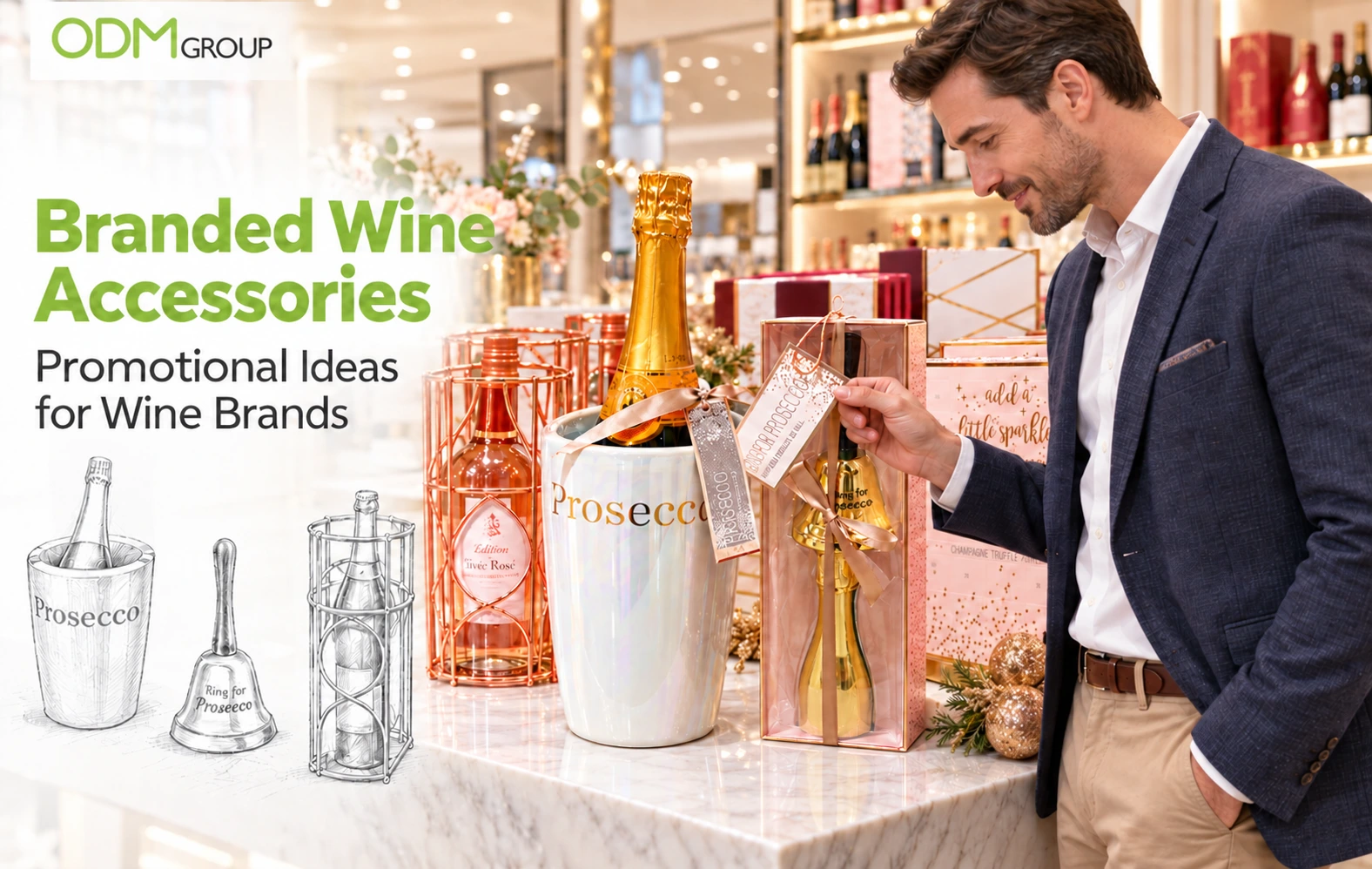
How Prosecco Used Branded Wine Accessories in Retail
This promotion was displayed in Debenhams in the UK. Customers could receive selected wine accessories with qualifying purchases, including a ceramic wine cooler, champagne flutes, a gold bell, a cocktail shaker and a metal bottle holder.
The campaign did more than place a logo on a giveaway. Its rose-gold palette, premium finishes and coordinated packaging connected the products to celebrations, entertaining and gifting. That made the accessories feel relevant to the occasions in which customers would enjoy the wine.
For marketers, the key lesson is simple: a promotional accessory works best when its design, function, and packaging support the positioning of the main product.
Branded Wine Accessories to Consider for Your Campaign
Different products serve different campaign goals. A compact tool may suit a high-volume retail giveaway, while a boxed accessory set can support premium gifting or customer loyalty programs.
1. Custom Wine Aerators
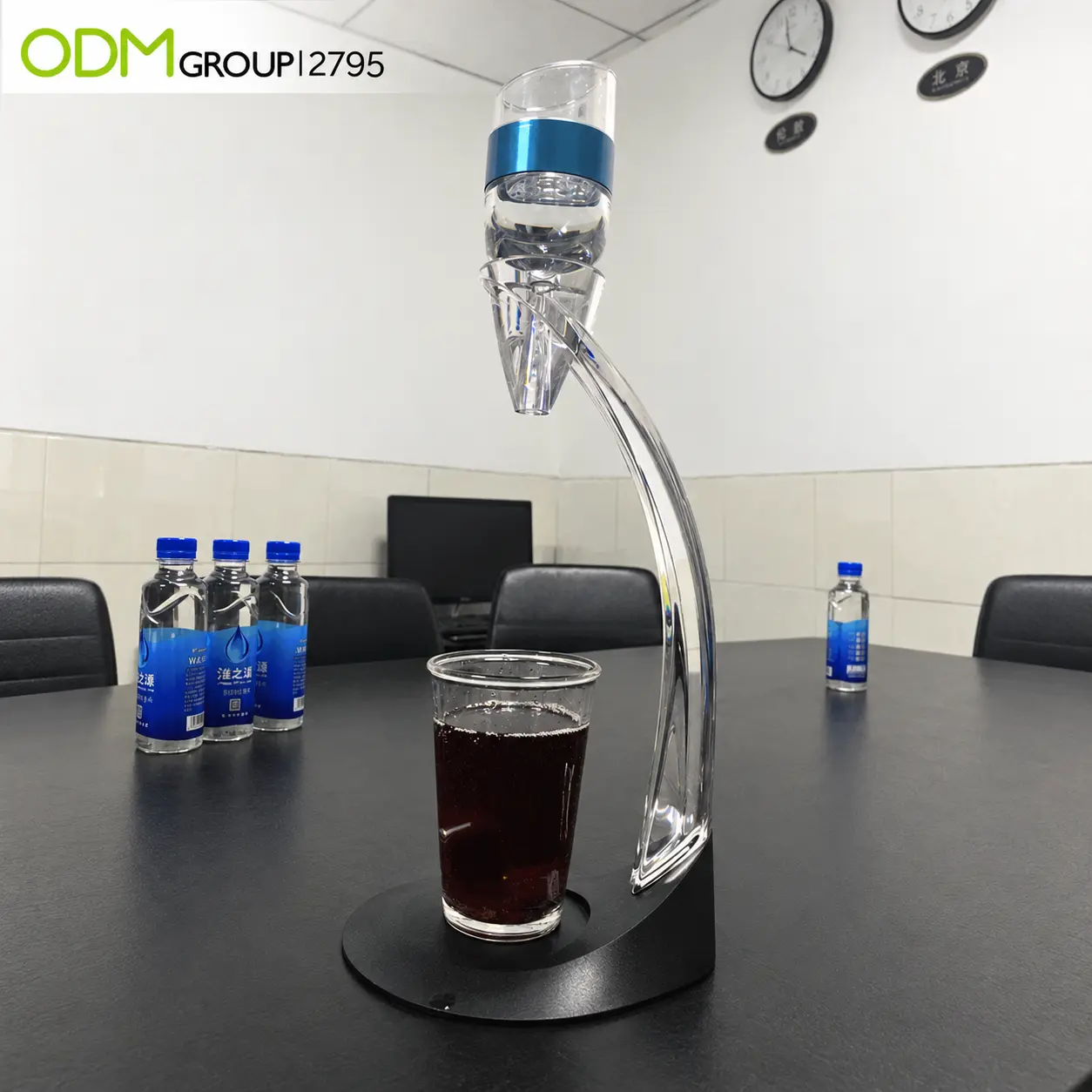
A wine aerator introduces air as the wine is poured. It is compact, useful and easy to package with a bottle, making it well suited to gift-with-purchase and on-pack promotions.
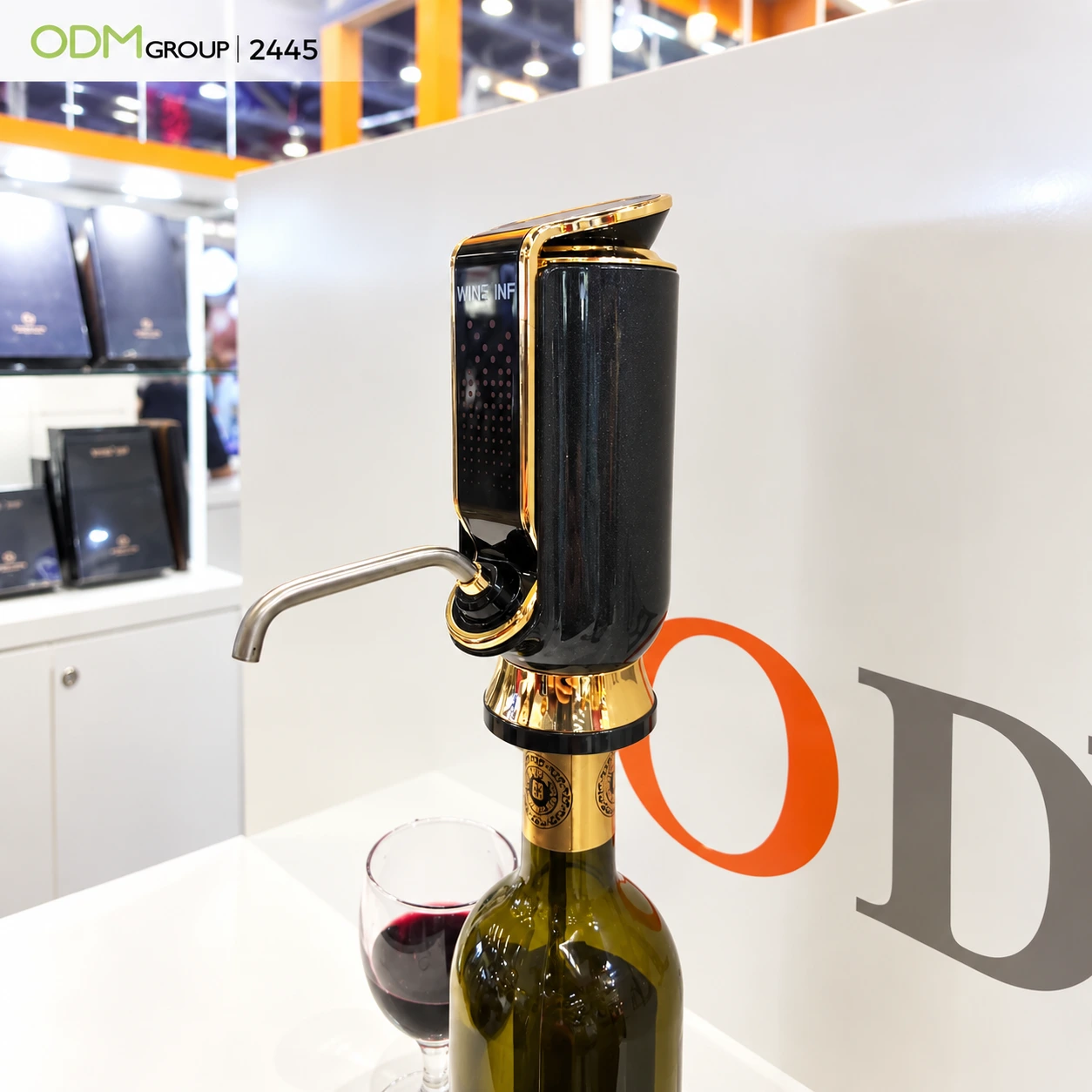
Branding can be applied to the main body, collar or individual gift box. Clear, black and metallic finishes can be selected to match the bottle label and campaign identity.
ODM has previously featured both a custom wine aerator and a branded wine aerator campaign, showing how this accessory can support wine launches and promotional gifting.
Best for: wine brands, tasting events, retail promotions and customer gifts.
2. Bottle-Shaped Corkscrews
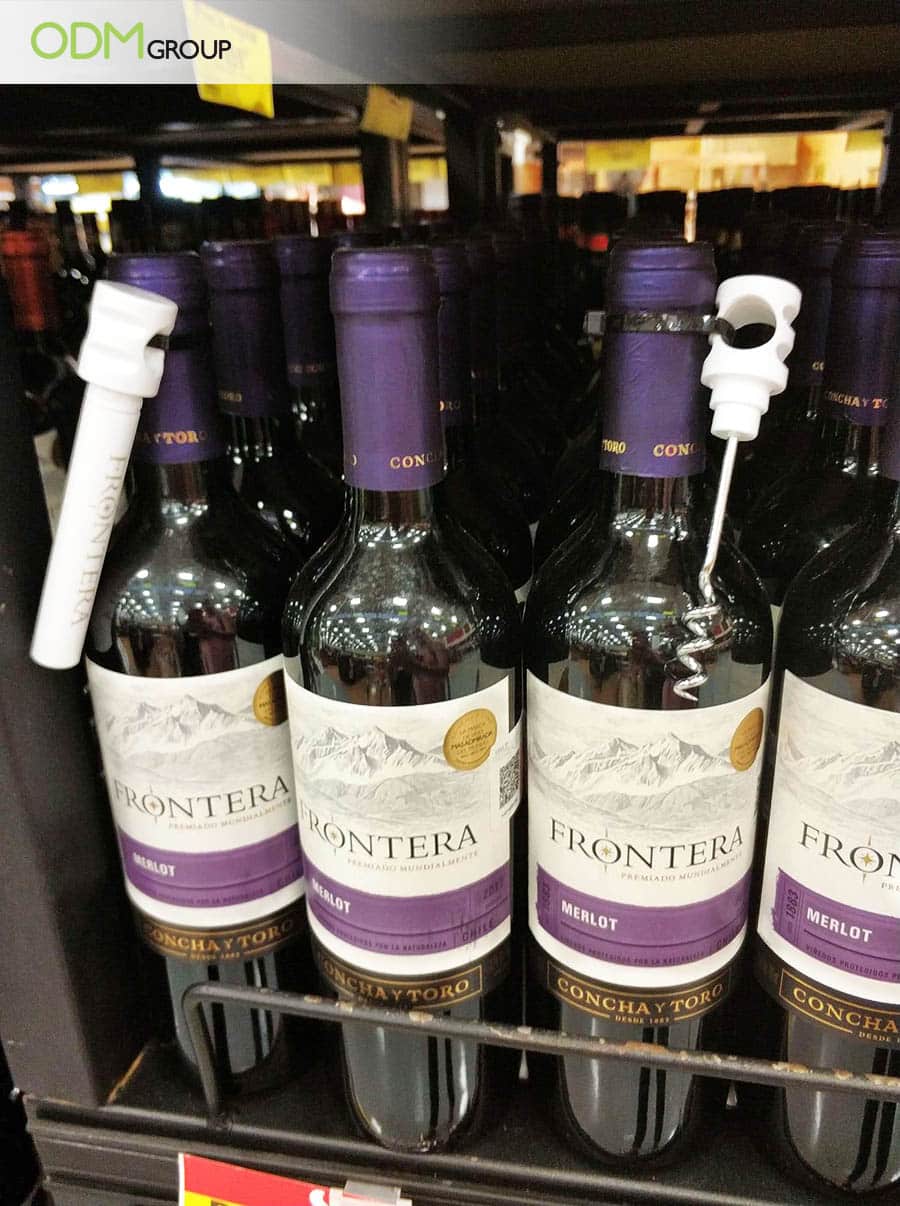
A bottle-shaped corkscrew connects the accessory directly to the product category. Its outer case can reproduce a bottle silhouette, brand colors, label artwork or a campaign message. Some designs can also include a bottle opener or magnet.
This format is especially suitable for promotions that need a recognizable product at an accessible unit cost. It can be packed in a small carton, attached to a bottle neck or combined with other bar tools.
Best for: on-pack promotions, sampling events, seasonal giveaways and high-volume campaigns.
3. Waiter’s Corkscrews and Multi-Function Openers
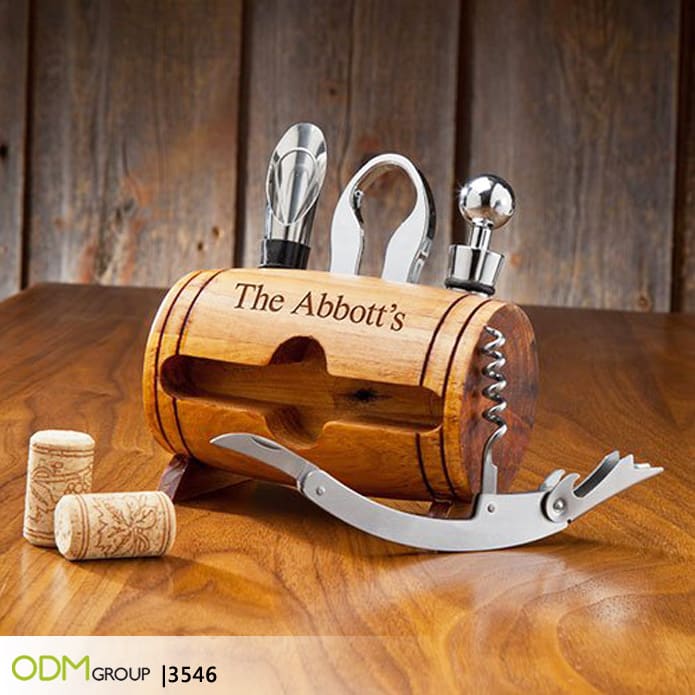
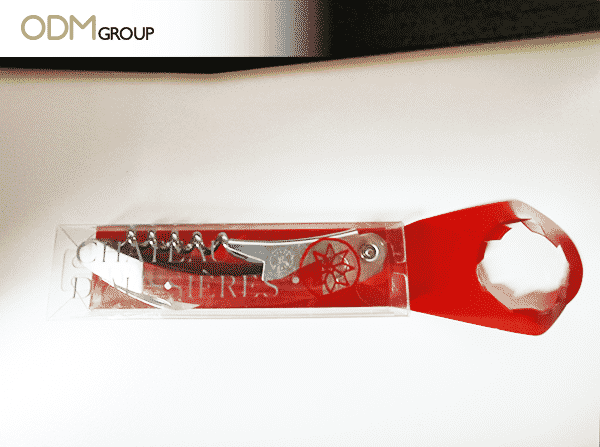
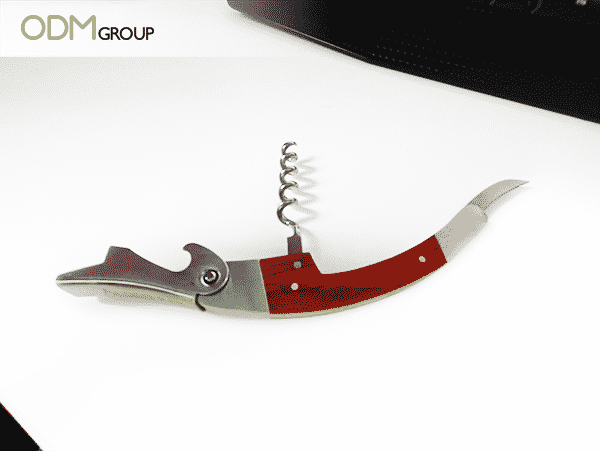
A waiter’s corkscrew can combine a spiral, bottle opener and foil cutter in one compact tool. Wood, stainless steel or soft-touch handles give brands different price and positioning options.
Laser engraving works well on metal, while printing or embossing can be used on larger handles. Before production, the hinge strength, spiral alignment and opening action should be tested.
Best for: wineries, restaurants, hotel bars, trade partners and hospitality teams.
4. Wine Coolers and Ice Buckets
The ceramic cooler in the Prosecco campaign offers a large branding area and remains visible throughout the drinking occasion. Other options include stainless-steel ice buckets, double-wall bottle chillers and acrylic coolers for events.
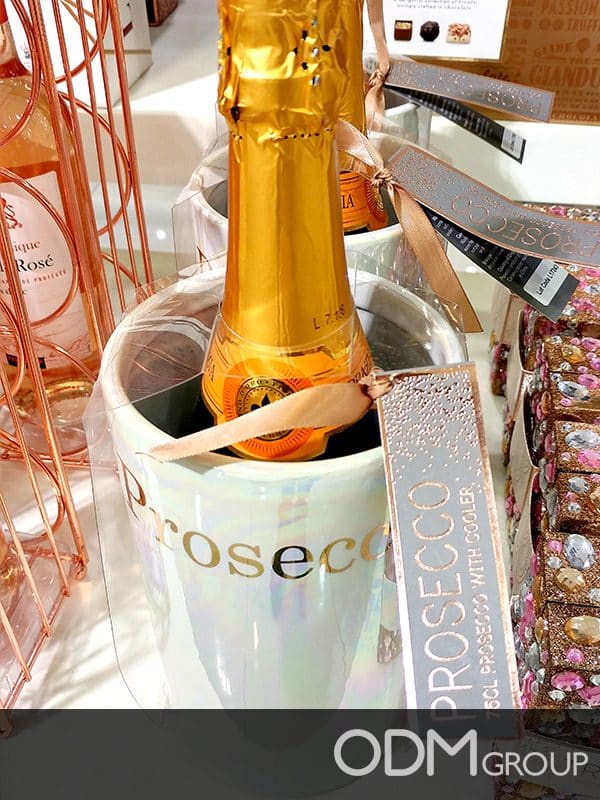
The material should reflect the intended setting. Ceramic provides a crafted, premium feel. Stainless steel suits upscale hospitality, while lightweight plastic or acrylic may be more practical for large activations.
Best for: restaurants, hotel programs, VIP events, home entertaining campaigns and premium purchase gifts.
5. Insulated Wine Sleeves and Cooler Bags
An insulated sleeve helps protect and keep a bottle cool during transport. It also provides more space for graphics than a small metal tool. Neoprene, polyester and recycled fabrics can support different price points and campaign messages.
Brands can add handles, shoulder straps, pockets or shaped panels. ODM’s Coolzee 4-in-1 demonstrates how an insulating sleeve can include additional functions such as an opener.
Best for: outdoor events, picnics, festivals, summer campaigns and travel retail.
6. Wineskin Bags and Reusable Bottle Carriers
A reusable bottle carrier helps customers transport wine while extending branding beyond the original purchase. Designs can range from single-bottle fabric bags to structured two-bottle carriers and insulated picnic styles.
ODM’s branded wineskin bag is another example of an accessory developed around wine consumption and portability.
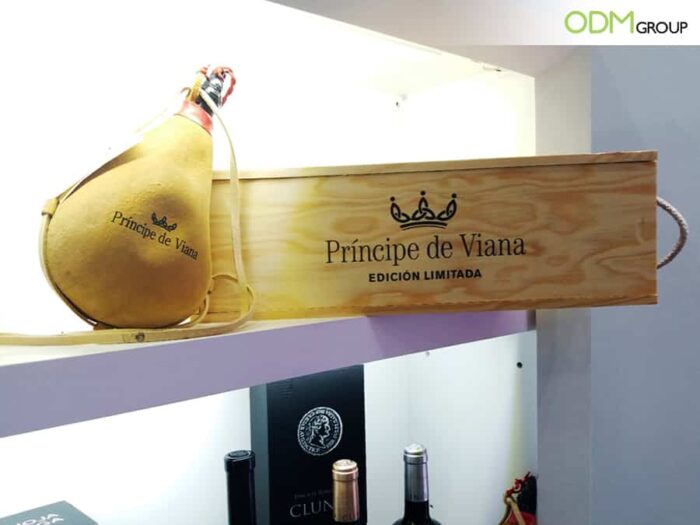
For a more premium result, brands can add padded dividers, reinforced handles, a corkscrew pocket or a removable shoulder strap.
Best for: winery shops, duty-free, wine clubs, holiday gifting and loyalty rewards.
7. Branded Wine Stoppers
Wine stoppers are compact, practical and easy to combine with a bottle or gift set. The top can be shaped around a logo, mascot, bottle emblem or campaign icon. Metal, silicone, wood and molded plastic offer different aesthetics and costs.
A stopper should be tested against common bottle-neck dimensions. Materials that come into contact with the bottle opening must also be suitable for the intended market.
Best for: direct mail, event giveaways, gift sets and repeat-purchase promotions.
8. Pourers and Drip Rings
Pourers help control the flow of wine, while drip rings catch liquid around the bottle neck. Both are small enough for compact promotional packaging and can be paired with a stopper or corkscrew.
These products work particularly well when the campaign needs a useful accessory without the cost or shipping volume of glassware.
Best for: high-volume retail campaigns, wine clubs, tastings and hospitality giveaways.
9. Champagne Flutes and Wine Glasses
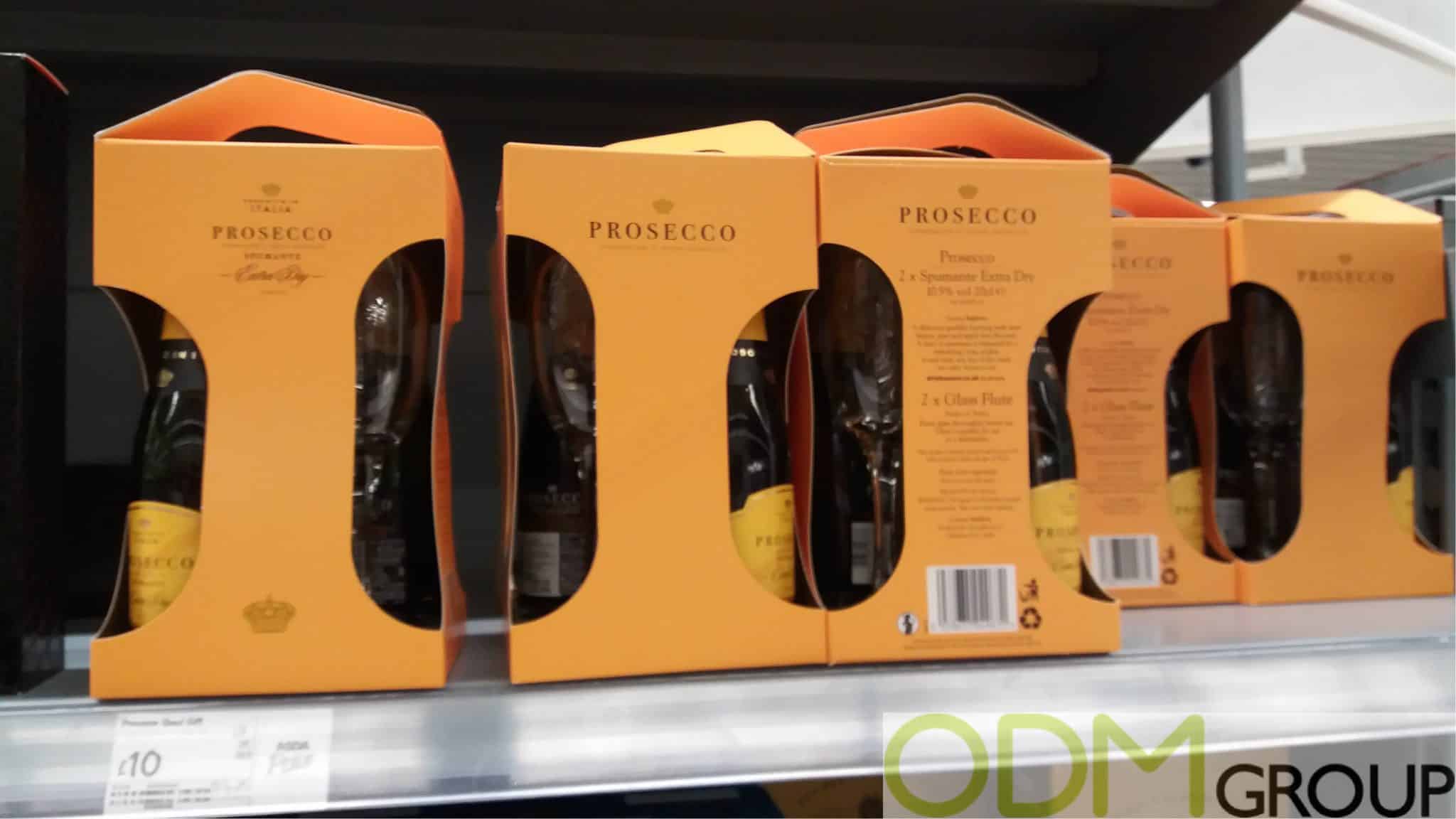
Branded glassware brings the logo directly into the drinking experience. A pair of flutes, as seen in the Prosecco campaign, can also increase the perceived value of a seasonal bottle promotion.
Decoration options may include screen printing, decals, frosting or etching. The design must account for wash resistance, print position and the usable branding area. Protective inserts and transit testing are especially important for glass products.
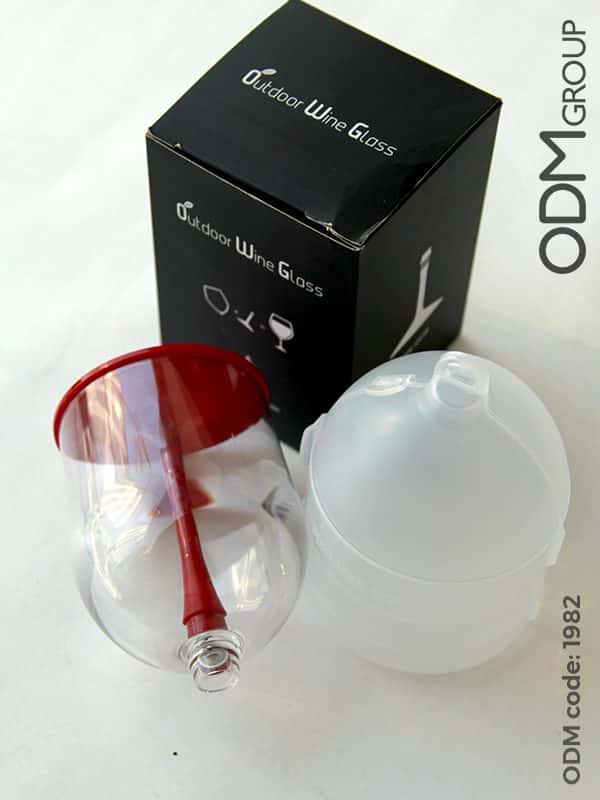
Reusable plastic or stainless-steel wine cups can be considered for festivals and outdoor venues where glass is unsuitable.
Best for: premium gift with purchase, weddings, events, hospitality and seasonal retail.
10. Wine Bottle Holders and Display Stands
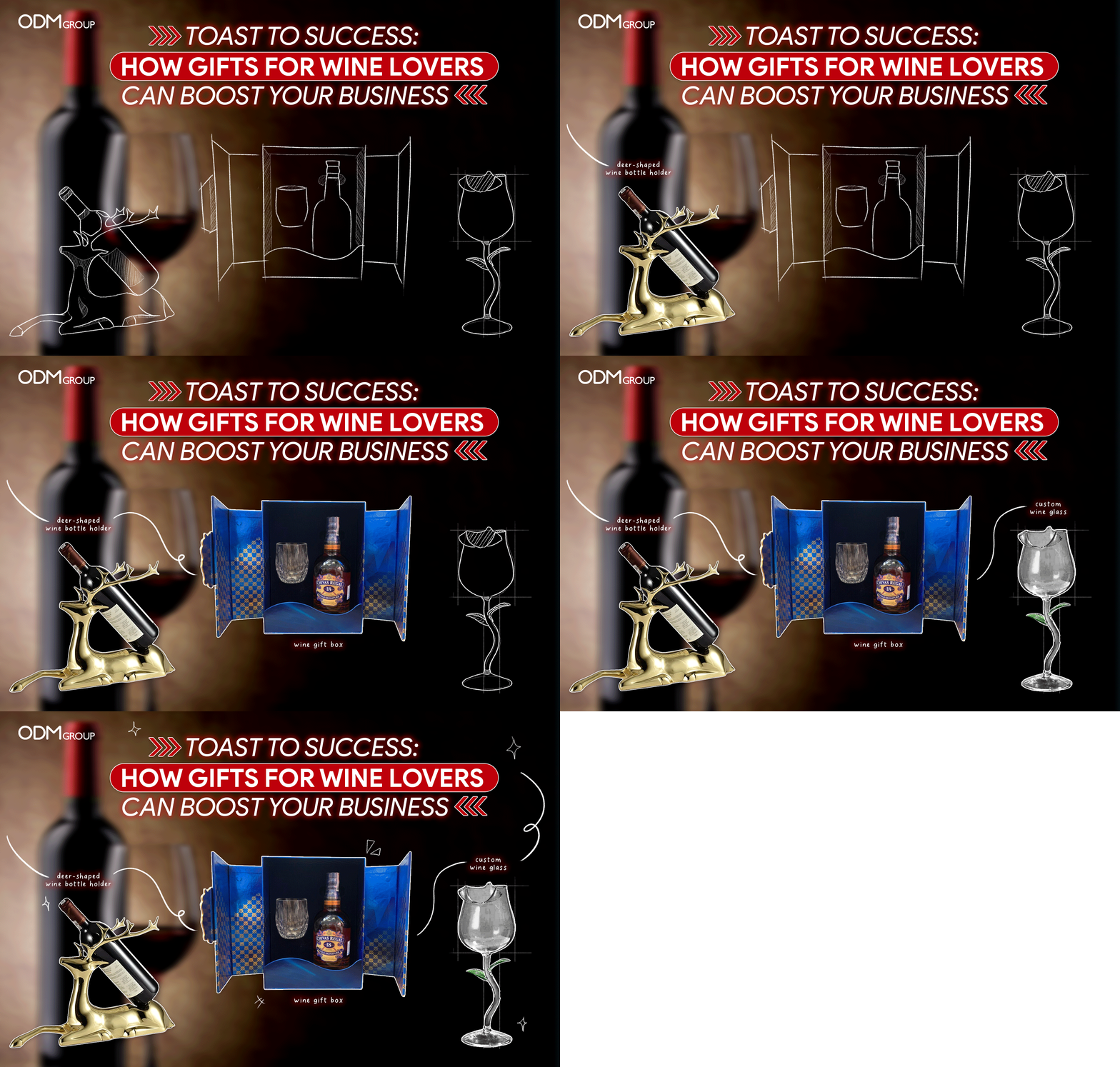
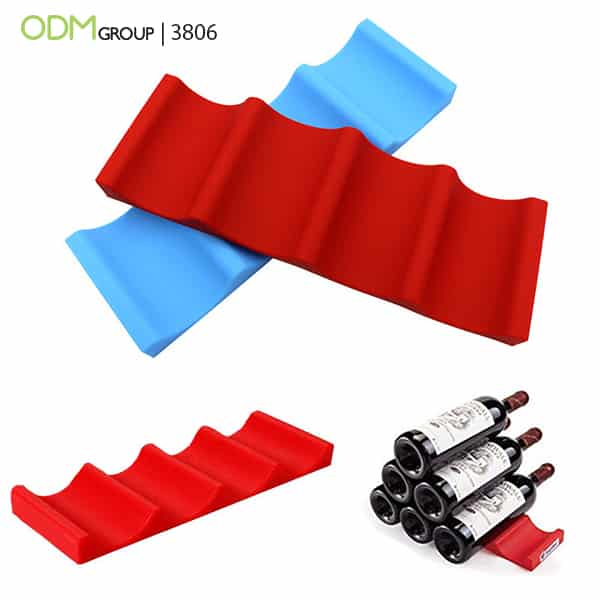
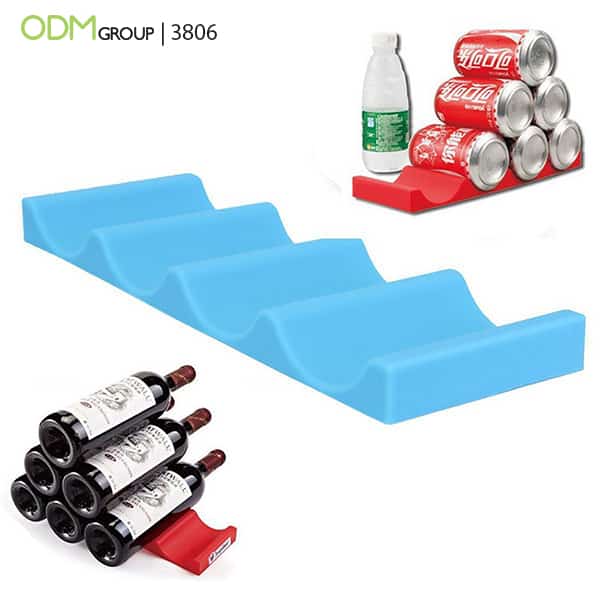
A bottle holder combines function with countertop visibility. Metal frames, sculptural forms and custom silhouettes can turn the bottle into part of the display while keeping the label visible.
Brands should consider the weight distribution, contact points and bottle sizes during development. A holder designed around one bottle shape may not fit a wider sparkling-wine bottle.
Best for: home bars, restaurants, retail displays, VIP gifts and decorative promotions.
11. Decanters and Serving Carafes
A decanter is suited to higher-value gifting where presentation matters as much as unit cost. Subtle decoration, such as a small etched logo or branded stopper, can maintain a premium appearance.
Because these products are fragile and relatively heavy, packaging development is essential. Molded pulp, foam or structured paperboard inserts should prevent movement and protect the neck and base.
Best for: executive gifts, wine-club rewards, anniversaries and premium customer programs.
12. Wine Accessory Gift Sets
A gift set can combine a corkscrew, stopper, pourer, drip ring and foil cutter in one branded presentation box. The outer packaging gives the brand a larger storytelling area and can be developed around a holiday, launch or corporate occasion.
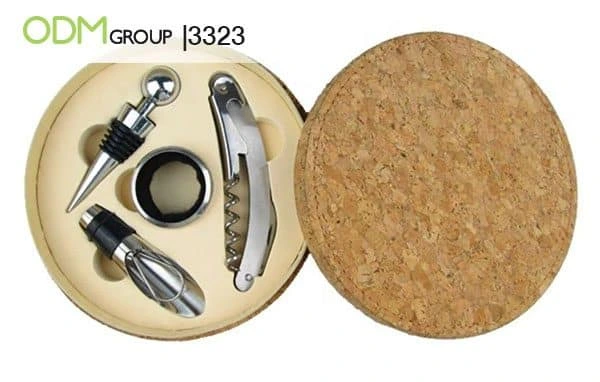
Sets can be designed at several levels:
- Entry level: corkscrew and stopper in a printed carton.
- Mid-range: four- or five-piece tool set in a reusable case.
- Premium: glassware, decanter or cooler with tools in a rigid presentation box.
Best for: corporate gifting, holiday promotions, distributor incentives and customer recognition.
Choosing the Right Accessory for the Campaign
Do not select a product based on appearance alone. Start with the campaign objective and distribution method.
| Campaign format | Suitable wine accessories |
|---|---|
| High-volume giveaway | Stoppers, pourers, drip rings and compact openers |
| On-pack or neck-hanger promotion | Bottle-shaped corkscrews, aerators and foil cutters |
| Gift with purchase | Flute sets, cooler sleeves, wine tools and bottle carriers |
| Premium retail promotion | Ceramic coolers, decanters and boxed accessory sets |
| Hospitality program | Waiter’s corkscrews, ice buckets, bottle holders and glassware |
| Corporate gifting | Multi-piece sets, decanters, serving boards and premium carriers |
| Outdoor event | Insulated sleeves, reusable cups and portable bottle carriers |
The accessory should also fit the audience. An occasional wine buyer may value a simple opener or cooler sleeve. A collector, sommelier or trade partner may expect better materials, more refined mechanics and restrained branding.
Branding and Packaging Options
The material determines which decoration method will produce the best result.
- Laser engraving: suitable for stainless steel, aluminum and selected wood surfaces.
- Screen or pad printing: useful for simple logos on plastic, fabric, glass and metal.
- Etching or frosting: creates a more subtle finish on glassware.
- Embossing and debossing: suitable for leather-look cases, fabric patches and selected packaging.
- Custom molding: allows a product or handle to follow a logo, bottle or campaign shape.
- Metal badges: add a premium branded detail to bags, boxes and cases.
Packaging can range from a simple printed carton to a rigid magnetic box with a fitted insert. The structure should secure each item, protect fragile parts and remain efficient to pack and ship.
What Should Brands Check Before Production?
Wine accessories may appear simple, but their performance depends on several details:
- Bottle compatibility: Test holders, stoppers, pourers and coolers with the intended bottle formats.
- Material requirements: Confirm food-contact and market-specific requirements for parts used near beverages.
- Mechanical performance: Test corkscrew hinges, spirals, handles, seals and moving parts.
- Branding durability: Check whether the logo withstands washing, moisture and repeated handling.
- Breakage protection: Develop suitable inserts and shipping cartons for glass and ceramic items.
- Campaign assembly: Confirm whether the gift will be packed with the bottle, attached as an on-pack item or distributed separately.
- Timelines: Allow time for design, samples, testing, packaging development, production and shipping.
These checks help prevent an attractive concept from becoming difficult to distribute or use.
Developing Branded Wine Accessories with ODM
ODM helps brands develop promotional wine accessories from the initial idea through production and delivery. Our team can support concept design, material selection, prototyping, packaging development, factory selection and audit, quality control and logistics.
We can also help create a coordinated product range rather than a collection of unrelated items. This allows the materials, colors, logo application and packaging to work together across the entire campaign.
Whether you are planning a high-volume retail giveaway or a premium corporate gift set, contact ODM to discuss the audience, target quantity, budget, market and delivery date.
More Ideas


FAQs about Branded Wine Accessories
What are the best wine accessories for corporate gifts?
Corkscrew sets, wine stoppers, aerators, insulated carriers, decanters and presentation boxes are popular options. The best choice depends on the recipient profile, budget and desired level of presentation.
Can wine accessories be customized with a company logo?
Yes. Depending on the material, logos can be printed, engraved, etched, embossed, molded or applied as a badge. The decoration method should be tested for appearance and durability before mass production.
What should be included in a wine accessory gift set?
A practical set may include a corkscrew, stopper, pourer and drip ring. Premium sets can add glassware, a decanter, bottle cooler or serving accessory.
How long does it take to produce custom wine accessories?
The timeline depends on product complexity, sampling, tooling, packaging and order volume. Fully custom products and fragile gift sets require more development and testing time than standard items with logo decoration.
What to Read Next?
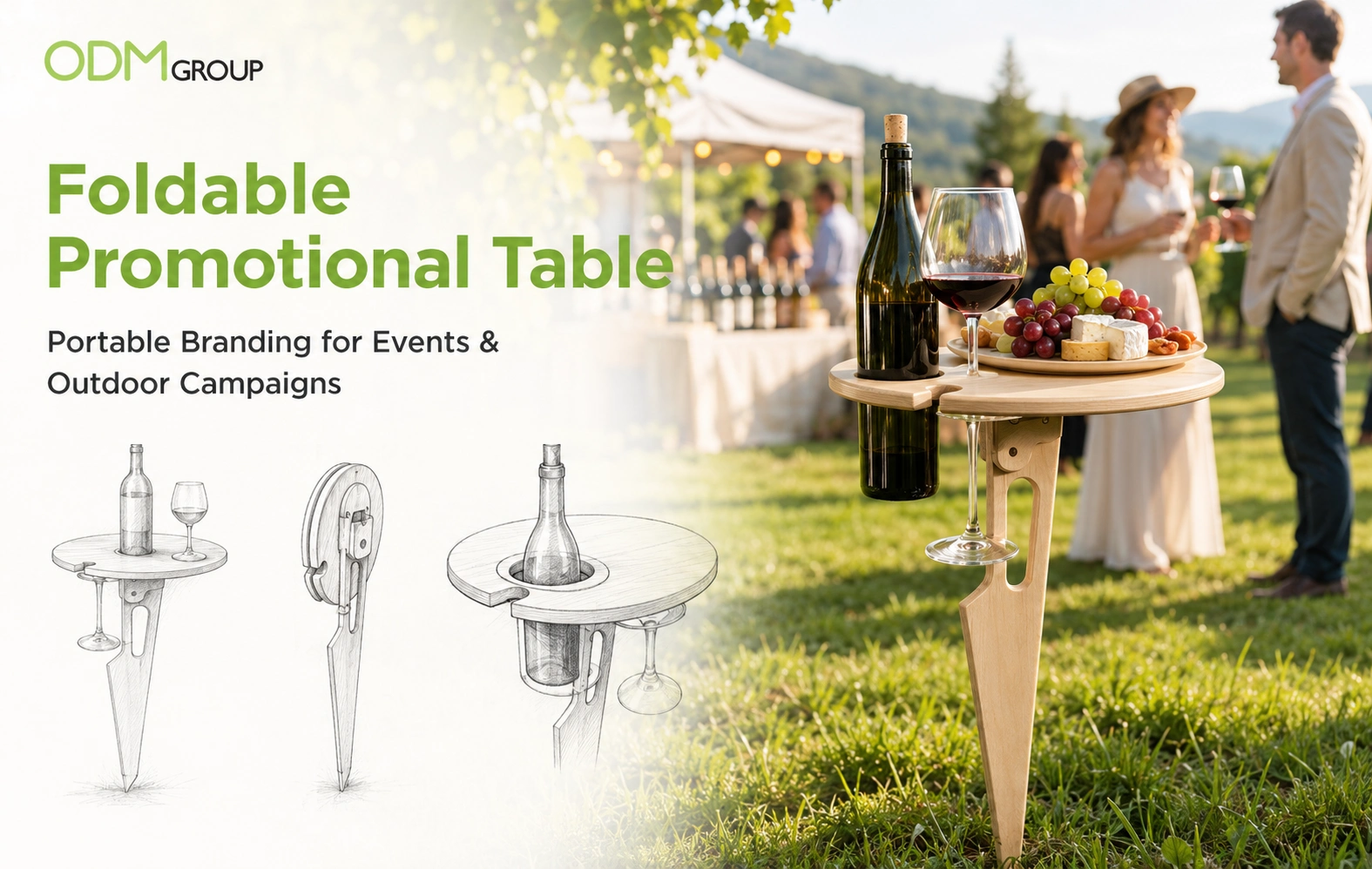
Heat Up Summer Promotions with a Foldable Promotional Table
A foldable promotional table gives brands a practical way [...]
Gifts for Wine Lovers: Elevate Impressions with Unique Accessories
National Wine Day on May 25 is the perfect [...]
Wooden Wine Display: Unique & Sustainable Product Presentation
Presentation is always key when it comes to marketing [...]
Bottle Neckers: Promotional Marketing Examples & Creative Ideas
A bottle necker is a small, eye-catching piece of [...]
Custom Wine Corkscrew: Why Do We Love this On-Pack Wine Gift?
Wine has always been a celebratory beverage, but it's also [...]
3 Ways to Make Your Bar Buzzworthy With This Wine Bottle Display Rack
Being an owner of a bar or a pub sounds [...]