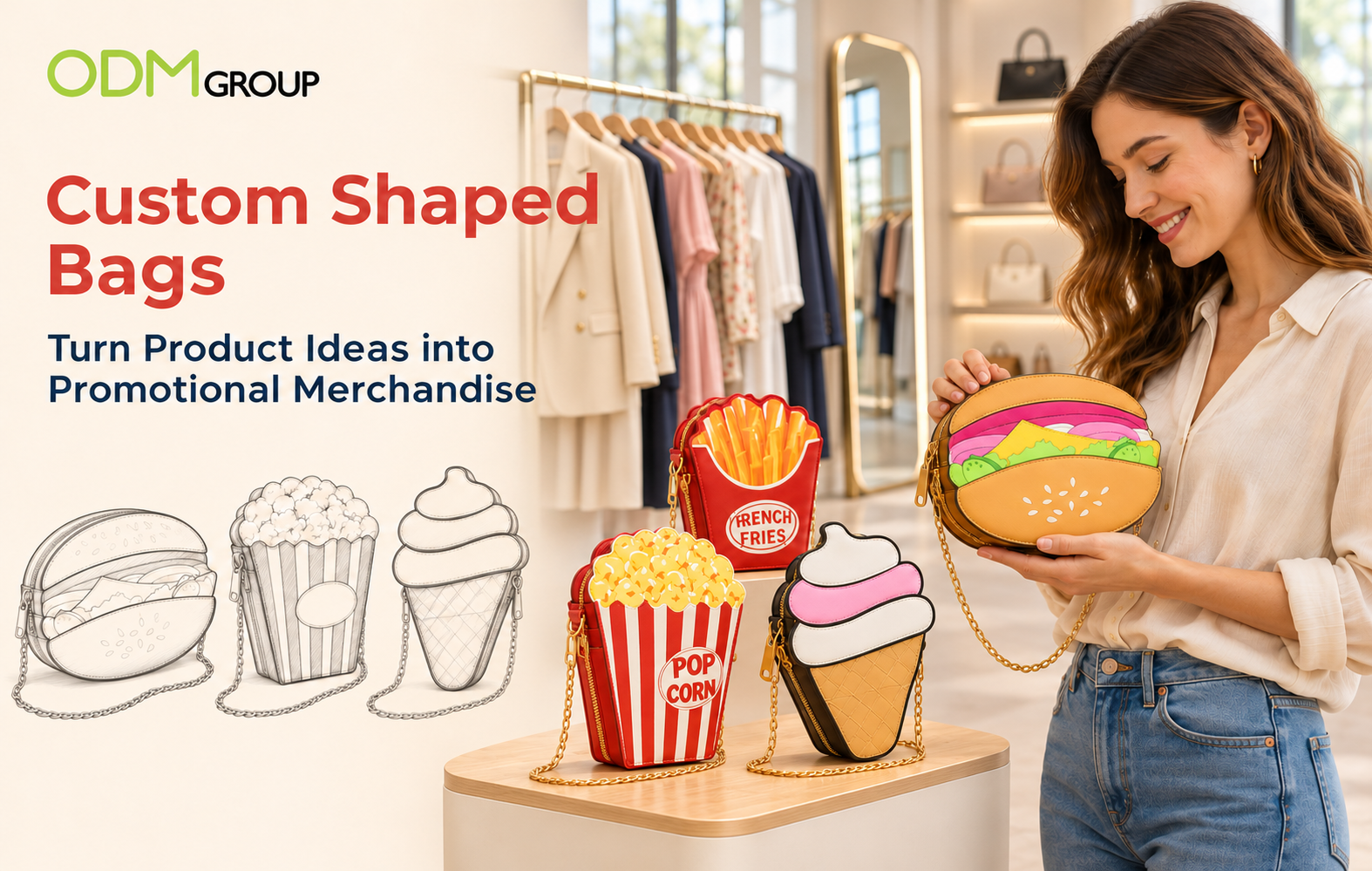
Custom-shaped bags turn a recognizable product, symbol, or character into a useful accessory. For brands planning promotional merchandise, the opportunity is to create something customers can connect with the brand through its shape, colors, and details.
A distinctive silhouette is only the starting point. The bag also needs enough usable space, a convenient opening, and comfortable handles or straps. Bringing those elements together makes the difference between an interesting novelty and merchandise people want to carry.
Food-inspired designs offer a playful starting point. Hamburger, ice cream, french fry, and muffin-shaped bags featured in our original article demonstrate how familiar products can become wearable accessories. These were market examples spotted by our team, rather than an ODM-produced collection.
Start with a Shape That Belongs to Your Brand
Choose a shape customers already associate with your business. A signature sandwich, distinctive drinks container, or recognizable mascot can provide a stronger creative direction than an unrelated novelty.
For a restaurant, that might mean a crossbody bag inspired by its bestselling burger. A cosmetics brand could explore a compact pouch shaped around a signature product. A sports campaign might use a jersey silhouette.
Keep the outline recognizable without reproducing every detail. Too many small attachments, layered panels, or decorative pieces can make the bag harder to use and complicate development.
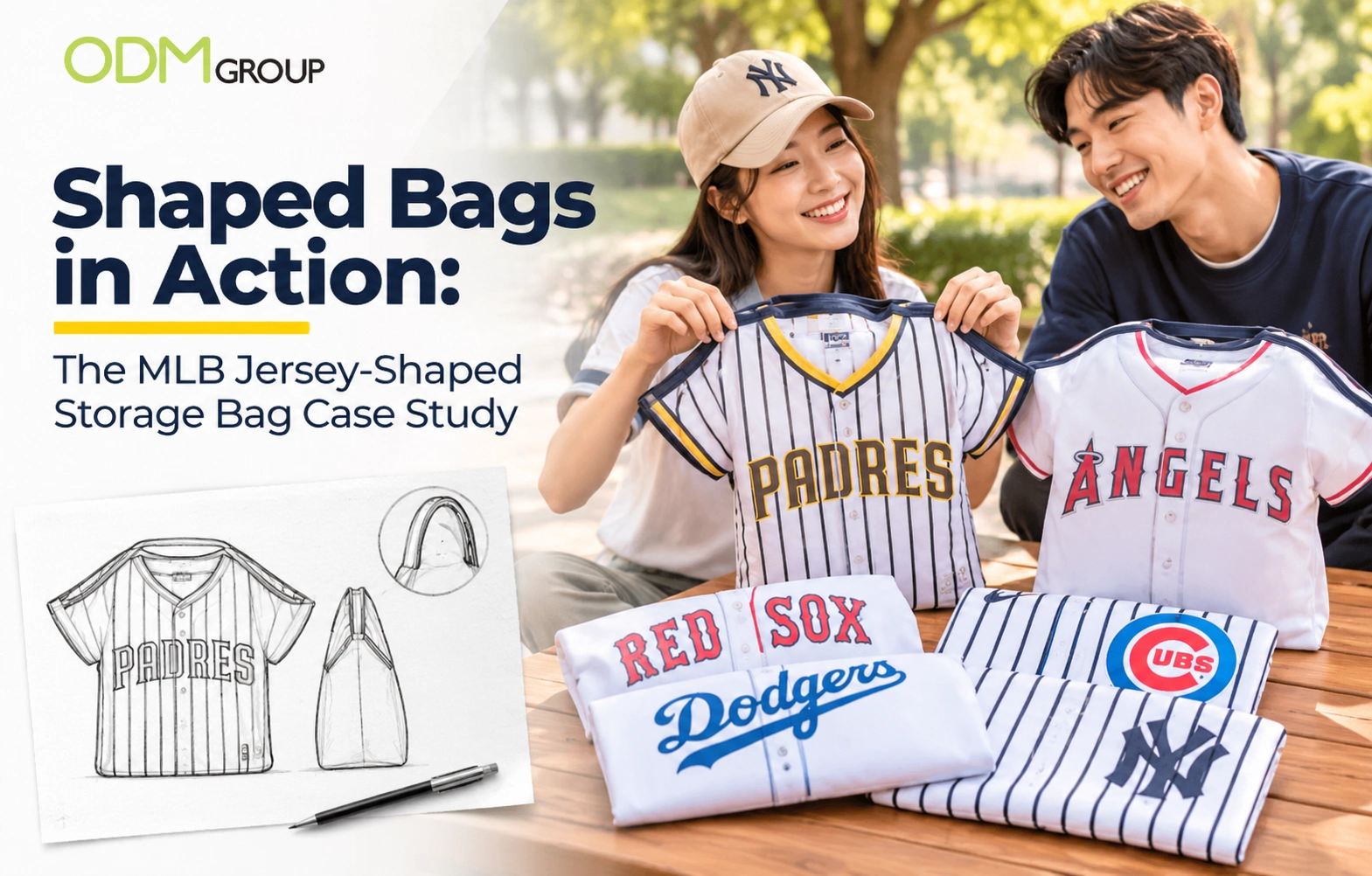
For inspiration from a different category, explore the jersey-shaped storage bag featured in the MLB retail campaign.
Choose the Bag’s Function Before Finalizing Its Shape
Decide what the recipient will carry before approving the exterior design. A coin purse, phone pouch, shoulder bag, and shopping tote each need a different approach to capacity and access.
A narrow ice cream cone silhouette may suit small essentials, while a rounded burger design could offer more depth. Neither should be sized by appearance alone.
Use actual objects when evaluating the design. Check whether a phone fits through the opening, whether keys are easy to retrieve, and whether the bag closes comfortably when filled.
ODM design insight: Review the usable interior separately from the exterior dimensions. Decorative sections may contribute to the silhouette without providing practical storage.
Which Custom Bag Construction Suits Your Idea?
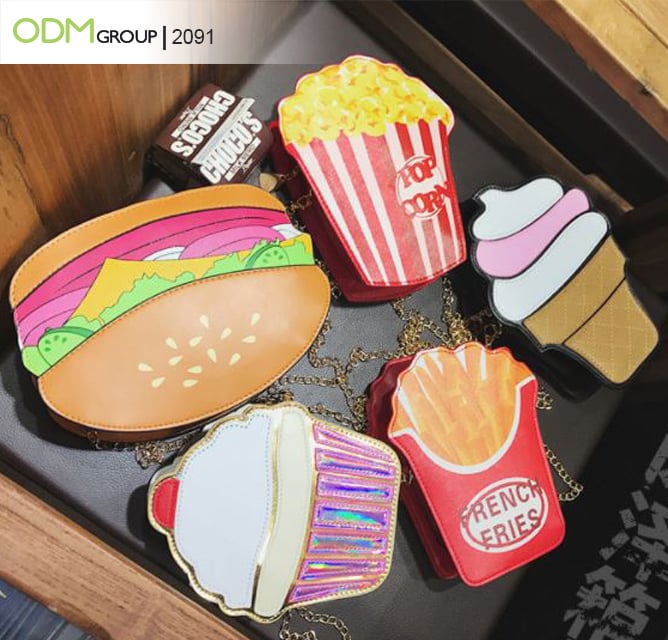
Designing Custom Shaped Bags: Food-Shaped Purse
A shaped outline does not always require a fully sculpted bag. Compare simpler and more detailed approaches before committing to a construction.
| Design approach | Best suited to | Main development consideration |
|---|---|---|
| Shaped flat pouch | Small gifts and compact accessories | Keeping the opening useful within a narrow silhouette |
| Shaped bag with side panels | Crossbody bags and everyday essentials | Balancing depth, capacity, and recognizable proportions |
| Padded or layered design | Soft, character-inspired merchandise | Controlling bulk and securing decorative components |
| Structured three-dimensional bag | Detailed statement accessories | Maintaining the form while allowing convenient access |
For example, a burger concept could begin as a round zippered pouch with printed layers. A more detailed version could use separate panels to represent the bun and fillings. Compare both against the campaign budget and intended use.
Select Materials Around the Finished Design
Choose materials alongside the construction. Ask for samples that demonstrate the proposed thickness, surface, lining, and finish rather than approving a material name alone.
Coated fabrics are worth exploring for designs that need a smooth, illustrated surface. Review how the finish behaves around curved seams and folded edges.
Canvas and other woven textiles can support a casual accessory direction. Evaluate whether the selected fabric needs lining or reinforcement to hold the intended outline.
Felt and padded textiles offer another direction for softer forms. Check edge finishing, shape retention, and the security of applied details.
The right choice depends on the complete bag. Two samples described with the same broad material name may look and feel quite different.
Avoid environmental claims based solely on the fabric description. Any claim about recycled content or another environmental attribute should be supported for the specified material and finished product.
Plan Zippers, Straps, and Branding Together
Functional details should be part of the first sketches.
Place the zipper where the user can reach it without distorting the shape. Check that decorative panels do not obstruct the pull and that the opening gives reasonable access to the interior.
Test strap attachment points with the bag filled. A design that hangs neatly when empty may tilt or twist under its intended load.
Branding also needs a deliberate position. A logo on a curved surface can become difficult to read, while artwork crossing several seams may be harder to align.
Consider a combination of:
- A recognizable product-inspired silhouette.
- Brand colors within the main panels.
- A small printed, embroidered, or woven brand identifier.
- A branded zipper pull or removable hangtag.
ODM design insight: Establish one clear branding area early. This gives the artwork a defined home while leaving room to refine the shape and construction.
Build the Bag Around the Promotion
The campaign mechanic should influence the design brief.
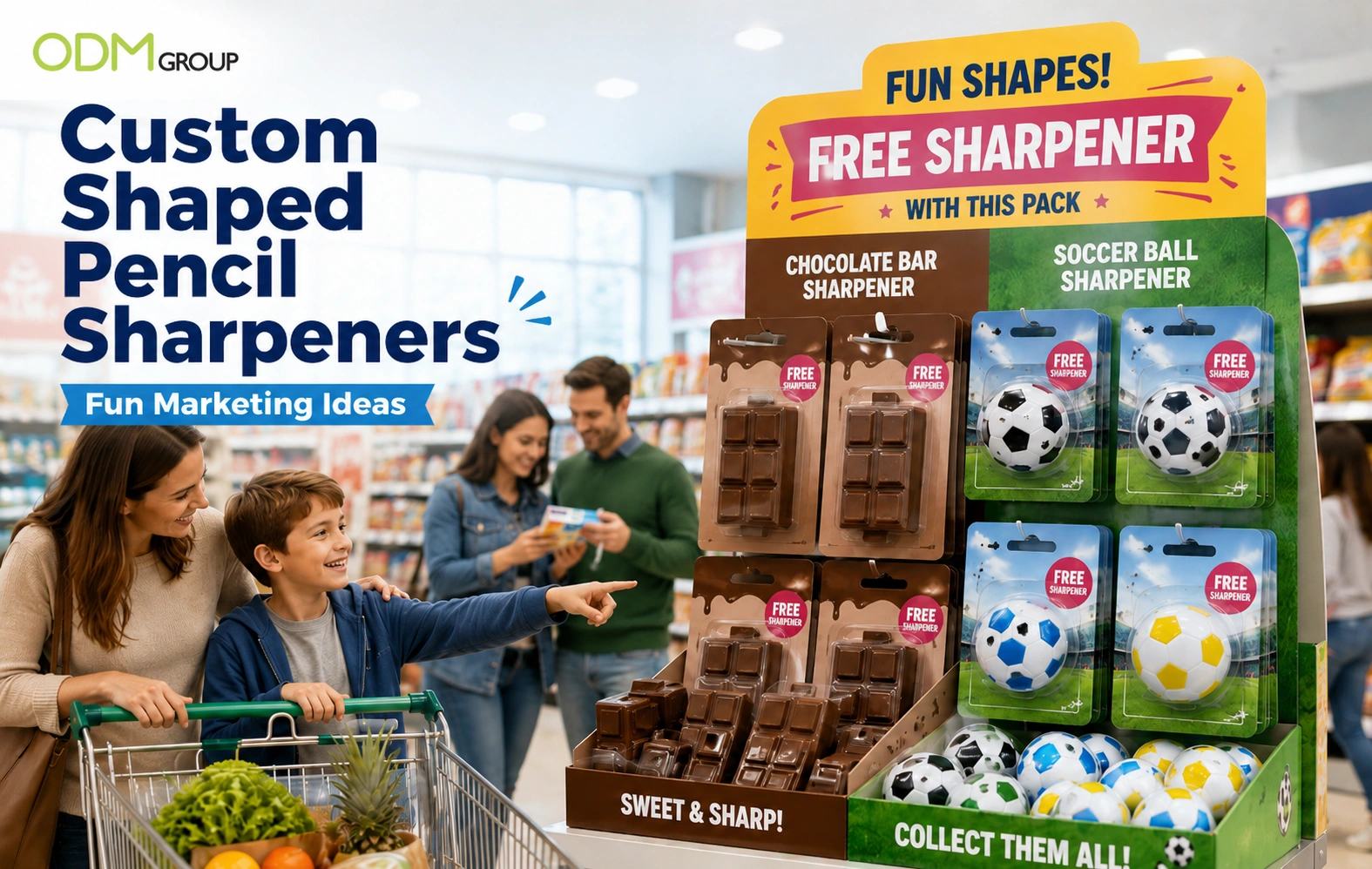
For a gift-with-purchase promotion, consider how customers will see the bag, understand the qualifying purchase, and collect their reward. Display one finished sample where shoppers can judge its size and construction.
For a collectible campaign, develop a shared design system. Different food shapes can use consistent straps, labels, and packaging while keeping their individual character.
For an event giveaway, consider how staff will store and distribute the bags. A bulky sculpted design may need a different handling plan from a flat pouch.
These choices should be resolved before the final sample, especially when the merchandise forms part of a larger retail display.
Develop and Review a Physical Sample
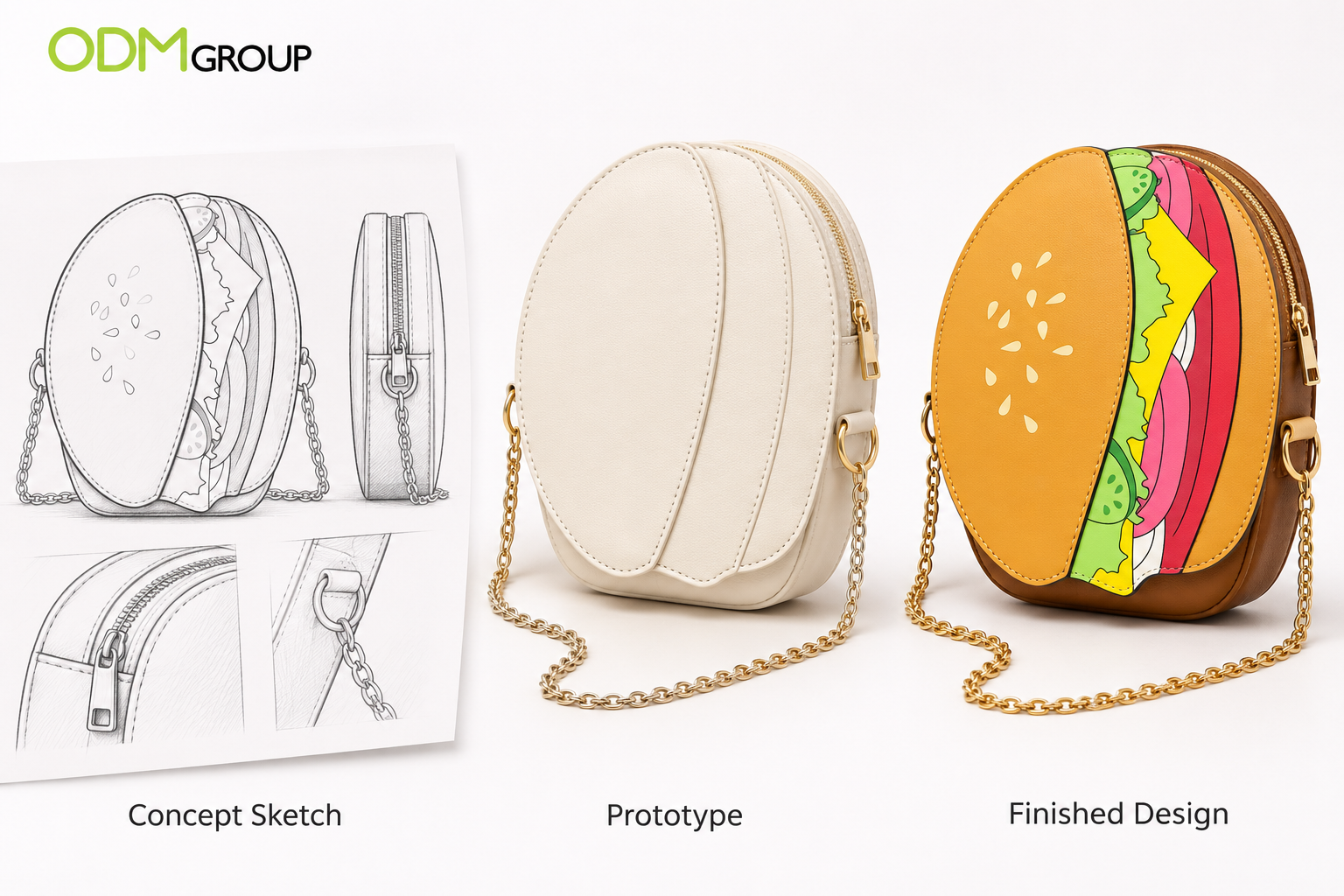
Move from sketches to a plain prototype before investing in detailed decoration.
Our sketch design process helps compare creative directions, while prototyping provides an opportunity to assess the physical design.
A useful review sequence is:
- Confirm the brief: audience, campaign mechanic, intended contents, quantity, launch market, and budget.
- Compare sketches: silhouette, dimensions, opening, straps, and artwork placement.
- Review a plain prototype: capacity, access, comfort, and overall proportions.
- Assess the decorated sample: colors, branding, finish, and packaging.
- Agree on acceptance criteria: the construction and appearance details to check against the approved sample.
For food-shaped designs, review the intended audience and launch market before finalizing small components or detachable decorations. A playful appearance should not substitute for an appropriate product assessment.
Develop Your Custom Bag Concept with ODM
At ODM, we help brands develop merchandise ideas around their campaign objectives. For custom shaped bags, that means considering the silhouette, function, branding, and presentation together.
Share your project brief with our team, including your preferred shape, audience, intended contents, quantity, budget, launch market, and target date. These details provide a practical starting point for exploring the concept.
More Product Ideas


Related Blogs
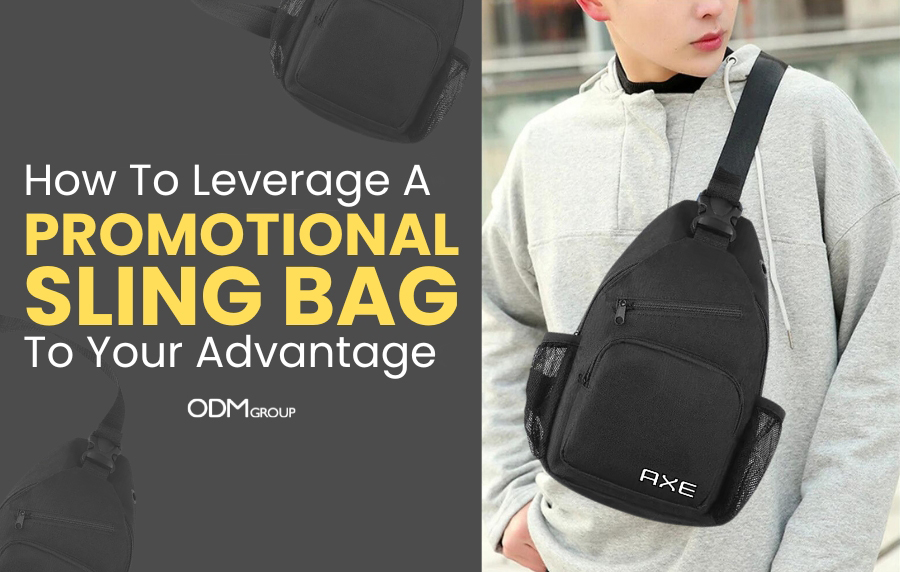
How to Step Up Your Marketing Game with Promotional Sling Bag?
There are a lot of types of bags in [...]

4 Ways Eco-Friendly Merchandise Bags Enhance Alcohol Marketing
Wine is one of the most loved alcoholic beverages [...]

Custom Solar Backpack: 4 Surprising Ways It Elevates Your Brand
Nature is a natural de-stressor that most people, especially [...]

Why Customers Spend More for Starbucks Promotional Logo Bags?
Starbucks — the coffee franchise that everyone knows and [...]
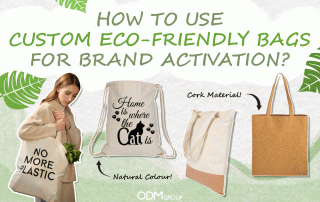
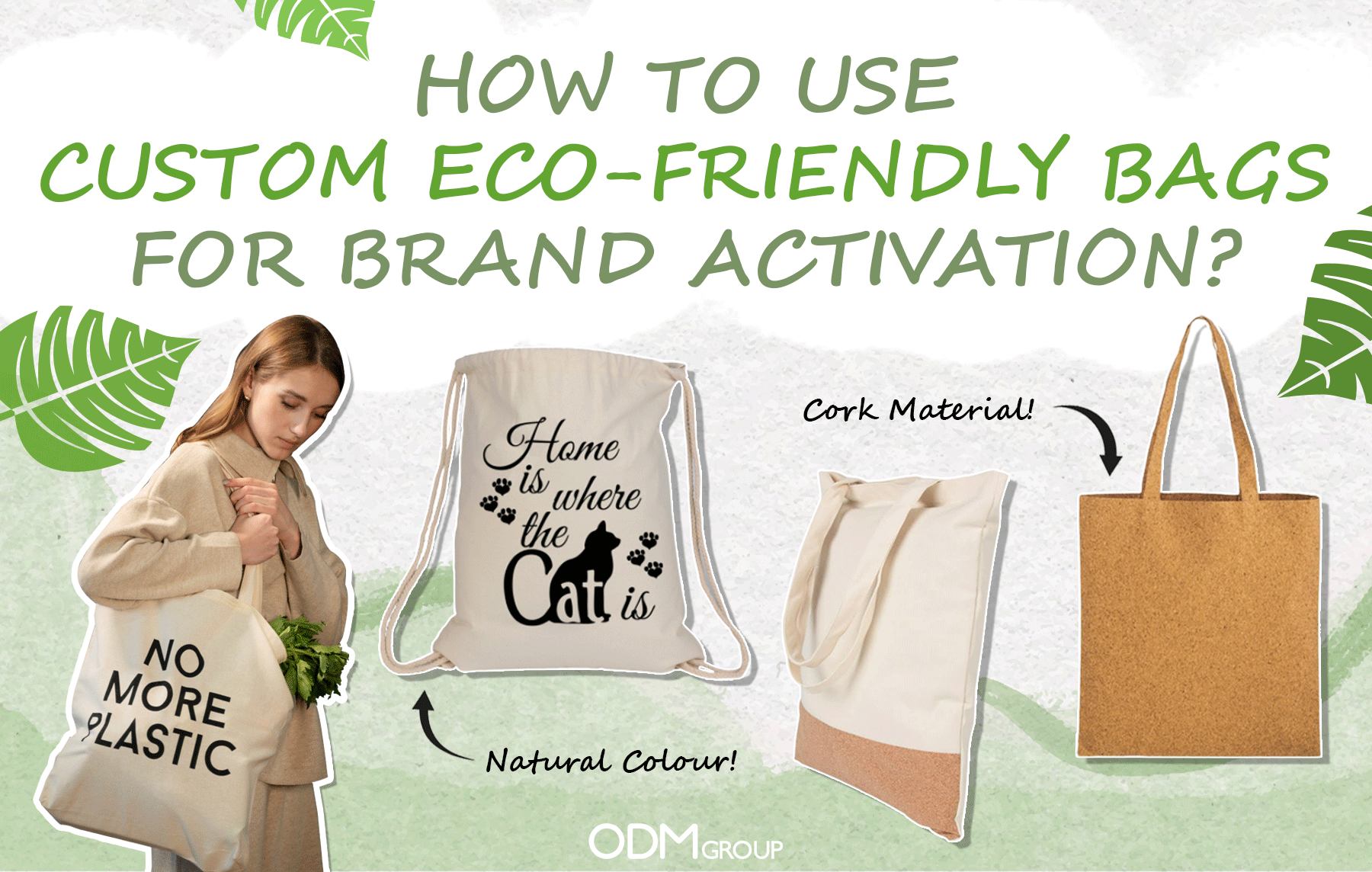
Customized Eco-Friendly Bags: Steal-Worthy Brand Activation Ideas
Let's say that you've already defined your brand activation [...]


Cooler Bag Manufacturers: Stay On Trend With Roll-Up Cooler Bags!
Cooler bags are undoubtedly one of the coolest custom branded [...]