
Promotional merchandise performs best when it earns a place in the customer’s everyday life. That is why tote bags remain a dependable choice for brand campaigns: they are useful, visible and easy to integrate into retail launches, events, loyalty programs and employee initiatives.
But familiarity also creates a challenge. When every brand offers a standard tote, how do you make yours distinctive?
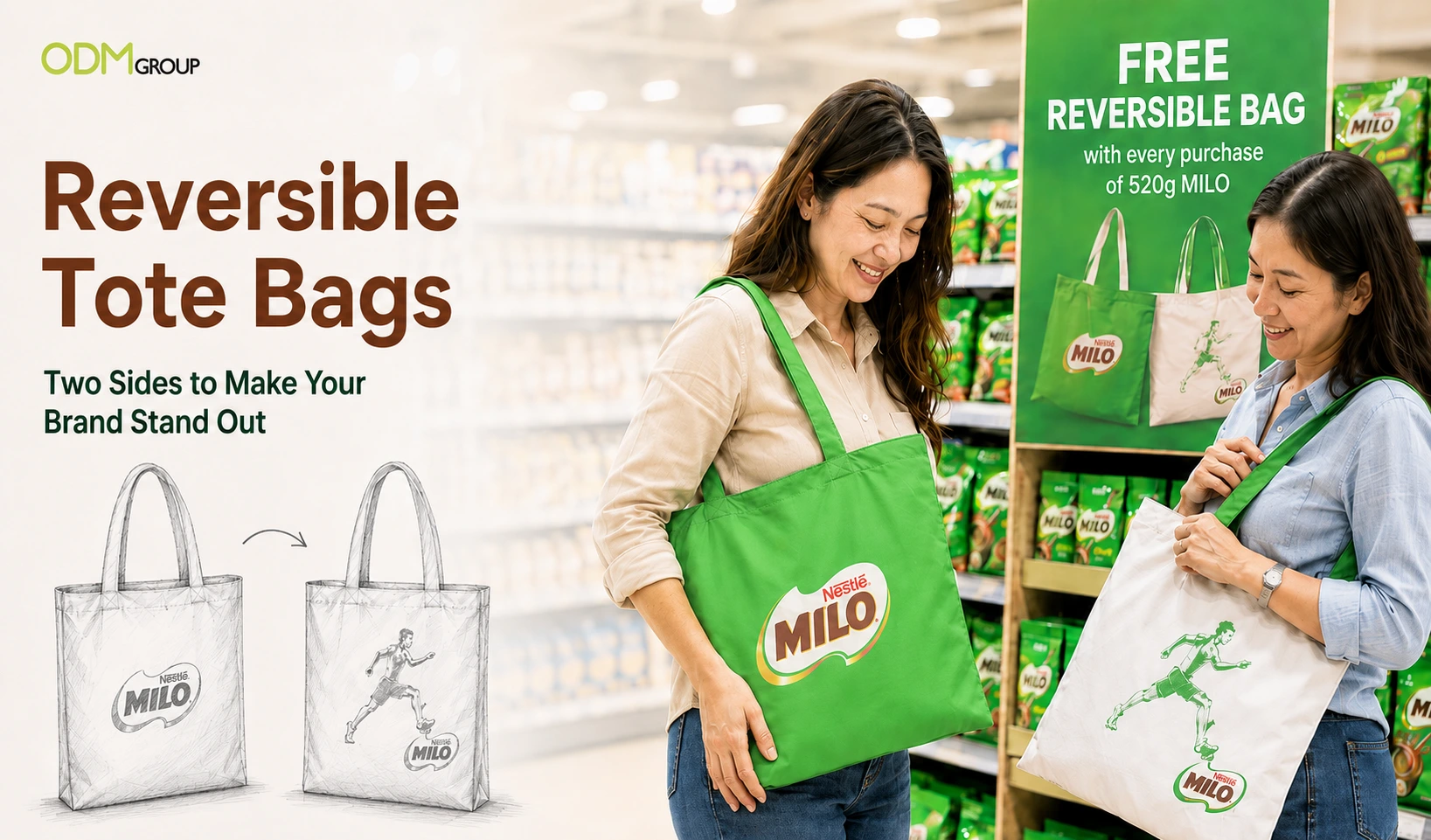
A reversible tote bag provides a compelling answer. With a different color and branding opportunity on each side, it turns one practical item into two coordinated looks. For marketing and procurement teams, that added versatility can create more campaign value without making the product difficult to understand or use.
Why Reversible Design Matters to Brands
A conventional tote provides one primary exterior surface. A reversible design gives the user two outward-facing options, allowing the product to change with a simple turn.
This creates several strategic possibilities:
- Two brand colors can be incorporated into one product.
- Each side can support a different campaign message or visual identity.
- Partner brands can receive their own dedicated side.
- A bold promotional look can be paired with a more understated everyday design.
- Seasonal or event-specific artwork can be balanced with evergreen branding.
The reversible format also introduces an element of discovery. When recipients turn the bag inside out and see a second color, graphic, or message, the interaction becomes part of the brand experience.
That small moment can make the merchandise more memorable than a standard giveaway.
A Compact Format Designed for Everyday Use
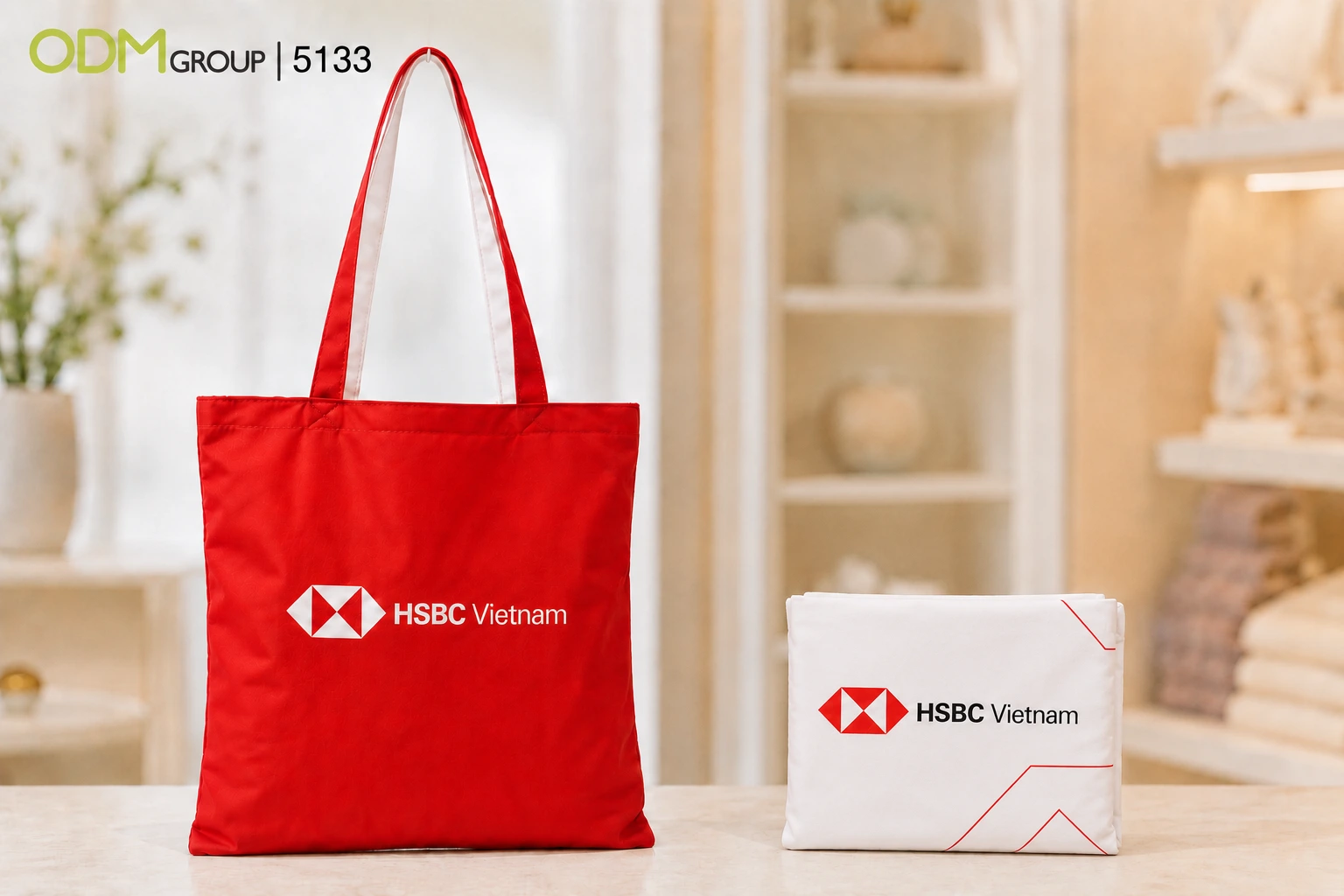
The featured concept measures approximately 26 × 34 cm, with handles measuring 3 × 66 cm. This compact format is suitable for carrying everyday essentials, event materials, light purchases, or personal items without feeling bulky.
Its long handles are designed for convenient hand or shoulder carrying, while the nylon-and-polyester construction supports a lightweight, portable format. When not in use, the tote can be folded for easier storage or distribution.
Product concept at a glance:
| Feature | Specification |
|---|---|
| Bag size | 26 × 34 cm |
| Handle size | 3 × 66 cm |
| Materials | Nylon and polyester |
| Construction | Reversible |
| Color treatment | One color on each side |
| Key attributes | Portable, durable and visually distinctive |
These details should be treated as a starting point rather than a universal specification. Material weight, dimensions, handle construction, stitching, decoration and packaging can all be refined to suit the intended audience, budget and distribution channel.
Two Sides Create More Room for Brand Storytelling
The strongest reversible tote concepts do more than place the same logo on two different colors. They use both sides intentionally.
One side might feature a campaign mascot, expressive artwork or a high-impact brand color. The reverse could use a quieter palette with a small woven label or minimal logo treatment. This gives recipients the flexibility to choose how visibly they want to engage with the brand.
Other creative directions include:
Brand and lifestyle
Use one side for prominent campaign artwork and the other for a subtle, fashion-oriented treatment. This can help the bag remain relevant after the promotion ends.
Main brand and sub-brand
A company can feature its corporate identity on one side and a product line, loyalty program or event identity on the other.
Collaboration campaigns
For partnerships, each organization can receive its own side while sharing a single, coherent product.
Two-part messaging
One surface can pose a question or introduce an idea, while the reverse reveals the answer, benefit, or call to action.
Employee and customer editions
The same underlying construction can support different graphics for internal and external audiences, subject to order quantities and production requirements.
Where Reversible Tote Bags Can Add Value
A reversible tote is most effective when both sides serve a clear purpose. The format should solve a communication, audience, or usability challenge, not simply add another color.
Here are several ways brands can use the two-sided design strategically.
1. Product launches: connect the campaign with the parent brand
A new product often needs a distinctive campaign identity while remaining connected to the company behind it. One side of the tote can feature the product launch, while the reverse carries the master brand.
For example:
- Side A: New product artwork, campaign slogan, or launch date
- Side B: Corporate logo and evergreen brand colors
This approach gives the launch strong visibility without limiting the bag’s relevance once the campaign ends.
2. Brand collaborations: give each partner dedicated visibility
Co-branded merchandise can become visually crowded when multiple identities compete on a single surface. A reversible tote gives each partner its own side, creating clearer and more balanced exposure.
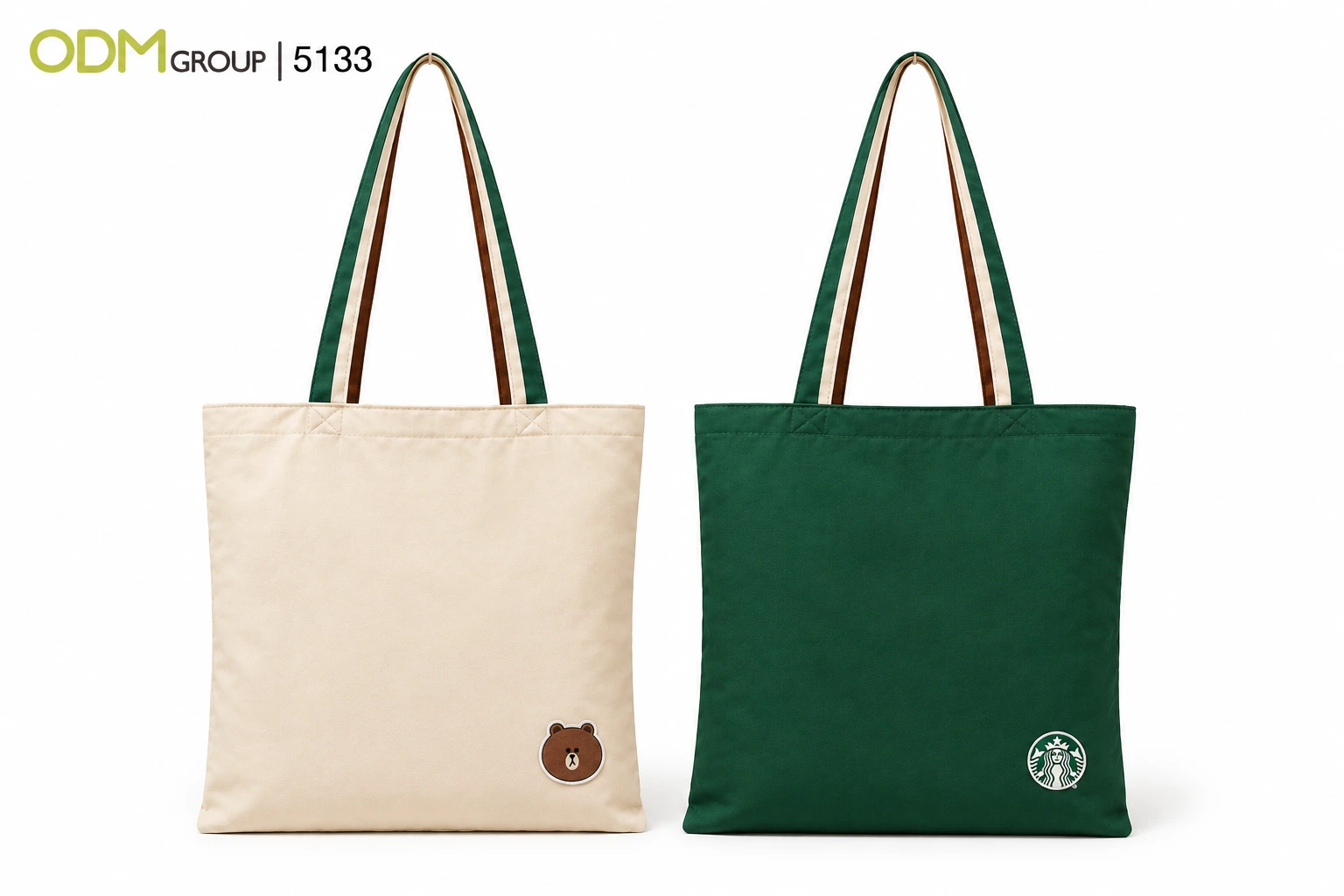
Before production, both parties should agree on color use, logo size, decoration method and whether the two sides should feel visually connected. A shared accent color or design element can help the final product feel cohesive.
3. Events and exhibitions: extend the experience beyond the venue
At a trade show, conference, or festival, one side can display event-specific information while the other carries a design suitable for everyday use.
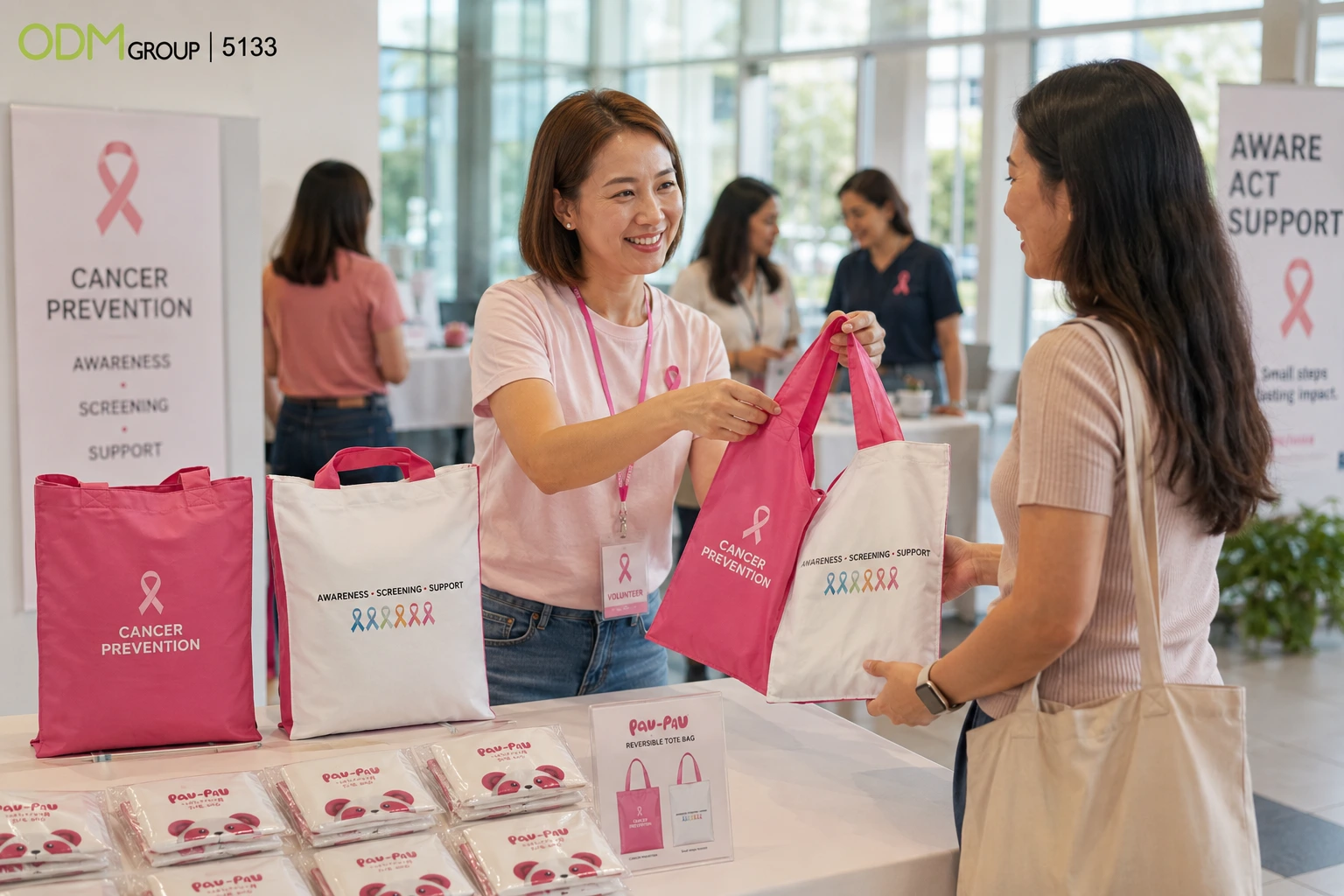
A useful execution might include:
- Side A: Event name, date, location or theme
- Side B: Minimal brand artwork or a lifestyle-focused graphic
The more wearable reverse side can encourage recipients to continue using the tote after the event, extending brand visibility beyond the initial distribution period.
4. Loyalty and membership programs: create a sense of access
Reversible totes can help distinguish membership tiers, limited releases, or reward milestones. One side may use the public-facing brand identity, while the other includes an exclusive color, message, or emblem for members.
Numbered labels, anniversary graphics, or collectible artwork can add perceived value, provided the details remain practical for the intended production quantity and budget.
5. Retail campaigns: offer styling flexibility
Consumers may like a brand but prefer not to carry prominent advertising every day. A reversible design gives them a choice between an expressive branded side and a quieter alternative.
For example:
- Side A: Bold seasonal artwork or a character graphic
- Side B: A solid color with a small woven label
This balance between brand visibility and personal style can make the tote more useful—and merchandise that fits everyday life is more likely to be carried repeatedly.
6. Employee programs: combine company identity with team culture
For onboarding kits, company anniversaries, or internal events, one side can communicate the corporate identity while the other celebrates a team, value, or milestone.
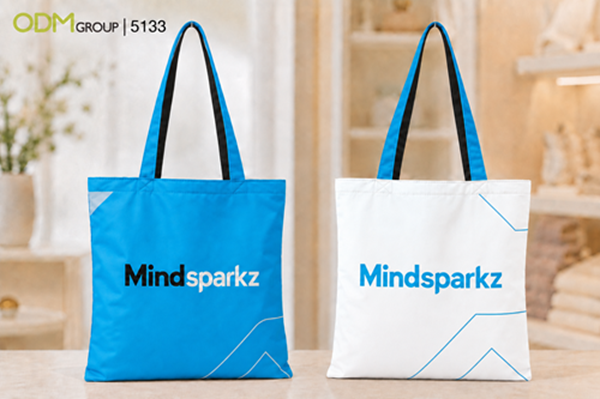
This makes the product suitable for both external use and internal engagement. However, employers should avoid overly time-sensitive messages if they want the bag to remain relevant for longer.
7. Cause-related campaigns: separate the message from the sponsor
A reversible tote can give a social initiative or community message its own visual space while identifying the supporting organization on the reverse.
Brands should ensure that any claims, certifications or impact statements are accurate and verifiable. The presence of a reusable tote alone should not be used as evidence that a campaign or product is sustainable.
8. Hospitality and travel: support different stages of the customer journey
Hotels, airlines, tourism organizations, and event destinations can use one side for the guest experience and the other for broader destination branding.
One surface might welcome the guest or identify a specific event. The reverse could feature destination artwork that remains useful as a travel or leisure bag after the visit.
Packaging Should Support the Campaign—not Be an Afterthought
The supplied example demonstrates how a folded tote can be presented with a printed paper insert. This creates space for product instructions, campaign storytelling, a QR code or a concise explanation of the reversible feature.
Packaging decisions should consider:
- Whether the tote will be mailed or handed out
- How quickly event staff need to distribute it
- Whether recipients can immediately understand the reversible function
- How the product will be protected during transport
- Which labeling or compliance information is required
- Whether the packaging format aligns with the brand’s environmental commitments
Brands should be cautious about making sustainability claims based solely on reusability. Material composition, packaging, production methods, testing, and actual patterns of use all matter. Any environmental message should be specific, supportable, and consistent with the finished product.
How ODM Helps Brands Develop the Concept
ODM Group serves as a strategic product development partner, helping brands turn an initial promotional idea into a production-ready concept.
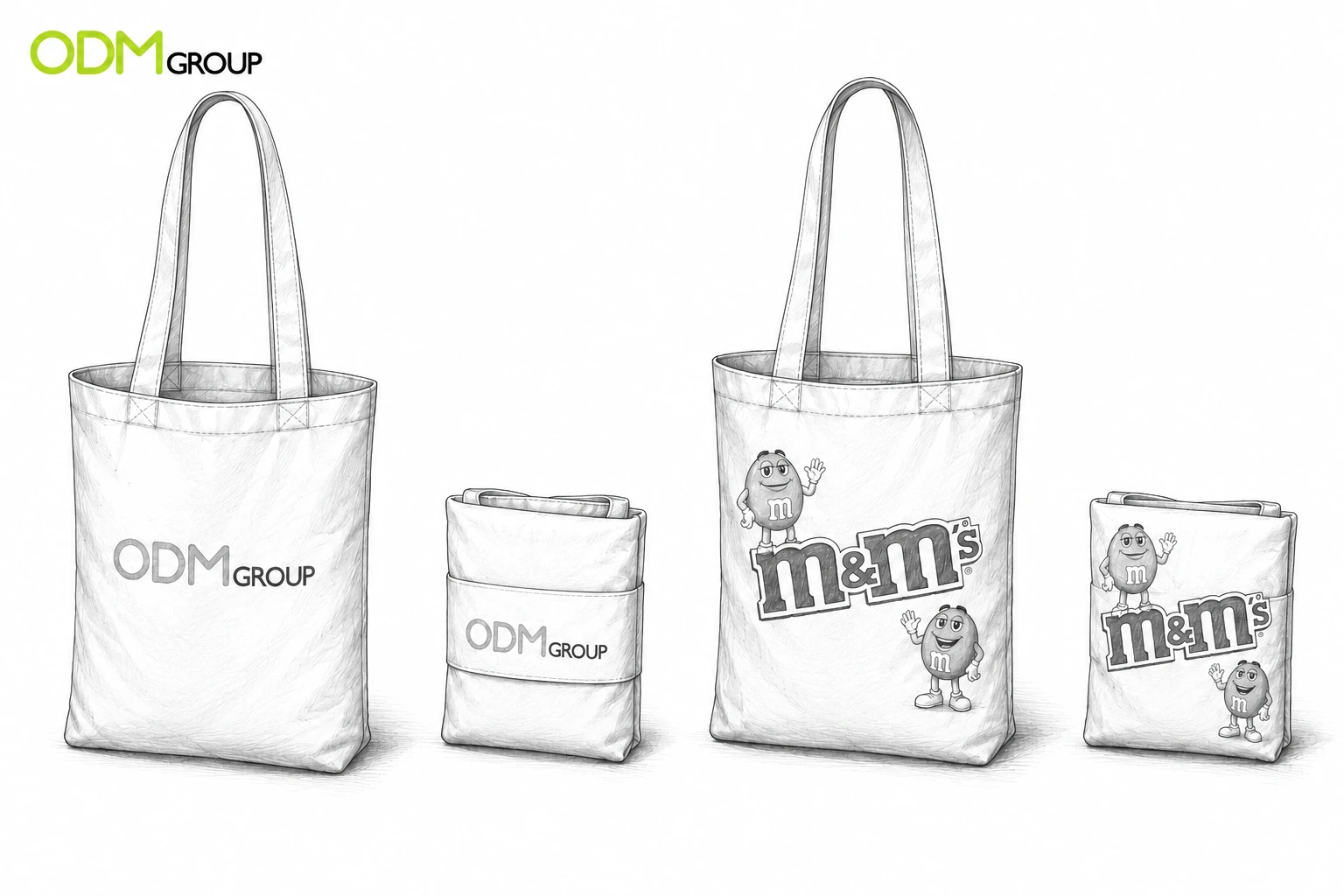
Our support can include:
Sketch design: Translating campaign objectives into practical layouts, color directions, decoration placements, and construction concepts.
Prototyping: Coordinating samples so teams can assess size, appearance, reversibility, handle comfort, and branding execution before committing to production.
Factory selection: Identifying and evaluating factories according to the product’s construction, decoration requirements, target quantities, quality expectations and delivery schedule.
Quality control: Defining inspection criteria and coordinating checks for materials, measurements, stitching, branding, workmanship and packaging.
Packaging design: Developing presentation concepts that explain the product, reinforce the campaign and suit the intended distribution method.
Logistics coordination: Planning packing configurations, shipment requirements, and delivery milestones to support a smoother rollout.
ODM does not supply this featured tote as an off-the-shelf product. Instead, we help brands develop their own idea and manage the critical decisions required to move it toward production. The final design, materials, branding, and packaging can be shaped around the individual campaign rather than copied from an existing item.
From Simple Tote to Strategic Brand Asset
A reversible tote bag is still an accessible, practical piece of merchandise—but its two-sided construction creates more room for creativity and differentiation.
For brands, the opportunity is not simply to add another logo to another bag. It is to design an item that balances visibility with everyday usability, tells a story across two surfaces, and feels intentional from the stitching to the packaging.
With the right concept development, prototyping, factory selection, quality control, and logistics planning, a simple reversible tote can become a flexible brand platform—one that recipients can carry, change, and continue using long after the campaign ends.
Have an idea for a custom reversible tote? The ODM Group can help you develop the concept, evaluate production options, and coordinate the journey from sketch to delivery.
Contact us today and let's design and manufacture something special together.
ODM Services
FAQs about Reversible Tote Bags
What makes a reversible tote different from a standard tote bag?
A reversible tote is constructed so that either side can face outward. This gives brands two usable colorways or design surfaces within one product.
Can both sides of the bag be customized?
Yes, each side can feature a different color, graphic, patch or branding treatment. The decoration method must be selected carefully so that stitching and backing remain presentable when the bag is reversed.
What are the dimensions and materials of this tote concept?
The featured bag measures approximately 26 × 34 cm, with handles measuring 3 × 66 cm. It uses nylon and polyester to create a lightweight, portable and durable format.
What quality checks are important for a reversible bag?
Quality control should cover dimensions, seams, handle attachment, color consistency, decoration placement and overall workmanship. Both sides should also be inspected as finished exterior surfaces.
How can ODM help develop a custom reversible tote?
ODM can support sketch design, prototyping, factory selection, quality control, packaging design and logistics coordination. We do not supply the featured bag; we help brands develop and execute their own product concept.
What to Read Next?
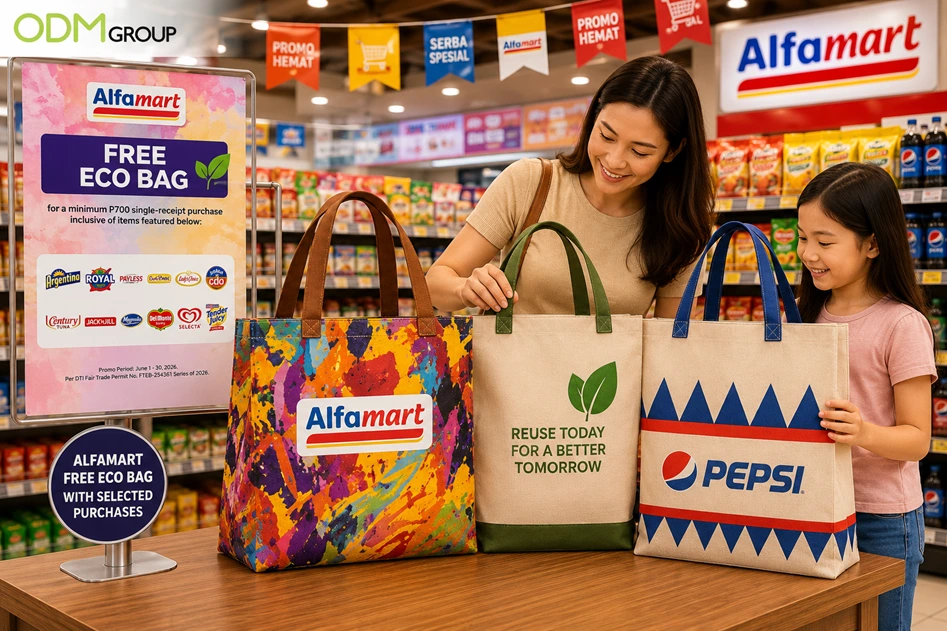
Custom Reusable Bags That Keep Your Brand in Motion
A promotion ends at checkout. A useful bag does not. [...]
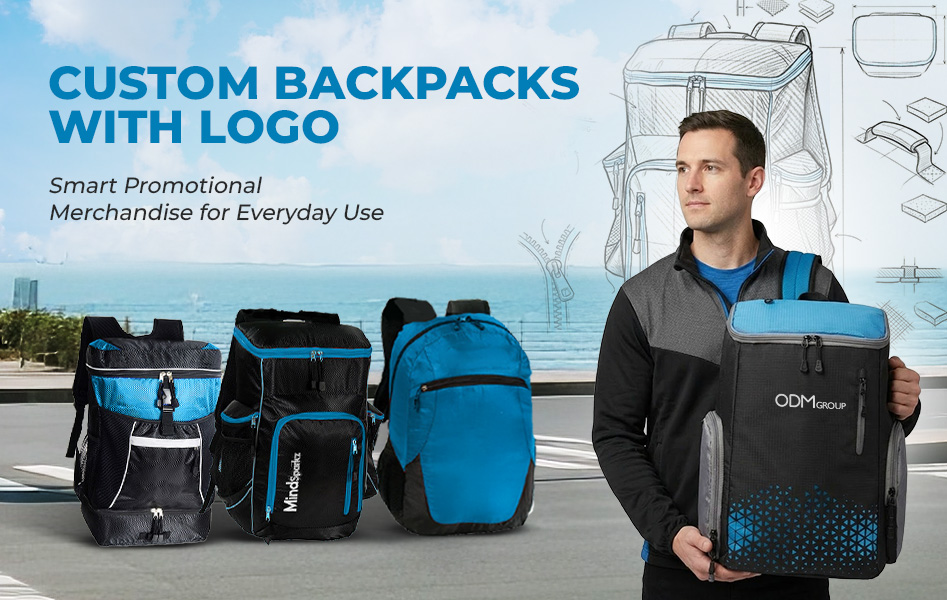
Custom Backpacks with Logo for Promotional Campaigns
Promotional products work best when they are both practical [...]
Take Your Outdoor Marketing to New Heights with Custom Dry Bags!
The allure of outdoor activities, from adventurous hikes to [...]
Promo Bags with Logo: Why Does Your Business Need Them?
Promo bags with logo provide an opportunity to increase [...]

5 Ways Reusable Custom Bags Make a Difference in Your Marketing
Sustainability is huge thing in the market as people [...]


4 Ways Eco-Friendly Merchandise Bags Enhance Alcohol Marketing
Wine is one of the most loved alcoholic beverages [...]