
A promotion ends at checkout. A useful bag does not.
Custom reusable bags can continue carrying a brand into homes, offices, stores, and everyday routines. When designed around the right campaign, they can strengthen an offer, influence purchase decisions, and keep the brand visible long after the initial transaction.
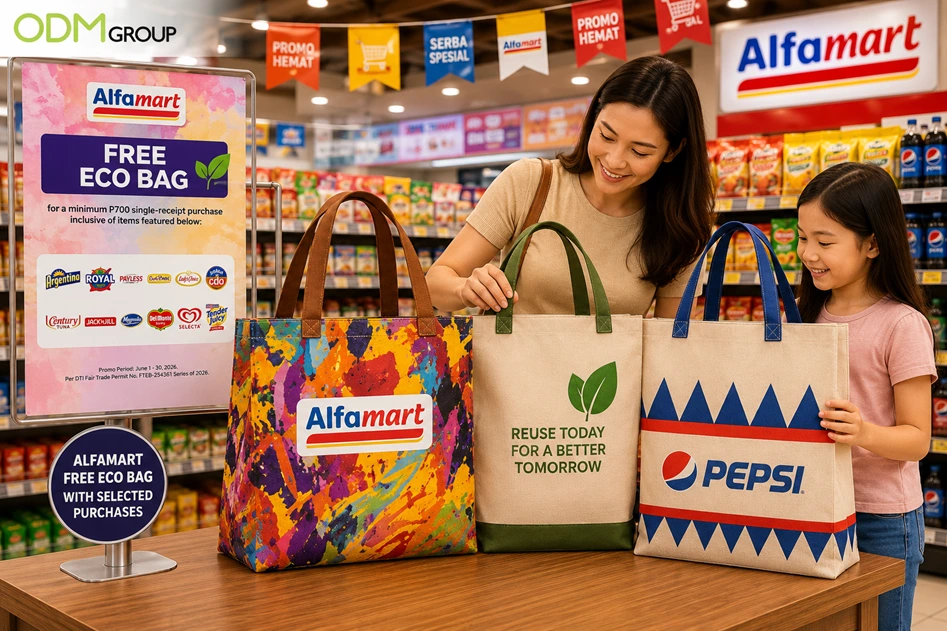
Why Custom Reusable Bags Still Work in Retail Marketing
Customers are more selective about what they take home. A promotional item needs to feel useful, relevant, and worth keeping.
Reusable bags have an advantage because they fit naturally into daily routines. Shoppers can use them for groceries, takeaway meals, office items, school supplies, travel essentials, gym gear, or weekend errands. A well-made bag can move from the store to the street, the office, the kitchen, and back into the customer’s next shopping trip.
For brands, repeated use creates ongoing visibility. Unlike a flyer or a receipt offer, a reusable bag can continue working after the first transaction.
However, usefulness alone is not enough. Many brands already offer bags. The difference comes from how the campaign is structured.
A strong bag campaign should answer three questions:
- What purchase behavior are we trying to encourage?
- Why will shoppers want to receive and reuse this bag?
- How does the bag support the brand, retailer, and campaign message?
When these questions are answered early, the promotion becomes more than a branded item. It becomes a retail tool.
What Makes a Reusable Bag Campaign Work
The best bag promotions usually have a clear role in the campaign. They are not added at the end as an afterthought.
They may support a bundle, a minimum spend, a selected-product purchase, a limited-time offer, or a loyalty mechanic. In each case, the bag gives customers an extra reason to act.
For example, a branded reusable bag can help a brand increase the perceived value of a meal deal, encourage shoppers to buy participating products, support sustainability messaging in a practical way, or make a seasonal promotion feel more collectible.
This is where the promotional value becomes more strategic. The bag is not just the reward. It is part of the reason the offer feels complete.
Reusable Bag Ideas
1. Alfamart Free Eco Bag Promotion
Alfamart offers another useful example for retail and convenience store campaigns.
The brand has used free eco-bag offers to encourage shoppers to purchase selected items or to reach a minimum spend. This type of mechanic works well in neighborhood retail because it connects the reward to an everyday shopping need.
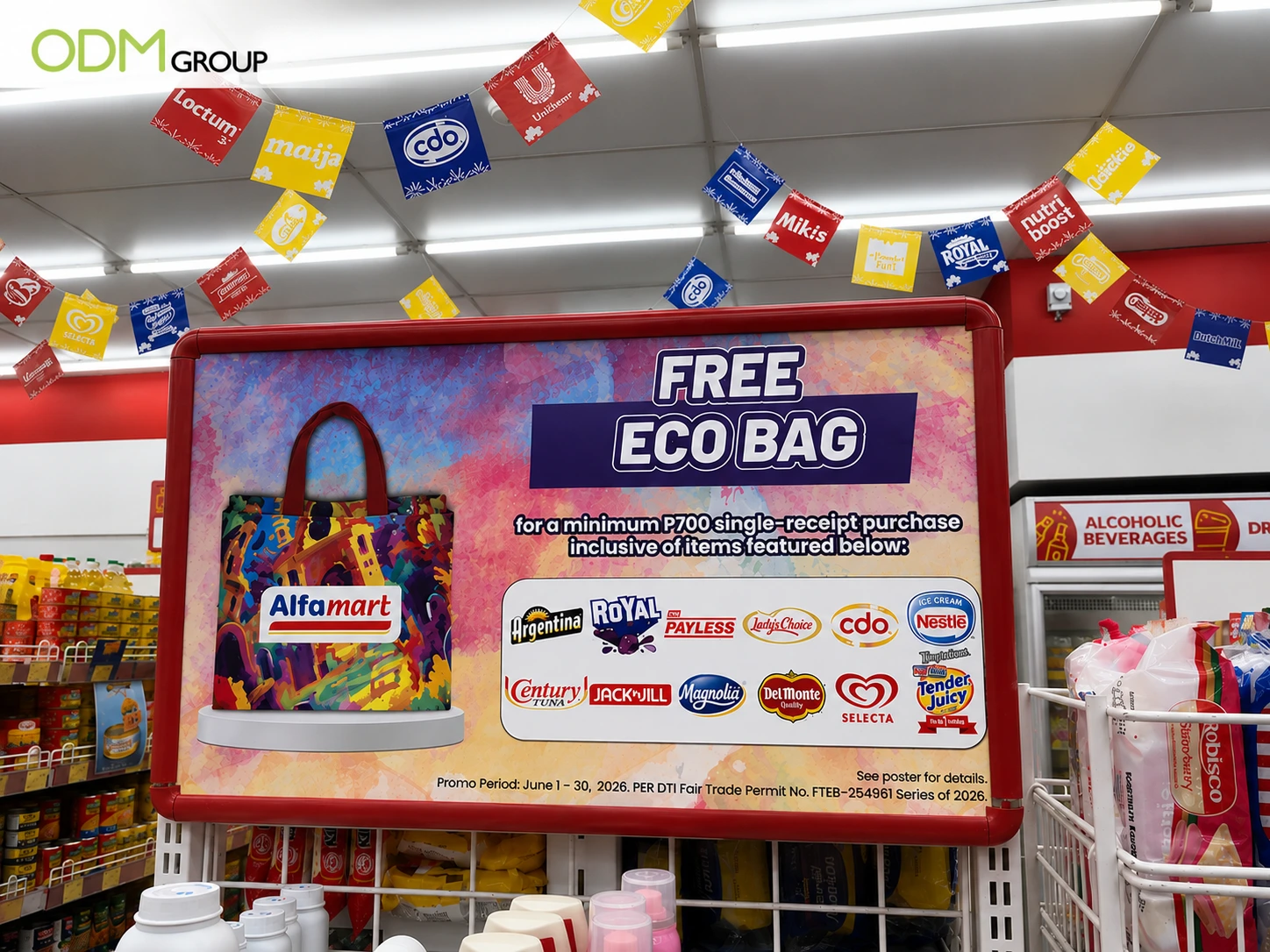
For Alfamart, the promotion supports practical shopping behavior. For participating FMCG brands, it can help drive movement from the shelf. For customers, the reward is simple, useful, and easy to understand.
This is why free bag promotions can work well in grocery, convenience, and super minimart channels. They do not require a complicated explanation. The value is immediate. The sustainability angle is also stronger when it is tied to habit. Instead of telling customers to be eco-conscious, the campaign gives them something they can actually use.
That makes the message feel more natural and less forced.
2. Pepsi x KFC Reusable Bag GWP
In this promotion, customers received a reusable bag with the purchase of a Pepsi Sharing Bucket. The promotion worked because the bag matched the occasion. It made carrying the meal easier, added value to the bundle, and extended brand visibility every time it was reused.
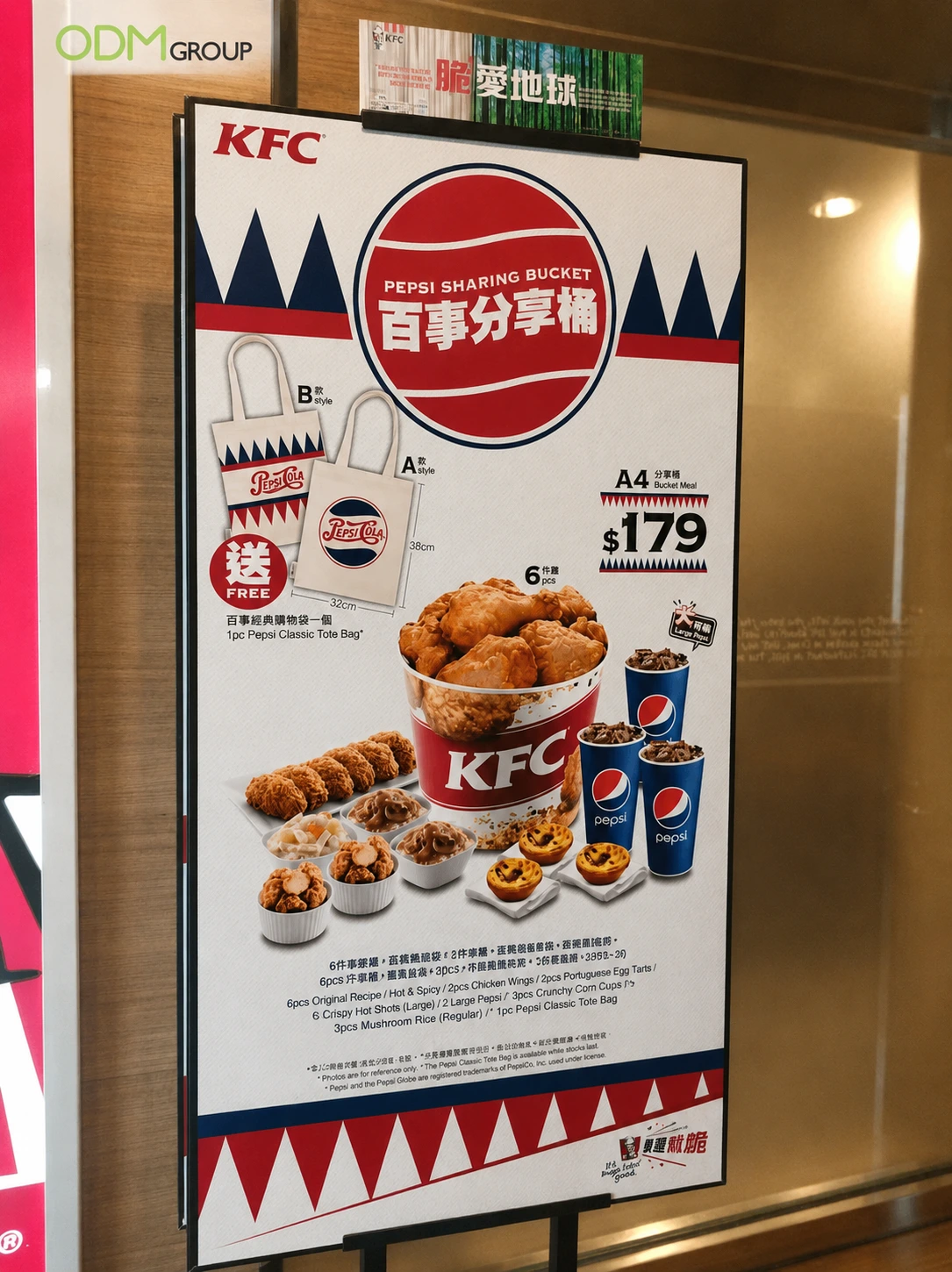
The bag was not random. It was connected to the product, the purchase moment, and the customer’s need. For QSR and beverage brands, this type of promotion is especially useful because it supports multiple goals simultaneously. It makes the bundle feel more valuable, strengthens the partnership between the two brands, gives customers a useful takeaway item, and creates a stronger reason to choose the promoted meal.
Campaign Mechanics Brands Can Use
Reusable bags are flexible because they can be linked to different promotional mechanics. The right mechanic depends on the category, channel, budget, and campaign goal.
1. Gift With Purchase
This is one of the most common approaches. Customers receive a branded bag when they buy a specific product or bundle.
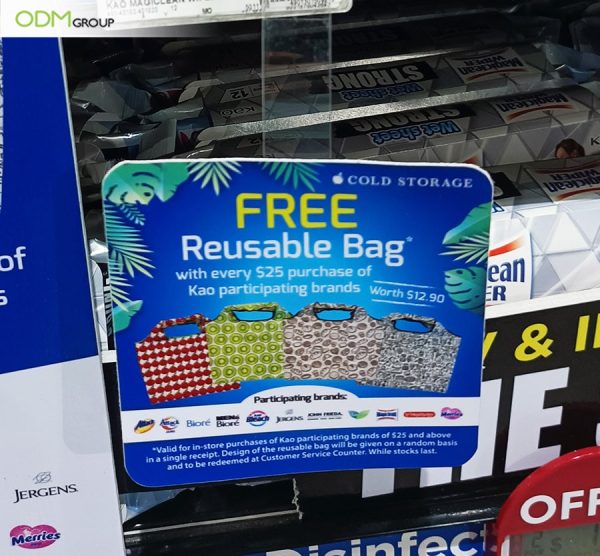
This works well for FMCG, beverage, beauty, snacks, QSR, and convenience retail campaigns. It can help increase product trial, encourage multi-buy behavior, or make a campaign set feel more complete.
2. Minimum Spend Reward
A retailer can offer a reusable bag when customers reach a certain basket value.
This is useful for grocery and convenience stores because it encourages customers to add more items to their baskets. It also gives shoppers a practical reward that feels connected to the shopping occasion.
3. Selected-Item Promotion
Brands can collaborate with retailers to offer a bag with purchases of participating products. This is a strong mechanic for multi-brand promotions, seasonal campaigns, and category pushes. It gives shoppers a clear reason to choose selected SKUs.
4. Co-Branded Campaign
Two brands can share the same promotional item when they are part of the same consumption occasion.
Pepsi and KFC are a good example because the food and beverage pairing feels natural. This approach can also work for coffee and snacks, beer and food, beauty and travel, or grocery and household products.
5. Limited-Edition Collectible Bag
A reusable bag can become more desirable when the design is limited, seasonal, or collectible.
This can work well for holidays, anniversaries, store openings, sports events, movie collaborations, and local community campaigns. The goal is to make the bag feel less like a free item and more like something customers want to own.
6. Return-Visit Incentive
Brands and retailers can also use reusable bags to encourage repeat visits.
For example, customers who bring the bag back could receive a small discount, loyalty stamp, or exclusive offer. This connects the promotional item to long-term behavior instead of a one-time transaction.
Design Decisions That Affect Reuse
A bag promotion only works if customers actually reuse the item. That depends on design, material, strength, and perceived value.
1. Size and Shape
The bag should fit the campaign. A QSR promotion may need a wider base for food packaging. A grocery campaign may need stronger handles and more capacity. A beauty campaign may need a more premium shape and finish.
Choosing the wrong size can make the item less useful, even if the artwork looks attractive.
2. Material
Common options include non-woven PP, RPET, cotton, canvas, laminated woven material, kraft paper with handles, and foldable polyester.
Each material has trade-offs. Some are more cost-effective. Some feel more premium. Some are better for heavier products. Some are easier to fold and carry.
The best choice depends on the expected use, campaign budget, quantity, print design, and retail environment.
3. Handle Strength
Handles are often overlooked, but they affect the customer experience. If the bag feels uncomfortable or weak, customers may not reuse it.
For grocery, beverage, and household campaigns, reinforced handles are important. For premium campaigns, the handle style can also influence perceived value.
4. Artwork
Customers are more likely to reuse a bag if the design feels natural in public.
Large logos can work for strong brands, but artwork should still feel balanced. Patterns, illustrations, campaign mascots, seasonal graphics, local references, and limited-edition visuals can make the design more attractive.
A good question to ask is simple: Would a customer willingly carry this outside the store?
5. Durability
A reusable bag should not feel disposable. Poor stitching, weak seams, thin material, or low-quality printing can reduce reuse and damage the campaign’s impression.
Durability is not only a production issue. It is a brand issue.
Common Mistakes to Avoid
Many bag campaigns fail because the item is treated as a low-cost add-on instead of part of the retail strategy.
-
Making the Bag Too Generic
A plain logo bag may be easy to produce, but it may not feel special. If the goal is customer reuse, the design needs enough appeal to stand out.
-
Choosing Price Over Purpose
The cheapest option may not support the campaign properly. If the bag is too small, too weak, or unattractive, it may not create long-term value.
-
Overloading the Design
A reusable bag does not need to carry every message. Too many logos, claims, icons, and slogans can make the design look crowded. Clear artwork often performs better.
-
Making Sustainability Claims Too Broad
Reusable bags can support sustainability campaigns, but brands should avoid vague or exaggerated claims. The focus should be on practical reuse, responsible material choices, and customer behavior.
-
Forgetting Retail Execution
A strong idea can still fail if store teams do not know how to present it. Campaign rules, display materials, stock allocation, and timing need to be planned carefully.
How ODM Helps Brands Build Better Bag Campaigns
ODM helps brands turn reusable bag ideas into campaign-ready promotional solutions.
This means looking beyond the product itself. The goal is to help brands develop a bag that fits the campaign objective, retail channel, customer behavior, budget, and timeline.
ODM can support brands with sketch design, prototyping, factory selection, packaging design, POS display ideas, quality control, and logistics coordination.
Through ODM’s in-house design team, Mindsparkz, brands can also explore creative directions before production. This helps marketing and procurement teams visualize the campaign, refine the design, and align the item with the wider brand activation.
Final Thoughts
Custom reusable bags can be a practical way to increase perceived value, support basket building, and keep a brand visible beyond the store.
The Pepsi x KFC campaign shows how a branded bag can strengthen a co-branded meal offer. Alfamart’s free eco bag promotion shows how the same idea can support everyday shopping behavior, selected-item purchases, and convenience retail campaigns.
Both examples prove the same point: reusable bags work best when they are connected to a clear shopper action.
For brands, the opportunity is not just to give away a bag. The opportunity is to build a campaign around usefulness, timing, design, and retail behavior.
ODM works with brands to develop bag campaigns that are practical, creative, and ready for real retail execution. If your team is planning a gift-with-purchase campaign, co-branded activation, convenience-store promotion, grocery campaign, or seasonal retail launch, ODM can help develop the right solution from concept through delivery.
More Promotional Product Ideas


FAQs about Custom Reusable Bags
What makes custom reusable bags effective for promotions?
Custom reusable bags are effective when they are useful, well-designed, and connected to a clear campaign mechanic. The bag should support a shopper action, such as buying a bundle, reaching a minimum spend, choosing selected products, or joining a seasonal promotion.
Which brands can use reusable bag campaigns?
Reusable bag campaigns work well for food and beverage brands, QSR chains, grocery retailers, convenience stores, FMCG brands, beauty companies, wellness brands, events, and trade marketing campaigns.
How can brands make reusable bags more desirable?
Brands can make reusable bags more desirable through better artwork, stronger materials, limited-edition designs, useful sizing, comfortable handles, foldable formats, and campaign-specific graphics. The bag should feel like something customers want to reuse, not just a free item.
Are reusable bags good for sustainability campaigns?
Yes, reusable bags can support sustainability campaigns when the focus is on practical reuse and responsible design. Brands should avoid overclaiming and instead highlight durability, repeat use, and thoughtful material choices.
What to Read Next?
How to Step Up Your Marketing Game with Promotional Sling Bag?
There are a lot of types of bags in [...]
How Corona Custom Brewery Merchandise Sell #LaVidaMasFina?
How can you charm consumers to buy more of [...]
6 Reasons A Free Bag With Purchase Works in Drinks Marketing
While novelty is certainly a needed touch to promotions [...]
4 Ways Eco-Friendly Merchandise Bags Enhance Alcohol Marketing
Wine is one of the most loved alcoholic beverages [...]

Beer Promotional Ideas for the Perfect Weekend Staycation!
Once again, Heineken is grabbing shoppers' attention with the perfect [...]

5 Benefits of a Giveaway Promotional Tote Bag
We recently spotted this interesting Unilever's promotion in Walmart stores. [...]