
Struggling to make your brand stand out in a crowded event or retail space? Unlike ordinary signage, split-flap displays use changing messages and distinctive mechanical lettering to capture attention and give people a reason to stop and look. From event announcements and live results to café menus and product promotions, they offer a creative way to share information while making your brand more memorable.
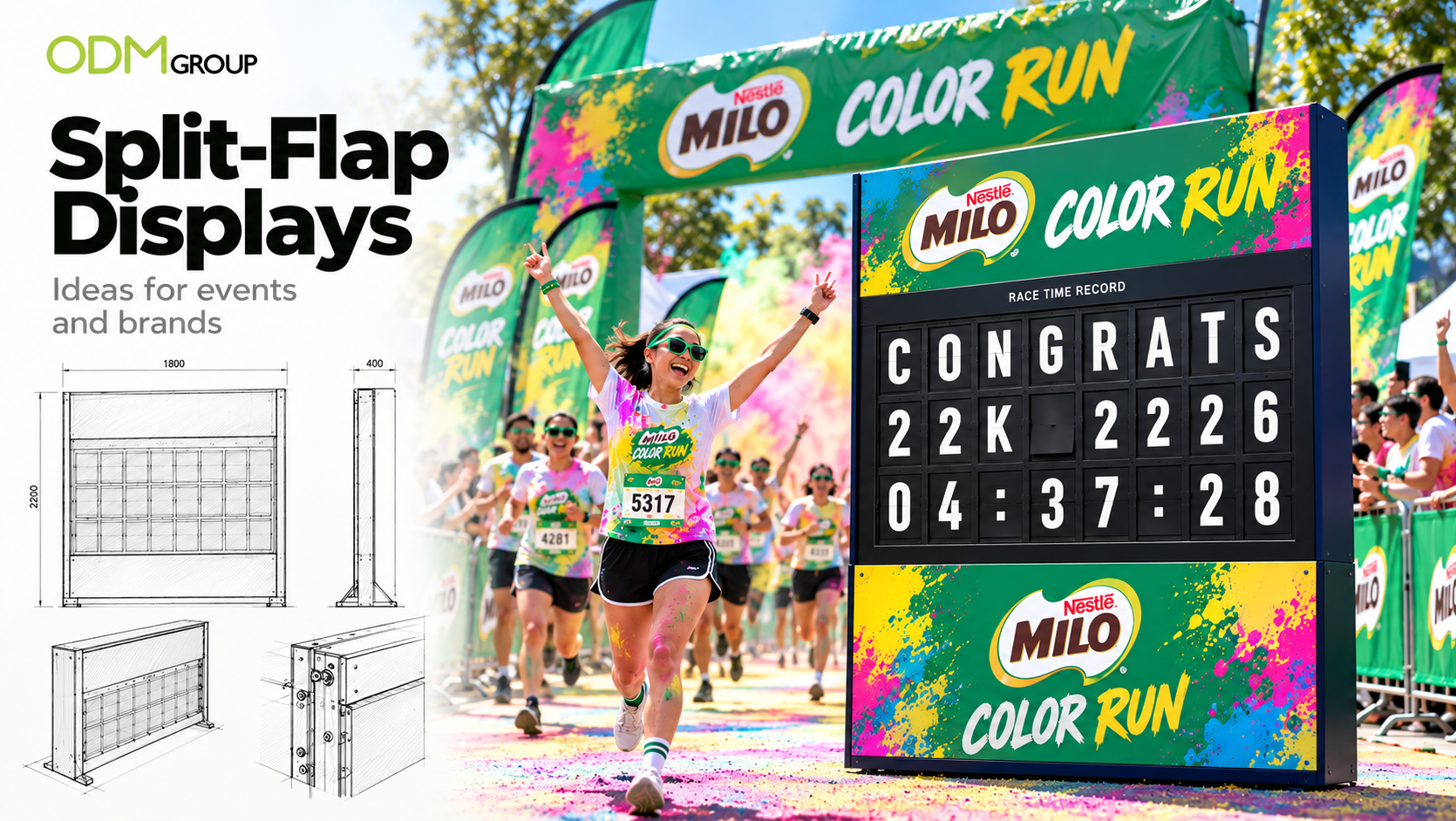
What Is a Split-Flap Display?
A split-flap display uses small mechanical panels, or flaps, that rotate to form letters, numbers and selected symbols. As the message changes, the flaps move into position, creating the familiar flipping effect associated with traditional departure boards.
Modern systems can be configured for different layouts, dimensions, colors and content. Depending on the system, they may display information such as schedules, prices, short messages, results or promotional copy.
The visual character is what makes the format interesting for brand teams. Unlike a standard printed sign, a split-flap display changes in a way people can see and hear. It can serve a practical purpose while also acting as a feature within the space.
1. Airports and Transport Hubs: Make Information Part of the Experience
Split-flap displays have a strong visual connection with travel because of their history as departure and arrival boards. That makes them a compelling concept for airports, railway stations, hotels and travel-themed commercial spaces.
A transport operator could use the format for selected departures, destination names, or visitor information, subject to operational and accessibility requirements. A brand activation could use a destination-inspired display to introduce a campaign, reveal a new product or invite visitors to explore a collection of locations.
The opportunity also extends to businesses located inside transport hubs. An airport café or restaurant could use a split-flap menu board, while a travel retailer could display messages such as “Last Call for Gifts” or “Your Journey Starts Here.”
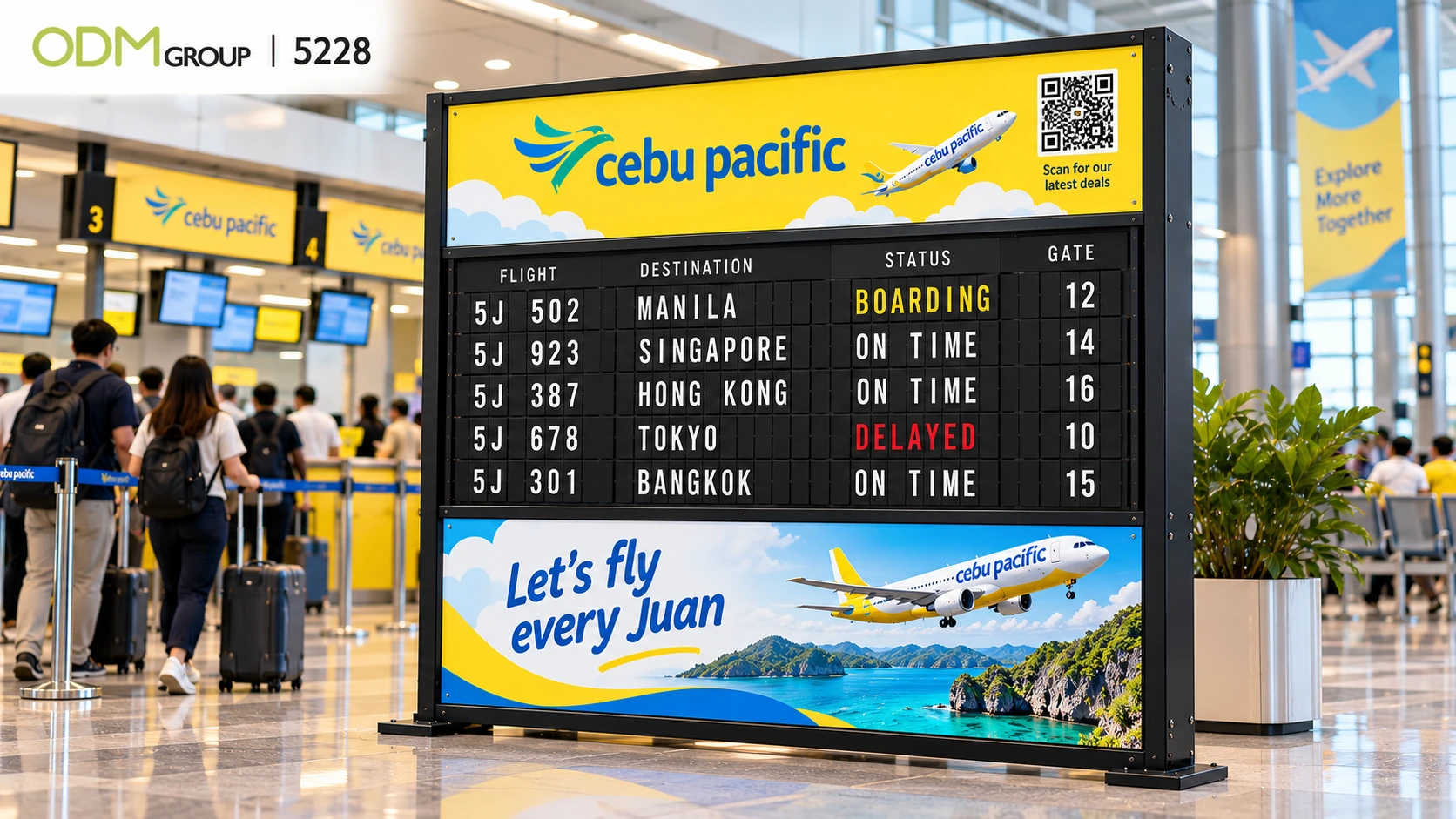
Brand idea: For a travel campaign, build a destination board that reveals a new place or offer at intervals. Use colors, typography, and surrounding graphics that connect the installation to the campaign identity.
Planning considerations: For live travel information, accuracy, update speed, legibility, and integration with the relevant information system are essential. For promotional use, the display should be clearly distinguished from official operational signage.
2. Sports Events: Turn Results Into a Spectacle
Sports events are a natural fit for split-flap display concepts because spectators already look for scores, timings, rankings and milestones.
Imagine a split-flap board at the finish line of a running event. It could display a runner’s finishing time, a race countdown, a category winner, or a short message celebrating participants. At a tournament or fan zone, the display could show match schedules, team names, or a changing event message.
The visual treatment can be designed around the event identity. A large overhead installation could become a focal point in an arena, while a smaller freestanding display could work at a registration desk, sponsor activation, or finish-line photo area.
Brand idea: Create a “Your Moment” display where finishers’ names or times appear alongside event messaging. Pair it with a branded photo wall, medal presentation, or social-sharing area to make the result part of the participant experience.
Planning considerations: Confirm what information the display needs to show, how frequently it must update, whether results need to connect to timing software, and how visible it must be from the audience area. These technical requirements should be checked with the display specialist before the concept is finalized.
3. Cafés and Restaurants: Give the Menu a Personality
A split-flap display can make a café menu feel like part of the interior design rather than a sign mounted above the counter.
A coffee shop could use it to present featured drinks, seasonal specials, prices, or a short message that changes throughout the day. A bakery might highlight the morning selection, while a restaurant or bar could use a compact display for daily recommendations.
The design does not have to look industrial. A black display can suit a contemporary interior, while a coloured housing or wood-tone finish may work better in a warm, natural space. The key is to plan the display as part of the setting, considering its proportions, mounting position and relationship with lighting, furniture and the counter.
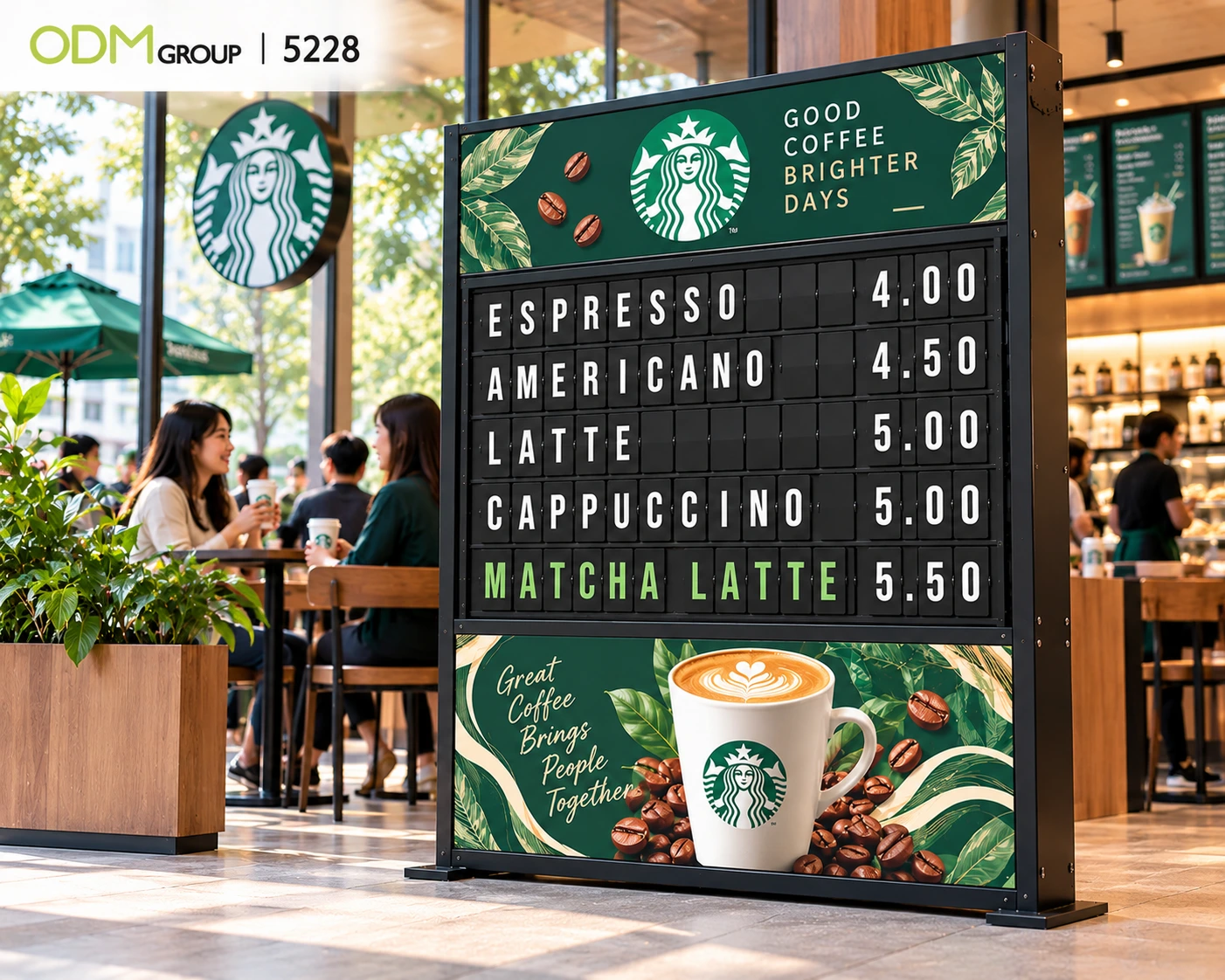
Brand idea: Build a rotating “Today’s Pick” feature around one signature drink. Pair the display with a small product photograph, matching cup design or branded takeaway packaging so the message connects with the rest of the customer journey.
Planning considerations: Menus change frequently, so the business should confirm how messages are updated, how prices are checked, and whether the available character set supports the required menu content. A split-flap display may work best for short messages rather than a long, detailed menu.
4. Retail and Brand Activations: Create a Reason to Look Again
Retail spaces compete for attention. A split-flap display can give a store window, product launch or branded installation a focal point that feels different from static signage.
A fashion retailer might use one to reveal a collection name or a changing campaign message. A sportswear activation could display a countdown to a launch, while a pop-up shop could use it to announce limited releases or guide visitors through a product story.
The display can also form part of a larger experience. Consider a branded wall with a central split-flap message, product stands nearby, and a dedicated photo area. The board becomes one component of the activation rather than an isolated piece of equipment.
Brand idea: Design a “Reveal Wall” for a product launch. The display begins with a short teaser and changes to the product name or campaign message at a scheduled moment. Surrounding graphics, lighting, and merchandise can carry the rest of the story.
Planning considerations: Establish the objective first. Is the display meant to attract footfall, explain a product, support a launch or encourage social sharing? The message, placement, and surrounding experience should all support that goal.
5. Cinemas, Theatres and Entertainment: Build Anticipation
Entertainment venues depend on atmosphere. A display can do more than tell visitors what is showing; it can help establish the mood before they enter the auditorium.
A cinema-inspired installation could display showtimes, auditorium numbers or a “Now Showing” message. A theatre could use a compact board to reveal the title of a production, a countdown to curtain-up or a line of promotional copy. At a festival or exhibition, a split-flap display could direct visitors to the next activity or highlight a scheduled performance.
Its mechanical movement offers a different experience from a conventional digital poster. That can be especially useful in a venue where the design aims to feel nostalgic, theatrical, or deliberately tactile.
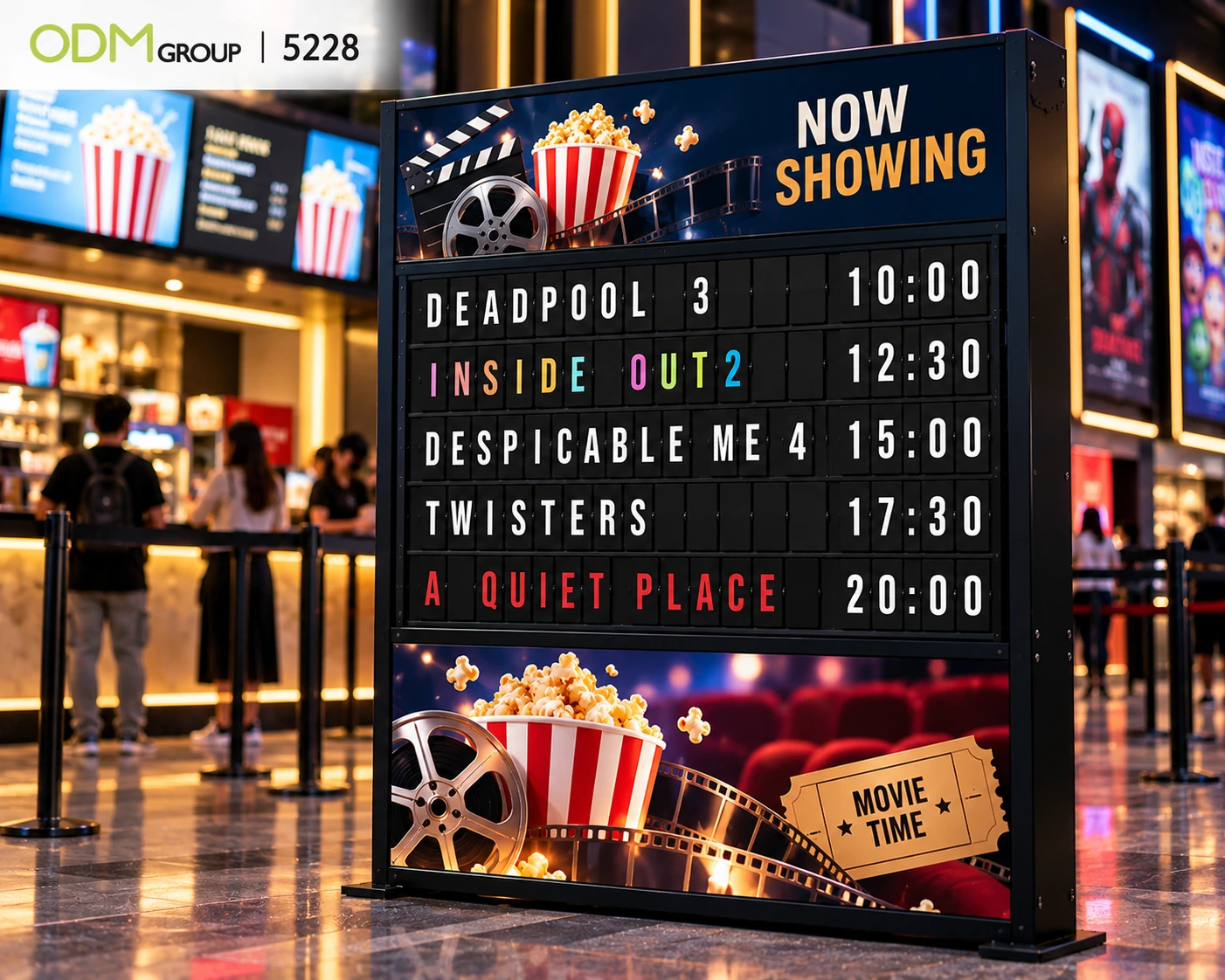
Brand idea: Create a “Coming Soon” display in the lobby and change the message as a release date approaches. For a theatre production, use a short line from the show’s approved campaign rather than trying to fit the full promotional artwork onto the board.
Planning considerations: Confirm the viewing distance, ambient lighting, message length, and update process. If film titles, entertainment artwork or logos are used, ensure the relevant permissions are in place.
6. Exhibitions, Museums and Corporate Spaces: Make Information Interactive
Split-flap displays can also support exhibitions, visitor attractions, museums, offices and experience centers.
A museum could use a display to reveal a date, location or short historical fact. An exhibition stand might show a product category, demonstration schedule or changing message. A corporate reception could use it to welcome visitors, highlight an event or introduce a company’s values.
For these settings, the content and design need to match the audience. A museum installation may prioritize clarity and historical context, while an exhibition stand may need a bolder message that can be understood at a glance.
Brand idea: Create a “Discover” display for an exhibition, where each message introduces a product feature, milestone, or question. The display can lead visitors toward a physical demonstration, information panel, or conversation with the team.
What Should Businesses Consider Before Developing a Split-Flap Display?
The most effective concepts start with the intended experience, not the hardware. Before developing a design, businesses should answer a few practical questions.
What job must the display do? A live scoreboard, café menu, and retail campaign have different content and update requirements. Define the primary use before choosing the format.
Where will people see it? Viewing distance, available wall space, mounting height, lighting and foot traffic affect the display’s size and placement.
What should it look and sound like? Consider the housing, flap colors, typography, layout, and relationship with the surrounding interior. The mechanical sound may be part of the appeal, but it should also suit the environment.
How will the content change? Confirm whether messages are updated manually, through software, or by integration with another system. Live results and operational information require additional technical planning.
What needs to be tested? Depending on the project, the team may need to review readability, content limits, update behavior, mounting, power requirements, durability, and integration. Requirements should be confirmed with the specialist responsible for the display system.
What is the wider brand experience? Think about the signs, packaging, merchandise, photography area, and visitor journey around the display. A strong idea connects the individual element to the campaign as a whole.
Relevant Ideas
Advertising backpack banners are basically flag banners attached to a backpack. The parts of the banner can be disassembled easily and stored in the bag itself.
Street pole banners are a form of outdoor advertising typically hung from street signs, poles, and light posts in a way that allows them to be seen from a distance.
Custom banner stands are a one-time investment with no limits or restrictions compared to other forms such as newspaper ads, billboards, etc that will be gone in a matter of days.
The LED screen backpack solves this visibility dilemma by turning dynamic digital media into mobile apparel. Built with weather-resistant Oxford/TPU fabric and protective screen covers to shield internal circuitry and contents during outdoor deployment.
How ODM Group Can Help Turn the Idea Into a Brand Experience
A distinctive display starts with a clear concept. Next, decide how it fits the campaign, how people will interact with it, and what supporting elements will make the experience feel complete.
ODM Group is a product development and merchandise agency. We help businesses explore ideas and move suitable concepts through design, prototyping, factory communication, quality assurance, packaging and delivery.
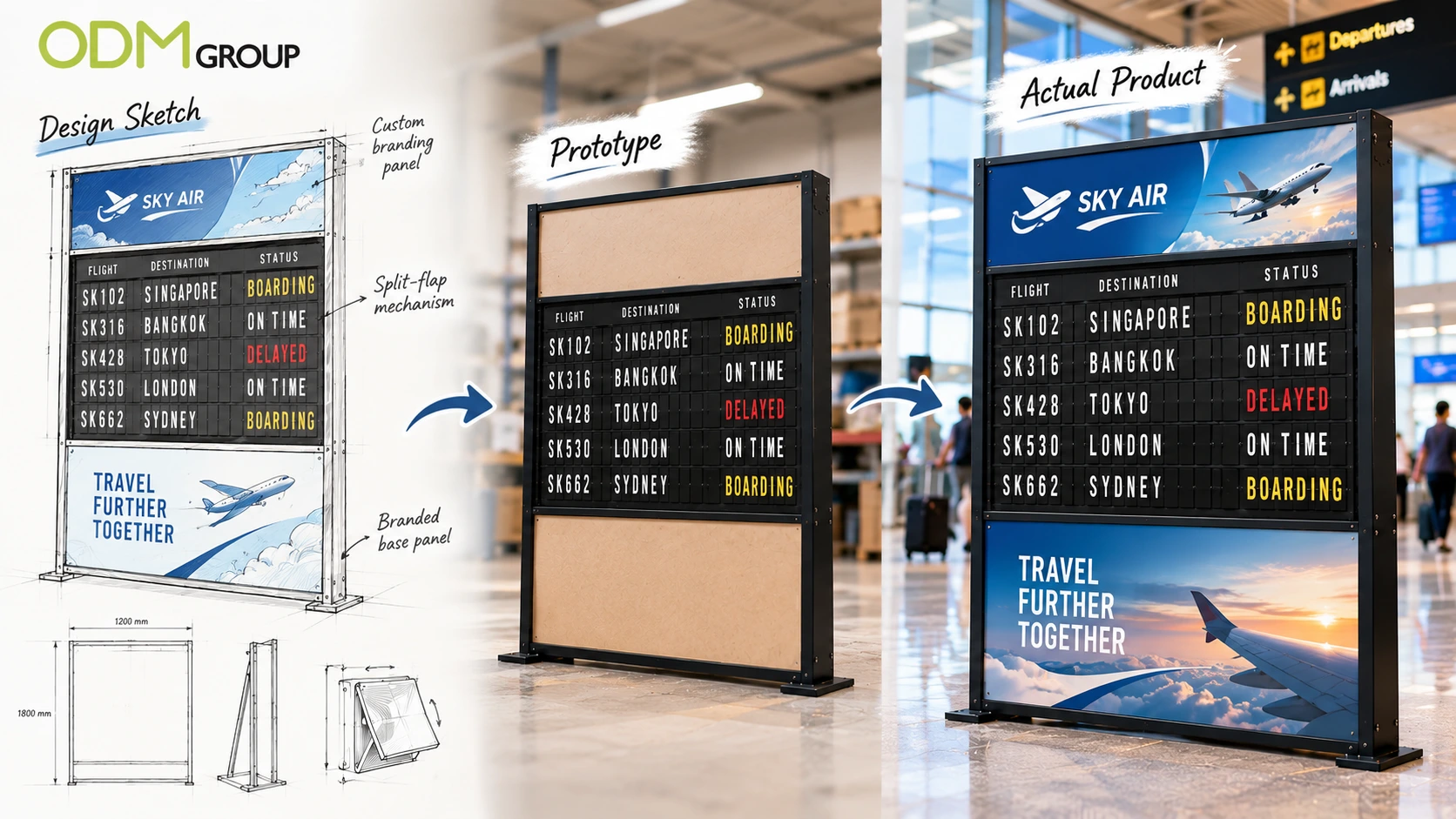
For a split-flap display project, ODM can help with:
- Concept development: Define the display’s purpose, audience, setting, and message.
- Design sketches and visualization: Explore the overall shape, layout, branding, color palette, and how the display could fit into the environment.
- Prototype coordination: Help communicate the concept and requirements to suitable specialists and review the proposed solution.
- Factory communication: Coordinate project details, specifications, samples and feedback with the relevant manufacturing partners.
- Quality assurance: Help establish appropriate checks against the agreed project requirements.
- Supporting merchandise and display elements: Explore complementary signage, branded items, packaging or activation components that make the overall campaign more cohesive.
- Delivery coordination: Help manage the project requirements through to delivery, depending on the agreed scope.
Important clarification: ODM is presenting split-flap displays here as a brand-experience idea. ODM does not claim to have produced the displays shown in the illustrative concepts or to manufacture split-flap display systems itself. Any specialist hardware, software, integration, and installation requirements would need to be assessed with the appropriate supplier.
From Sketch to a Finished Concept
A useful starting point is a visual brief that shows how the display could look in its intended environment.
For example, a sports event brief might include the event setting, a proposed scoreboard layout, the messages to be shown, the event’s visual identity and how the display would sit alongside the finish line or sponsor area. A café brief might focus on menu content, interior finishes, mounting and how the board supports the customer experience.
The concept can then be reviewed against the practical requirements before a business commits to a production route. This process helps teams identify what needs to be specified, which details require specialist input and how the display fits the wider project.
Have an Idea for Your Next Brand Experience?
The strongest brand experiences give people something to notice, interact with and remember. A split-flap display can provide that focal point, whether it is revealing a race result, highlighting a signature drink, building anticipation before a show, or introducing a new product.
The opportunity is not simply to install a display. It is to decide what the display should mean to the audience and how it can support the wider campaign.
Have a brand activation, retail concept or event in mind? Share your objective, target audience, venue, preferred visual style, project timeline, and budget range with ODM Group. We can help explore the concept, develop the visual direction, and assess the product-development and coordination requirements for bringing the wider brand experience to life.
Use code ODM-5228 to get a detailed quote.
More Ideas to Consider


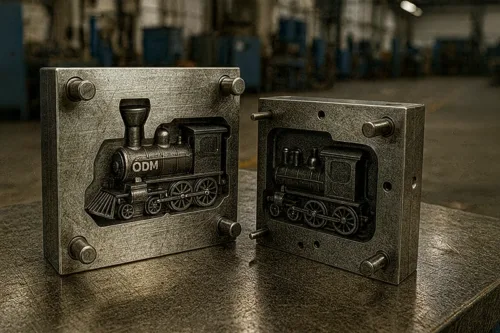
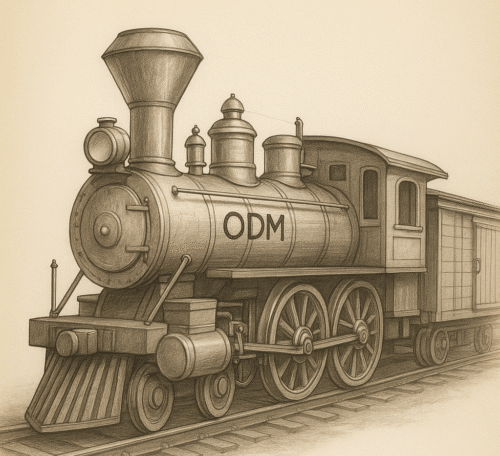
FAQs about Split Flap Displays
What is a split-flap display used for?
Split-flap displays can show schedules, prices, scores, short messages and promotional information. Businesses may use them in airports, transport hubs, cafés, restaurants, sports venues, cinemas, retail stores, exhibitions and other commercial interiors.
Are split-flap displays suitable for brand activations?
They can be a useful feature for product launches, pop-up stores, event signage and interactive brand environments. Their effectiveness depends on the campaign objective, message, placement and wider experience.
Can split-flap displays be customized for a brand?
Depending on the specialist system, customization may include the display dimensions, layout, housing color, flap content and selected graphic elements. The available options should be confirmed with the display supplier.
Does ODM Group manufacture split-flap displays?
This article presents split-flap displays as a creative product and brand-experience idea. ODM Group can help businesses develop concepts and coordinate suitable product-development requirements, but it does not claim to manufacture the display systems featured here.
Latest Blogs
Split-Flap Displays for Events, Retail and Brand Activations
Struggling to make your brand stand out in a crowded [...]
Beer Swag Ideas: Lessons from Heineken Silver’s Taiwan Campaign
Beer swag is evolving beyond traditional bottle openers and [...]

Car Tissue Holder: A Creative Automotive Promotional Gift
A car tissue holder can be more than a [...]

6 Tips for a Sustainable and Functional Promotional Travel Kit
A promotional travel kit combines practical travel essentials with [...]

Promotional Products for Pets: Ideas Inspired by SmartHeart Pet’s Homie
During a visit to Vietnam, the ODM team came [...]

15 Promotional Products for Universities to Celebrate World Students’ Day
Promotional products for universities work best when they support [...]
Related posts:
 Retail Hanging Displays in Vietnam See Marketing Take Flight
 Customized Flying Discs for Sports Events, Beach Days and Brand Activations
 Get Your Brand Noticed In Store With Creative Custom Retail POP Display!
 POP Retail Display by Nescafé Commands Attention
 Stand Out from Dull Retail Shelves with a Custom Electronic Display