
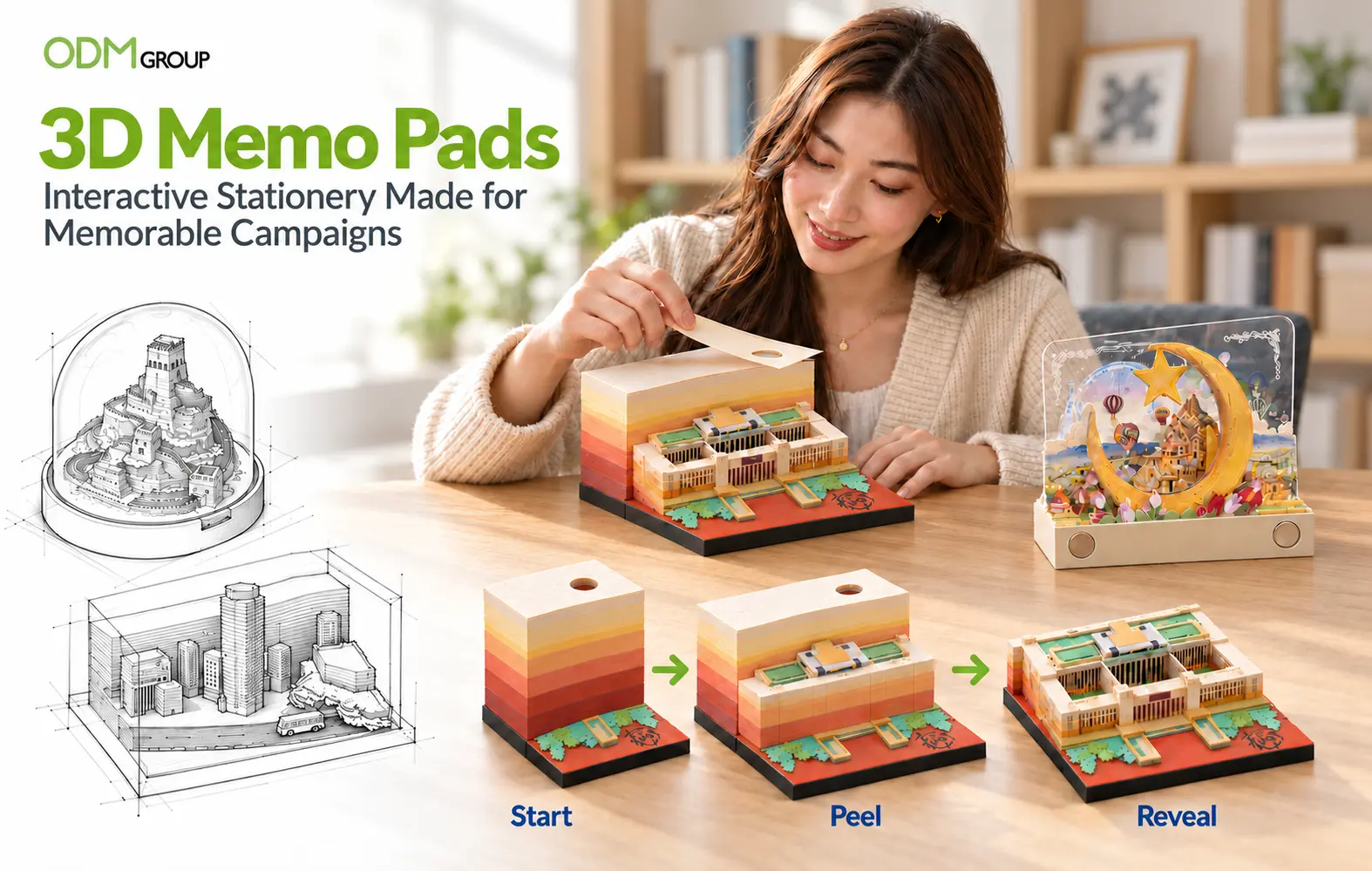
3D memo pads combine an everyday office product with an evolving visual experience. As users remove individual sheets, the pad gradually reveals a three-dimensional structure, layered scene, product shape, landmark, or branded design.
Unlike standard stationery that presents the same appearance throughout its use, a 3D memo pad changes over time. This transformation gives brands repeated opportunities to attract attention, encourage interaction, and remain visible on a customer’s desk.
How Do 3D Memo Pads Work?
Shaped paper layers create the three-dimensional design. As users remove the intended memo sheets, more of the structure is revealed. Depending on the construction, parts of the sculpture may already be visible before the pad is used.
The removable sheets and permanent sculptural sections serve different purposes. A sample should make that distinction clear so users can enjoy the reveal without damaging the final piece. The term “memo pad” does not confirm an adhesive backing; check the specification if sticky notes are required.
Why 3D Memo Pads Work in Promotional Campaigns
Promotional products are most effective when people choose to keep them nearby. Memo pads naturally support this objective because they have a clear purpose in offices, reception areas, classrooms, studios, and home workspaces.
The 3D format adds several marketing advantages.
1. A Product with an Interactive Reveal
Removing a sheet changes the appearance of the pad. That gives the product a sequence to demonstrate, making a short video or in-person display useful when introducing it to recipients or retail customers.
The reveal should be easy to understand. A brief instruction card can show where to begin and which parts are intended to remain.
2. A Connection to a Specific Place or Occasion
A building or scene can carry meaning without relying entirely on a printed slogan. A company headquarters might mark an anniversary; a landmark might connect a souvenir to a visit.
Choose a subject the audience will recognize. An elaborate model has limited campaign value if recipients cannot connect it to the organization or occasion.
3. They Make Brand Stories More Tangible
Three-dimensional paper engineering gives brands an opportunity to communicate more than a campaign slogan.
A hotel can recreate its property. A real estate company can feature a development. A food brand can produce a pad shaped like its signature product. A tourism authority can turn a local landmark into a miniature desk model.
The recipient does not simply receive a branded item. They gradually uncover a story connected to the organization.
4. They Feel More Collectible Than Standard Stationery
Traditional memo pads are useful but widely available. A sculptural pad has greater perceived value because of its detailed construction and unusual appearance.
Limited-edition colors, numbered collections, seasonal designs, and location-based series can strengthen the collectible appeal. This is particularly useful for loyalty campaigns, premium customer gifts, and event merchandise.
Businesses That Can Use 3D Memo Pads
The concept can be adapted to many industries because both the shape and printed artwork can be customized.
1. Property Developers and Real Estate Companies
A memo pad can recreate a residential tower, office building, shopping center, or planned community.
It may be given to property buyers, investors, business partners, or visitors attending a development launch. Each page can include project information, contact details, floor plan references, or QR codes leading to a virtual tour.
2. Hotels, Resorts, and Tourism Organizations
Hotels can transform their property, lobby, villa, or surrounding landscape into a miniature paper model.
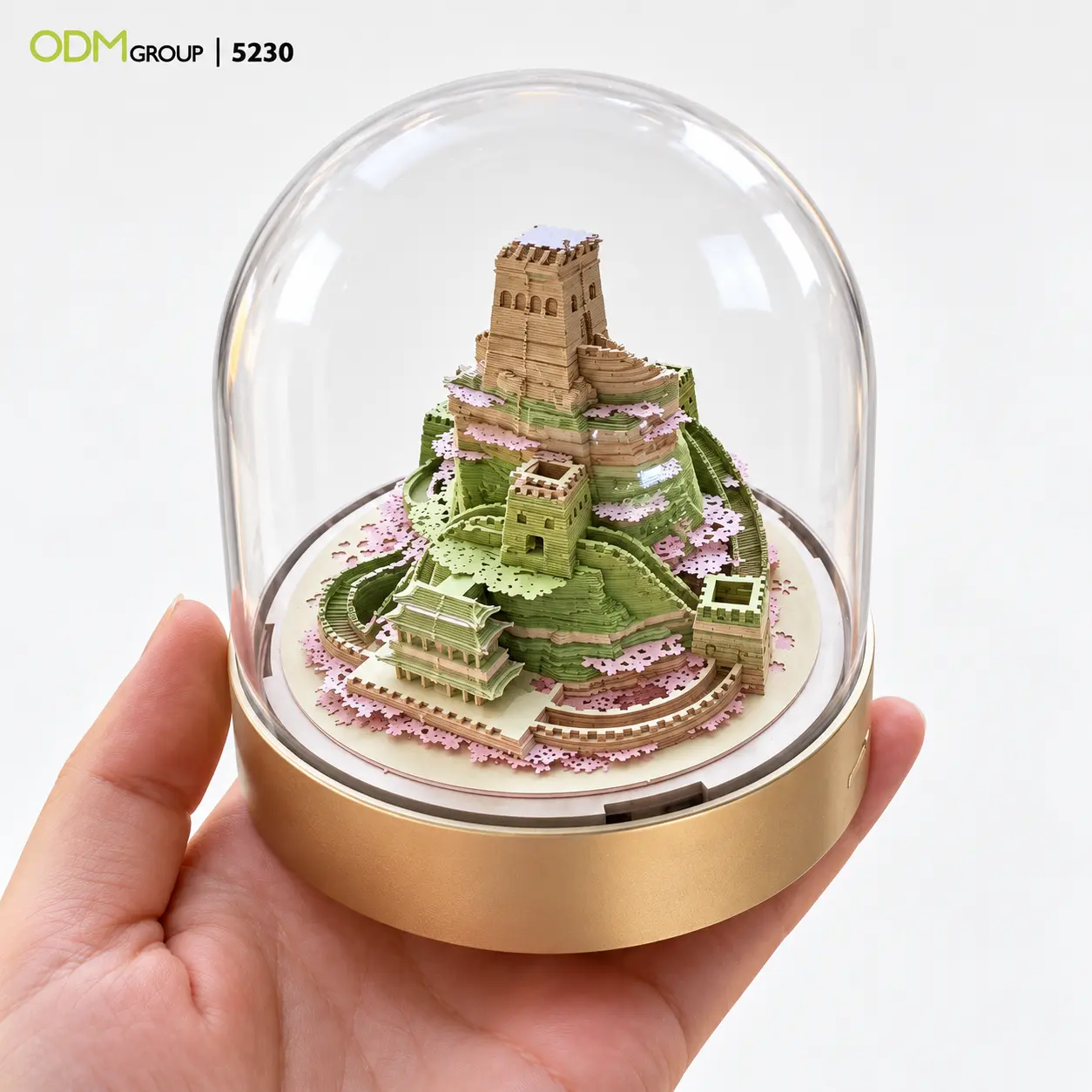
Tourism boards can create collections based on local monuments, museums, heritage buildings, transportation icons, or natural attractions. These can work as visitor gifts, retail souvenirs, travel trade merchandise, or promotional items for international tourism events.
3. Museums and Cultural Institutions
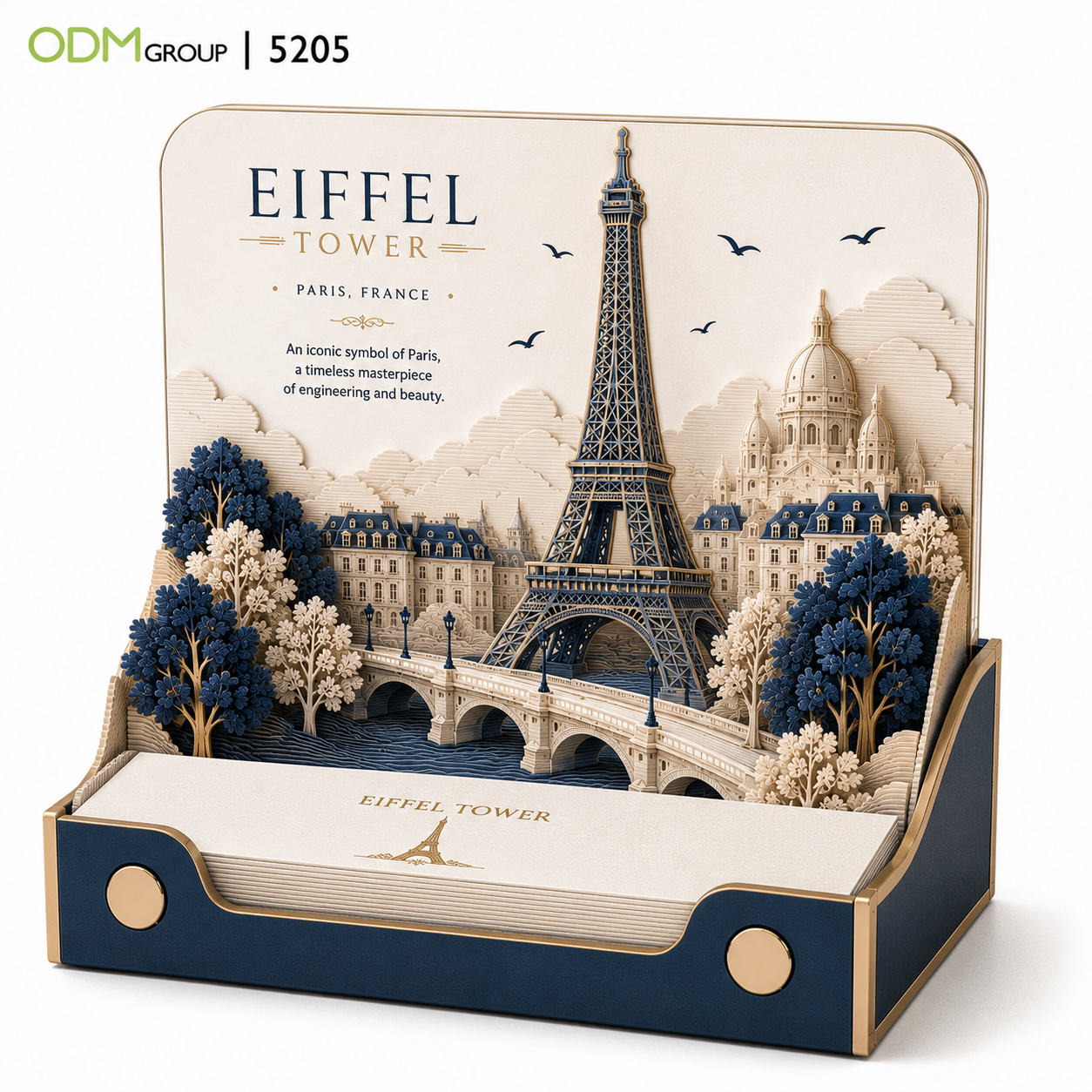
Detailed paper engineering is particularly suitable for architecture, historic objects, archaeological sites, and cultural exhibits.
A museum could develop memo pads based on its most recognizable artifact or building. The item could be sold in the gift shop or distributed to sponsors, members, educators, and event attendees.
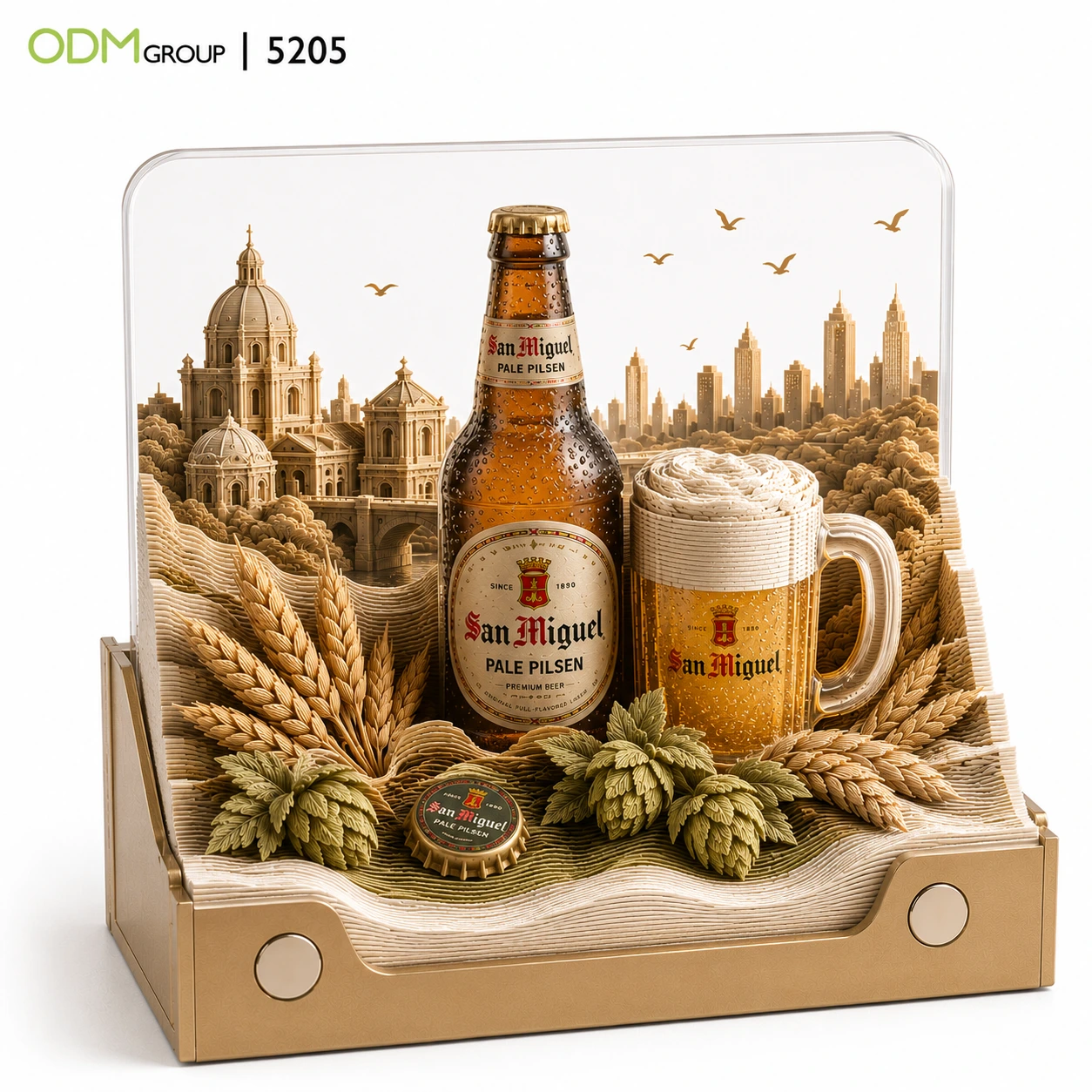
4. Food and Beverage Brands
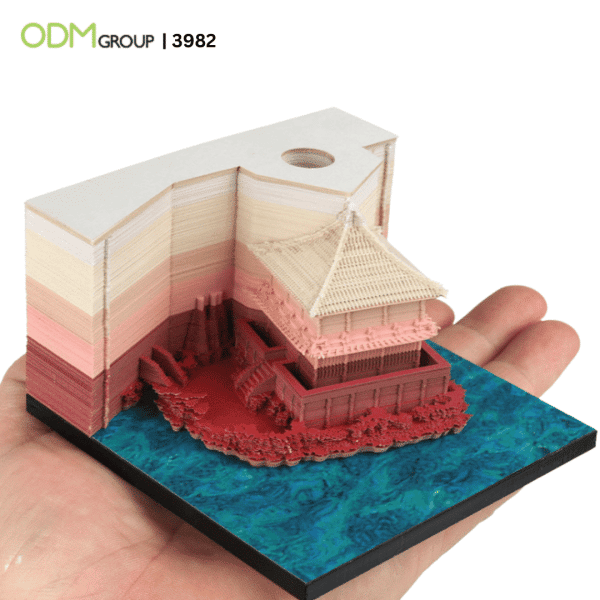
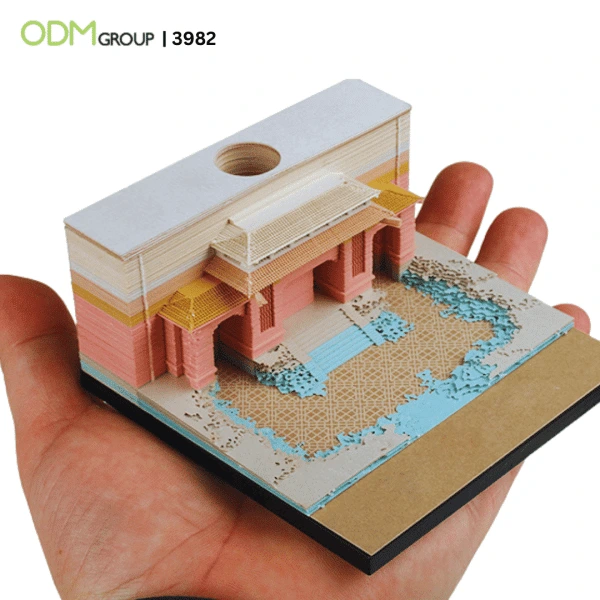
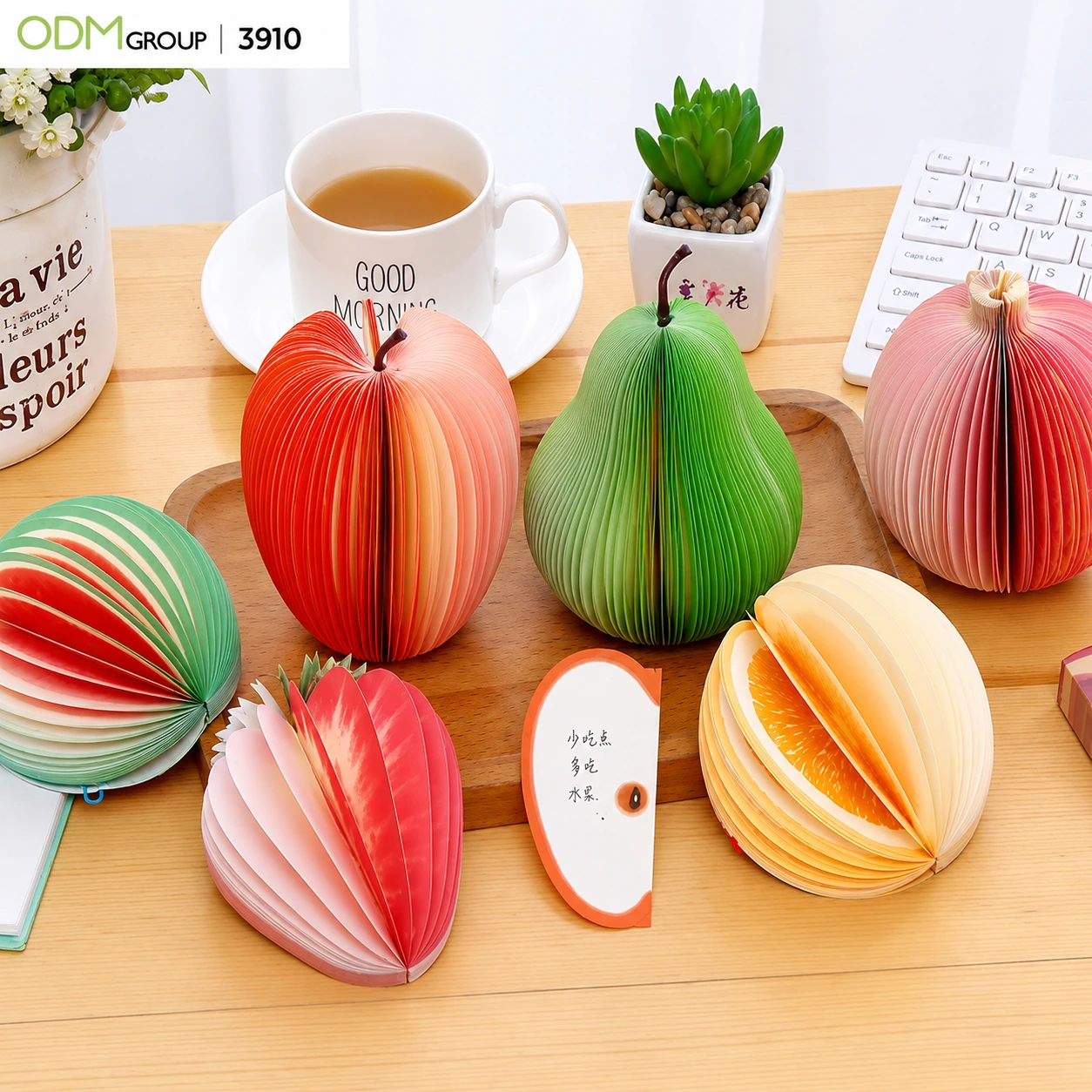
Fruit-shaped memo pads demonstrate how familiar products can inspire the form of the stationery itself.
Food and beverage companies could create pads shaped like a coffee cup, tea tin, chocolate bar, beverage bottle, fruit, cake, or product package. Each sheet may carry recipes, flavor notes, promotional codes, or small brand messages.
5. Automotive and Transportation Companies
A layered memo pad could depict a vehicle, train, aircraft, shipping vessel, charging station, or transport route.
These products may support vehicle launches, dealership events, passenger loyalty programs, corporate partnerships, and transport exhibitions.
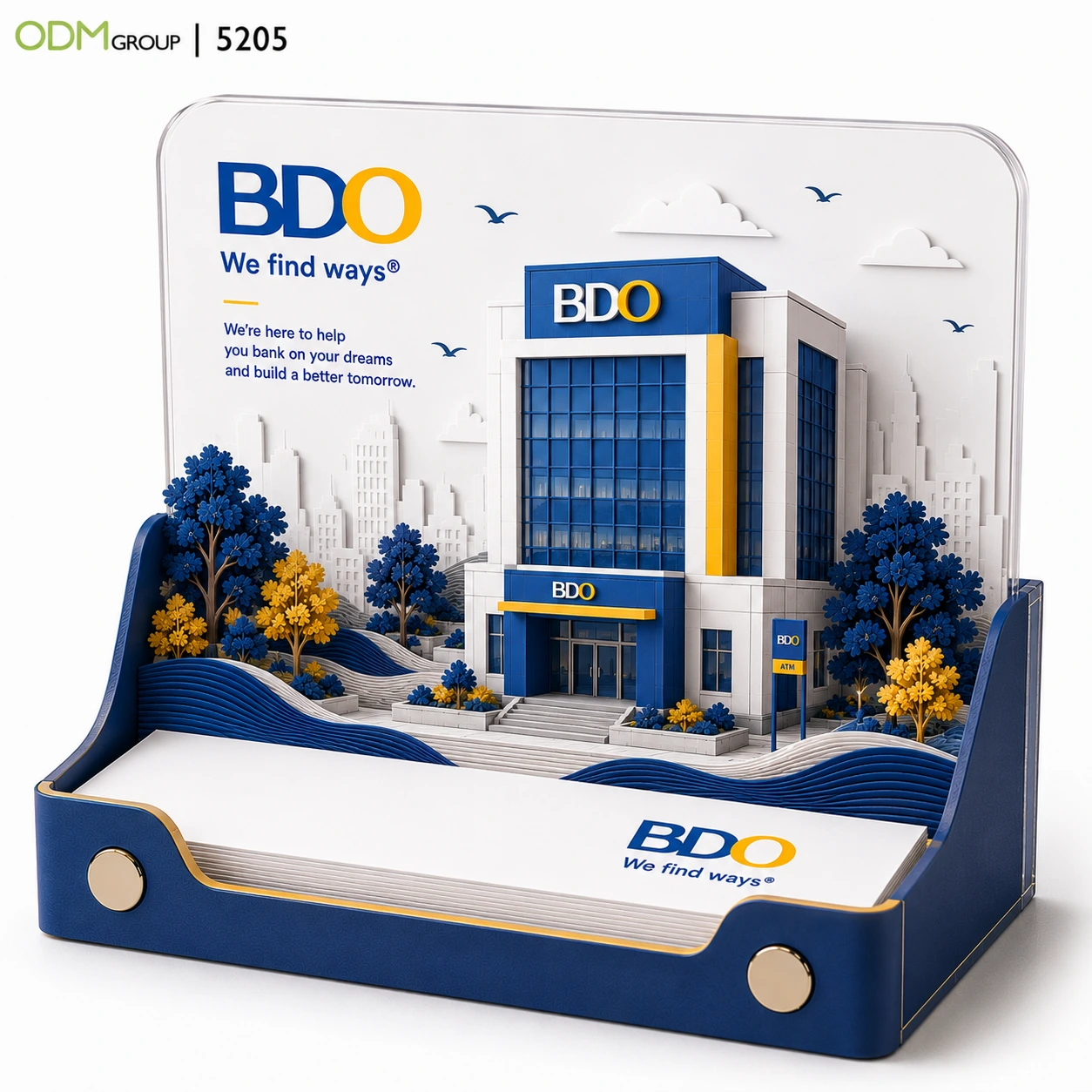
6. Financial and Professional Service Companies
Banks, insurance providers, consulting firms, and technology companies often require practical corporate gifts that can be used in professional environments.
A 3D memo pad can reflect the company headquarters, a symbolic growth concept, a city skyline, or an abstract representation of the service. Subtle branding can help the item remain suitable for executive desks.
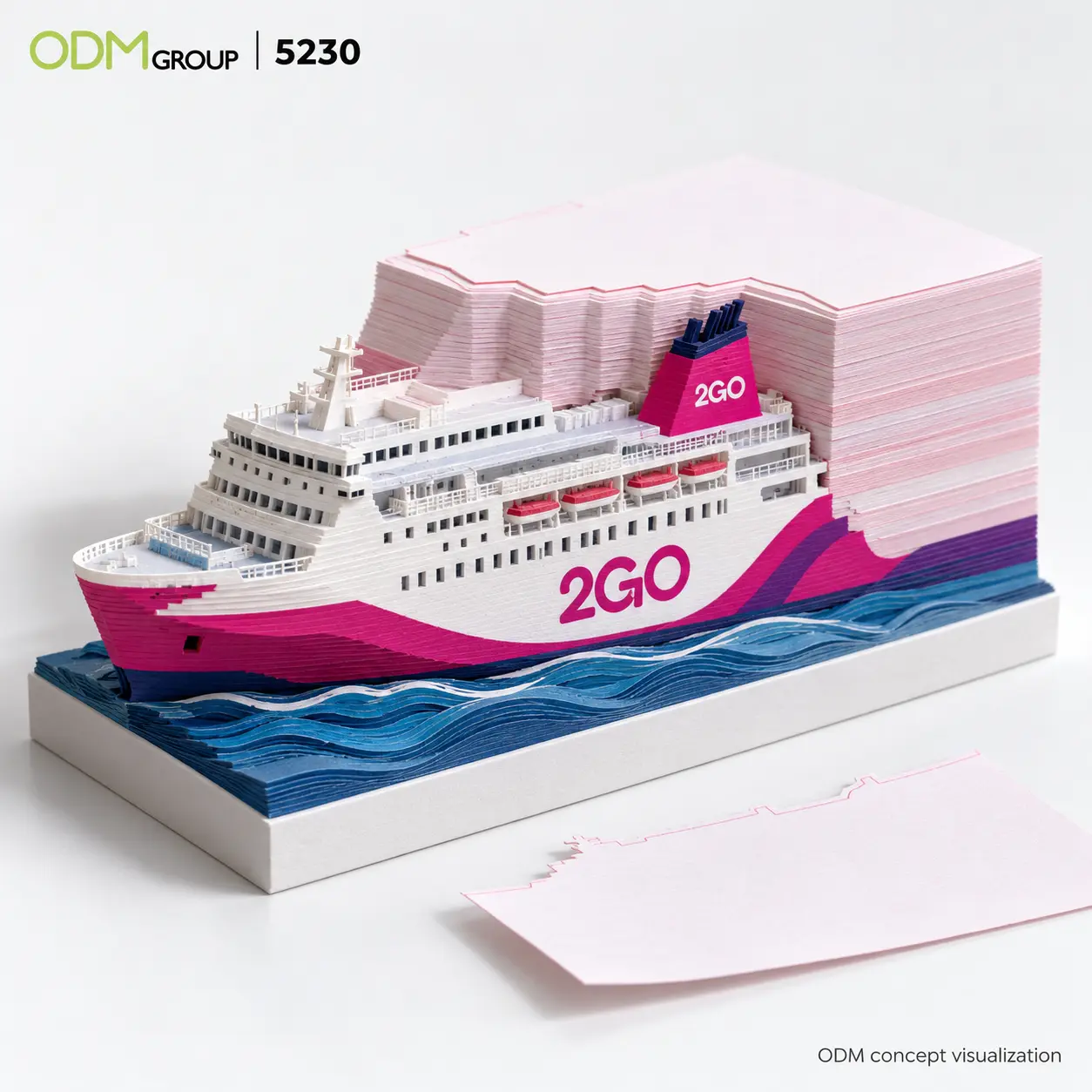
7. Shipping and Logistics Companies
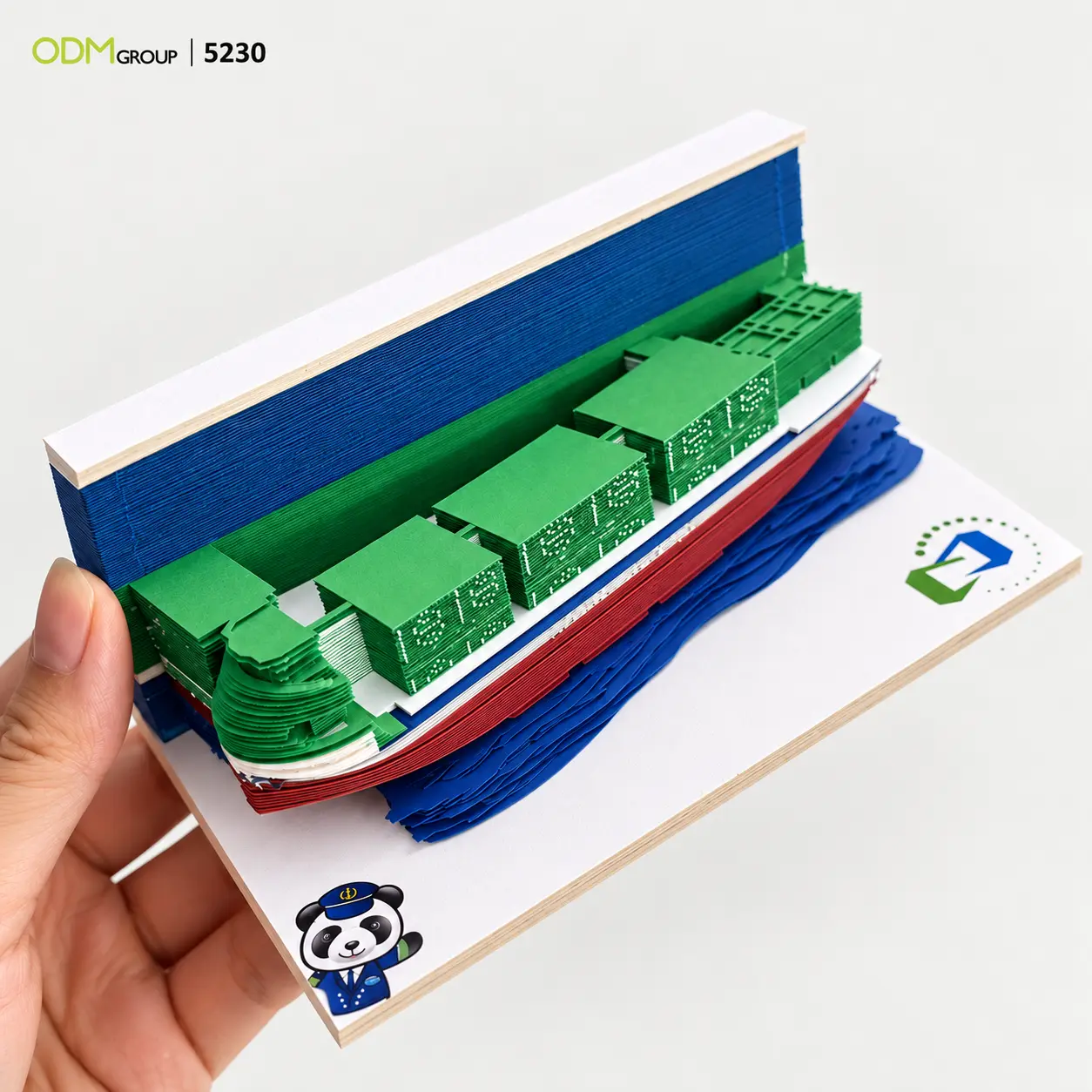
Shipping lines, freight forwarders, courier companies, and port operators could use 3D memo pads depicting a cargo ship, passenger ferry, container terminal, delivery truck, or warehouse.
Seasonal and Product-Inspired Design Ideas
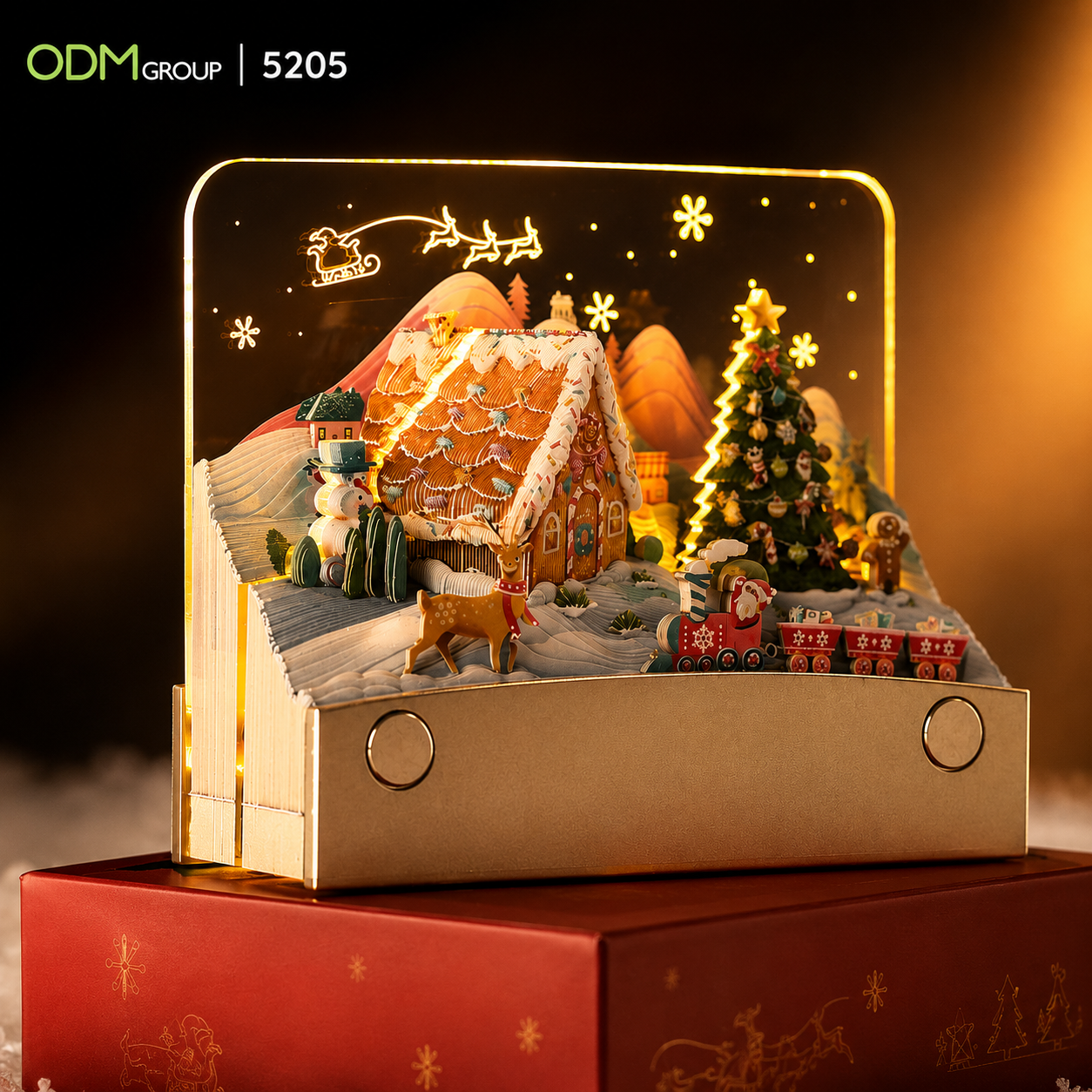
Architectural scenes are one direction. Brands could also explore a seasonal landscape, a recognizable product silhouette, or an approved character design, subject to development and any necessary permissions.
For teams comparing business partner gift ideas, a sculptural memo pad is worth considering when the brief calls for a distinctive desk gift with a meaningful subject. Review recipient gift policies and budget suitability before selecting it.
A Christmas campaign might use a winter setting around a company building, while a product launch could take inspiration from a distinctive packaging shape. Keep the idea simple enough to read clearly in layered paper.
How to Choose the Right Design and Branding
Review More Than the Finished Sculpture
Assess the pad before use, midway through the reveal, and in its intended final form. Check usable writing space, sheet removal, colour separation, and structural stability.
The product should work at each stage. Do not approve it solely because the final sculpture looks attractive in a photograph.
Keep Branding Visible After the Reveal
Branding on removable pages may disappear with use. Explore a logo on the base, case, sleeve, or presentation card so the brand connection can remain with the displayed piece.
Keep decoration proportionate to the subject. A small logo on a base may suit an architectural design better than artwork placed across delicate building details. Confirm print areas and methods during sampling.
Choose the Appropriate Level of Customization
An existing design with branded packaging and a fully bespoke sculpture involve different development work. Compare them against the campaign objective rather than assuming a custom shape is always necessary.
A bespoke design may be justified when the subject is central to the campaign. For a broader gifting program, a suitable existing structure with a well-developed presentation could be worth assessing.
Packaging, Sampling, and Production Checks
Packaging should protect the paper layers, explain the product, and present the finished design clearly. A display case may support that presentation, but its material, fit, and durability need confirmation.
Plan packaging design around the actual distribution route. A retail gift, a hand-delivered corporate item, and a mailed gift may need different protective arrangements.
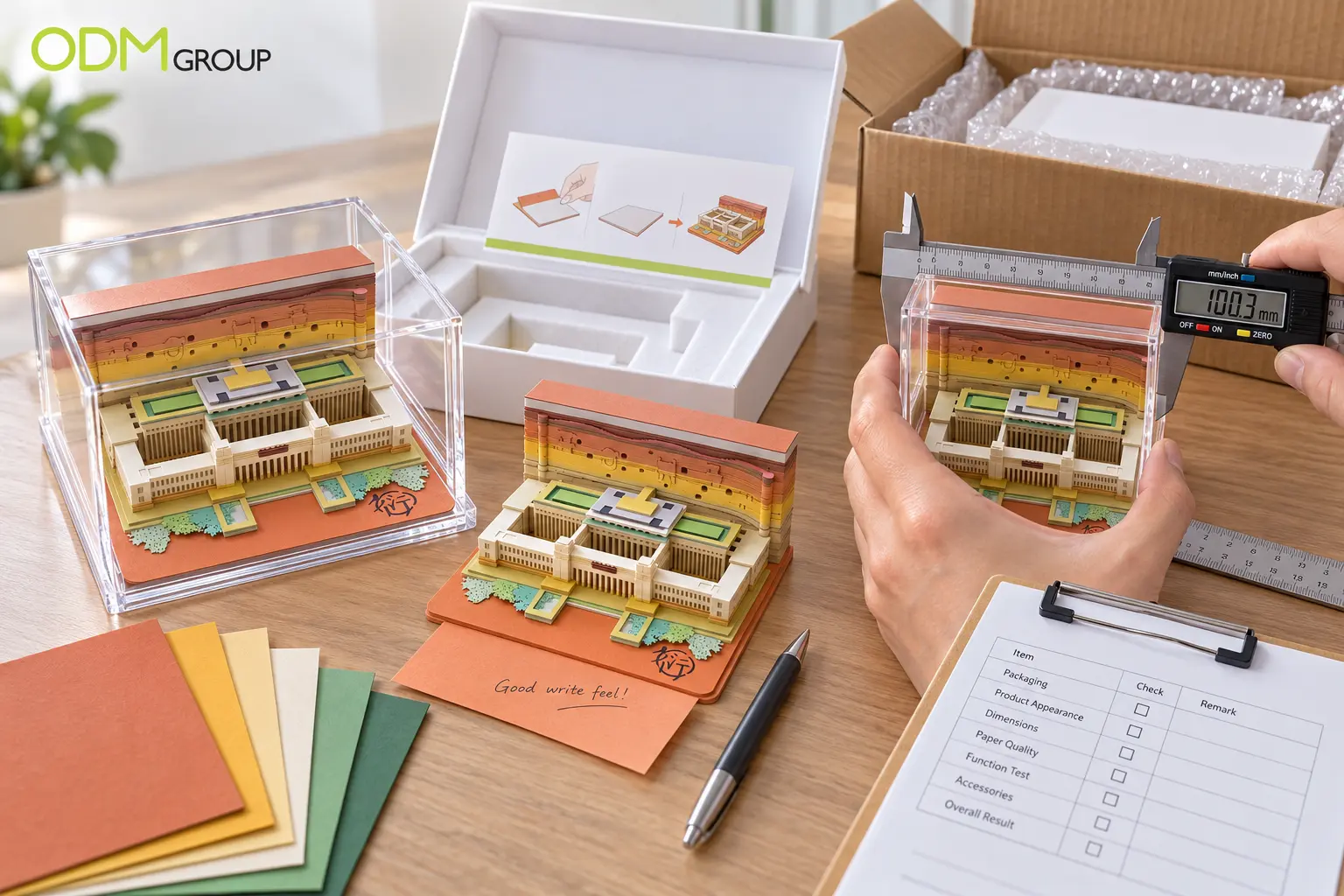
Before approving an order, confirm:
- Paper thickness, colour, sheet count, and writing performance.
- Cutting accuracy, layer alignment, and clean removal of intended sheets.
- Stability and protection of fine structural details.
- Branding position, print quality, and visibility after use.
- Packed dimensions, instructions, and protection during transit.
- Minimum order quantity, sampling costs, production schedule, and delivery arrangements.
Avoid assuming a paper-based product is automatically sustainable or recyclable. Adhesives, finishes, bases, and cases need separate consideration, and environmental claims should have supporting evidence.
How ODM Can Help Develop Your 3D Memo Pad Idea
ODM can help turn a campaign brief into product sketches, explore the sculpture and branding direction, and coordinate prototyping. Sketch design helps establish the visual concept, while prototyping supports review of the form, reveal, and presentation before production decisions.
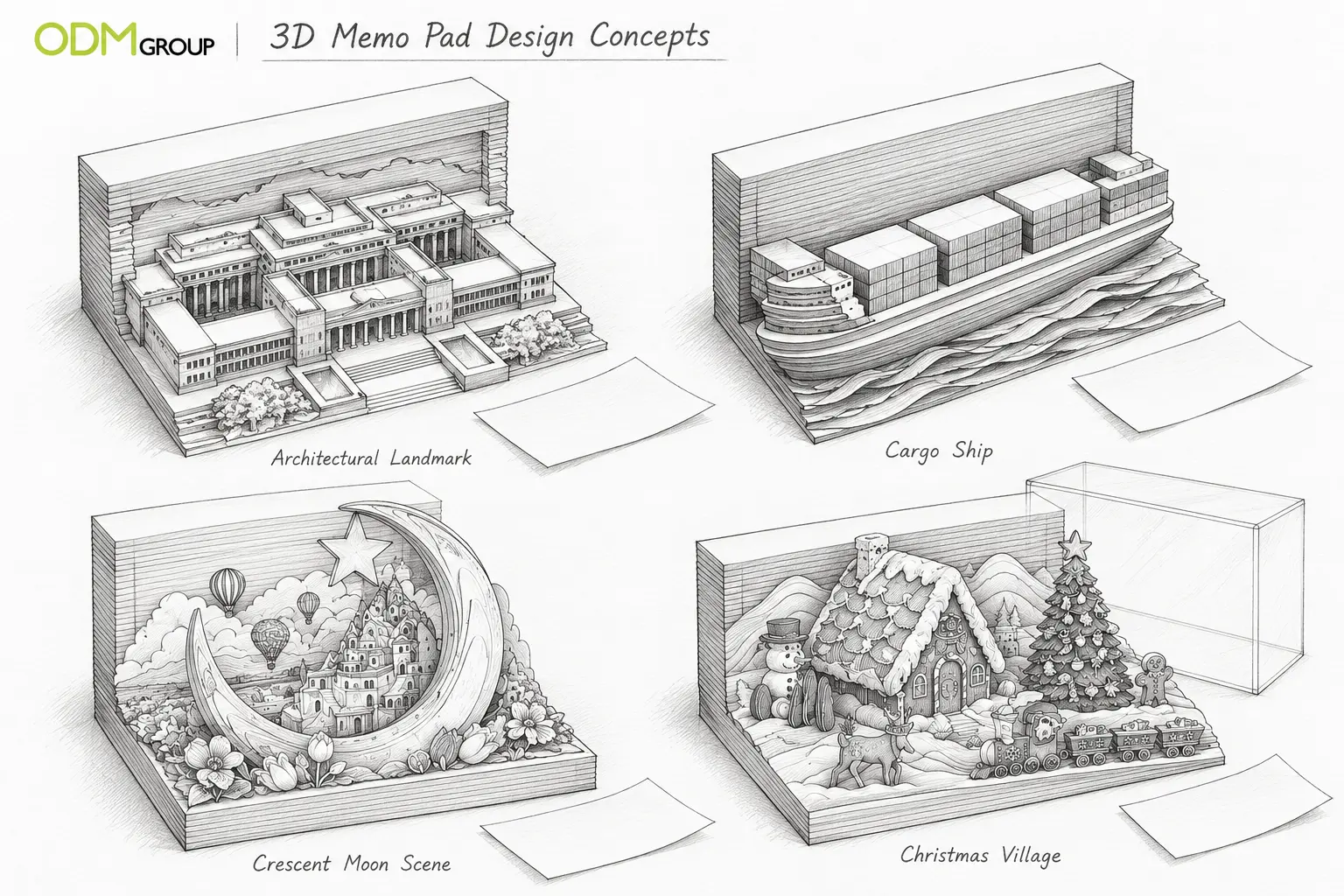
The team can also support factory communication, quality assurance, and delivery coordination. For this format, agreed checks should address paper-layer alignment, sheet removal, structural details, branding, and packaging. Quality control should work against approved specifications and samples.
Make Every Page Part of the Brand Story
3D memo pads show how a familiar product can become more engaging through thoughtful design.
They provide a useful writing surface, create an evolving visual experience, and give brands long-term desk visibility. The final structure can continue working as a display piece even after the notes have been used.
From buildings and landmarks to food products, characters, and seasonal scenes, the format can be adapted to many industries and campaign goals.
ODM helps businesses connect the concept, visual design, packaging, and campaign presentation. Contact ODM to develop a custom 3D memo pad that gives customers a new way to experience your brand.
More Product Ideas


FAQs about 3D Memo Pads
What makes a 3D memo pad better than standard promotional stationery?
It combines practical note paper with an evolving sculptural design. This creates more interaction, stronger desk visibility, and greater perceived value.
Which campaigns are best suited to 3D memo pads?
They work well for corporate gifting, seasonal promotions, product launches, loyalty rewards, tourism campaigns, property launches, and premium event giveaways.
Can the design feature a specific product or building?
Yes. The structure can be inspired by product packaging, landmarks, hotels, offices, vehicles, mascots, characters, or architectural projects.
How can branding be added subtly?
Branding can appear on the base, page edges, backing panel, individual sheets, sleeve, or packaging. Corporate colors and recognizable brand elements can also be built into the design.
Can the sheets include campaign content?
Yes. Pages can feature small logos, QR codes, offers, contact details, patterns, or short messages while keeping enough clear writing space.
Why is custom packaging important?
Packaging protects the detailed paper structure and improves presentation. It can also explain how the product works and carry additional campaign information.
Related Blogs
Book Strap Carrier for Smarter Brand Promotions
Promotional bags are everywhere, but a book strap carrier [...]
Mini Desk Vacuum Cleaner: From Desk Clutter to Brand Recall
Most promotional products disappear long before the campaign is [...]
Gyroscope Toy: Why It’s a Must-Have Promotional Gift in 2026
As workloads increase and attention spans shrink, practical desk [...]
Top Promotional Product Trends for 2026
Promotional products have evolved far beyond the traditional freebies. [...]

Top 20 Corporate Gift Ideas to Boost Employee Retention!
Employees are businesses' greatest assets. And keeping them, especially [...]


Custom Wall Organizer: Office Gift Idea for Project Managers
November 3rd is Project Management Day! It is a [...]