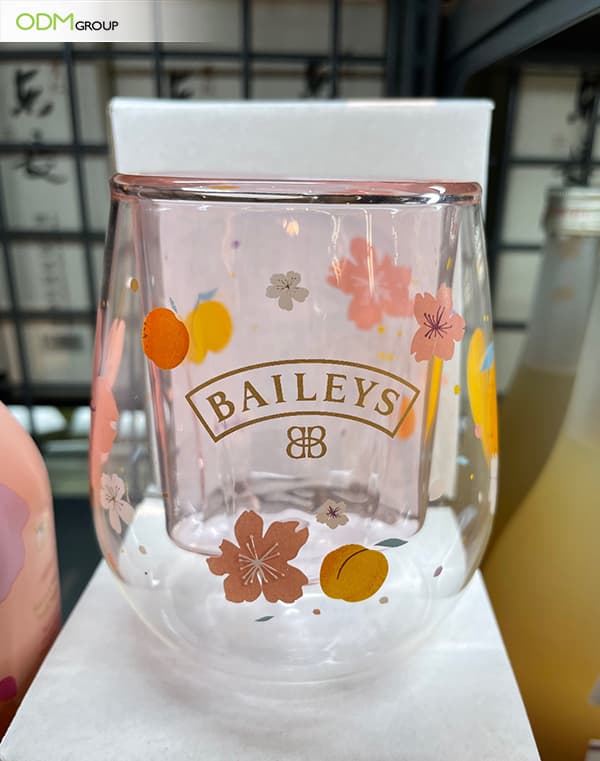
In beer marketing, visibility is not the problem. Most brands already have a strong presence on shelves, in bars, and across events.
What is harder is staying relevant after the drink is finished. That is where branded beer glasses work differently. Instead of competing for attention in the moment, they extend the experience beyond it. When customers continue using the glass at home or in social settings, the brand remains part of that interaction.
That is a very different kind of exposure, and one that builds over time.
More Than a Promotional Item
A beer glass is not just a container. It shapes how the product is experienced.
The weight, the rim, the clarity, even the way foam settles—these details influence perception. When branding is applied thoughtfully, custom branded beer glasses become part of the drinking experience rather than something added on top.
This is why they often outperform more disposable promotional products. They are not used once. They become part of routine behavior.
And in marketing, repetition is where value builds.
Where Branded Beer Glasses Work Best
The effectiveness of a branded beer glass depends less on the product itself and more on how it is used within a campaign.
1. On-Trade and Hospitality
Bars, restaurants, and events are the most natural environments. Here, the glass becomes part of the serve. Customers associate the brand directly with the drinking experience, not just the packaging.
2. Retail and Gift-With-Purchase Campaigns
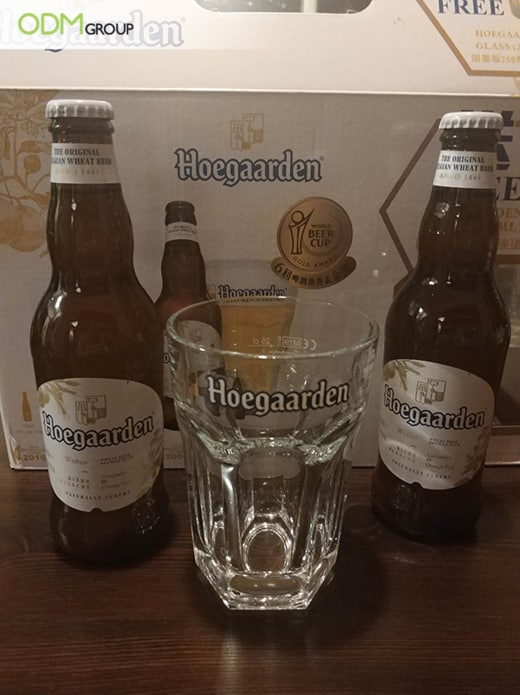
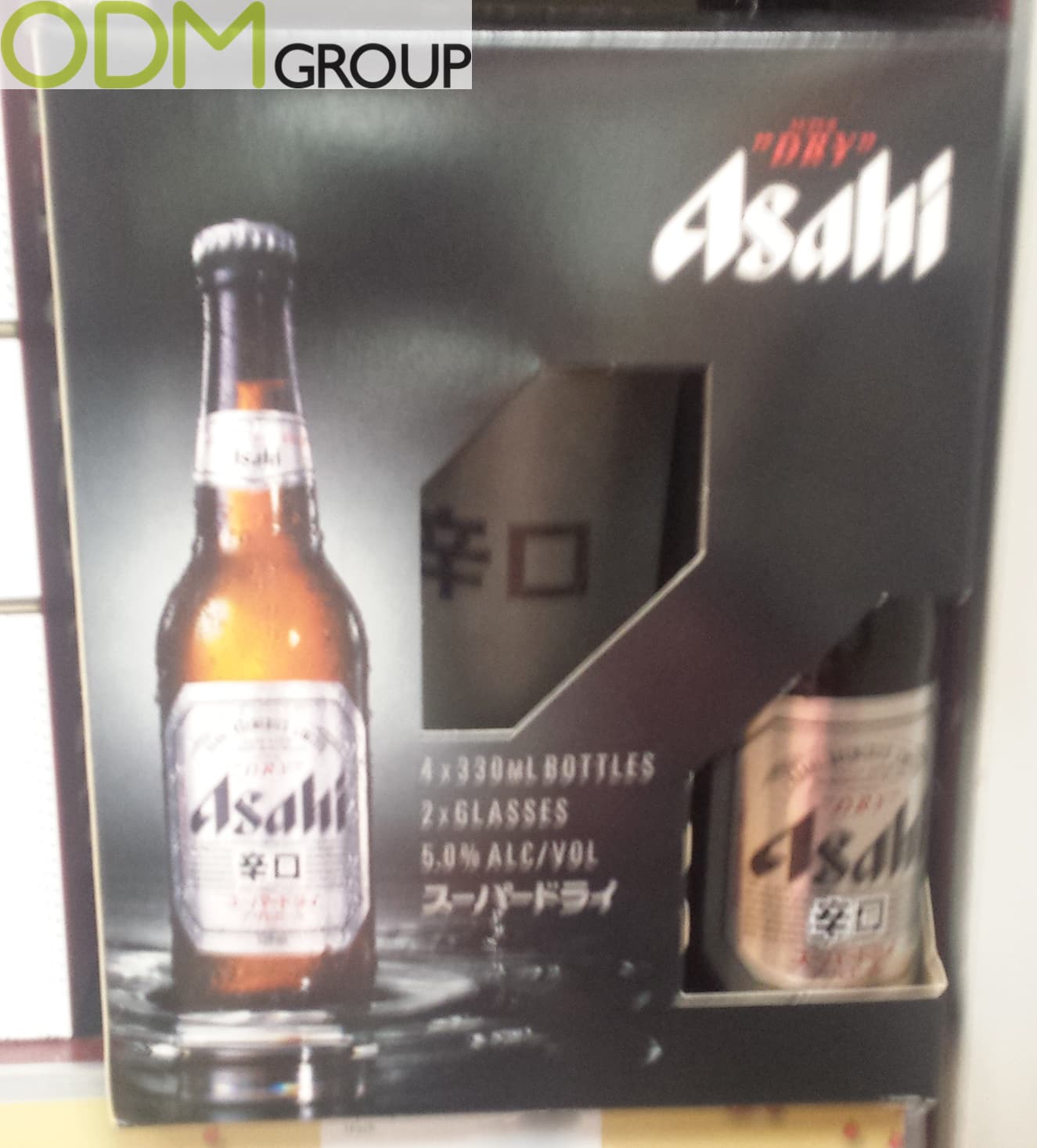
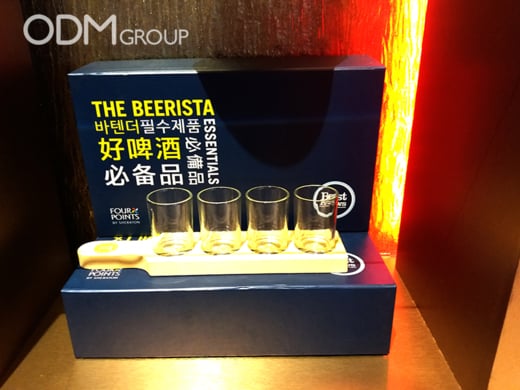
In retail, a branded beer glass can shift a purchase decision. It adds perceived value while also offering something customers will continue to use. This works especially well for bundle promotions or seasonal campaigns.
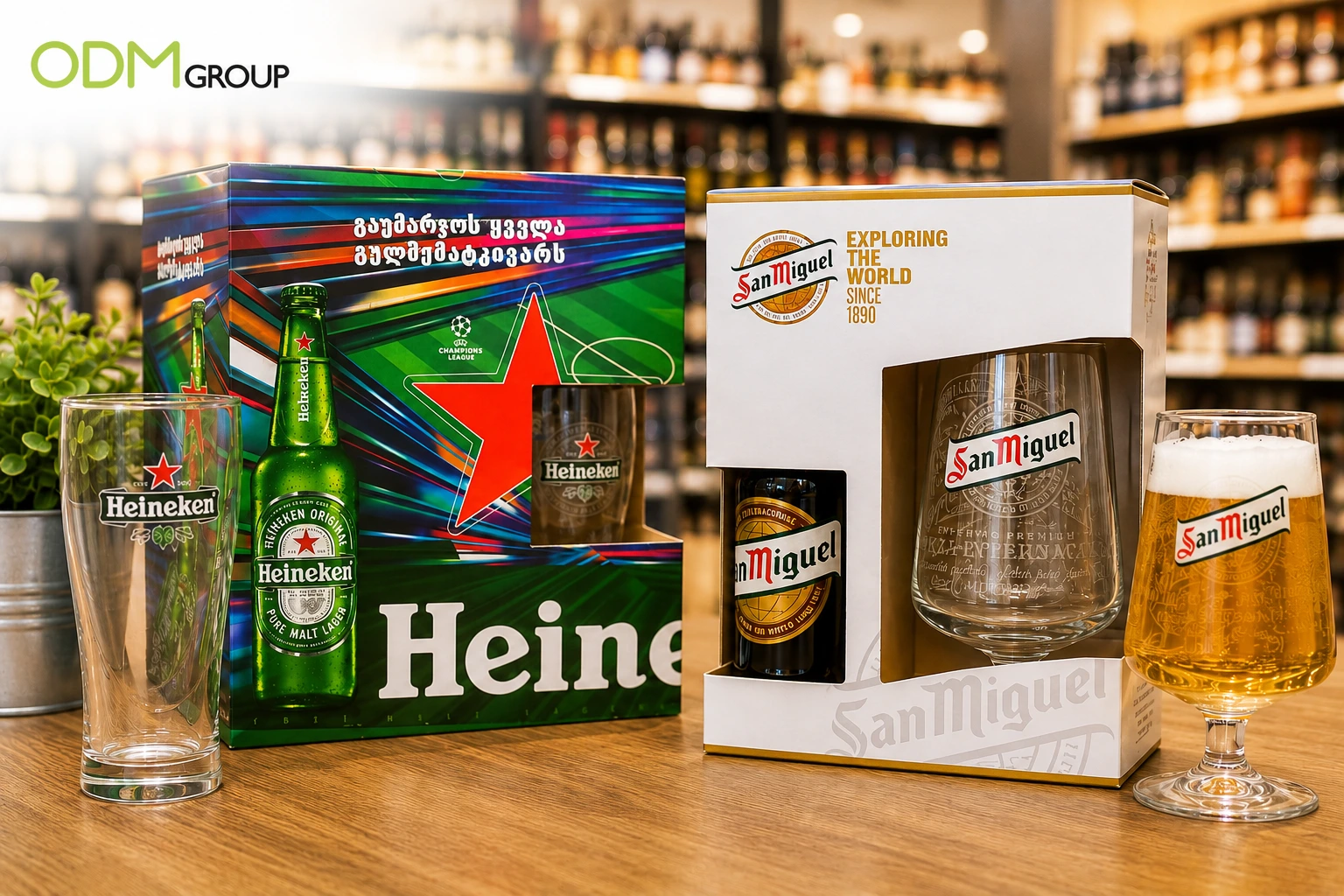
3. Limited Editions and Collaborations
When paired with a campaign theme or collaboration, the glass becomes collectible. This encourages repeat purchases and creates a sense of exclusivity.
Case Study: Würenbacher Branded Beer Glass
Würenbacher's approach to branded beer glasses is a good example of keeping things focused.
The design does not try to do too much. The branding is clear, the shape supports the drinking experience, and the overall execution feels consistent with the product itself.
What stands out is the restraint.
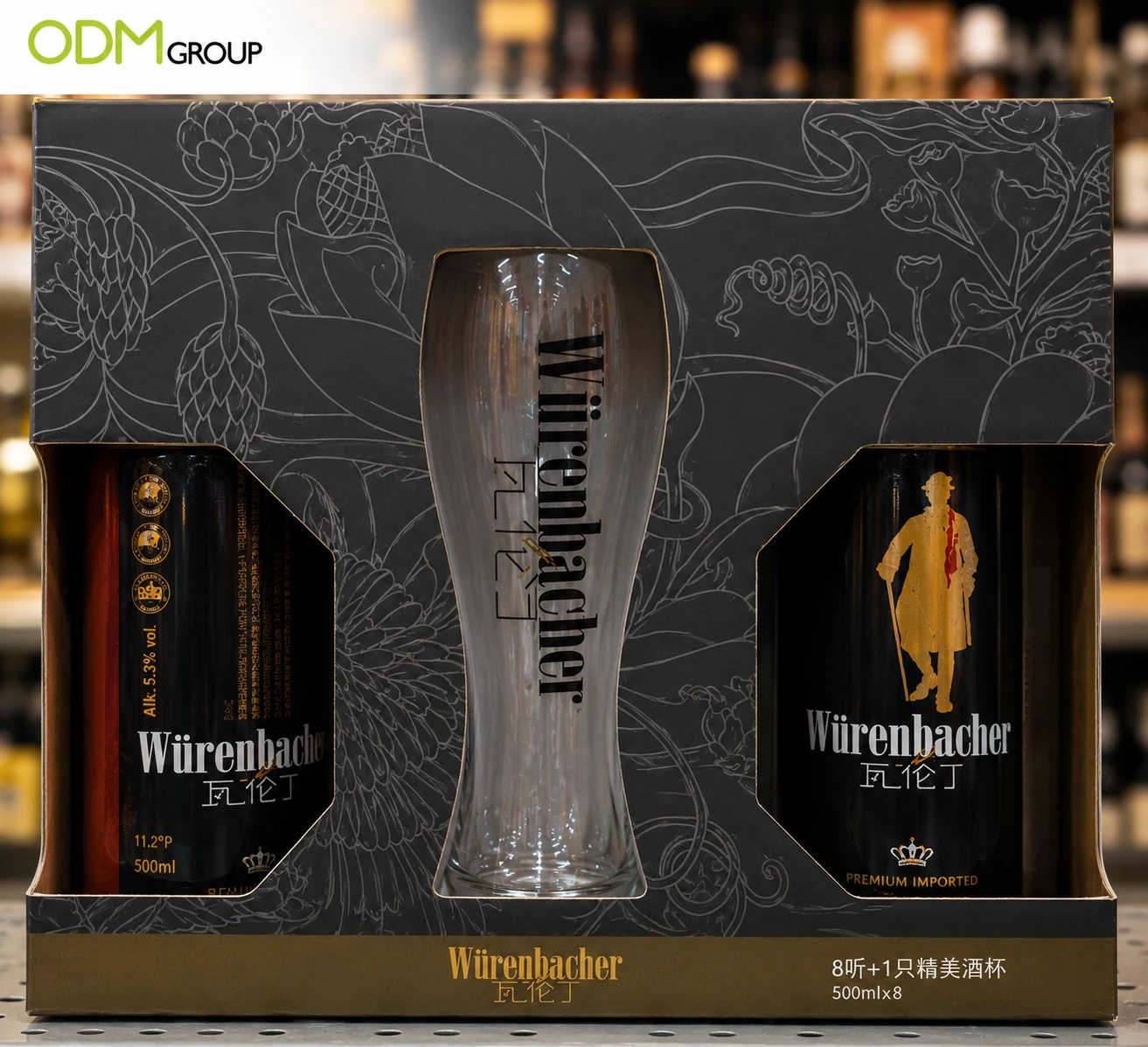
Instead of overloading the glass with graphics, the brand allows the product to remain the focus. This makes the glass feel more premium and more likely to be reused. That reuse is where the real value comes from.
Where Many Brands Get It Wrong
Branded beer glasses are straightforward in concept, but small decisions can significantly affect how they are perceived.
A few common missteps:
- Overbranding that competes with the drink itself
- Low-quality glass that reduces perceived value
- Ignoring packaging, especially for retail campaigns
- Treating the glass as an add-on instead of part of the experience
These issues rarely come from production constraints. They usually come from decisions made too late in the process.
Where Many Brands Get It Wrong
Branded beer glasses are straightforward in concept, but small decisions can significantly affect how they are perceived.
A few common missteps:
- Overbranding that competes with the drink itself
- Low-quality glass that reduces perceived value
- Ignoring packaging, especially for retail campaigns
- Treating the glass as an add-on instead of part of the experience
These issues rarely come from production constraints. They usually come from decisions made too late in the process.
Designing for Real Use
The most effective branded beer glasses are designed with context in mind.
- Will the glass be used in a bar setting or at home?
- Is it meant to feel premium or accessible?
- Is it part of a one-time promotion or a longer campaign?
These questions shape everything—from the form and material to the branding approach.
When design decisions are aligned with how the product will actually be used, the result feels natural. When they are not, even well-made products can feel out of place.
Packaging Is Part of the Product
In retail, packaging plays a bigger role than many expect.
A well-designed box can:
- protect the product during transport
- elevate perceived value
- make the item suitable for gifting
It also creates space for storytelling. Even a simple message can reinforce the campaign and guide how customers perceive the product.
Ignoring packaging often means missing an opportunity to strengthen the overall experience.
From Idea to Execution
For brands, the challenge is not finding a beer glass. It is making sure the final product works within a campaign.
This is where ODM Group typically supports the process.
Rather than focusing only on sourcing, ODM works with brands from the early stages:
- developing initial sketch concepts that align with campaign goals
- refining product details through prototyping
- selecting the right factory partners based on material and quality requirements
- managing quality control throughout production
- designing packaging that supports both retail and usability
- coordinating logistics to ensure smooth delivery across markets
By aligning these elements early, the final product is more consistent—not just in quality, but in how it performs as part of a campaign.
Final Thought
Most promotional products are designed for a single moment. Branded beer glasses work differently. They stay in use—at home, at gatherings, and in everyday routines. That repeated exposure is where real brand value builds.
For GWP campaigns and retail promotions, the opportunity is not just to give something away, but to create something customers actually keep. If you are planning your next campaign, we can help you turn a simple idea into a product that performs in the real world. Contact ODM today to get professional support.
ODM Services
FAQs about Branded Beer Glasses
Can branded beer glasses influence brand loyalty, not just awareness?
Yes. Because they are reused, they create repeated exposure in relaxed, social settings. This builds familiarity in a way one-time promotional items cannot.
Are branded beer glasses still effective in a digital-first marketing strategy?
They work well as a physical complement to digital campaigns. A well-designed glass can appear in user-generated content, social posts, and home settings—extending reach organically.
What makes a beer glass feel “premium” rather than promotional?
Subtle branding, quality materials, and balanced proportions. Often, what you leave out matters as much as what you include.
Can branded beer glasses be used outside of alcohol brands?
Yes. Cafés, lifestyle brands, and even corporate campaigns use similar formats for cold beverages, mocktails, or themed events.
What to Read Next?
7 Must-Know Reasons for Using a Custom Stanley Tumbler in Marketing
Stanley mugs rose in popularity in 2017. The biggest [...]
5 Marketing Lessons to Learn from Roku Gin Glass Gift Set Idea
Offering gift sets is probably one of the most [...]
Custom Printed Drinkware: How Sting Connects To The Market?
Glasses are the perpetual pair to drinks and beverages. [...]
Why Liquor Promotions Need More Than Just Free Gifts
Walk through any liquor aisle today, and you will [...]
Custom Printed Beer Glass: How Heineken GWP Drives More Sales In-Store?
Heineken, as the official sponsor of the UEFA Champions League, excites [...]
Custom Logo Glass: Baileys’ Adorable GWP for Shoppers in China
Giving away a free promotional gift is a great way [...]