
Beverage aisles are busy. Shoppers move quickly past rows of bottles, cans, multipacks, seasonal offers, and competing brands. In that short moment, a brand needs more than attractive packaging. It needs a clear reason for shoppers to stop, look, and buy.
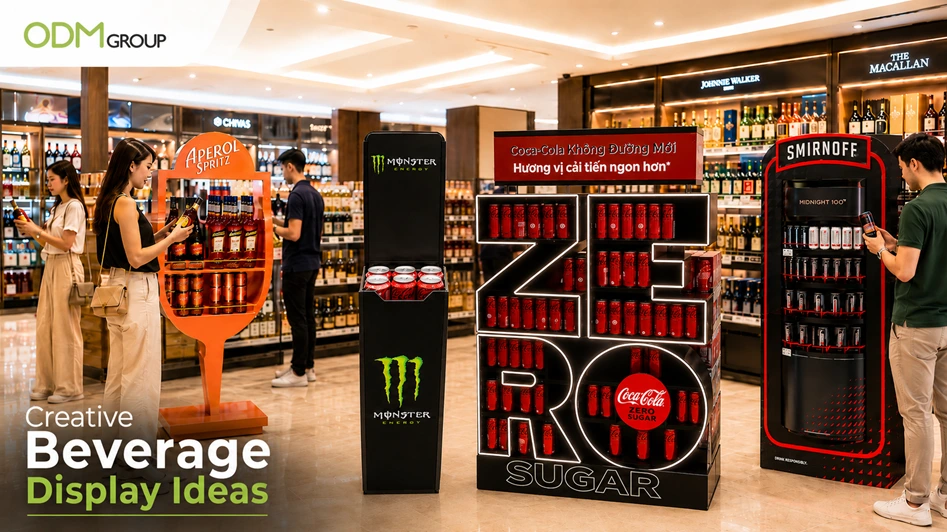
This is where a custom beverage display becomes valuable. It is not just a structure that holds products. It is a retail sales tool that helps beverage brands create visibility, communicate promotions, support product launches, and own space at the point of purchase.
From Product Holder to Retail Sales Tool
A custom beverage display should never be treated as a simple product stand. In retail, it has to perform several jobs at once.
It needs to hold products safely. It needs to attract attention from a distance. It needs to make the offer clear in seconds. It needs to fit the store environment. It also needs to help staff restock products without difficulty.
For beverage brands, this is especially important because drinks are often heavy, fast-moving, and highly competitive. Bottles, cans, cartons, and multipacks all have different structural requirements. A display for glass bottles will need a different level of stability from a lightweight cardboard counter unit for canned drinks.
A strong beverage display works as part of the full campaign. It should connect the product, brand message, promotional offer, and retail space into one clear shopping experience.
Why Beverage Brands Need More Than Shelf Space
Standard shelves put brands side by side with competitors. That can be challenging in categories where shoppers see many similar products at once.
A custom beverage display gives the brand a dedicated moment. It can sit near the entrance, at the aisle end, beside the chilled section, close to checkout, or in a high-traffic promotional area. This extra visibility helps the product stand apart from the normal shelf environment.
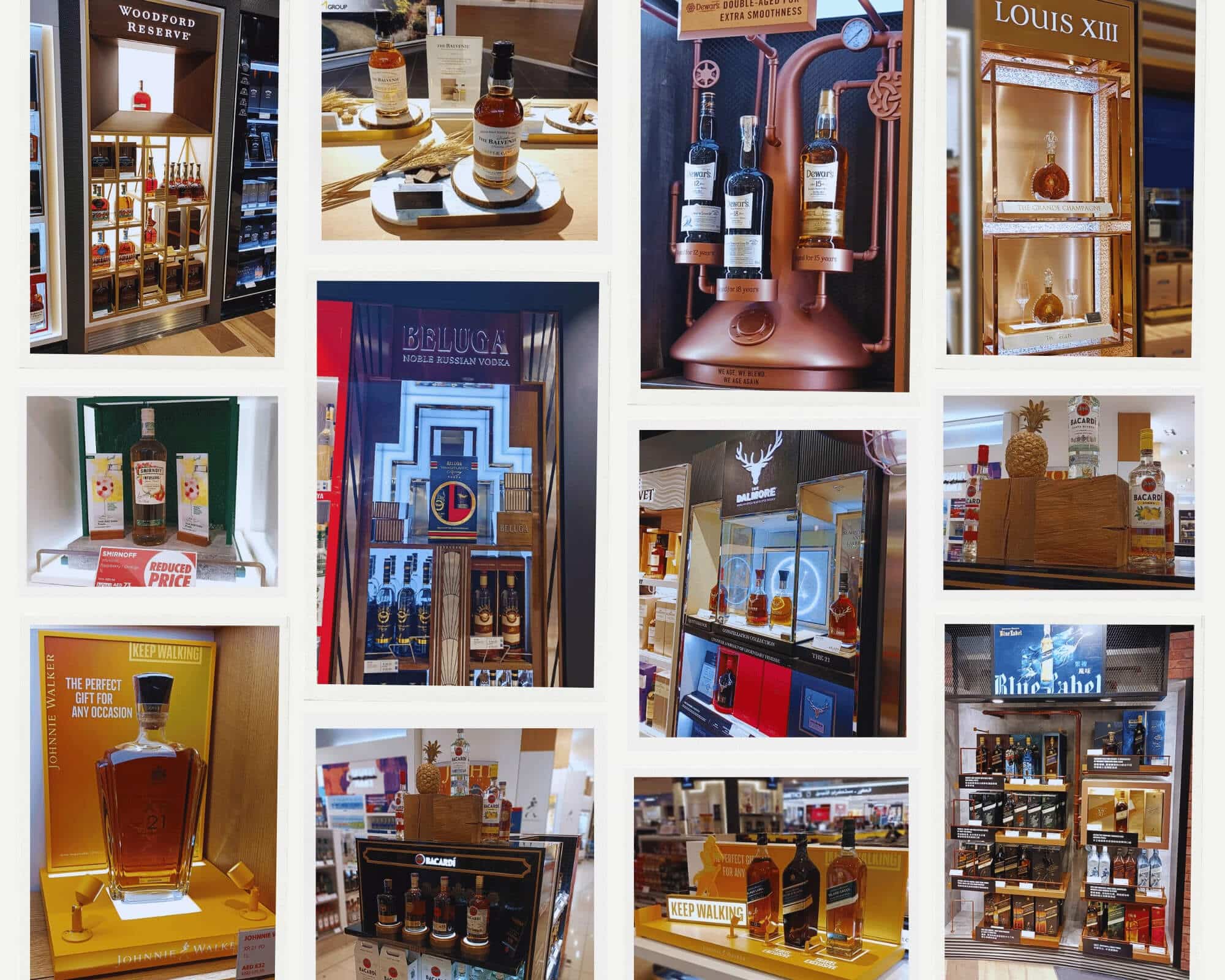
This is useful for many campaign types. A new drink flavor may need a display that clearly introduces the product. A summer campaign may need a bright, lifestyle-led display that encourages impulse purchases. A premium liquor brand may need a more refined display that supports its brand image. A supermarket promotion may require a sturdy unit that can carry multiple products and communicate the offer from a distance.
In each case, the display is not only about visibility. It is about helping shoppers understand why they should choose the product now.
Display Strategy Starts With the Shopper Journey
Before choosing the shape, material, or finish, brands should consider how shoppers will encounter the display.
Will the display be seen from across the store, or only when shoppers are already in the beverage aisle? Will the product be chilled or sold at room temperature? Will shoppers need to understand a promotion quickly? Will the display hold single bottles, multipacks, cartons, or gift sets? Will store staff need to restock it several times a day?
These questions affect the final design.
A display near the entrance needs a strong visual impact and clear branding. A checkout counter display needs a small footprint and quick access to products. A liquor store display may need a premium finish and stronger structure. A sampling booth may need space for cups, staff tools, storage, and POS materials.
Good display planning starts with real behavior. The design should support the way shoppers move, look, decide, and buy.
Custom Beverage Display Ideas Based on Campaign Goals
Different campaigns need different display formats. A product launch, seasonal promotion, gift-with-purchase campaign, and sampling activation should not all use the same structure.
1. Product Launches
Brands can use floor-standing displays, counter units, tasting stations, or hero-product pedestals. These formats give new products a clearer introduction and help shoppers notice them outside the regular shelf.
2. Seasonal Promotions
Themed displays can connect the beverage to holidays, summer occasions, sporting events, music festivals, or festive retail periods. The design can use campaign colors, illustrations, lighting, or supporting merchandise to create a stronger seasonal message.
3. Gift-with-Purchase Campaigns
Displays can include space for both the drink product and the promotional gift. This is useful for campaigns that include glasses, bottle openers, coasters, ice buckets, tote bags, cocktail kits, or tumblers. When the gift is shown clearly beside the product, the value of the offer becomes easier to understand.
4. Multipack Promotions
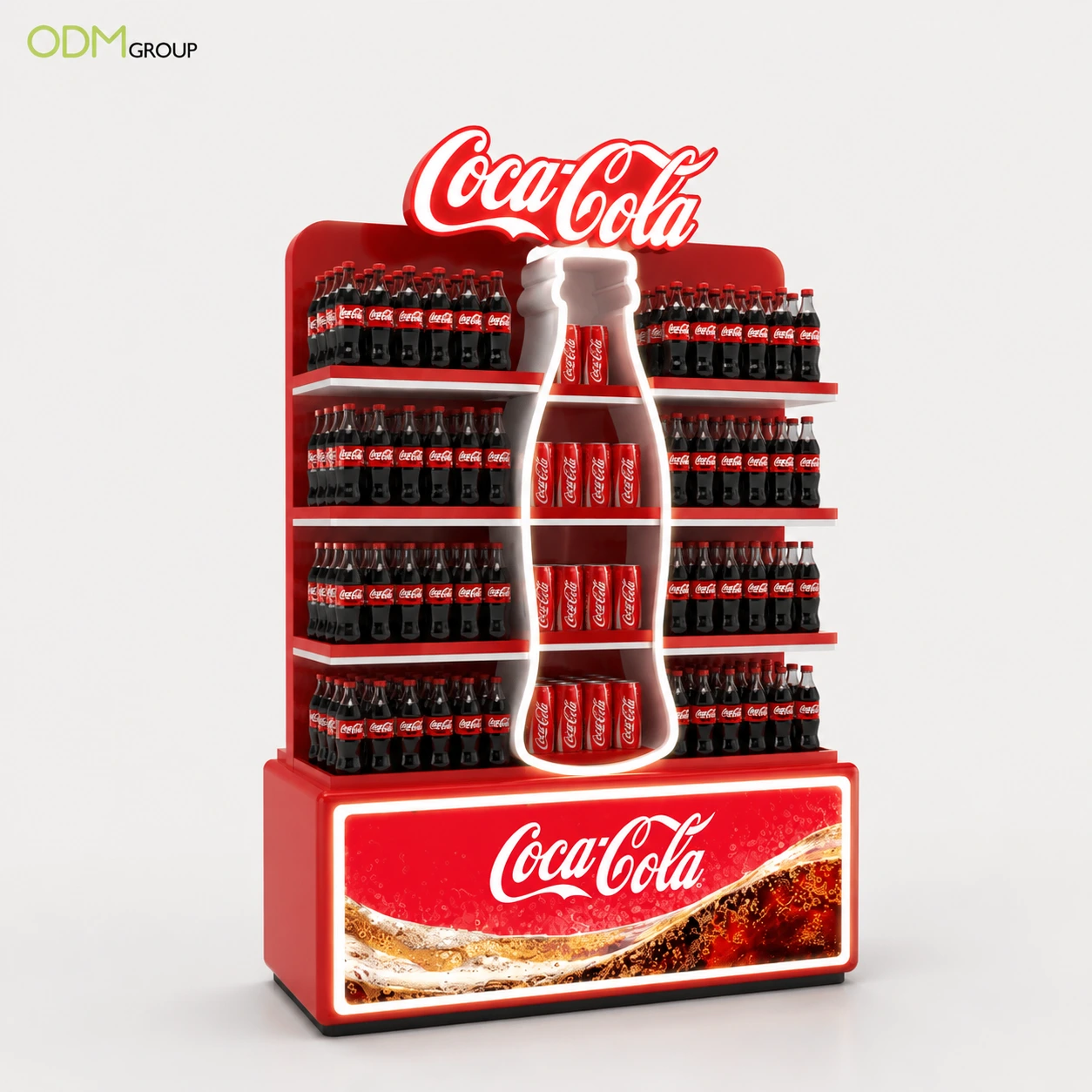
Brands may need stronger stackable displays, pallet displays, or reinforced corrugated units. These displays must support heavier loads while keeping the product easy to shop.
5. Premium Beverage Brands
Materials such as metal, wood, acrylic, or LED lighting can create a more elevated look. These displays are suitable for liquor brands, travel retail, high-end supermarkets, hotels, bars, and gifting campaigns.
6. Sampling Campaigns
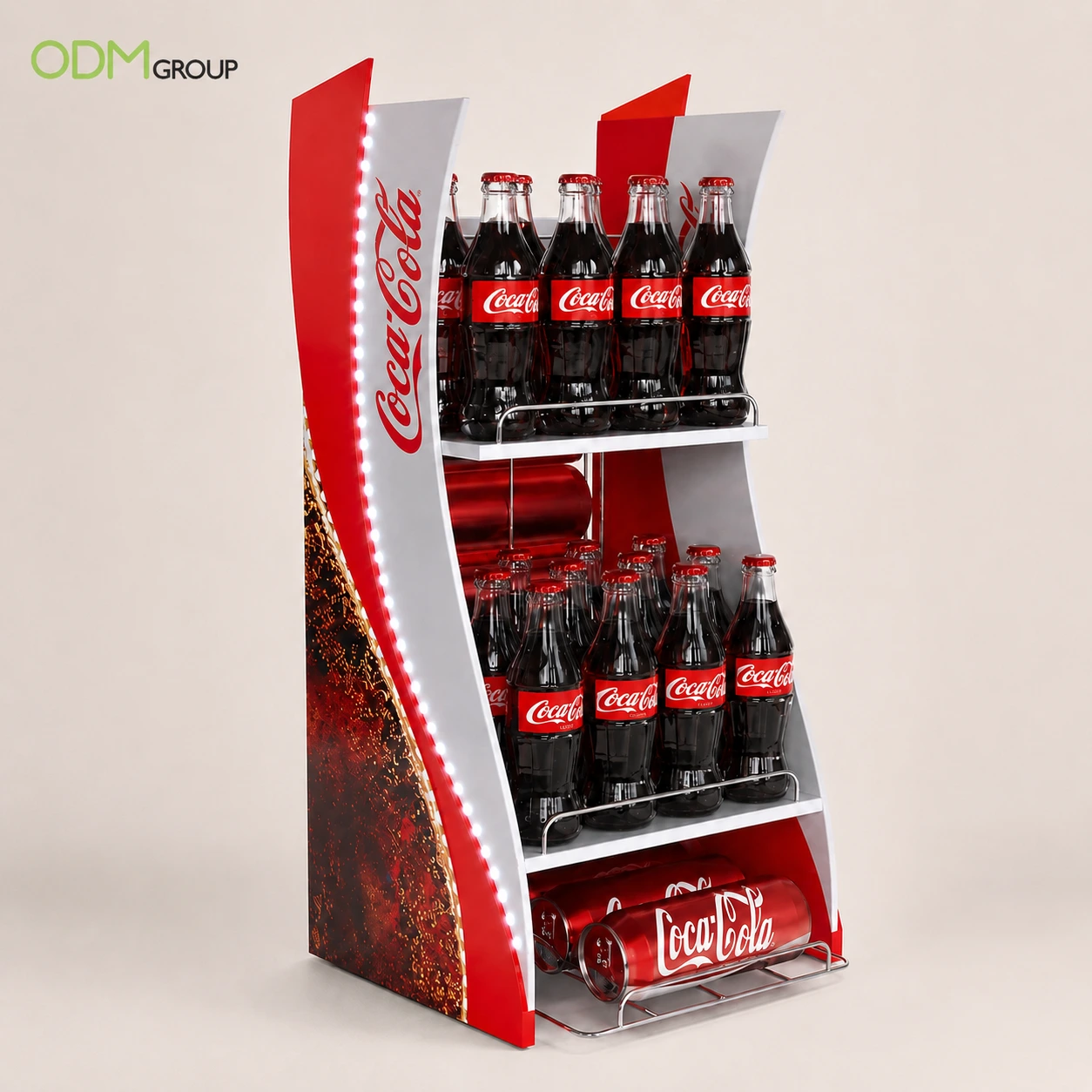
Mobile carts, demo counters, or compact booths can help staff interact with shoppers while keeping the brand visible.
Case Study: Smirnoff Midnight 100 Beverage Display
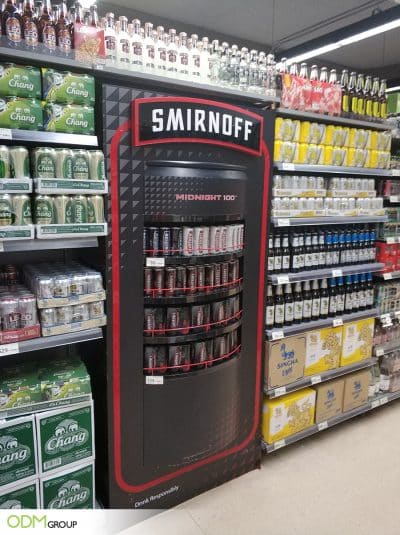
Smirnoff used a bold custom beverage display in Thailand to promote its Midnight 100 drink.
Placed directly in the alcohol aisle, the display took up strong retail space and stood out clearly beside competing brands.
The can-shaped design made the product easy to recognize from a distance.
It also gave shoppers a quick idea of what was being promoted before they got closer.
The can-shaped design made the product easy to recognize from a distance.
It also gave shoppers a quick idea of what was being promoted before they got closer.
What Makes a Beverage Display Work in Real Retail
A display can look impressive in a design mock-up but still fail in-store if it does not meet practical retail needs.
1. The product must remain visible.
Shoppers should be able to see the bottle, can, label, flavor, or pack format clearly. If graphics cover too much of the product, the display may look attractive but reduce product recognition.
2. The message must be simple.
Retail shoppers do not stop to read long text. The main offer, product name, and campaign message should be clear in a few seconds.
3. The structure must be stable.
Beverage products can be heavy, especially glass bottles and multipacks. The display needs the right base support, shelf strength, and material thickness to handle real product weight.
4. The display should be easy to assemble and restock.
Store teams are more likely to use a display properly when it is simple to set up and maintain.
5. The display must travel well.
Packaging, flat-packing, assembly instructions, and transport protection all affect whether the final display arrives in good condition and performs as expected.
Beverage Display Mistakes That Reduce Campaign Impact
Beverage products are heavier than many retail items. A display must have enough structure, balance, and shelf support to hold bottles, cans, or multipacks safely.
Shoppers only have a few seconds to understand the offer. Crowded messaging can make the display harder to read and reduce its impact.
Strong branding is important, but shoppers still need to see what they are buying. The product should remain visible and easy to reach.
If the display is too large, difficult to place, or unsuitable for the store layout, retailers may not use it properly.
A short-term promotion may not need a heavy permanent display, while a premium liquor campaign may require a more refined material than basic printed cardboard.
A display should be designed for the full journey, including packing, shipping, storage, setup, restocking, and final use on the retail floor.
How ODM Supports Custom Beverage Display Projects
ODM helps beverage brands develop custom display solutions that support real campaign needs. Our role goes beyond finding a display format. We help brands think through the retail setting, product weight, campaign message, material options, packaging, and delivery requirements.
This can include concept development, structural design, 3D visualisation, sampling, factory selection, quality control,and logistics.
Through Mindsparkz, our creative and product design division, we can support early-stage concept work, sketches, visual directions, and presentation-ready design ideas. From there, ODM coordinates manufacturing through our trusted factory network and manages the details needed to move the display from idea to retail floor.
Final Thoughts
A custom beverage display should not only look attractive. It should work in real retail conditions. It needs to safely carry product weight, communicate the offer quickly, support shopper behavior, align with the campaign goal, and strengthen brand visibility at the point of purchase.
For beverage brands, the right display can turn ordinary retail space into a stronger promotional moment. It can help launch products, support seasonal sales, present gift-with-purchase offers, and make the brand easier to notice in a crowded category.
Contact ODM Group to start developing custom beverage displays for your next campaign.


Frequently Asked Questions
Can a custom beverage display influence impulse purchases?
Yes. A strong display can stop shoppers, highlight the product, and make the offer easy to understand within seconds.
How can beverage brands make displays feel premium without overspending?
Use clean structure, strong artwork, good color matching, smart product spacing, and balanced branding. Even simple materials can look premium when designed well.
Should the product or campaign message come first?
The product should come first. Shoppers need to recognize what is being sold before they read the promotion.
Can ODM help develop a display from an early idea?
Yes. ODM supports concept development, structural design, sampling, factory coordination, quality control, and logistics.
What to Read Next?
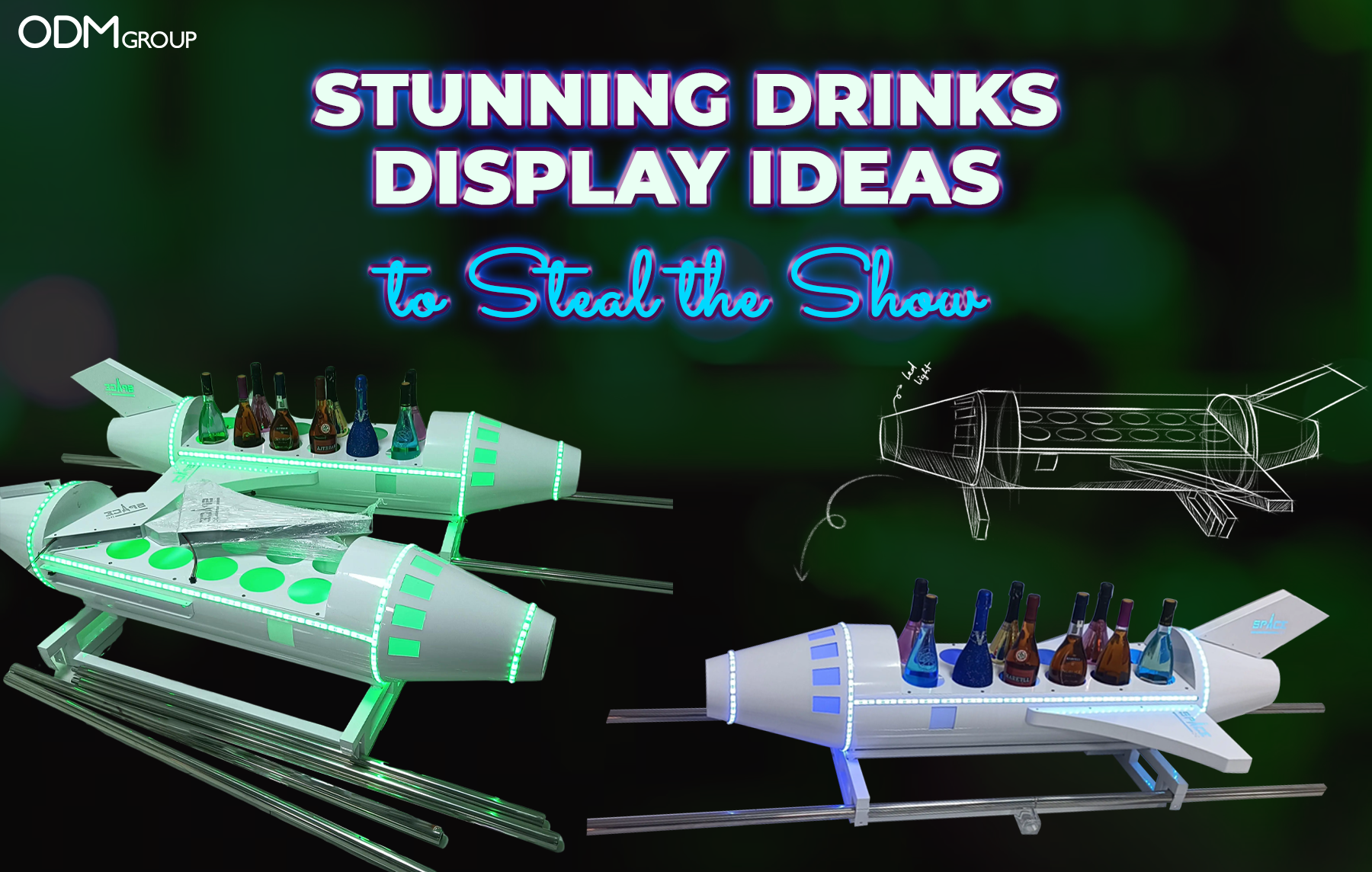
How to Wow Customers with these Stunning Drinks Display Ideas?
With countless alcoholic drink brands around, how do you [...]
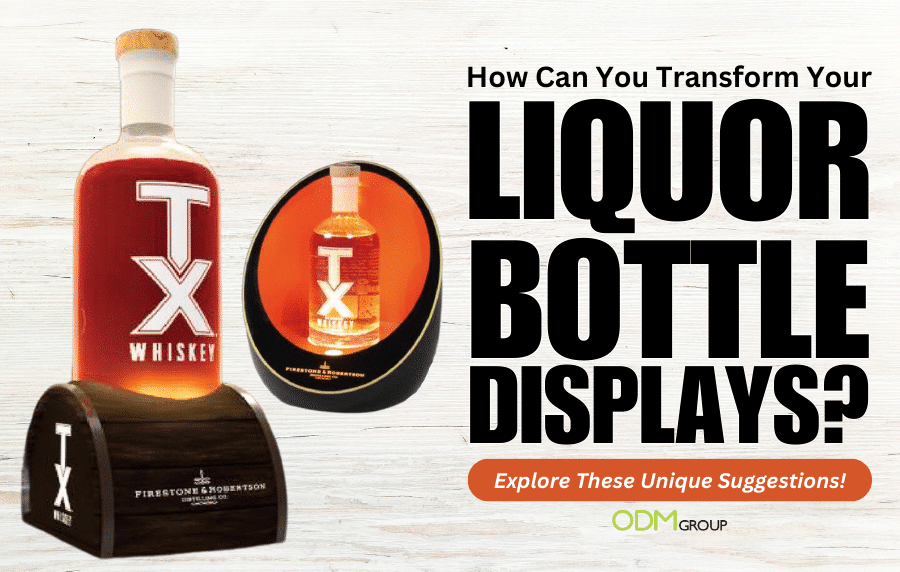
Drinks Marketing: The Art of Custom Liquor Bottle Display Ideas
In the age where consumer attention is a valuable [...]
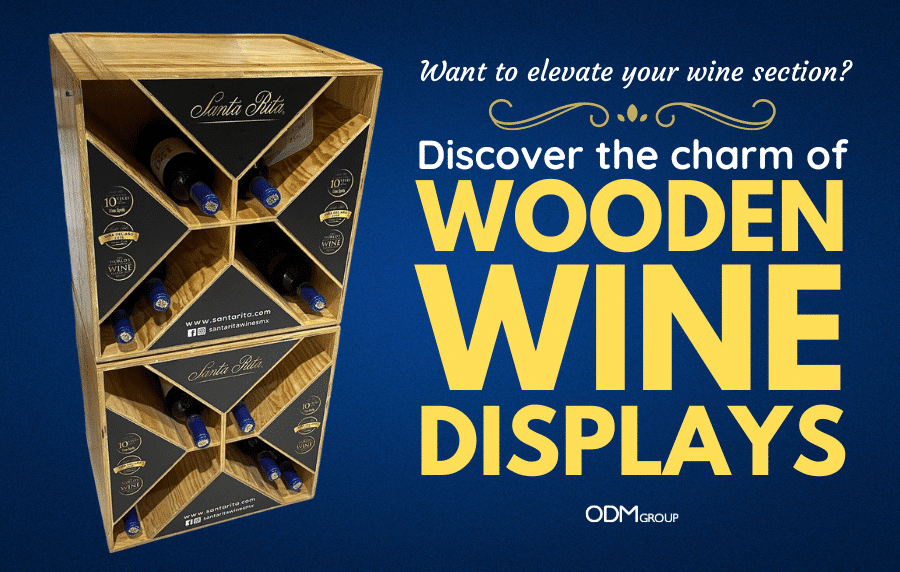
Wooden Wine Display: Unique & Sustainable Product Presentation
Presentation is always key when it comes to marketing [...]
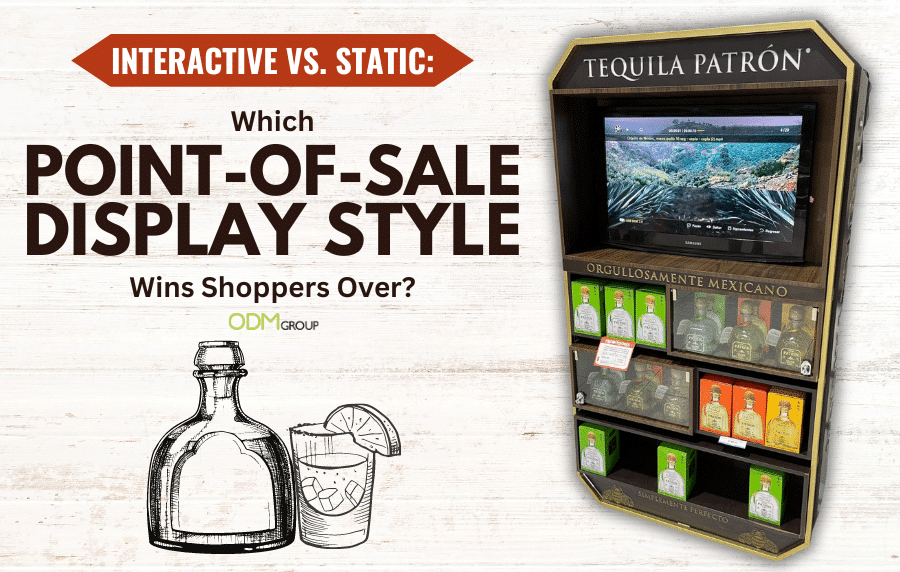
Drinks Marketing Idea: The Power of Point of Sale Video Display
In today's competitive retail environment, it is essential to [...]
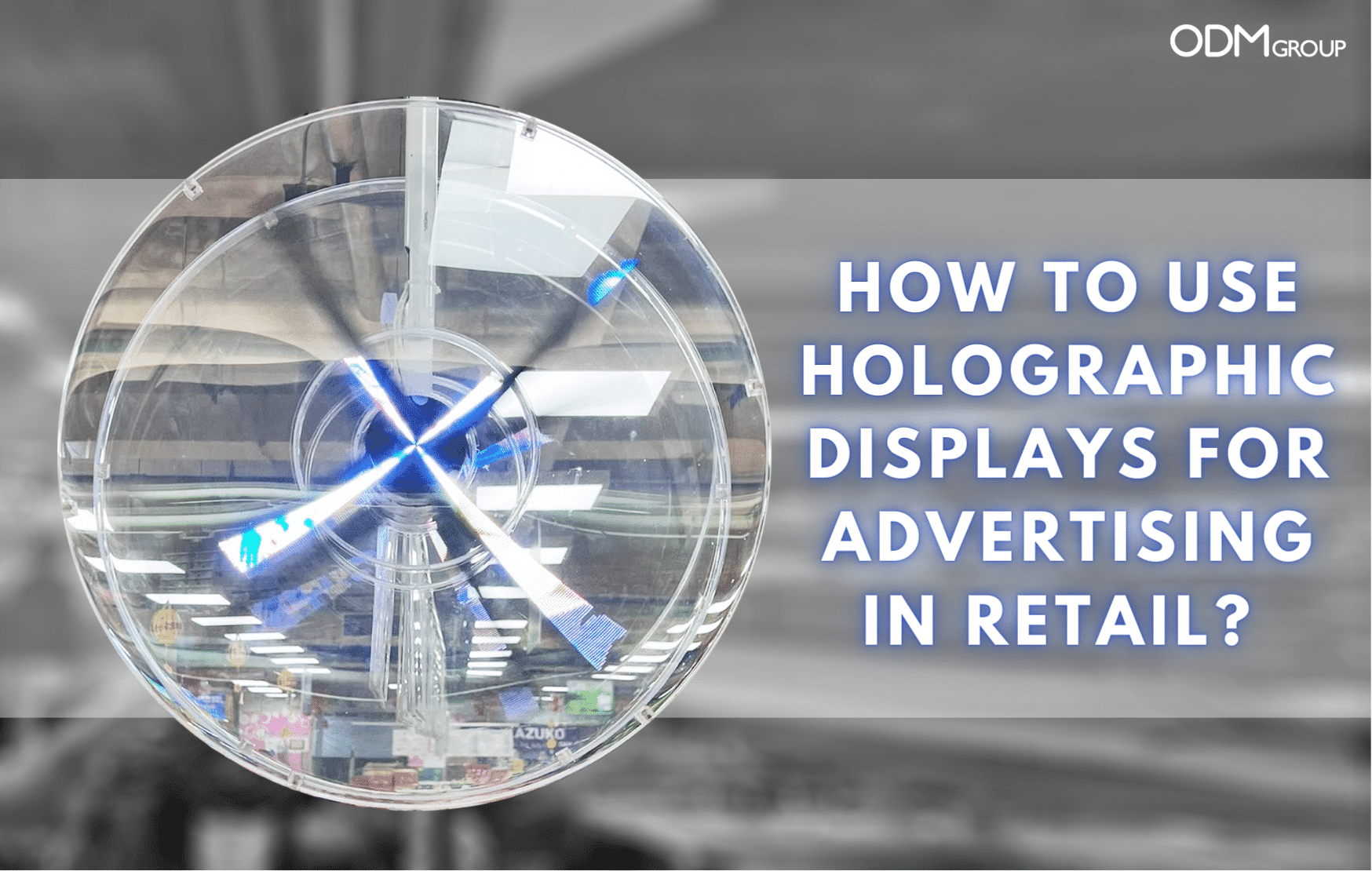
Advertising in Retail: Entice Customers With Holographic Displays!
Retail advertising is a powerful tool for reaching and [...]
Alcohol Bottle Display: 5 Tips To Stand Out From Famous Brands
The competitive nature of the drinks industry made it [...]