
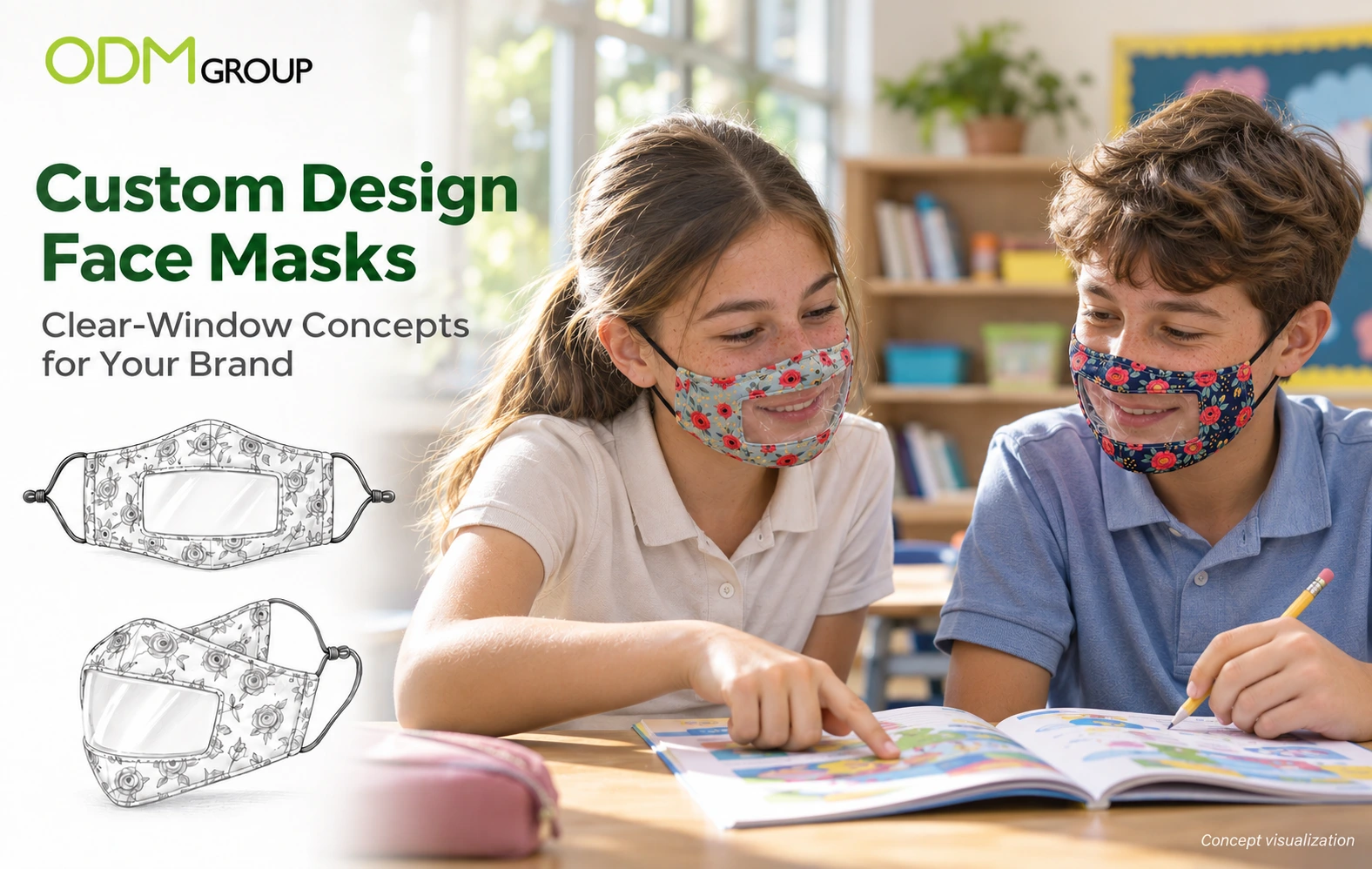
A custom-designed face mask should feel like part of your brand. Fabric patterns, logo placement, and finishing details all contribute to an accessory that coordinates with staff uniforms or campaign apparel.
A clear-window design adds another consideration: keeping the mouth area visible while creating enough space for your brand identity. The window, fabric border, and adjustable ear loops need to work together, so the finished design feels considered from every angle.
A Clear Mouth Window with Room for Custom Design
This face mask combines a transparent mouth panel with a patterned fabric body and adjustable ear loops. The fabric frames the window and provides space for decoration without printing over the central viewing area.
Floral prints give the design a softer appearance, while plain colors or geometric patterns can create a more understated corporate look. The choice should follow your brand guidelines and how the accessory will be worn.
The clear panel is intended to retain visibility of the mouth. That can be relevant when considering visual communication: people who lipread need to see lip patterns and facial expressions. Actual usefulness depends on window clarity, positioning, lighting, and the individual’s communication preferences.
Make the Design Work with Your Brand

Develop a distinctive fabric pattern
An all-over print gives you more freedom than a single logo. Explore original illustrations, repeating brand motifs, or a pattern drawn from your wider campaign artwork.
Keep the scale of the print in mind. Large motifs can be interrupted by seams or the transparent panel, while very small details may lose definition. Review the pattern on the actual cutting layout before approving it.
ODM Insight: Treat the fabric border as a shaped design surface. A pattern that works on a flat rectangle may look quite different once it is cut, stitched, and worn.
Give the logo a clear position
A small logo on a side panel can provide recognition without crowding the design. Position it away from seams, folds, and adjustment points, and keep the mouth window free from decoration.
If the mask already has a detailed pattern, consider using a quieter area of fabric for the logo. Check the placement on a worn sample to confirm that it remains visible.
Coordinate trim and colors
Ear loops, stitching, and adjustment pieces affect the overall appearance. Matching trim creates a consistent finish; contrasting trim can introduce an accent color from your brand palette.
Approve colors on physical materials. Fabric, elastic, and thread can reproduce the same shade differently, especially when viewed under different lighting.
Choose a Design Direction for the Intended Use
Start with a clear reason for including a face covering in the project. Where this format is appropriate, the intended setting should guide its appearance and development priorities.
| Design direction | Brand application | Priority |
|---|---|---|
| Plain fabric with a small side logo | Coordinated staff apparel | Consistency with the uniform and a discreet finish |
| Original all-over pattern | Campaign or event apparel | Recognizable artwork that works around the window |
| Coordinated mask and pouch | Branded accessory collection | Consistent graphics, practical storage, and clear care information |
These are concept directions to explore. Suitability for a particular workplace or activity needs to be established separately.
Review the Window, Fit, and Construction Together
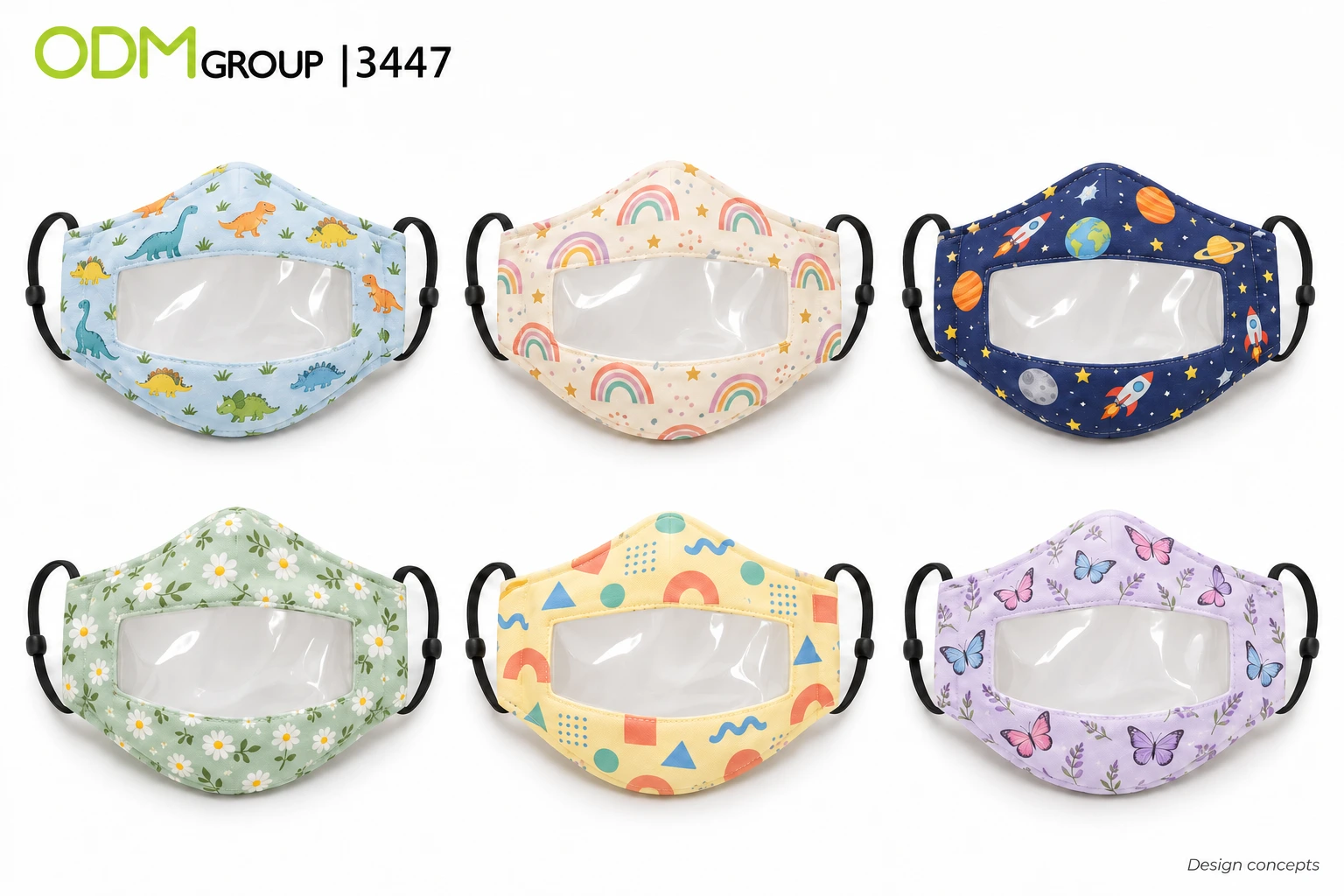
A polished design needs to hold up beyond the artwork stage. Evaluate a complete sample to understand how the fabric and transparent panel behave during wear.
Check whether the window stays aligned with the mouth during conversation. Assess reflections, condensation, creasing, and movement under the lighting expected in use. Ask intended users for feedback rather than assuming that a transparent panel meets everyone’s communication needs.
Review the ear-loop adjustment, edge finish, stitching, and panel attachment as well. Confirm that the selected construction supports the intended fit without repeatedly pulling the window out of position.
Material composition, care requirements, and any performance claims need supporting documentation. Filtration, medical suitability, and anti-fog properties cannot be established from appearance.
ODM Insight: Assess the fabric and window as one assembled product. A cleaning method that suits the textile may affect the transparent panel or its attachment.
Complete the Concept with Coordinated Packaging
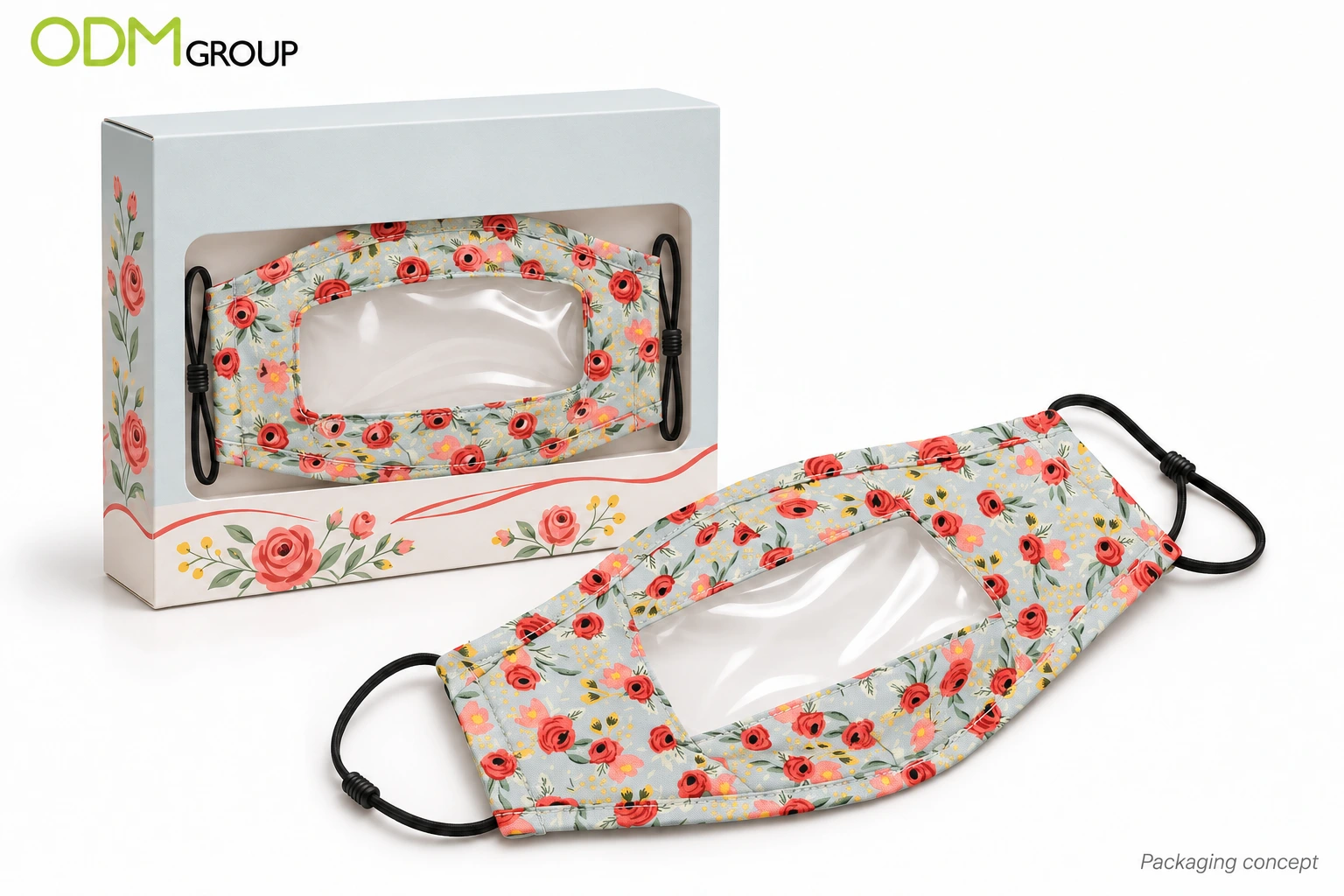
Packaging gives you additional space for brand storytelling and product information. A printed sleeve can keep the presentation compact, while a carton or storage pouch can form part of a more developed accessory concept.
Choose dimensions that accommodate the mask without sharply folding the transparent panel. Review the packed sample for creasing, rubbing, and presentation after handling.
Include verified material information, care instructions, intended use, and any required labeling. ODM’s packaging design concepts can help bring the accessory and its presentation into one visual direction.
What to Include in Your Project Brief
A detailed brief helps the design team compare realistic options from the outset. Include:
- Audience and use: Who will wear the mask and in what setting.
- Brand assets: Logos, color references, artwork, and uniform photographs.
- Design requirements: Window proportions, decoration areas, trim, and packaging preferences.
- Project parameters: Target quantity, budget, destination market, and required delivery date.
- Validation needs: Applicable material, performance, labeling, and care requirements.
Minimum quantities, costs, and schedules depend on the selected construction, custom materials, decoration, packaging, and testing. Allow time for prototype review and revisions before approving the final specification.
Develop Your Custom Design Face Mask Concept with ODM
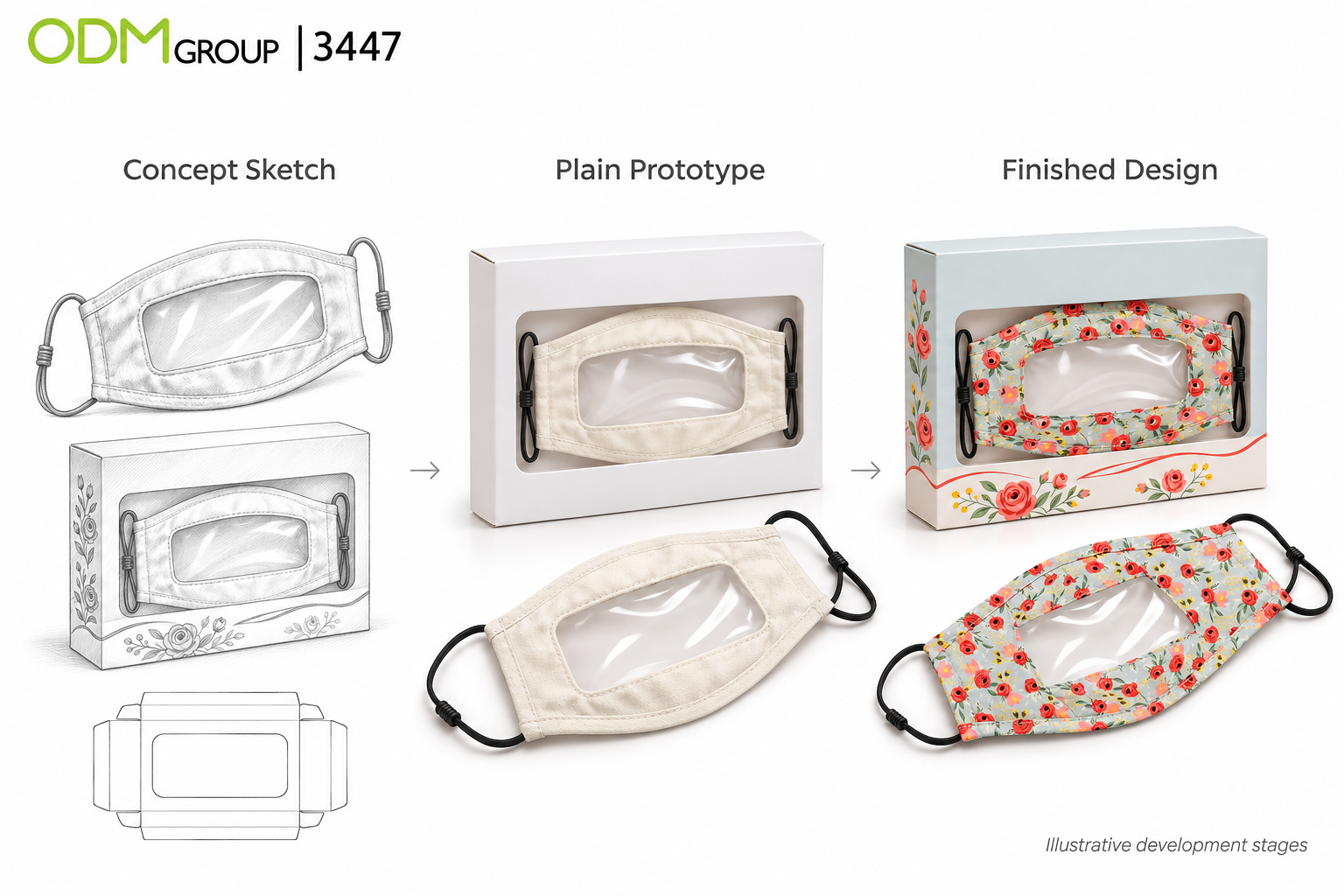
ODM develops creative ideas for branded merchandise, apparel accessories, and packaging. For a clear-window face mask, the concept can bring together original artwork, logo placement, color options, and a coordinated presentation.
Beginning with product design sketches lets your team compare directions before evaluating a physical sample.
Discuss your project with ODM and share your audience, intended use, quantity, budget, and deadline. Reference ODM-3447 to explore this clear-window style as a starting point.
More Ideas


FAQs about Custom-designed Face Mask
Can we replace the floral print with our brand’s artwork?
Custom artwork can form the basis of a new concept. Provide your brand files and specify whether the design needs an all-over pattern or a logo in a fixed position. The print method and material options need confirmation for the selected construction.
Can we change the shape or size of the mouth window?
Changes can be explored during development, but they affect the surrounding fabric and panel attachment. Review any revised shape on a worn sample before approving it.
How do we prevent the logo from being cut off?
Specify a fixed decoration area with clearance from seams and cut edges. Ask for artwork mapped to the pattern pieces, then check the assembled sample.
Can the mask and pouch use the same pattern?
They can share a coordinated artwork direction. Adjust the scale and placement for each item, and compare physical color samples if different materials or print methods are used.
Latest Blogs
 Gallery
Employee Appreciation Gifts for Every Budget and Occasion
Branded promotional products, Corporate promotions, Electronic promotional items, Gift with purchase, Giveaway promotional items, Marketing, Personalized promotional gifts, Premium promotional products, promotional gift, Promotional Products, Trending innovative promotions

Employee Appreciation Gifts for Every Budget and Occasion
Recognizing employees should go beyond handing out a generic [...]
Custom Collectible Figures for Brand Marketing and Merchandise
Custom collectible figures give brands a physical way to [...]
Bulk Corporate Gifts: How to Plan Your Order
A welcome kit for new hires and a thank-you [...]
Cardboard Box Printing: How to Choose the Right Method and Finish
Your packaging design can look perfect on screen and [...]
Promotional Product Trends 2027: 6 Innovations Beyond the Ordinary
Promotional products are evolving beyond logo-printed giveaways. In 2027, [...]
Promotional Red Packets Lunar New Year: Order For Success!
As the Lunar New Year approaches, it's time to [...]