
A new product can take months or even years to develop. Yet when it finally reaches the market, consumers may give it only a few seconds of attention.
That is why an effective new product promotion must do more than announce that something new is available. It must make the product visible, communicate its difference, encourage trial, and give people a reason to share the experience.
Pepsi Philippines recently demonstrated this approach by launching Pepsi Extra Fizz as part of its #GoExtra campaign.
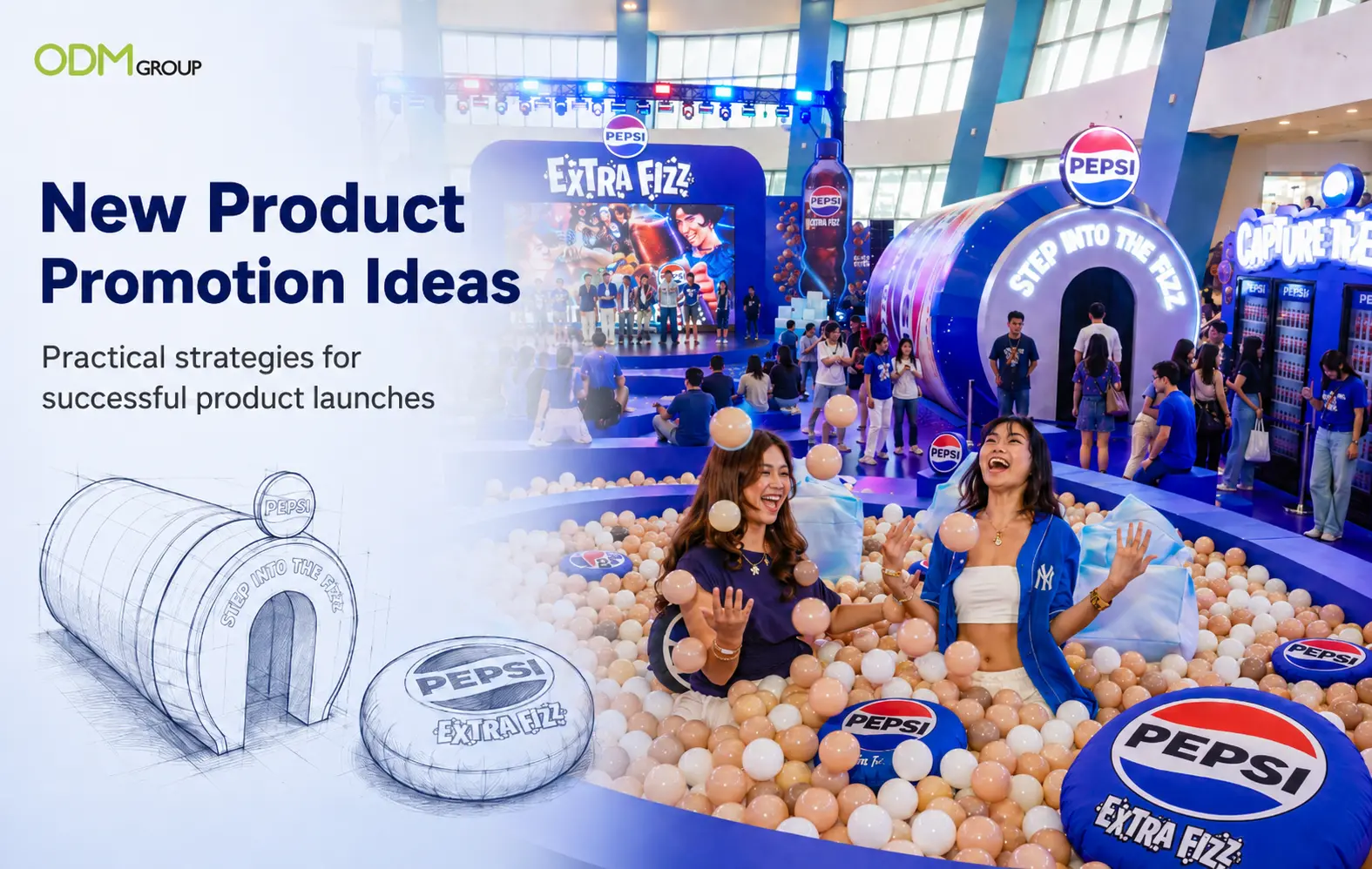
For brand managers, trade marketers, retailers, and procurement teams, the campaign offers practical lessons on how physical experiences, promotional products, packaging, and digital communication can work together to support a new product launch.
Why New Product Promotion Needs More Than Advertising
Advertising can create awareness, but awareness alone does not guarantee that people understand or try a new product.
A successful launch should answer four questions:
- What is new?
- Why does it matter?
- How can consumers experience it?
- What should they do next?
When these answers are communicated through displays, product demonstrations, packaging, events, influencers, and social media, the launch becomes easier to understand and remember.
The most effective campaigns also create continuity. A consumer may first see the product online, encounter it at a pop-up, receive a sample, notice it again in a supermarket, and finally decide to purchase it.
Each touchpoint should reinforce the same product message.
How to Promote a New Product Effectively: Lessons From Pepsi
1. Build the Campaign Around One Clear Product Idea
A launch becomes difficult to remember when it tries to communicate too many features at once.
Instead, identify one clear idea that captures the product’s main difference. It may be a stronger flavor, an improved formula, a new function, a sustainable material, a convenient format, or a limited-edition design.
For Pepsi Extra Fizz, the campaign centered on making everyday meals feel more exciting with bolder flavor and added fizz. The #GoExtra message gave the brand a simple creative direction that could be applied across event graphics, activities, social content, product displays, and influencer communication.
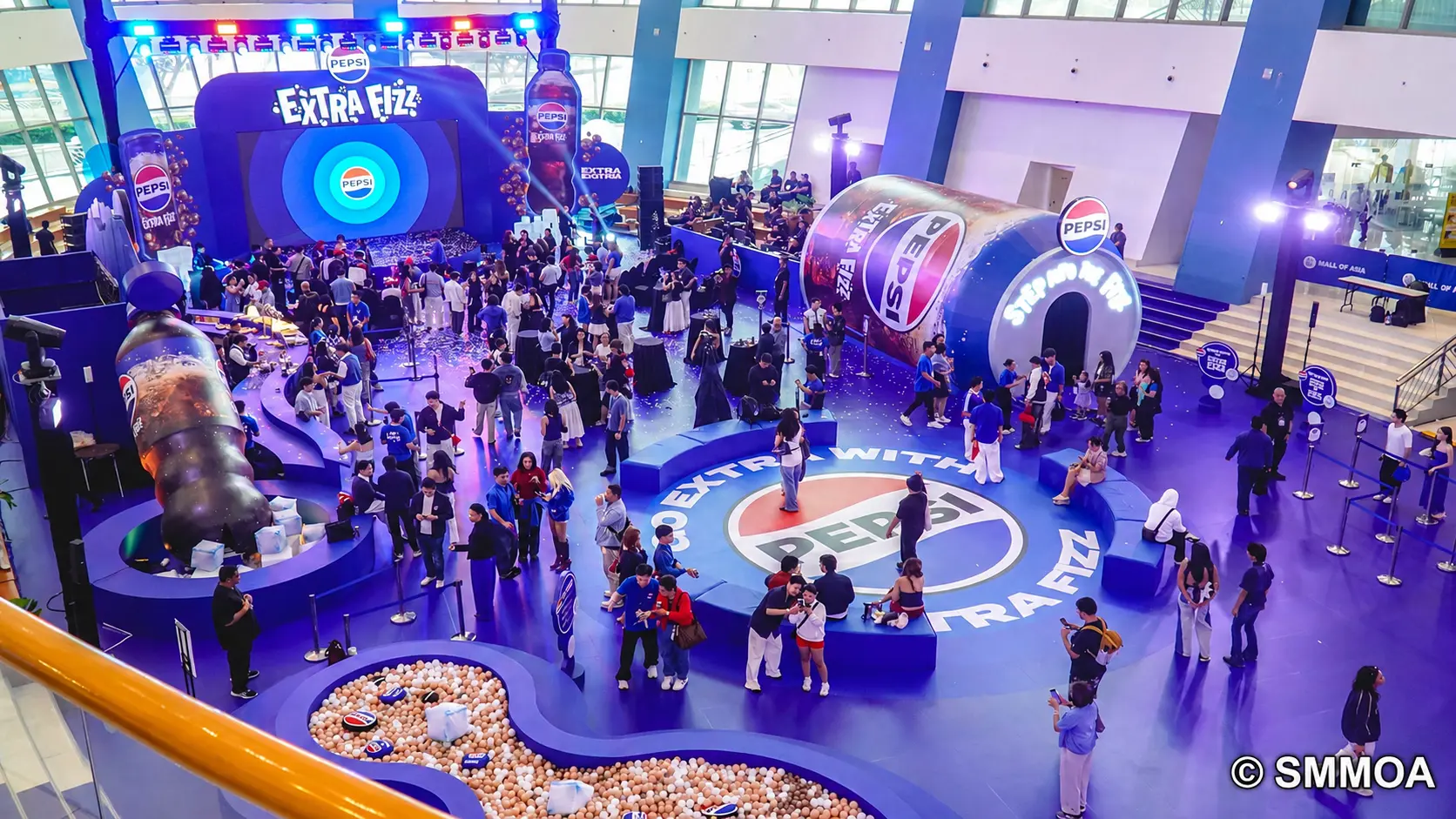
photo by SM MOA
2. Turn Product Packaging Into a Large-Scale Display
Packaging is usually the most recognizable visual asset in a product launch. Enlarging it can turn an ordinary venue into a branded environment.
At the Pepsi activation, oversized bottles, cans, logos, and product graphics appeared throughout the space. A giant horizontal bottle structure also served as a walk-through entrance, immediately immersing visitors in the world of Pepsi Extra Fizz.
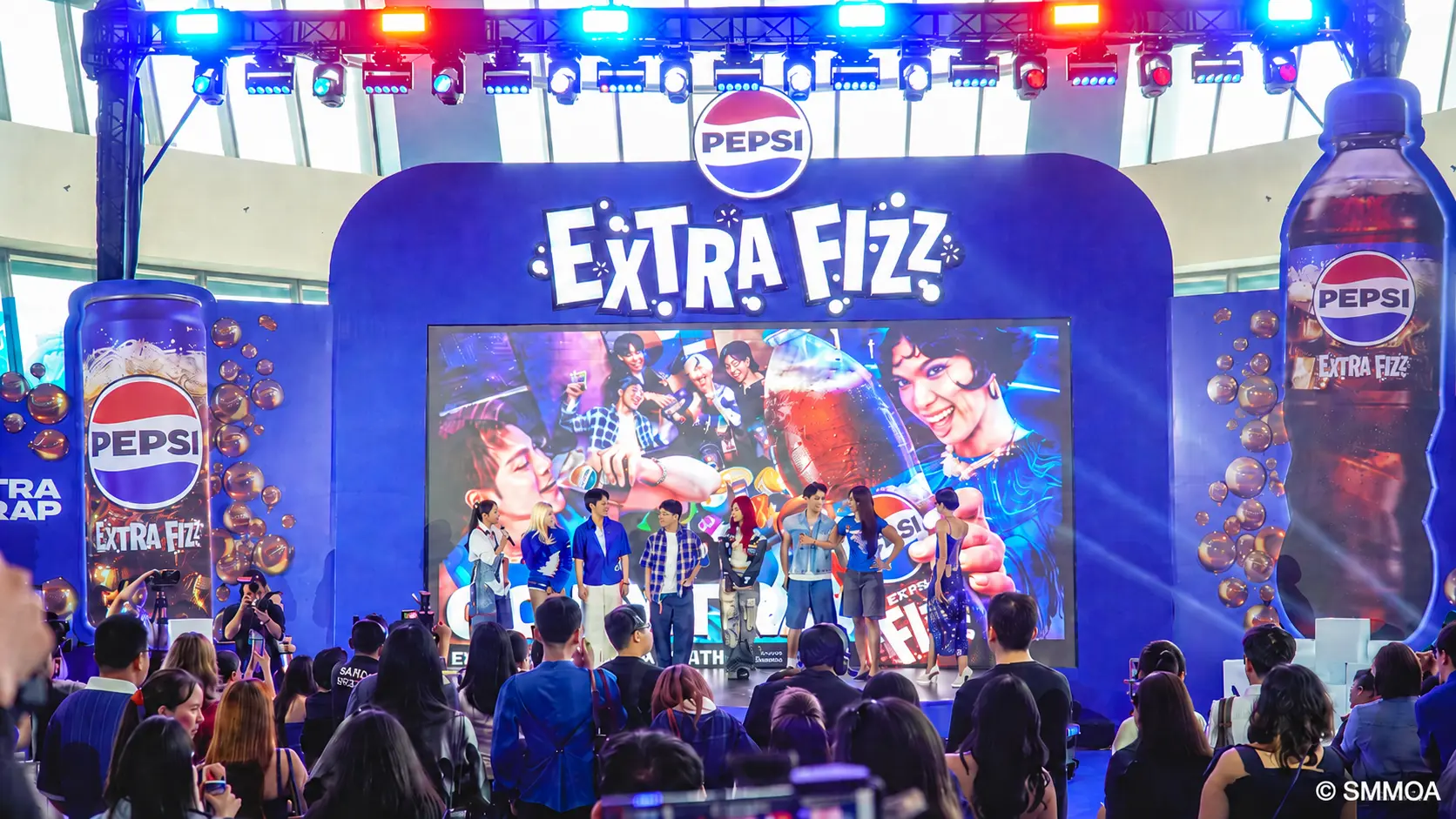
photo by SM MOA
This type of display can serve several purposes at once:
- Attract attention from a distance
- Establish the campaign’s visual identity
- Direct visitors into the activation
- Create a recognizable meeting point
- Generate photo and video opportunities
- Keep the new product visible throughout the event
Brands do not always need a massive installation. The same principle can be adapted into smaller product-shaped displays, sampling counters, retail endcaps, inflatable replicas, window installations, or modular exhibition structures.
However, the display must be practical as well as visually impressive. Designers should account for assembly, structural support, transportation, venue access, visitor movement, storage, and reuse.
3. Use Interactive Activities to Explain the Product
Interactive activities are most effective when they help visitors understand the new product rather than simply entertain them.
At the Pepsi Extra Fizz launch, the oversized Pepsi can booth offered an immersive experience inside the structure. After entering, visitors encountered interactive bubble displays accompanied by fizzing sound effects. These sensory elements translated the product’s carbonation into something people could see and hear.
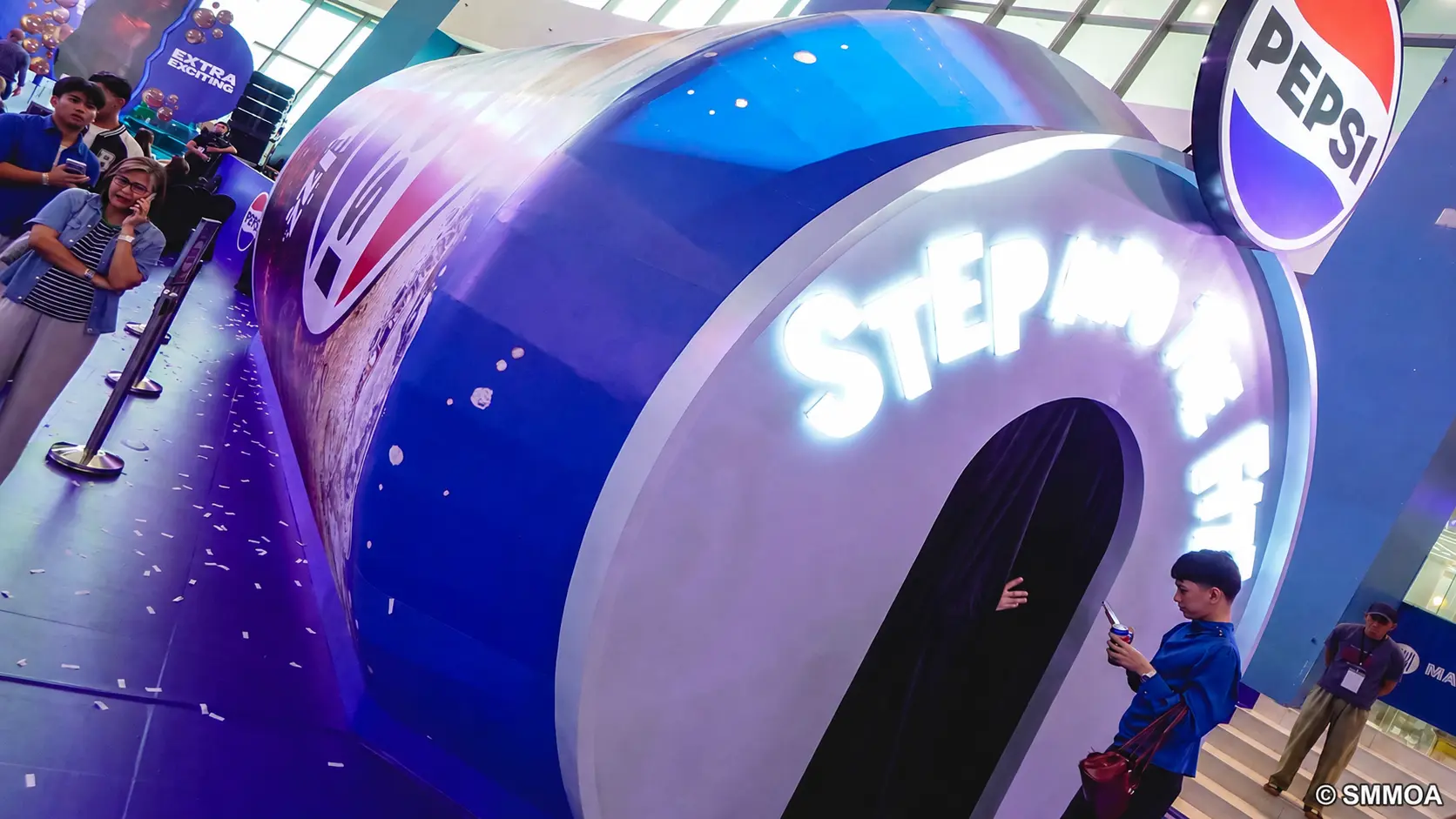
photo by SM MOA
This is a useful lesson for brands planning a new product promotion. A product feature can become the foundation of the physical experience. Sound, lighting, movement, texture, digital displays, and environmental effects can all help make an otherwise abstract benefit more tangible.
4. Give Consumers a Real Product Experience
A launch event may attract attention, but product trials are what help consumers evaluate the offer.
Pepsi included free product sampling at the Extra Fizz activation, giving attendees an opportunity to experience the drink firsthand.
For a beverage, the key product characteristics can be experienced immediately. For other categories, trial may involve touching a material, testing a feature, smelling a fragrance, wearing an item, watching a live demonstration, or comparing the new product with an existing option.
A well-managed sampling area should include:
- Visible product presentation
- Trained brand representatives
- Clear hygiene procedures
- Short product explanations
- Disposal or return points
- Purchase information
- QR codes or store locators
- A simple feedback mechanism
Staff should be able to explain the product in one or two sentences. Long sales scripts can interrupt the experience.
Most importantly, sampling must lead somewhere. Visitors should know where the product is available, how much it costs, and whether a purchase promotion is running.
5. Combine Entertainment With Product Education
Entertainment can help build excitement, attract crowds, and create content. However, the product should never become secondary to the performance.
The Pepsi launch used a central stage, large digital screens, music, audience interaction, and a special appearance by social media personality Mimiyuuuh. The program also included a dance activity involving creators and attendees.
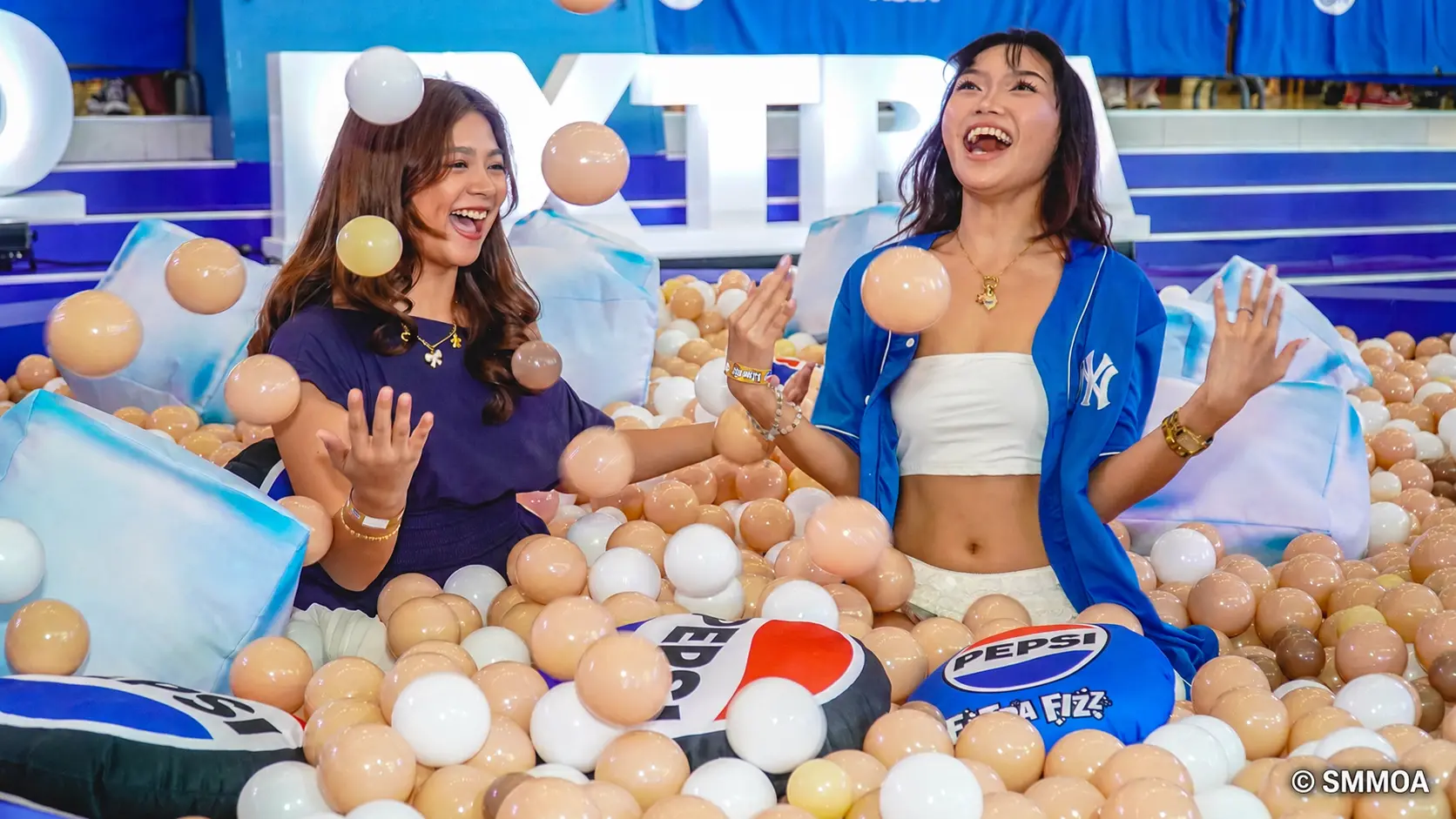
photo by SM MOA
Throughout the stage area, large product graphics and Pepsi Extra Fizz branding remained visible. This allowed the entertainment to support the product reveal rather than compete with it.
Brands can use live programming for:
- Product demonstrations
- Founder or executive presentations
- Influencer interviews
- Audience competitions
- Educational sessions
- Live customization
- Prize announcements
- Product comparisons
Every segment should return to the main product message. Hosts should reinforce what is new, why it matters, and how visitors can try or purchase it.
6. Create Areas Designed for Social Media Content
Consumers are more likely to share a product launch when the environment gives them something distinctive to photograph or film.
The Pepsi Extra Fizz activation included several content-ready features, such as the oversized Pepsi can booth, interactive ball pit, illuminated stage, branded cushions, and large product installations. One particularly creative feature was a refrigerator-style photo booth.
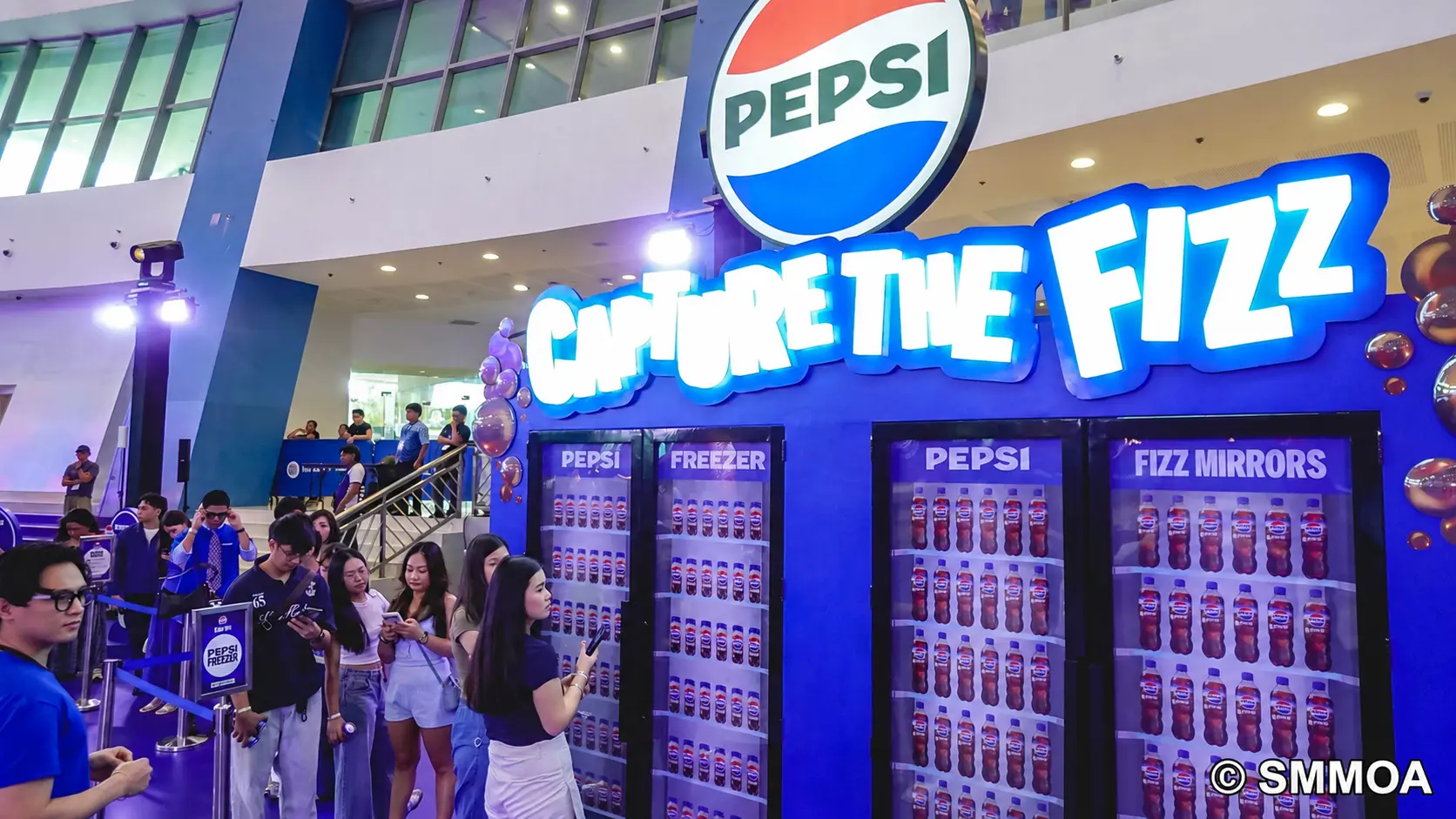
photo by SM MOA
From the outside, the installation looked like a branded fridge filled with Pepsi products. However, the refrigerator door served as the entrance to a photo booth. This unexpected transition added an element of discovery and gave visitors a more engaging alternative to a standard photo wall.
Remember, the strongest social media installations encourage visitors to do something rather than simply stand in front of a backdrop. Opening a refrigerator door, entering an oversized product, interacting with bubbles, or holding branded merchandise can make the resulting content more memorable and shareable.
7. Use Influencers to Demonstrate the Experience
Influencers are most valuable when they help audiences see how the product fits into real life.
Pepsi invited media representatives, digital creators, and tastemakers to experience the campaign. Mimiyuuuh’s appearance and on-stage participation added entertainment value to the event while boosting its social reach.
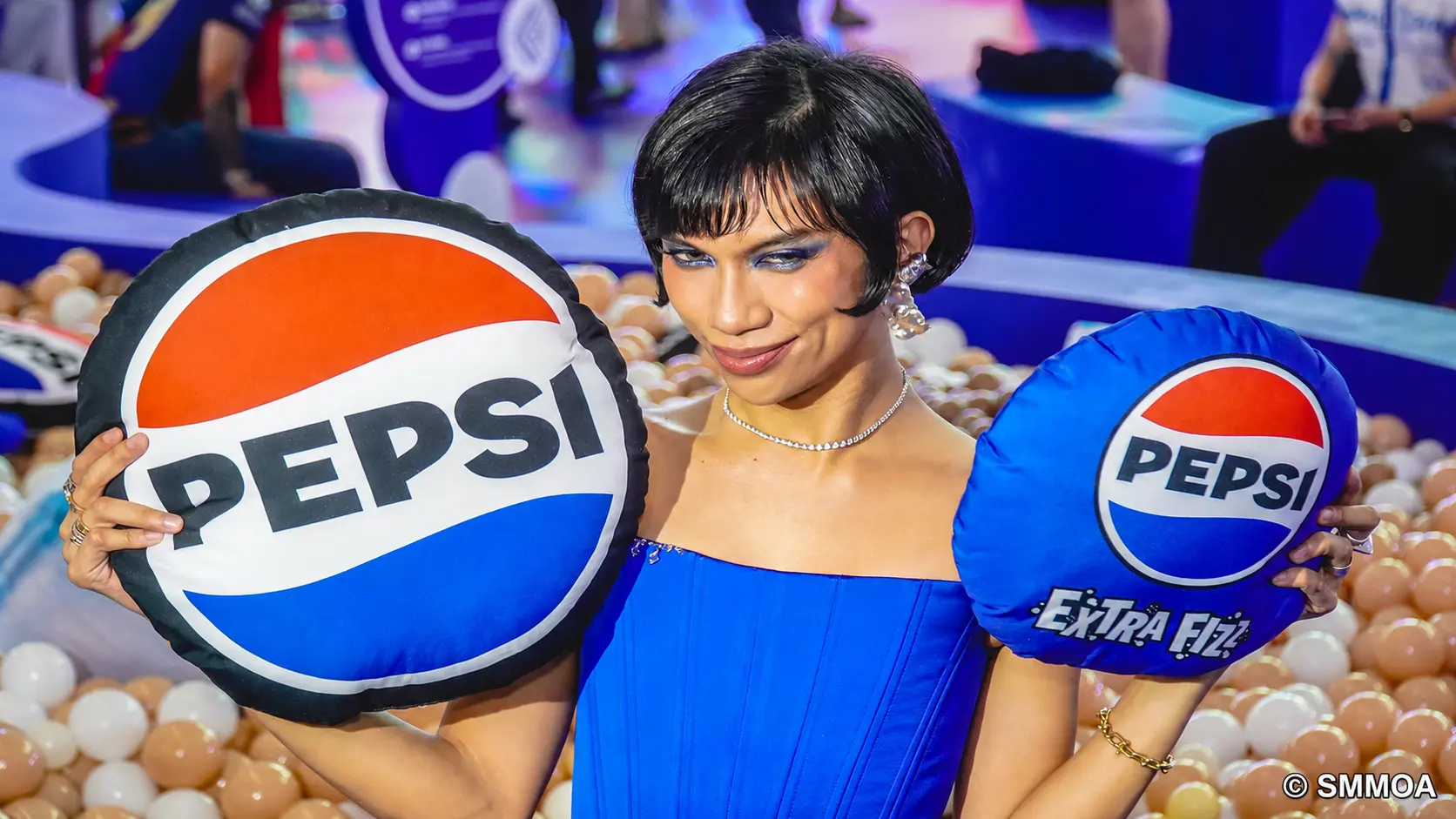
photo by SM MOA
Influencer involvement can be divided into three stages.
Before the launch, creators can tease the product, reveal invitations, or encourage followers to attend.
During the event, they can try the product, participate in activities, interview guests, and share live reactions.
After the launch, they can publish reviews, recaps, meal pairings, tutorials, or retail reminders.
Brands should select creators based on audience relevance, content quality, engagement, location, and brand fit—not follower count alone.
The creative brief should provide the key product message, required disclosures, campaign hashtag, and essential talking points. It should still allow creators to communicate in their own style.
8. Make Promotional Merchandise Part of the Activation
Promotional merchandise should not feel disconnected from the launch concept.
At the Pepsi event, product-shaped cushions appeared in the interactive ball pit. Some featured the Pepsi logo, while others carried Pepsi Extra Fizz branding.
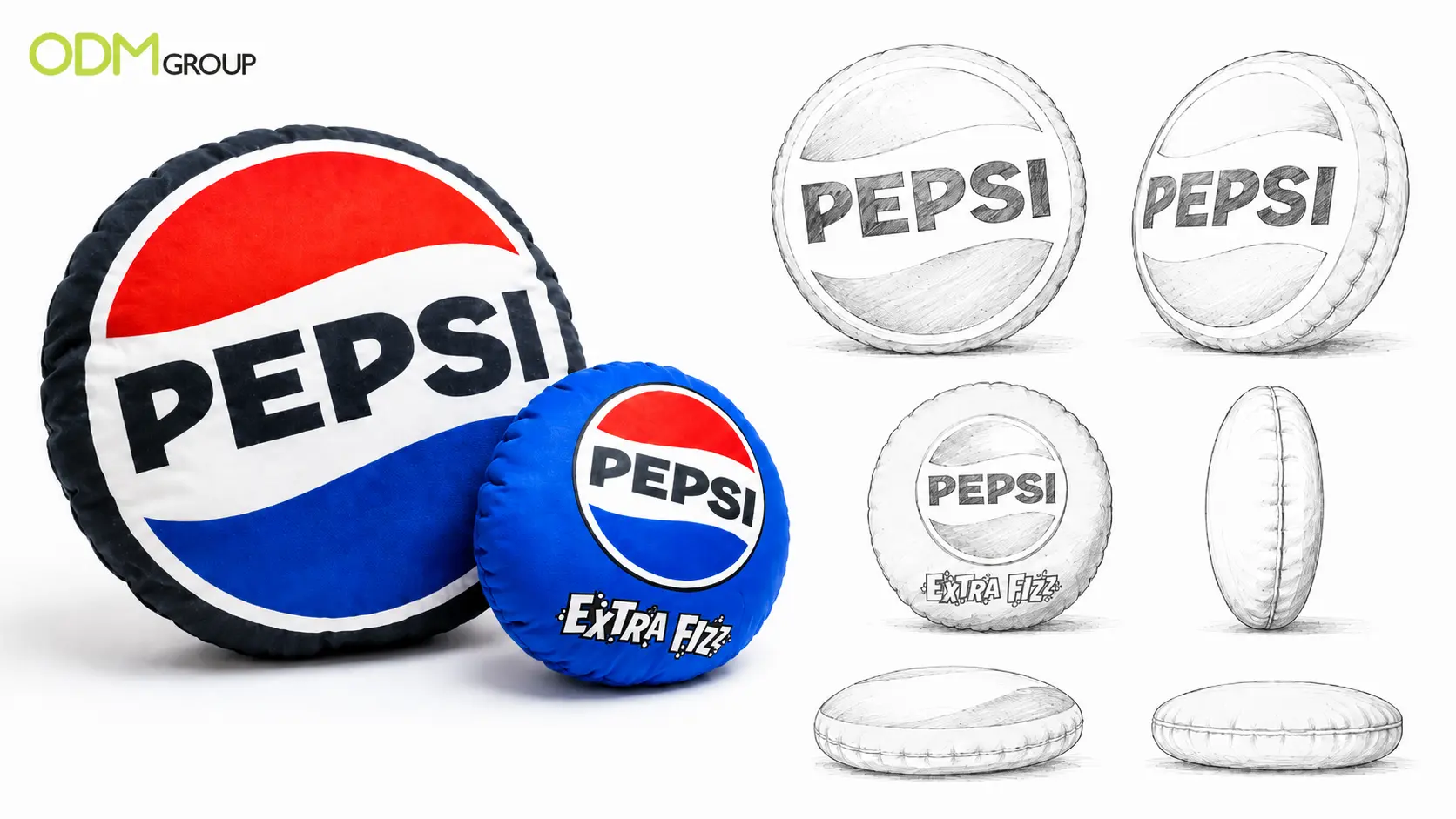
This shows how promotional merchandise can play an active role in an event instead of being handed out only at the exit.
Other launch merchandise could include:
- Miniature product replicas
- Custom drinkware
- Wearable accessories
- Limited-edition bags
- Collectible pins
- Product-shaped plush items
- Cooling products
- Phone accessories
- Branded food containers
- Event apparel
Brands can also create different merchandise tiers. Small items may be distributed to general visitors, while higher-value products can reward purchases, competition winners, influencers, retailers, or VIP guests.
The item should either be useful enough to keep or distinctive enough to display.
9. Connect the Launch With Retail and Digital Sales
An impressive event will not generate its full value unless it leads consumers toward purchase.
The campaign’s visual identity should continue across supermarkets, convenience stores, e-commerce listings, delivery platforms, and social media.
Brands can connect an activation with sales through:
- Store locator QR codes
- Digital coupons
- Product bundles
- Launch-day discounts
- Gift-with-purchase offers
- Receipt-based redemptions
- Retail-exclusive merchandise
- Limited-edition packaging
- Online ordering links
Pepsi’s decision to stage the launch at the SM Mall of Asia placed the product in a high-traffic commercial environment while providing space for a large consumer activation. The launch took place at the mall’s Music Hall, with public activities promoted for July 25–26, 2026.
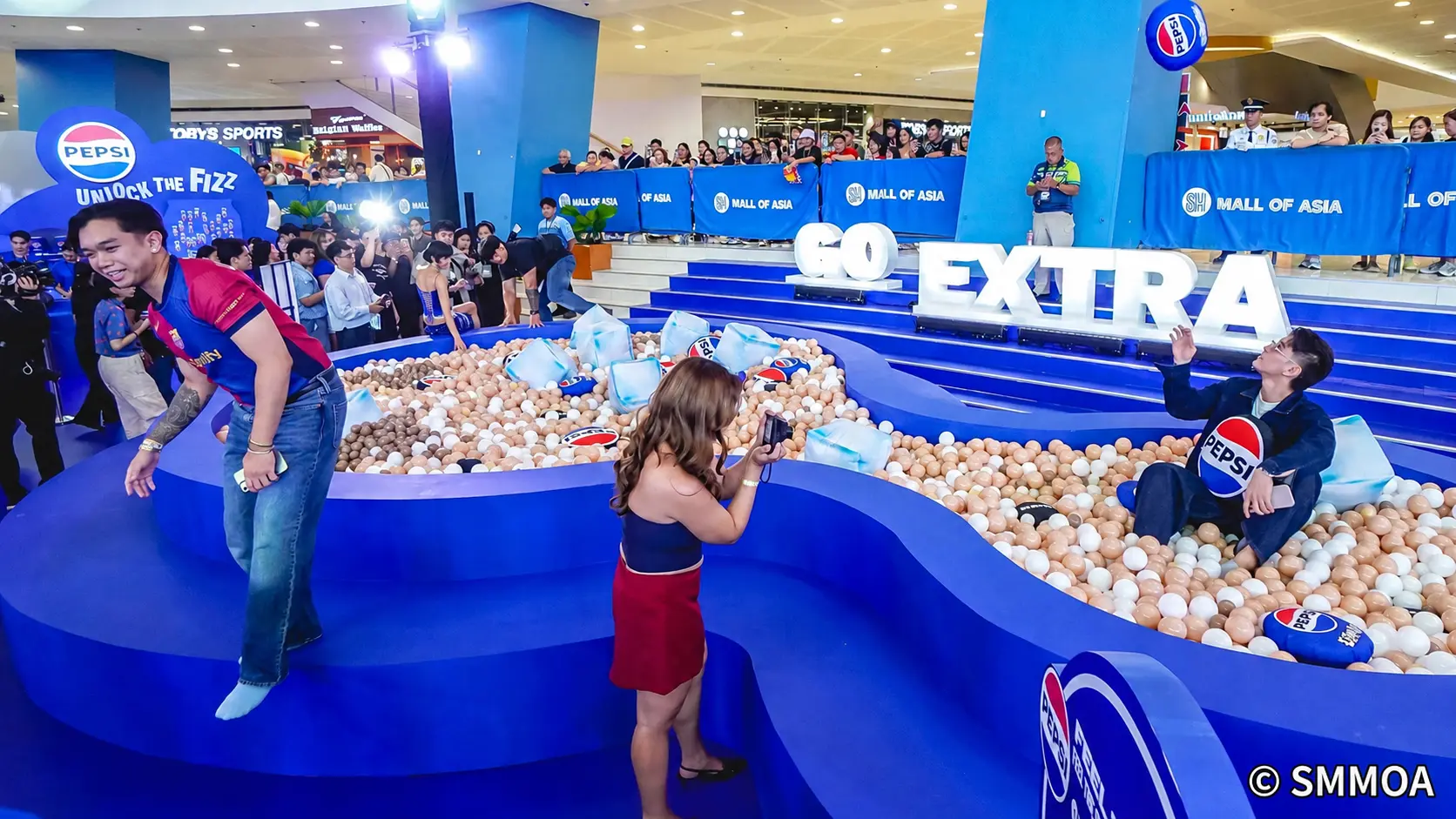
photo by SM MOA
The next step should remain clear throughout the event. Do not assume visitors will search for the product later.
Tell them where to buy it.
Product Launch Ideas
A successful beauty product launch is no longer built around one reveal date. It is a coordinated campaign that lets customers discover, test, and remember a product across several touchpoints.
Take a closer look at some of the most successful product launch campaigns in history, exploring the strategies that made them unique and the valuable lessons we can learn from them.
Creating a buzzworthy new product launch marketing plan isn’t just about throwing ideas at the wall and seeing what sticks. Read insights here.
Planning to promote your new product? Explore our wide range of promotional merchandise!


How ODM Supports New Product Promotion
A successful new product launch requires coordination between strategy, design, engineering, sourcing, production, and logistics.
ODM works as a strategic product marketing partner, helping brands translate campaign ideas into physical assets that support awareness, engagement, trial, and sales.
Our team can help develop:
ODM can design product-shaped displays, retail units, pop-up structures, sampling counters, exhibition installations, and interactive display concepts.
We consider more than appearance. Designs can be developed around visitor flow, product access, assembly, transportation, venue limitations, durability, and future reuse.
Packaging is often the first physical interaction consumers have with a new product.
ODM can support structural packaging design, promotional sleeves, limited-edition packs, gift boxes, influencer kits, retail bundles, and launch presentation boxes.
The objective is to make the new product recognizable while ensuring that the packaging is suitable for production, packing, transport, and retail display.
ODM can develop merchandise that connects directly to the launch concept rather than relying on generic giveaways.
Through Mindsparkz, our design team can create original concepts, product sketches, 3D visuals, material recommendations, prototypes, and production-ready specifications.
Once the design is approved, ODM can support factory selection, prototyping, quality control, packaging coordination, and international logistics.
This integrated approach helps maintain consistency across displays, packaging, merchandise, and other campaign assets.
Turn Your Next Product Launch Into an Experience
A new product deserves more than a press announcement and a temporary banner.
The right displays can command attention. Interactive activities can make the product benefit tangible. Packaging can strengthen presentation. Merchandise can keep the campaign visible. Together, these touchpoints can turn a launch into an experience that consumers understand, remember, and share.
Planning a new product promotion? Partner with ODM to develop custom displays, launch packaging, interactive concepts, and promotional merchandise built around your product’s strongest idea. Contact our team to start designing a launch that moves consumers from first impression to product trial—and from trial to purchase.
ODM Services
FAQs about New Product Promotion
How early should a business plan a new product promotion?
Start three to six months before launch. Complex displays, packaging, or merchandise may need more time for design, prototyping, production, and shipping.
How much should a business budget for a product launch?
The budget depends on the campaign scale, venue, production volume, and promotional channels. Include design, displays, packaging, merchandise, staffing, content, logistics, and contingency costs.
Which promotional channels should businesses prioritize?
Choose channels that match how customers discover and evaluate the product. Retail displays, sampling, social media, influencers, and demonstrations are often effective when used together.
What promotional merchandise should businesses use?
Choose items connected to the product or customer lifestyle. Useful, distinctive, or collectible merchandise is more likely to be kept and shared.
Latest Blogs
Car Tissue Holder: A Creative Automotive Promotional Gift
A car tissue holder can be more than a [...]
6 Tips for a Sustainable and Functional Promotional Travel Kit
A promotional travel kit combines practical travel essentials with [...]
Promotional Products for Pets: Ideas Inspired by SmartHeart Pet’s Homie
During a visit to Vietnam, the ODM team came [...]
15 Promotional Products for Universities to Celebrate World Students’ Day
Promotional products for universities work best when they support [...]
Promotional Beer Bottle Opener: A Bottle-Shaped Gift for Brewery Campaigns
bottle shaped bottle opener, automatic bottle opener, promotional product for beer, beer promos
3D Memo Pads: Sculptural Designs for Brand Campaigns
3D memo pads combine an everyday office product with [...]