
A well-designed pop-up store display gives brands an opportunity to create a physical retail presence without committing to a permanent location. It can introduce a new collection, test a market, support a seasonal campaign, or bring an online brand closer to its customers.
However, placing products on temporary shelves is not enough. The display must attract attention from a distance, communicate the campaign concept and make products easy to browse. Every fixture, material and interaction should contribute to a clear customer journey.
What Is a Pop-Up Store Display?
A pop-up store display is a temporary arrangement of retail fixtures, branded structures, signage, and product presentation elements used inside a short-term retail space.
The complete pop-up store may include:
- Product display stands
- Wall and floor graphics
- Shelving and merchandise tables
- Demonstration areas
- Promotional offer displays
- Interactive installations
- Photo opportunities
- Storage and checkout counters
- Lighting and digital screens
Unlike a permanent shop interior, a pop-up display is usually designed for quick installation and removal. It may operate for one day, several weeks or an entire season.
Pop-up stores can be installed in shopping malls, airports, hotels, festivals, department stores, trade shows and outdoor venues. Some brands also place them inside existing stores as temporary shop-in-shop experiences.
Why Brands Invest in Pop-Up Store Displays
Temporary retail spaces allow brands to concentrate their campaign within a defined period and location. This can create a sense of urgency while giving customers a more direct way to experience the products.
Customers can touch materials, test functions, compare sizes and understand how products fit into their routines. This is particularly valuable for brands that primarily sell online.
A physical display can answer questions that are difficult to address through product photography alone.
A pop-up store can become the central experience for launching a new product, limited collection or brand collaboration.
Instead of relying only on advertising, the company can create an environment where customers discover the product through demonstration, storytelling and interaction.
Shopping mall atriums and event venues expose brands to people who may not actively search for their products online.
An open, highly visible display can capture passing traffic and introduce the brand to a wider audience.
A visually distinctive pop-up gives customers and content creators something worth photographing. Product-shaped structures, themed sets and interactive features can extend the campaign beyond the physical location.
However, the photo opportunity should connect naturally with the product and campaign. A decorative backdrop with no clear brand relevance may generate images without strengthening product recognition.
Pop-ups can help brands evaluate locations, product categories, display formats and customer responses before investing in a permanent space.
Teams can use the activation to observe which products attract attention, where visitors spend time and which interactions lead to purchases.
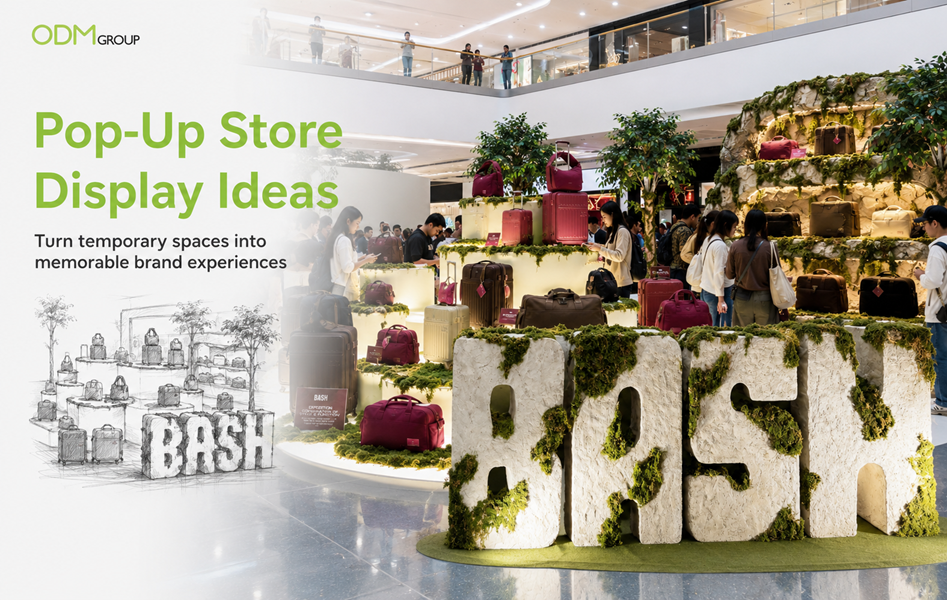
BASH Expedition Pop-Up Store at SM Mall of Asia
The BASH Expedition Pop-Up Store at SM Mall of Asia demonstrates how a temporary display can turn an open mall area into a distinctive brand environment.
The activation presented bags, luggage, and travel accessories through an expedition-inspired setting. Rather than relying on conventional shelving, the display used artificial moss, stone-like surfaces, green textures and landscape-inspired forms.
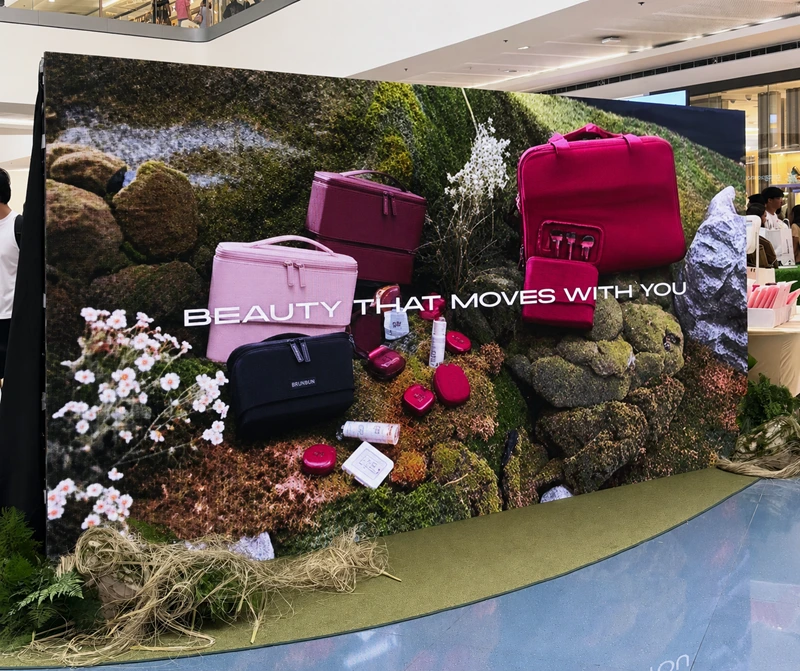
photo by SM MOA
lluminated platforms presented the merchandise at different heights. Meanwhile, the open layout allowed mall visitors to see and approach the products from several directions.
The design connected the merchandise with movement, exploration and travel. It therefore communicated more than individual product features: it placed the collection within a recognizable lifestyle.
What Made the BASH Pop-Up Store Display Effective?
Several aspects of the activation offer useful lessons for other brands developing temporary retail spaces.
1. The Theme Supported the Products
The expedition theme connected naturally with bags, luggage, and travel accessories. The nature-inspired textures helped reinforce ideas of movement and exploration.
This alignment matters. A theme should give shoppers useful context for the products rather than serve as unrelated decoration.
2. Natural Textures Created Contrast
The moss-like surfaces and organic shapes stood out against the shopping mall’s polished architecture.
This contrast helped the activation establish its own visual identity within a busy retail environment.
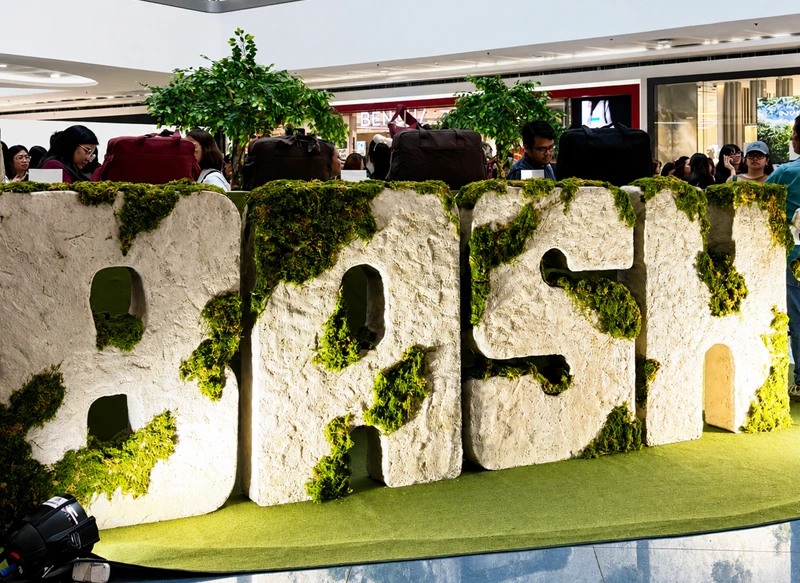
photo by SM MOA
3. Different Display Heights Created Depth
Raised platforms separated individual products and made selected designs more visible. The layered surfaces also allowed the installation to resemble a miniature landscape rather than a flat arrangement of merchandise.
Varying product heights can help brands establish a clear hierarchy between hero products, supporting collections, and smaller accessories.
4. The Open Layout Encouraged Exploration
Customers could approach the activation from several directions without passing through a narrow entrance.
This is especially important for mall atriums, where visitors may arrive from the front, sides or rear. Large walls and poorly positioned counters can interrupt sightlines and make a temporary store appear less accessible.
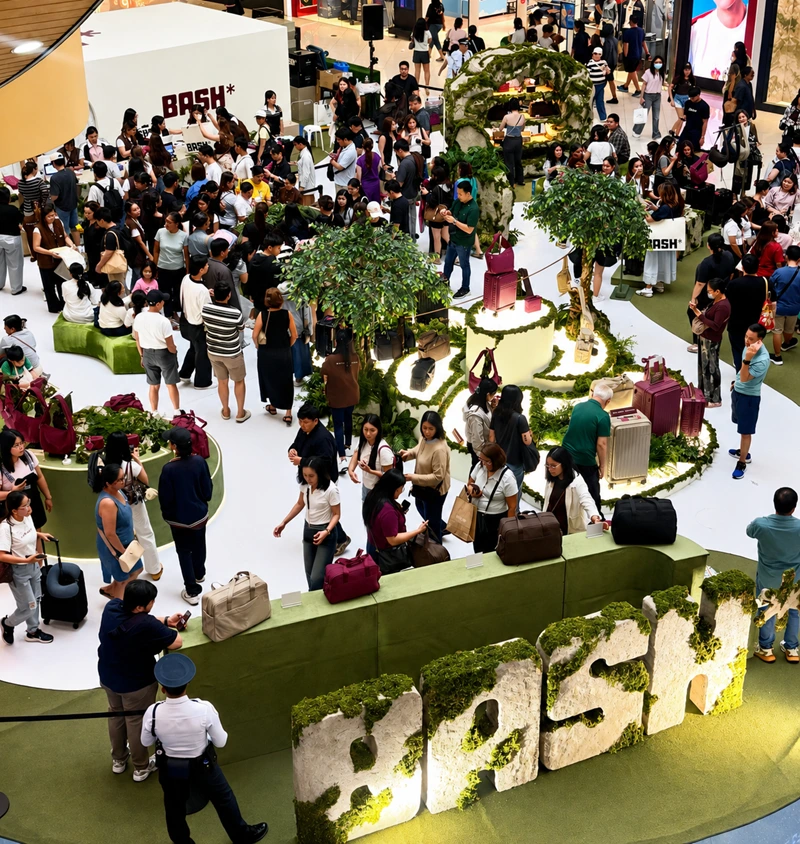
photo by SM MOA
5. Lighting Highlighted the Merchandise
Integrated lighting drew attention to the products and helped define individual display zones.
Strategic lighting can also direct customers through a space, emphasize hero items, and improve the appearance of customer photographs.
6. The Environment Felt Consistent
The materials, colors, landscaping, and fixture shapes followed one clear visual direction. This consistency made the activation feel like a complete environment rather than a group of unrelated display units.
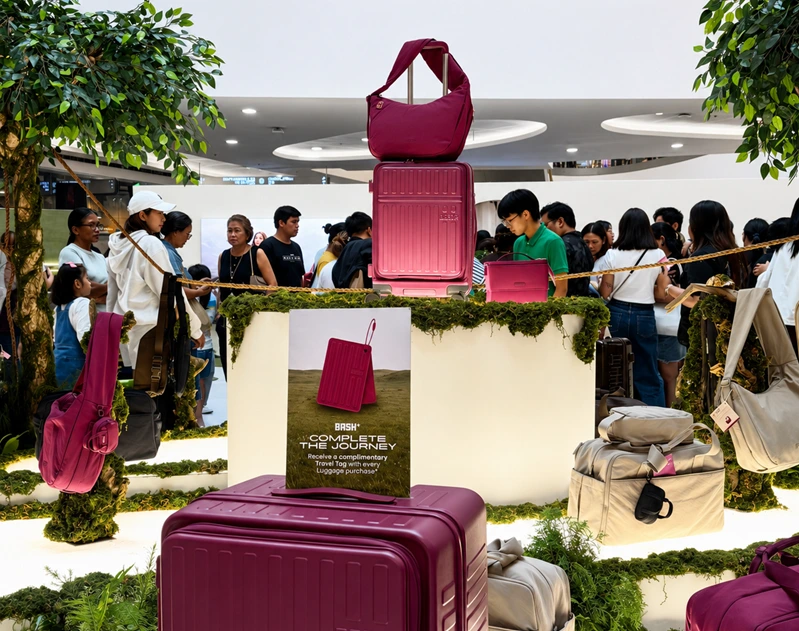
photo by SM MOA
12 Pop-Up Store Display Ideas With Real Brand Examples
The most suitable concept depends on the venue, product category, audience, and campaign objective. These ideas can be adapted for mall activations, roadshows, outdoor events and temporary shop-in-shop campaigns.
1. Oversized Product Display
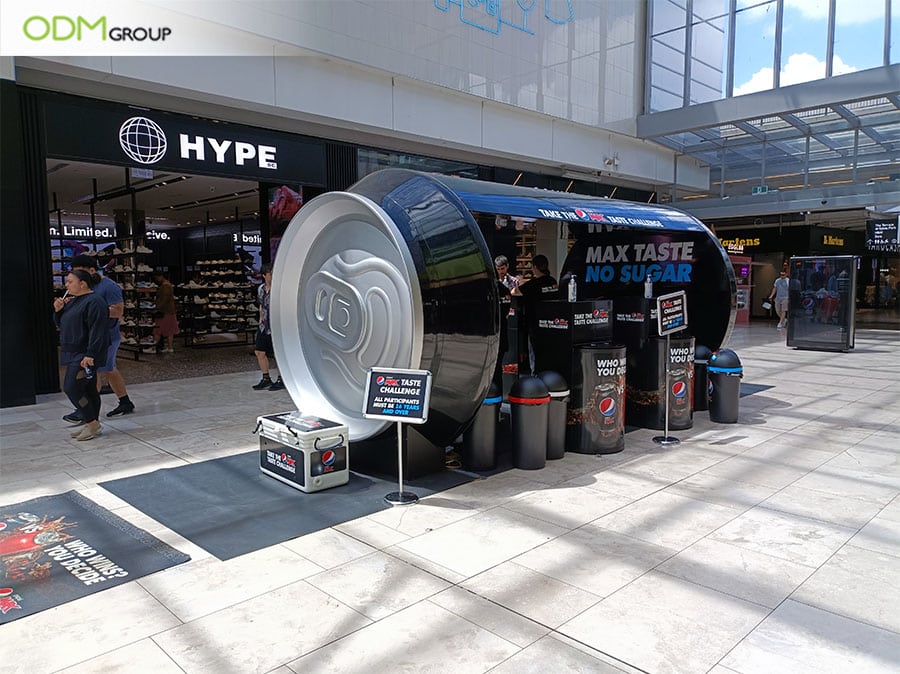
Turn a recognizable product or package into a large architectural feature.
The Pepsi MAX oversized pop-up shop design demonstrates this approach. Its giant horizontal can immediately connected the activation with the promoted beverage while providing an enclosed area for a taste challenge.
Brands could transform the following into large display structures:
- Beverage cans or bottles
- Suitcases
- Perfume bottles
- Cosmetic cases
- Shoe boxes
- Food packages
- Electronic devices
An oversized structure should serve a practical purpose in addition to attracting attention. It might contain sampling counters, digital screens, product shelves, storage or an interactive activity.
2. Destination-Themed Pop-Up
Build the retail environment around a place or setting connected to the campaign.
A travel brand could recreate an airport gate, luggage carousel, campsite, or hotel lobby. A summer collection might use a beach-club setting, while a food brand could draw inspiration from a café, market or street stall.
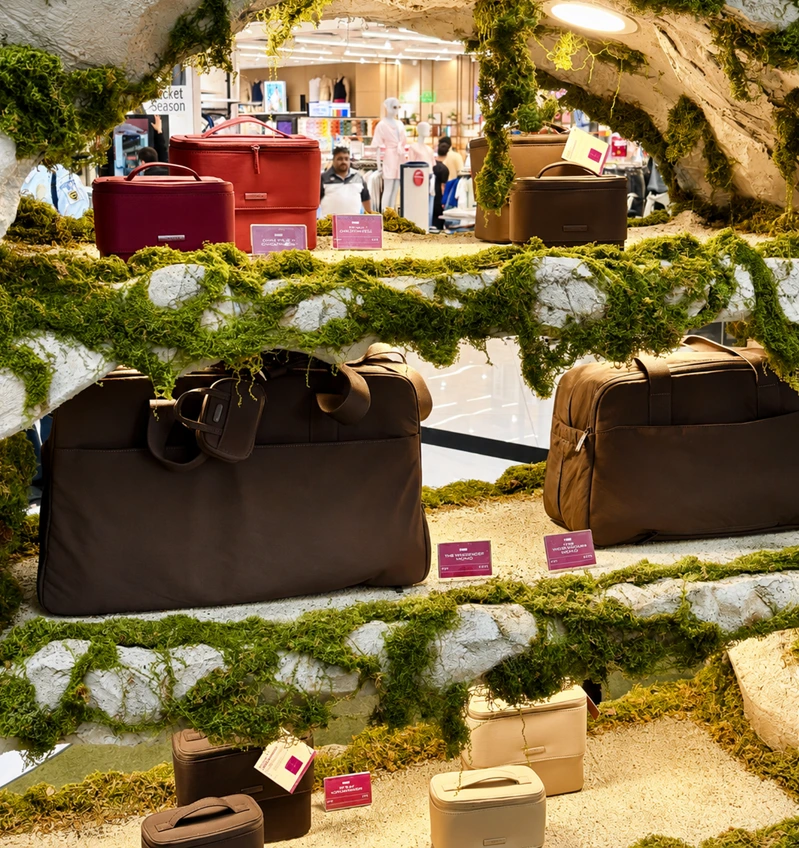
photo by SM MOA
The BASH Expedition Pop-Up followed a related direction by turning its mall location into a nature-inspired landscape.
Destination-led displays help customers imagine where and how they could use the products.
3. Branded Product Installation
Extend the promoted product’s colors, graphics and packaging features across the store.
The GS25 x Daisy Ale mall pop-up store incorporated the beverage’s distinctive mint-green packaging throughout its walls, shelves and central displays. Repetition made the product identity part of the environment.
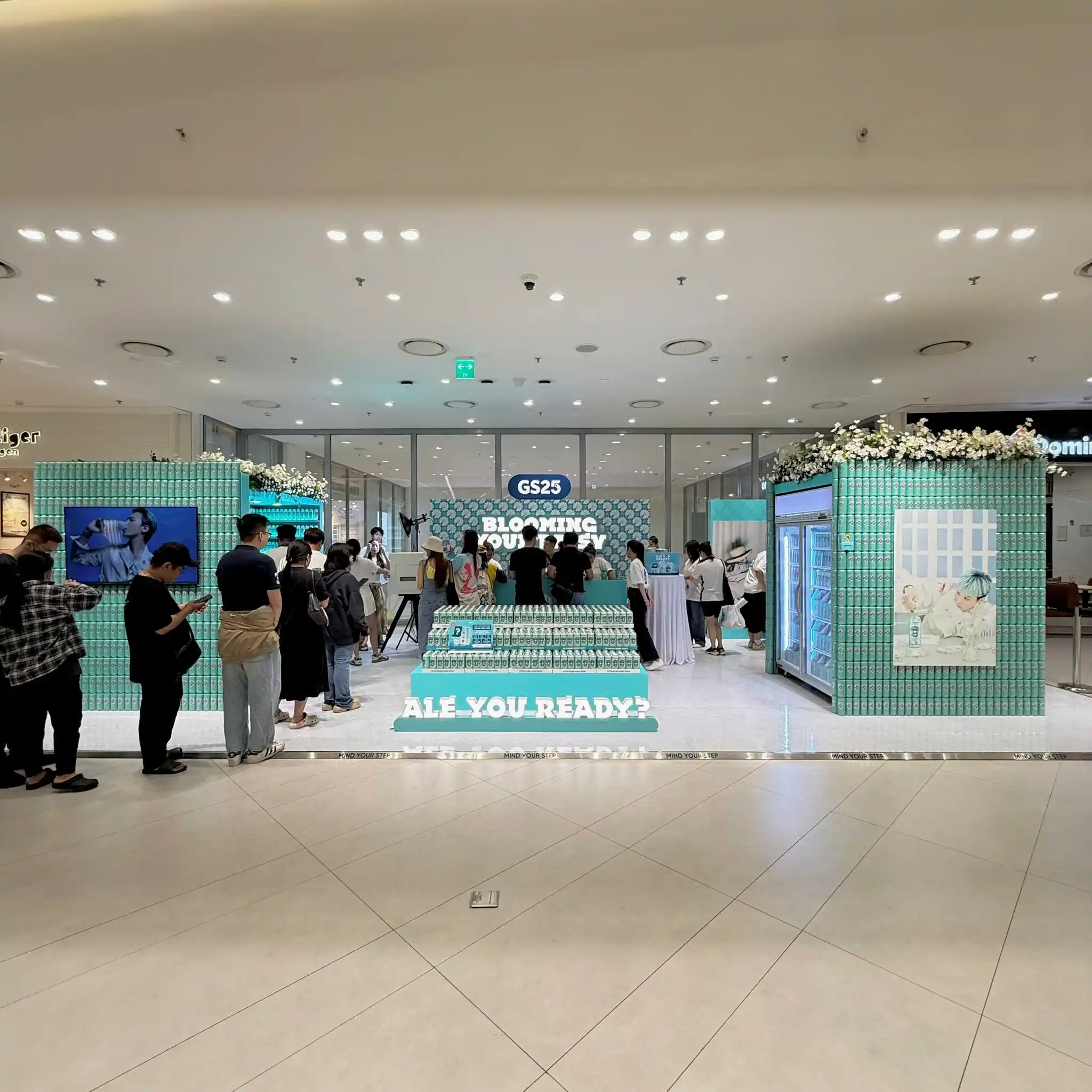
Brands can apply this approach through:
- Package-shaped display blocks
- Repeated bottle or can silhouettes
- Product-inspired wall patterns
- Branded arches
- Packaging-shaped plinths
- Oversized replicas displayed with actual products
This idea works especially well for products with recognizable colours, shapes or graphic identities.
4. Modular Display System
Use interchangeable panels, shelves, hooks, and graphics that can be rearranged for different venues.
A modular display can adapt to:
- Mall atriums
- Department stores
- Trade shows
- Outdoor events
- Retail roadshows
- Seasonal campaigns
The structure should accommodate different floor plans, product weights and transportation requirements. Reusable frames can remain in circulation while graphics and decorative panels are updated for each campaign.
5. Product Trial Zone
Give customers a dedicated area where they can test or compare the merchandise.
A bag brand might allow shoppers to examine compartments, adjust straps and test capacity. Beauty companies can provide mirrors and hygienic testers, while electronics brands can install listening or demonstration stations.
For food and beverage campaigns, the trial zone could become a sampling counter or blind taste test. The Pepsi MAX Taste Challenge illustrates how product trial can become the central attraction rather than a secondary activity.
6. Fan Community Zone
Turn a temporary space into a meeting point for people who share an interest in a sport, entertainment property, artist or cultural event.
The Rugby World Cup fan-zone activation used teardrop banners, A-frame signs, branded merchandise, trophy-related displays and an interactive selfie station. Together, these elements extended the event atmosphere beyond the stadium.
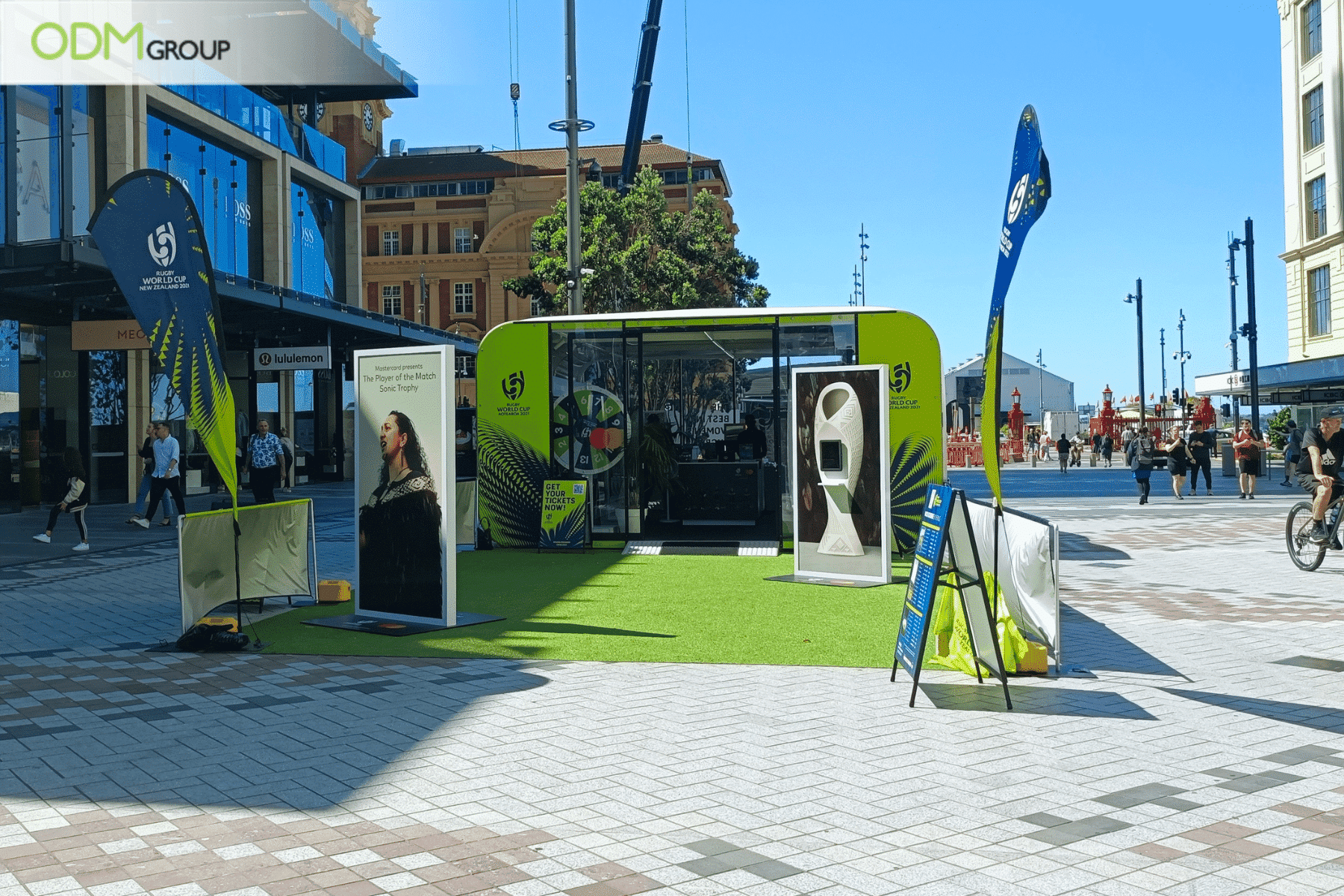
A fan community zone could include:
- Live-screening areas
- Team or character merchandise
- Prediction games
- Collectible giveaways
- Trophy replicas
- Photo stations
- Personalization activities
- Meet-and-greet spaces
This format can support sports tournaments, movie releases, gaming events and music campaigns.
7. Product Customization Bar
Allow customers to add personal details to their purchases.
Depending on the merchandise, options might include:
- Initials
- Embroidery
- Engraving
- Patches
- Bag charms
- Decorative straps
- Stickers
- Custom packaging
Personalization can make a standard product feel exclusive to the event. The production process may also become part of the attraction as customers watch their items being completed.
Brands should separate ordering, production and collection areas to prevent congestion around the main product displays.
8. Interactive Challenge Station
Create a simple activity that demonstrates a product feature or campaign message.
Visitors could:
- Pack a suitcase within a time limit
- Test the capacity of a bag
- Complete a reaction game
- Identify a flavor through a blind taste test
- Match products to different situations
- Unlock a prize using a digital code
- Spin a prize wheel after purchasing
The activity should be easy to understand and short enough to maintain visitor flow. A sample, promotional gift or discount can provide an additional reason to participate.
9. Immersive Experience Cube
Use a semi-enclosed structure to separate visitors from the surrounding retail or event environment.
The Mastercard immersive event installation shows how bold architecture can generate curiosity and create a controlled space for an interactive experience.
Inside an experience cube, brands could use:
- Projection mapping
- Augmented or virtual reality
- Directional sound
- Controlled lighting
- Interactive screens
- Product films
- Sensory demonstrations
- Private consultations
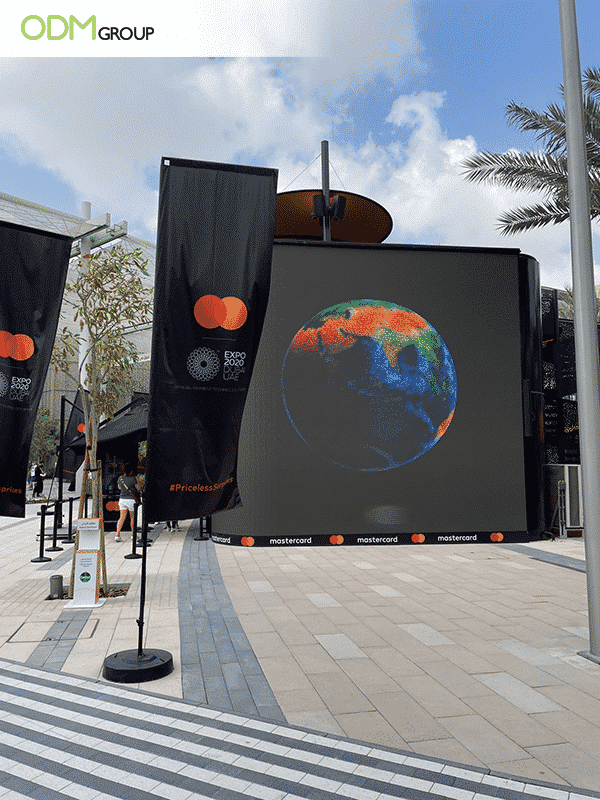
This format is valuable when the activation requires controlled light, sound or visitor attention.
10. Gift-With-Purchase Display
Present the promotional gift beside the qualifying products or campaign activity.
Showing the physical gift makes the offer easier to understand and can increase its perceived value. Depending on the campaign, suitable gifts may include:
- Luggage tags
- Bag charms
- Pouches
- Reusable bottles
- Collectible pins
- Branded apparel
- Hand flags
- Mini sports accessories
- Limited-edition products
The Rugby World Cup fan zone demonstrates how branded giveaways can strengthen participation. Items such as hand flags can be used immediately while increasing campaign visibility throughout the event.
11. Social Content Station
Create a space where visitors can photograph themselves with the products or campaign environment.
The Rugby World Cup activation included an interactive selfie point that encouraged visitors to document their participation. Its branded design helped keep the event identifiable within customer-generated content.
A travel campaign might use a departure gate, scenic lookout or luggage installation. A beauty brand could build an illuminated vanity, while a beverage campaign might use an oversized package or ingredient-inspired set.
Position the station away from browsing, payment and collection queues.
12. Flat-Pack Outdoor Pop-Up
Develop a portable activation that can move between festivals, public spaces, and event venues.
Its components might include:
- Foldable counters
- Modular wall panels
- Teardrop flags
- A-frame signs
- Artificial turf
- Branded barriers
- Mobile display cases
- Lockable storage
- Portable photo stations
A flat-pack system is particularly useful for regional activations that visit several locations.
Practical Considerations Before Production
A pop-up store display must work as a retail environment, not only as an attractive rendering.
Confirm the available floor area, height restrictions, electrical access, loading schedule and approved installation methods.
Shopping centers and event venues may also have requirements for fire safety, emergency access, materials, sound levels, and operating hours.
Determine how many products each fixture must hold and how frequently staff will replenish the display.
Shelves must safely support the expected weight without looking overcrowded. Concealed storage should remain accessible to staff without interrupting customers.
The number of components, required tools and installation sequence can affect labour costs and venue access.
Design teams should consider packing dimensions, component labels, protective materials and the time required to assemble and dismantle the display.
Even a short activation may experience frequent handling, cleaning and accidental impact. Materials, edges, connectors and finishes should suit the anticipated traffic and campaign duration.
Entrances and circulation areas should accommodate different visitors. Important products and interactive features should remain within comfortable reach.
For a multi-location campaign, consider durable frames, replaceable graphics and repairable components. A reusable system may require a higher initial investment but provide better value across several events.
How ODM Helps Develop Pop-Up Store Displays
ODM works with brands to transform campaign objectives into creative, practical, and production-ready pop-up environments. The process can begin with research, customer journey planning and concept sketches that explore the campaign theme and display architecture. ODM’s Mindsparkz design team can then develop custom fixtures, 3D visualizations, and CAD models to demonstrate how the products, structures, and interactive features will work together.
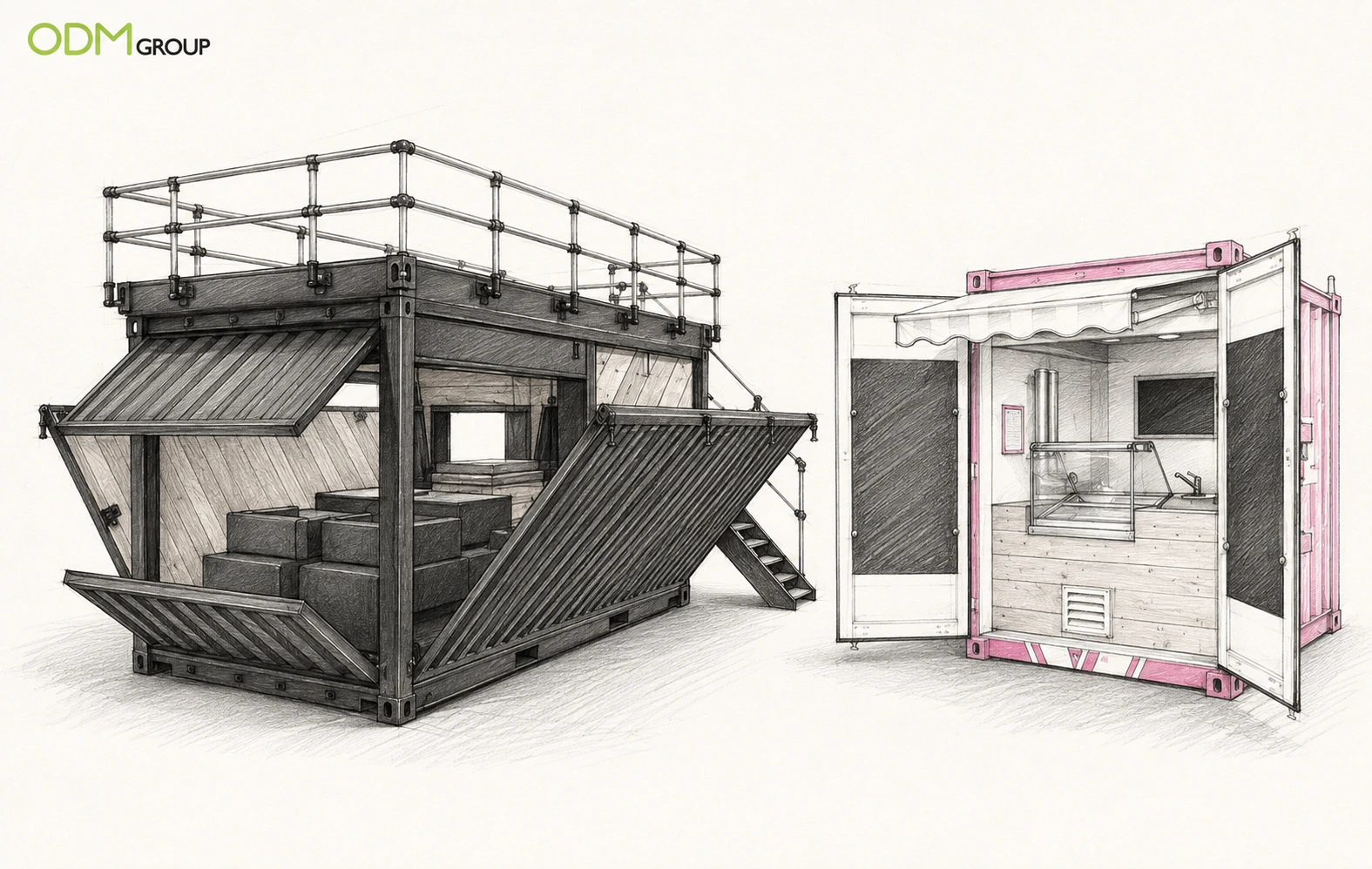
From material and finish recommendations to prototyping, factory selection and production management, ODM supports each stage of development. The team can also oversee quality control, protective packaging and logistics planning. This design-led process connects creative ambition with practical requirements such as safety, product capacity, installation, transportation, durability and future reuse.
ODM can also develop coordinated promotional merchandise, gift-with-purchase items and retail packaging. This ensures that every physical component follows one consistent creative direction and contributes to a cohesive brand experience.
Create a Pop-Up Store Customers Want to Explore
An effective pop-up store display does more than hold merchandise. It turns a temporary location into a clear and memorable expression of the brand.
The BASH Expedition Pop-Up Store demonstrates how a relevant theme, open visibility, natural textures and layered product presentation can transform a mall atrium. Other brands can build on this approach with product trials, customization, interactive challenges and campaign-specific promotional gifts.
Planning a temporary retail activation? Contact ODM to develop your pop-up store display from initial sketches and 3D modelling through prototyping, production, quality control and logistics.


FAQs about Pop-Up Store Display
What is the difference between a pop-up store and a pop-up store display?
A pop-up store is the complete temporary retail space. A pop-up store display refers to the fixtures, structures, signage and merchandising elements used inside that space.
Where can brands install a pop-up store?
Common locations include shopping mall atriums, department stores, airports, hotels, exhibitions, festivals and outdoor event spaces. The location should match the target audience and campaign objective.
How can a pop-up display attract more customers?
Use a clear campaign theme, open sightlines, prominent hero products and a compelling reason to enter. Visitors should understand the activation within a few seconds of seeing it.
Can pop-up store displays be reused?
Yes. Modular frames, interchangeable graphics and flat-pack components can support repeated use across different venues. Reusability should be considered during the initial design stage.
What to Read Next?
Creative LED POP Signage Ideas for In-Store Promotions
In a busy retail aisle, shoppers do not always [...]
Marketing Advantages of Using A Liquor Bottle Lighting
Creating a captivating and memorable experience is the key [...]
What are the Pros & Cons of a Custom Acrylic Display Stand in Retail?
POS display units are very common to see in various [...]
9 Advantages of Using Custom Point of Sale Displays in Retail
It goes without saying custom point of sale display [...]
How Tiger Beer Grabs Shoppers’ Interest with its 3D POP Display?
In the fiercely competitive world of beverage marketing, standing [...]
Elevating Drinks Promotion with this Premium Wine Display Stand!
When it comes to marketing drinks, presentation is everything! [...]
Related posts:
 Promotional Bean Bags That Turn Spaces Into Brand Experiences
 12 In-Store Display Ideas to Boost Brand Conversation – Shelf Talkers, Wobblers and More!
 Get Your Brand Noticed In Store With Creative Custom Retail POP Display!
 Experiential Marketing Activations: Turn Store Visits to Brand Experiences
 Brand Character: Lessons on Haribo Unique Store Display