
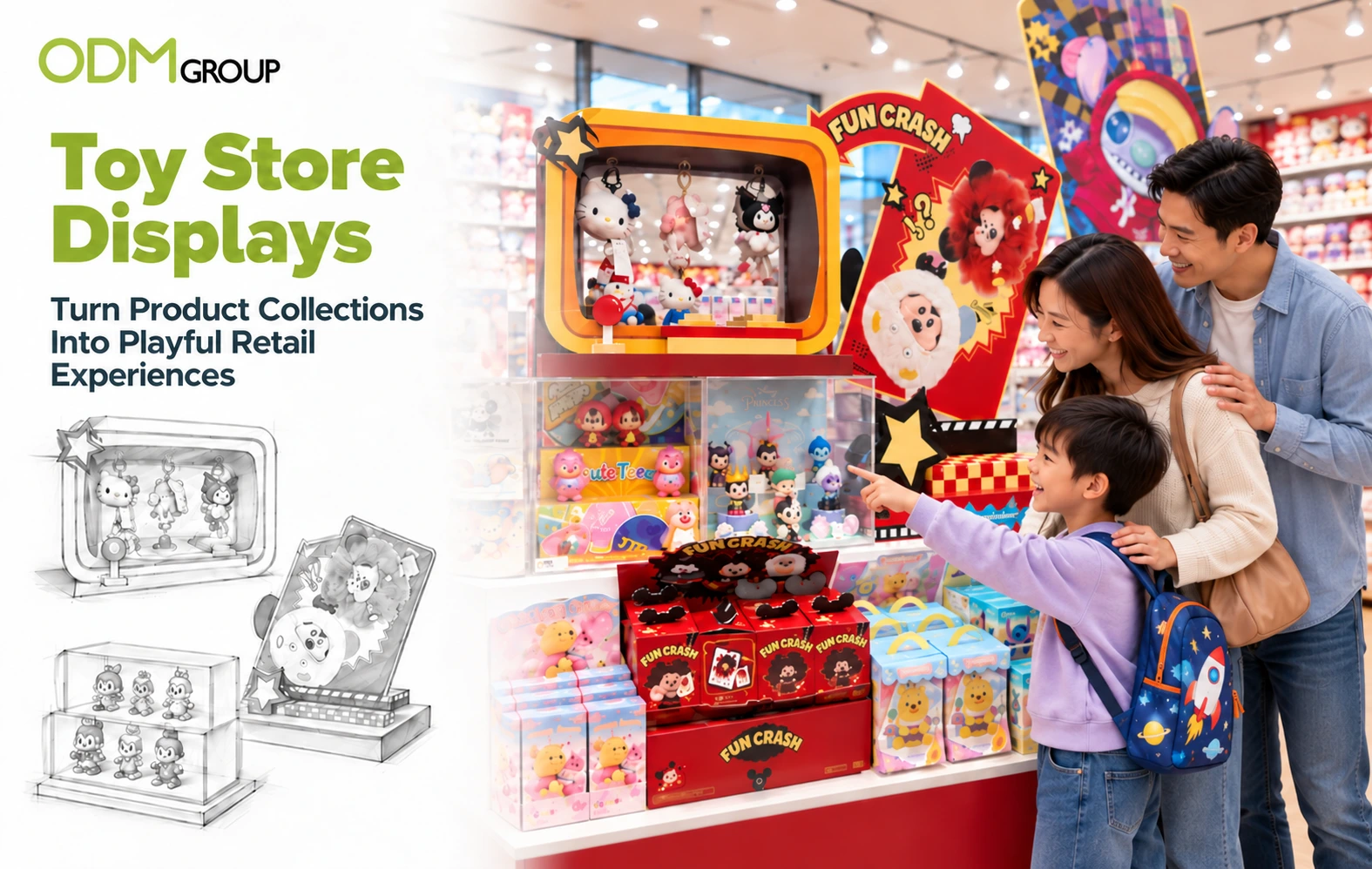
Toy store displays do more than hold merchandise. They turn product collections into visual stories that shoppers can understand within seconds.
For brands, licensors, retailers, and distributors, effective toy store displays are campaign tools, not decorative fixtures. The strongest concepts attract attention, support the product story, and remain practical for real stores and wider rollouts.
Why Toy Store Displays Matter to a Retail Campaign
Toys are often sold through emotion, discovery, and recognition. Children may respond to color, scale, characters, and play value, while parents and collectors may look for pricing, age suitability, product details, completeness of the range, and perceived value.
A well-planned display can support both audiences and give the campaign a clearer commercial role. Depending on the brief, it can help a retailer or brand:
- Attract attention in a visually crowded store
- Group related products into a recognizable collection
- Make new launches and licensed ranges easier to find
- Communicate character stories or campaign themes
- Keep small products organized and visible
- Encourage browsing, comparison, and add-on purchases
- Use vertical space without overwhelming shoppers
- Improve restocking and maintain a tidy presentation
- Create a recognizable moment that shoppers may photograph and share
- Give a licensed collaboration a visual identity beyond its packaging
The display should attract attention without making the product difficult to shop. If graphics block merchandise, shelves are hard to replenish, or products fall out of their trays, visual impact quickly becomes an operational problem.
MINISO Example: Building a Display Around Entertainment
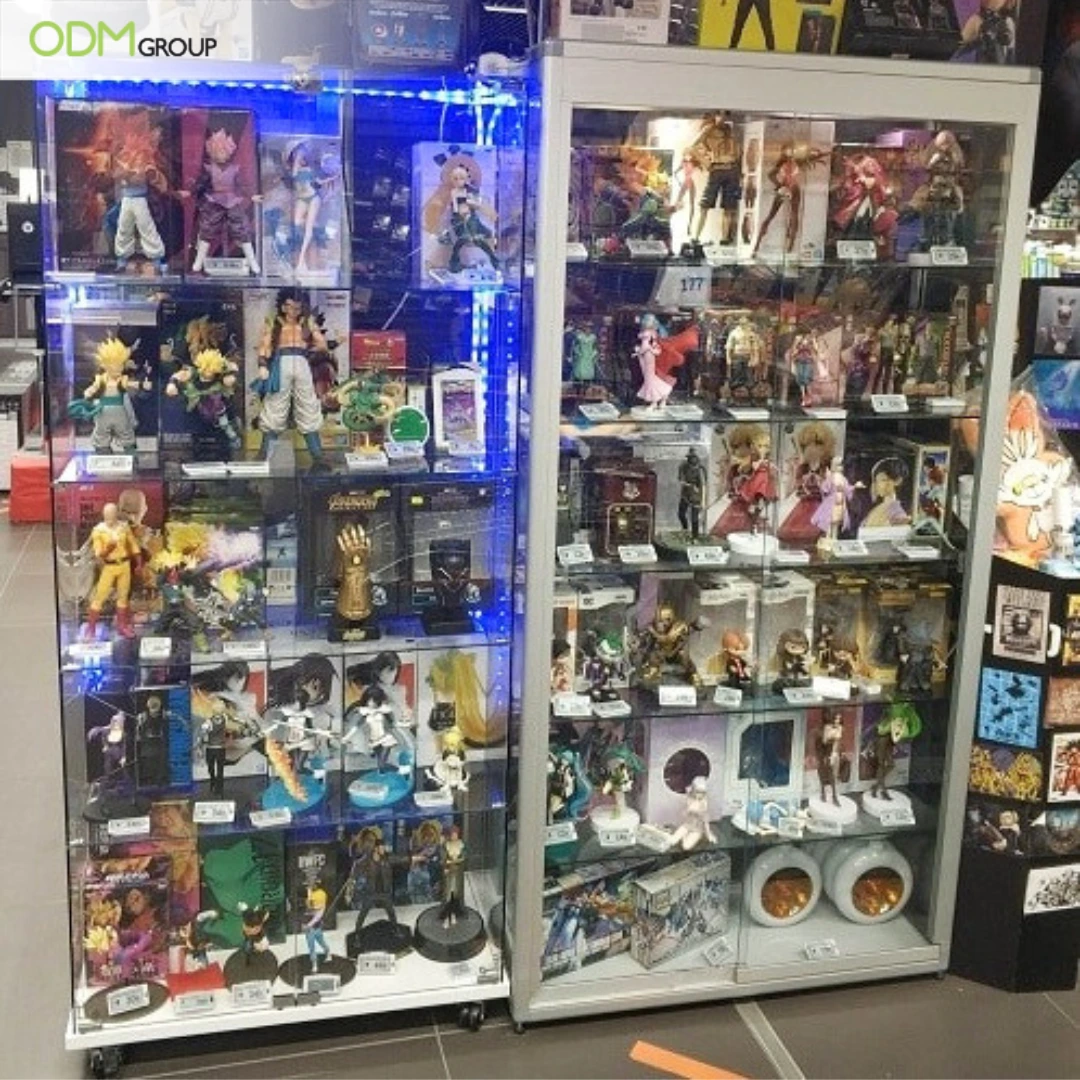
This MINISO example shows how a themed display can turn several toy collections into one visible retail destination. An oversized screen-shaped fixture, bold character graphics, transparent cases, and branded product trays create a playful focal point within the store.
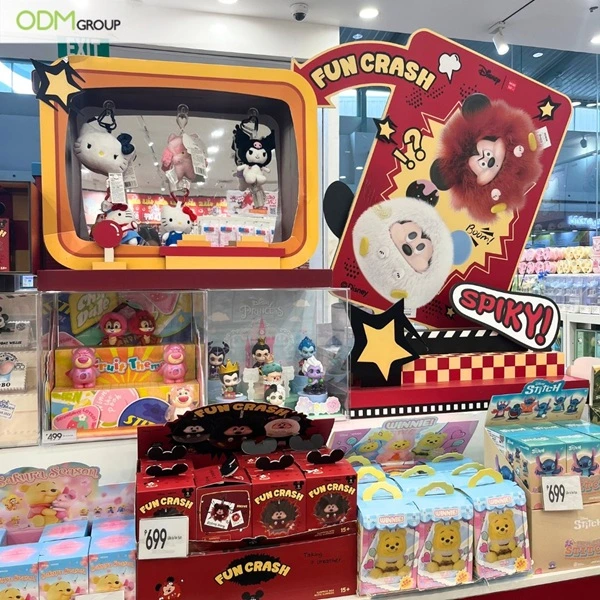
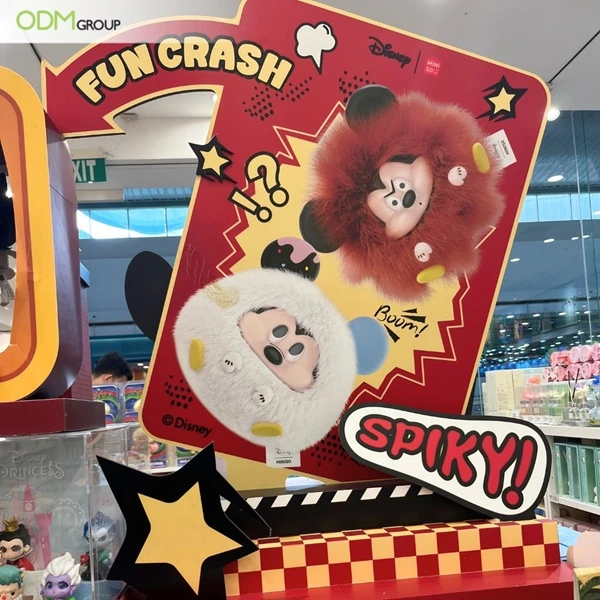
Key features include:
- A tall visual anchor that can be seen from a distance
- Layered product presentation using different heights
- Open trays for easy shopping and replenishment
- Glass cases that give selected figures a collectible feel
The lesson for brands is not to copy the structure, but to create a display language that fits their own product story. Visual impact should still be balanced with product access, pricing, replenishment, stability, and installation.
Toy Store Display Ideas for Different Campaign Goals
No single display format suits every toy collection. The format should follow the behavior the campaign wants to encourage—discovery, demonstration, collecting, gifting, impulse purchase, or social sharing. Brands can adapt the following ideas according to product size, campaign duration, retail footprint, and budget.
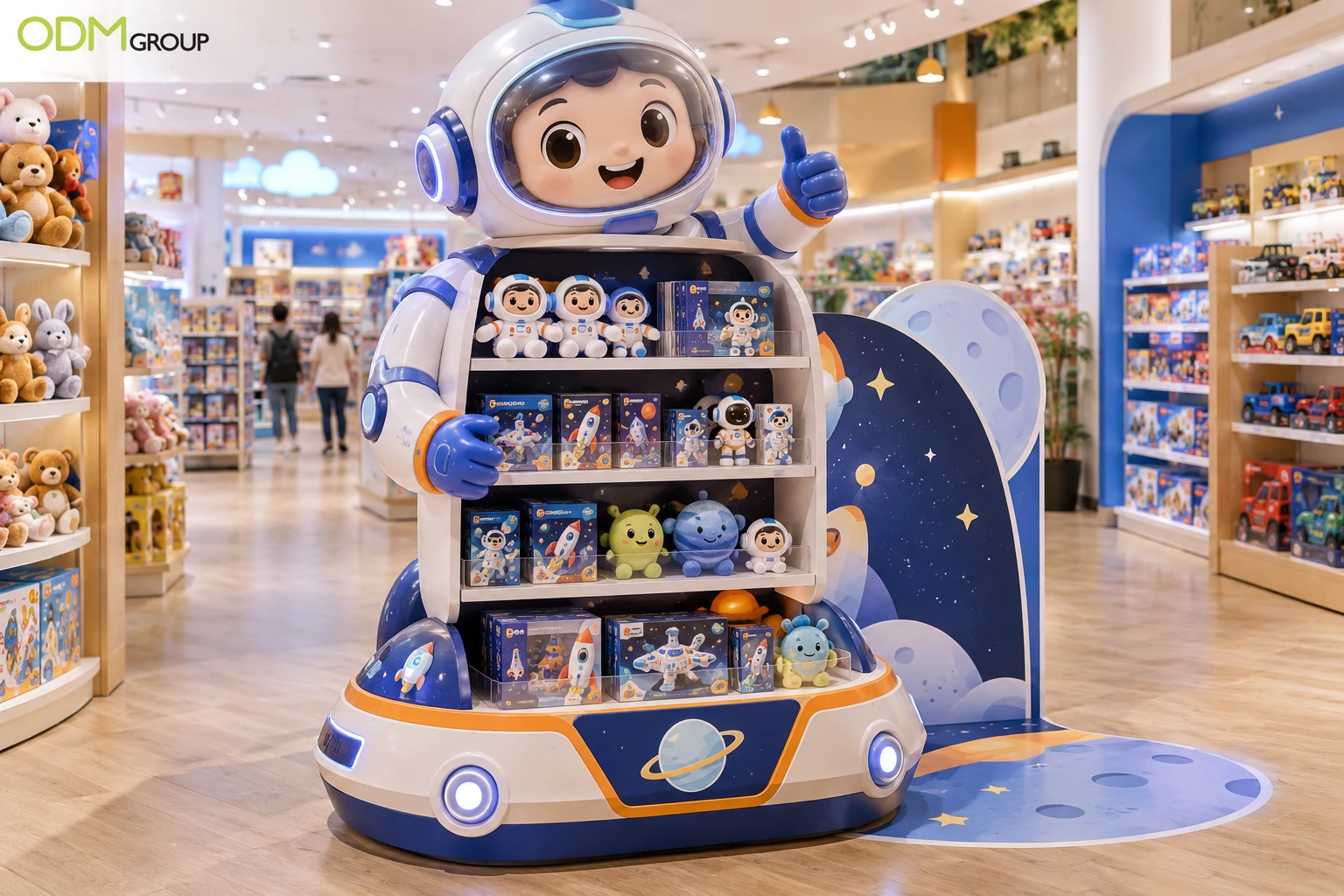
1. Character-Shaped Freestanding Display
A freestanding unit can use the silhouette, colors, or environment of a well-known character. Shelves may be incorporated into a castle, vehicle, arcade machine, spaceship, or oversized toy box.
This format is useful for launches, licensed collections, and seasonal campaigns because it creates high visibility and gives shoppers a strong photo opportunity. The structure should still prioritize stability, reach height, product capacity, and clear access.
2. Modular Display System
A modular system uses a common base with replaceable headers, side panels, trays, or risers. Retailers can adapt it for different collections without replacing the full structure.
This can be valuable for stores with frequent product launches. It may also simplify shipping, storage, maintenance, and regional updates. The design team should establish standard connection points and limit the number of unique parts.
3. Blind-Box Discovery Wall
Blind boxes benefit from repetition and volume. A grid wall, tiered tray, or series of labeled compartments can show the collection’s scale while keeping small packs organized.
A separate sample area can display opened figures, rarity information, or the complete character lineup. Where appropriate, a swap shelf or digital checklist can add a community element without interfering with the main stock.
4. Transparent Collectible Display Case
Glass cases can present figurines as collectible objects while protecting samples from handling. Tiered platforms inside the case improve visibility and give each figure a defined position.
For easier store operations, the case should include secure but convenient staff access, replaceable graphics, and easy-to-clean surfaces.
5. Interactive Try-Me Display
Toys with sound, movement, light, or mechanical functions often need demonstration. A controlled “try me” station can make the benefit immediately understandable.
The unit may include a tethered sample, push button, short instruction, battery-management solution, or automatic timeout. Designers should also consider noise levels, hygiene, cable routing, replaceable samples, and durability under repeated use.
6. Toy Testing Table
A low activity table can invite children and families to test building sets, puzzles, craft products, or educational toys. Built-in storage can hold samples, while raised edges help contain loose pieces.
Consider rounded corners, cleanable materials, anti-tip construction, age-appropriate dimensions, and supervision requirements from the beginning.
7. Shelf-Ready Packaging Display
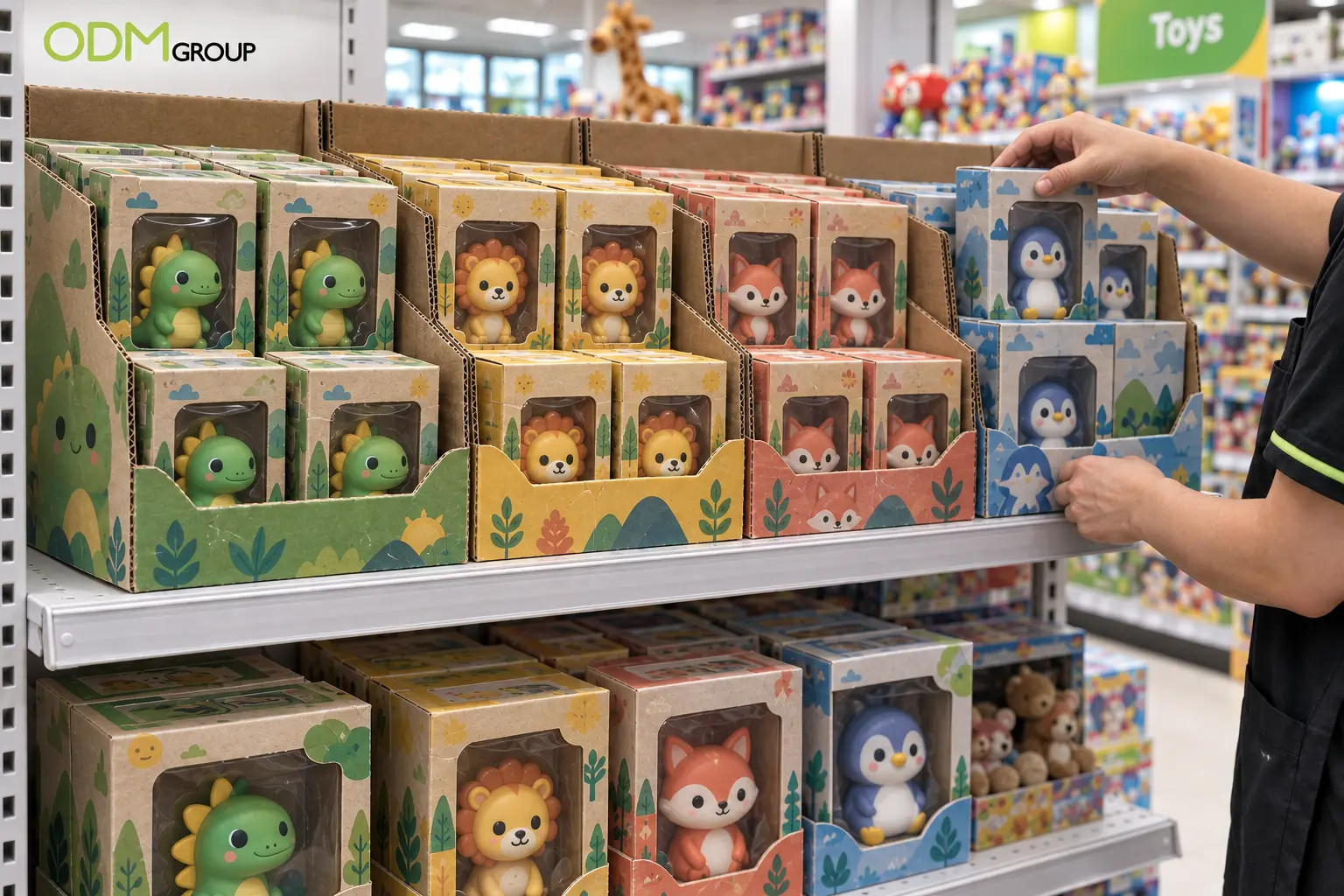
For smaller campaigns, the shipping carton or outer packaging can convert into a branded shelf tray. This reduces setup time and keeps the products arranged consistently.
Good shelf-ready packaging should open cleanly, protect stock in transit, display the front of the pack, and let staff replenish the shelf quickly.
8. Seasonal Toy Display
Holiday, back-to-school, movie-release, and festival campaigns can use temporary graphic skins and themed attachments. A reusable core fixture, combined with campaign-specific panels, can reduce waste and improve consistency across multiple promotions.
9. Countertop Impulse Display
Small toys, keychains, novelty items, and collectible packs can perform well near checkout. Counter displays should have a compact footprint, clear pricing, enough stock capacity, and strong visibility from the shopper’s approach direction.
10. Photo-Friendly Launch Installation
An oversized prop, character scene, or walk-in toy box can extend a product launch beyond the shelf. When the concept is easy to photograph, customers may share the experience online.
The photo moment should not obstruct circulation or create queues in narrow areas. Plan branding, lighting, accessibility, assembly time, and store approval.
Explore More Retail Display and Toy Marketing Ideas
Canned stuffed animals are small plush toys compressed or folded inside reusable or decorative cans. The can may resemble the brand’s existing product packaging, feature campaign artwork, or use a completely custom structure.
A mystery box figurine, also known as a blind box collectible, is a toy or mini figure packaged in a way that conceals its identity until unboxing.
What sets this foldable metal POS display apart from other point-of-sale units is its ability to combine structural durability with compact storage. Here’s a breakdown of the key features:
At its core, POSM is a vital part of POS (Point of Sale) systems, bridging the gap between innovation and functionality.
What Brands Should Define Before Developing a Display
A productive design brief should go beyond the visual theme. Before sketching begins, stakeholders should align on:
- Campaign objective and success measures
- Target shopper and shopping behavior
- Product dimensions, weights, and pack quantities
- Number of SKUs and desired stock capacity
- Store format and available footprint
- Maximum display height and shopper reach
- Campaign duration and reuse requirements
- Installation and replenishment process
- Material, finish, and sustainability priorities
- Target cost and rollout quantity
- Shipping destinations and packing restrictions
- Retailer rules, safety standards, and approval stages
These inputs influence everything from shelf spacing to material selection. Designing before these constraints are understood often leads to avoidable revisions later.
Match the Construction to the Campaign
Material should support the campaign rather than define it. A short promotional launch may call for lightweight printed board, while a longer program may need a reusable frame with replaceable graphics. Transparent components can protect collectible samples, and stronger structural materials may be needed for high product loads or repeated installation.
The right decision depends on campaign life, finish expectations, store conditions, shipping volume, reuse goals, and budget. These factors should be reviewed while the concept is being developed—not after the appearance has already been approved. This allows the creative team to preserve the idea while adapting the construction intelligently.
From Campaign Idea to Store-Ready Experience
Display development works best when creative and operational decisions are connected from the beginning:
1. Understand the campaign: Define the shopper, product range, retail environment, desired behavior, markets, budget, and measures of success.
2. Develop the central idea: Explore how the product story could become a distinctive physical experience rather than applying graphics to a standard fixture.
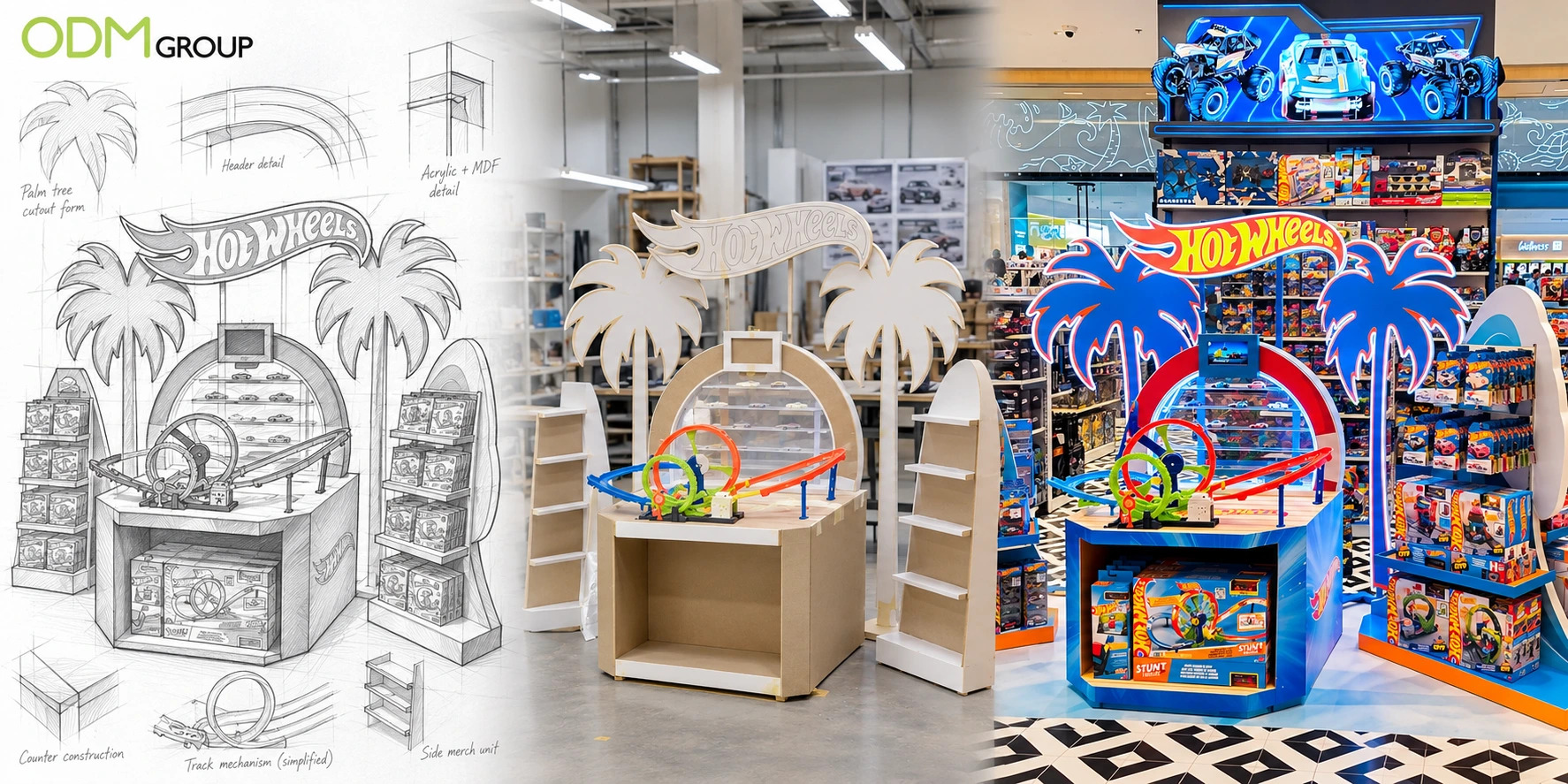
3. Visualize the experience: Use industrial sketches and 3D views to assess scale, sightlines, product arrangement, interaction, and brand presence.
4. Test the idea: Build a prototype to review appearance, product fit, shopper access, replenishment, stability, assembly, and packing.
5. Prepare for rollout: Select suitable specialist factories, confirm approved materials and finishes, and establish production and inspection requirements.
6. Manage execution: Coordinate production oversight, quality control, packing, freight, and delivery across the required markets.
Prototyping is particularly important because it protects both the creative concept and the commercial investment. A rendering can communicate direction, but a physical prototype shows whether the product stays visible, the interaction feels intuitive, graphics align, components perform as intended, and store teams can assemble and replenish the display efficiently.
How ODM Group Supports Display Development
ODM Group helps brands turn retail objectives into display concepts developed around the product range, shopper journey, store footprint, campaign period, and rollout market. We do not manufacture toy displays or offer standard units from a catalog. Our role is to create the idea, develop it into a workable display brief, and coordinate the specialist partners needed to realize it.
Our display-development support can include:
- Display concepts and formats: Countertop, freestanding, endcap, showcase, interactive, shelf-ready, or modular ideas based on the campaign objective and store space.
- Merchandising layout: SKU placement, shelf spacing, hero-product positions, pricing areas, shopper sightlines, and replenishment access.
- Sketches and 3D visualization: Mindsparkz can show the proposed structure, scale, product loading, branding zones, and shopper interaction before prototyping.
- Materials and prototypes: We help develop suitable construction options and coordinate prototypes to check product fit, stability, assembly, appearance, and usability.
- Factory selection and QC: ODM can identify and audit specialist display factories, coordinate production, and plan inspections covering dimensions, printing, finishes, structure, and component fit.
- Packing and global logistics: We can plan flat-pack construction, store kits, assembly instructions, protective packaging, consolidation, and international delivery.
By connecting these stages, ODM helps protect the display idea while keeping feasibility, quality, installation, and rollout requirements aligned.
Final Thoughts
Effective toy store displays turn a collection into a destination. The MINISO example shows how scale, character graphics, layered presentation, product trays, transparent cases, and price communication can work together to create a more engaging retail moment.
The strongest results begin with a clear campaign idea and carry it consistently from the large visual statement to the smallest product tray. When brands consider shopper behavior and store operations alongside creativity, they can develop displays that feel distinctive, support the merchandise, and remain practical to roll out.
Planning a toy launch, licensed collection, or retail activation? Start your project with ODM Group. Bring us the product, campaign objective, or early-stage brief, and we can help shape the central display idea, visualize and prototype it, identify the right specialist partners, and manage the path to a coordinated global rollout.
More Display Ideas


FAQs about Toy Store Displays
What is the best display format for a toy launch?
The best format depends on product size, number of SKUs, retail space, campaign duration, and desired shopper interaction. A freestanding feature unit may suit a major launch, while a counter display or shelf-ready tray may be more effective for small collectibles.
How early should brands begin developing a custom retail display?
Development should begin early enough to allow for concept work, structural engineering, retailer approval, prototyping, revisions, production, inspection, and freight. Complex multi-material or global programs generally require more time than simple printed units.
Can toy displays be designed for reuse?
Yes. A reusable frame can be combined with replaceable graphics, trays, headers, and character panels. This modular approach can extend the life of the fixture across several launches, provided dimensions and connection points are standardized.
What should be tested during display prototyping?
Teams should test product fit, stock capacity, stability, load performance, assembly, replenishment access, graphic alignment, finish quality, pack-out, and compatibility with the intended store footprint.
What to Read Next?
Creative LED POP Signage Ideas for In-Store Promotions
In a busy retail aisle, shoppers do not always [...]
Marketing Advantages of Using A Liquor Bottle Lighting
Creating a captivating and memorable experience is the key [...]
What are the Pros & Cons of a Custom Acrylic Display Stand in Retail?
POS display units are very common to see in various [...]
How Tiger Beer Grabs Shoppers’ Interest with its 3D POP Display?
In the fiercely competitive world of beverage marketing, standing [...]
Bottle to Work of Art: 5 Benefits of Using Custom LED Bottle Glorifier
Standing out in the competitive liquor industry requires brands [...]
Top 4 Things to Consider For An Effective Beer Merchandising Display
A retail market is a competitive place. Not only [...]