Free promotional merchandise can give customers an immediate reason to choose one brand, add another item to their basket, or complete a purchase sooner. However, the word free does not automatically make a campaign valuable. The product still needs to feel relevant, desirable, and worth earning.
For brands, the strongest free merchandise programs are planned as complete marketing systems. The gift, qualifying purchase, packaging, in-store communication, stock allocation, and distribution process should all support the same commercial objective. When these elements work together, a giveaway can generate sales while creating a physical reminder of the brand that remains with the customer.
What Is Free Promotional Merchandise?
Free promotional merchandise refers to branded or campaign-related products provided to customers without a separate charge. These items may be distributed with a qualifying purchase, during an event, as part of a loyalty program, or through another promotional mechanic.
Common campaign formats include:
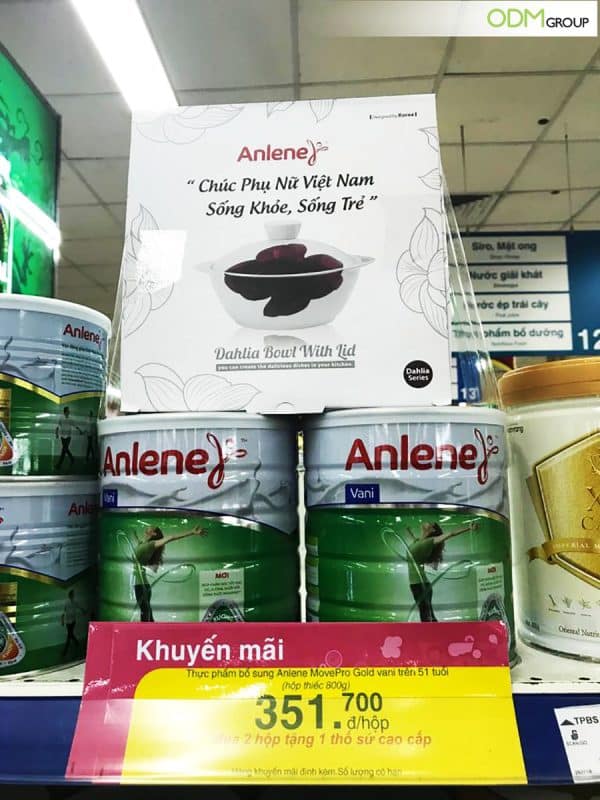
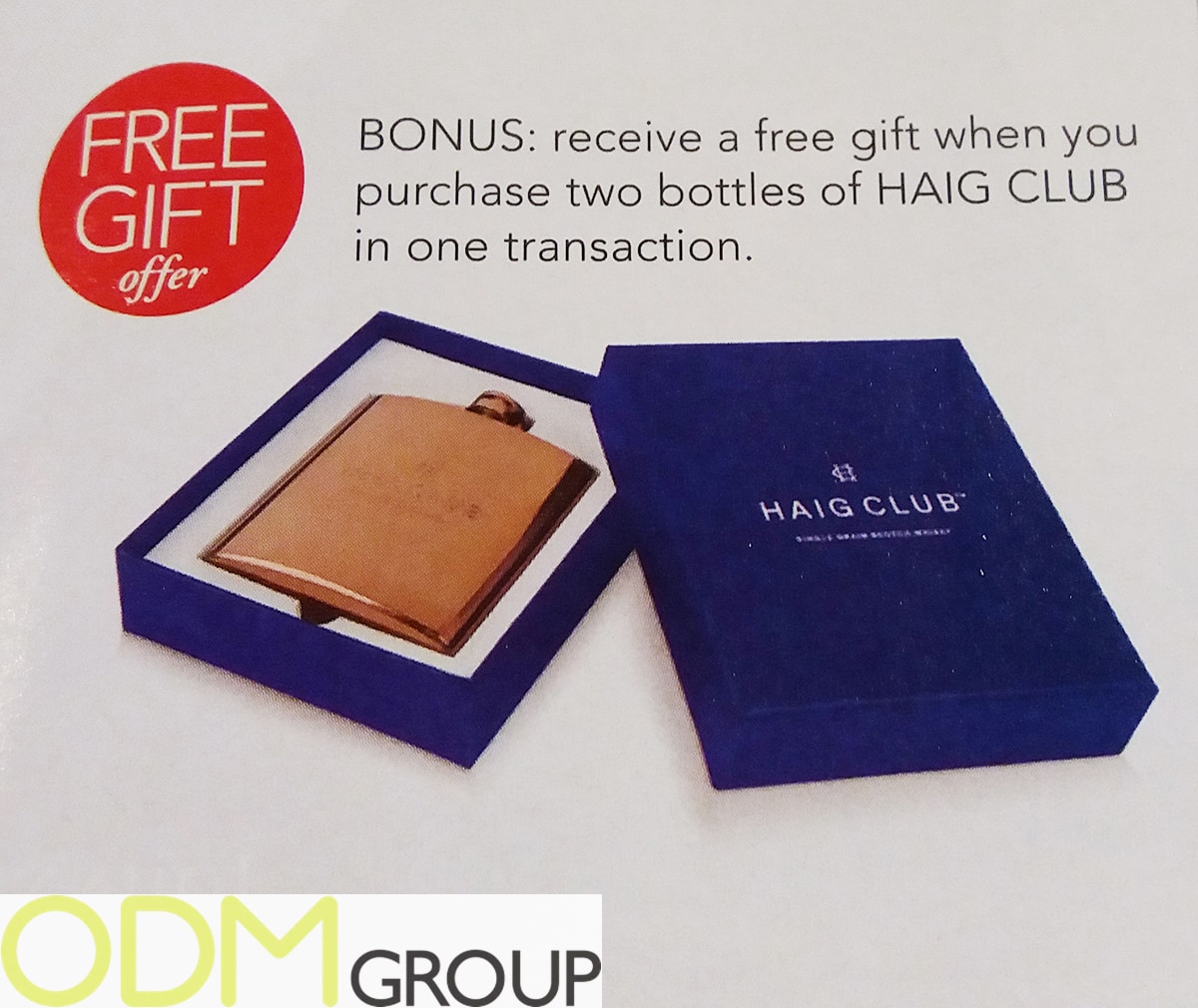
- Gift with purchase: A customer receives an item after buying a qualifying product or spending a specified amount.
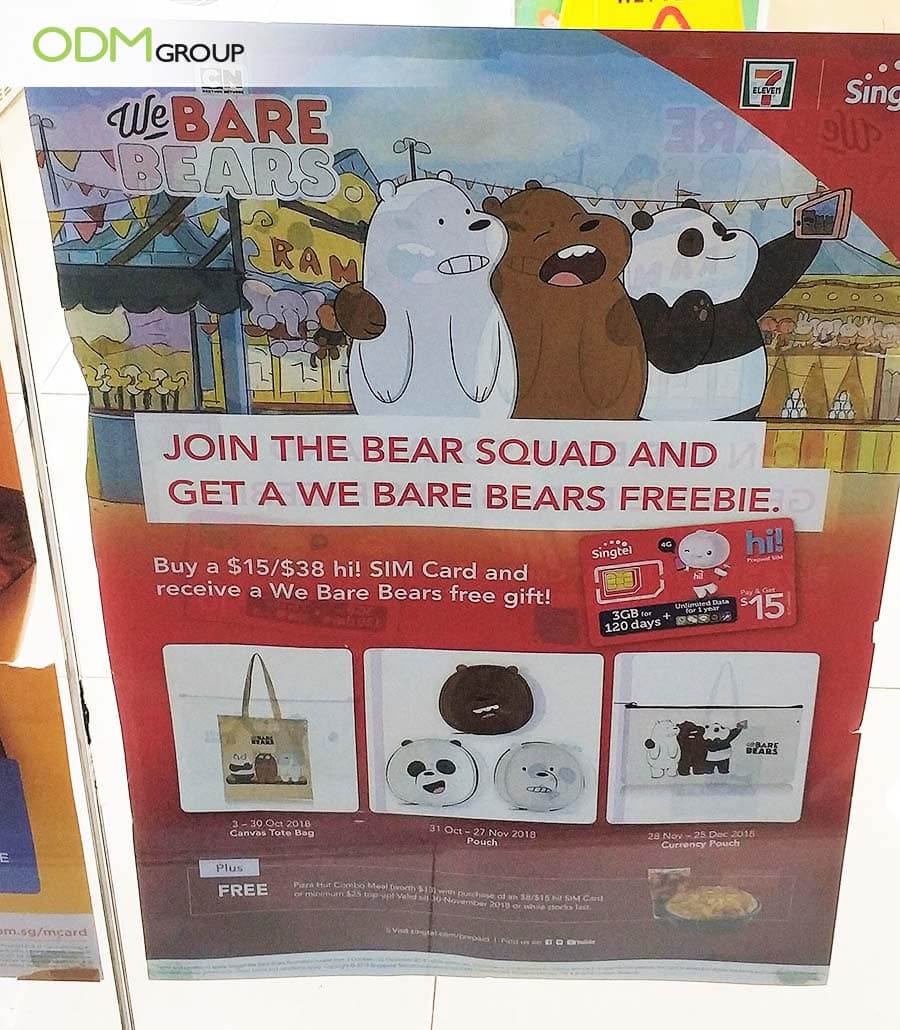
- Buy-one-get-one promotion: An additional product or related item is included with a purchase.
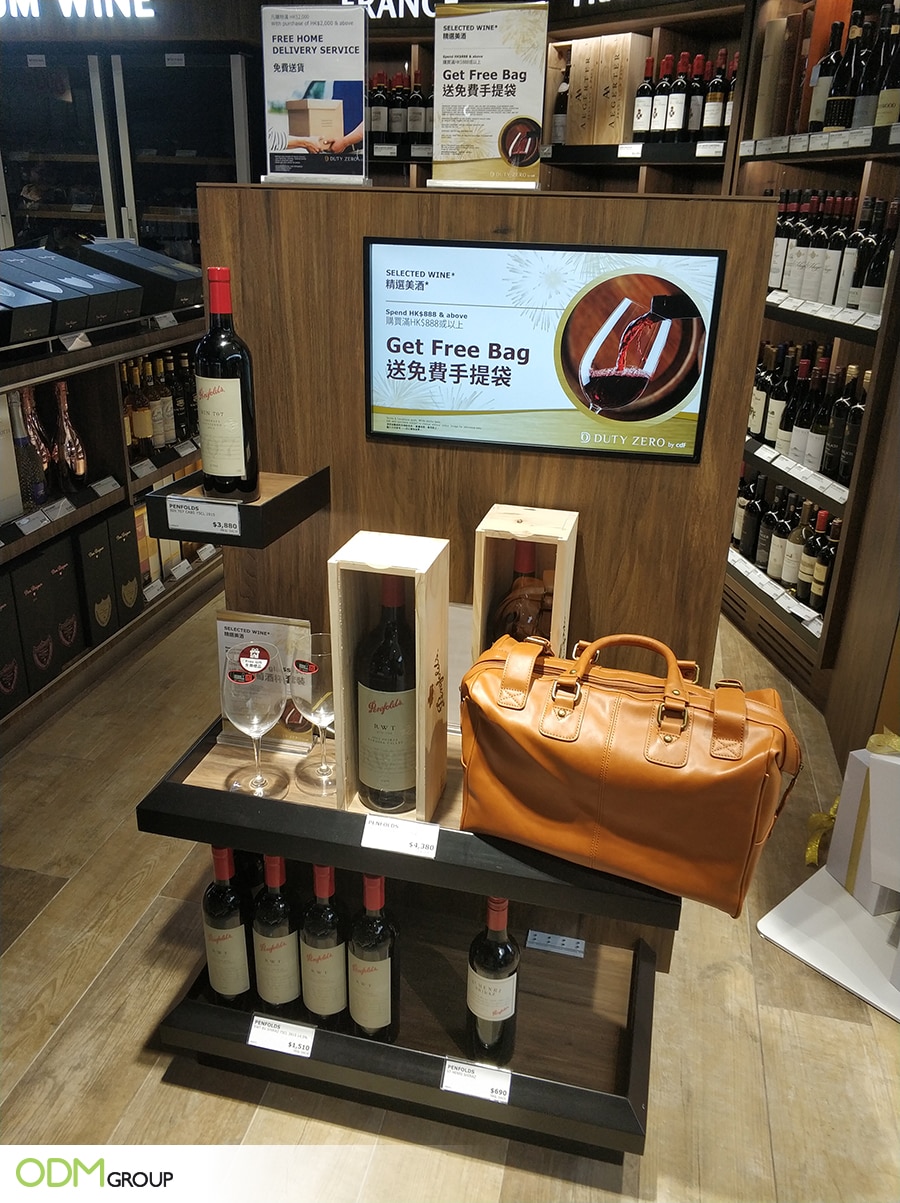
- Tiered rewards: The value or number of gifts increases at different spending levels.
- Limited-edition redemption: Customers collect points, stamps, codes, or proofs of purchase to claim exclusive merchandise.
- Event giveaway: Merchandise is distributed at exhibitions, product launches, conferences, or brand activations.
- Loyalty reward: Members receive gifts based on sign-up, engagement, purchase frequency, or membership status.
Unlike a conventional discount, merchandise gives the customer something tangible. A discount disappears when the transaction ends; a useful gift can continue generating impressions each time it is worn, carried, displayed, or used.
Why Brands Use Free Merchandise
The right giveaway can influence both the purchase decision and the customer’s experience of the brand.
A spend-threshold promotion can motivate shoppers who are already close to the qualifying amount to add another product. The threshold should feel attainable while still supporting the campaign’s sales objective.
If it is set too low, the brand may give away margin without changing customer behavior. If it is too high, the reward may fail to motivate enough shoppers.
Limited quantities or a defined campaign period can encourage customers to act sooner. This gives brands an alternative to repeated price reductions, which may weaken perceived value when used too frequently.
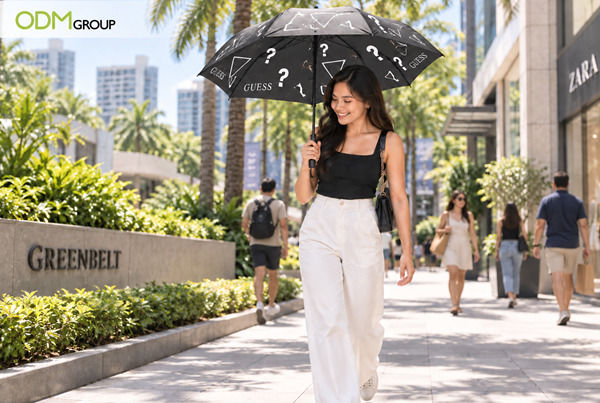
Wearable, portable, or reusable merchandise continues to appear beyond the original retail environment. An umbrella, tote bag, bottle, cap, or travel accessory can produce repeated brand exposure in everyday settings.
A well-designed gift adds an element of discovery and reward to the transaction. This can make a routine purchase feel more exclusive, particularly when the merchandise is unavailable for regular sale.
Merchandise can connect a promotion to a specific season, collection, event, or lifestyle occasion. Summer travel kits, rainy-season accessories, holiday gift sets, and launch-exclusive collectibles give the campaign a timely reason to exist.
GUESS Free Gift Promotion
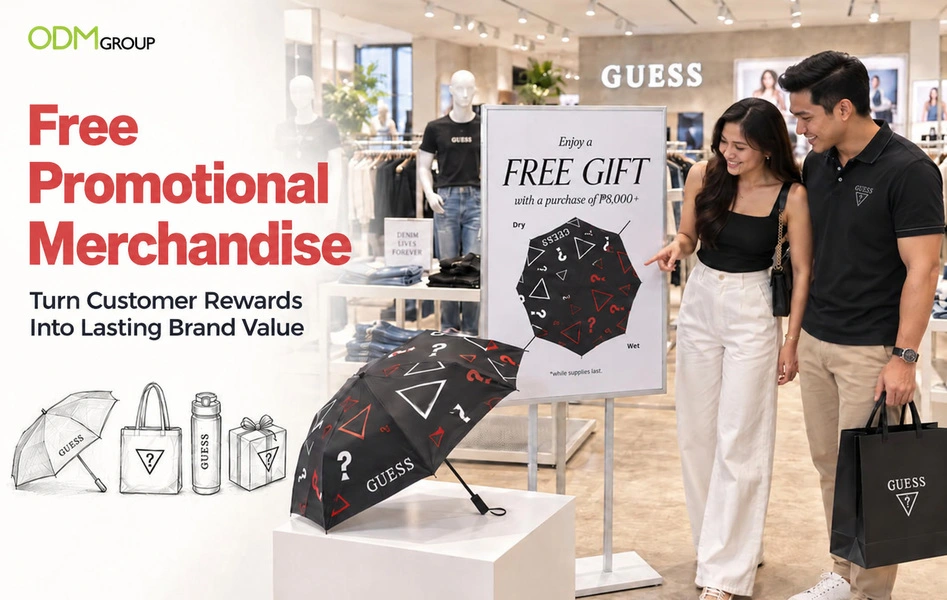
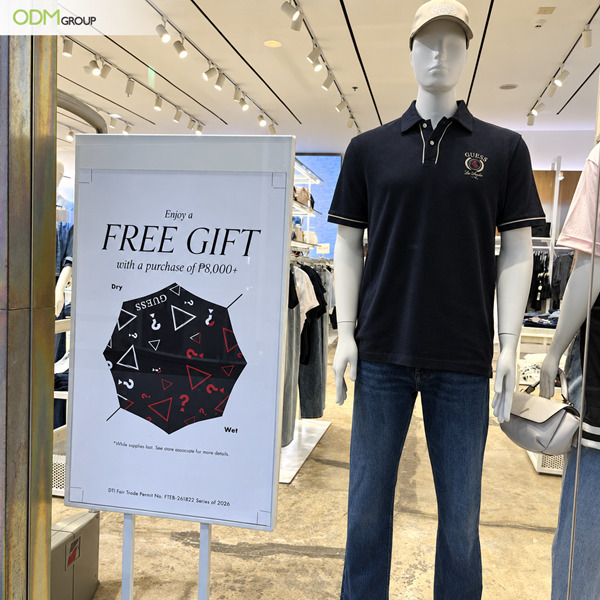
At a GUESS location inside SM Store in the Philippines, shoppers received a free umbrella with purchases of ₱8,000 or more, while supplies lasted.
Suitable for sunny and rainy conditions, the branded umbrella offers practical value while extending GUESS visibility beyond the store. The clear spending threshold and prominent POS display also help encourage higher-value purchases and make the offer easy to understand.
What Makes Free Promotional Merchandise Effective?
1. Relevance to the Customer
The product should fit the audience’s habits, interests, and purchase context. A beauty brand may consider a travel pouch or mirror, while a beverage company might choose drinkware or a cooler bag. Relevance usually creates more perceived value than simply choosing the cheapest available item.
2. Alignment With the Brand
The merchandise should feel like an extension of the brand, not a generic product with a logo added at the end. Shape, color, material, graphics, finishing, and packaging can all express brand identity.
3. Strong Perceived Value
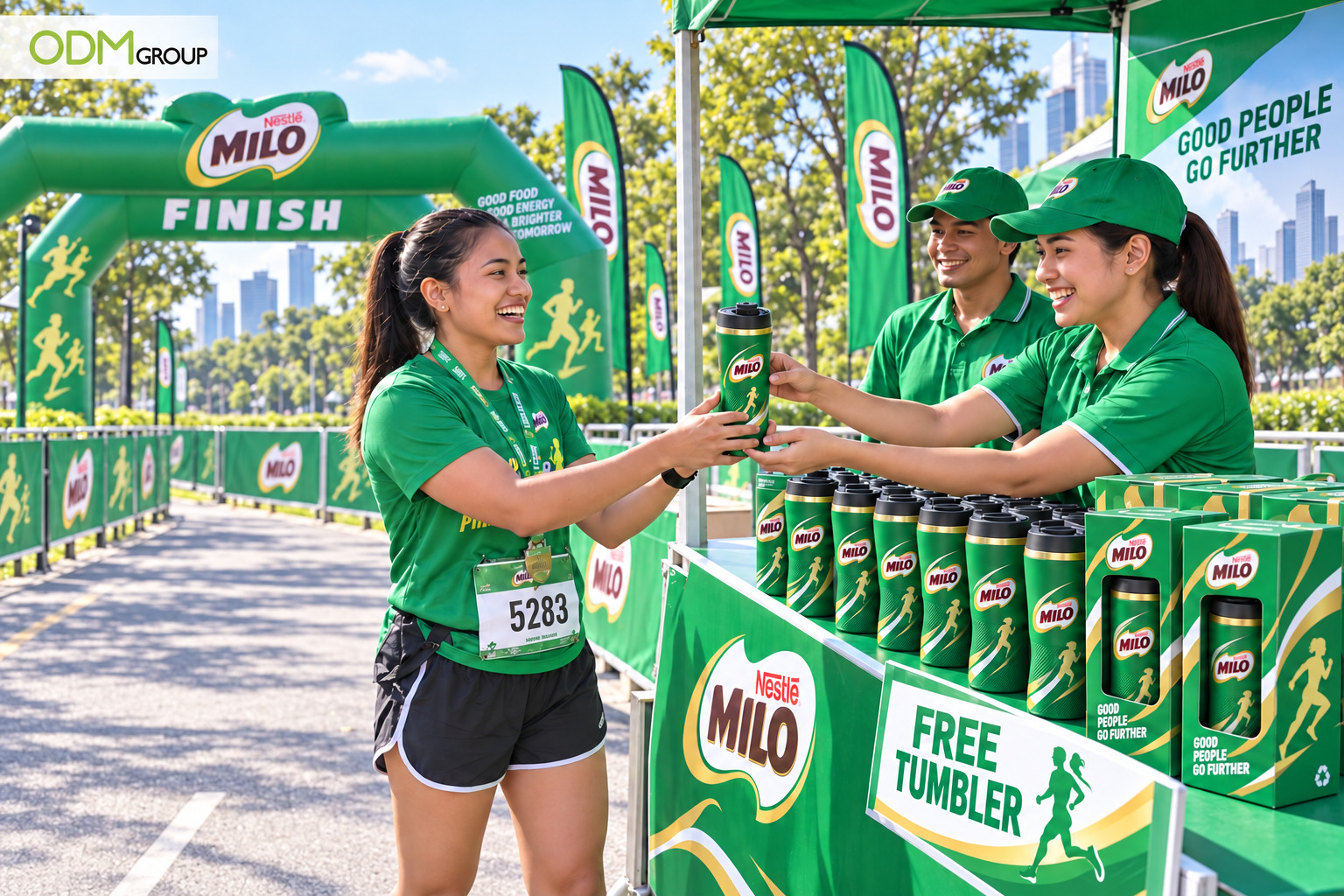
Customers assess the gift against the effort or spending required to obtain it. Useful functions, attractive presentation, exclusive artwork, and solid construction can increase perceived value without necessarily raising unit cost.
4. Appropriate Branding
More branding is not always better. A large logo may suit event merchandise, while a subtle woven label, embossed mark, custom pattern, or branded color palette may suit fashion and premium campaigns better. The aim is to create something customers genuinely want to use.
5. Simple Redemption
Customers and retail teams should understand the mechanics immediately. Clearly state the threshold, qualifying products, campaign dates, participating locations, redemption steps, and stock conditions. Complex terms can slow down transactions and create inconsistent execution between stores.
6. Reliable Quality
A free item still represents the company that gives it away. Weak seams, poor printing, sharp edges, unstable construction, leakage, or early product failure can turn a positive promotion into a negative brand experience. Samples and quality control should therefore be treated as essential parts of the campaign.
7. Packaging and Display That Explain the Value
Packaging protects the merchandise and can make it feel more gift-worthy. POS displays then connect the reward to the qualifying purchase. Together, they help customers see the offer as a considered campaign rather than excess stock being given away.
Choosing the Right Free Merchandise
Before selecting a product, brands should define the action they want the campaign to generate. Is the goal to increase basket value, support a launch, attract store traffic, collect registrations, reward loyal customers, or reactivate dormant buyers?
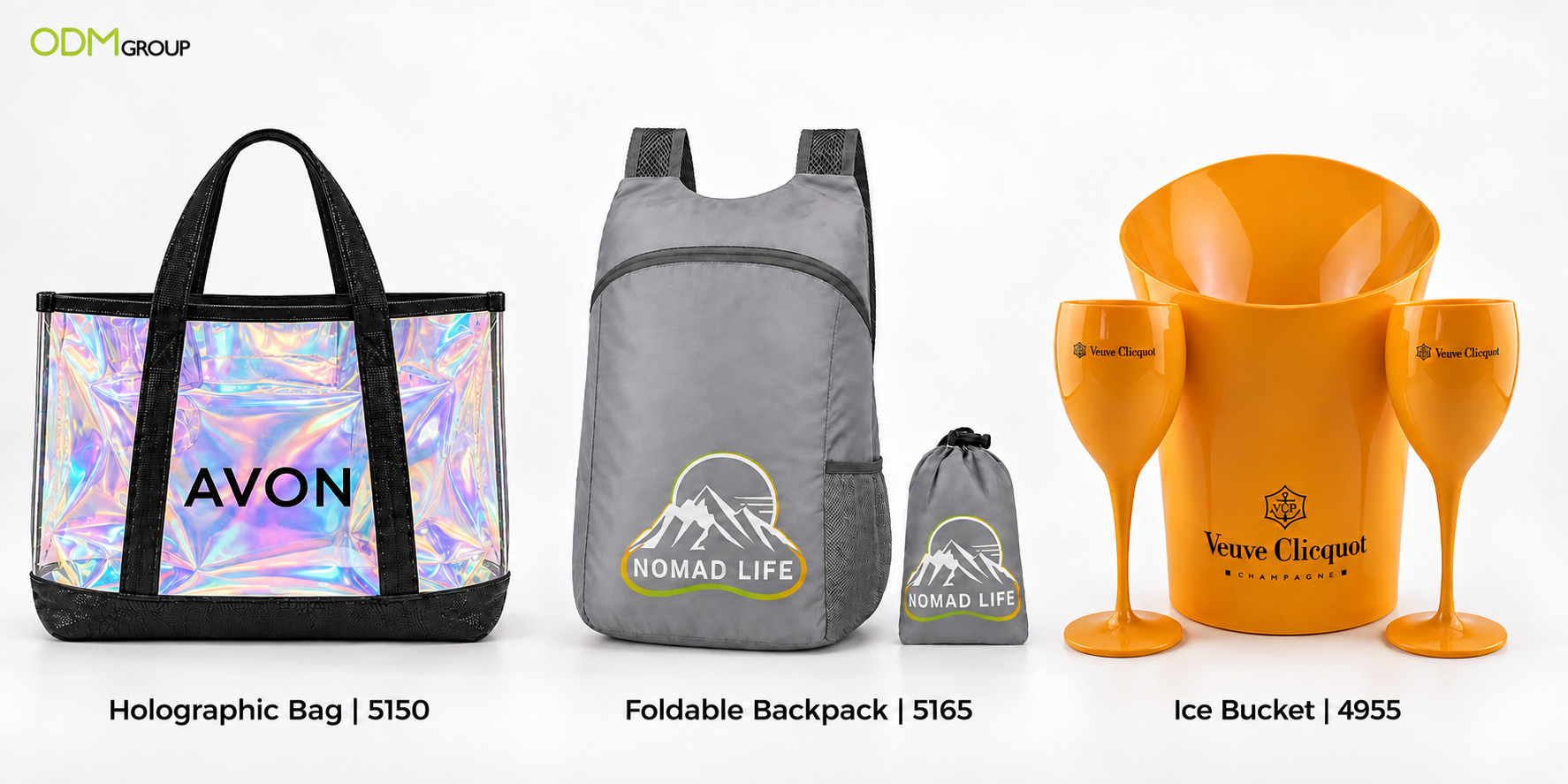
The answer affects the ideal merchandise, value level, quantity, and distribution method. Buyers should also evaluate:
- Target customer and intended use
- Retail price point and average order value
- Target merchandise cost per redemption
- Campaign duration and forecast redemption rate
- Branding area and design complexity
- Materials, construction, and required testing
- Packaging dimensions and shelf or counter space
- Production lead time and delivery schedule
- Allocation across stores, markets, or sales channels
- Local promotional, labeling, and compliance requirements
A compact, lightweight item may simplify freight and store handling. A more substantial gift may create stronger perceived value but require greater attention to packaging, storage, and distribution. The best choice balances customer appeal with operational reality.
Common Mistakes to Avoid
One frequent mistake is selecting an item before defining the campaign objective. This can produce a gift that looks appealing but does not support the desired customer behavior.
Brands should also avoid:
- Choosing products based only on low unit price
- Setting the qualifying threshold without margin and redemption modeling
- Adding branding without considering whether customers will use the item
- Approving production before testing function, construction, and color
- Leaving packaging and in-store communication until late in development
- Underestimating carton volume, storage space, or multi-location delivery
- Producing quantities without a clear allocation and replenishment plan
Planning the entire system early helps protect both the customer experience and the commercial return.
Make “Free” Feel Worth Earning
Free promotional merchandise works best when it is useful to the customer, credible for the brand, and connected to a clear business objective. The GUESS umbrella promotion demonstrates how a practical product, visible spend threshold, recognizable design, and direct in-store communication can form a simple but effective retail offer.
For marketers and procurement teams, the opportunity is not merely to source a giveaway. It is to create a reward that helps influence the purchase, strengthens the campaign story, and continues representing the brand after the transaction.
Planning a free merchandise campaign? Start your project with ODM Group. Our teams can support product and packaging design, prototyping, factory selection, POS display development, production coordination, quality planning, and logistics.
Visit www.theodmgroup.com or contact info@theodmgroup.com to discuss your brief.