
Kids promotional products can do far more than add excitement to a multipack or seasonal offer. When the item is useful, age-appropriate, and connected to a child’s routine, it can improve retail visibility, strengthen purchase motivation, and keep the brand present long after the campaign ends.
The most effective campaigns are not designed only to catch a child’s attention. They also give parents a practical reason to participate. That balance is essential when marketing to kids: children respond to color, characters, play, and collectibility, while adults evaluate usefulness, quality, suitability, and overall value.
Why Kids Promotional Products Work
Children’s promotions often perform well because they create an immediate emotional response. A familiar character, bold color palette, or collectible design can make an otherwise standard retail pack feel more exciting.
However, visual appeal alone is rarely enough to sustain a strong campaign. Parents and caregivers usually make the final purchase decision, so the gift must also feel relevant to family life.
That is why lunchboxes, feeding accessories, drinkware, school supplies, travel products, and creative kits are commonly effective. They offer a clear use beyond the initial purchase and fit naturally into routines such as school, meals, playtime, and family outings.
Useful kids merchandise also extends the campaign’s visibility. A branded lunchbox may be used several times a week. A feeding bowl may appear at every meal. A pencil case or backpack may travel between home and school.
Each use creates another interaction with the brand without requiring another media placement.
Designing for Children and Parents
A strong children’s promotion must appeal to two audiences at the same time.
For children, the product should feel fun, personal, or collectible. This can be achieved through characters, dimensional elements, bright graphics, themed shapes, customization, or a choice of designs.
For parents, the same product should communicate practical value. They may consider whether it is easy to carry, simple to clean, appropriate for the child’s age, and useful beyond the campaign period.
This creates a useful design principle:
The child should want the item, while the parent should understand why it is worth having.
A lunchbox shaped around a brand character may catch a child’s attention, but its portability and daily usefulness help close the purchase. A playful feeding set may look appealing on the shelf, but its connection to mealtimes makes the offer more credible to caregivers.
The promotional item should therefore feel like an extension of the product category rather than a random giveaway.
Chuckie and Cerelac: Two Relevant Retail Examples
The Chuckie and Cerelac promotions show how brands can connect promotional products with different stages of childhood.
Chuckie’s free lunchbox promotion
Chuckie paired a multipack of chocolate milk drinks with a free lunchbox. The promotional packaging used direct messages such as “Free Lunchbox,” “Be School Ready,” and “Collect 2 Designs.”
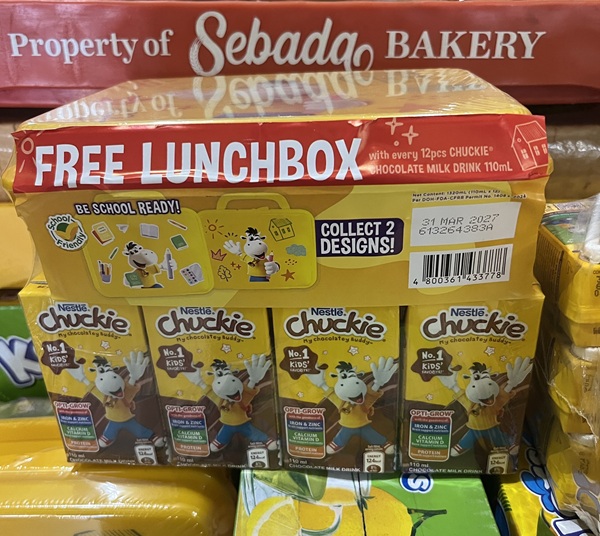
The campaign works because the gift fits both the product’s audience and a recognizable family occasion. A lunchbox is relevant to school-age children, while the collectible designs add a playful reason to participate.
The item also offers strong visual branding space. Character graphics, school-themed illustrations, and a bright yellow finish make the gift recognizable without relying only on a large logo.
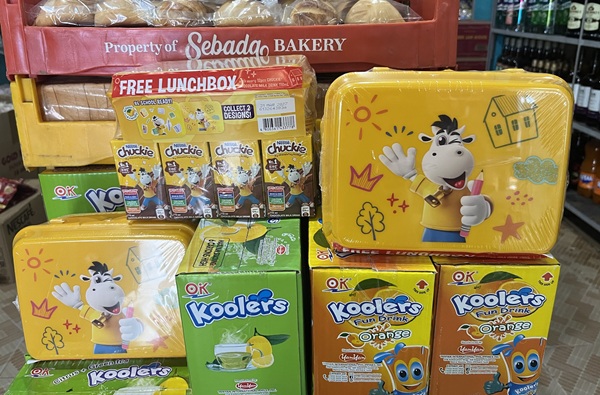
From a retail perspective, the lunchbox gives the multipack more physical presence. It helps the promotion stand out among standard beverage packs and makes the added value immediately visible.
Cerelac’s free feeding set
Cerelac used a free limited-edition feeding set with qualifying purchases. The bear-shaped design connects naturally with younger children and the brand’s infant nutrition category.
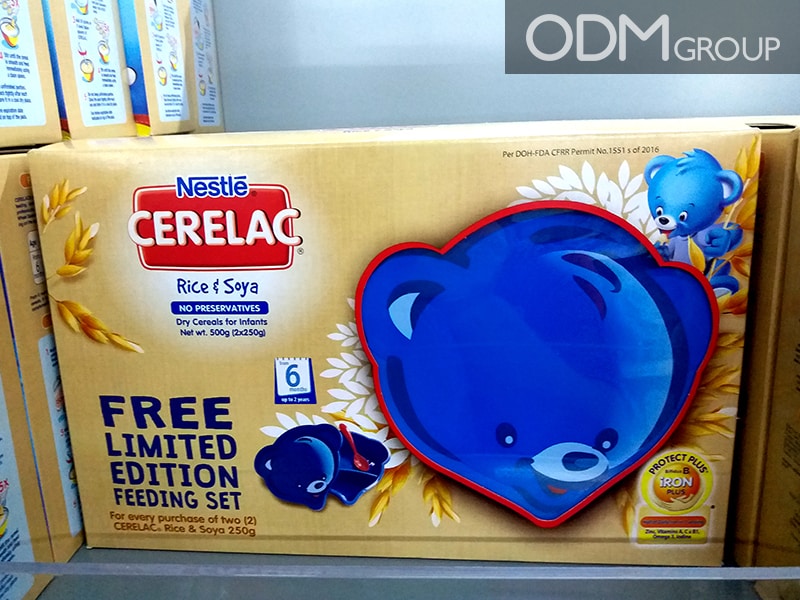
Rather than introducing an unrelated toy, the promotion provides an item that supports the product’s normal use. This creates stronger relevance for parents and makes the gift easier to justify.
The packaging also presents the feeding set as an important part of the offer rather than a small add-on. Its size, shape, and color help the promotion gain attention at the shelf.
These two campaigns target different age groups, but they follow the same strategic idea: choose a product that supports an existing family routine.
What Makes Kids Merchandise Effective?
Good kids merchandise needs more than a bright color scheme. It should have a clear purpose within the campaign.
1. Everyday usefulness
Products that fit into daily life tend to create greater long-term value.
A lunchbox, snack container, bottle, pencil case, or feeding accessory may remain in use for months. This repeated exposure helps the promotional product continue working after the original retail offer has ended.
Useful products also make the campaign easier for parents to understand. The gift feels like something the family can genuinely use rather than an item that will quickly become clutter.
2. Age-appropriate appeal
Children’s needs and preferences change quickly with age.
Products for toddlers may benefit from simple shapes, easy-grip features, soft visual styling, and familiar characters. Older children may respond better to collectibles, personalization, creative activities, or designs that feel more independent.
Brands should avoid treating children as one broad audience. A product that works well for preschoolers may feel too young for school-age children.
3. A clear connection to the brand
The best promotional products for kids reinforce the brand’s role in the family’s life.
A food brand might offer lunchware or snack storage. A beverage brand could develop bottles, cups, or insulated sleeves. An educational brand may choose activity kits or school accessories.
The connection does not need to be literal, but it should feel logical. When the product and gift support the same occasion, the campaign becomes easier to communicate.
4. Distinctive but controlled branding
Children’s merchandise gives brands room to use more expressive colors and graphics. However, excessive branding can reduce the product’s appeal.
The most successful designs often use brand colors, mascots, patterns, or recognizable visual cues without covering every surface with logos.
The item should still feel desirable when viewed as a product in its own right.
Kids Promotional Product Ideas by Campaign Type
The right product depends on the child’s age, the retail channel, the purchase requirement, and the campaign objective.
Back-to-school campaigns
Back-to-school promotions are particularly well-suited to practical kids’ merchandise.
Potential ideas include lunchboxes, pencil cases, water bottles, book straps, mini backpacks, desk organizers, drawing kits, and reusable name tags.
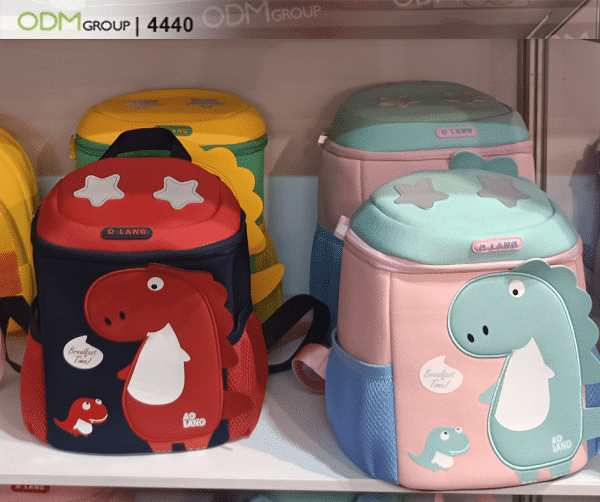
These products work because the campaign is tied to a clear seasonal need. Parents are already preparing for school, so the gift can feel timely and useful.
A brand could also create a coordinated collection. For example, the first qualifying purchase might include a lunchbox, while later purchases unlock a matching bottle or stationery pouch.
Mealtime promotions
Food, nutrition, and beverage brands can develop products connected to eating and drinking.
Possible options include feeding bowls, cutlery sets, snack containers, reusable cups, placemats, divided lunch trays, and food storage pouches.

The design can introduce playful features without reducing practicality. Character-shaped lids, themed compartments, or color-coded sections can make the item more engaging for children.
Creative and educational campaigns
Creative products can give children a more active role in the campaign.
Brands might consider coloring sets, reusable sticker books, magnetic drawing boards, craft kits, character stamps, puzzle packs, or buildable packaging.
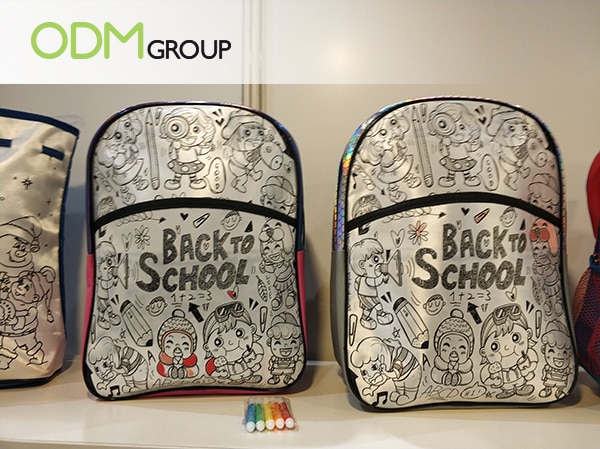
These ideas are especially useful when the brand wants to encourage participation rather than simply hand over a gift.
The activity can also be extended through packaging, retail displays, or digital content. A product pack might include a simple challenge, drawing prompt, or collectible scene.
Travel and family-outing campaigns
Travel-friendly promotional products can support hospitality, entertainment, transport, food, and lifestyle brands.
Ideas include activity pouches, mini backpacks, travel pillows, foldable organizers, luggage tags, snack bags, and compact games.
These products are often visible outside the home, which can increase organic brand exposure during family trips and public outings.
Collectible campaigns
Collectibility can encourage repeat purchases when carefully structured.
Brands may create several character designs, colorways, seasonal editions, or items that connect to form a larger set.
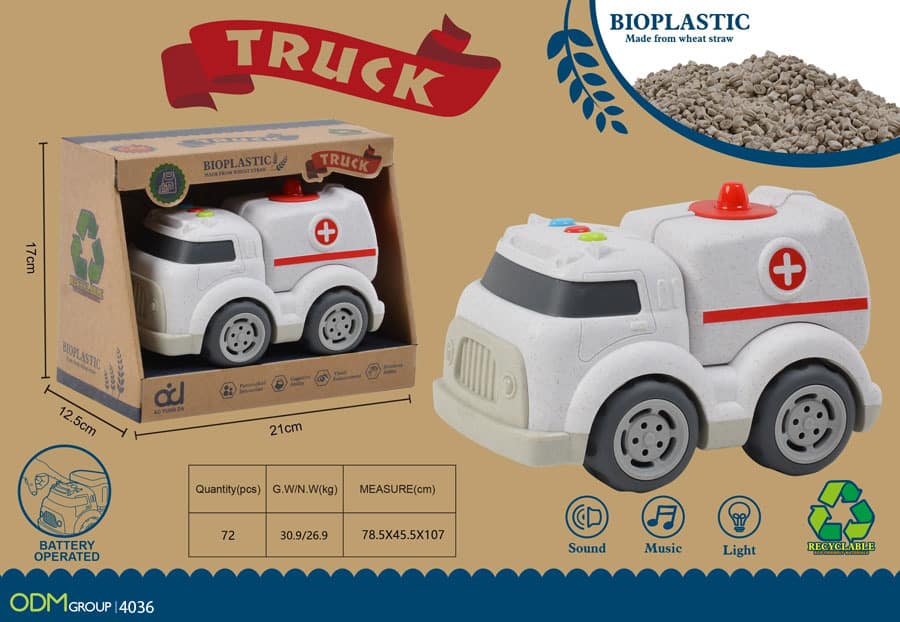
The collection should remain achievable. Too many variations or unclear distribution can frustrate families. A smaller, well-designed range is usually easier to understand and more satisfying to complete.
Building a Better Promotional Mechanic
The gift may attract attention, but the redemption structure determines how easy it is to join the campaign.
A multipack offer can increase basket size, while an instant gift provides immediate satisfaction. A points-based mechanic may encourage repeat purchases, but it requires more explanation and a longer commitment from consumers.
Brands should align the mechanic with the commercial goal.
A product launch may benefit from an instant free gift that helps drive trial. A loyalty campaign may use several items released over time. A seasonal promotion may rely on limited availability to create urgency.
The purchase requirement should also feel proportionate to the gift. If the threshold is too high, the promotion can lose credibility. If it is too low, the campaign may struggle to deliver sufficient perceived value or commercial impact.
Clear communication is essential. Customers should quickly understand:
- What they need to buy
- Which gift they will receive
- Whether designs can be selected
- Where and when the offer is available
- Whether stocks are limited
The easier the mechanic is to explain, the easier it is for retail teams and shoppers to engage with it.
Use Packaging and Displays to Sell the Gift
Promotional packaging should make the added value visible from a realistic shopping distance.
The headline must be direct. Phrases such as “Free Lunchbox,” “Collect Two Designs,” or “Limited-Edition Feeding Set” explain the offer quickly.
Product visuals should also be accurate. Parents should be able to understand the gift’s shape, size, and intended use before purchasing.
For larger items, brands can use shelf displays, counter displays, hanging samples, or transparent packaging windows to make the product more tangible.
The gift, product packaging, and retail display should share one visual system. Consistent colors, characters, campaign messages, and illustrations help the promotion feel planned rather than added at the last minute.
Responsible Marketing to Kids
Marketing to kids requires more care than a standard adult promotion.
The campaign should provide clear information for parents and avoid relying entirely on pressure from a child to influence the purchase. The product should be suitable for the intended age group, and the promotional message should accurately represent what consumers receive.
Brands should also consider whether the item has enough lasting value to justify its inclusion.
A promotion built around a useful product can strengthen the customer experience. A disposable novelty may create short-term attention but do little for the brand after the campaign ends.
Responsible children’s promotions respect both the child’s excitement and the parent’s role in the decision.
How ODM Group Supports Kids Promotional Campaigns
ODM Group helps brands develop kids promotional products as part of a wider campaign strategy.
We begin by considering the business objective, audience, retail channel, purchase mechanic, and intended use of the item. This helps ensure that the final product supports the campaign rather than functioning as an isolated giveaway.
Our design team at Mindsparkz can translate initial ideas into hand sketches, 3D concepts, packaging directions, and product visualizations. These tools allow marketing and product teams to compare options, refine proportions, explore character applications, and present the concept internally before development begins.
ODM Group can also help coordinate prototyping, quality management, packaging, and campaign delivery through our network of trusted partners.
The goal is to create kids’ merchandise that feels relevant to the brand, valuable to parents, and exciting to children.
Create a Campaign Families Remember
Successful marketing to kids is not simply about adding a colorful character to a giveaway. It requires a product that children find exciting, parents consider useful, and brands can connect to a clear campaign objective.
The Chuckie lunchbox and Cerelac feeding set promotions show how relevant products can strengthen a retail offering. The broader lesson is applicable across food, beverage, education, entertainment, hospitality, and family-focused categories.
By combining thoughtful product design, a clear promotional mechanic, and strong retail communication, brands can create kids promotional products that remain valuable well beyond the initial purchase.
Planning a family-focused promotion? ODM Group can help develop custom kids’ merchandise, campaign packaging, retail concepts, and product visuals tailored to your audience and marketing goals. Contact ODM to start your kids’ promotional campaigns.
More Ideas


FAQs about Promotional Products
What are the best kids promotional products?
The strongest options combine child appeal with practical family value. Lunchboxes, drinkware, feeding products, school accessories, creative kits, and travel items are effective because they support familiar routines.
How can brands choose age-appropriate promotional products for kids?
Brands should consider the child’s stage of development, how independently the item will be used, and whether the visual design fits the target age group. Products for toddlers should be approached differently from merchandise for older school-age children.
Are collectible promotions effective?
Yes. Collectibles can support repeat purchases and sustained campaign interest. The range should be limited, clearly explained, and achievable for families.
How can packaging improve a children’s promotion?
Packaging can explain the offer, show the gift clearly, and connect the promotional item with the main product. Strong packaging also helps the campaign gain visibility in a crowded retail environment.
Can ODM Group create custom promotional products for kids?
Yes. ODM Group can help develop the campaign concept, select suitable product directions, and manage the wider development process. Mindsparkz can support the project with sketches, 3D concepts, packaging designs, and product visualization.
What to Read Next?
 Gallery
Winter Promotional Gifts: Useful Ideas Beyond the Usual Giveaways
Branded promotional products, Christmas promotional gifts, Giveaway promotional items, Kids promotional products, Marketing, Personalized promotional gifts, Premium promotional products, promotional gift, Promotional Products, Purchase with purchase, Sports promotional items
Winter Promotional Gifts: Useful Ideas Beyond the Usual Giveaways
Winter promotional gifts work best when people have a [...]
Kids Promotional Products: Campaign Ideas Families Value
Kids promotional products can do far more than add excitement [...]
Custom Face Shields Perking Up Your Marketing Strategy
Face shields had their moment. Then they quietly disappeared [...]
12 Tips for Creating Captivating Custom Kids Merchandise
Kids are probably one of the hardest markets to [...]
5 Reasons Nestle Bath Toy Set GWP Succeeds in Retail
Marketing to kids means your brand must consider a [...]
Top Qualities of Effective Promo Gifts for Kids: The Ultimate Guide
Imagine a child's eyes lighting up with excitement as [...]