Gold printing is one of the most effective ways to make promotional products feel more premium. Whether used on glassware, packaging, or gift items, a gold finish can instantly add a sense of value and exclusivity.
However, not all gold finishes are the same. Real gold, metallic ink, and foil each produce different results in appearance, durability, cost, and production requirements. Before moving into production, brands need to understand which option best fits their product and campaign goals.
What Does Gold Printing Actually Mean?
Gold printing is a broad term. In promotional product manufacturing, it can refer to several different decoration methods, including:
- Real gold paint applied to glassware
- Pantone-matched metallic gold ink
- Gold foil stamping on packaging
- Metallic transfer printing
- Gold decals
- Gold-effect digital artwork
- Metallic labels or stickers
Each method has a different purpose. For example, a gold rim on a wine glass is not produced in the same way as a gold logo on a rigid gift box. A metallic gold ink on a promotional mug will not have the same reflective finish as hot foil stamping on packaging.
This is why brands should not only ask, “Can we print this in gold?” The better question is:
What type of gold finish is right for the product, the campaign, and the way the customer will use it?
Real Gold Printing: Premium Look, Higher Cost, More Care Required
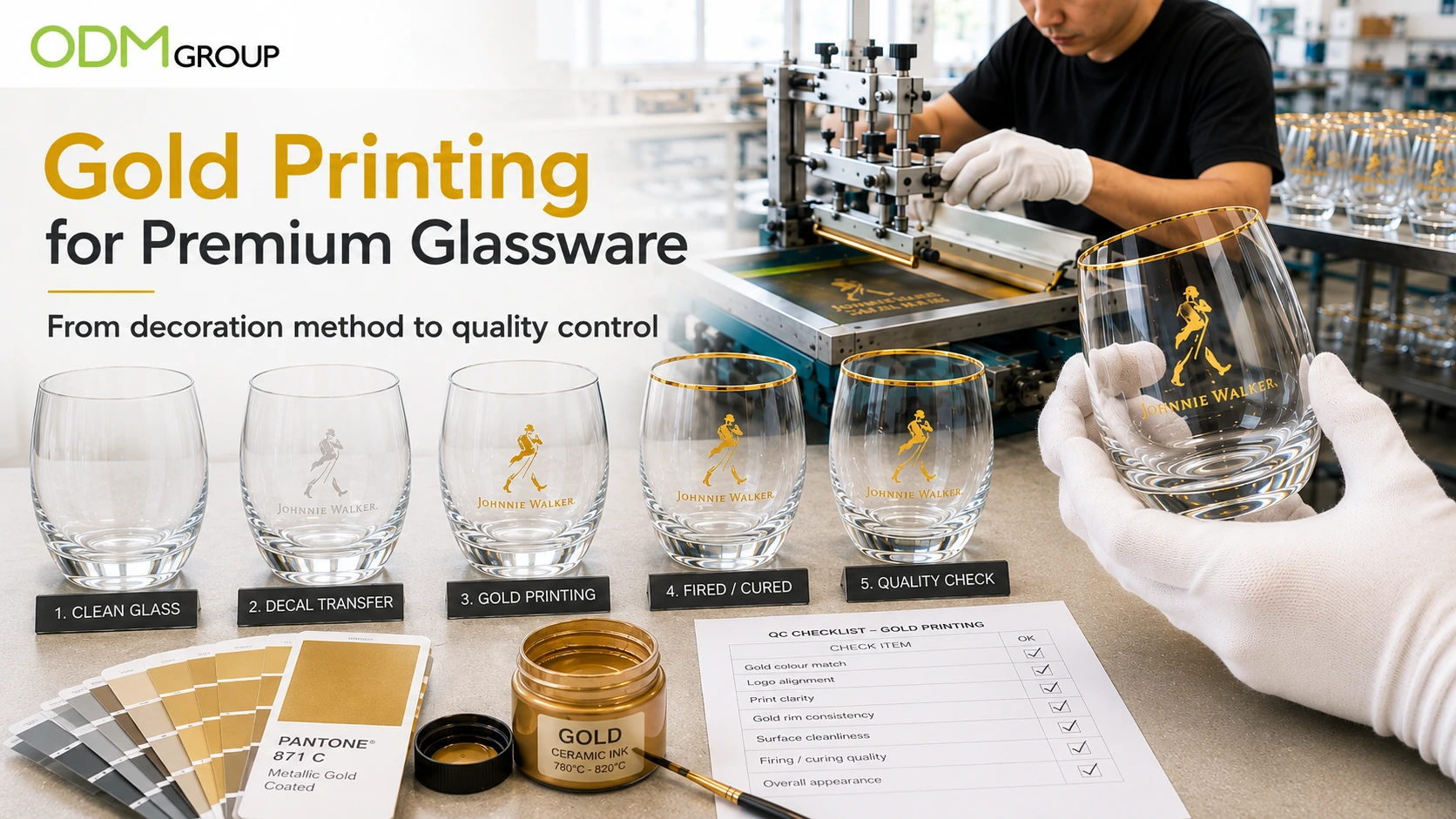
Real gold printing is often used when a brand wants a luxury finish, especially on drinkware and glassware. In this process, real gold is mixed with paint and carefully applied to specific areas of the product, such as the rim, logo, or decorative details.
For glassware, real gold can create a rich, elegant appearance that standard gold-colored paint cannot fully replicate. It catches the light better, feels more premium, and can make the item look closer to a luxury retail product than a simple giveaway.
This makes real gold printing suitable for:
- VIP drinkware gifts
- Limited-edition glassware
- Premium wine or spirits promotions
- Luxury hospitality merchandise
- Collector-style promotional items
- High-end corporate gifts
However, real gold also comes with production limitations. Because it is more delicate, products with real gold details may not be suitable for high-temperature firing. This can affect the decoration’s final durability and may mean the item is not dishwasher safe.
For brands, this is not necessarily a problem. A luxury promotional glass does not always need to be treated like everyday drinkware. But the product care instructions must be clear. If the product should only be washed by hand, this needs to be communicated to the customer.
Real gold printing is best when the campaign is focused on perceived value, gifting, collectability, or premium presentation.
It is not always the best option for mass giveaways, daily-use items, or campaigns where durability is more important than luxury appeal.
Metallic Gold Ink: A More Practical Option for Larger Campaigns
For many promotional campaigns, metallic gold ink or Pantone-matched gold paint is the more practical choice.
Instead of using real gold, the supplier can match a gold-like color using metallic ink or gold paint. Pantone 871 C is one commonly used metallic gold reference, although the final result will still depend on the material, printing method, coating, and production setup.
This option is useful when brands want a gold appearance but also need better cost control and easier production.
Metallic gold ink is suitable for:
- Larger promotional runs
- Branded drinkware
- Corporate giveaways
- Event merchandise
- Promotional mugs and glasses
- Retail gift-with-purchase items
- Campaigns with tighter budgets
The main advantage is practicality. Metallic ink can be easier to apply consistently, especially when the design needs to be repeated in larger quantities. Depending on the material and production method, it may also allow higher-temperature treatment than real gold decoration.
The trade-off is appearance. Metallic gold ink gives the color impression of gold, but it usually does not create the same depth, gloss, or reflective shine as real gold or foil. It can look premium when used well, but it should not be sold internally as the same finish as real gold.
This is where many brands make mistakes. They approve a digital mockup that looks shiny on screen, then receive a physical sample that appears flatter than expected.
For this reason, brands should always request a physical sample when the gold finish is important to the campaign.
Gold Foil Stamping: Stronger for Packaging and Premium Presentation
If the gold finish is intended for packaging, labels, sleeves, gift boxes, invitation cards, or paper-based promotional materials, foil stamping may be the better option.
Gold foil stamping uses metallic foil, heat, and pressure to transfer a reflective gold finish onto the surface of the material. It is commonly used for premium packaging because it creates a shine and texture that regular ink cannot achieve.
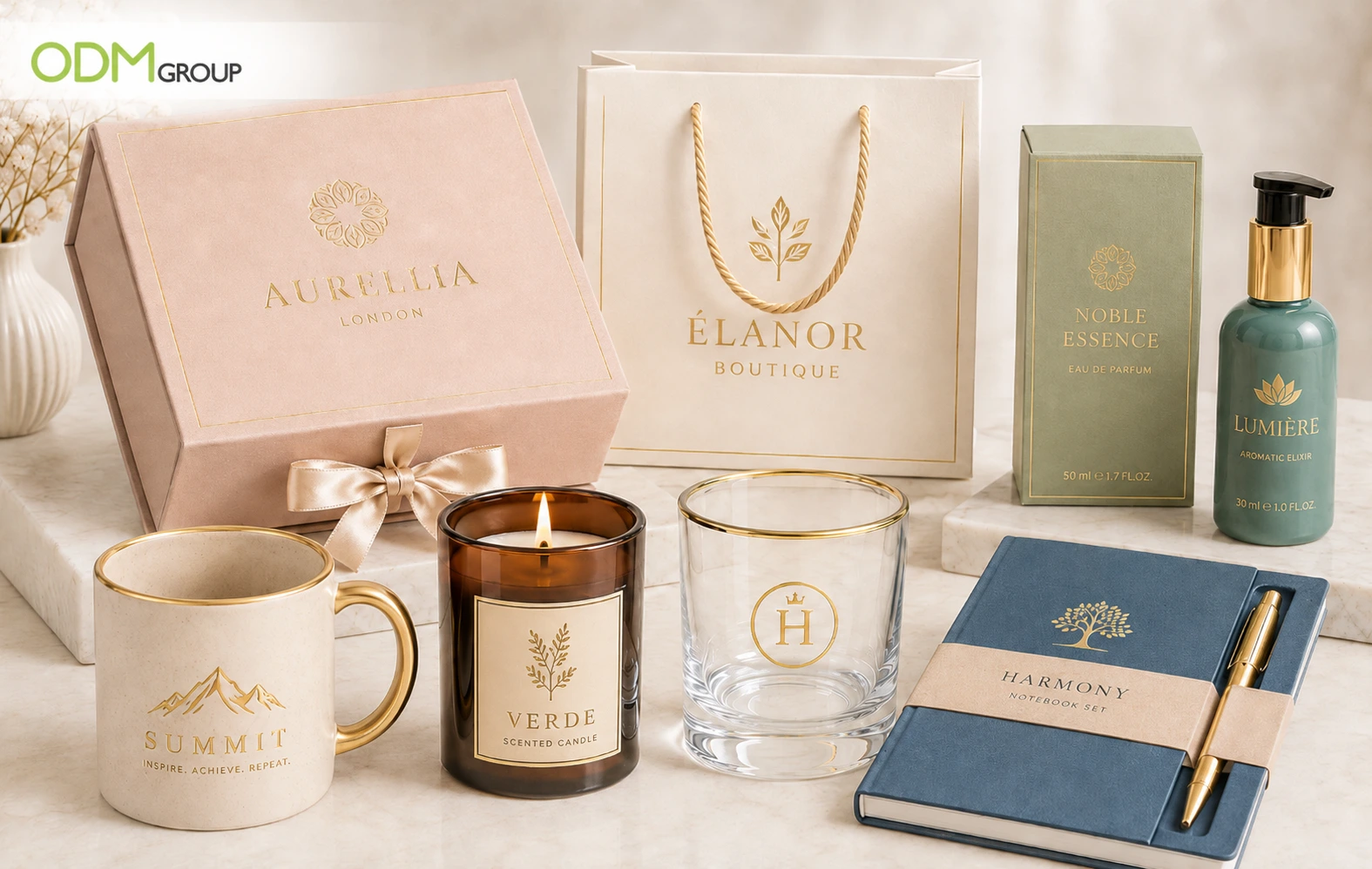
Gold foil can be used on:
- Rigid gift boxes
- Product sleeves
- Paper bags
- Premium labels
- Hang tags
- Gift cards
- Corporate gift packaging
- Limited-edition packaging
- Beauty and fragrance boxes
- Alcohol and confectionery packaging
Foil stamping is especially effective when the gold detail is used selectively. A small foil logo, border, product name, or pattern can make the packaging feel more expensive without overwhelming the design.
This method is often a smart choice for brands that want to elevate the unboxing experience. The product itself may be simple, but the gold foil packaging can make the overall presentation feel much more premium.
However, foil stamping also requires planning. The artwork needs to be prepared correctly, and the design must be suitable for the material. Very thin lines, tiny text, or overly detailed artwork may not foil clearly, especially on textured or uneven surfaces.
Brands should also remember that foil stamping is usually more relevant to packaging than curved glassware. If the goal is a gold logo on a box, foil may be ideal. If the goal is a gold rim on a glass, another method will be needed.
Best Uses of Gold Printing by Industry
Gold finishes are especially useful when brands want to create a more premium impression. Here are some common applications by industry.
1. Drinks and Spirits Promotions
Gold details work well for wine, whisky, champagne, beer, and cocktail promotions. A gold logo on glassware, a gold rim, or a gold-accented gift box can make the product feel more collectible.
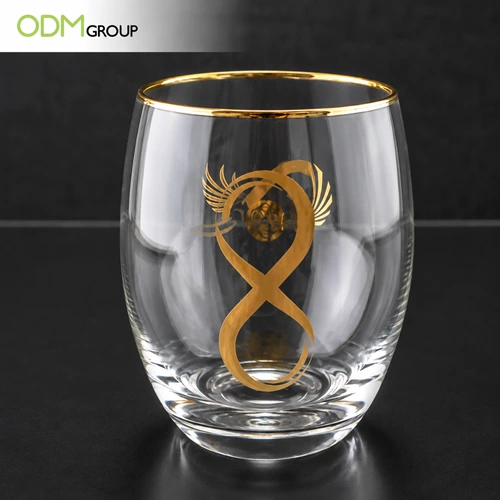
For spirits brands, gold is often used to support limited-edition campaigns, festive promotions, VIP gifting, and travel retail launches.
2. Beauty and Cosmetics
In beauty promotions, gold often communicates luxury, elegance, and giftability. It can be used on cosmetic gift boxes, beauty tool packaging, skincare sets, fragrance sleeves, or limited-edition promotional items. Gold foil is especially useful for beauty packaging because it adds shelf impact without changing the full product structure.
3. Corporate Gifting
Gold printing is popular for executive gifts, anniversary merchandise, holiday gift sets, and recognition items. It can make simple products such as notebooks, drinkware, packaging, and gift cards feel more considered.
For corporate gifts, the gold finish should be subtle. Too much gold can make the item look less refined. A small gold logo, border, or accent is often enough.
4. Travel Retail
Travel retail promotions need to stand out quickly in a crowded environment. Gold finishes can help packaging and gift sets feel more premium on shelf, especially for alcohol, confectionery, fragrance, and luxury food products.
A gold finish can also support “limited edition” or “exclusive travel retail” messaging.
5. Food and Confectionery
Gold printing is widely used for festive food packaging, chocolate boxes, premium tins, mooncake packaging, and holiday gift sets. It helps create a stronger gifting impression and can make seasonal packaging feel more special.
What Brands Should Check Before Confirming Gold Printing
Before moving into production, brands should ask several practical questions.
1. What material are we printing on?
Gold printing behaves differently on glass, ceramic, paper, plastic, metal, fabric, and leather. A finish that works beautifully on a rigid box may not work on a curved glass or flexible pouch.
The material should always guide the decoration method.
2. Does the item need to be dishwasher safe?
This is especially important for glassware, mugs, and drinkware. If the product needs to be used daily, the decoration method must be chosen carefully.
A luxury gold rim may look beautiful, but if the item requires handwashing, the brand should be aware of this before placing the order.
3. Is the gold detail decorative or functional?
Some gold finishes are mainly decorative. Others need to survive handling, washing, transport, retail display, or repeated use.
The more functional the product is, the more important durability becomes.
4. How large is the gold area?
A small gold logo is easier to control than a large gold pattern. Large metallic areas may show texture, unevenness, scratches, or colour variation more easily.
For premium products, subtle gold details often look better than covering too much surface area.
5. Is the design too detailed?
Thin lines, small text, and complex patterns can be difficult to reproduce with some gold finishes. This is especially true for foil stamping and curved-surface printing.
If the artwork is too detailed, it may need to be simplified before production.
6. Will the gold match the brand guideline?
Gold is not one fixed color. It can look warm, cool, yellow, bronze, champagne, matte, glossy, or reflective.
If the brand has strict color guidelines, these need to be checked during sampling. A screen mockup is not enough because metallic finishes change depending on the lighting and material.
7. What is the campaign quantity?
For small premium runs, real gold or foil may be worth the additional cost. For high-volume promotional campaigns, metallic ink may be more practical.
The right choice depends on the balance between budget, quantity, and brand impact.
Common Mistakes Brands Make With Gold Finishes
Gold can make a product look premium, but only when it is used correctly. Here are common mistakes brands should avoid.
-
Choosing real gold when durability is the priority
Real gold can look beautiful, but it may not be the right choice for products that need frequent washing or heavy use. If durability is the top priority, another finish may be better.
-
Expecting metallic ink to look like foil
Metallic gold ink can create a gold color, but it will usually not have the same reflective shine as foil. Brands should not judge the finish based only on a digital mockup.
-
Using too much gold
Gold works best as an accent. When overused, it can make a product look less premium. A controlled gold detail often feels more expensive than a large gold print area.
-
Forgetting the packaging
For premium promotional products, packaging matters. Sometimes the most effective place to use gold is not on the product itself, but on the box, sleeve, label, or insert card.
-
Skipping the sample stage
Gold finishes can look very different depending on material, lighting, and production method. A physical sample helps prevent disappointment before mass production.
-
Not giving care instructions
If the item is not dishwasher-safe or requires special handling, this should be communicated clearly. This protects both the customer experience and the brand image.
Other Printing/Decoration Methods
Laser engraving is a unique printing method that uses a laser to create high-quality permanent markings on metal surfaces.
Screen printing is a printing technique that uses a woven mesh to support an ink-blocking stencil. This method is also known as serigraphy or silkscreen printing.
Wrap printing is a decorative process of printing an image, brand name, logo or design on a special kind of vinyl that can be installed on a large surface.
How ODM Helps Brands Choose the Right Gold Finish
Choosing a gold finish is not only a design decision. It affects sourcing, sampling, cost, production method, packaging, and quality control.
ODM helps brands look at the full picture before production begins. Our team can support with product sourcing, decoration method selection, packaging development, sampling, supplier coordination, and quality control.
For example, if a drinks brand wants premium glassware, we can help compare real gold printing against metallic ink based on the desired look, budget, and care requirements. If a beauty brand wants a luxury gift-with-purchase set, we can help explore foil-stamped packaging, metallic labels, and custom inserts. If a company wants corporate gifts, we can recommend a gold finish that feels premium without making the product too delicate or expensive.
Through our supplier network and product development experience, ODM helps brands move from idea to production with fewer surprises.
Final Thoughts
Gold printing can make a promotional product look more premium, but the right method depends on how the product will be used.
Real gold is best for luxury and limited-edition items. Metallic gold ink is more practical for larger promotional runs. Gold foil stamping is ideal for packaging and gift presentation. Each option has a different role in brand marketing.
Before production, brands should consider the product material, durability, artwork, budget, order quantity, and customer experience. A good gold finish should not only look attractive in a mockup. It should also work in real production and support the campaign’s purpose.
If your brand is planning premium promotional products, custom packaging, or gold-finish merchandise, ODM can help you choose the right production route and develop a product that fits your campaign goals.
More Promotional Product Ideas


FAQs about Custom Gold Printing
Is real gold printing dishwasher safe?
Not always. Some real gold finishes on glassware may require lower-temperature processing, which can affect dishwasher safety. Brands should confirm care instructions during sampling.
Is Pantone 871 C the same as real gold?
No. Pantone 871 C is a metallic gold color reference, but it does not create the same shine, depth, or reflective finish as real gold. The final result also depends on the material and printing method.
What is the best gold finish for promotional glassware?
For premium or limited-edition glassware, real gold details can create a luxury effect. For larger promotional runs, metallic gold ink may be more practical and cost-effective.
Can gold printing be used on packaging?
Yes. Gold foil stamping is commonly used on packaging, gift boxes, sleeves, labels, tags, and paper bags. It is often one of the best ways to create a premium unboxing experience.
Latest Blogs

Customized Cluster Bells: Inspiring Promotional Gift Ideas for Baby Brands
Customized Cluster Bells offer an interesting example of how [...]

Airplane Promotional Products: How STARLUX Airlines and CITY PRIMA Engage Customers
Airplane promotional products can do more than display a brand [...]

Event Branding Ideas: Make Every Touchpoint a Brand Experience
Event branding ideas turn separate venue elements into one [...]

Waterproof Camping Blanket: Take Your Brand Into the Outdoors
A waterproof camping blanket gives brands a useful role [...]
Custom Letter Envelope Opener Ideas for Corporate Gifts
A letter envelope opener may be a simple desk [...]

LED Screen Backpack: Smart Walking Billboards for Campaigns
Static outdoor signage and traditional promotional merchandise [...]