Every brand wants to be remembered. The smartest ones put something in your hands that makes forgetting impossible.
Branded stationery has been around for decades, but the brands getting the most out of it today are not treating it as a cheap giveaway. They are treating it as a strategic touchpoint: something that carries the weight of their brand long after a campaign ends, a meeting wraps up, or a hotel stay is checked out of.
The difference between stationery that gets kept and stationery that gets binned comes down to two things: product quality and thinking quality. This post covers both and shows what it looks like when a brand gets it exactly right.
Four reasons branded stationery outperforms digital ads
A notepad or pen is useful. Customers keep it because they want to, not because they feel obligated.
That's the holy grail of promotional marketing: a gift that genuinely adds value to someone's day.
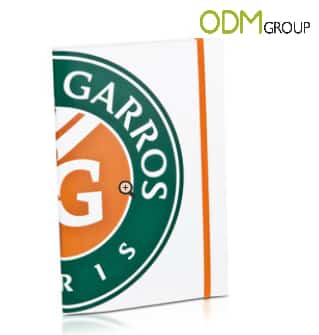
A beautifully debossed notepad communicates something a logo sticker never could.
The craftsmanship of your giveaway is a direct proxy for your brand's standards.
From hotel rooms to office desks to kitchen counters, branded stationery reaches environments no paid media ever could.
Every new setting is a fresh brand impression, at zero additional cost.
Unlike a campaign with a deadline, a branded notebook keeps working for months after it's given away.
Every use is an impression. Every impression deepens recall. The returns grow long after your budget is spent.
Customized Branded Stationery List
Branded stationery covers more ground than most marketers expect. Beyond the obvious, there is a broad range of products that carry a logo well and earn a place in someone's daily routine.
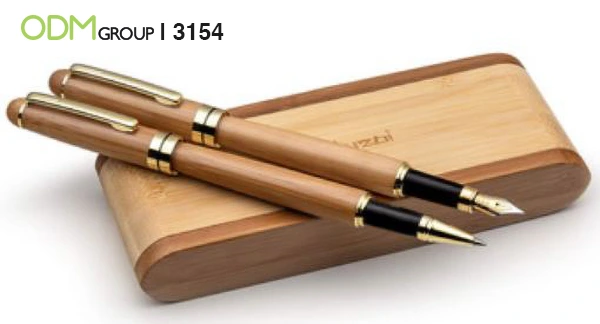
1. Writing Instruments
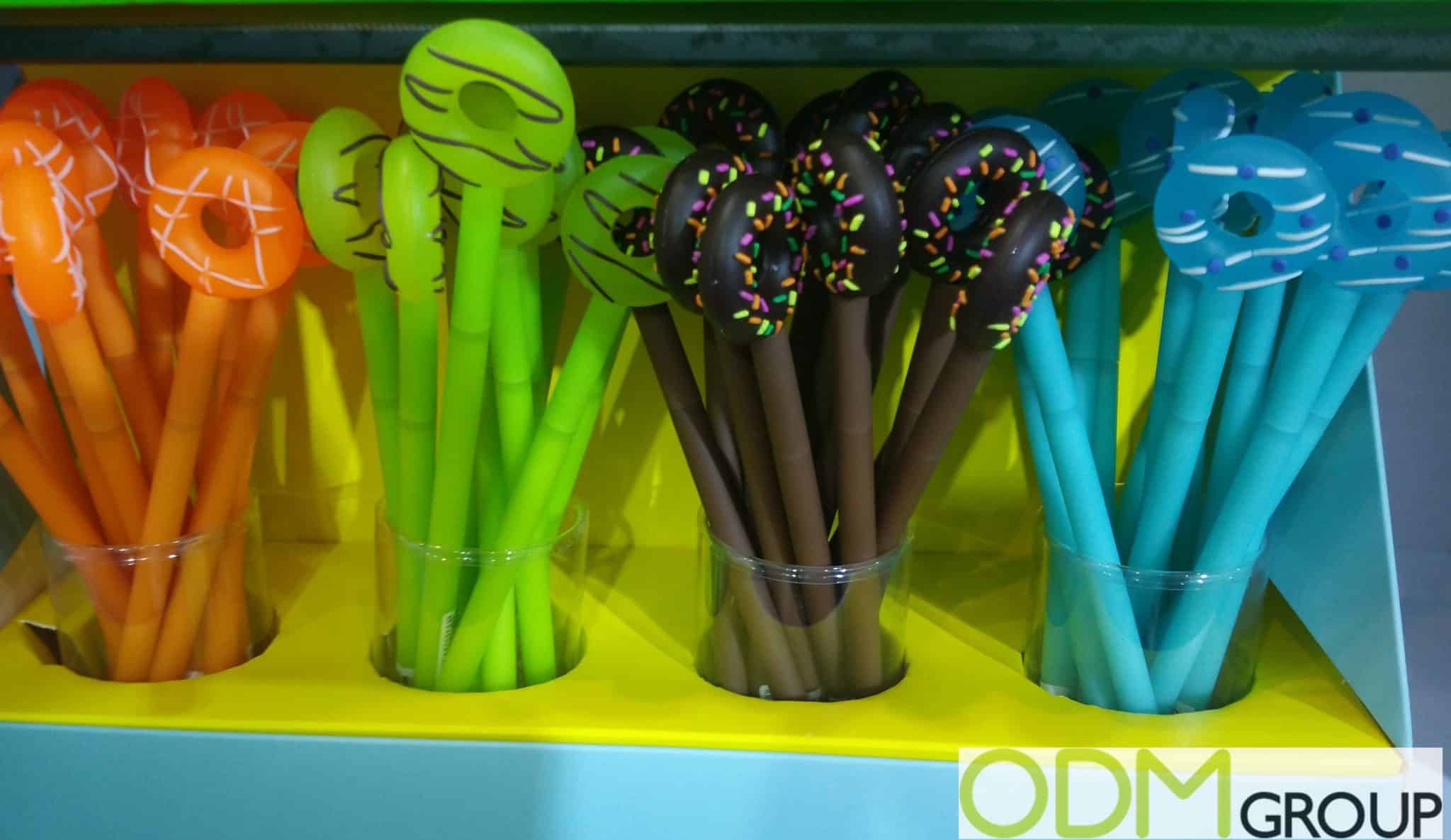
Ballpoint pens, rollerball pens, gel pens, fountain pens, mechanical pencils, and branded wood pencils.
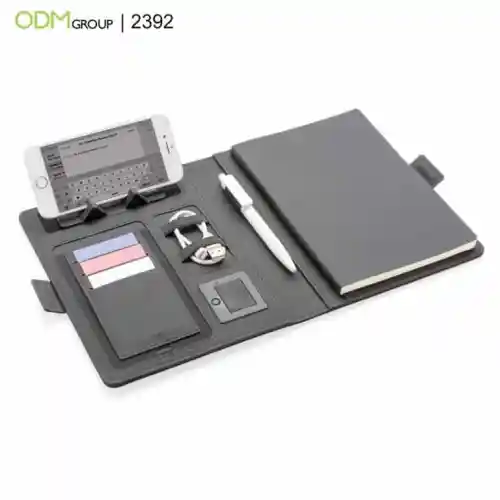
2. Notebooks & Notepads
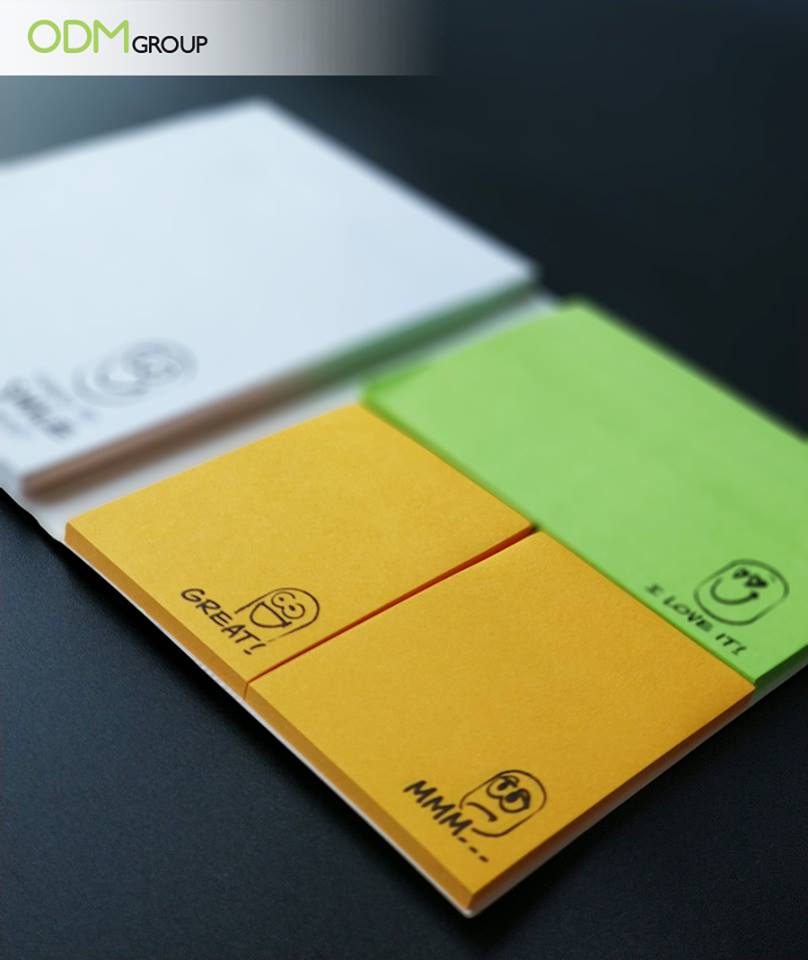
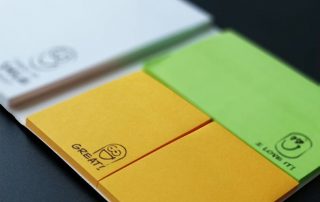
Hardcover, softcover, pocket notepads, spiral-bound, desk pads, and sticky note sets.
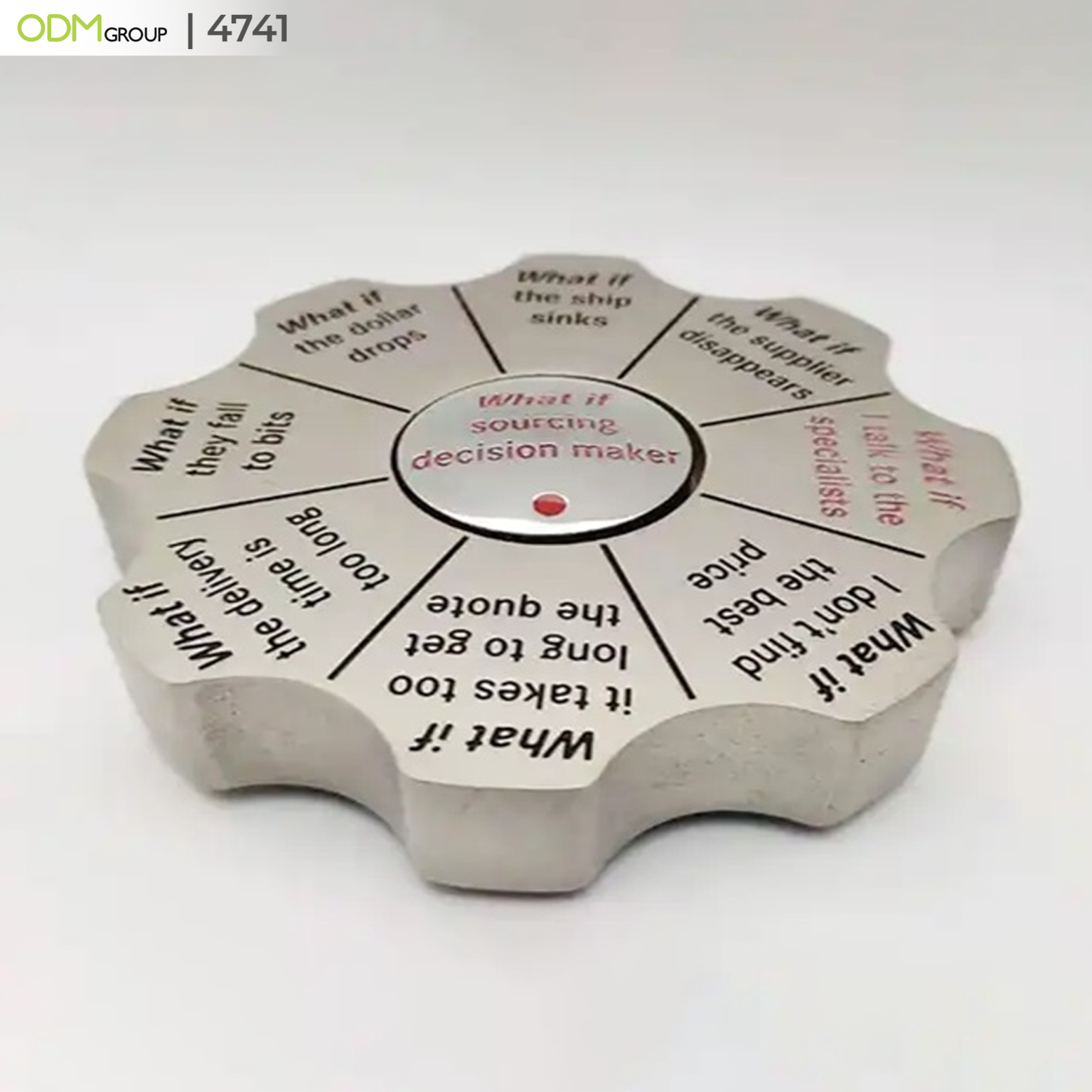
3. Desk Accessories
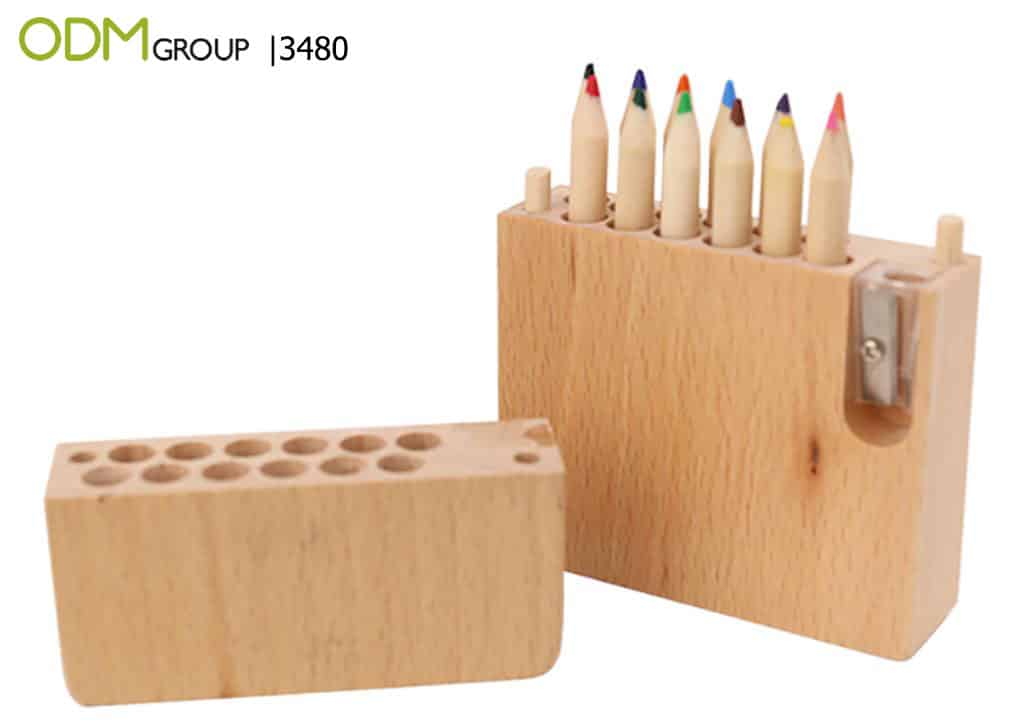
Pen holders, desk organizers, paperweights, mouse pads, bookmarks, and rulers.
5. Stationery Sets & Gift Bundles
Executive gift sets, hospitality welcome sets, on-desk starter kits, GWP packs, trade show kits, and seasonal gift sets.
How the right finish turns a giveaway into a brand asset
The application technique matters as much as the product itself. Here is how to choose the right one for your brand.
DebossingBest for premium |
Presses your logo permanently into the cover material — no ink, just a clean tactile impression. It improves with age and signals restraint and confidence. Ideal for hospitality, luxury, and professional services brands. |
Foil stampingHigh visual impact |
Gold, silver, or custom foil is applied under heat and pressure. Eye-catching and memorable. Works best with bold, geometric logos and brands that want to own the room. |
Screen printingHigh volume |
Reliable, cost-effective, and color-accurate. Best for large campaigns where budget efficiency matters. Works on flat, smooth covers. Less premium-feeling, but it is excellent for visibility at scale. |
UV spot printingModern & tactile |
A glossy, raised coating applied over the logo creates a sophisticated matte-gloss contrast. Increasingly popular for corporate gifting and brand books. Subtle but distinctive in hand. |
Maison de Camille Boutique Hotel- A Case Study
“A hotel stay lasts a few nights. A beautifully made notepad lasts months — and every time a guest uses it, they’re brought right back to the experience.”
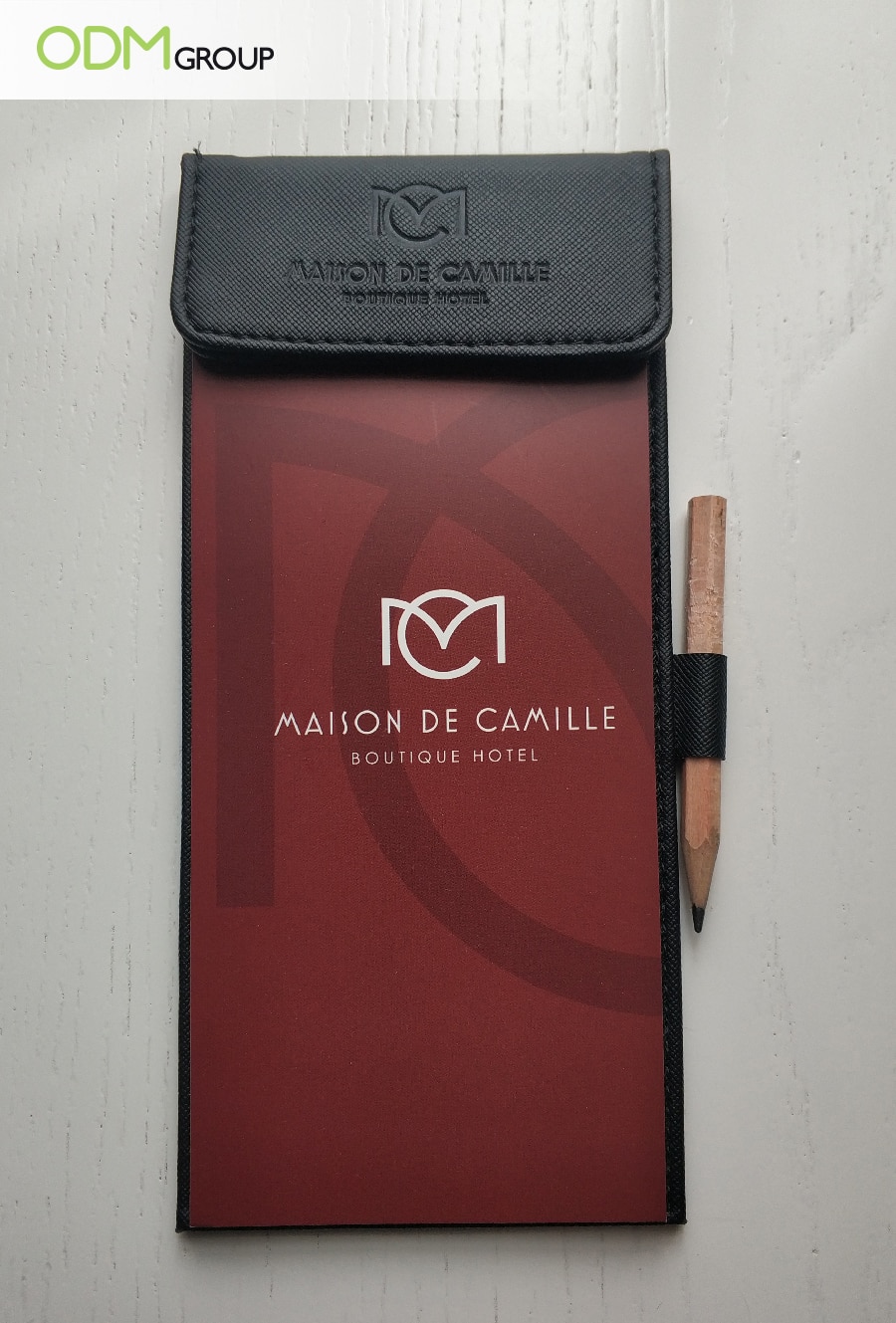
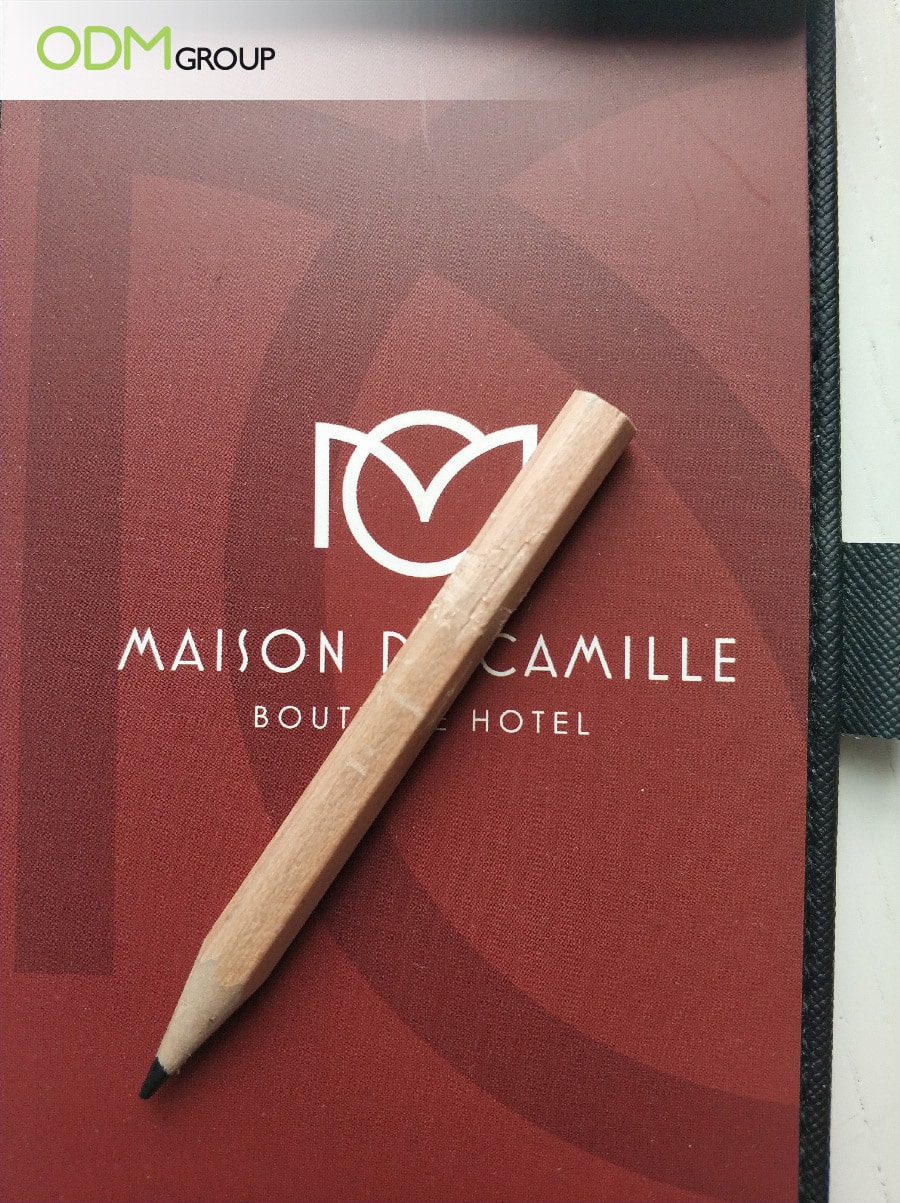
Maison de Camille is a high-end boutique hotel that understands something most brands miss: the guest experience does not end at checkout. By commissioning a custom debossed notepad and pencil set as a room amenity and take-home gift, the hotel created a brand artifact that continues working long after the stay ends.
The notepad features the hotel’s logo elegantly debossed into the cover — no color, no ink. Just a clean, tactile impression that communicates exactly what the hotel is: refined, unhurried, and considered in every detail.
The pencil pairing is deliberate. A notepad without a writing instrument sits idle. A paired set is immediately useful — and every time a guest reaches for it weeks or months later, the brand impression is quietly renewed.
Four questions worth asking before you start
1. Where will this actually be used?
A pocket notepad for hotel guests is a very different object from an A4 desk pad for trade show visitors. Format and size should follow the real behavior of your audience — not what is easiest to order.
2. What does the finish communicate?
Kraft signals sustainability. Faux leather signals premium. Matte card signals editorial and creative. Every material choice says something about your brand — make it a deliberate decision, not a default.
3. Would you keep it to yourself?
The fastest quality test: would someone on your own team actively want to use it? If the answer is hesitant, your customer will sense that too. Set the bar internally first.
4. Is this standalone or part of a campaign?
Branded stationery works on its own — but it works even harder as part of a coordinated campaign: a GWP, an on-pack promotion, a trade show bundle, or a welcome gift set. Tell us your objective and we will build backwards from there.
Conclusion
Most marketing is designed to be noticed. Branded stationery works differently. At its best, it is not noticed at all — it is just used. The notepad that sits on a desk for eight months, the pen that gets passed around a meeting room, the pencil a hotel guest slips into their bag without thinking twice. None of these moments feel like advertising. That is precisely what makes them effective.
There is something worth sitting with in that idea. The promotional products that perform best are the ones that earn their place through usefulness, not visibility. They happen to carry a logo. But the reason they are kept, used, and seen again and again has nothing to do with the logo. It has to do with whether the thing itself is any good.
READY TO START YOUR BRANDED STATIONERY CAMPAIGN?
Let’s build something your customers will keep. ODM Group is your end-to-end strategic partner for promotional products, design, manufacturing, and global delivery. Contact us today!
More Ideas


FAQs about Customized Branded Stationery
What is the minimum order quantity for branded stationery?
This varies by product and supplier. As a general guide, most printed stationery items such as notepads and pens have a minimum order quantity of 100 to 500 units. Premium items with debossing or foil stamping typically start at 200 to 300 units. ODM Group works with clients to find the right balance between volume, unit cost, and quality.
What is the difference between debossing and embossing?
Debossing presses the design into the material, creating a recessed impression. Embossing raises the design above the surface. Both are applied without ink or colour, relying purely on the texture and shadow of the material to make the mark visible. For branded stationery, debossing is more commonly used as it tends to hold detail better on soft cover materials like linen and faux leather.
Can I order a sample before committing to a full run?
Yes, and it is usually recommended. Most manufacturers can produce a pre-production sample — sometimes called a physical proof or PP sample — for approval before the full order goes into production. There is typically a cost for this, and it adds 1 to 2 weeks to the timeline, but it is worth it for premium or high-volume orders where getting the finish exactly right matters.
Is branded stationery a good option for sustainable campaigns?
It can be, depending on the materials and supplier chosen. Recycled paper, FSC-certified notebooks, soy-based inks, and bamboo or recycled plastic components all contribute to a lower environmental footprint. The longer a product is kept and used, the better its sustainability profile becomes — which is another reason quality matters. A well-made notebook used daily for a year has a very different impact from a cheap one discarded in a week.
What to Read Next?
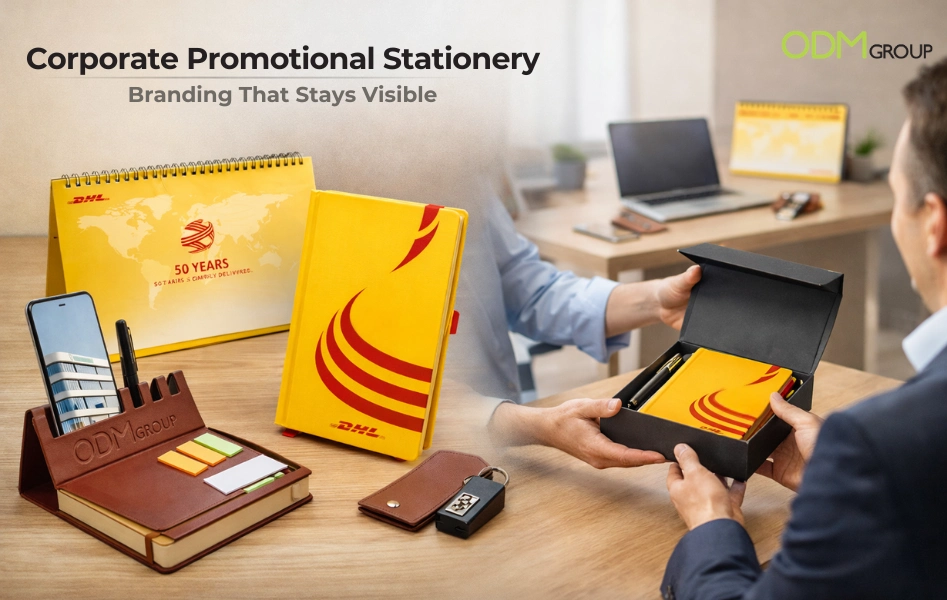
Corporate Promotional Stationery Ideas for a Lasting Brand Impression
Corporate promotional stationery still works. Not because it’s traditional, [...]
8 Branded Stationery Items To Boost Productivity
Admit it or not, there are days we feel like [...]
 Gallery
5 Promotional Stationery Products that Will Get Your Brand Noticed!
Branded promotional products, Custom packaging, Custom Products, Giveaway promotional items, In-pack promotions, Kids promotional products, Marketing, On-pack promotions, Personalized promotional gifts, POS Displays, Premium promotional products, promotional gift, Promotional Products, Purchase with purchase-
-
-
5 Promotional Stationery Products that Will Get Your Brand Noticed!
Pencils are one of the most flexible promotional stationery products [...]
Custom Wooden Pen Holders in Funny Shapes – Desktop Promotion Idea
Are you looking for an effective yet affordable and long-lasting [...]
Why Customized Branded Stationery Still Wins
Every brand wants to be remembered. The smartest ones [...]
Cool Graphic Design Ideas : How Tic Tac Gets Their Message Across
If you're looking for graphic design ideas that dive off [...]