
A custom LED light box sign gives brands a clear and highly visible presence in busy retail environments. Whether installed above a storefront, beside an entrance, or inside a promotional space, an illuminated sign can help customers identify a business during the day and after dark.
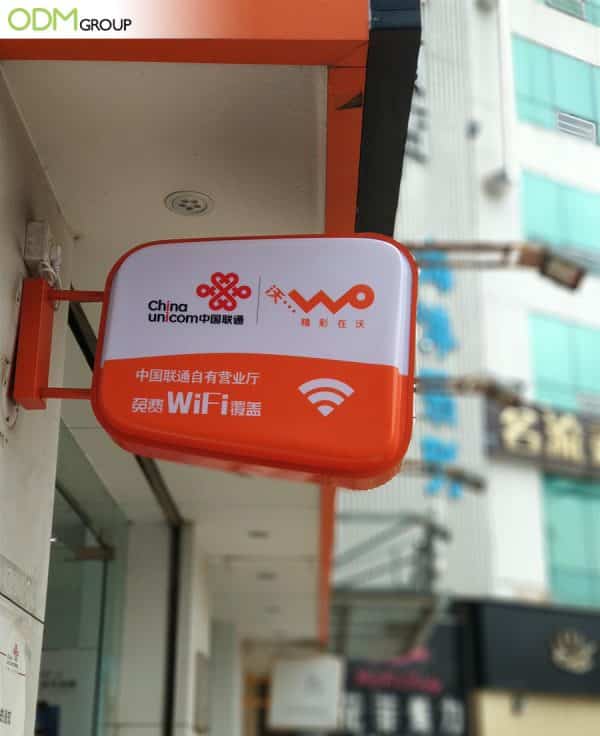
China Unicom’s Wall-Mounted LED Light Box
The China Unicom light box features the company’s recognizable orange and white branding. Instead of using a complicated message, the design focuses on the logo and brand identity.
Its wall-mounted position also helps the sign face passing pedestrians rather than sitting flat against the storefront. This can improve visibility for people approaching from either direction.
Light Up Your Brand with a LED Light Box Sign – China Unicom Shows How
The light box is relatively compact, making it suitable for stores located along narrow or crowded streets. During the day, it functions as a branded shop sign. At night, the internal lighting helps the store remain visible among neighboring businesses and surrounding advertisements.
This example highlights an important point: an effective illuminated sign does not always need to be large or elaborate. The right combination of design, placement, and lighting can make a simple sign highly noticeable.
1. Increase Storefront Visibility
Retail streets often contain competing signs, window graphics, digital screens, and promotional displays. A light box creates a bright focal point that can help a business stand out within this visual environment.
Illuminated signs are particularly useful for businesses that operate in the evening, including:
- Convenience stores
- Restaurants and bars
- Hotels
- Pharmacies
- Telecommunications stores
- Entertainment venues
- Transportation hubs
- Shopping centers
Brands can also coordinate their light boxes with other outdoor displays to create a more consistent customer journey from the street to the point of sale.
2. Support Consistent Brand Recognition
A custom LED light box can reproduce a company’s logo, brand colors, typography, and campaign graphics. This allows the sign to become a recognizable extension of the brand rather than a generic directional fixture.
For stronger visual recognition, the design should focus on a small number of important elements:
- A clearly displayed logo
- Strong contrast between the background and artwork
- Legible text
- Consistent brand colors
- A message that can be understood quickly
Customers walking past a store may only have a few seconds to notice the sign. Keeping the artwork simple makes the branding easier to recognize from a distance.
3. Provide Visibility From Different Directions
The orientation of a sign can be just as important as its design.
A sign installed flat against a wall is mainly visible to people standing directly in front of the store. A projecting or wall-mounted light box extends outward from the building, allowing pedestrians approaching from both sides to see it.
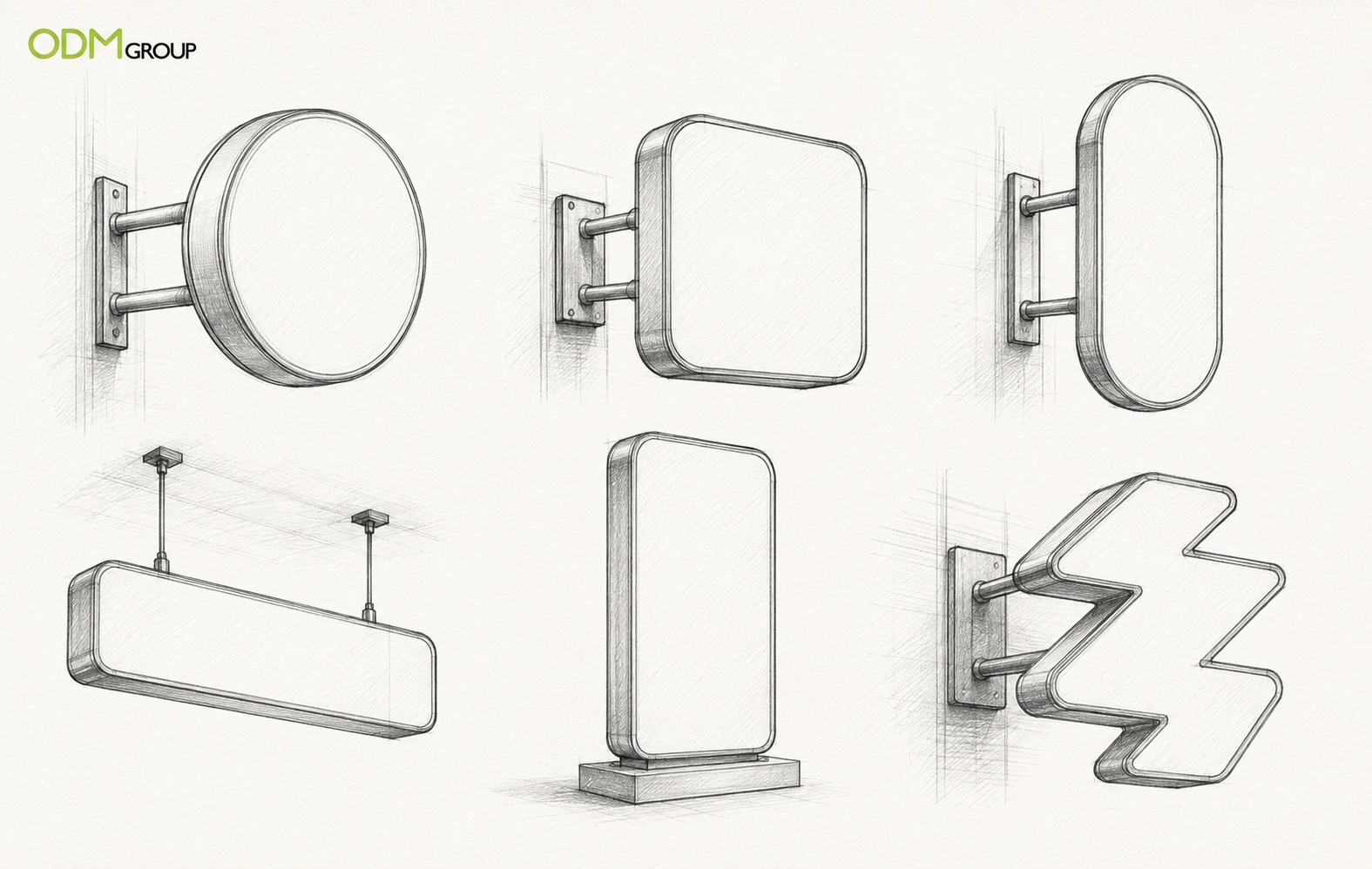
Depending on the location, brands can choose from several configurations:
- Single-sided light boxes: Suitable for walls, counters, and interior displays.
- Double-sided light boxes: Useful for corridors, shopping streets, and areas with two-way foot traffic.
- Hanging light boxes: Suitable for malls, exhibitions, retail aisles, and covered walkways.
- Freestanding light boxes: Designed for store entrances, events, and temporary activations.
- Countertop light boxes: Ideal for product launches, reception areas, and point-of-sale promotions.
The best configuration depends on the viewing angle, installation space, customer traffic, and intended viewing distance.
4. Create a Long-Term Branding Asset
Unlike short-term posters or temporary printed banners, a well-designed light box can support ongoing brand visibility.
The frame and lighting system can remain in place while selected graphics are updated for new campaigns. This can make the display useful for seasonal launches, special offers, new products, or updated store branding.
Before developing the sign, brands should consider whether the artwork needs to be permanent or replaceable. A changeable graphic panel may be more practical for retailers that regularly update their promotions.
5. Reduce Energy Consumption
LED modules generally use less energy and generate less heat than many traditional illuminated signage systems. They can also provide consistent brightness across the display when the internal layout is correctly designed.
However, performance depends on the quality of the LED modules, power supply, wiring, ventilation, and construction. Buyers should not evaluate a light box based only on its exterior appearance.
The electrical components should be appropriate for the intended market and installation environment. Outdoor projects may also require additional protection against moisture, dust, temperature changes, and prolonged exposure to sunlight.
For a closer comparison of illuminated signage technologies, read our guide to LED vs. neon signs.
6. Adapt the Design to Different Campaigns
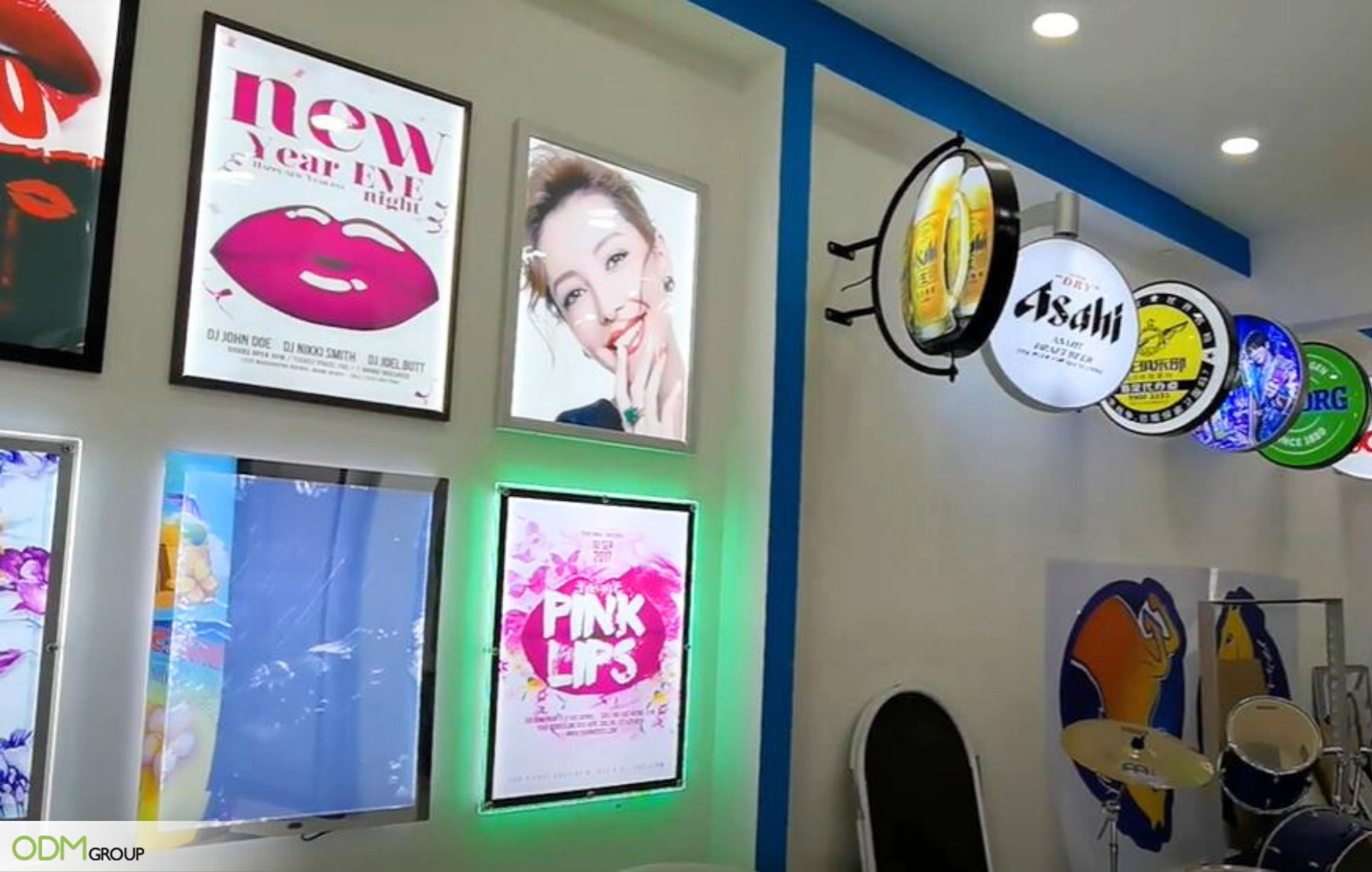
LED light boxes are not limited to permanent storefront signs. They can also be developed as part of a wider retail or promotional campaign.
-
Retail Storefronts
A projecting sign can help customers identify a shop along a busy street. Double-sided designs are especially useful where pedestrian traffic approaches from multiple directions.
-
Point-of-Sale Promotions
Smaller illuminated displays can be positioned near featured products, checkout counters, or promotional zones. They can draw attention to a launch without occupying the space required by a large display unit.
-
Beverage and Hospitality Promotions
Bars, restaurants, hotels, and beverage brands can use illuminated displays for menus, logos, product promotions, or branded serving areas. Bottle-shaped light boxes and illuminated bottle glorifiers can provide a closer connection to the promoted product.
Explore more ideas for combining illumination and beverage presentation in our guide to custom bottle glorifiers.
-
Exhibitions and Events
Freestanding or portable light boxes can support event branding, wayfinding, product demonstrations, and photo opportunities. Modular construction may make the display easier to transport, assemble, and reuse.
-
Corporate and Reception Areas
A premium logo light box can reinforce brand identity in a lobby, office, showroom, or meeting area. Materials such as brushed metal, acrylic, wood, or textured finishes can help the sign complement the interior.
Customization Options for LED Light Box Signs
A custom sign should be developed around its environment rather than selected only from a standard catalog. Important customization areas include:
1. Shape and Dimensions
Light boxes can be produced in square, rectangular, circular, logo-shaped, or product-inspired formats. The dimensions should suit the available installation space while keeping the artwork visible from the expected viewing distance.
2. Frame Material
Possible materials include aluminum, steel, acrylic, plastic, and wood. Material selection affects the sign’s appearance, weight, durability, price, and suitability for indoor or outdoor use.
3. Graphic Application
Artwork may be printed, engraved, cut from acrylic, applied as vinyl, or developed as a raised logo. Replaceable graphic panels can be considered for businesses that need to refresh campaigns regularly.
4. Lighting Style
Depending on the construction, a light box may use edge lighting, backlighting, halo lighting, or illuminated letters. Each option creates a different visual effect and may require a different internal structure.
5. Mounting Method
The design may include wall brackets, hanging hardware, a tabletop base, or a freestanding support. Installation requirements should be considered during development, not after the sign has been completed.
6. Power Supply
The location of electrical outlets, cable routing, voltage, plug type, and local requirements should be confirmed before production. Cable management is particularly important for creating a clean retail presentation.
What Should Buyers Include in Their Brief?
A clear project brief helps the design and sourcing team recommend a practical construction method. Before requesting a quotation, prepare the following information:
- Intended use and campaign objective
- Indoor or outdoor installation
- Preferred dimensions and shape
- Single-sided or double-sided format
- Logo and artwork files
- Required quantity
- Target budget
- Destination market
- Installation or mounting requirements
- Desired delivery date
Photos and measurements of the installation area are also helpful. They allow designers to consider available space, viewing direction, wall conditions, cable placement, and surrounding visual elements.
How ODM Supports Custom Signage Projects
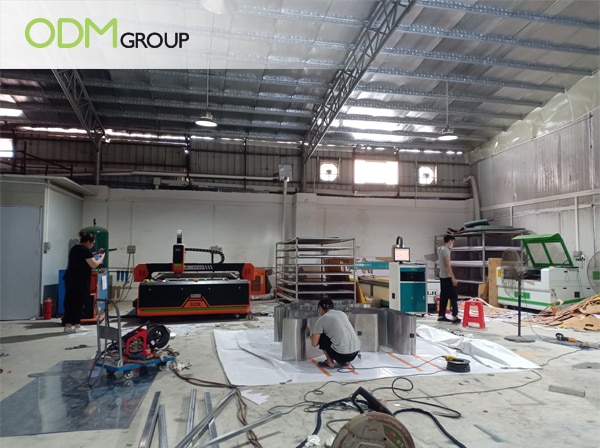
Developing custom illuminated signage involves more than placing a logo on an existing light box. The structure, lighting, artwork, materials, installation method, and electrical components must work together.
The ODM Group supports brands through the complete project development process. Depending on the brief, our team can coordinate:
- Product brainstorming and concept development
- Industrial sketches and presentation decks
- 3D CAD and structural development
- Material and lighting recommendations
- Prototype and sample coordination
- Factory selection and audit
- Branding and packaging development
- On-site quality control
- Logistics and international shipping
Our role is to help brands move from an initial marketing idea to a practical, brand-aligned product. We can also coordinate an LED light box with other custom POS displays to create a consistent retail activation.
Final Thoughts
The China Unicom example shows how a relatively simple LED light box can strengthen storefront visibility. Its effectiveness comes from recognizable branding, clear artwork, compact construction, and placement that allows the sign to be viewed from different directions.
For brands planning their own illuminated signage, the priority should not be adding more elements. It should be making the right elements easier to see.
A custom LED light box can become a valuable part of a retail campaign when its design responds to the location, viewing distance, customer traffic, and wider brand identity.
Planning an illuminated storefront sign or retail display? Contact The ODM Group with your artwork, preferred dimensions, estimated quantity, installation environment, delivery market, and target timeline. Our team can help coordinate the project from concept development to quality control and shipping.
More Product Ideas


Frequently Asked Questions
What is a custom LED light box sign?
A custom LED light box sign is an illuminated display developed with a brand’s logo, colors, graphics, or promotional message. It typically combines a frame, branded display surface, internal LED modules, power components, and a mounting or support system.
Can LED light boxes be used outdoors?
Yes, but an outdoor light box must be designed for the intended environment. Its frame, graphic panel, electrical components, connectors, and seals may require additional protection against moisture, dust, sunlight, and temperature changes.
Should I choose a single-sided or double-sided light box?
A single-sided sign is generally suitable for walls and areas where customers approach from one direction. A double-sided light box is better for projecting, hanging, or freestanding installations where the sign needs to be visible from two directions.
Can the graphics be replaced?
Yes. Some light boxes can be developed with removable or interchangeable graphic panels. This is useful for retail stores, events, and seasonal campaigns that require regular artwork updates.
What to Read Next?
Business Sign Ideas & Creation To Illuminate Your Success
In the bustling streets of commerce, a business’s sign [...]
Creative Retail Sign Ideas: Tips to Increase Your Brand Visibility
A great brand manager knows that good custom shelf [...]

Cardboard Box Packaging Prices On Surge: How It Affects Promo Industry
Whether you’re shopping online or taking your weekly stroll at [...]
China Factory Tour: Custom Sign Manufacturing
Learning about custom sign manufacturing will be today’s agenda! The [...]
Visiting a Steel Supplier in China for Advertising Signages
Maintaining a close relationship with our suppliers outside was very [...]
Learn How to Boost Visibility With a Storefront Signage
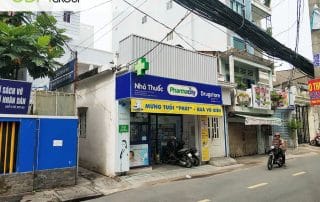
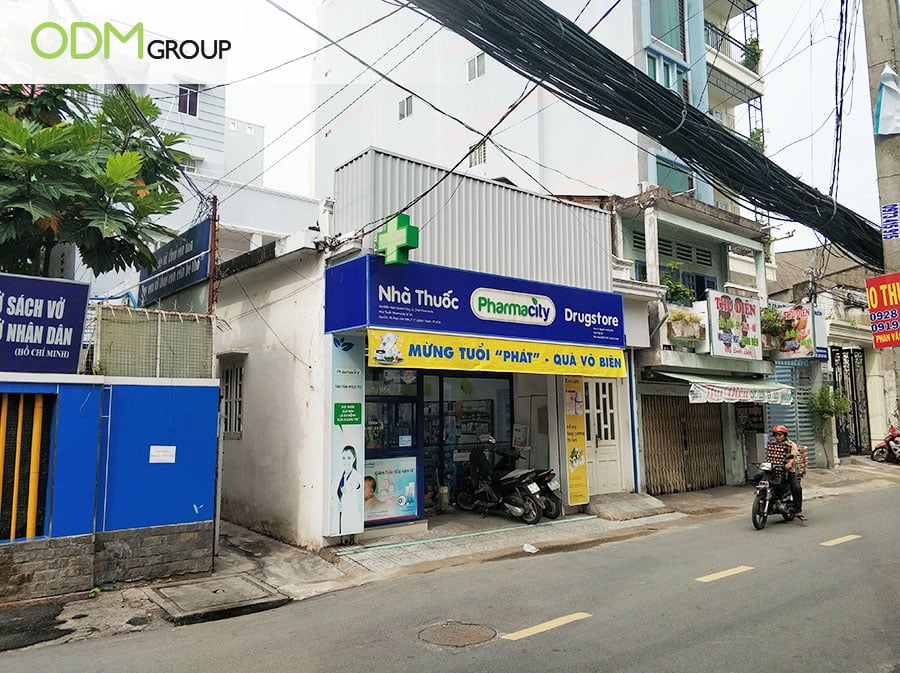
Pharmacity caught our attention when exploring Vietnam! Their storefront signage [...]