
Promotional baby products are not simply giveaways. They occupy a unique position in brand marketing. Every item purchased enters homes and becomes part of daily routines. Ultimately, they represent a brand during one of the most important stages in a customer’s life.
This creates both an opportunity and a responsibility. A useful baby product can strengthen trust, encourage long-term loyalty and give a brand meaningful visibility. A poorly selected product, however, can quickly raise concerns about quality, safety and brand credibility.
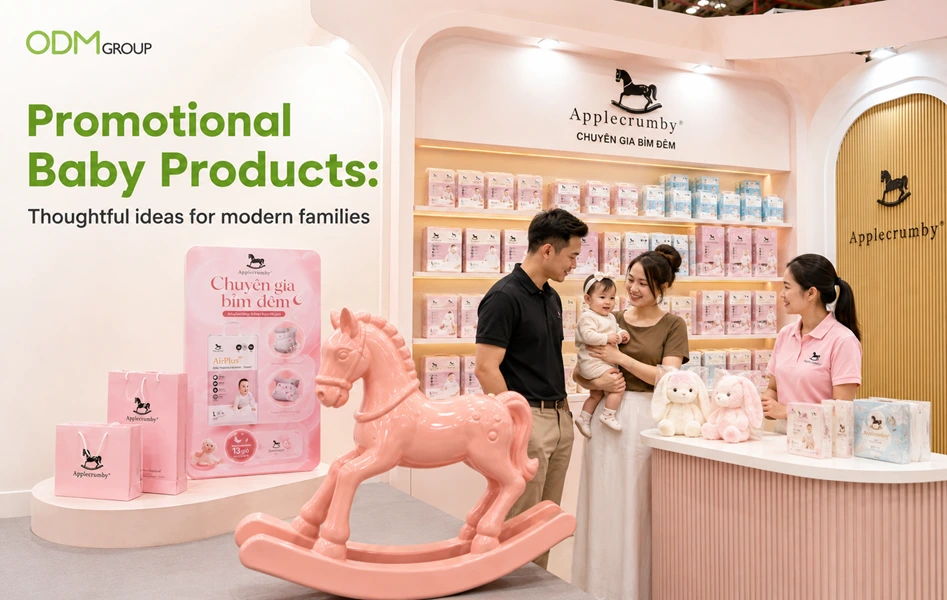
Why Baby and Parenting Markets Deserve Leadership Attention
The baby market is shaped by high customer involvement. Parents tend to research products carefully, compare materials, read reviews, and seek reassurance before making decisions.
They are not only evaluating the product. They are evaluating the company behind it.
This makes trust one of the most valuable forms of brand equity in the category. Businesses that demonstrate care, transparency and practical understanding can build relationships that continue beyond a single purchase.
Promotional baby products can support that relationship by giving customers something useful during pregnancy, childbirth or early parenthood.
They may be used within:
- Customer acquisition campaigns
- Retail gift-with-purchase promotions
- Loyalty and membership programs
- Maternity and healthcare initiatives
- Employee newborn gifting
- Product sampling campaigns
- Family travel packages
- Parenting events and exhibitions
- Community and educational programs
The strongest campaigns do not treat the merchandise as an isolated promotional item. They connect it to a wider customer experience.
What Applecrumby’s Vietbaby Fair Presence Signals
Applecrumby’s participation at Vietbaby Fair Vietnam last month is a useful example of how baby and parenting brands are increasing their physical presence in growing consumer markets.
Events of this kind bring brands, retailers, parents, and industry stakeholders into the same environment. They allow companies to move beyond digital advertising and create direct product experiences.
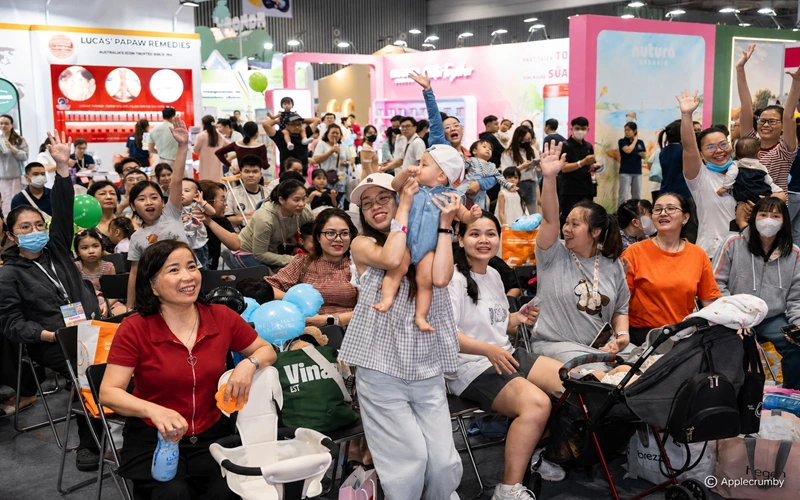
For leaders, the strategic value of a baby fair is not limited to immediate sales. It can also provide opportunities to:
- Observe changing parental priorities
- Introduce products to new audiences
- Explain product features face to face
- Gather feedback from parents and retail buyers
- Build trust through physical product interaction
- Support distributor and retailer conversations
- Test which messages attract the strongest response
Promotional products can extend the impact of these events.
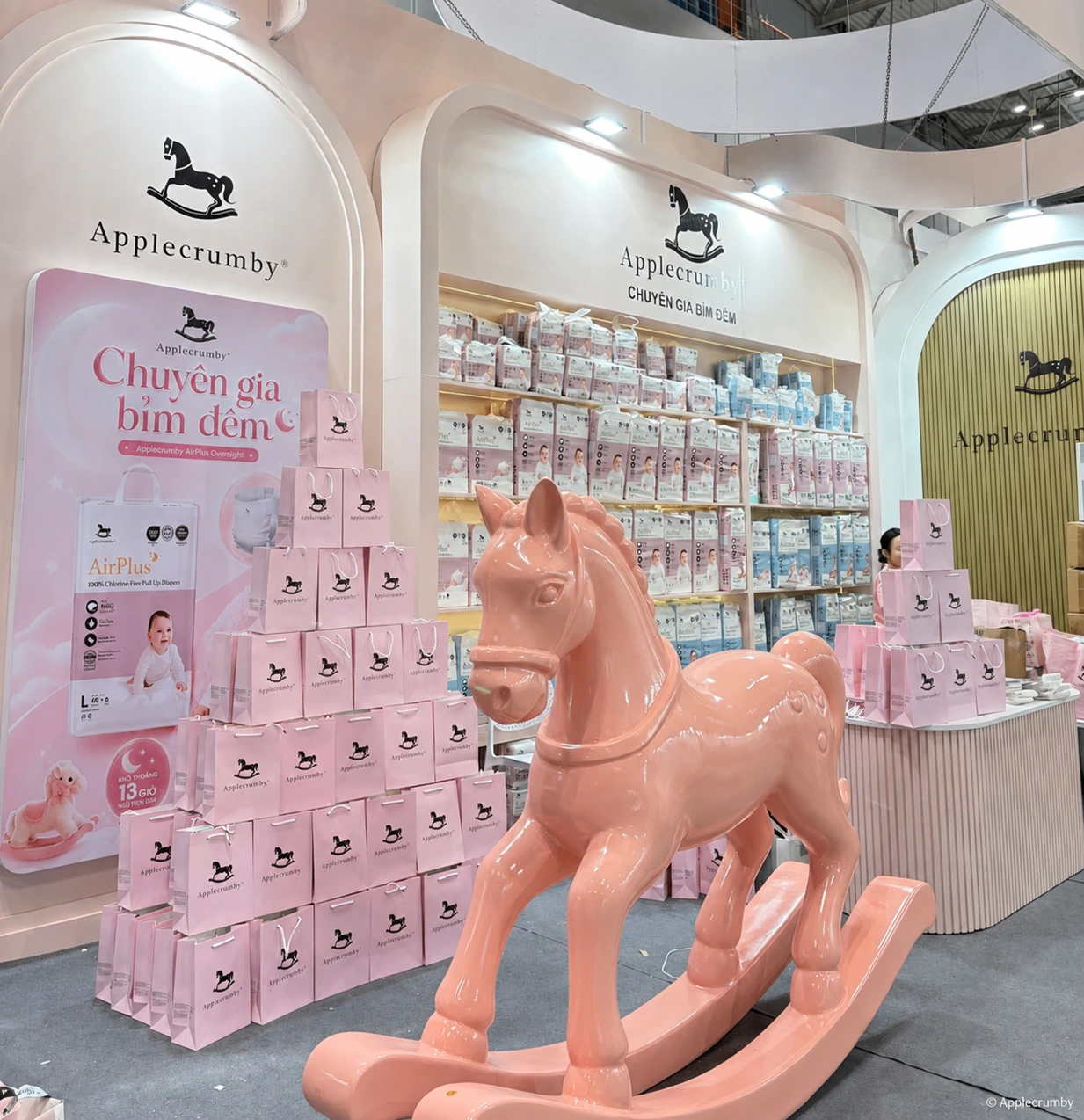
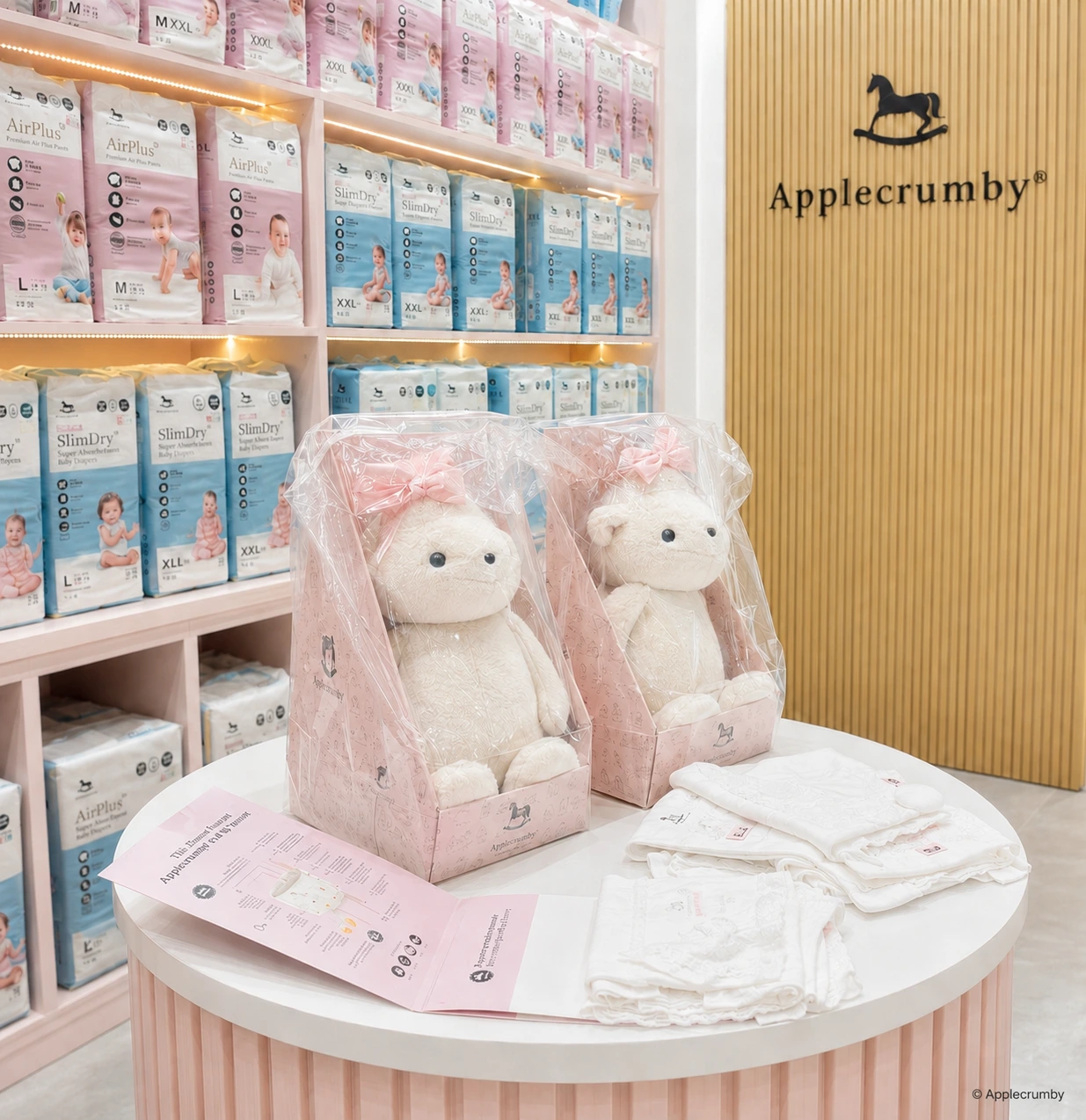
A practical item placed in a visitor’s hands can keep the brand visible after the fair has ended. However, the item must reinforce the company’s positioning. A premium baby care brand, for example, should not distribute a generic product that feels unrelated to quality, comfort or family wellbeing.
The promotional product becomes part of the brand experience.
From Giveaway Thinking to Customer-Lifecycle Marketing
Baby products can support brands at several stages of the customer lifecycle.
1. Awareness
A well-designed product can introduce the brand to parents who may not yet be familiar with its services or product range.
At exhibitions, retail launches and maternity events, products such as bibs, changing pouches or reusable organizers can attract attention while creating a natural starting point for conversation.
2. Consideration
Promotional products can help brands demonstrate their understanding of real parenting needs.
A compact travel changing mat, for example, communicates convenience.
A soft textile gift may communicate comfort and care.
An organized welcome set can communicate preparation and attention to detail.
These messages are often more persuasive when customers can experience the product directly.
3. Conversion
Baby merchandise can be used as a purchase incentive, subscription reward, or account-opening gift.
The product should add value without distracting from the main offer. It should also be easy for customers to understand and redeem.
Complicated mechanics can reduce participation, even when the gift itself is attractive.
4. Loyalty
Newborn gifts and milestone rewards can help businesses create stronger emotional connections with existing customers.
Insurance providers, banks, healthcare groups, and employers can use these products to acknowledge an important life event. This moves the relationship beyond transactions and demonstrates that the organization recognizes the individual.
5. Advocacy
Products that are useful, attractive, and easy to carry may naturally appear in homes, parenting groups, social content, and public spaces.
This visibility can create organic brand exposure, but only when parents genuinely choose to use the item.
Promotional Baby Product Ideas With Strategic Value
The product should always follow the campaign objective. Leaders should begin with the customer need and then determine the most relevant format.
1. Baby Welcome Sets
Welcome sets are suitable for hospitals, employers, insurers, parenting platforms, and premium membership programs.
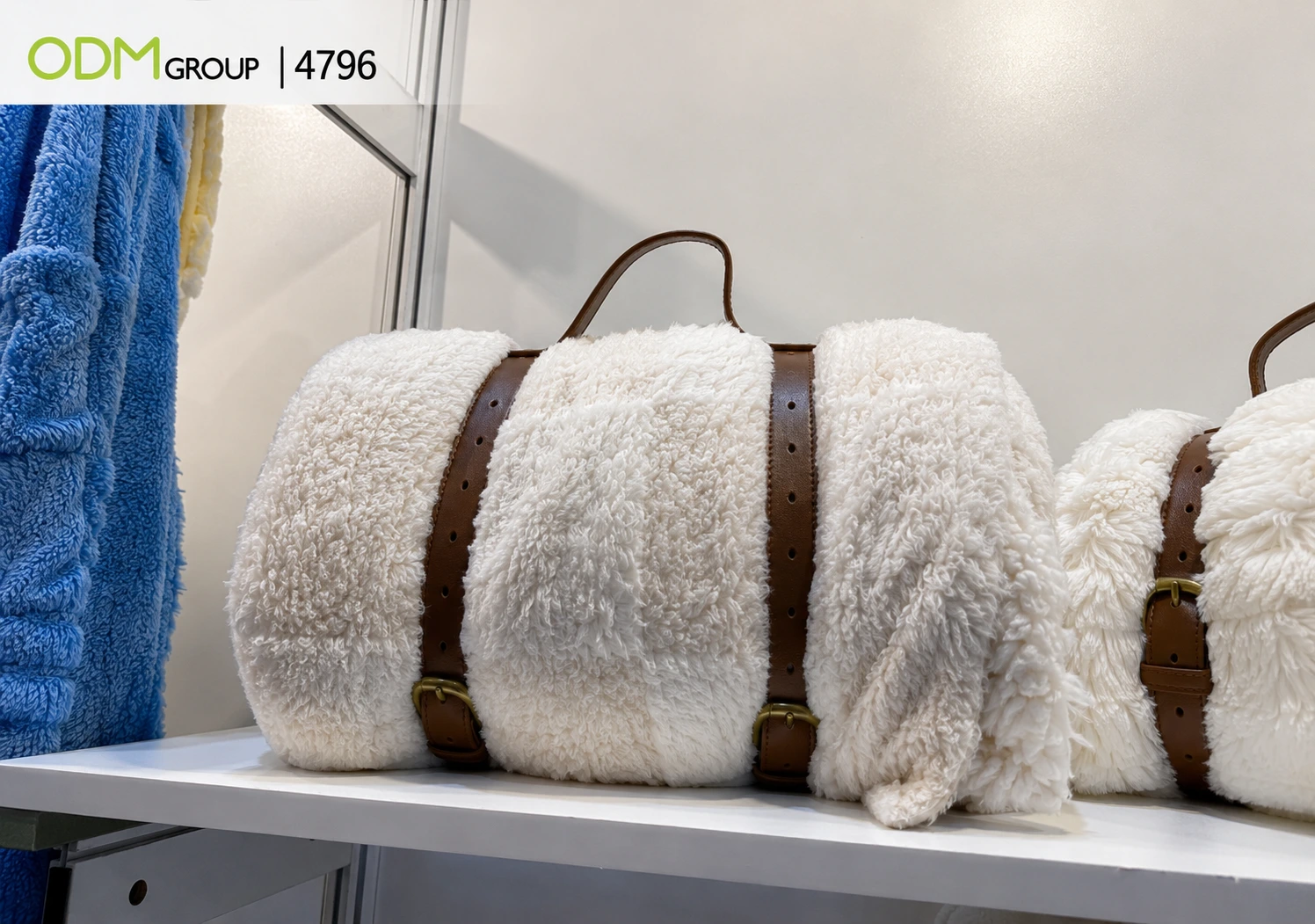
A set may include:
- A baby blanket
- A bib
- A washcloth
- A soft toy
- Baby socks
- A reusable storage pouch
- A message card for the parents
The value comes from coordination. When the products, packaging, and message feel connected, the set becomes a complete brand experience rather than a collection of unrelated items.
2. Feeding Accessories
Bibs, bowls, spoons, snack containers and reusable food pouches can support baby food, nutrition, pharmacy and retail promotions.
These products may offer frequent brand visibility, but their intended use should guide every design decision. Material selection, cleaning, shape and packaging all require careful consideration.
Branding should remain balanced. Parents are more likely to use a tasteful product than one dominated by a large corporate logo.
3. Changing and Travel Products
Parents often place a high value on products that make travel and daily organization easier.
Relevant options include:
- Foldable changing mats
- Wet and dry pouches
- Nappy organizers
- Insulated bottle bags
- Pram organizers
- Travel toiletry cases
- Compact storage bags
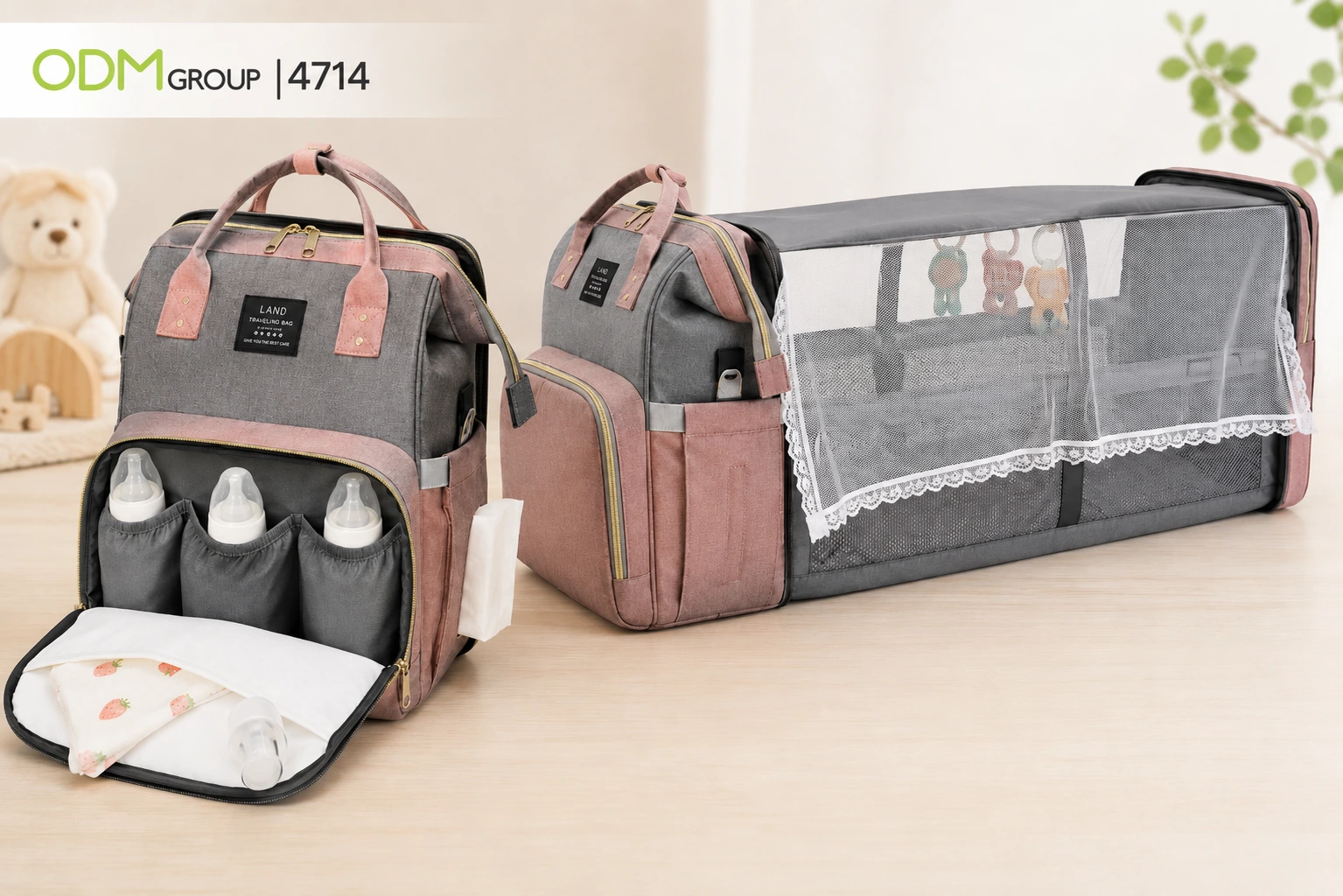
These products can be particularly effective for airlines, hotels, automotive brands, travel retailers and family-focused service businesses.
4. Comfort and Textile Products
Blankets, muslin cloths, hooded towels, and washcloths can help brands communicate comfort and care. These products may remain in regular use for months, giving them stronger retention value than short-lived event merchandise.
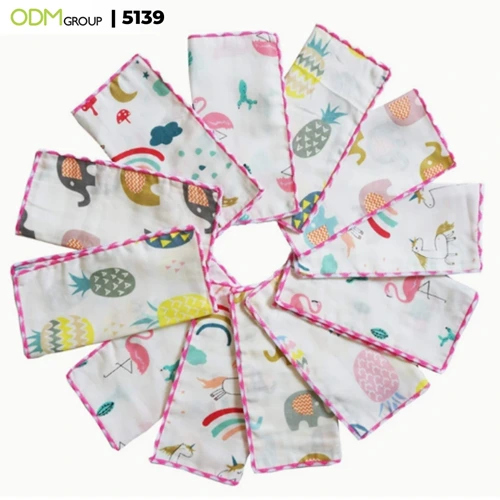
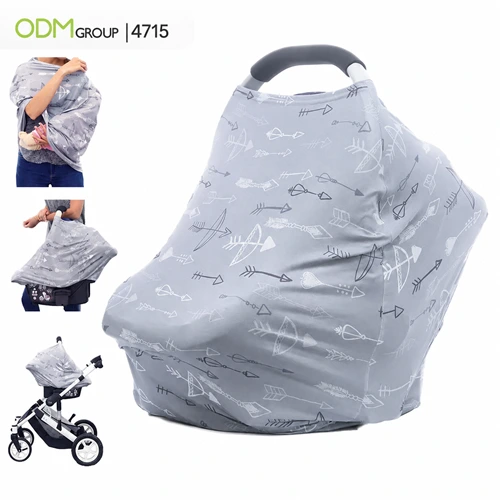
However, leaders should consider the customer experience beyond the first impression. Fabric feel, washability, stitching and durability all influence whether the item remains in use.
5. Parent-and-Baby Gift Sets
Some of the most thoughtful campaigns recognize the needs of the parent as well as the child.
A combined set could include a baby textile item alongside a reusable bottle, insulated mug, wellness pouch, or document organizer for the parent.
This approach can create a more complete emotional message: the brand is supporting the family, not simply targeting the baby category.
The Leadership Decisions Behind a Successful Campaign
A promotional baby product program requires alignment between marketing, procurement, compliance, sustainability and operations.
Senior decision-makers should address several questions early.
What business outcome should the product support?
The same product should not be used automatically for every campaign.
An event giveaway may need to be lightweight and easy to distribute. A customer loyalty gift may require stronger presentation and personalization. A retail promotion may need clear redemption packaging and shelf communication.
The objective should define the product—not the other way around.
Does the item fit the brand’s position?
Every product communicates something.
A premium brand may prioritize materials, presentation and understated design. A family travel company may focus on portability. A healthcare organization may emphasize reassurance, clarity and practicality.
When the product does not match the brand, the campaign can feel disconnected.
Will parents genuinely use it?
Useful products usually generate stronger long-term visibility than novelty merchandise.
Leaders should evaluate the product from the parent’s perspective:
- Is it easy to clean?
- Is it easy to carry?
- Does it solve a real problem?
- Is the design appropriate for different households?
- Will the branding discourage regular use?
- Does the packaging create unnecessary waste?
These questions often reveal more than a price comparison.
What risks must be managed?
Baby-related products can carry higher reputational sensitivity than general promotional merchandise.
Age suitability, materials, construction, detachable components, labeling and destination-market requirements should be considered during product development—not after the final design has been approved.
A late compliance issue can affect the product, packaging, schedule and overall campaign budget.
How will success be measured?
Promotional merchandise should be evaluated against a business objective.
Depending on the campaign, relevant measures may include:
- Event registrations
- Qualified leads
- Product redemptions
- Membership sign-ups
- Repeat purchases
- Social engagement
- Customer retention
- Retail sell-through
- Cost per acquired customer
Without a defined measure of success, it becomes difficult to distinguish a strategic promotional program from a simple merchandise purchase.
Building Trust One Useful Product at a Time
Promotional baby products can create meaningful connections because they enter a highly personal part of the customer’s life.
That access should never be treated casually.
The brands that perform best in this category will be those that understand parents, solve practical problems, and connect merchandise to a broader customer strategy. They will prioritize relevance over novelty and long-term trust over short-term logo exposure.
ODM Group helps brands create products that match every campaign. From sketch design, prototyping, factory selection, quality control, packaging design, and delivery, our team works closely with brands all over the world. Contact ODM to develop promotional baby products that support families while protecting the value of your brand.
More Product Ideas


FAQs about Baby Promotional Products
What makes promotional baby products effective?
They are most effective when they solve a practical parenting need, reflect the brand’s values and remain useful after the initial campaign or event.
Which industries can use promotional baby products?
They can support campaigns for healthcare, insurance, banking, retail, food and nutrition, hospitality, travel, corporate HR and parenting-focused businesses.
Should brands place a large logo on baby merchandise?
Usually not. Subtle branding often makes the item more appealing for regular use. Woven labels, custom patterns, small prints and coordinated colors can create visibility without making the product feel overly promotional.
Can ODM Group help create a complete baby gift program?
Yes. ODM can support concept development, product design, packaging, prototyping, sourcing, production coordination, quality control and delivery planning.
Latest Blogs
Event Branding Ideas: Make Every Touchpoint a Brand Experience
Event branding ideas turn separate venue elements into one [...]
Waterproof Camping Blanket: Take Your Brand Into the Outdoors
A waterproof camping blanket gives brands a useful role [...]
Custom Letter Envelope Opener Ideas for Corporate Gifts
A letter envelope opener may be a simple desk [...]
LED Screen Backpack: Smart Walking Billboards for Campaigns
Static outdoor signage and traditional promotional merchandise [...]
Marketing Gift Game Ideas to Connect Teams Through Play
A marketing gift game can offer much more than [...]
Food Cooling Fan: Make Your Brand Mascot Part of the Meal
A food cooling fan may seem like a simple [...]