
A rotating POP display can give brands the extra few seconds they need to win shopper attention in a crowded retail aisle. Instead of relying only on static shelves, brands can use movement, lighting, product organization, and visual storytelling to create a stronger point-of-purchase experience.
This is especially important for categories such as oral care, personal hygiene, beauty, wellness, beverages, confectionery, and FMCG products. Shoppers often compare similar products quickly. A display that moves, lights up, or presents products from different angles can help a brand stand out before the shopper even reaches the shelf.
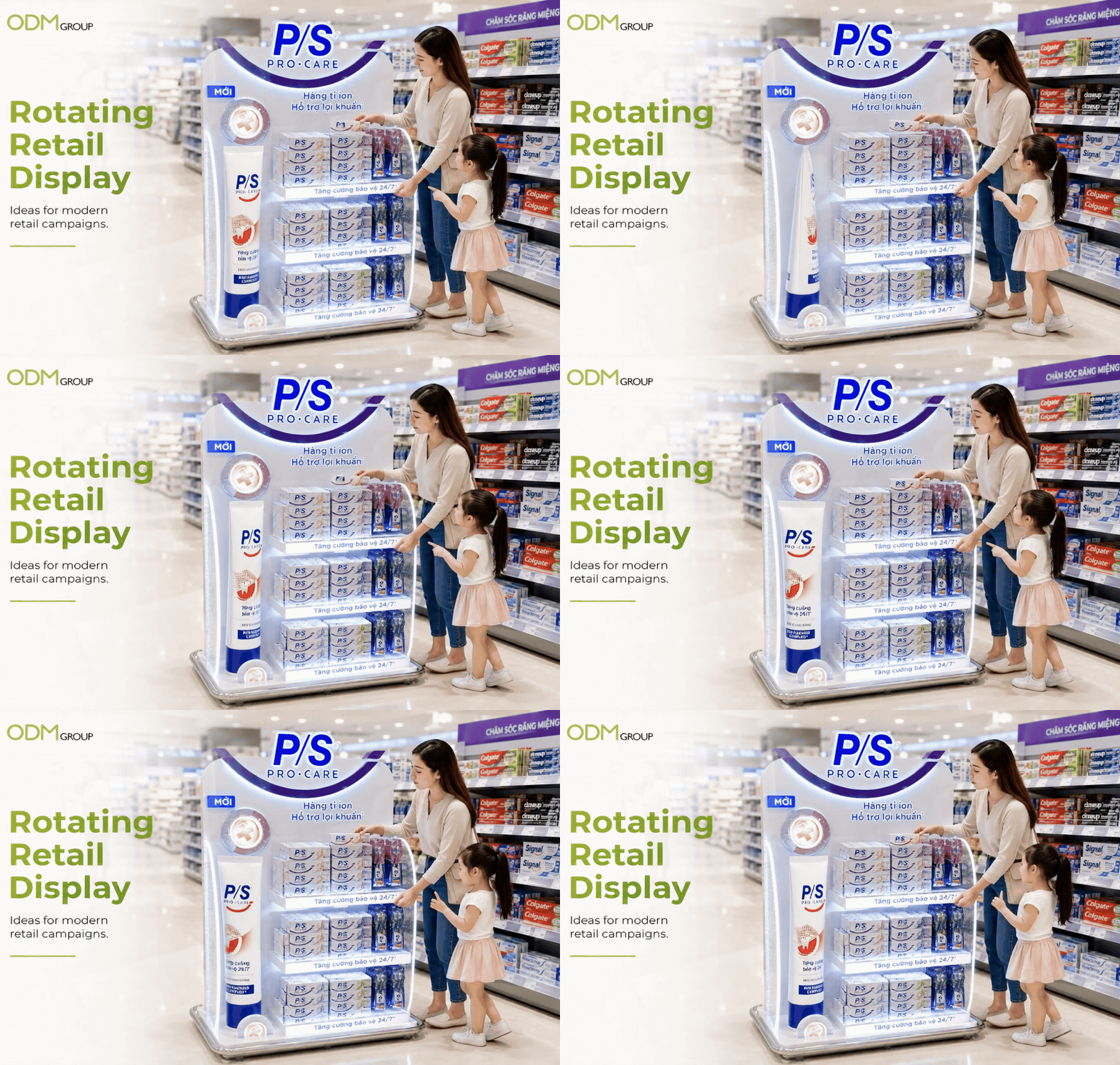
For brands planning retail activations, the opportunity is not simply to add movement. The real value is creating a display that attracts attention, communicates a clear message, fits store requirements, and can be produced and delivered smoothly across target markets.
Why Rotating POP Displays Matter in Retail Marketing
In-store marketing is becoming more competitive. Retailers are filled with brand messages, price tags, shelf talkers, promotional islands, and seasonal displays. A standard display can easily disappear into the background.
A rotating POP display helps interrupt that pattern.
Movement naturally catches the eye. When shoppers see something turning, lighting up, or presenting products dynamically, they are more likely to pause. That pause gives the brand a short but valuable moment to communicate.
For marketers, this matters because many purchase decisions still occur in-store. Even if a shopper already knows the category, they may still choose based on visibility, perceived value, promotion, packaging, or convenience.
A well-designed rotating display can help brands:
This makes rotating displays useful not only as product holders, but as retail communication tools.
P/S Rotating Display Sample: What Brands Can Learn
The P/S Pro Care display shows how motion and structure can work together in a retail campaign.
The large illuminated logo helps shoppers recognize the brand from a distance. This is important because shoppers are not always actively searching for oral care products. The display needs to attract attention before the shopper walks past the aisle.
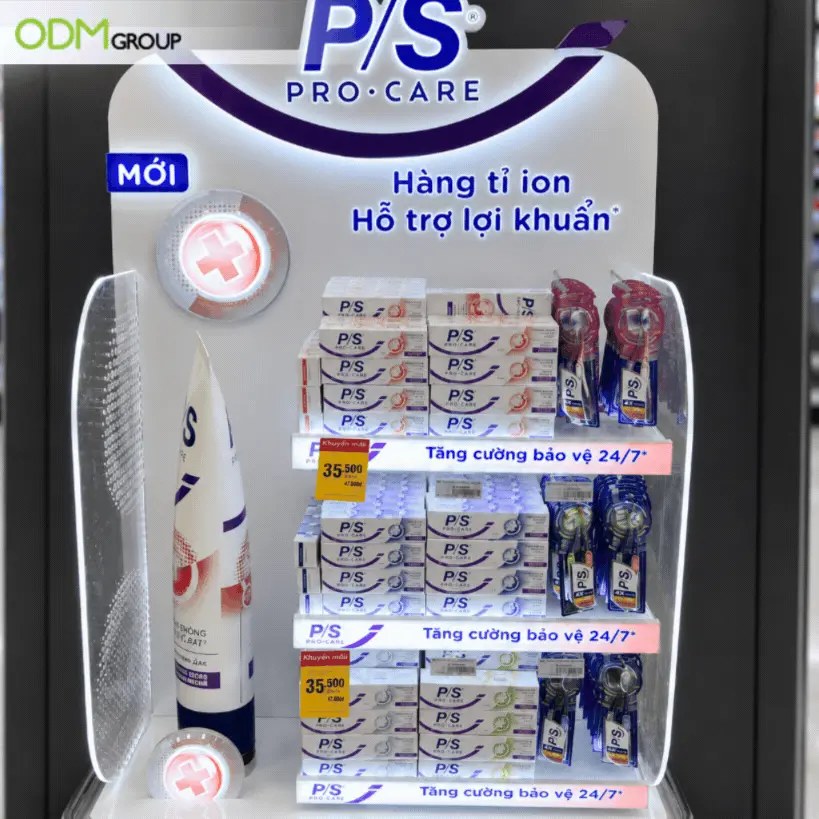
The shelves are also arranged clearly. Toothpaste boxes and toothbrush packs are displayed in an organized way, making it easy for shoppers to compare and pick up products. This matters because even the most attractive display will fail if the products are hard to reach or difficult to understand.
The oversized toothpaste replica gives the display stronger product identity.
It tells shoppers what the campaign is about immediately, even before they read the details.
For brands, this is a smart technique because large product replicas can make small packaged goods feel more visible in a retail environment.
The rotating element adds movement and curiosity.
Instead of looking like a standard shelf display, the unit becomes more active and engaging.
Combined with LED lighting, it creates a more premium presentation for a daily-use product category.
The biggest lesson from this sample is simple: movement works best when it supports a clear campaign message.
A rotating feature should not be added just for decoration. It should help shoppers notice the product, understand the benefit, or engage with the promotion.
Strategic Uses of Rotating POP Displays
Brands can use rotating POP displays in different ways depending on the campaign goal.
1. New Product Launches
When launching a new product, visibility is critical. A rotating display can help introduce the product quickly and separate it from existing shelf items.
For example, a personal care brand launching a new formula can use a rotating product replica or benefit wheel to highlight key claims such as whitening, antibacterial protection, hydration, or long-lasting freshness.
2. Product Education Campaigns
Some products need explanation before shoppers feel confident buying them. This is common in oral care, skincare, supplements, electronics, and home care.
A rotating panel can show step-by-step usage, ingredient benefits, product comparisons, or routine suggestions. This helps simplify information without overwhelming the shopper.
3. Multi-SKU Promotions
For brands with several variants, a rotating display can make browsing easier. Instead of placing everything on one flat shelf, products can be arranged by benefit, flavor, size, color, or target user.
This works well for toothpaste variants, skincare routines, lip products, vitamins, snacks, and travel-size products.
4. Gift-with-Purchase Campaigns
A rotating POP display can also showcase the main product alongside the free gift. This helps shoppers immediately understand the promotion.
For example, a beauty brand can show a skincare set on one side and the free pouch or mini product on the rotating section. A beverage brand can display bottles together with branded glasses, coolers, or bar tools.
5. Seasonal Retail Activations
Rotating displays can be adapted for Christmas, Lunar New Year, Valentine’s Day, summer campaigns, back-to-school promotions, and other seasonal events.
The rotating part can feature festive graphics, limited-edition packaging, gift bundles, or promotional messages. This helps brands refresh the same basic display structure for different campaigns.
Rotating POP Display Ideas for Brands
Here are several display ideas brands can consider for future retail campaigns.
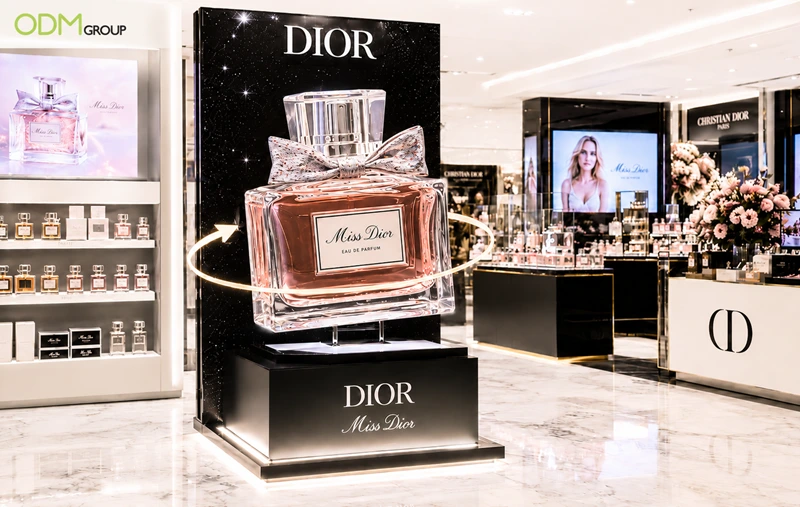
1. Rotating Product Replica
A large rotating product replica works well when the product shape is recognizable. This is effective for toothpaste tubes, bottles, jars, cans, perfume, cosmetics, and snack packaging.
It helps shoppers identify the product category quickly and creates a strong visual anchor for the display.
2. Rotating Demo Panel
For products that require explanation, a rotating demo panel can show how the product works. This is useful for electronic toothbrushes, skincare devices, home gadgets, kitchen tools, and wellness products.
3. 360-Degree Product Tower
A rotating tower display allows shoppers to browse products from different sides. This is ideal for smaller items such as lip balm, travel toiletries, vitamins, confectionery, tech accessories, and small beauty products.
It can also be used near checkout counters or store entrances where floor space is limited.

4. Rotating Gift Display
Brands can use a rotating section to feature premium gifts, limited-edition packs, or bundle offers. This makes the promotion more visible and increases perceived value.
5. Lighted Rotating Header
Not every display needs a moving shelf. A rotating or illuminated header can already create strong visibility while keeping the product area stable and easy to restock.
This is a practical option for supermarkets, pharmacies, and convenience stores.
What Brands Should Consider Before Producing a Rotating Display
A rotating POP display requires more planning than a standard printed display. The design needs to look good, but it also needs to work in real stores.
Before designing, brands should define the main goal. Is the display meant to launch a new product, increase visibility, promote a bundle, explain a benefit, or support a seasonal campaign?
The objective should guide the structure, message, and rotating feature.
Retailers may have strict rules on display size, height, materials, power supply, safety, and placement. A creative display still needs to fit the store’s operational requirements.
This is where early planning helps avoid expensive revisions later.
The display should be designed around how shoppers move through the store. Can they see the brand from a distance? Can they access the products easily? Is the key message visible at eye level?
A good display is not only attractive in photos. It performs well in the actual retail environment.
Store staff should be able to refill the display quickly. Shelves, hooks, trays, and product slots must be practical.
If the display is difficult to restock, it may become messy or empty during the campaign.
Rotating features can be manual, battery-powered, plug-in, or motorized. Each option has pros and cons.
For short campaigns, a simple manual or battery-powered solution may be enough. For premium long-term displays, a more durable motorized mechanism may be worth the investment.
Displays with moving parts must be stable, especially in high-traffic stores. The base, wiring, edges, shelves, and rotating sections should be checked carefully before rollout.
This is one reason prototyping and quality control are important.
Why Work With a Strategic Display Partner?
A rotating POP display involves more than design and production. It connects marketing, engineering, sourcing, retail compliance, and logistics.
Working with a strategic partner like ODM Group helps brands bridge the gap between creative ideas and production realities. A display may look impressive in a concept sketch, but it also needs to be stable, cost-effective, easy to assemble and restock, and suitable for shipping.
ODM helps brands think through these details early, so the final display is not only creative but also practical for real campaign execution.
Final Thoughts
Rotating POP displays can help brands achieve greater visibility, improve product education, and create more engaging retail campaigns. The P/S Pro Care display shows how lighting, motion, product organization, and clear messaging can turn a product display into a stronger in-store brand experience.
For businesses planning product launches, seasonal promotions, hygiene campaigns, beauty activations, beverage displays, or FMCG retail programs, rotating POP displays offer a smart way to stand out in competitive store environments.
With support in sketch design, prototyping, factory selection, quality control, and logistics, ODM helps brands create custom displays that are creative, practical, and ready for retail rollout.
Connect with our team today. We’re always ready to review your next project. Let’s design and manufacture something special together.
More Ideas
Frequently Asked Questions
What is a rotating POP display?
A rotating POP display is a point-of-purchase display with a moving or turning feature. This can include a rotating product replica, spinning shelf, benefit wheel, demo panel, or rotating header designed to attract shopper attention in-store.
Are rotating POP displays only suitable for premium products?
No. They can be used for both premium and everyday products. For daily-use categories such as oral care, hygiene, snacks, and personal care, a rotating display can help make the product more visible and easier to understand.
Do rotating displays need electricity?
Not always. Some displays are manual, while others use batteries or plug-in power. The best option depends on the campaign duration, store setup, display size, and whether lighting or automatic movement is required.
What should brands prepare before developing a rotating display?
Brands should prepare product dimensions, campaign goals, target retail channels, estimated quantity, budget range, branding guidelines, and any retailer requirements. These details help ODM create a display concept that is both creative and feasible.
What to Read Next?
9 Advantages of Using Custom Point of Sale Displays in Retail
It goes without saying custom point of sale display [...]
How Tiger Beer Grabs Shoppers’ Interest with its 3D POP Display?
In the fiercely competitive world of beverage marketing, standing [...]
Striking Metal POP Display: How Skol Captured Shoppers’ Interest?
A point-of-purchase (POP) display is made to showcase a [...]
The Power of Presentation: Seawag’s Acrylic Counter Display
Creating an immersive and visually appealing shopping experience is [...]
4 Things You Need to Know For POP Display Marketing that Works
To cut through the noise of the retail market, [...]

How Laughing Cow POP Merchandising Display Achieved Success?
Point of purchase (POP) allows brands to communicate with [...]