
Licensed promotional merchandise can help brands create more engaging consumer experiences by connecting everyday products with recognizable characters, entertainment franchises, and popular brands.
A good example is Cheerios’ 2012 gift-with-purchase (GWP) promotion featuring a Batman stunt figure. Coinciding with the release of The Dark Knight Rises, the campaign combined a familiar breakfast cereal with a collectible character-inspired gift.
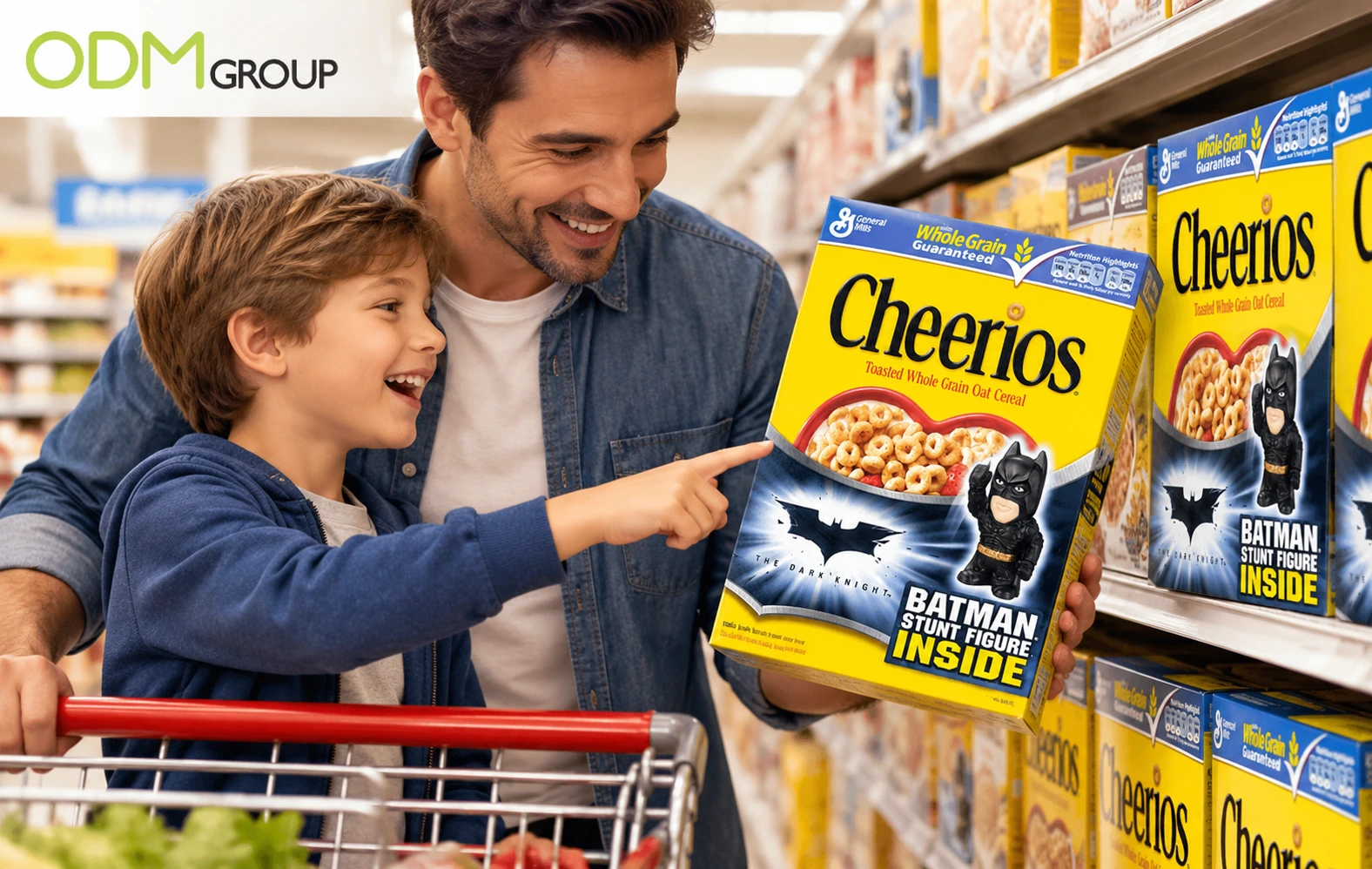
Rather than offering an ordinary promotional freebie, Cheerios introduced an item with entertainment appeal and potential collecting value. This demonstrates how licensed promotional merchandise can add interest to everyday purchases and create opportunities for more memorable brand interactions.
How the Cheerios Batman GWP Promotion Worked
The Cheerios promotion offered consumers a Batman stunt figure with cereal purchases. The timing coincided with the release of The Dark Knight Rises, creating a connection between the breakfast brand and a major entertainment franchise.
The campaign brought together two recognizable names:
- Cheerios: An established breakfast cereal brand with a presence in grocery retail.
- Batman: A globally recognized superhero character with appeal among fans and collectors.]

The Batman figure acted as an additional purchase incentive, giving consumers something beyond the cereal itself.
This type of promotion demonstrates how brands can use licensed characters to introduce entertainment value into everyday shopping experiences.
Why Brands Use Licensed Promotional Merchandise
Licensed promotional merchandise allows brands to incorporate established characters, entertainment properties or other intellectual properties into their marketing campaigns.
When developed around the right audience and campaign objectives, these products can offer several advantages.
1. Creates an Additional Purchase Incentive
A relevant promotional gift can make a product more appealing at the point of purchase.
Consumers who already recognize or enjoy a particular character may be more interested in a product that includes a related collectible. For FMCG brands, this provides an opportunity to differentiate products in competitive retail environments.
2. Connects Brands with Popular Entertainment
Collaborations with entertainment franchises can introduce a brand to audiences who may already have an emotional connection with a character.
The Cheerios Batman promotion illustrates this approach. By connecting the cereal purchase with a film release, the campaign brought together grocery retail and entertainment marketing.
3. Encourages Collectibility
Collectible merchandise can extend consumer engagement beyond the initial purchase.
Brands can consider developing a series of promotional items featuring different characters, designs, poses or accessories. This creates opportunities for repeat engagement and gives consumers a reason to explore the full collection.
4. Makes Everyday Products More Memorable
A promotional gift can add an unexpected element to an otherwise routine purchase.
For family-oriented FMCG brands, character-inspired merchandise, activity sets and small toys can introduce an additional experience that complements the main product.
Developing Licensed Promotional Merchandise for FMCG Campaigns
Creating licensed promotional merchandise requires more than choosing a popular character. The product must suit the target audience, campaign objectives, packaging requirements, and retail environment.
Here are important considerations for brands planning a similar promotion.
Character Selection and Licensing
The chosen character should have a natural connection with the intended audience and campaign theme.
Before development begins, brands must secure the appropriate intellectual property permissions. This includes understanding licensing agreements, permitted product categories, approved artwork, and design approval requirements.
These considerations help ensure that the proposed merchandise complies with the rights holder’s requirements.
Product Design and Functionality
The promotional item should represent the licensed character while remaining suitable for its intended use.
For example, a superhero collectible figure could incorporate:
- A recognizable character silhouette.
- Distinctive costume details and colors.
- A dynamic action-inspired pose.
- Accessories that complement the character.
- A compact format suitable for promotional packaging.
Product specifications should also consider the target age group, materials, construction, durability and applicable safety requirements.
Packaging Integration
Packaging plays an important role in GWP campaigns, particularly when promotional merchandise is distributed alongside food and beverage products.
Brands need to determine how the promotional item will be presented:
- In-pack promotion: The gift is placed inside the primary product packaging.
- On-pack promotion: The gift is attached to the exterior of the packaging.
- Separate promotional presentation: The gift is displayed alongside the main product.
Each option involves different considerations for packaging dimensions, product protection, retail handling, and distribution.
Production Feasibility and Quality Assurance
Custom promotional merchandise needs to be evaluated for production feasibility before a campaign moves forward.
Brands should consider material availability, product specifications, tooling requirements, quality standards, production timelines, and delivery schedules.
For licensed merchandise, approved designs and samples may also need to be reviewed before production proceeds.
Other Licensed Promotional Merchandise Ideas for FMCG Brands
Character figures are just one way to incorporate licensed properties into consumer promotions. Depending on the campaign, brands can explore different merchandise concepts.
Here are some possibilities:
Collectible Mini Figures
Develop a series of character figures with different poses, accessories or variations. These can work well for campaigns built around collecting and repeat engagement.
Interactive Toys
Explore simple toys that encourage imaginative play and provide entertainment beyond the initial purchase.
Activity Sets
Consider puzzles, games, and creative activity kits that connect with a licensed character or entertainment theme.
Branded Stationery
Character-inspired pencils, notebooks, erasers and other stationery items can provide practical promotional gifts.
Character-Themed Packaging
Integrate licensed artwork into product packaging to create a coordinated promotional experience across the retail shelf.
The right concept depends on the target audience, campaign objectives, licensing permissions, budget, and distribution requirements.
How ODM Group Supports Licensed Promotional Merchandise Development
Developing a promotional merchandise campaign involves several stages, from initial creative thinking to product specifications and production coordination.
ODM Group is a product development and merchandise agency that helps brands explore creative concepts for promotional products, packaging and retail marketing campaigns.
Our approach can include:
- Concept development: Exploring licensed merchandise ideas that connect with a brand, campaign and target audience.
- Product sketching: Visualizing proposed merchandise designs before technical development.
- 3D CAD and mould development: Developing product designs and specifications for custom merchandise.
- Packaging development: Exploring ways to integrate promotional gifts into primary product packaging.
- Factory coordination: Coordinating with suitable manufacturing partners on production requirements.
- Quality assurance: Coordinating quality checks to help ensure products meet agreed specifications.
- Delivery coordination: Supporting the production and delivery process with manufacturing partners.
By considering creative, technical, and logistical requirements together, brands can develop more practical promotional merchandise concepts that support their wider marketing objectives.
Final Thoughts
The Cheerios Batman GWP promotion demonstrates how licensed promotional merchandise can add another dimension to an everyday grocery purchase.
By combining a familiar cereal brand with a recognizable entertainment character, the campaign created a promotional concept built around consumer interest and collectibility.
For FMCG brands, the opportunity is to develop merchandise that complements the primary product, appeals to the intended audience and fits the practical requirements of packaging and retail distribution.
A successful promotional concept starts with understanding the audience and identifying the right merchandise to support the campaign.
Planning a licensed merchandise or gift-with-purchase campaign?
ODM Group helps brands explore creative promotional merchandise concepts, develop product designs and coordinate with manufacturing partners. Contact our team to discuss your next campaign.
More Ideas
w


FAQs about Licensed Promotional Merchandise
What is licensed promotional merchandise?
Licensed promotional merchandise refers to products developed using authorized intellectual property, such as characters, entertainment franchises, logos or established brand identities. These products can be incorporated into marketing campaigns, giveaways, gift-with-purchase promotions and retail activations.
What is the difference between licensed merchandise and promotional merchandise?
Promotional merchandise is developed to support a marketing or branding objective. Licensed merchandise uses intellectual property with permission from the relevant rights holder. A product can be both licensed and promotional merchandise.
Why do FMCG brands use licensed character merchandise?
FMCG brands can use licensed character merchandise to create additional purchase incentives, connect with entertainment audiences, introduce collectible items and make everyday products more engaging.
What should brands consider when developing licensed promotional products?
Important considerations include licensing permissions, target audience, product design, materials, safety requirements, packaging compatibility, budget, production feasibility and delivery timelines.
Latest Blogs
Custom Collectible Figures for Brand Marketing and Merchandise
Custom collectible figures give brands a physical way to [...]
Bulk Corporate Gifts: How to Plan Your Order
A welcome kit for new hires and a thank-you [...]
Cardboard Box Printing: How to Choose the Right Method and Finish
Your packaging design can look perfect on screen and [...]
Promotional Product Trends 2027: 6 Innovations Beyond the Ordinary
Promotional products are evolving beyond logo-printed giveaways. In 2027, [...]
Promotional Red Packets Lunar New Year: Order For Success!
As the Lunar New Year approaches, it's time to [...]
Cafe Promotion Ideas: How Seasun Cafe Uses Merchandise to Reward Loyalty
A memorable cafe experience does not have to end [...]