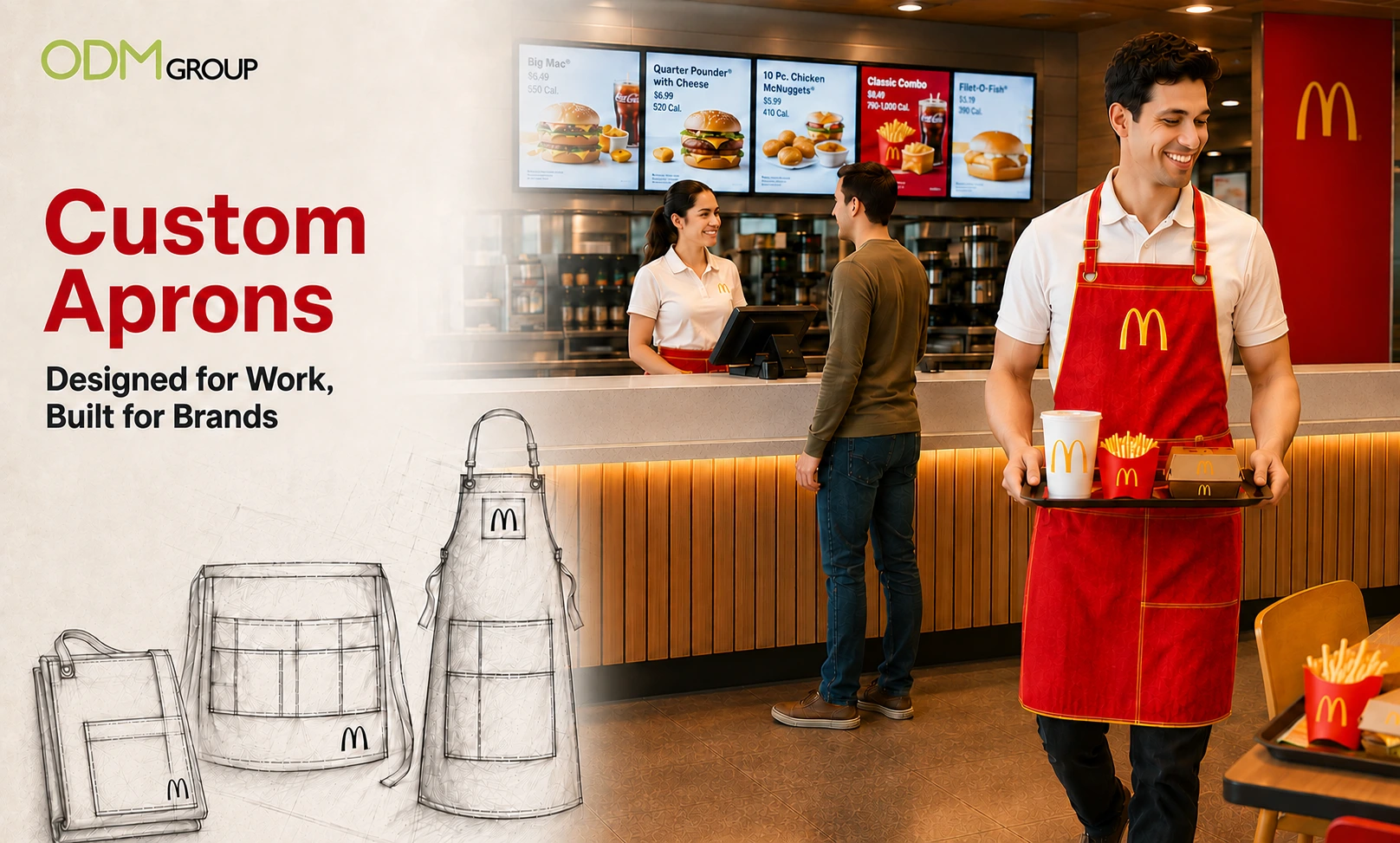
Custom aprons are more than protective workwear. In restaurants, cafés, stores, and live events, they help employees look organized and recognizable. In consumer campaigns, they can become useful branded merchandise that customers take home and use again.
The most effective apron is designed around its purpose. A chef needs coverage and comfort, while a server needs freedom of movement and accessible pockets. A promotional apron, meanwhile, must be attractive enough that customers keep it.
Why Custom Aprons Work for Businesses
Aprons place a brand in the middle of an activity. They may be worn while preparing food, serving customers, demonstrating products, or participating in an event. This makes the branding feel connected to the experience rather than added as an afterthought.
They also offer several practical advantages:
- A large and visible area for branding
- Useful protection for clothing
- Space for pockets and working tools
- Flexible designs for different roles
- Options for both staff and customer promotions
- A longer useful life than many disposable giveaways
However, visibility alone is not enough. Employees will avoid an uncomfortable apron, and customers will not keep one that looks like advertising material. The design must combine function, comfort, and brand identity.
Two Custom Apron Designs to Consider
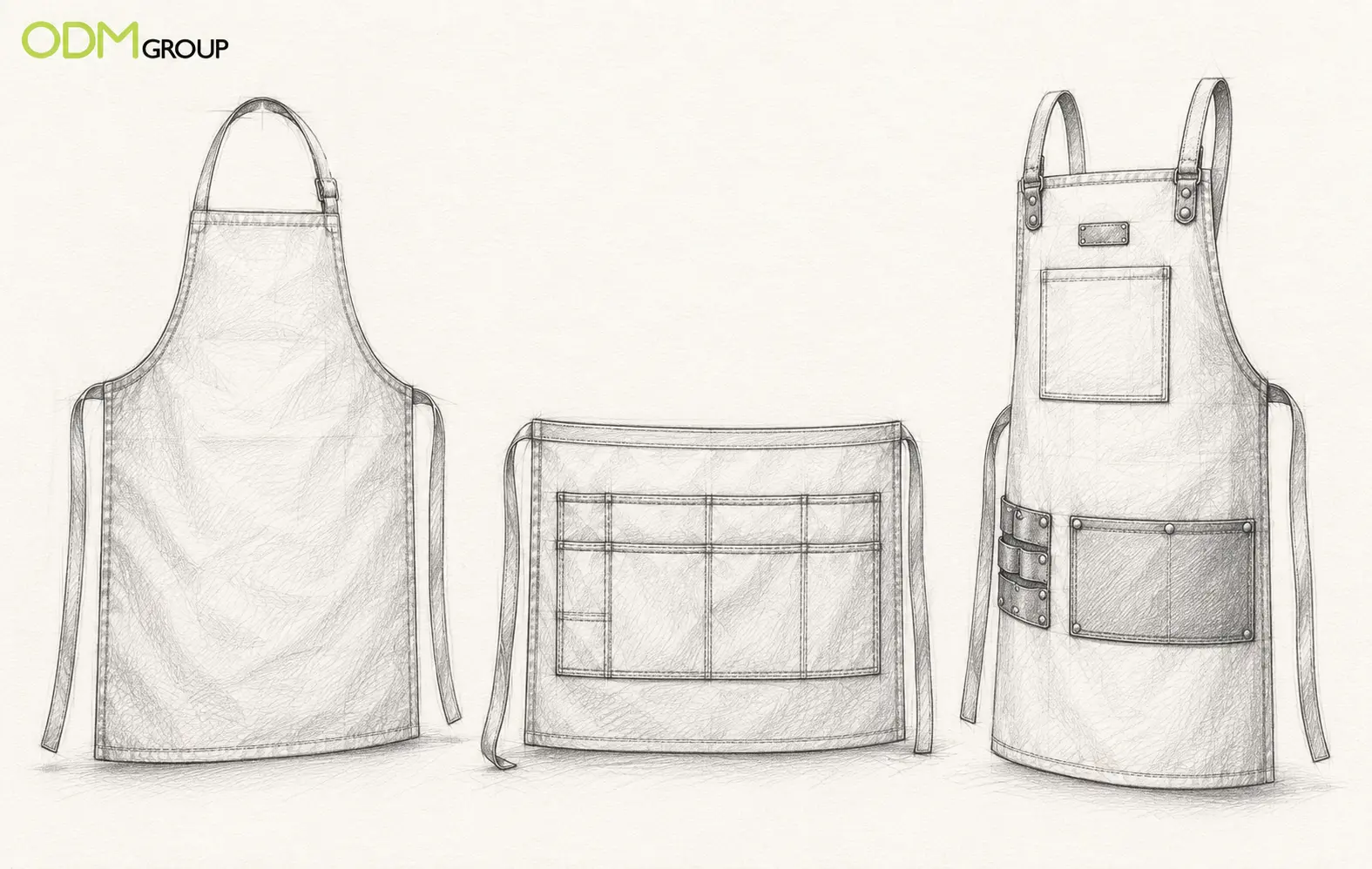
Full-body and half-body aprons serve different purposes. Understanding how each format is used can help a business choose the right design for its employees or campaign.
It also provides ample space for branding. Businesses can choose a restrained uniform design or use the apron as a canvas for campaign artwork.
For hospitality and retail environments, full-body aprons can form part of a coordinated staff uniform.
Canvas, denim, or structured cotton blends create a professional workwear appearance. Details such as adjustable straps, reinforced pockets, contrast stitching, metal fittings, and leather-look patches can make the design feel more considered.
Branding does not need to dominate the apron. A small embroidered logo or stitched patch can often create a more premium effect than a large print.
Professional full-body aprons are well suited to:
- Restaurants and cafés
- Bakeries and dessert shops
- Bars and breweries
- Hotels and resorts
- Catering companies
- Specialty food retailers
- Cooking schools
- Garden and craft businesses
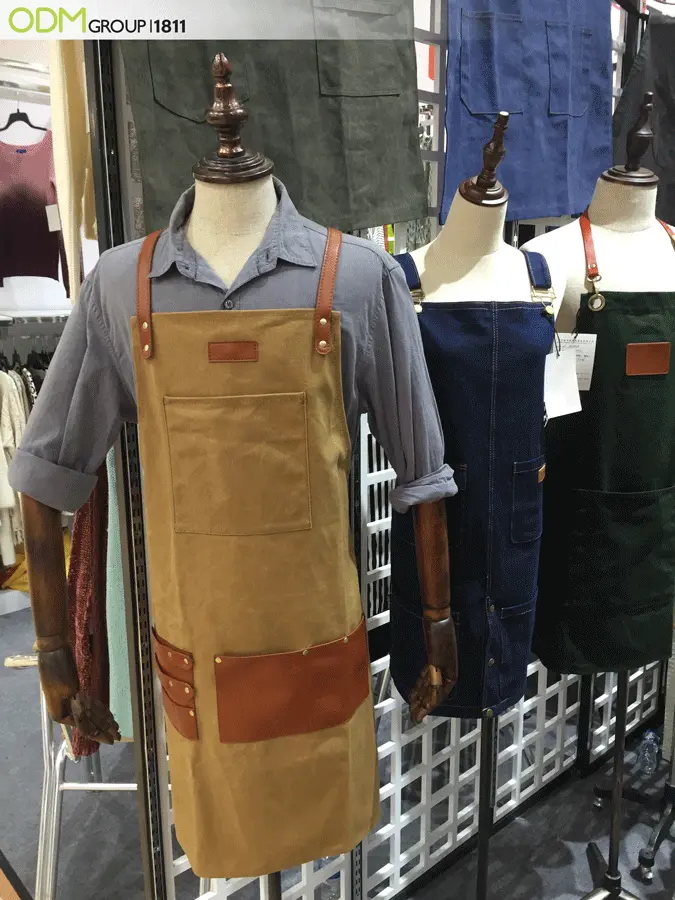
The pockets can also be adapted to the wearer’s role. A barista may need space for a towel and small tools, while a craft instructor may require deeper compartments for brushes or equipment.
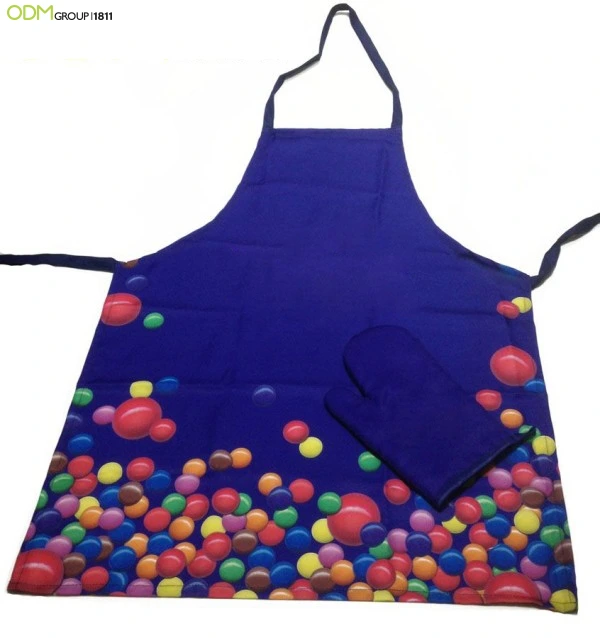
A lightweight full-body apron offers a different opportunity. Rather than functioning as a staff uniform, it can become part of a consumer campaign.
The colorful confectionery apron shown here uses printed product-inspired artwork across the lower section. This gives the product a clear connection to the brand category without relying only on a central logo. The matching oven mitt completes the coordinated kitchen set.
This format works well for:
- Food and confectionery promotions
- Supermarket loyalty programs
- Kitchen appliance campaigns
- Seasonal cooking promotions
- Gifts with purchase
- Social media competitions
- Family events
- Influencer kits
A promotional apron should still feel wearable. Attractive artwork, useful features, and restrained logo placement can encourage customers to keep using it after the campaign ends.
2. Half-Body Aprons
A half-body apron, also known as a waist apron, begins at the waist and typically ends above or around the knee.
It provides less coverage than a full-body apron, but it is lighter and allows the wearer to move freely. This makes it particularly suitable for service, retail, and event roles.
The half-body design featured here includes a wide pocket panel divided into several compartments. These pockets can be adapted to the objects the wearer needs throughout the day.
A restaurant server might carry an order pad, pens, a bottle opener, and a payment device. A retail employee may need space for a phone, product cards, or small accessories. Event personnel could use the same layout for tickets, badges, and promotional materials.
Half-body aprons are particularly relevant for:
- Servers and bartenders
- Café employees
- Retail associates
- Market vendors
- Exhibition teams
- Florists
- Salon employees
- Workshop instructors
- Garden centers
- Hardware retailers
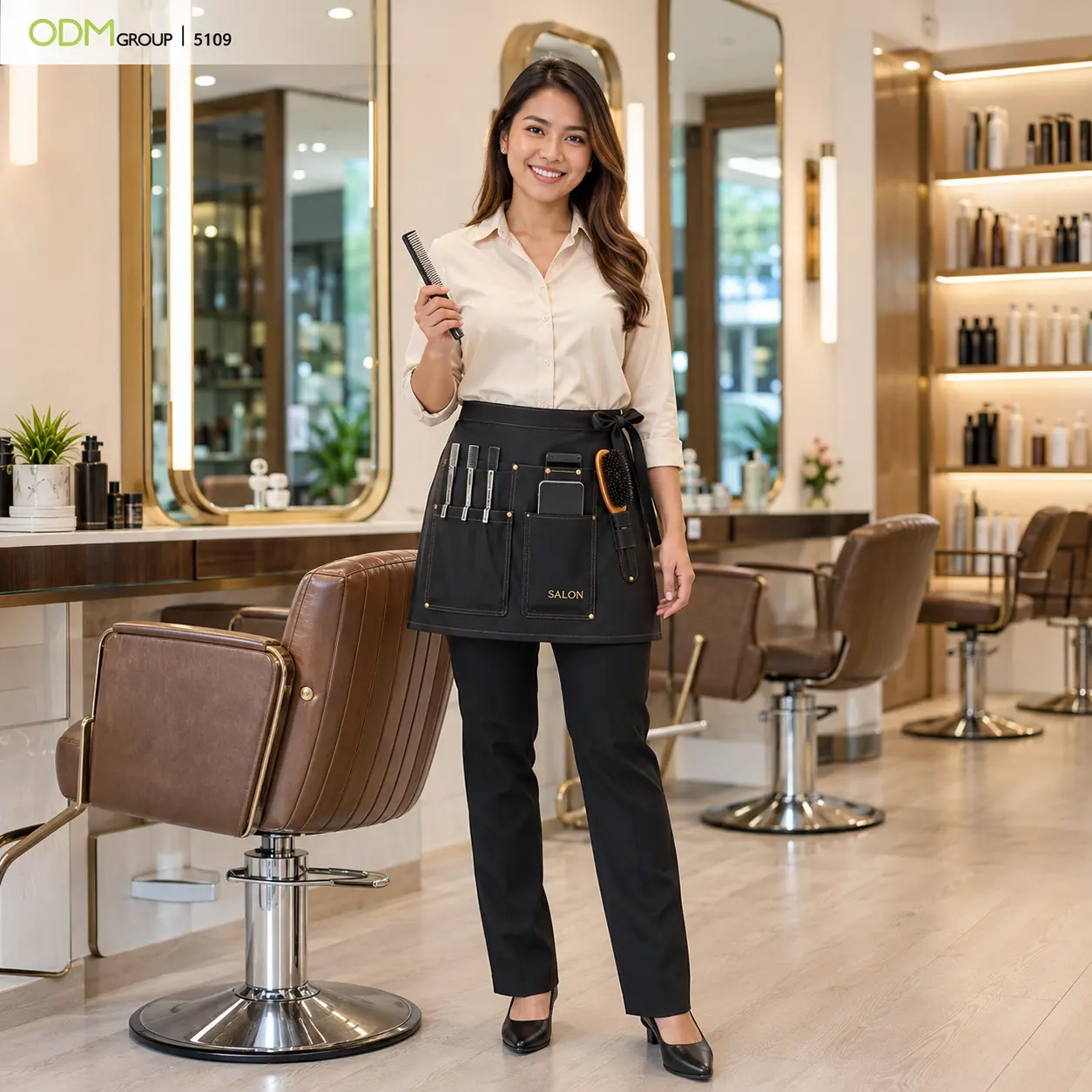
Pocket design is central to this format. The number, depth, and position of each compartment should reflect what the employee actually carries. A well-organized pocket layout can make the apron a useful working tool rather than simply part of the uniform.
How Different Businesses Can Use Custom Aprons
The same apron format can support very different business objectives. The design should change according to who will wear it, where it will be used, and what the business wants to achieve.
1. Restaurants, Cafés and Bars
Hospitality businesses can use custom aprons to create a recognizable staff identity.
A shared fabric, color palette, and branding system can connect different roles while allowing each employee to wear the most appropriate design. Kitchen and barista teams may use full-body aprons, while servers wear coordinating waist aprons.
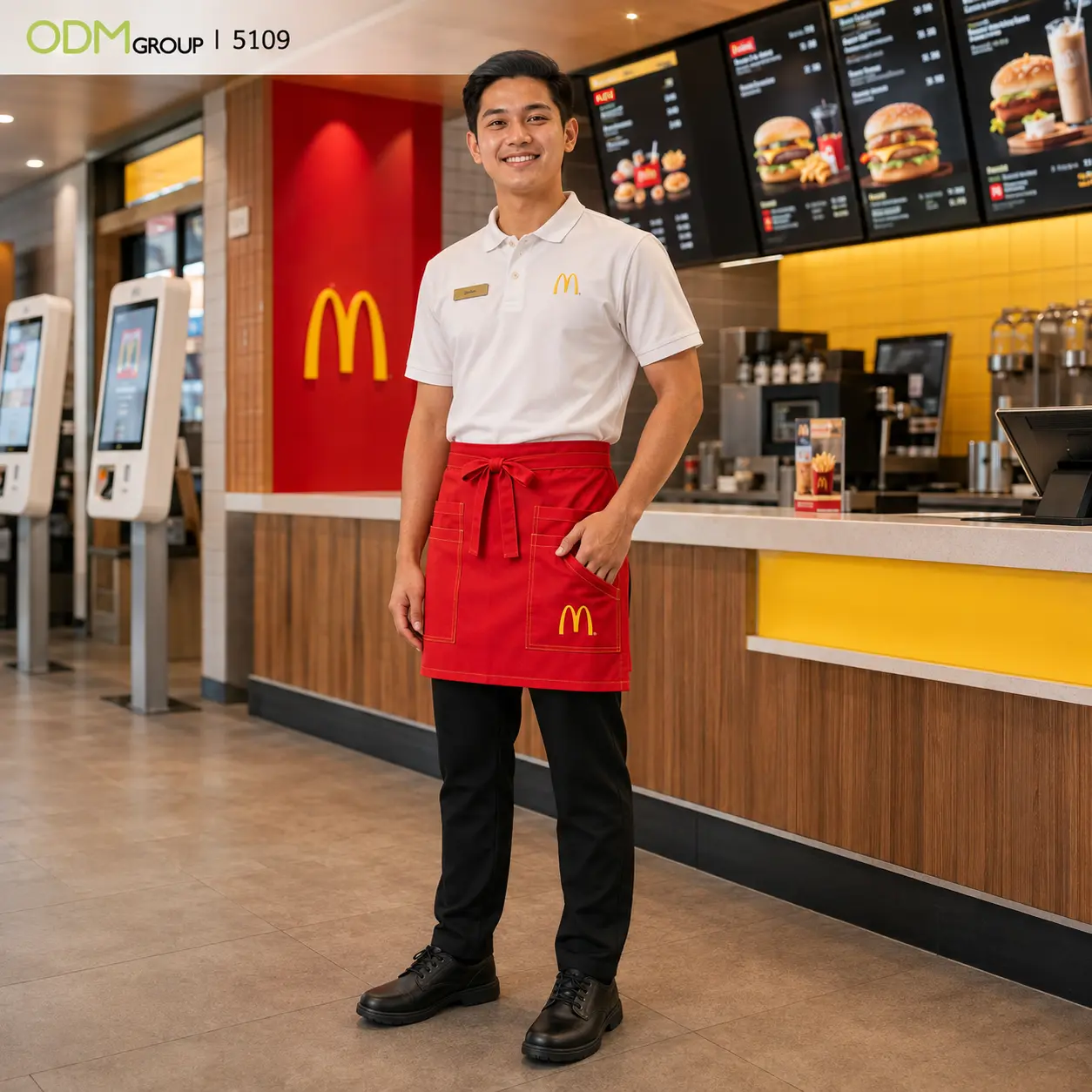
Aprons can also reinforce the character of the venue. Dark denim, tan straps, and subtle patches can support a casual workwear aesthetic. Neutral canvas and tonal embroidery can create a more refined appearance.
Beyond daily uniforms, hospitality brands can offer aprons as merchandise or use them during opening events, tasting sessions, and customer workshops.
2. Food and Beverage Brands
Food and beverage companies can use aprons to connect their products with cooking, serving, and entertaining.
A sauce brand could offer an apron during barbecue season. A confectionery company might create a colorful baking set for families. A coffee or beverage brand could develop professional aprons for baristas, tasting teams, or brand ambassadors.
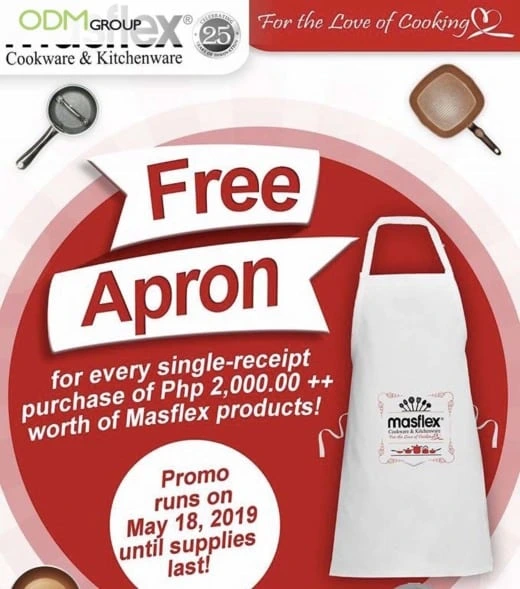
Possible campaign formats include:
- Gifts with purchase
- Retail bundles
- Recipe campaigns
- Cooking challenges
- Influencer mailers
- Product launches
- Loyalty rewards
- Competition prizes
The apron can also be paired with an oven mitt, kitchen towel, recipe card, utensil, or selected product to create a more valuable promotional set.
3. Supermarkets and Retailers
Retailers can use aprons for employees working at food counters, sampling stations, pop-up displays, or seasonal activations.
They can also offer branded aprons as loyalty rewards or purchase incentives. Seasonal designs may support Christmas baking, summer grilling, Mother’s Day, Father’s Day, or other cooking-related occasions.
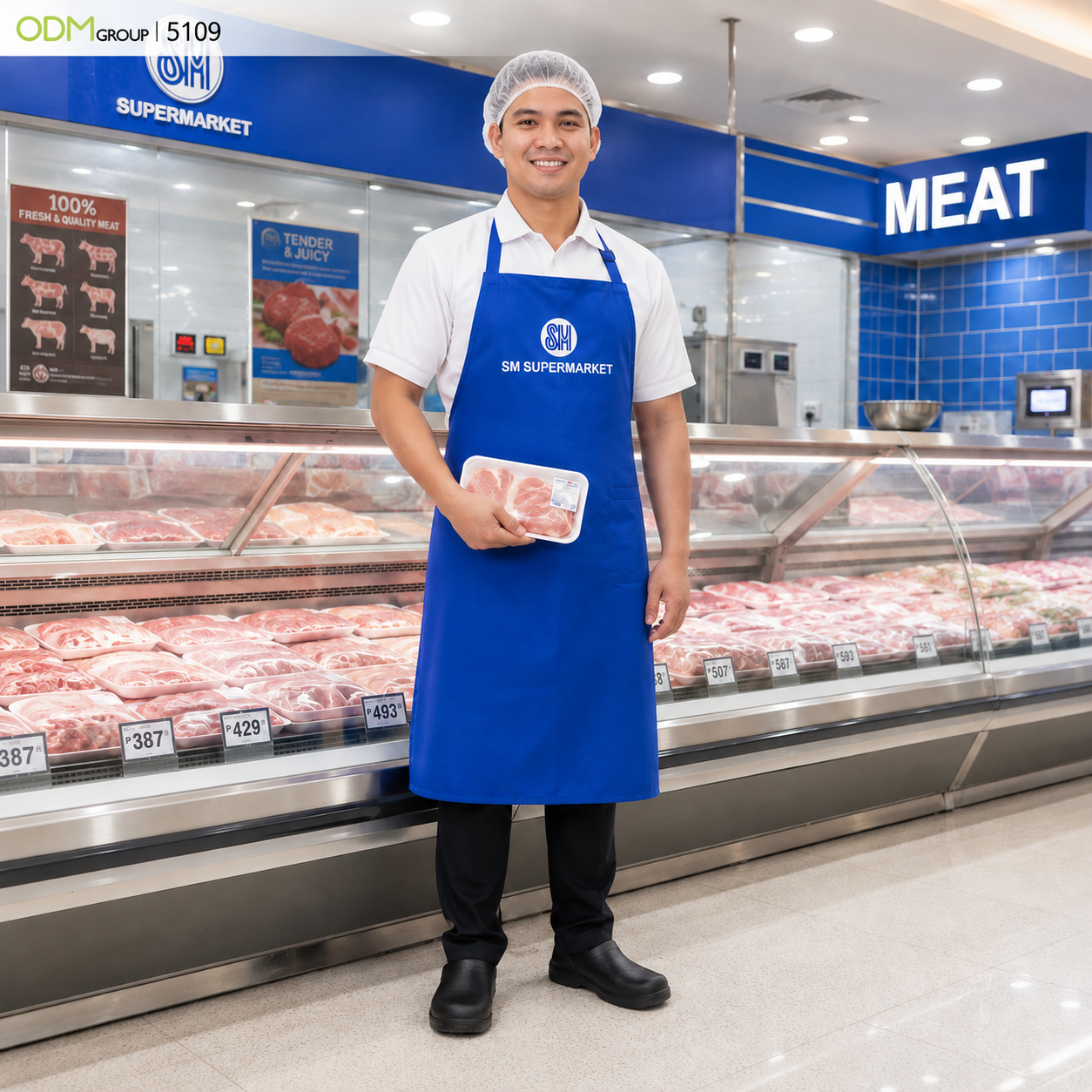
For retail promotions, packaging and presentation matter. The apron should be easy to display, store, and hand to customers without losing its visual appeal.
4. Hotels and Hospitality Groups
Hotels can develop coordinating aprons for restaurant, bar, room-service, and event teams. Design variations can distinguish different departments while retaining a consistent brand identity.
Aprons can also support guest experiences such as:
- Cooking classes
- Cocktail workshops
- Live food stations
- Culinary weekends
- Corporate retreats
- Children’s activities
Participants can wear the aprons during the activity and take them home afterward, extending the experience beyond the hotel.
6. Events and Brand Activations
At food festivals, trade shows, pop-ups, and product demonstrations, aprons make campaign teams easy to recognize.
They also give staff somewhere to store frequently used items. Depending on the activation, this might include product samples, coupons, pens, menus, or digital devices.
For public events, adjustability is important. Flexible straps and practical sizing allow the same design to accommodate different team members.
6. Corporate and Team-Building Programs
Cooking classes, cocktail sessions, gardening workshops, and creative activities are popular formats for employee engagement.
Providing participants with a custom apron helps bring the group together and gives everyone something useful to take home. The design can feature the company identity, event theme, employee names, or team colors.
8. Garden, Craft and DIY Businesses
Aprons are equally useful outside the food and hospitality sectors.
Garden centers, florists, hardware retailers, craft studios, and DIY brands can develop utility aprons with reinforced compartments, tool loops, and stronger fabrics.
In these applications, the functional details carry the brand. A thoughtful pocket layout or distinctive strap system can make the product more memorable than an oversized logo.
Building the Brand Into the Apron
Customization should go beyond printing a logo on the chest.
The material, stitching, hardware, pocket shape, straps, and color combinations can all communicate the brand’s character. A brewery and a luxury hotel may use the same basic apron format but create completely different results through these choices.
Brand details may include:
- Embroidered logos
- Woven labels
- Printed patterns
- Leather or leather-look patches
- Contrast stitching
- Branded metal fittings
- Custom pocket shapes
- Color-matched straps
- Printed internal details
Decoration should suit the intended use. Embroidery and stitched patches work well for professional uniforms. Screen or digital printing can support colorful consumer campaigns and seasonal artwork.
The most successful designs usually show restraint. When an apron looks like a product people would choose for themselves, it is more likely to remain in use.
Packaging the Apron for Your Campaign
Packaging should reflect how the apron will be distributed.
A printed paper band or branded sleeve can work for a high-volume promotion. A fabric pouch or gift box creates a stronger presentation for retail merchandise, corporate gifts, and influencer kits.
The apron can also be combined with:
- Oven mitts
- Kitchen towels
- Cooking utensils
- Recipe cards
- Product samples
- Barbecue accessories
- Craft or gardening tools
These additions can turn a single apron into a complete campaign set. They also give the packaging a clearer story, whether the objective is cooking, entertaining, creativity, or team participation.
How ODM Can Help
The ODM Group helps brands develop custom aprons around the intended user, activity, and campaign.
Our team can create original sketch designs, coordinate prototypes, and select a suitable factory for the project. We can also support packaging design, quality control, and international logistics, providing one partner from the initial idea through final delivery.
Final Thoughts
A custom apron can be a staff uniform, a working tool, an event accessory, or promotional merchandise. Its value depends on how well the design fits that purpose.
Full-body aprons offer greater coverage and a prominent area for branding. They are ideal for kitchens, cafés, workshops, and consumer cooking promotions. Half-body aprons provide easier movement and organized storage, making them particularly useful for servers, retail employees, and event teams.
The best designs begin with the wearer. Once the business understands what that person needs to do, carry, and communicate, the apron can be developed into a product that supports both the work and the brand.
Looking to create custom aprons for your employees or next campaign? Contact The ODM Group to discuss your concept, design requirements, packaging, and delivery plans.
ODM Services
FAQs about Custom Aprons
What is the difference between a full-body and half-body apron?
A full-body apron covers the chest, waist, and upper legs, providing greater protection and more space for branding. A half-body apron begins at the waist and offers easier movement and quick access to pockets.
Which businesses can use custom aprons?
Custom aprons are suitable for restaurants, cafés, bars, hotels, food brands, supermarkets, retailers, event organizers, garden centers, craft studios, salons, and corporate activity programs.
Can the pockets be customized?
Yes. The number, size, and position of the pockets can be adapted to the wearer’s role. Compartments may be designed for order pads, phones, utensils, payment devices, tools, or event materials.
How can a logo be added to an apron?
Common options include embroidery, screen printing, digital printing, woven labels, and stitched patches. The most suitable method depends on the material, artwork, intended use, and desired appearance.
Can custom aprons be used as gifts with purchase?
Yes. Aprons are particularly relevant to food, beverage, kitchenware, and home appliance promotions. They can be offered individually or combined with oven mitts, utensils, recipes, or selected products.
Other Related Blogs
Custom Tuft Rugs: 7 Quick Ways to Step Up Your Marketing Game!
In recent times, businesses have shown a growing interest [...]
Customizable Promotional Items: Make Your Marketing Click
With the new normal, people are getting more interested in [...]
Cooler Bag with Logo: 7 Lessons to Learn from Pocari Sweat
As part of their promotional campaign in Hong Kong, Pocari [...]
 Gallery
Promotional Apron by Masflex – Household Promotion Done Right
Branded promotional products, Corporate promotions, Electronic promotional items, Gift with purchase, Giveaway promotional items, Personalized promotional gifts, Premium promotional products, promotional gift, Promotional Products
Promotional Apron by Masflex – Household Promotion Done Right
Fans of Masflex are rejoicing because of their newest marketing [...]
Why You Should Invest in a Custom Bag Holder – Ask Stella Artois
Where do we put our bags at bars or restaurant? [...]

Eco-Friendly Branded Packaging Design
Sanitary Care Products Asia (SCPA), produces sanitary products such as [...]
OraCare Shows Benefits of Logo Plastic Tumbler As On Pack Gift
Despite the numerous product on the shelf, Oracare still caught [...]
Custom Promotional Product Ideas – Case Study From HSBC On Branding
HSBC captivates the interest of its clients through its unique custom [...]
Voucher special offer on Quality Control : would you be fast enough?
Quality Control must be a critical item on any "To [...]