
Double-sided custom crayons offer brands a compact way to add a creative activity to promotional campaigns, children’s products and retail gift sets. With two usable ends, they can combine colors in one product while leaving room for distinctive packaging and campaign branding.
For brand managers, the challenge is not simply choosing a crayon. It is developing a product that suits the target audience, fits the campaign budget, meets relevant safety requirements, and works within the intended packaging.
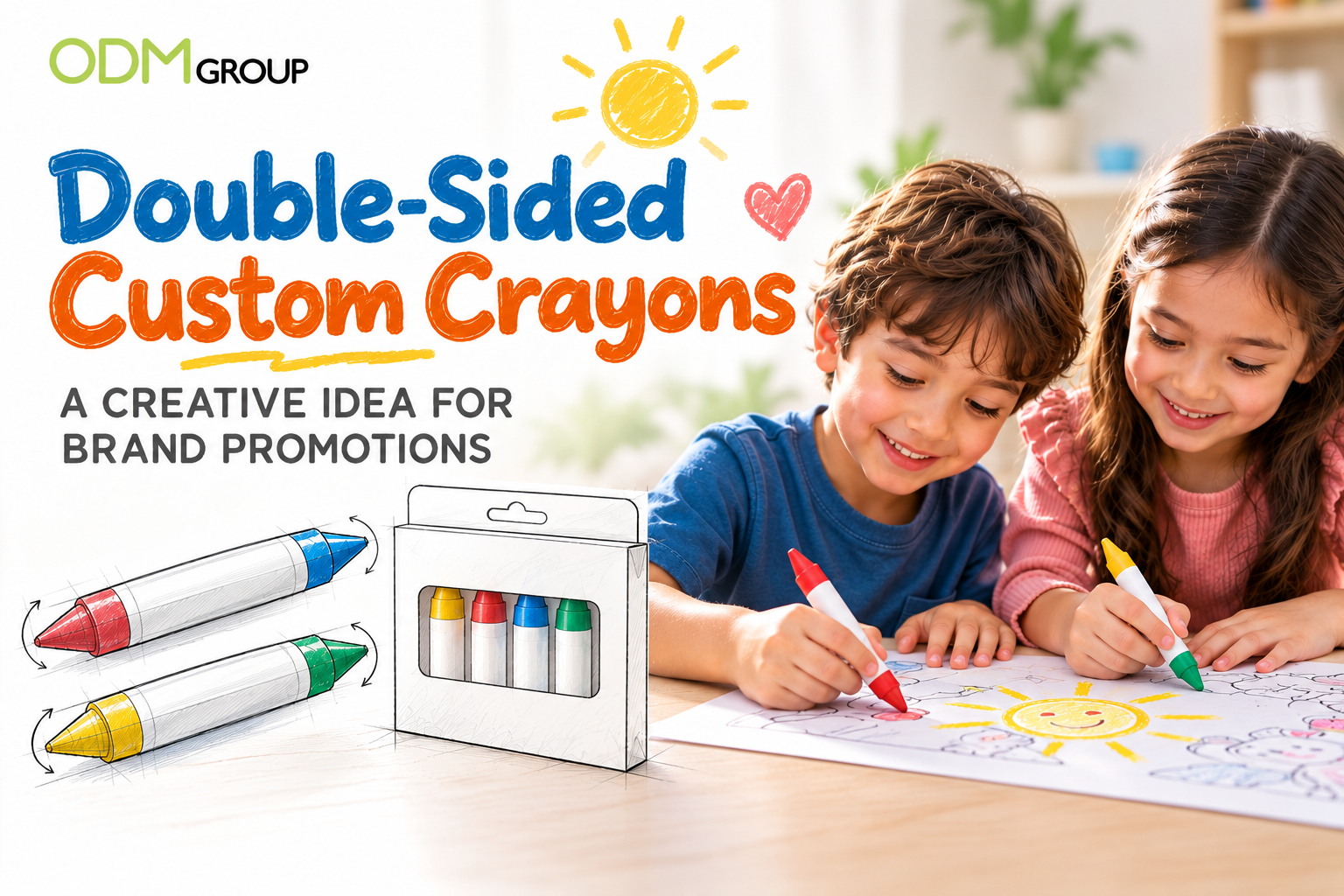
ODM Group helps businesses develop custom promotional merchandise, from initial concepts and product design through manufacturing coordination and quality control. Here is what to consider when developing double-sided custom crayons for your next campaign.
What Are Double-Sided Custom Crayons?
Double-sided custom crayons are coloring products designed with a usable tip at each end. Depending on the proposed design, the two ends can feature different colors, allowing users to switch colors without changing crayons.
For brands, the format offers an opportunity to make a familiar stationery item more distinctive. Rather than relying on packaging alone, the product itself can become part of the campaign concept.
Before moving into production, buyers should establish the intended age group, color combinations, product dimensions, branding requirements, and packaging format. These decisions influence the design brief and help determine which manufacturing options are practical.
Why Use Double-Sided Crayons in Promotional Campaigns?
1. Add Value to Children’s Gift Sets
Custom crayons can complement products aimed at families and children. For example, brands could include them in activity packs, seasonal gift sets or selected children’s product bundles.
The key is to connect the coloring activity with the wider campaign. A travel brand might develop a destination-themed activity pack, while a food brand could explore a coloring sheet as part of a family promotion.
2. Make the Product More Distinctive
A double-ended format provides an alternative to conventional single-ended crayons. Different color pairings, coordinated packaging and a recognizable visual theme can help the product stand out within a promotional range.
The design should remain practical, however. Color combinations should be easy to identify, and the product should be comfortable for its intended users to handle.
3. Create Opportunities for Brand Storytelling
The packaging can carry the main branding, campaign message, or instructions for a coloring activity. Where the available surface permits, the crayon design may also incorporate colors associated with the brand.
For products with limited printable space, packaging is often the more practical place for logos, promotional messaging and required product information.
4. Support High-Volume Promotions
Compact coloring products may be suitable for campaigns involving multiple retail locations, event attendees or product bundles. Their suitability depends on the required quantity, packaging, shipping arrangements and unit cost.
Buyers should compare the complete landed cost rather than the manufacturing price alone. Packaging, quality inspection, freight, and any applicable duties can affect the final campaign budget.
Where Can Brands Use Custom Crayons?
Double-sided custom crayons can be considered for several types of promotional activity.
Gift with Purchase Promotions
Retailers and consumer brands can explore crayons as an additional gift with selected purchases. They may work particularly well when the gift relates to the product category or creates an activity for families.
For example, a children’s product range could feature a themed coloring activity, with the crayons packed alongside a coloring sheet or illustrated card.
On-Pack Promotions
Crayons can be developed as an additional item within a promotional bundle or attached to a suitable outer pack. The design team must consider the dimensions, pack construction, product protection and the space required for labels or instructions.
For food-related promotions, the packaging design should also account for appropriate separation between the coloring materials and the food product.
Children’s Events and Family Campaigns
Brands participating in family-oriented events can consider crayons for activity packs, welcome kits or supervised coloring stations.
A coordinated set of crayons, activity sheets and branded packaging can give the campaign a consistent visual identity. The quantity and pack format should reflect how the items will be distributed and used.
Educational and Retail Merchandise
Schools, educational brands, museums and family attractions may also consider custom crayons for educational packs or retail merchandise.
The product concept should reflect the intended activity, age range and distribution environment rather than relying on branding alone.
How Are Custom Crayons Manufactured?
The manufacturing process depends on the selected crayon construction, color arrangement and production method. A typical wax crayon process includes the following stages.
1. Material and Color Selection
The development process begins by defining the intended colors, wax formulation, dimensions and performance requirements.
Pigments are incorporated into the selected wax formulation to achieve the required color. Consistency between production batches is important, particularly when the crayons must match an established brand palette.
Material specifications should be agreed before production, with appropriate safety and compliance requirements identified for the destination market.
2. Molding and Forming
The prepared material is formed into the required crayon shape using a suitable molding process. The design may need to accommodate the two usable ends while maintaining the intended dimensions and finish.
Custom shapes or unusual dimensions can introduce additional tooling requirements. Buyers should therefore confirm whether an existing mould is suitable or whether new tooling is needed.
3. Cooling and Finishing
After forming, the crayons are allowed to cool and stabilize before further handling. Finishing requirements depend on the product design and may include removing excess material or checking the appearance of the ends and surfaces.
4. Quality Inspection
Inspection criteria should be established before mass production. Depending on the agreed specification, checks may cover colour consistency, dimensions, surface defects, breakage and the finish of both ends.
Where the product is intended for children, the relevant safety and compliance requirements should also be confirmed. Any corrective action should follow the agreed quality-control procedure.
5. Packaging and Preparation for Shipment
The finished crayons are packed according to the approved design. Options may include individual wrapping, a paperboard sleeve, a small box or a larger activity kit, subject to product and production requirements.
Before shipment, the buyer should verify that the packaging, product quantities, labeling, and other agreed specifications match the approved sample and purchase requirements.
What Should Buyers Consider When Developing Double-Sided Custom Crayons?
A clear product brief helps reduce unnecessary revisions and makes it easier to assess the feasibility of the concept.
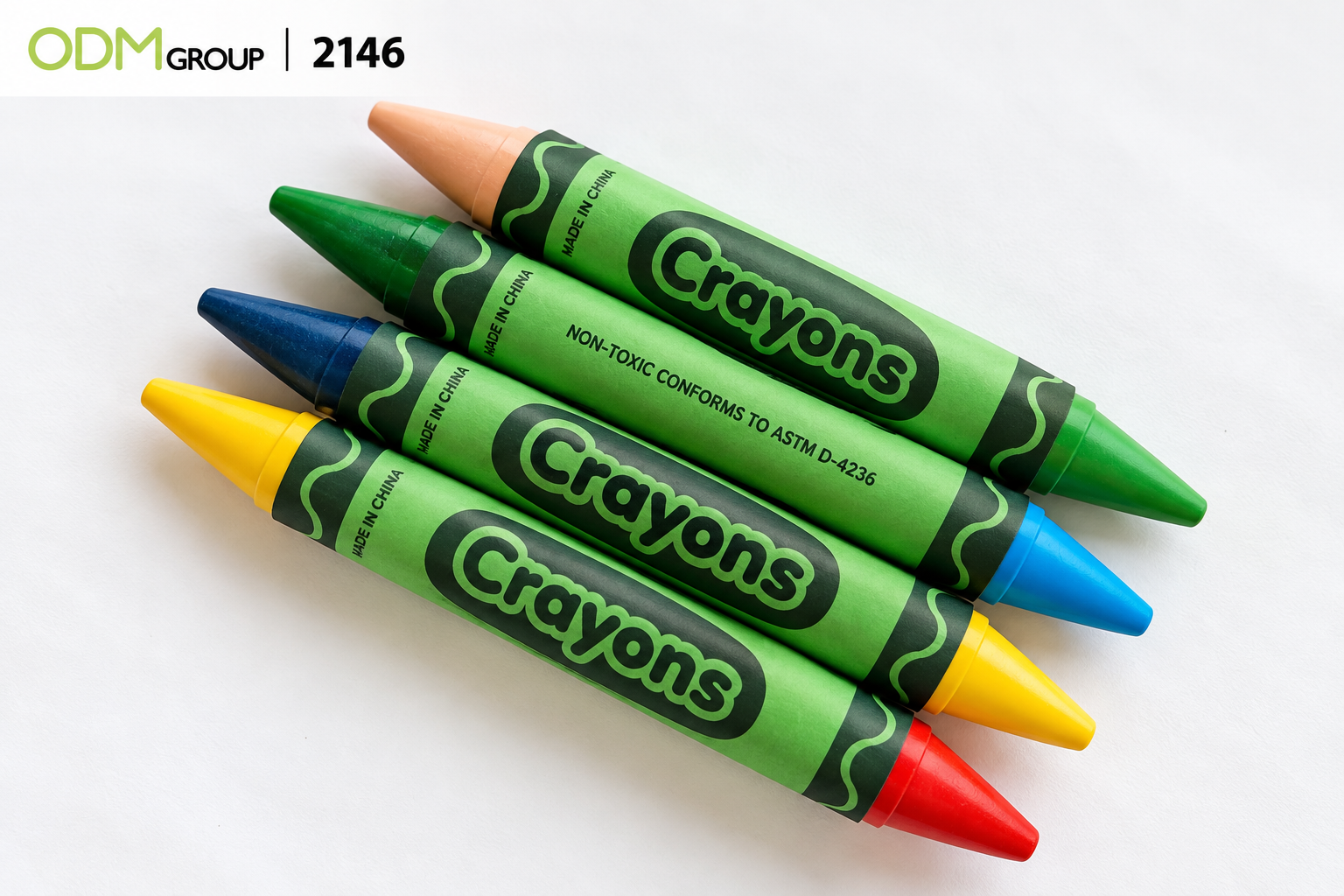
Target audience and intended use
Define the age group, setting, and purpose of the product. A giveaway for a supervised event may require a different format from merchandise intended for regular retail sale.
Colour combinations
Specify the colors required at each end and identify any brand color references. Confirm whether the colors can be achieved using the proposed material and production process.
Dimensions and ergonomics
The size and shape should suit the intended users. Consider ease of handling, durability and whether the product can be packed efficiently.
Branding and packaging
Determine where logos, campaign graphics and product information will appear. Packaging should protect the crayons while supporting the visual identity of the promotion.
Minimum order quantity and tooling
Ask whether the design can use existing tooling or requires a new mould. Minimum order quantities and unit costs depend on the product specification, manufacturing process and supplier requirements, so these details should be confirmed during quotation.
Safety and market requirements
Do not assume that a product is suitable for children simply because it is made from wax. Confirm the composition, age grading, applicable testing and documentation for the markets where it will be sold or distributed.
For products classified as toys in Great Britain, relevant requirements may include the Toys (Safety) Regulations 2011. Requirements should be assessed against the product’s intended use and destination market.
Developing Custom Promotional Merchandise with ODM
A successful promotional product starts with a clear brief, not just an interesting shape or color combination.
ODM Group supports businesses with product concept development, design, manufacturing coordination, quality control and packaging development. These services help buyers evaluate how a proposed product fits their campaign objectives and production requirements.
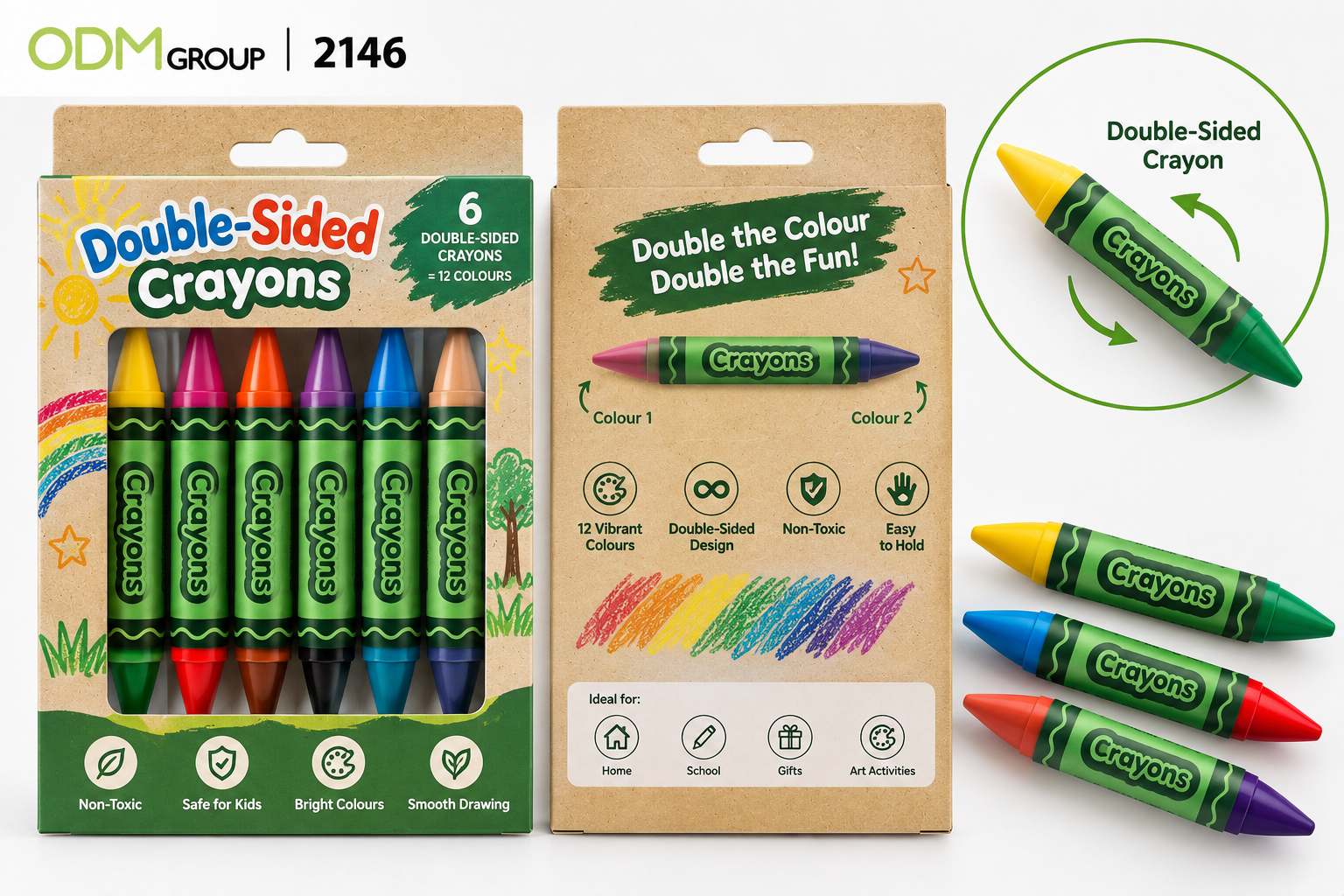
For a double-sided custom crayon project, the process can begin with the intended audience, target quantity, preferred colors, packaging concept, and delivery requirements. The team can then assess the next steps for developing the product and preparing it for production.
If you are planning a children’s promotion, retail gift with purchase or branded activity kit, contact ODM Group and reference product code ODM-2146 to discuss the double-sided custom crayon concept.
Planning a custom crayon promotion? Contact ODM Group to discuss the product concept, design requirements and packaging options.
Product specifications, minimum order quantities, testing requirements, and production timelines should be confirmed for each project before an order is placed.
More Product Ideas
q


What to Read Next?
Book Strap Carrier for Smarter Brand Promotions
Promotional bags are everywhere, but a book strap carrier [...]
DIY Kite Kits for Family-Focused Campaigns
Marketing to kids and parents works best when it [...]

Back-to-School Gifts for Teachers That Build Loyalty
Every back-to-school season, brands roll out discounts, bundles, and student [...]
20 Back-to-School Merch Ideas From The ODM Group
It's that time of year again - the start of [...]
Unleash Creativity & Adventure: Custom School Backpacks for Kids
In this realm of young shoppers, the allure of [...]
 Gallery
Educational Promotional Products for A Back to School Promotion
Branded promotional products, Corporate promotions, Custom packaging, Custom Products, Gift with purchase, Giveaway promotional items, In-pack promotions, Kids promotional products, Marketing, Personalized promotional gifts, Premium promotional products, promotional gift, Purchase with purchase, Trending innovative promotions


Educational Promotional Products for A Back to School Promotion
Prep up for the start of a new school year! [...]
Related posts:
 Custom Earphones – Unique Design For Your Brand
 Custom Bluetooth Speakers: A Highly Popular Item for Brand Promotions
 Double Up In-Store Promotions With GWP & POS Display Stand
 Double Up Your Promotions: Let Branded Hangsell Displays Do the Selling
 Glassware with Silicone Sleeves: Functional Design for Brand Promotions