
Cloth pouch bags can do more than package a product. They can protect items, reinforce brand identity, and give customers something useful to keep. For jewelry brands, beauty companies, and businesses planning promotional campaigns, the right pouch can complement a product and make the overall presentation more memorable.
Choosing the right design, however, takes more than picking a fabric and adding a logo. The size must fit the product, the material should suit its intended use, and the branding should work with the design. Also consider budget and production requirements, especially for larger campaigns.
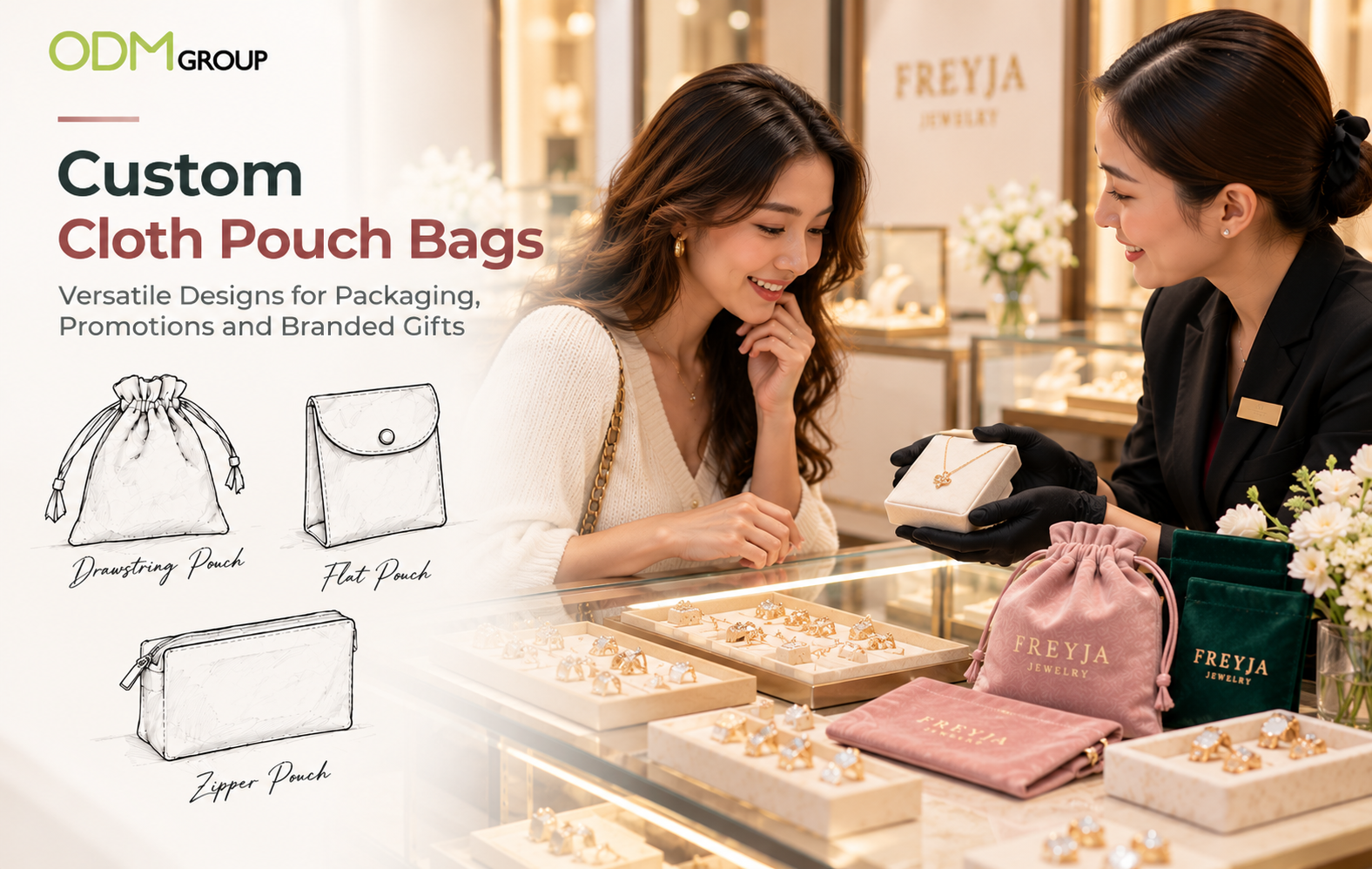
For brand managers and procurement teams, it helps to start with a few basic questions: What will the pouch hold? Who will receive it? And what does it need to achieve?
This guide covers the main decisions involved in developing custom cloth pouch bags, from choosing a design to preparing for production.
How to Choose Your Cloth Pouch Bags Design
1. Start With the Campaign or Product Objective
Before selecting a fabric or requesting a quote, consider how you’ll use the pouch. A design that works well for jewelry packaging may not suit a beauty gift set or a large promotional campaign.
Retail Packaging and Product Presentation
Jewelry brands can use soft fabric pouches to present earrings, necklaces, bracelets, and other accessories. Beauty companies may prefer larger pouches that hold several skincare products or cosmetics together.
The pouch should complement the product while providing enough room for its contents. A premium-looking fabric won’t compensate for a pouch that’s hard to open, too small, or poorly made.
Gift-With-Purchase Campaigns
Custom cloth pouch bags can serve as promotional gifts or hold other products included in a gift-with-purchase (GWP) offer.
For example, a beauty brand might include a branded pouch with a qualifying purchase, while a fashion retailer could use one to present accessories during a seasonal promotion.
Before settling on the design, consider whether the pouch adds enough value to the offer. Think about the target audience, the main product, the campaign budget, and whether customers are likely to reuse the pouch afterward.
Corporate Gifts and Event Merchandise
Pouches can also work well for conferences, brand activations, and corporate gifts. They can hold small accessories, stationery, and other lightweight items.
How you distribute the pouches matters, too. A design for a large event may need to be lightweight and easy to pack in bulk. A premium client gift, on the other hand, may justify more elaborate materials or finishes.
The goal is to find a design that fits the campaign without adding unnecessary features.
2. Choose a Pouch Style That Fits the Product
The shape and closure affect how a pouch opens, what it can hold, and how it looks when presented. The best option depends on the product and how you’ll use the pouch.
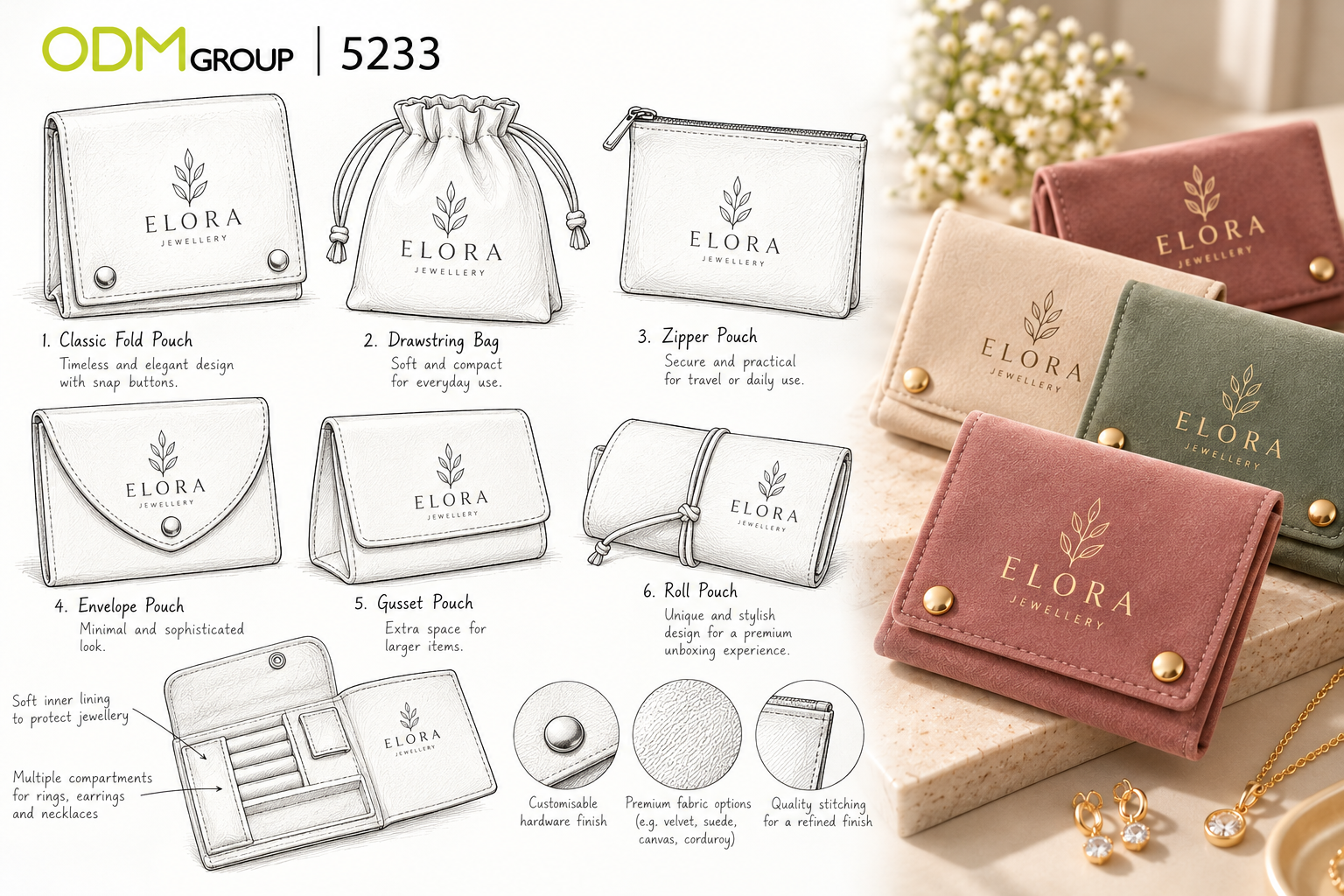
Drawstring Pouches
Drawstring pouches work well for jewelry, small accessories, gifts, and selected promotional products.
Brands can customize them with different fabrics, cords, ribbons, and logo treatments.
Before choosing this style, check that the opening is wide enough for the product and that the closure holds the contents securely.
The cord should be easy to use, and the logo should remain visible when the fabric gathers.
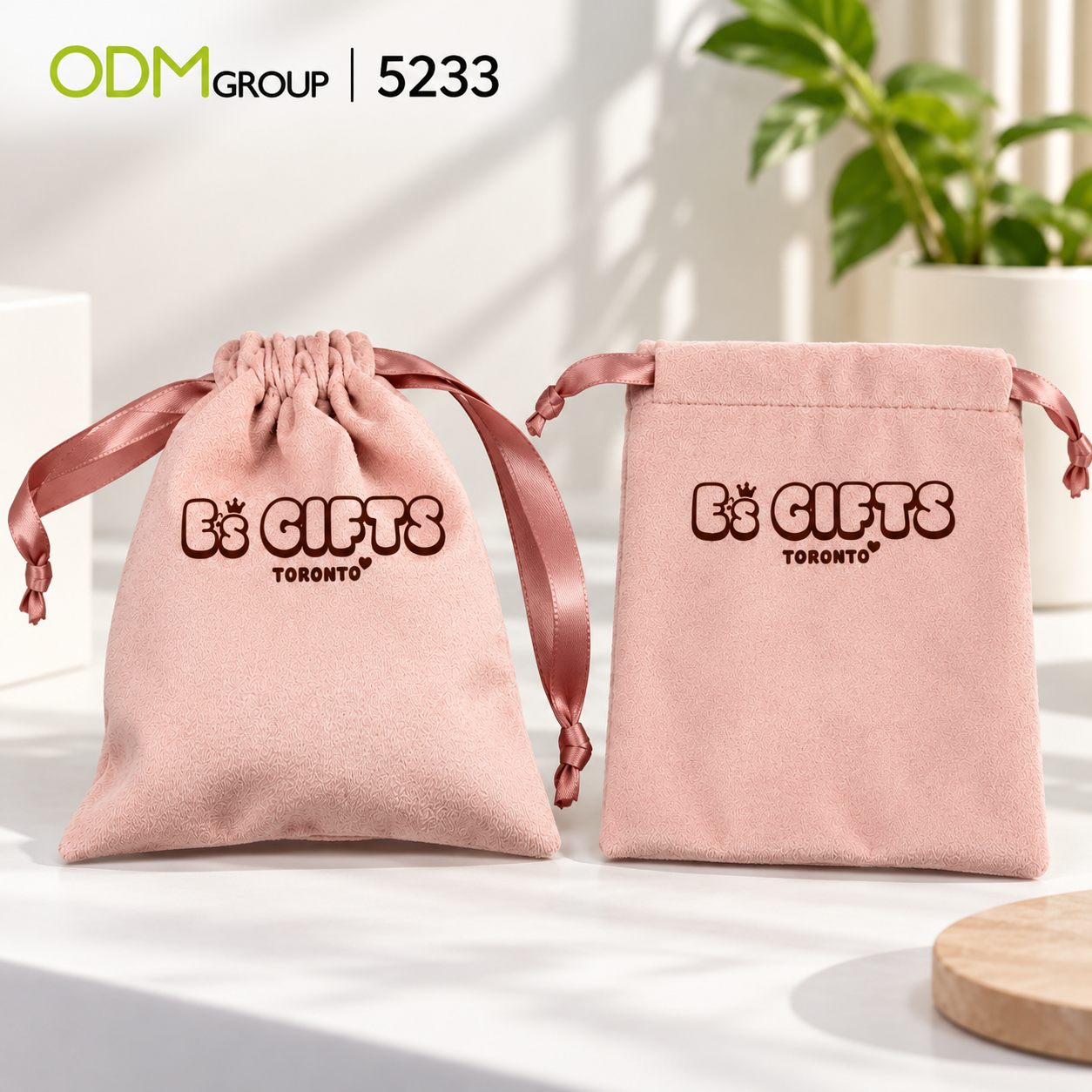
Drawstring pouches are a simple option for many small gifts, but products that need a more structured closure may require a different design.
Flat Pouches
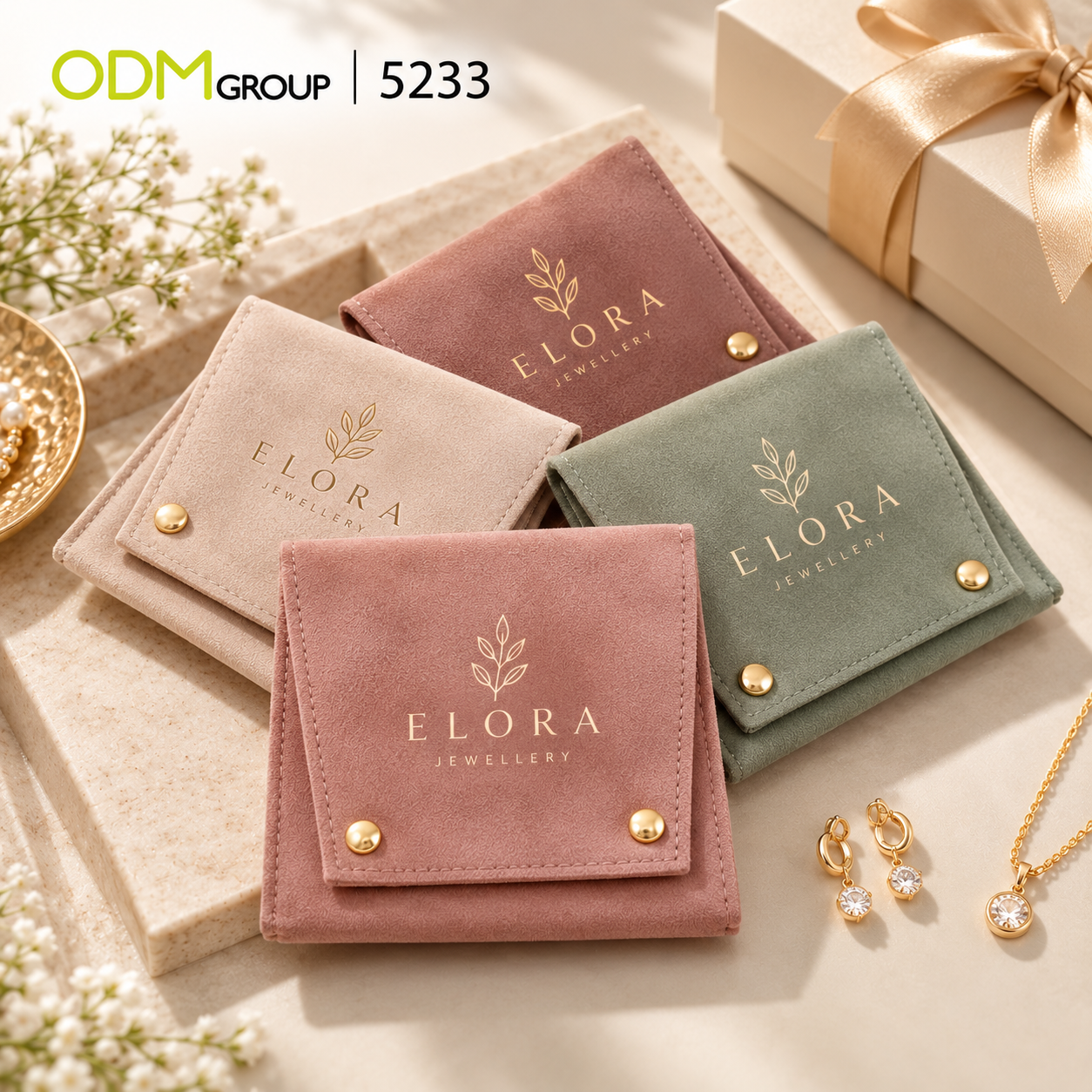
Flat pouches are a good fit for compact products that don’t need much internal space.
They can have a simple opening, flap, snap fastener, or another suitable closure.
Their slim shape makes them easy to include in gift sets and retail packaging.
However, the dimensions need to account for the actual product and any protective inserts or additional packaging.
A flat pouch may work well for a small accessory, while a set of cosmetics may need a wider base or a more structured design.
Velvet and Soft-Touch Pouches
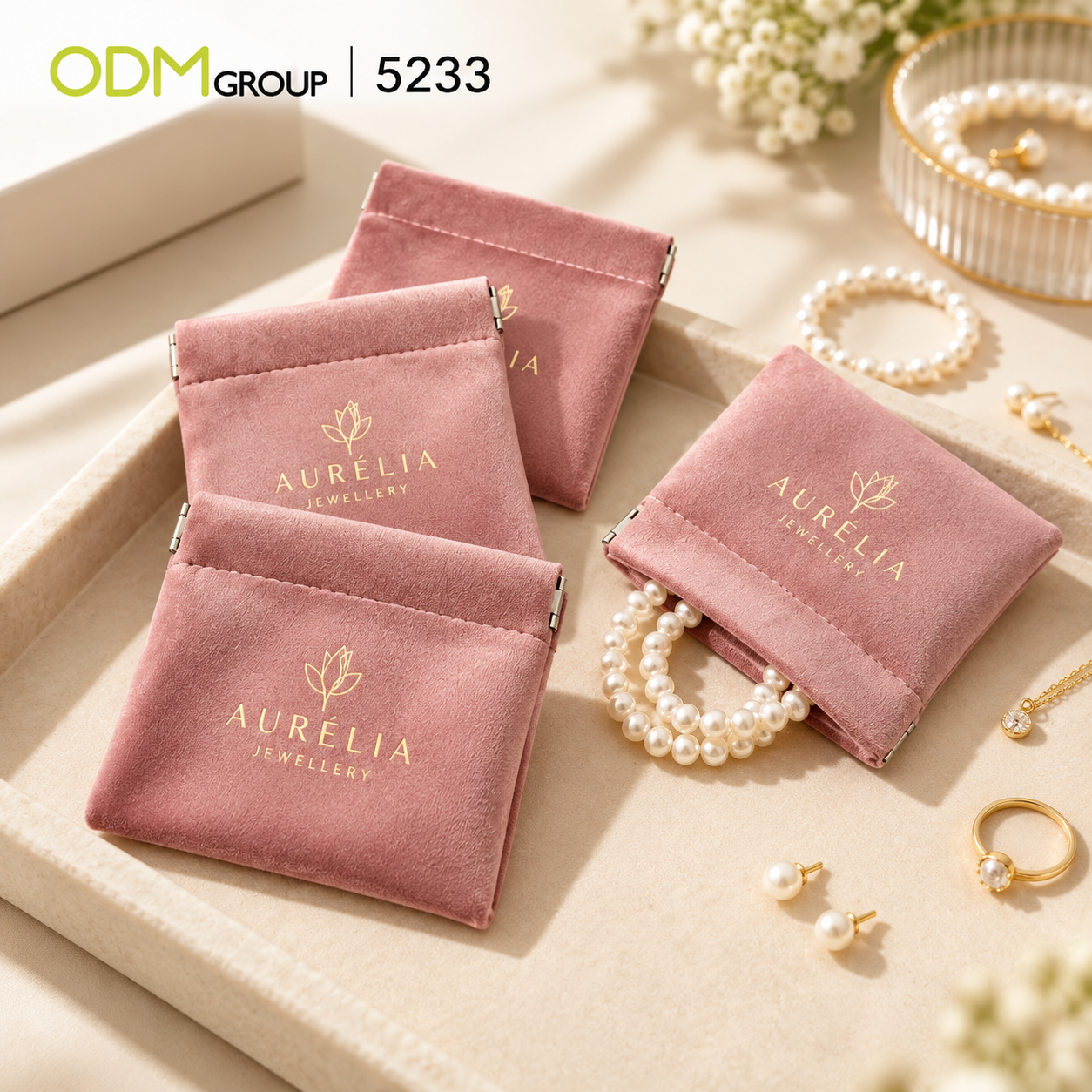
Velvet and other soft-touch fabrics can give jewelry and fashion accessories a more premium presentation.
The texture is an important part of the design, so details such as fabric color, stitching, lining, and logo placement deserve attention.
For delicate jewelry, consider the interior as well as the exterior. A soft surface alone doesn’t guarantee enough protection against scratches or movement.
Structured Cosmetic and Lifestyle Pouches
For larger products or multi-item gift sets, a more structured pouch may be the better choice. A zipper, lining, gusseted base, or internal compartments can make the pouch more practical.
These features can improve usability, but they also add construction requirements.
Before including them, consider whether they solve a real problem for the intended user.
For example, a gusseted base may help accommodate several products, while a simple flat pouch may be sufficient for a lightweight promotional gift.
3. Select a Fabric That Balances Appearance and Performance
Fabric affects the look and feel of a pouch, but it also influences durability, branding, and production cost. The right choice depends on the product, the brand’s positioning, and how the pouch will be used.
| Material | Potential applications | What to evaluate |
|---|---|---|
| Cotton | Everyday merchandise, gifts, and simple packaging | Fabric weight, weave, shrinkage, and print performance |
| Canvas | Structured pouches and heavier accessories | Thickness, stiffness, seam strength, and bulk |
| Velvet | Jewelry and premium gift presentation | Surface consistency, color variation, and branding compatibility |
| Satin | Decorative gifts and selected beauty promotions | Smoothness, seam construction, and susceptibility to snags |
| Polyester or microfiber | Accessories, organizers, and promotional products | Texture, abrasion resistance, and branding compatibility |
| Corduroy | Lifestyle merchandise and fashion-oriented designs | Rib direction, texture, and logo placement |
These materials are starting points rather than fixed recommendations. Their suitability depends on the specific fabric and finished design.
When Is a Premium Fabric Worth the Investment?
A more expensive fabric may be worthwhile when the pouch plays an important role in the product’s presentation.
For a jewelry collection, texture and finish may be central to the customer experience. For a high-volume event giveaway, a simpler material may make more sense if it meets the campaign’s requirements.
The decision should come down to what the pouch needs to achieve, rather than assuming a more expensive fabric will always produce a better result.
How Should Brands Evaluate Reusability?
If the pouches are intended for repeated use, consider the durability of the seams, closures, and fabric. They should remain practical after the original products have been removed.
Cleaning requirements may also matter, particularly for pouches used with cosmetics or personal accessories.
If sustainability is part of the campaign message, be careful about the claims being made. Reusability alone doesn’t establish the overall environmental impact of a product.
4. Customize the Details That Matter
Customization helps distinguish cloth pouch bags, but every additional feature should have a purpose. The goal is to create a design that reflects the brand without unnecessarily complicating the product.
Choose a Suitable Branding Method
Common options include screen printing, embroidery, heat transfer, and woven labels. Each creates a different finish and has its own requirements.
- Screen printing: Works well for many bold logos and straightforward graphics.
- Embroidery: Adds texture and dimension, which can suit premium merchandise.
- Heat transfer: Can accommodate detailed artwork when the fabric and transfer process are compatible.
- Woven labels: Provide a more understated branding option.
- Metallic printing or foil effects: Can add a decorative finish when the material and application method allow it.
Small lettering and intricate graphics may not reproduce clearly on every fabric. Testing the branding method on the intended material helps identify potential issues before bulk production.
Coordinate Color and Branding
The pouch may need to match an existing brand identity or complement other packaging components.
Consider how the fabric color works with the logo, closure, and overall design. A contrasting cord or metallic logo can create a focal point, while a tone-on-tone design may give the pouch a more understated look.
If brand color accuracy is important, review a physical sample rather than relying only on a digital mockup.
Evaluate Closures and Additional Features
Drawstrings, zippers, snaps, linings, and internal pockets can change how a pouch functions.
Before adding a feature, ask whether it makes the pouch easier to use, improves protection or organization, or supports the intended presentation. Also consider whether it will increase cost or make production more complicated.
These decisions are particularly important for promotional merchandise, where the design needs to fit a set budget and delivery schedule.
5. Develop the Concept Into a Production-Ready Product
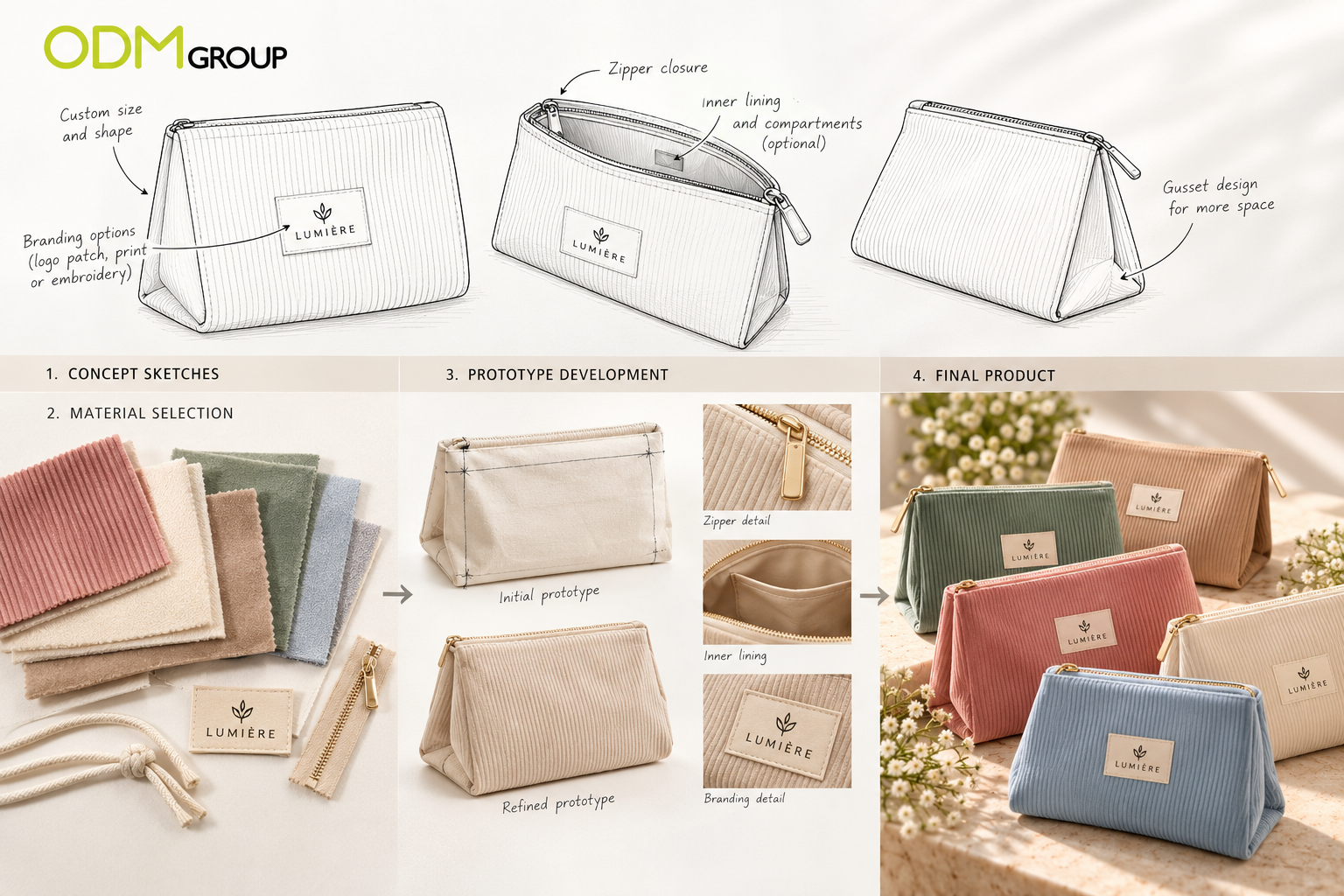
A visual concept is a useful starting point, but it doesn’t cover every detail needed to produce the finished pouch. The next step is to turn the design into a clear specification that can be followed consistently.
Step 1: Define the Product Brief
Start with the essential information:
- Intended use and target audience.
- Product dimensions and approximate weight.
- Preferred pouch style and fabric.
- Branding requirements and artwork.
- Estimated quantity and number of color variations.
- Target budget and delivery deadline.
- Distribution market and packaging requirements.
You don’t need to have every detail finalized at the beginning. However, knowing which requirements are fixed and where there’s room for adjustment makes it easier to compare design options.
Step 2: Develop and Compare Concepts
Sketches and visual mockups help teams explore different shapes, fabrics, closures, and branding treatments before settling on a design.
Appearance is only part of the decision. One concept may look distinctive but require additional components or more complicated construction. Another may achieve the same result with a simpler specification.
Evaluating these trade-offs early helps connect the creative direction with practical production requirements.
Step 3: Confirm the Specification
Once a design has been selected, document the approved dimensions, material composition, fabric weight where relevant, stitching, closure, logo artwork, and finishing details.
Include acceptable tolerances and any requirements for individual packaging, labels, or instructions.
A clear specification gives everyone involved a shared reference for the finished product.
Step 4: Review a Physical Sample
A physical sample lets the team check the actual material, dimensions, closure, and branding before committing to a larger order.
Check that the product fits comfortably, the pouch opens and closes as expected, the seams are consistent, and the logo is clear. If the pouch will hold several items, test it with the complete set rather than assessing it empty.
Document any changes and approve the final specification before authorizing bulk production.
Step 5: Establish Quality-Control Requirements
Quality checks should reflect how the pouches will be used.
Relevant checks may include:
- Dimensions and construction consistency.
- Fabric color and material specification.
- Seam strength and closure operation.
- Logo position, size, and application quality.
- Finished appearance and packaging condition.
If the pouches will hold delicate products, check that the construction provides the necessary protection. Any applicable material safety, labeling, or testing requirements should be determined based on the intended use and destination market.
ODM Group’s product development capabilities can support the process, from design and prototyping through quality control and delivery.
6. Understand MOQ, Lead Time, and Cost Before Ordering
For procurement teams, a quotation is most useful when the specifications are clear. Two pouches that look similar in a photograph may differ in materials, construction, branding, and packaging requirements.
Minimum Order Quantity
Minimum order quantities (MOQs) depend on factors such as material availability, production setup, and the level of customization.
Standard materials may offer different ordering options from custom colors or specialized fabrics. Multiple designs can also affect production planning.
If a campaign includes several color variations, confirm whether the minimum quantity applies to the complete order or to each design separately.
Production Lead Time
The schedule depends on material sourcing, sample development, revisions, production capacity, quality checks, and shipping.
Custom materials or additional components may require more coordination than a straightforward design using readily available materials.
For seasonal campaigns, work backward from the launch date and leave time for sample review and approval. Confirm the expected schedule with the development and manufacturing partners rather than relying on a general estimate.
How to Compare Quotations
Compare the complete specification, not just the unit price.
Check whether each quotation covers the same fabric, dimensions, branding method, closure, lining, order quantity, packaging, inspection requirements, and delivery arrangements.
A lower-cost option may be suitable if it meets the campaign requirements. Spending more on a feature may be justified if it improves usability or presentation in a meaningful way.
The important thing is to understand what you’re paying for before making a decision.
A Practical Brief for Your Custom Cloth Pouch Bags
Before approaching a product development partner, prepare a brief that explains what you need and why.
Use this checklist to organize the details:
Campaign objective: What should the pouches achieve?
Intended contents: Which products will they hold?
Target audience: Who will receive or use them?
Design direction: What shape, color, and overall appearance do you have in mind?
Material: Is a specific fabric required, or are alternatives welcome?
Branding: What artwork, logo size, and application method are needed?
Quantity: How many pouches are required, including each color or variation?
Budget: What is the target cost, and which features are essential?
Packaging: Will the pouches be supplied individually or as part of a gift set?
Delivery: Where and when must the finished products arrive?
If the project is still at an early stage, reference images and sketches can help communicate the idea without locking you into a final design.
Have a Cloth Pouch Idea in Mind?
A good pouch starts with a clear idea of how it will be used, what it needs to hold, and how it should represent your brand. The details, from fabric and size to logo placement and packaging, all help bring the concept together.
If you’re planning custom cloth pouch bags for a retail product, gift-with-purchase campaign, or branded giveaway, ODM Group can help you explore the design and work through the development process.
Let’s talk about your next pouch project. Share your ideas, target quantity, budget, and launch timeline with our team. We’ll help you explore the options and develop a pouch that fits your product and campaign.
ODM Services
FAQs about Cloth Pouch Bags
What are the best cloth pouch bags for a promotional campaign?
It depends on the product, audience, and budget. Simple drawstring pouches may suit compact giveaways, while structured or lined designs may work better for multi-item gift sets.
Which fabric is best for custom cloth pouch bags?
Cotton, canvas, velvet, satin, and polyester-based fabrics offer different combinations of texture, structure, and branding compatibility. Compare them based on the intended use, appearance, durability, and cost.
Can cloth pouch bags be customized with a company logo?
Yes. Options include screen printing, embroidery, heat transfer, and woven labels. The right method depends on the fabric, artwork, and finish you're looking for. A physical sample helps confirm the result.
What information should I provide when requesting a quotation?
Include the intended use, approximate dimensions, material preference, logo artwork, order quantity, packaging requirements, delivery destination, and target date. These details help clarify the project and make quotations easier to compare.
What to Read Next?
Cloth Pouch Bags: How to Choose the Right Design for Your Brand
Cloth pouch bags can do more than package a [...]

Roku Gin Adopts Sustainability With its Custom Fabric Packaging Bag Idea
Sustainable packaging has been a buzzword over the last [...]
Custom Design Tote Bags: 7 Easy Ways to Market Your Business!
Bags are arguably the most popular promotional products of [...]

Top 6 Reasons Customized Canvas Bags are Critical to Your Business
These customized canvas bags at a grocery store in the [...]

3 Reasons Why Custom Branded Products Boost Your Advertising Game!
The French-style bakery Pat'a Chou in Vietnam have designed custom [...]



Promotional Canvas Bag Campaigns: Ideas, Design and Production Guide
A promotional canvas bag can give customers a useful reason [...]