
A great race-day experience doesn’t end at the finish line. Thoughtful custom marathon merchandise can help participants remember the event, give sponsors more meaningful visibility, and encourage runners to return.
Two campaigns show how organizers can approach this differently: Smart Fit’s practical merchandise at a São Paulo half marathon and the PUMA Philippine Half Marathon Series 2026, which gives runners a multi-city challenge to complete.
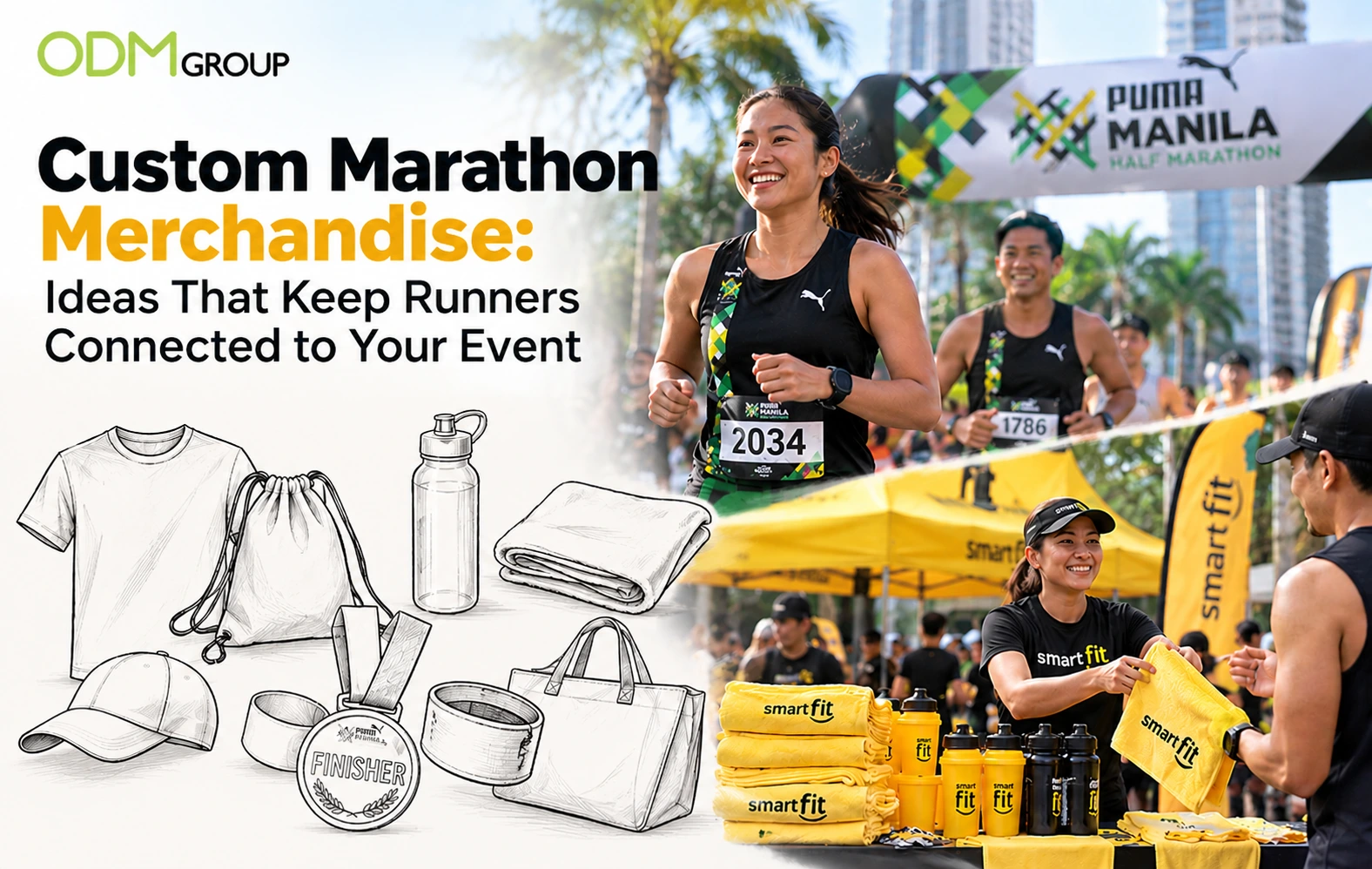
For event organizers and sponsors, both offer a useful lesson: merchandise works harder when it has a clear purpose beyond carrying a logo.
How to Make Marathon Merchandise More Effective
The right merchandise can do more than promote an event. It can improve the race-day experience, strengthen brand visibility, and give runners a reason to return. Smart Fit and PUMA take different approaches, but both offer useful lessons for planning impactful merchandise. Here’s what event organizers can learn from their campaigns.
1. Give Runners Merchandise They’ll Actually Use
At the 16th Half Marathon in São Paulo, fitness brand Smart Fit paired branded towels, water bottles, and cups with tents, flags, and a photo area. The products suited the race-day setting, while the branded displays helped make Smart Fit visible around the event.
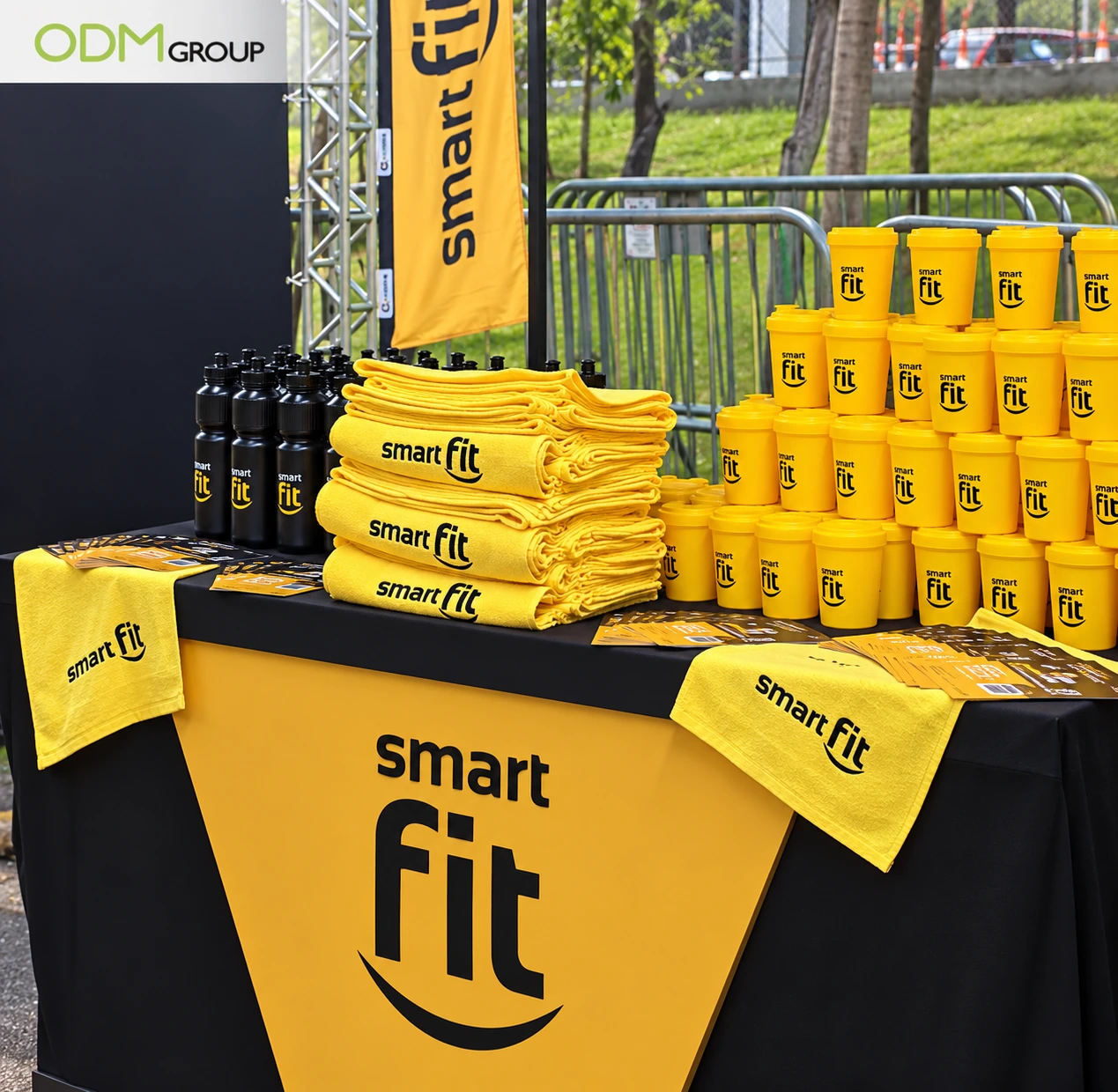
That’s a useful starting point when planning marathon merchandise. Think about what participants need before, during, and after the race. A water bottle or towel may be useful on race day, while a well-made bag or reusable item can stay part of a runner’s routine long afterward.
The product itself matters, too. Material, size, durability, and branding placement all affect how an item looks and feels in use. A practical product with a clear, well-considered design can leave a better impression than a generic giveaway that gets forgotten after the event.
Before settling on a product, ask a simple question: would runners choose to keep and use this if the event logo weren’t on it? If the answer is yes, you’re starting from a stronger concept.
2. Give Runners a Reason to Come Back
The PUMA Philippine Half Marathon Series 2026 takes a different approach. The series runs across six cities and offers 5K, 10K, and 21K distances. According to the event listing, runners who complete all six cities can earn the All-City Finisher Medal.
The medal connects each individual race to a bigger achievement. Instead of reminding you of just one finish line, it represents the effort of completing the entire series.
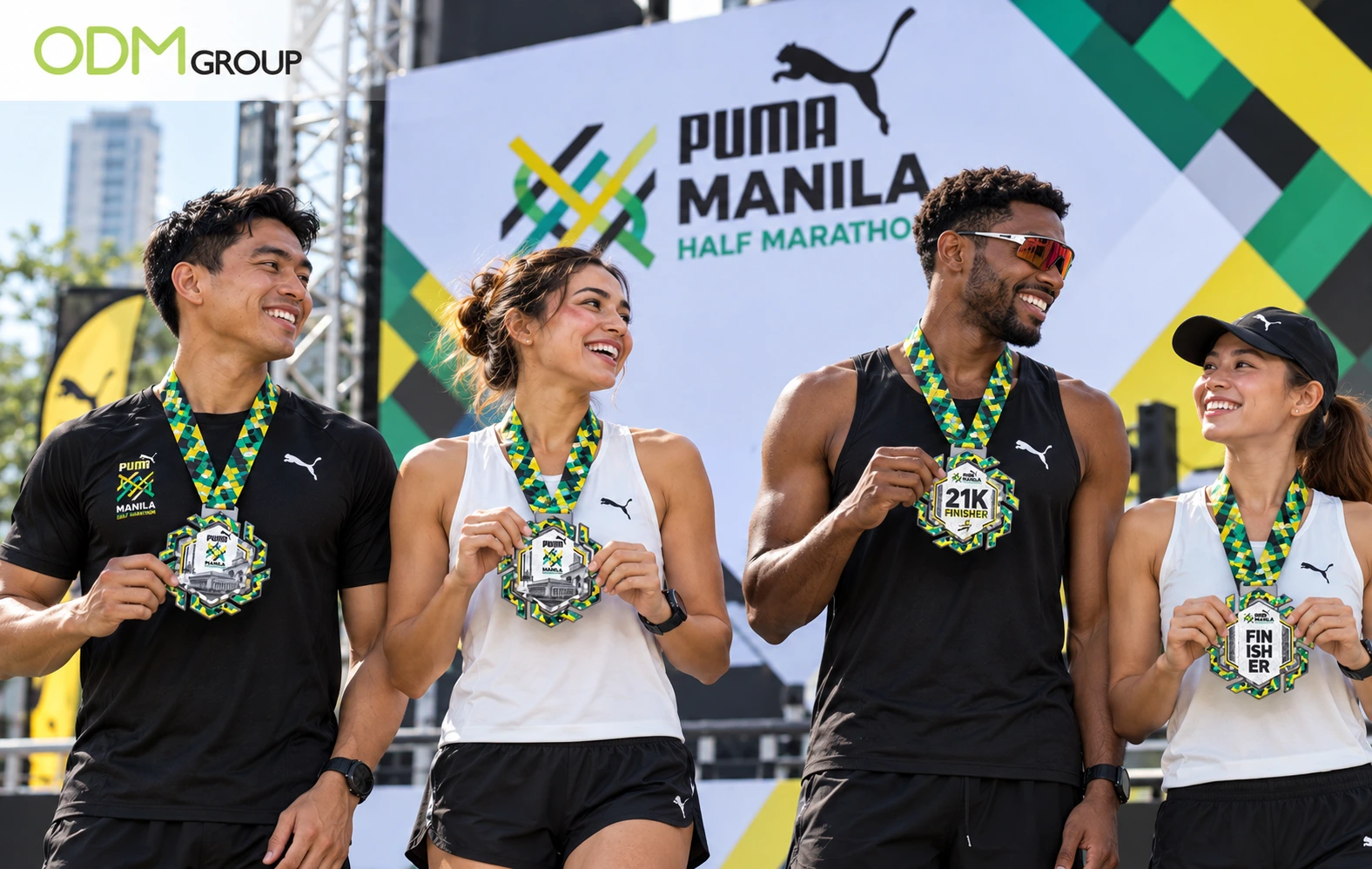
For organizers running multi-stage events, this opens up interesting possibilities for merchandise planning. A series could use a consistent visual identity across every race, with distinctive details for each location or milestone. The final reward could then bring those elements together.
The event listing confirms the series format and medal, but doesn’t specify other merchandise or giveaways. The useful takeaway is how a reward can support a longer participation goal.
3. Plan Merchandise Around the Race-Day Experience
Merchandise planning becomes easier when you consider the different moments that make up the event, rather than choosing products in isolation.
Make participant materials easy to carry and organize. Consider how runners will use the packaging and bag after they leave.
Prioritize useful products and clear event or sponsor branding. Items should suit the setting and be practical to carry or use.
Give participants a way to remember their achievement, whether through a finisher item or a thoughtfully designed keepsake.
Consider products runners might continue using, helping the event or sponsor stay visible in everyday life.
Not every event needs merchandise for every stage. The right choices depend on the audience, budget, event format, and campaign objectives.
It’s also worth thinking about the products as a collection. If an event includes several branded items, consistent colors, materials, and design details can make them feel like part of the same campaign.
For events with multiple sponsors, agree on logo placement early. Giving every brand equal prominence isn’t always the best solution. A clear visual hierarchy can help the finished product look more considered while still meeting sponsorship requirements.
4. Match the Products to Your Campaign Goals
Smart Fit’s campaign shows how practical products and visible event branding can support a single race. Meanwhile, PUMA’s series shows how a reward tied to completing multiple events can keep runners participating.
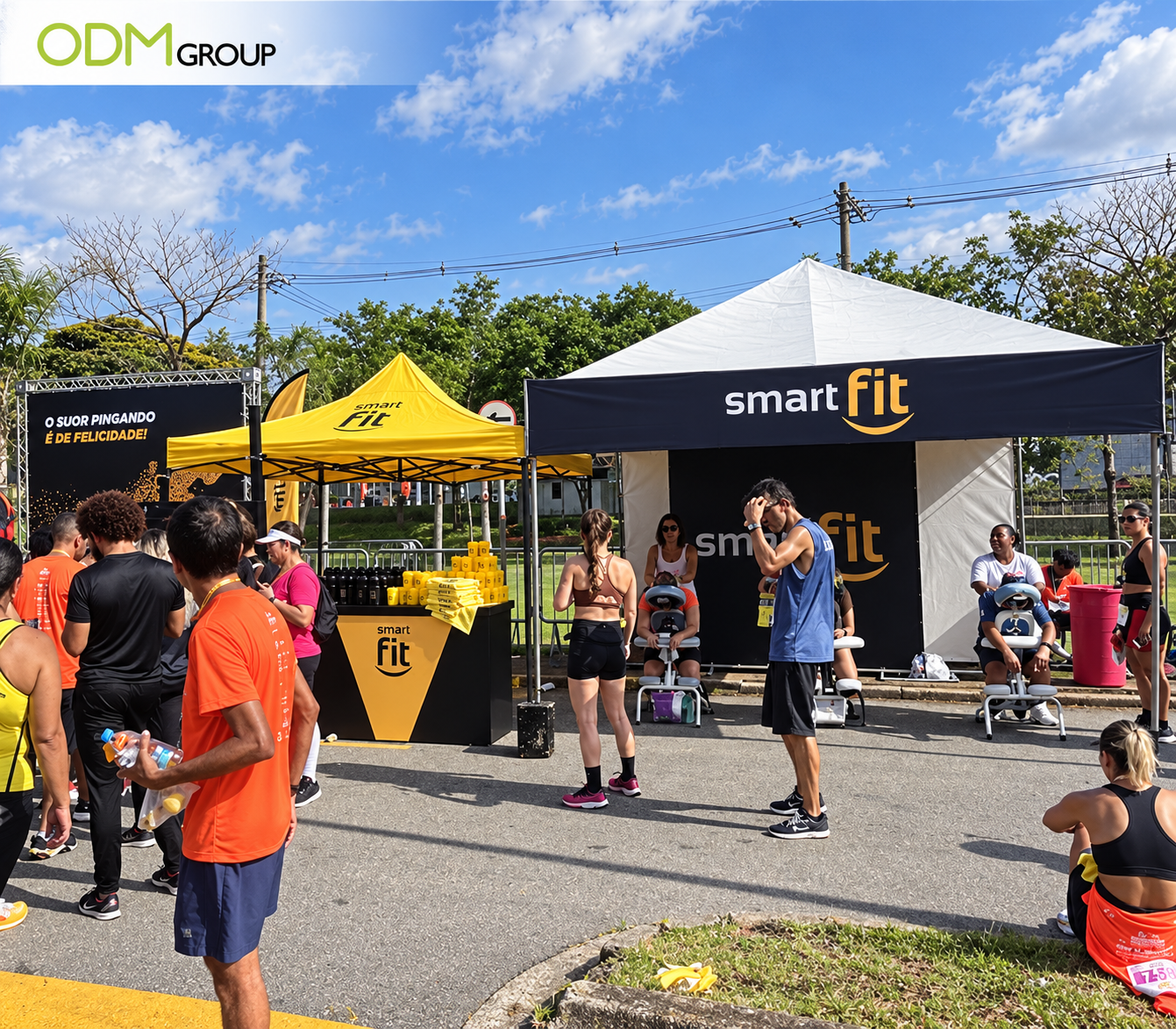
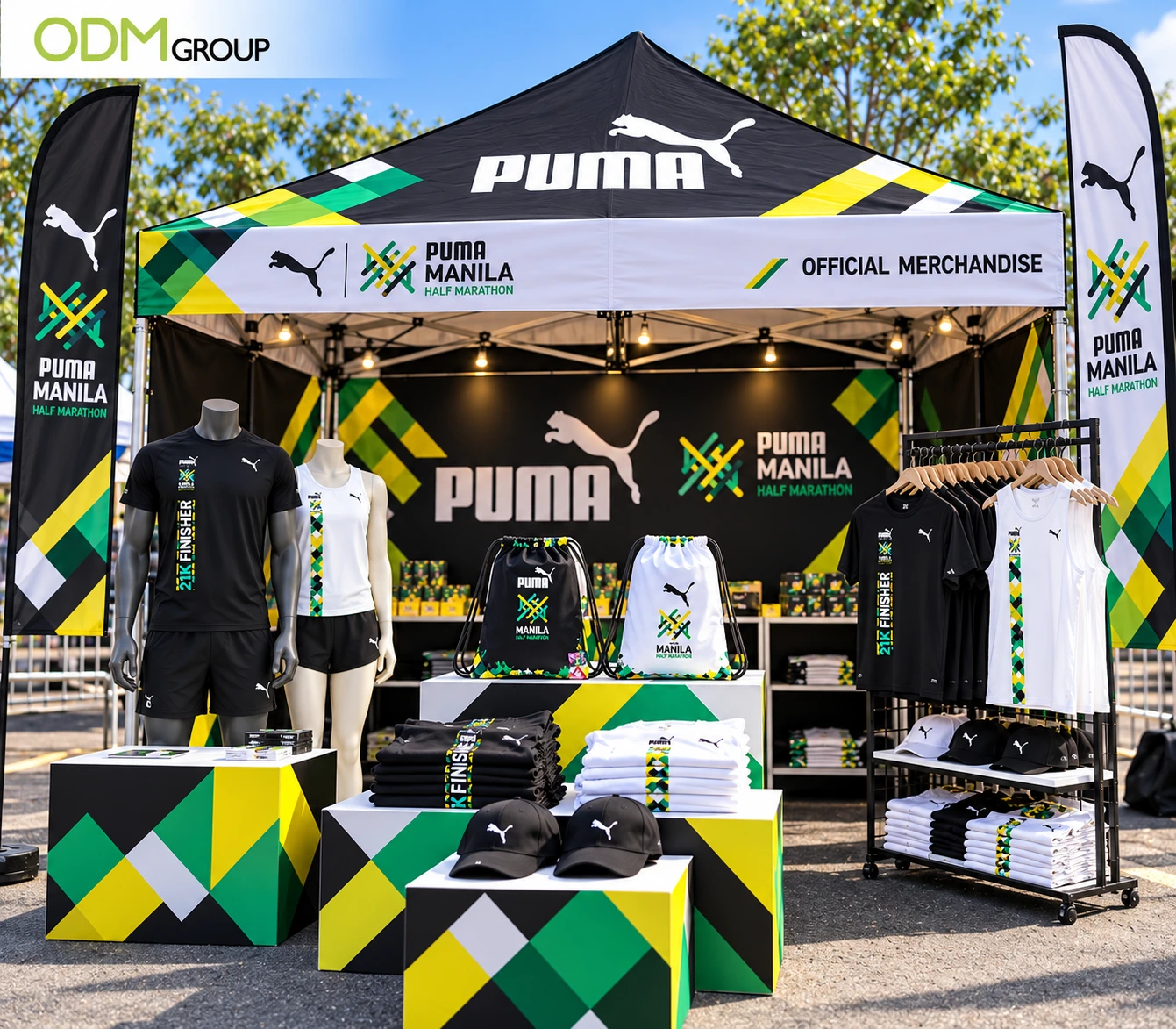
Both approaches start with understanding what the campaign needs to achieve.
Before choosing products, decide what matters most. Is the priority to improve the runner experience, increase sponsor visibility, recognize an achievement, or encourage repeat registration? That decision will help narrow down the product options and make the budget work harder.
It’s also important to consider what happens after the concept is approved. Product specifications, branding requirements, samples, production, quality checks, and shipping all need to fit the event schedule. Working through these details early can help avoid rushed decisions as race day approaches.
ODM helps brands develop custom promotional products from concept and design through sourcing, production, quality control, packaging, and shipping. For event teams, this means the product concept, branding, and delivery requirements can be considered together, rather than treating merchandise as a last-minute addition to the campaign.


How to Boost Your Event Outdoor Branding?
A shade to rest under before and during a marathon or any activity, even something as simple as walking is a necessity for anybody. Hence, promotional shades like tents and canopies are the perfect outdoor promotions to invest in! See more below:
Make Your Next Race Merchandise More Meaningful
Custom marathon merchandise doesn’t have to be complicated to make an impact. A useful product can improve the race-day experience, while a well-planned finisher reward gives participants something to work toward.
The key is choosing products that fit the event, make sense for the audience, and support the campaign’s wider goals.
Planning custom merchandise for an upcoming race? Start with your objectives, audience, quantities, and timeline, then develop a product plan around the moments runners will remember.
Explore ODM Group’s services to learn more about its custom product development and merchandise capabilities.
The sports market is active and always on the go. To get merchandise ideas for your next event or promotion, you can check out works! Just tap the image below for more!

FAQs About Custom Marathon Merchandise
What merchandise should be included in a marathon race kit?
Common race kit items include a branded running shirt or singlet, race bib, drawstring bag, and finisher medal. Depending on the event, organizers may also include towels, water bottles, caps, or other practical accessories. The best selection depends on the event format, participant needs, budget, and campaign goals.
How can custom marathon merchandise increase sponsor visibility?
Branded merchandise gives sponsors opportunities to connect with participants before, during, and after race day. Items such as running shirts, bags, towels, and reusable bottles can keep a brand visible beyond the event itself. Clear logo placement and a consistent design help maintain visibility without making products feel overcrowded.
How can organizers make marathon merchandise stand out?
Start with a clear concept that connects the product to the event's identity. Distinctive colors, thoughtful branding, suitable materials, and practical features can help merchandise feel more memorable. For race series, using consistent design elements across different products or event locations can create a recognizable collection.
When should organizers start planning custom marathon merchandise?
Planning should begin well before race day to allow time for concept development, design approvals, sampling, production, quality checks, packaging, and shipping. The exact lead time depends on product complexity, order quantity, and delivery location. Confirming requirements early helps reduce last-minute changes and scheduling risks.
Related Blogs
Marathon Merchandise: Ideas That Keep Runners Connected to Your Event
A great race-day experience doesn’t end at the finish [...]
Building Sports Collectibles: Lessons from Coca-Cola x Panini
For many years, promotional products have been evaluated based [...]

4 Practical Custom Sports Products That Boost Brand Visibility
Sports equipment is a popular choice of marketing used [...]

Motorsport Merchandise Ideas That Drive Brand Performance
Motorsport merchandise ideas are no longer just about souvenir [...]

Mascot Keychains: The Perfect Giveaway for High-Impact Campaigns
From global sporting events like the World Cup to [...]


Top 12 Golf Swag Bag Ideas to Impress Your Tournament Guests
Golf has always been more than just a sport. [...]