Children’s magazines compete for attention in a crowded retail environment. A strong cover, a familiar character, and engaging editorial content all matter—but an imaginative promotional gift can provide the final reason to pick up one title instead of another.
We spotted several covermount gifts for kids’ magazines at WHSmith in the UK. Publications including Doctor Who Adventures, Marvel Heroes, National Geographic Kids, and Star Wars Adventures used limited-edition toys, stationery, puzzles, and collectibles to strengthen their appeal.
These examples demonstrate more than the popularity of free merchandise. They show how the right promotional product can improve shelf visibility, increase perceived value, and extend engagement beyond the magazine itself.
What Is a Covermount Gift?
A covermount gift is a promotional product attached to the outside cover of a magazine. It is immediately visible to shoppers and forms part of the publication’s point-of-sale presentation.
This differs slightly from an in-pack gift, which is enclosed inside the magazine’s packaging. Both formats can support sales, but covermount gifts have an additional advantage: the product can attract attention before the customer picks up the magazine.
For publishers, the challenge is not simply to add a free item. The gift needs to:
- Appeal to the intended age group
- Connect naturally with the publication
- Look attractive at retail
- Fit within packaging and distribution limitations
- Meet applicable product-safety requirements
- Deliver sufficient perceived value without making the campaign commercially unviable
The following promotions illustrate several ways publishers can approach that balance.
Four Covermount Gift Examples
1. National Geographic Kids: Branded Stationery and Activity Set
The National Geographic Kids promotion included two notepads, two animal-shaped erasers, a sticky octopus toy, a ruler, and a pencil.
This assortment combined practical stationery with playful animal-themed products. That made it relevant to the publication’s young, curious audience while offering several items within one compact promotional pack.
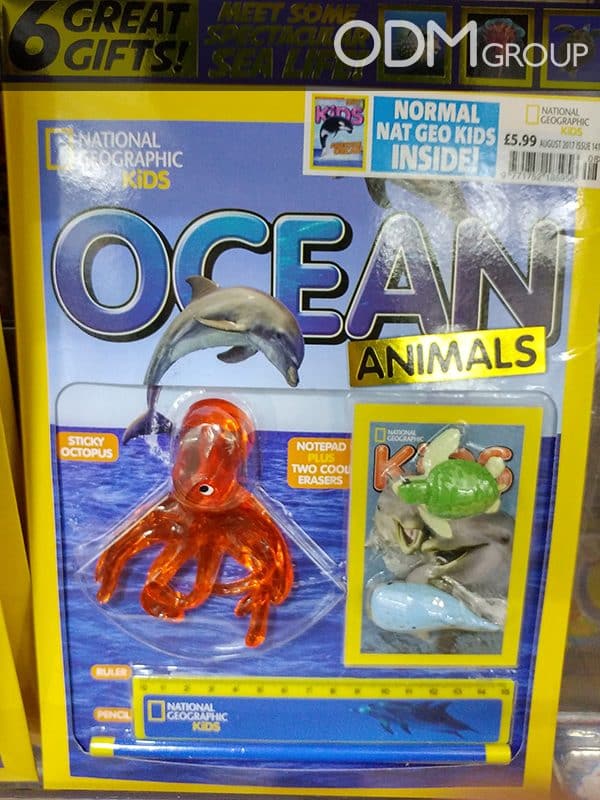
From a campaign perspective, stationery can also generate repeated brand exposure. A pencil, ruler, or notepad may remain in a school bag or on a desk long after the magazine has been read.
Why it works: The products support creativity and learning while remaining consistent with the magazine’s educational positioning.
2. Star Wars Adventures: Collectible Character Gift Set
Star Wars Adventures offered two foam Rebel gliders, a collectible Boba Fett figure, and two posters.
The promotion combined three types of engagement: active play, collecting, and display. This helped the gift appeal to readers with different interests while using the established visual world of Star Wars to create an immediate connection.
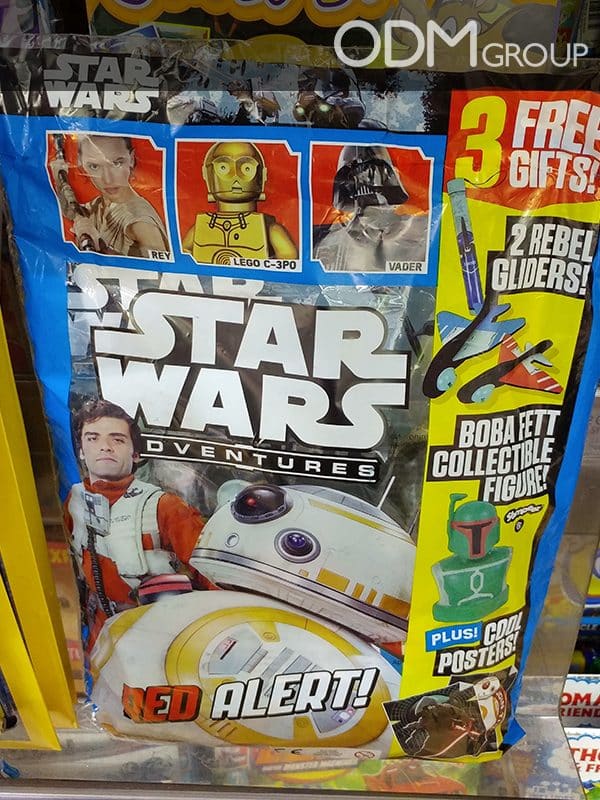
Licensed character merchandise can deliver strong recognition, but it also introduces important development requirements. Artwork approvals, character accuracy, colour standards, packaging presentation, and intellectual-property guidelines must be managed carefully throughout the project.
Why it works: The set transforms a magazine purchase into a broader fan experience and gives the reader multiple ways to interact with the franchise.
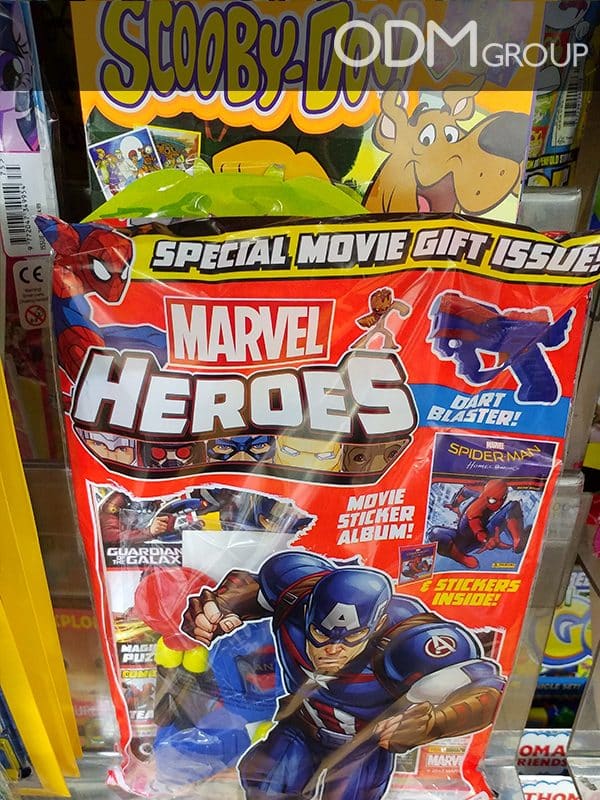
3. Marvel Heroes: Dart Blaster Toy
The Marvel Heroes magazine featured a superhero-inspired dart blaster.
Action toys can attract attention quickly because they offer an obvious play experience. When connected to a familiar entertainment property, they also allow children to recreate stories and imagine themselves as part of that world.
However, products resembling toy weapons require especially careful consideration. Age grading, projectile design, material selection, warning labels, testing, and market-specific regulations should be addressed from the earliest stages of development.
Why it works: The product offers immediate imaginative play while reflecting the action-led identity of the publication.
However, products resembling toy weapons require especially careful consideration. Age grading, projectile design, material selection, warning labels, testing, and market-specific regulations should be addressed from the earliest stages of development.
Why it works: The product offers immediate imaginative play while reflecting the action-led identity of the publication.
4. Doctor Who Adventures: Conundrum Cube
Doctor Who Adventures included a Conundrum Cube puzzle.
This was a particularly relevant product choice because it reflected the problem-solving, mystery, and science-fiction themes associated with Doctor Who. Instead of relying only on character imagery, the gift translated the publication’s editorial world into an interactive activity.
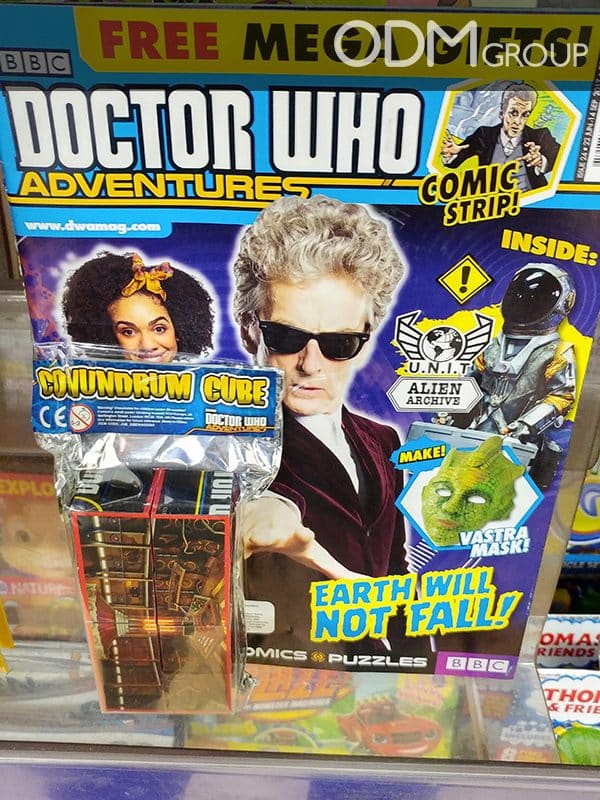
Puzzle products can also encourage longer engagement than a purely decorative item. Readers may return to them repeatedly or share the experience with family and friends.
Why it works: The gift connects with the intellectual and imaginative qualities of the brand, rather than simply displaying its logo.
Why Covermount Gifts Can Support Magazine Sales
A covermount campaign can influence several stages of the customer journey, from attracting attention at the newsstand to encouraging readers to look for the next issue.
Stronger Shelf Visibility
Magazine displays are visually competitive. A well-designed product and packaging format can give a title more physical presence and help it stand apart from nearby publications.
The shape, color, and visibility of the gift all affect performance. A good product can still lose impact if it is hidden by unclear packaging or positioned awkwardly against the magazine.
Higher Perceived Value
A promotional gift can make a special issue feel more valuable, particularly when the item is exclusive or unavailable through standard retail channels.
The gift does not necessarily need to be expensive. Relevance, originality, usability, and presentation often influence perceived value as much as product size.
Extended Brand Interaction
A magazine may be read once, while a useful pencil case, puzzle, figurine, or activity product can remain with the reader for weeks or months.
This extended use creates additional brand touchpoints. It can also help the publication become part of the reader’s play, learning, or collecting habits.
Repeat Purchase and Collectability
Publishers can build momentum by offering coordinated products over several issues. A series of figurines, stationery items, character accessories, or puzzle components gives readers a reason to return.
Collectability must be planned carefully, however. Each item should have enough individual value while contributing to the wider set. Production and delivery schedules also need to be reliable so that the series remains consistent.
A Stronger Connection Between Reading and Play
The most effective covermount gifts do not distract from the magazine. They deepen the reader’s interest in its subject.
Science kits can support educational content. Character accessories can extend a fictional story. Puzzles can reinforce problem-solving themes. When editorial and product teams work together, the gift becomes part of the content experience rather than an unrelated giveaway.
Related Blogs:
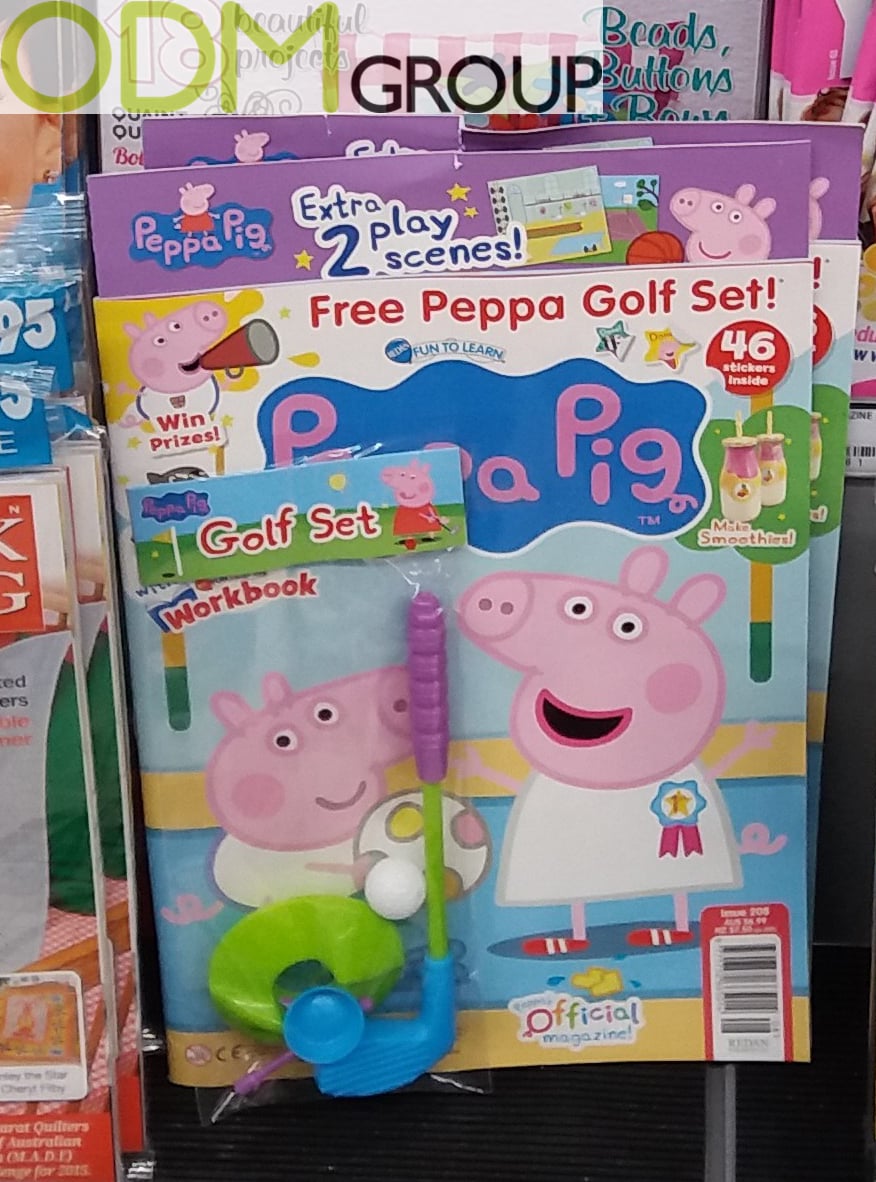
This Covermount golf set toy from Peppa Pig is very interesting, which made the workbook stand out on the shelf.
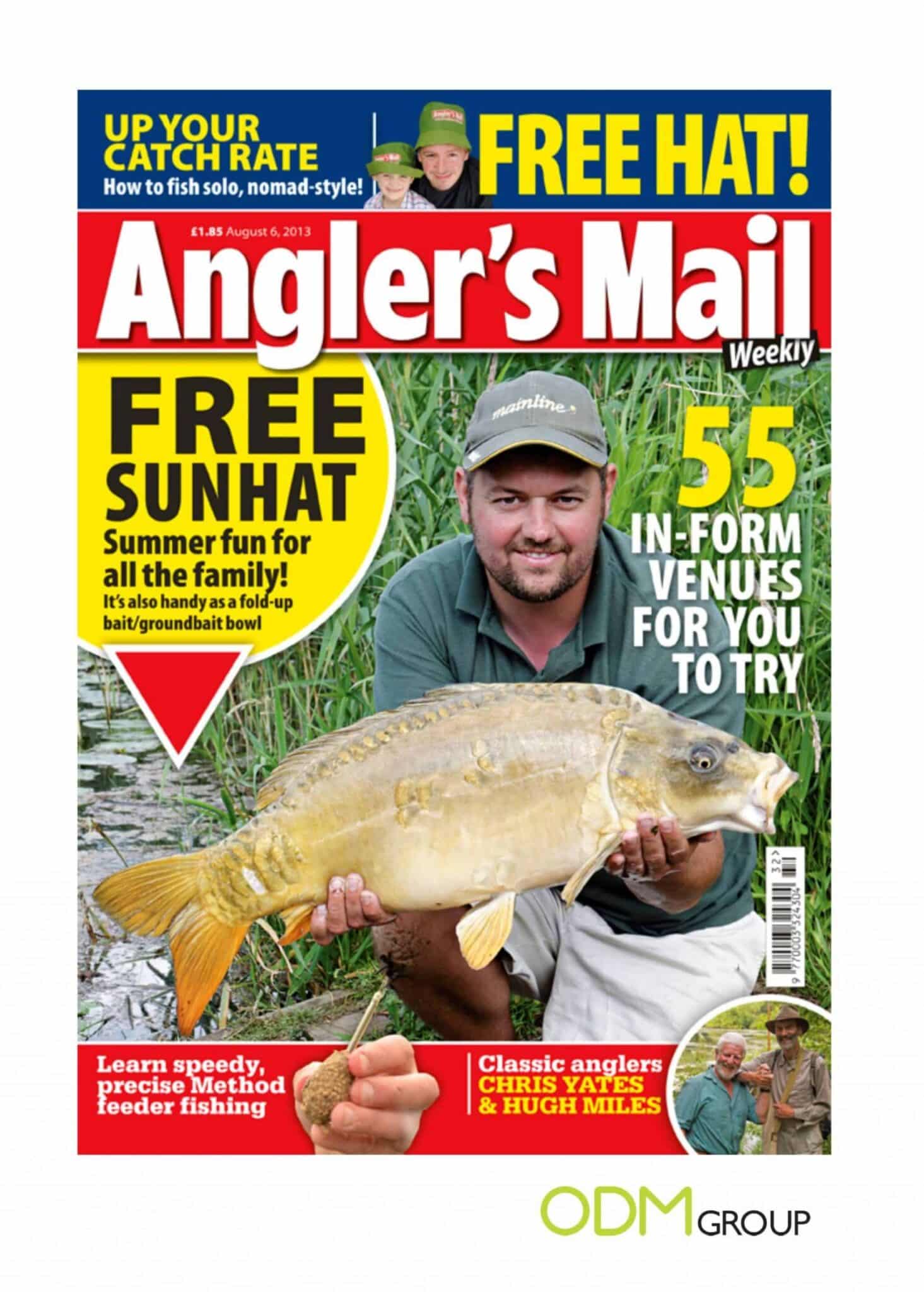
See how the free hat helped boost Angler’s Mail’s readership:
Arsenal teamed up with E-Zone for a special on-pack packaging promotion. This blog discusses how the team-up improved brand exposure:
What Publishers Should Consider Before Developing a Covermount Gift
A successful covermount gift sits at the intersection of marketing, product design, procurement, compliance, publishing, and logistics. Several decisions need to be aligned before production begins.
Campaign Objective
Is the campaign intended to attract new readers, increase sales of a special issue, encourage repeat purchases, or reward an established audience?
A gift designed for immediate shelf impact may differ from one created as part of a long-term collectible series.
Audience and Age Appropriateness
The product should reflect the reader’s age, abilities, interests, and expected usage. Small components, projectiles, magnets, cords, and certain materials may introduce additional risks or testing requirements.
Age grading should influence the concept from the beginning—not be added after the product has already been designed.
Licensing and Brand Consistency
Licensed merchandise requires accurate execution across the product and its packaging. Character proportions, logos, typefaces, colors, and required legal information may all be subject to approval.
Approval time should therefore be included in the development schedule.
Packaging and Retail Presentation
Covermount packaging has several jobs to perform. It must protect the product, show the gift clearly, communicate its value, carry required information, and attach securely to the publication.
It must also withstand packing, transport, retail handling, and display without damaging the magazine.
Quality and Compliance
Children’s promotional products require appropriate testing for their materials, construction, mechanical performance, and intended market.
A low-cost product is not low-risk. Weak components, inconsistent production, unclear warnings, or unsuitable materials can expose publishers and brand owners to recalls, reputational damage, and disrupted campaigns.
Sustainability
Material efficiency should be considered across both the product and its packaging. Opportunities may include reducing unnecessary components, selecting longer-lasting product concepts, improving pack dimensions, and using more responsible materials where technically suitable.
The best decision is not always the product with the least material. A useful, durable gift that remains in use may deliver more lasting value than a disposable novelty item.
Our Takeaway
Covermount gifts can help children’s magazines attract attention, increase perceived value, and build stronger reader engagement. Their effectiveness, however, depends on more than attaching a toy to the cover.
The product needs to support the publication’s identity, appeal to the right audience, meet safety and licensing requirements, and work within strict packaging, budget, and distribution constraints. When these elements are aligned, the gift becomes part of the reader experience and not simply an added freebie.
How ODM Can Help
The ODM Group supports publishers, entertainment brands, marketing teams, and procurement professionals with the development of custom promotional products and retail-ready packaging.
Our work can cover product strategy, concept development, design, prototyping, sourcing, factory selection, quality control, packaging design, and delivery. This joined-up approach is particularly valuable for covermount programs, where product dimensions, safety, cost, presentation, and publishing schedules must all work together.
Planning a covermount promotion or licensed merchandise campaign? Contact ODM to discuss your objectives, intended market, timeline, and target audience. If you are referencing an existing ODM product, include its product code so our team can prepare a more detailed quotation.
More Ideas
w


Frequently Asked Questions
What is the difference between a covermount gift and an in-pack gift?
A covermount gift is attached to the outside of a magazine and is normally visible at the point of sale. An in-pack gift is enclosed inside the magazine or its packaging.
What products work well as children’s magazine gifts?
Suitable options can include stationery, puzzles, figurines, activity kits, posters, simple games, educational products, and character-themed accessories. The best choice depends on the audience, editorial theme, budget, packaging format, and intended market.
Can covermount gifts be custom-designed?
Yes. Products can be developed around a publication, licensed character, campaign theme, or collectible series. Customization may include product shape, colors, graphics, packaging, and functionality.
How early should a publisher start development?
Timing depends on product complexity, licensing approvals, testing, tooling, packaging, and order volume. Starting early provides more time to refine the concept, resolve compliance issues, complete approvals, and coordinate delivery with the publication schedule.
What to Read Next?
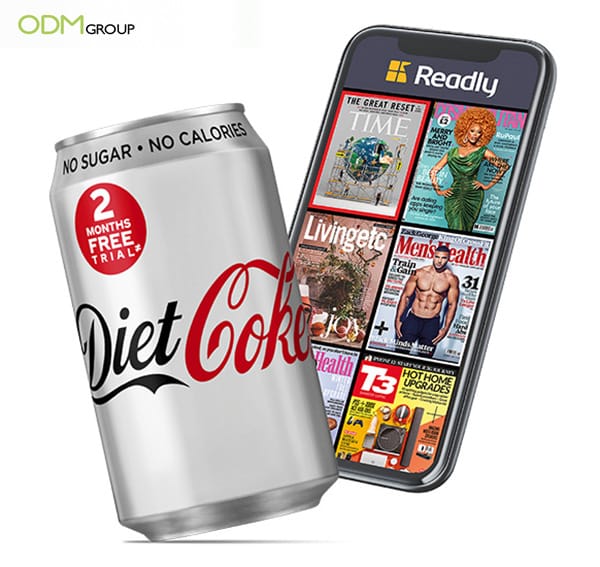
How Does Diet Coke x Readly’s Promotion Free Gift Build-Up Campaign?
Diet Coke, a popular zero-calorie soft drink since 1982; and [...]

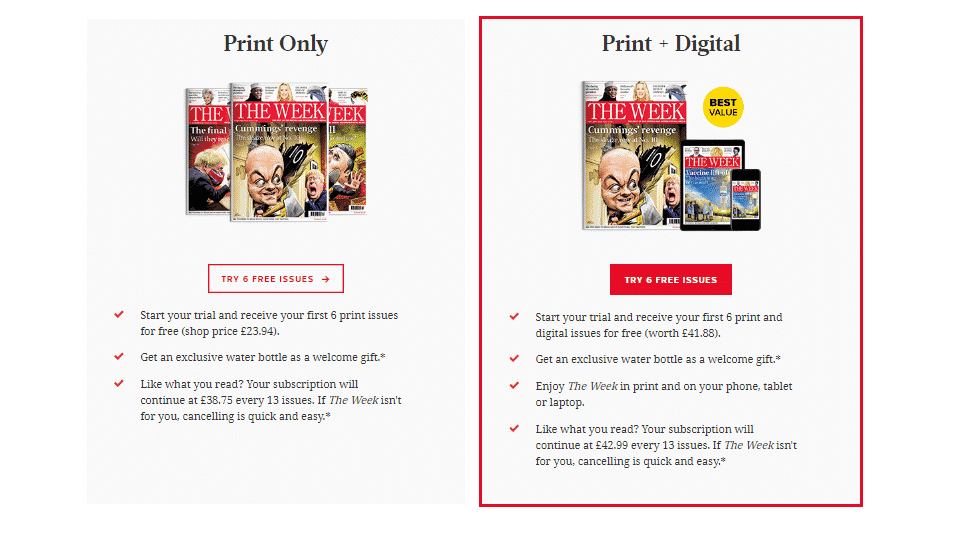
7 Secrets to Boost Sales — The Week Magazine Subscription Free Gift
For magazine brands, what's the best way to get the [...]
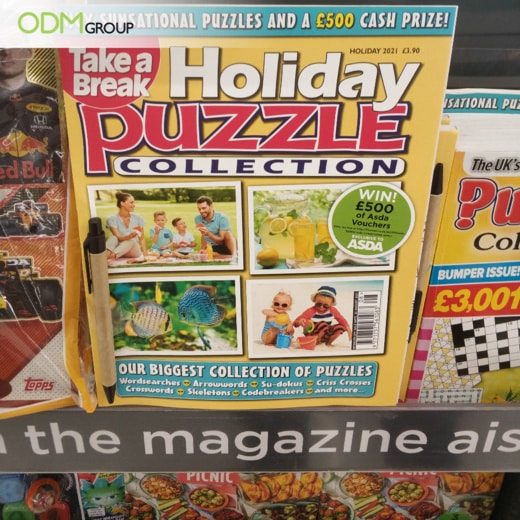
How TAB’s Puzzle Collection Stood Out With Sustainable Branded Merchandise?
Take A Break is one of the most popular women's [...]
Magazine Advertising Ideas: 8 Creative Covermount Promotions
Magazines compete for attention in a crowded retail and media [...]
How TOUR’s Magazine Promotion Idea Stirs Excitement on the Shelves
TOUR Magazine, the ultimate fans’ guide to the 2021 Tour de [...]
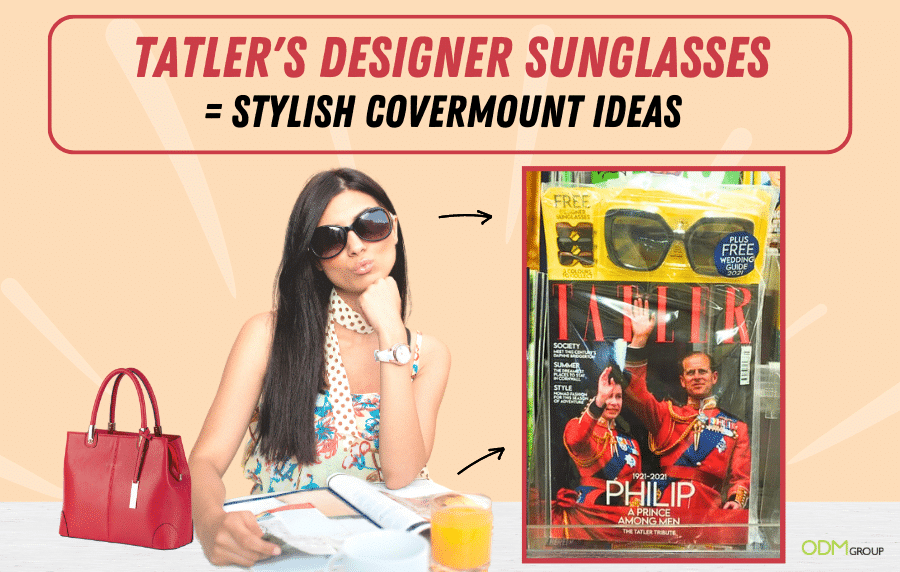
How Tatler’s Free Gift Magazine Flip the Market’s Tough Competition?
While the pages of Tatler never fail to captivate [...]