The real test of promotional merchandise begins after the campaign ends. Does the product stay in use or end up in a drawer?
Custom lunch bags have an advantage: they solve an everyday need while carrying the brand into offices, schools, events, and family outings. Each use can extend a short-term promotion into months of repeated visibility.
But that value is designed, not guaranteed. The strongest lunch bags connect shape, capacity, artwork, materials, and packaging to a clear audience and commercial objective. From children’s bags and employee gifts to retail promotions, this guide shows how brands can turn a familiar product into merchandise people actively want to keep.
Why Lunch Bags Continue to Work as Promotional Merchandise
Many promotional products are used only during an event or campaign. A well-designed lunch bag can remain in a customer’s routine long after the original purchase.
It may travel to an office every morning, appear in a school cafeteria or join a family outing at the weekend. Each use keeps the brand visible in a natural setting. The exposure does not feel forced because the product is performing a practical job.
Promotional lunch bags also give designers more room to work than many small promotional items. The front, back, side panels, lid, handles, zipper pulls and inner lining can all support the concept. A brand can use color, illustration, shape and construction—not only a printed logo—to make the item distinctive.
The commercial value comes from that combination of utility and identity. If either is weak, the product loses impact. A functional bag with generic artwork feels forgettable. A highly creative bag that is uncomfortable or difficult to clean is unlikely to stay in use.
Start With the Campaign, Not the Catalog
Before selecting a shape or fabric, teams should decide what the lunch bag needs to achieve.
Is it designed to increase the value of a multipack? Encourage repeat purchases? Support a product launch? Reward employees? Welcome students? Promote a seasonal event?
Those answers affect every product decision.
A gift-with-purchase bag for a children’s drink may need bright graphics, compact dimensions and an easy-grip handle. An employee lunch tote may require a quieter visual treatment, stronger load capacity and space for containers and a bottle. A picnic promotion may benefit from a shoulder strap, larger insulation area and a wipe-clean lining.
Starting with the objective also helps marketing and procurement teams avoid unnecessary features. More pockets, custom hardware and complex shapes can increase cost and development time. They should be added only when they improve the user experience or campaign idea.
Five Ways Brands Can Use Custom Lunch Bags
1. Children's and education campaigns
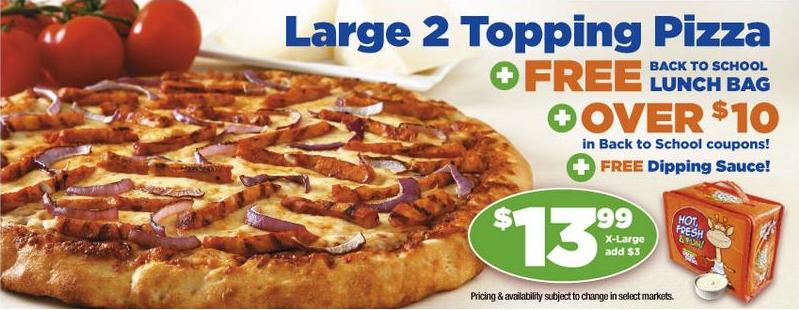
For younger audiences, lunch bags can support enrollment programs, family events and back-to-school promotions.
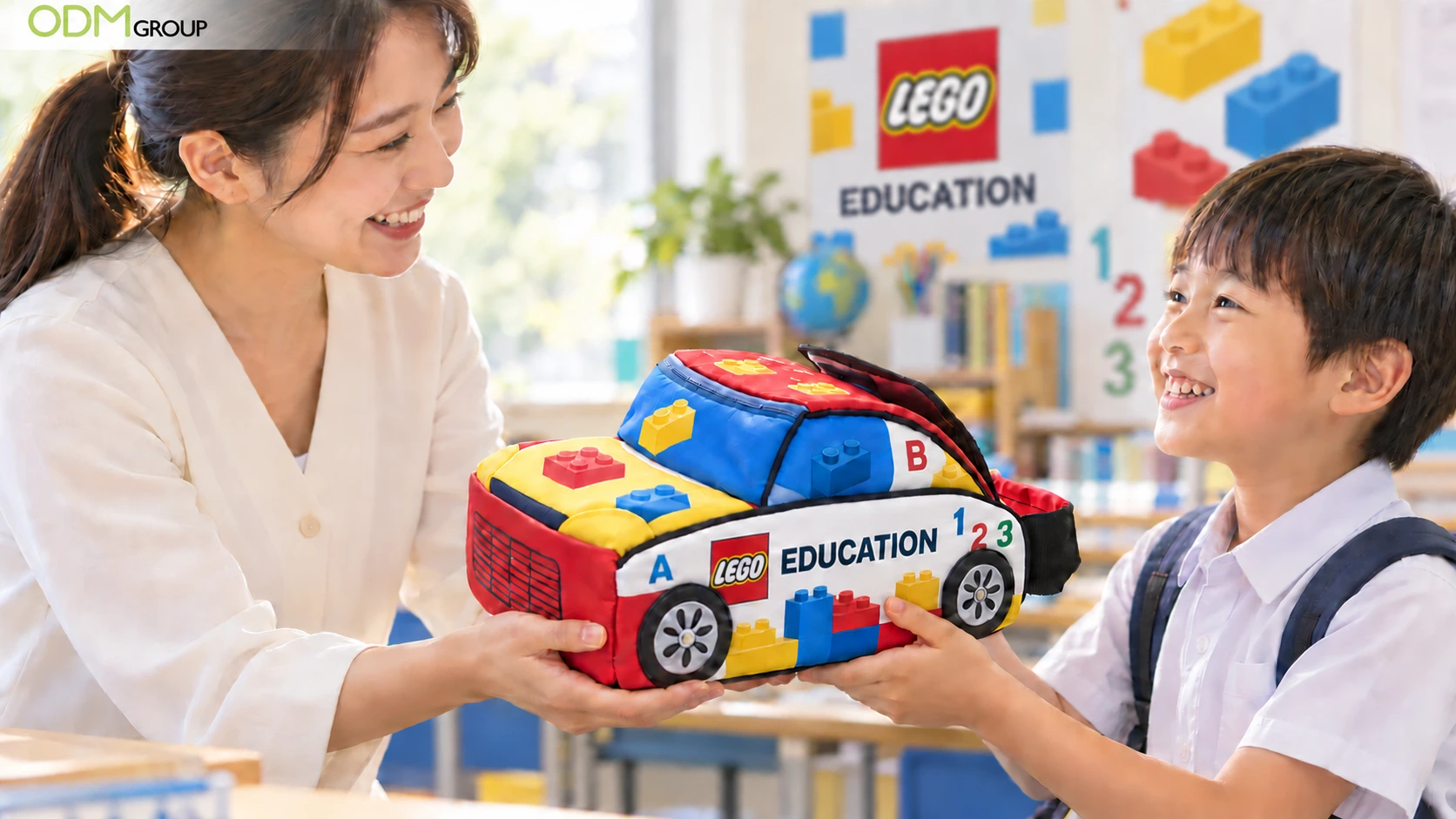
A car-shaped bag, for example, creates more immediate appeal than a standard rectangle. A school or education brand could develop the shape around a vehicle, mascot or learning theme. The handle size, zipper movement and internal capacity still need to suit the child who will use it.
Novelty should never replace usability. A distinctive silhouette is valuable only if the bag remains stable, comfortable to carry and practical to pack.
2. Food and beverage promotions
Lunch bags are a natural fit for drinks, snacks, dairy products and ready-to-eat food. They extend the consumption occasion beyond the product itself.
A beverage brand might offer an insulated bag with a qualifying multipack. A snack company could develop a school-break bag sized for smaller portions. A supermarket could introduce a picnic cooler as a seasonal loyalty reward.
The merchandise should borrow recognizable elements from the primary packaging without becoming a copy of it. Colors, characters and graphic patterns can create continuity, while the finished bag should still look attractive when used away from the retail display.
3. Youth and lifestyle campaigns
Teenagers and young adults often respond to merchandise that feels expressive rather than overtly promotional. Bold color blocks, short phrases, illustrated patches and interchangeable details can give a lunch bag more personality.
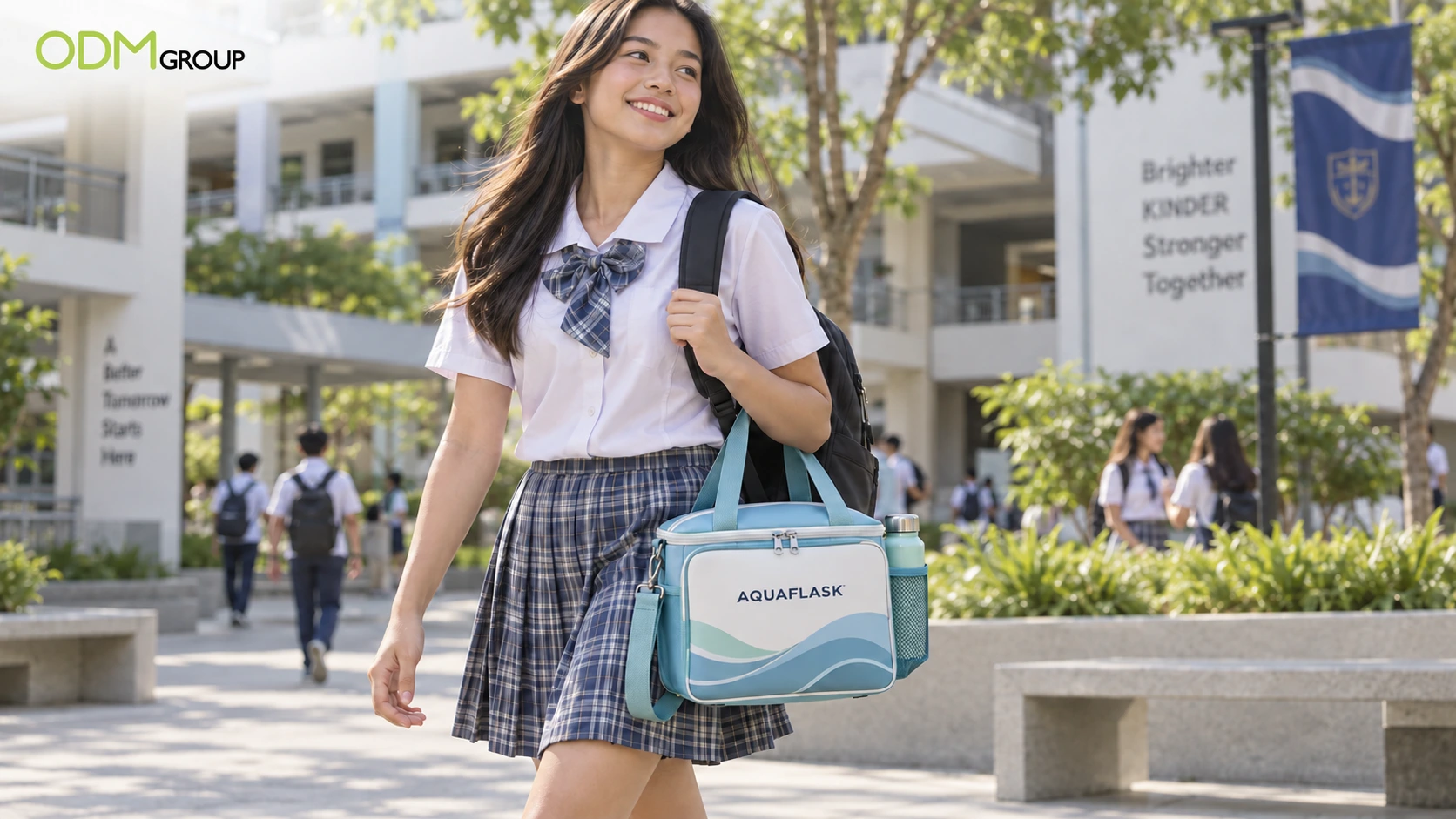
This does not mean covering every surface with slogans. A stronger direction may use one memorable line, a distinctive zipper pull or a graphic system that relates to music, sport, gaming or campus culture.
The brand should decide whether the item is expected to look like campaign merchandise or a product users would choose independently. The second standard usually leads to longer use.
4. Character and licensed merchandise
Licensed characters and brand mascots can be integrated through printed panels, shaped features, ears, appliqués or zipper details. These concepts can help a campaign connect with an established audience.
However, character merchandise requires control. Artwork approvals, color standards and usage rules must be confirmed early. Construction lines can cut through faces or important visual elements if graphic design and sewing patterns are developed separately.
Physical samples are essential. A flat design may look correct on screen but change once fabric is cut, padded and stitched.
5. Product- and service-inspired designs
A lunch bag can take cues from the product being promoted. A beverage container, delivery vehicle, food pack, or recognizable piece of equipment can inspire its shape.
This approach can create strong visual impact at launch events and in retail displays. It also introduces technical questions. Unusual shapes may reduce usable capacity, require extra reinforcement or increase packing volume.
The best solution often balances a recognizable idea with a practical core structure. The product should suggest the brand asset without becoming difficult to manufacture or use.
Retail Example: Mogu Mogu Lunch Bags
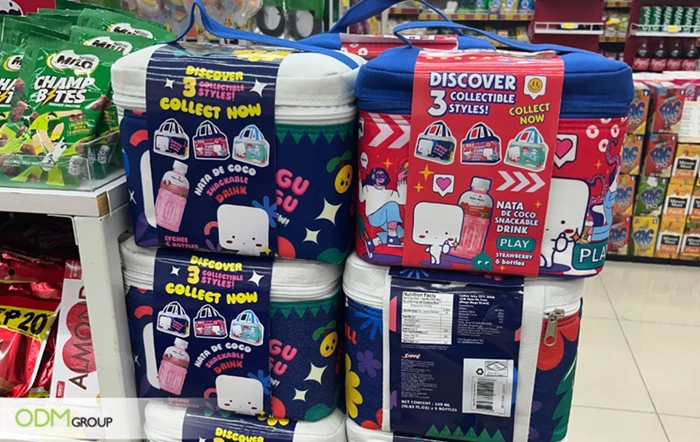
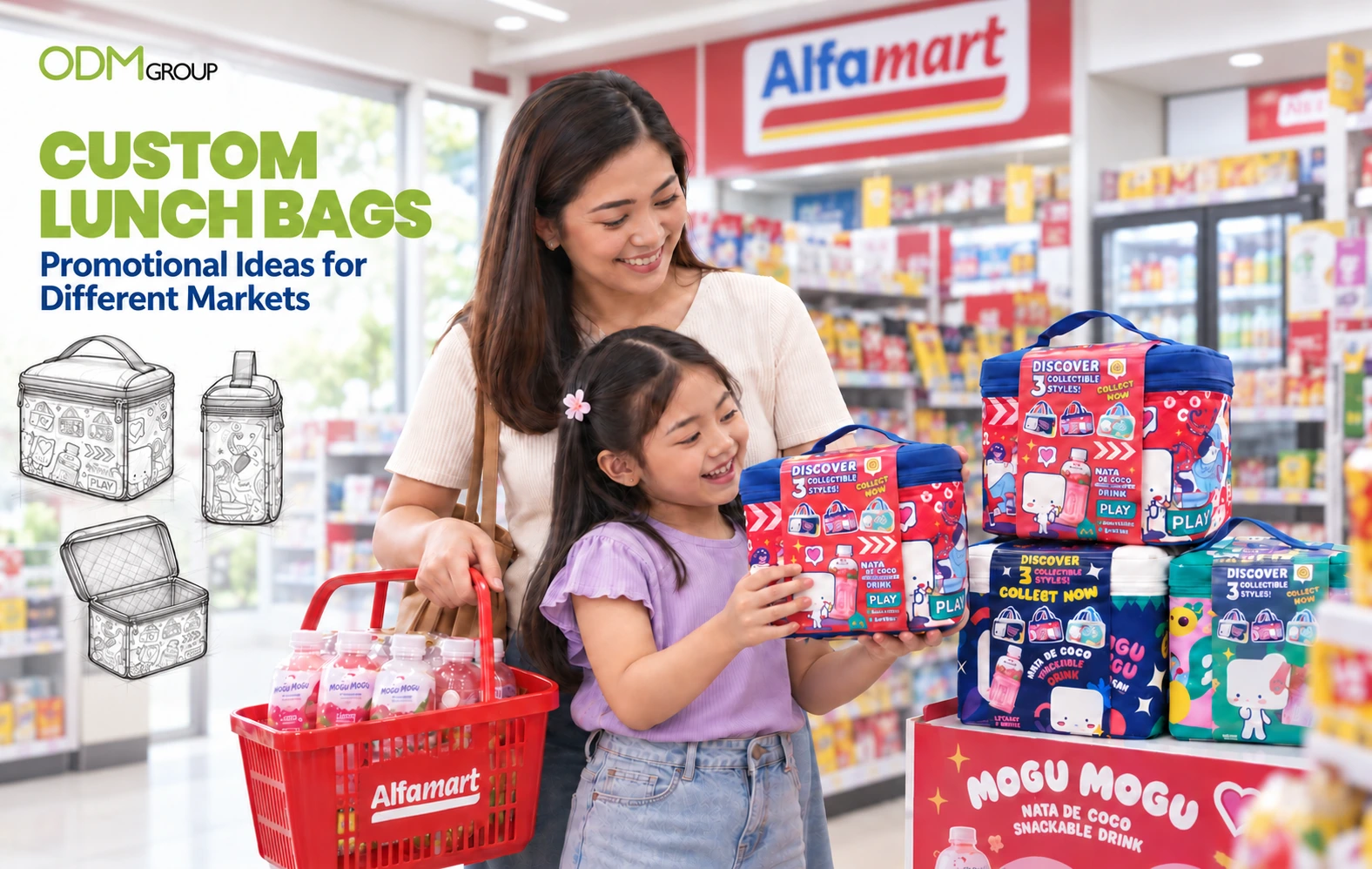
Mogu Mogu lunch bags displayed with qualifying drinks in a retail store
This Mogu Mogu promotion shows how a familiar lunch bag can become part of a broader retail story. The bags use colorful full-panel artwork linked to the drink's playful identity. A printed sleeve connects the merchandise to the qualifying product and shows the available designs.
The bags are placed beside the drinks, making the promotion easy to understand in a busy store. Shoppers can see the gift, identify the participating product and compare the designs without searching for instructions elsewhere.
The example also demonstrates why campaign packaging matters. Without the sleeve, the bag might appear to be a separate retail item. The additional communication turns it into a promotional offer.
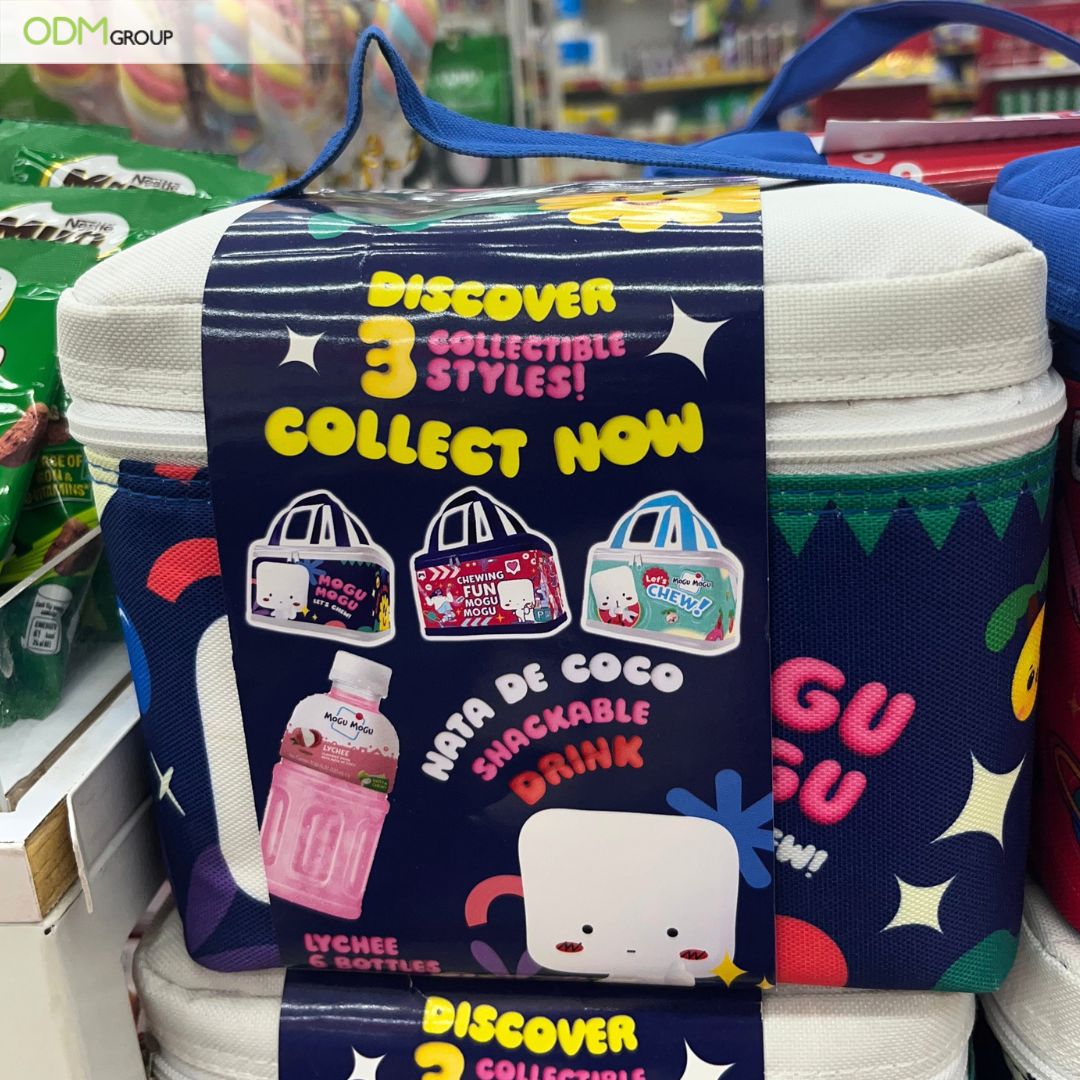
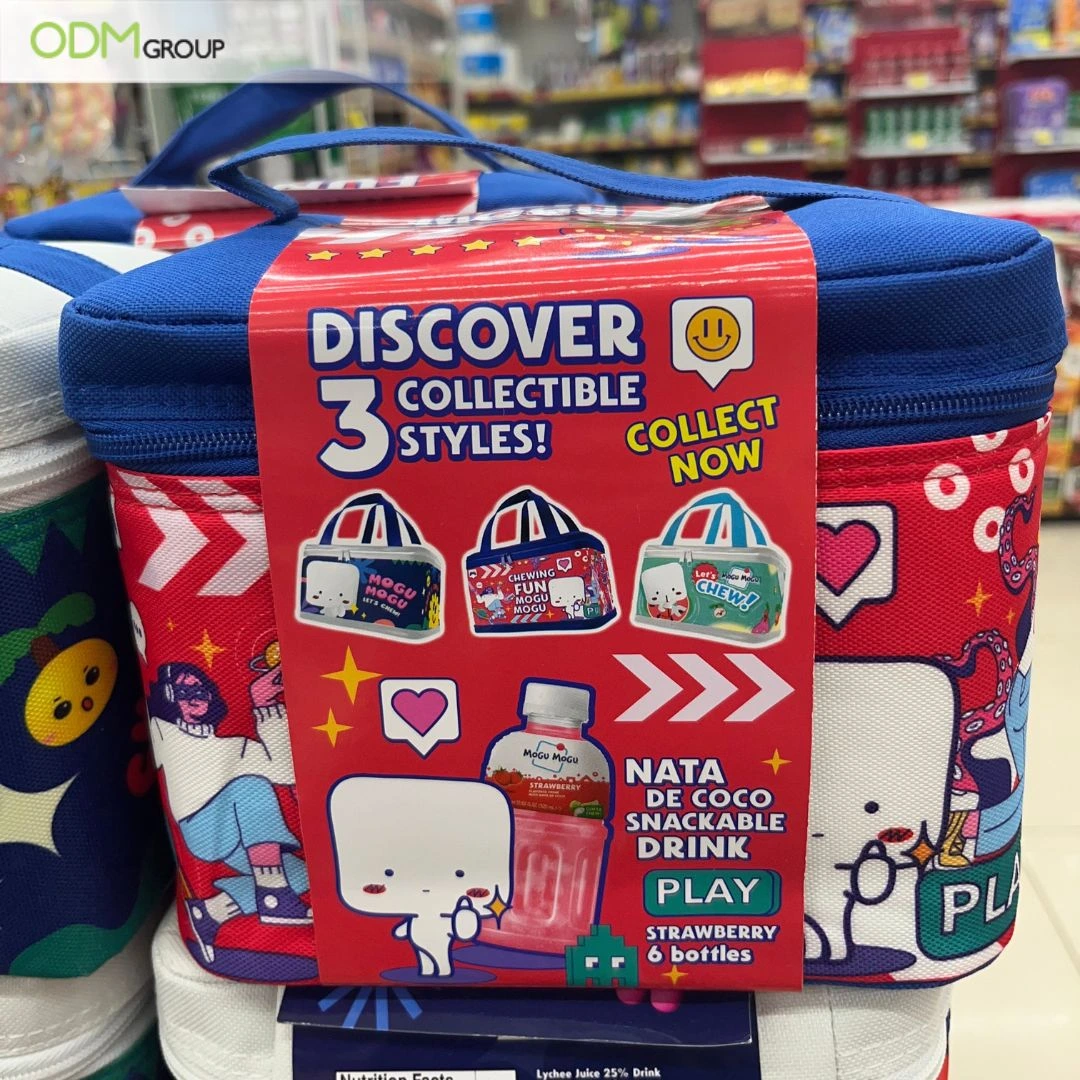
Full-surface artwork gives the bag a stronger identity than a small logo on a blank product. The blue and white trim defines the structure, while the graphic panels create shelf impact.
That execution requires coordination between artwork and construction. Handles, piping, seams and the zip-around lid all affect how the design appears on the finished bag.
More Lunch Bag Ideas
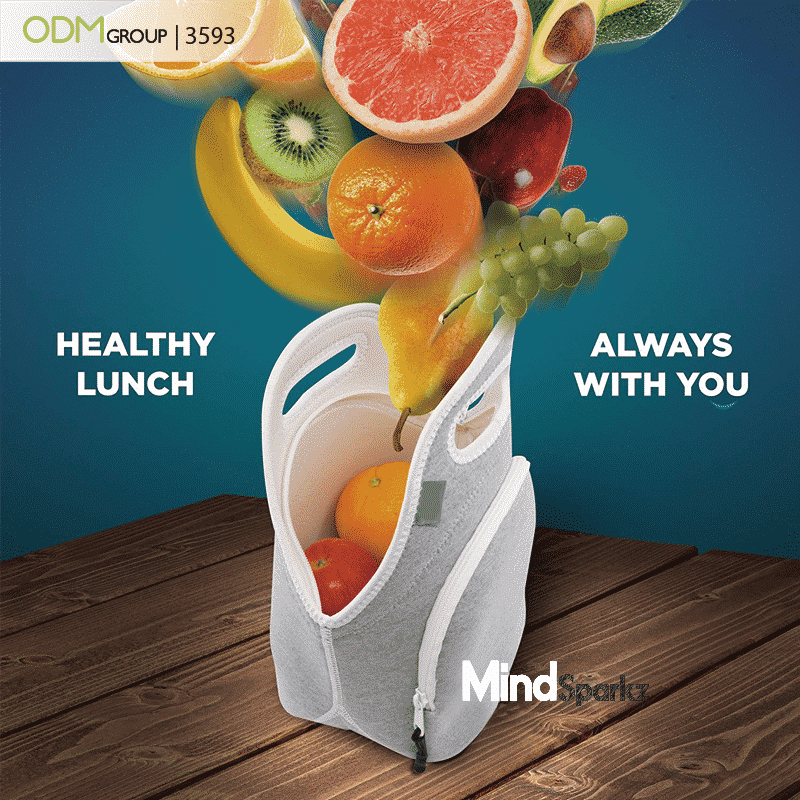
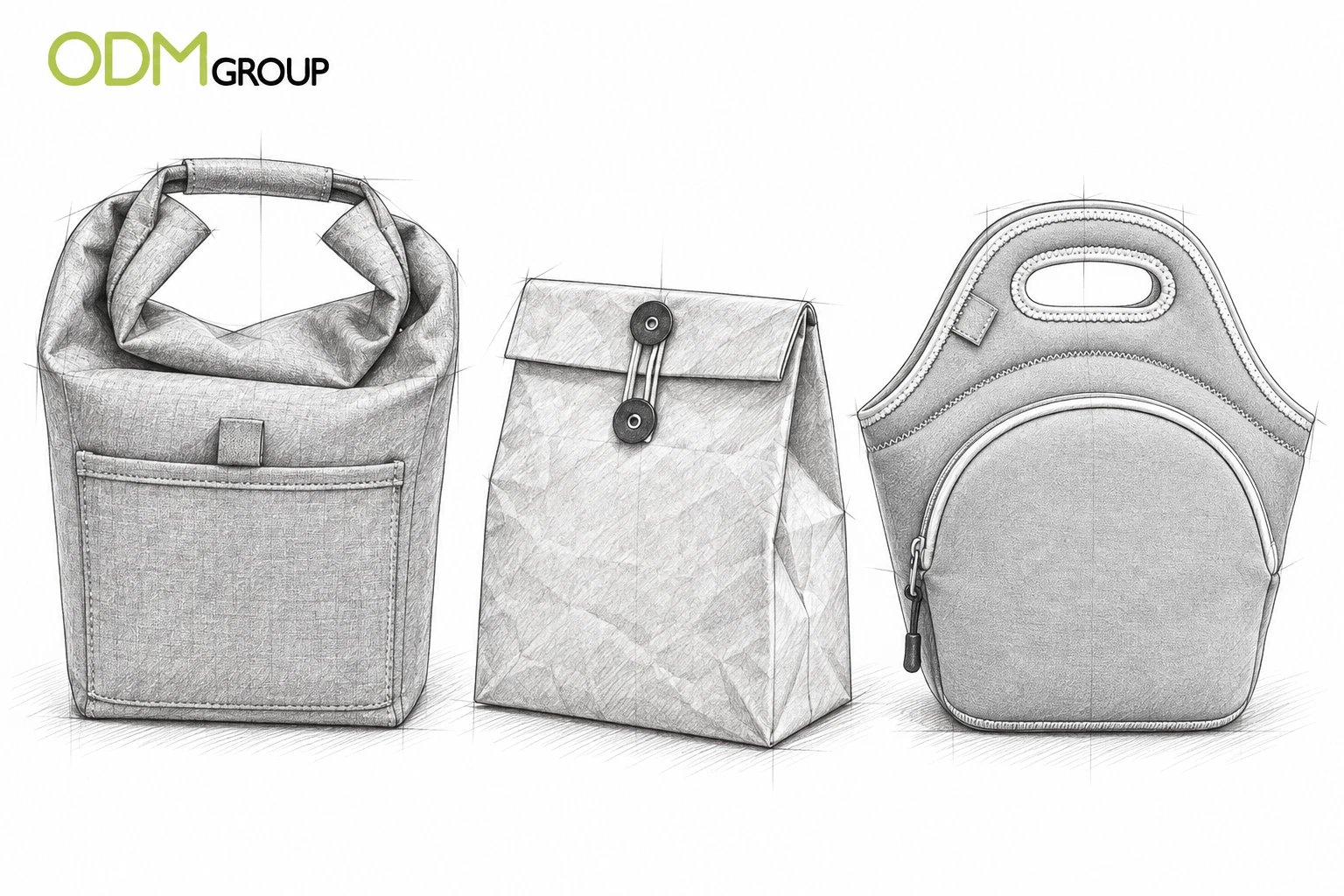
Tyvek lunch bags are long-lasting that can be easily clean and kept sanitary. Just wipe down the surface with soap and water. Tyvek bags are also stain-resistant, so most stains wipe away easily.
Unlike other food bags, the outer of this bag is made from neoprene. This neoprene insulated bag is certainly a handy product for individuals and takeout businesses.
Design Decisions That Influence Quality
Capacity
Teams should define what the user is expected to carry before approving dimensions. A bag may look well proportioned in a rendering but prove too narrow for common lunch containers or too tall for the intended retail pack.
Testing with real contents is more useful than relying only on external measurements.
Insulation
Thermal performance depends on the complete construction: lining, foam, closure, seams, external temperature and whether ice packs are used. There is no universal number of hours that applies to every insulated bag.
If a campaign makes a performance claim, the test conditions should be defined and documented.
Outer material
Polyester is commonly selected because it supports colorful printing and different surface finishes. Recycled polyester may suit campaigns with specific material goals. Other options may be considered depending on appearance, durability, cost and decoration.
Material decisions should be based on the whole product. A fabric that prints well may still require reinforcement around handles or a different treatment near high-wear areas.
Opening and closure
A zip-around lid provides broad access and can make cleaning easier. A flap, drawstring or roll-top closure creates a different visual character but may change insulation and usability.
Zippers should be tested around corners and under load. They are among the first parts users notice when quality is poor.
Handles and carrying options
Handle width, length and attachment should reflect the expected load. A compact children's bag needs a different solution from a commuter tote or family cooler.
Shoulder straps can add value but also add hardware, labor and cost. They should solve a genuine carrying need.
Cleaning
Spills are expected. The lining should be easy to wipe, and inner corners should not trap residue. Odor, color transfer and material response to repeated cleaning should be checked during sampling.
Packaging and POS Are Part of the Product Experience
A promotional lunch bag does not reach the customer in isolation. It may be attached to a multipack, placed in a display, handed over at checkout, or packed inside a gift set.
The distribution method should inform the packaging.
A belly band can show available designs and explain a gift-with-purchase mechanic. A hangtag can communicate materials and care instructions. A carton may protect a more structured premium bag. A POS display can bring the merchandise and qualifying product together.
From First Sketch to Store Delivery
ODM supports the complete development of custom lunch bags, from the initial concept to final delivery. Our team creates design sketches, 3D CAD and prototypes to refine the bag’s shape, materials, insulation, compartments and branding before production begins.
We also coordinate manufacturing, quality control, packaging and logistics. For retail campaigns, ODM can develop supporting POS displays and promotional packaging that connect the lunch bag with the wider brand experience. This integrated approach helps reduce production risks and maintain consistency across the product, packaging, and in-store presentation.
The Strategic Value of a Custom Lunch Bag
A lunch bag is not automatically effective because it is practical. Its value depends on how well it connects the brand, audience, product and distribution environment.
The examples in this article show several possible routes: playful retail graphics, youth-focused phrases, licensed characters, shaped children's bags and designs inspired by a brand's product or service.
The strongest direction will not always be the most elaborate. It will be the one customers understand quickly, enjoy using and associate naturally with the brand.
That requires creative thinking, technical development and operational planning to move together. When the bag, packaging and retail presentation are developed as one system, a familiar everyday product can become a much stronger promotional asset.
Ready to develop a custom lunch bag for your next campaign? Contact ODM to discuss design, prototyping, production, packaging and retail display options.
More Product Ideas


Frequently Asked Questions
What materials are used for custom lunch bags?
Common options include polyester, recycled polyester, non-woven fabric and coated textiles. Insulated versions may combine an inner lining with foam. The best specification depends on the design, intended use, decoration method, durability target and budget.
How long do insulated lunch bags keep food cold?
Performance varies according to insulation, closure, ambient temperature, contents and use of ice packs. Brands should test the intended construction under defined conditions before publishing a performance claim.
Can a lunch bag be made in a custom shape?
Yes. Textile patterns can be developed around characters, products, vehicles or campaign themes. Complex shapes may affect usable capacity, sampling time, reinforcement, packing volume and cost.
What is the best printing method for a promotional lunch bag?
It depends on the fabric and artwork. Full-surface printing suits detailed patterns, while screen printing works well for simpler graphics. Heat transfer, embroidery, woven labels and molded patches may support other design directions.
Latest Blogs
Bottle Necker Design: Creative Ideas for Your Next Promotion
A bottle necker gives a brand a little extra [...]
Press-and-Spin Toy: A Playful Twist on Custom Promotional Products
Promotional products are more memorable when they offer more [...]
Customized Cluster Bells: Inspiring Promotional Gift Ideas for Baby Brands
Customized Cluster Bells offer an interesting example of how [...]
Airplane Promotional Products: How STARLUX Airlines and CITY PRIMA Engage Customers
Airplane promotional products can do more than display a brand [...]
Event Branding Ideas: Make Every Touchpoint a Brand Experience
Event branding ideas turn separate venue elements into one [...]
Waterproof Camping Blanket: Take Your Brand Into the Outdoors
A waterproof camping blanket gives brands a useful role [...]