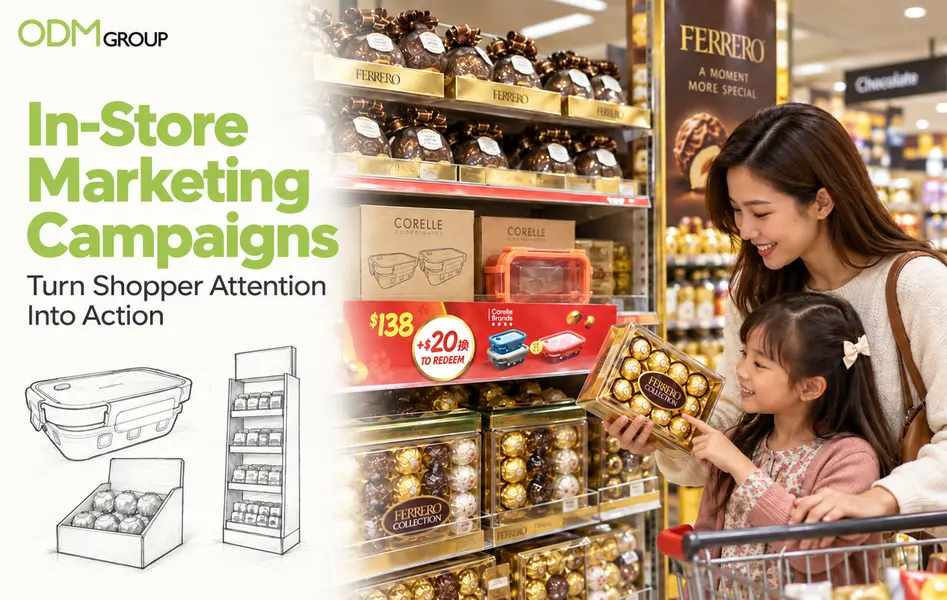
An effective in-store marketing campaign does more than place a discount sign beside a product. It gives shoppers a clear reason to notice, consider, and act while they are already close to making a purchase.
From gift-with-purchase rewards and collectible merchandise to branded displays and seasonal packaging, the strongest campaigns connect the promotional mechanic, physical execution, and commercial objective. For brands, this means planning not only what shoppers will receive, but also how the offer can influence product trial, basket value, and repeat engagement.
Why In-Store Marketing Still Matters
1. It Influences Decisions Close to Purchase
Shoppers do not always enter a store committed to one brand. A visible display, useful reward, or compelling bundle can interrupt routine purchasing behavior and encourage them to consider another option.
This is particularly valuable in crowded categories where competing products have similar pricing or functional benefits. The campaign provides an additional reason to choose one brand over another without relying entirely on a price reduction.
2. It Can Increase Basket Value
Promotions can encourage customers to purchase more when the redemption threshold is carefully set. A shopper may add another participating item to qualify for a gift or reach the required spending level.
The threshold must remain achievable. If it feels excessive relative to the reward, customers may ignore the offer. Brands should compare the gift’s perceived value with the additional spending they want to generate.
3. It Improves Product Visibility
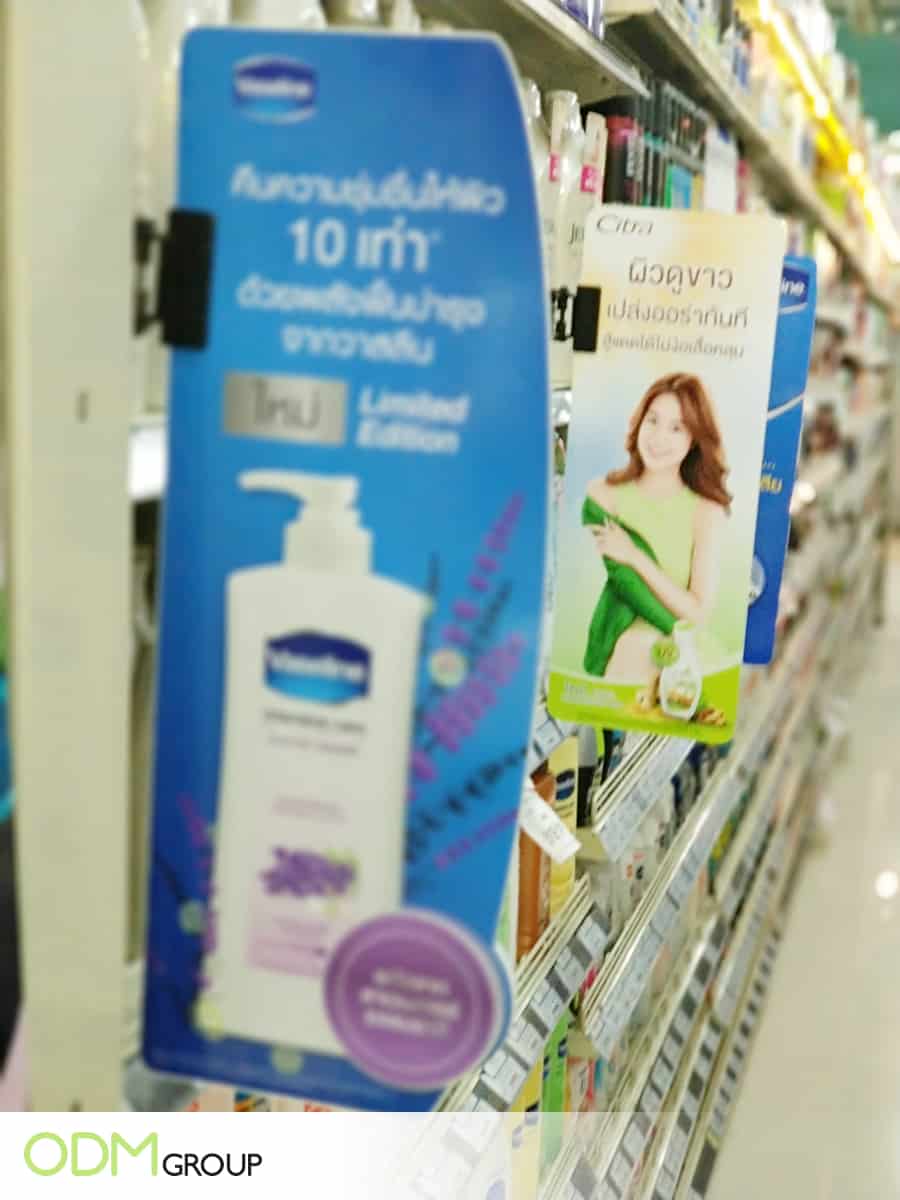
Retail shelves compete for attention. Branded displays, shelf communication, promotional packaging, and visible reward samples can help a product stand apart from surrounding options.
Visibility alone, however, is not enough. The display must explain the offer quickly and direct attention toward the participating product. A visually impressive unit that creates confusion can become an obstacle rather than a sales tool.
4. It Creates a More Memorable Brand Experience
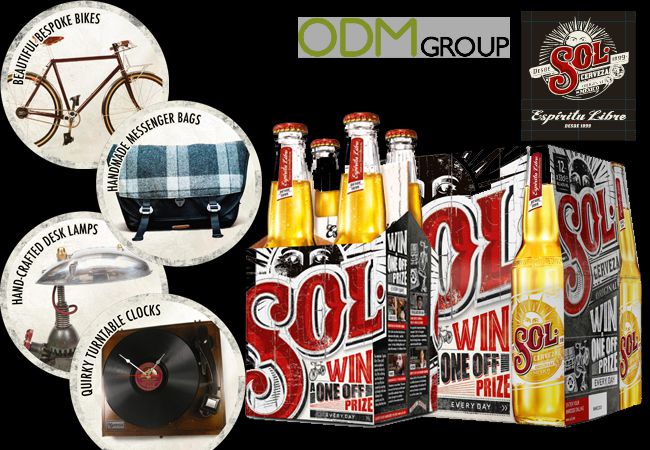
Physical rewards give shoppers something they can use, display, or share after the transaction. This can extend brand exposure beyond the store and make the campaign more memorable than a temporary discount.
Collectibles can take this further by encouraging repeat visits. When several designs are released in stages, customers have a reason to return and continue engaging with the campaign.
In-Store Campaign Example: Seasonal GWP and PWP Offers
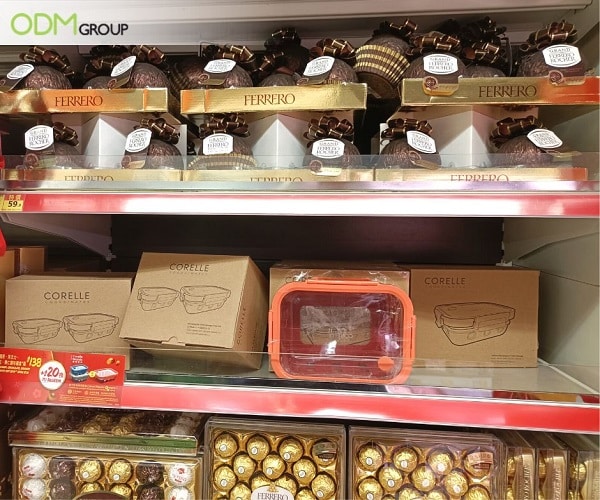
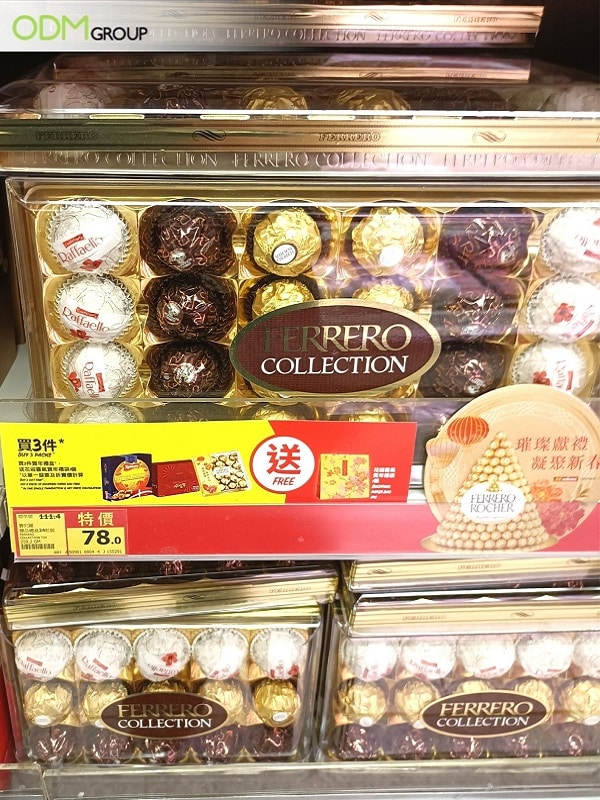
During Chinese New Year, a retailer in Hong Kong used two complementary promotional mechanics: a purchase-with-purchase offer featuring branded lunch boxes and a gift-with-purchase offer featuring seasonal paper bags.
1. Purchase With Purchase: Branded Lunch Boxes
Customers who purchased qualifying confectionery and gift products worth HK$138 could add HK$20 to redeem a Corelle lunch box. Several capacities were presented, including 370 ml, 640 ml, and 1,050 ml options.
The promotion had several commercially useful qualities:
- The reward came from a recognizable housewares brand.
- Its practical function supported strong perceived value.
- The qualifying purchase encouraged shoppers to add more to their baskets.
- The small top-up helped distinguish the offer from a standard giveaway.
- Multiple sizes made the merchandise feel more like a considered collection.
Rather than discounting the participating products directly, the retailer added value to the transaction. This can help protect product positioning while still giving shoppers an incentive to spend more.
2. Gift With Purchase: Chinese New Year Paper Bags
The retailer also offered a Chinese New Year-themed paper bag when customers purchased three qualifying festive products on a single receipt.
Although simpler than the lunch-box promotion, the bag supported the seasonal shopping occasion. It could package purchases, make them more giftable, and extend the campaign beyond checkout.
The lesson is not that every brand should offer a paper bag. It is that the reward should have a clear role in the shopping journey. Useful packaging can become part of the promotion when its design, timing, and function are relevant to the occasion.
In-Store Marketing Campaign Ideas for Brands
The right format depends on the objective, product category, retail environment, and available lead time.
Gift With Purchase
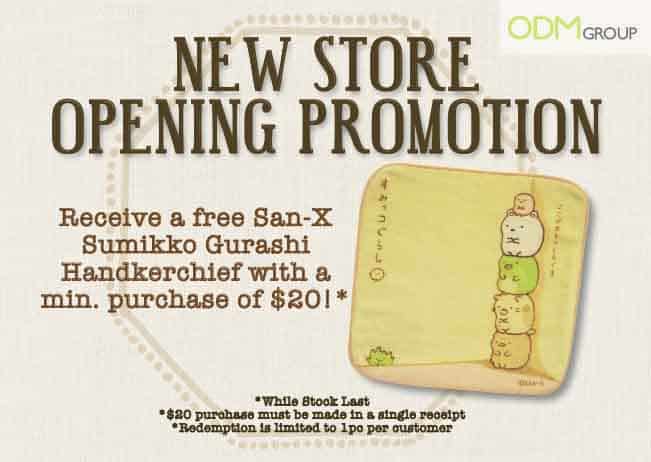
Customers receive a free item after purchasing a specified product, quantity, or value. GWP campaigns work well for encouraging trial, supporting launches, and adding value without reducing the main product’s price.
Purchase With Purchase
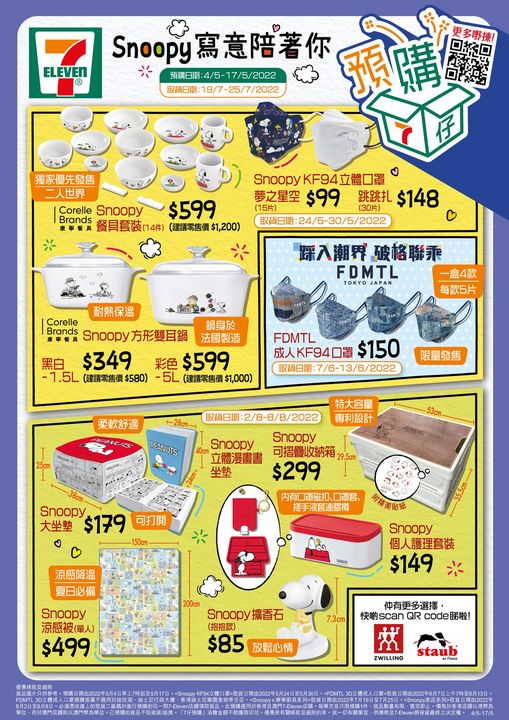
Customers gain access to an exclusive product at a reduced price after meeting the purchase condition. PWP works best when the reward has an obvious retail value and feels difficult to obtain elsewhere.
Collectible Reward Series
A campaign can feature several characters, colors, designs, or seasonal editions. Staggered releases may encourage repeat purchases, but brands must carefully plan assortment ratios and replenishment.
Collectible merchandise is a series of related promotional products. Each item may feature a different character, color, illustration, or shape, but all products belong to the same campaign.
Branded Bundles and Promotional Packaging
Packaging can combine participating products, improve giftability, or communicate a limited-edition story. It can also simplify the offer for retail teams by presenting the promotion as one ready-to-sell unit.
Interactive POS Displays
Displays can incorporate product demonstrations, samples, motion, lighting, QR codes, or simple challenges. Any interactive feature should support the buying decision rather than distract from it.
A product display shelf, as the name suggests, allows for products to be displayed in a pleasing and eye-catching manner.
Loyalty-Based Redemptions
Instead of rewarding one transaction, brands can allow customers to collect stamps, points, or digital credits over several visits. This structure is useful when repeat purchasing is more important than a one-time sales lift.
How to Plan an Effective In-Store Marketing Campaign
1. Start With One Primary Objective
Decide whether the campaign should increase trial, basket value, repeat visits, product visibility, or sales of a specific range. Trying to achieve every objective at once can make the promotion difficult to communicate and measure.
2. Define the Shopper Action
Translate the objective into a simple behavior. This may be buying two products, reaching a spending threshold, trying a new flavor, scanning a code, or returning to collect another design.
Store staff and customers should be able to understand the mechanic in seconds.
3. Select Merchandise With a Strategic Role
The reward should suit the audience, brand, price point, and campaign occasion. Practicality is valuable, but relevance matters just as much. A generic item with a logo may deliver less impact than a product developed around the brand’s identity or the way customers use its core product.
Brands should evaluate:
- Audience relevance
- Perceived value
- Branding visibility
- Product safety and compliance
- Packaging requirements
- Production lead time
- Target cost and quantity
- Shipping and storage volume
4. Set a Viable Redemption Threshold
Use existing sales data to estimate how much additional spending customers may accept. The reward cost, retailer margin, projected redemption rate, and campaign objective should all inform the threshold.
A campaign can fail in two directions: an offer that is too difficult attracts little participation, while an offer that is too easy can exhaust stock without generating sufficient incremental value.
5. Design the Merchandise, Packaging, and POS as One System
The reward should not be developed in isolation. Its packaging, display method, redemption message, and position in the store all influence whether shoppers understand its value.
Consistent design across these elements makes the campaign easier to recognize. Prototypes and store mockups can also reveal practical problems before production, including unstable displays, difficult replenishment, unclear copy, or packaging that occupies too much shelf space.
6. Forecast Inventory and Store Allocation
Brands should estimate redemption by location, sales volume, and campaign phase. High-performing stores may require more stock, while a contingency quantity can help manage unexpected demand.
The plan should also specify what happens when a particular design or reward runs out. Clear substitution and communication rules can prevent customer frustration and inconsistent store execution.
7. Prepare the Retail Team
Store staff need concise instructions covering eligibility, redemption, stock handling, campaign dates, and customer questions. Even a well-designed promotion can underperform when it is explained differently across locations.
8. Measure More Than Total Redemptions
Redemption volume shows participation, but it does not provide the full commercial picture. Depending on the objective, brands may also track:
- Sales uplift for participating products
- Change in average basket value
- New-product trial
- Repeat purchase or store visits
- Cost per redemption
- Sell-through by location
- Reward stock remaining
- QR scans or digital engagement
Defining these measures before launch makes post-campaign evaluation more useful.
Common In-Store Campaign Risks
The Reward Has Little Brand Relevance
A popular product may drive short-term redemption, but it will not necessarily strengthen brand recall. Custom form, color, packaging, or function can create a more credible connection.
The Promotion Is Difficult to Understand
Too many qualifying products, spending levels, dates, or redemption steps create friction. Lead with one clear message and place detailed terms where customers can access them without overwhelming the main display.
Merchandise Arrives After the Launch
Custom products require time for design, sampling, approvals, production, quality control, and shipping. Campaign dates should be planned backward from the required in-store delivery date, with contingency time for revisions.
Stock Is Distributed Inefficiently
Equal allocation across stores may not reflect real sales patterns. Forecasting by store performance and monitoring redemption during the campaign can reduce both shortages and excess inventory.
The Display Does Not Work in the Retail Environment
A POS unit may look effective in a rendering but create problems during installation, replenishment, or daily store operations. Dimensions, load capacity, assembly, retailer guidelines, and shopper flow should be confirmed during development.
How ODM Supports In-Store Campaign Development
An in-store campaign involves more than selecting a promotional item. The reward, packaging, retail display, production plan, and delivery schedule must work together to create a consistent and commercially viable experience.
The ODM Group helps brands turn campaign objectives into manufacturable physical solutions. Working with our design team at Mindsparkz, we support campaign ideation, merchandise development, industrial sketching, 3D visualization, custom packaging, and POS display design. We also provide guidance on suitable materials and production methods before moving concepts through prototyping and pre-production sampling.
Once a design is approved, our team coordinates factory selection, production, quality control, compliance requirements, packaging, freight, and multi-market delivery. By considering cost, usability, retail presentation, and logistics from the beginning, we help brands reduce execution risks and develop in-store campaigns that are practical to produce and easier to scale.
See how other brands ran their in-store marketing effectively…
Exclusive Merchandise Ideas: How Did 7-Eleven Excel This Conveniently?
Convenience stores are meant to make procurement of necessities [...]
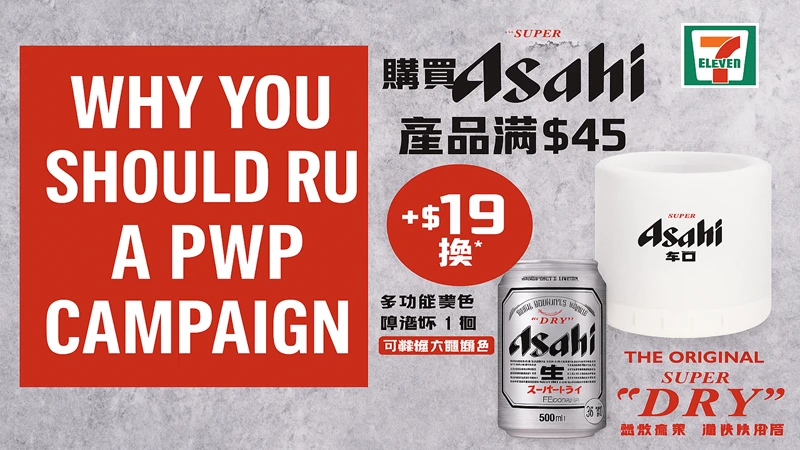
Top 7 Reasons Why Should You Run a Promotional PWP Offer In-Store
Asahi Super Dry's recent promotional PWP offer proves how [...]
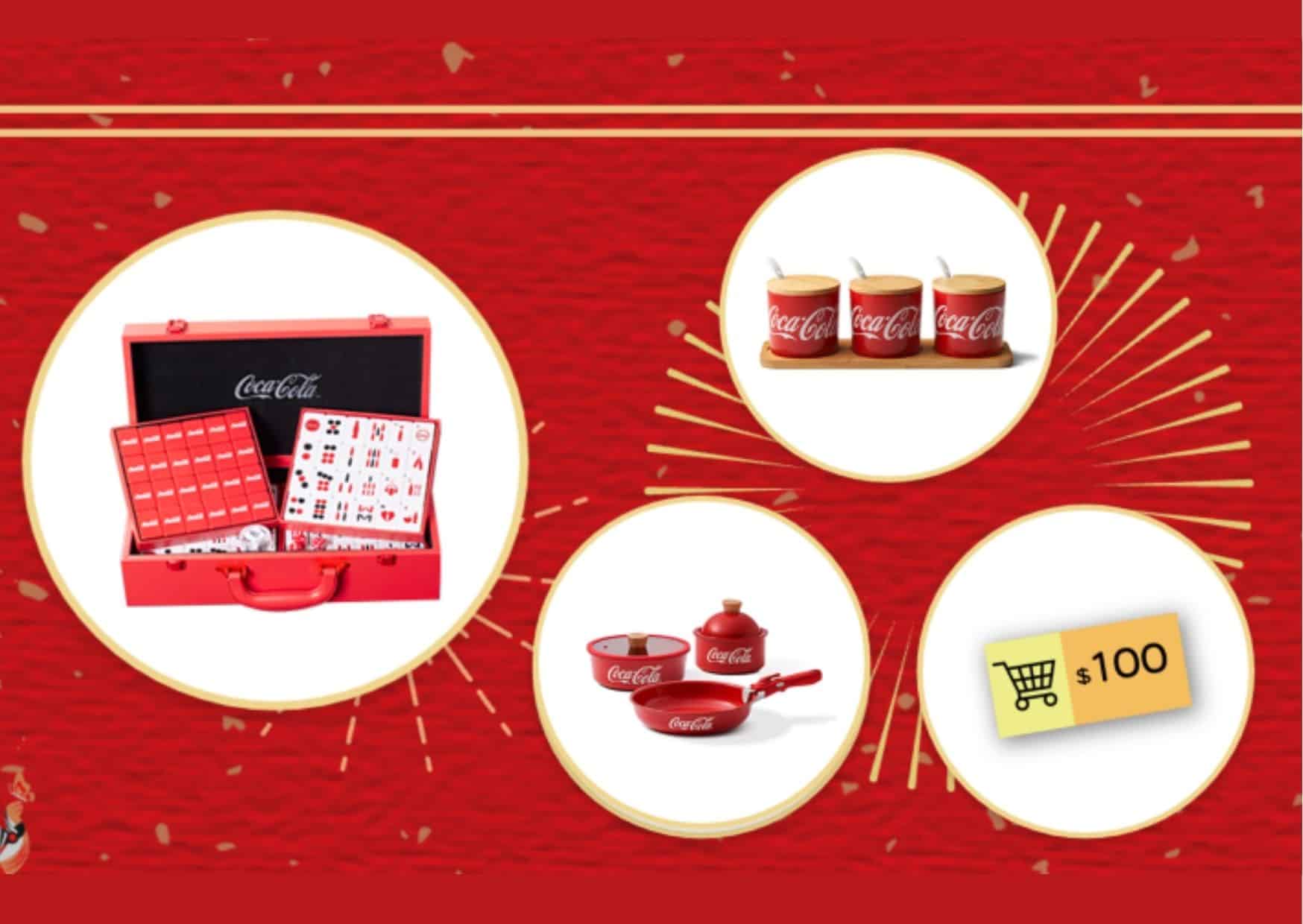
Customer Incentive Ideas: 5 Valuable Tips from Coca-Cola PWP Promo
Consumers repeatedly buy when they feel valued. Hence, businesses [...]
Promotional gift items to consider for PWP and GWP promotion…
If you are also planning to run such marketing campaigns, here are some of our top picks PWP and GWP items you might consider.
Desktop items are one of the most practical GWP items you may consider. Not just cost-effective, they also work perfectly for almost any kind of product and brand.
Bar and drinks essentials are also another effective PWP/GWP merchandise you can offer. You don’t need to look for an expensive one. You only need to be wise in finding which will work for your business.
Not just creative, these water bottle ideas are surely useful and practical. Attractive and high;u-functional, these will make a perfect addition to your GWP merch ideas.
Final Thoughts
In-store marketing campaigns can be done in a variety of ways. It can be offering free promotional products, running an in-store competition, holding a store event, utilising POS displays, and many more. All these can make your brand stand out from the competition unless you know how to implement them effectively.
Thus, if you feel like you’re lacking the skills and resources to create the right one for your business, it’s time for you to ask for help from professionals. We, at the ODM Group, have been in the marketing and sourcing industry for almost two decades. With our years of experience, we can help you run an in-store marketing campaign that will surely help you sell your products.
We can assist you in designing and creating POS display units for your in-store promotion, gift with purchase ideas, and other promotional products. If you want to learn more about the products and services we offer, feel free to contact our team today. ODM and our designer from Mindsparkz are here to help you turn your ideas into reality!
More Product Ideas


FAQs about In-Store Marketing Campaign
What makes an in-store marketing campaign effective?
An effective campaign connects a clear shopper action with a relevant incentive and visible point-of-sale communication. It should also be easy for retail teams to explain and simple for customers to redeem.
How should brands choose merchandise for an in-store promotion?
Merchandise should appeal to the intended audience, support the brand story, and offer sufficient perceived value. Cost, quantity, production time, packaging, compliance, and distribution requirements should also be evaluated before the concept is approved.
What is the difference between GWP and PWP?
A gift with purchase is provided free when a customer meets the required purchase condition. A purchase with purchase gives the customer access to an additional promotional item, usually at a reduced or exclusive price.
What to Read Next?
Event Branding Ideas: Make Every Touchpoint a Brand Experience
Event branding ideas turn separate venue elements into one [...]
Waterproof Camping Blanket: Take Your Brand Into the Outdoors
A waterproof camping blanket gives brands a useful role [...]
Custom Letter Envelope Opener Ideas for Corporate Gifts
A letter envelope opener may be a simple desk [...]
LED Screen Backpack: Smart Walking Billboards for Campaigns
Static outdoor signage and traditional promotional merchandise [...]
Marketing Gift Game Ideas to Connect Teams Through Play
A marketing gift game can offer much more than [...]
Food Cooling Fan: Make Your Brand Mascot Part of the Meal
A food cooling fan may seem like a simple [...]