
A promotional keychain can do more than carry a company logo. With the right concept, it can encourage repeat purchases, strengthen brand recognition and give customers something they genuinely want to collect.
Bo’s Coffee demonstrated this with a holiday promotion featuring miniature coffee equipment keychains. Instead of choosing a generic giveaway, the brand transformed familiar café tools into small pieces of branded merchandise. The result was a gift that connected directly to its products and the experience customers associate with the brand.
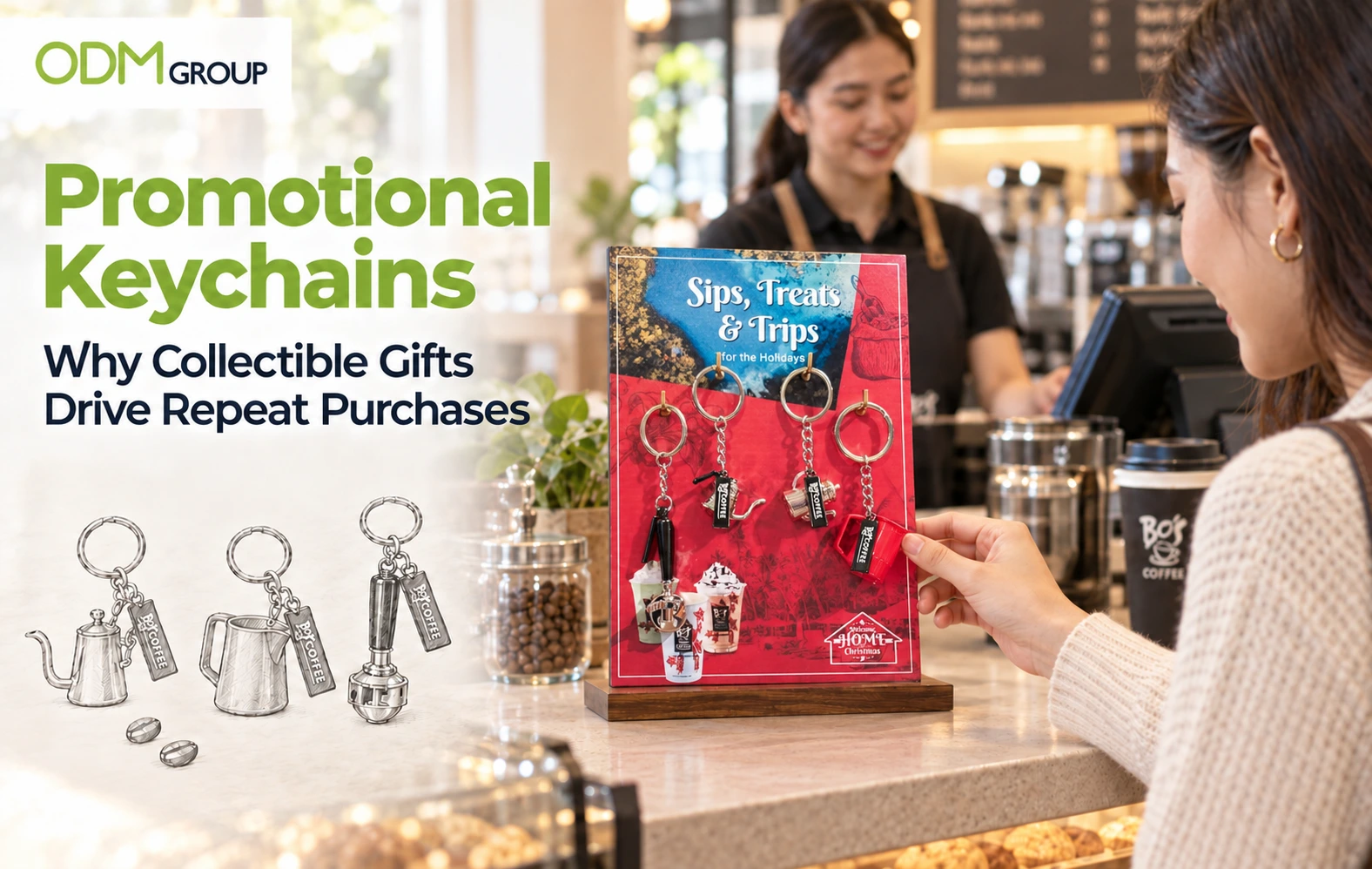
A Closer Look at the Bo’s Coffee Promotion
The holiday promotion featured a collection of keychains inspired by coffee-making equipment. Customers could receive one after meeting the required purchase condition.
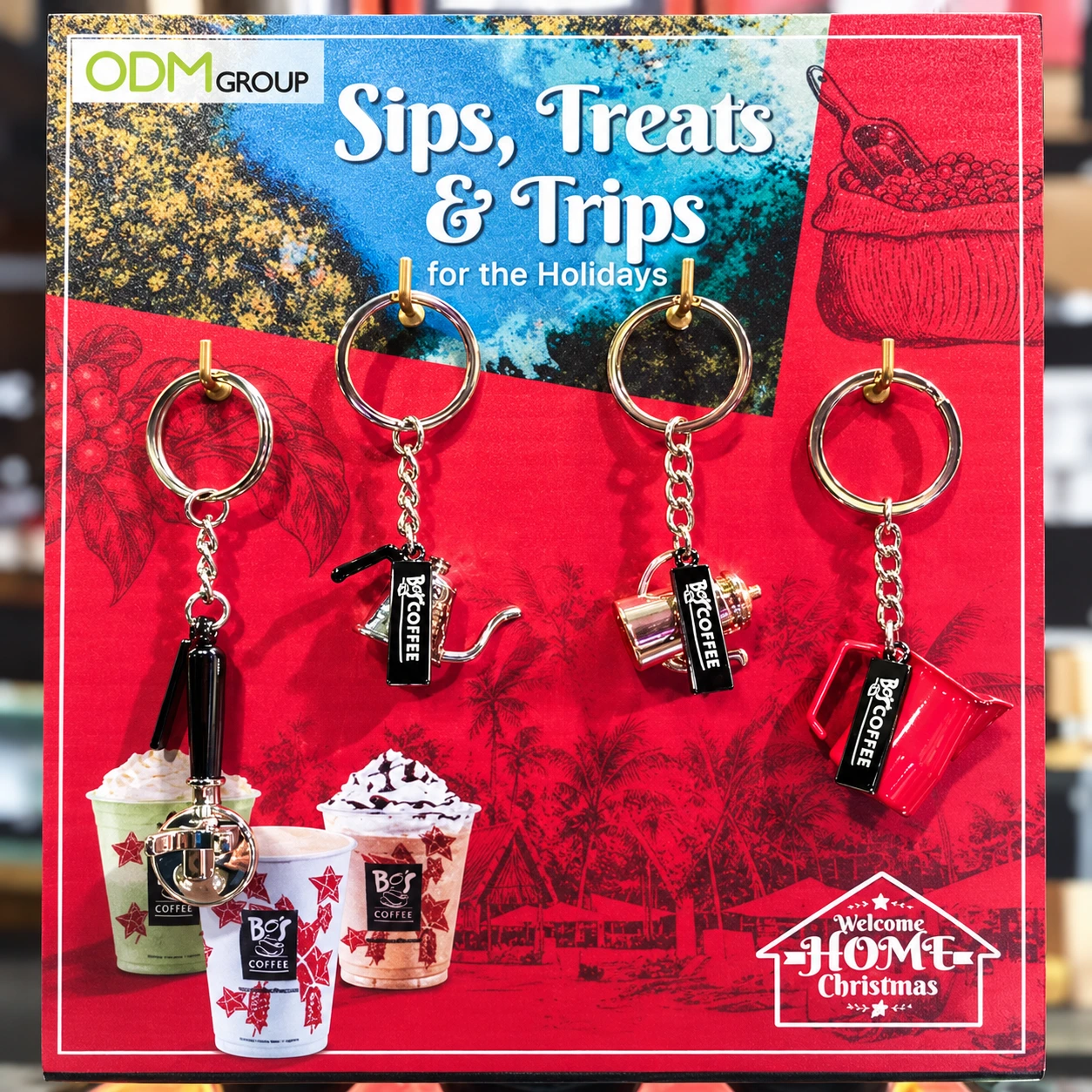
The miniature format made the designs playful and recognizable. Each piece also represented an important part of coffee culture, giving the collection a stronger connection to Bo’s Coffee than a standard logo-shaped keychain would have achieved.
Customers could attach the keychains to their keys, bags, or pouches. This extended the campaign beyond the point of purchase and allowed the brand to remain visible in everyday settings.
Why This Collectible Keychain Promotion Works
1. The Products Reflect the Brand
The strongest promotional merchandise usually has a clear reason to exist. It should connect with the brand, its products, or the experience it offers.
For Bo’s Coffee, miniature coffee tools were a natural choice. Customers could immediately understand the relationship between the gift and the business. The keychains reinforced the café experience without relying on a large printed logo to communicate the brand.
This is an important lesson for marketers. A recognizable product shape can sometimes create a stronger association than branding alone.
2. Multiple Designs Encourage Collecting
A single keychain may motivate one purchase. A coordinated series can give customers a reason to return.
When a promotion includes several designs, customers may want to collect their favorites or complete the full set. This can support repeat visits and additional purchases throughout the campaign.
The designs should still feel connected. A shared scale, color palette, packaging style, and visual language can make separate products look like one deliberate collection.
Brands can also use limited releases or staggered launches to maintain interest. However, the redemption rules and availability of each design should always be communicated clearly.
3. The Gift Adds Value to a Purchase
Keychains are compact, but that does not mean they must feel disposable. Detailed molding, suitable materials and a well-developed theme can turn a small item into a desirable gift with purchase.
The Bo’s Coffee promotion gave customers an additional reward for reaching the qualifying spend. This type of mechanic can help encourage a larger transaction while keeping the offer simple to understand.
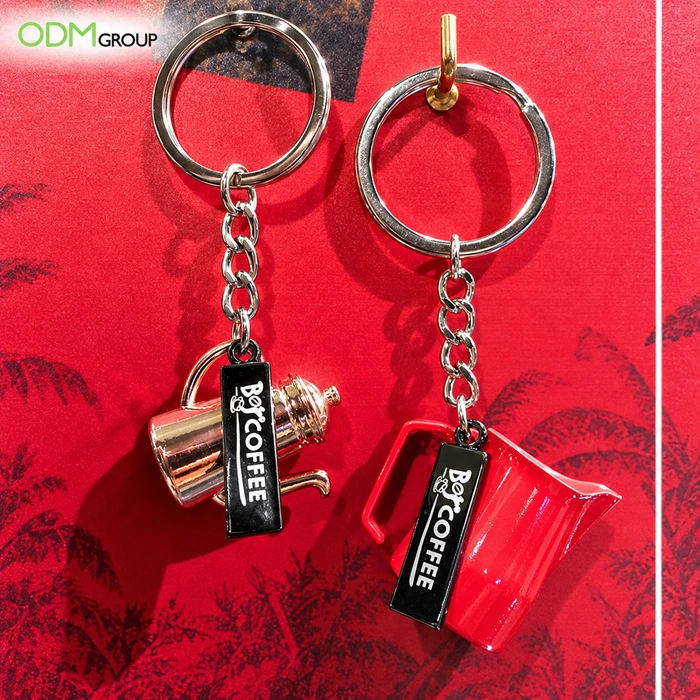
The perceived value of the gift matters. Customers are more likely to respond when the product looks intentional, useful or collectible rather than like an inexpensive item carrying a logo.
4. The Campaign Creates Everyday Brand Visibility
Custom keychains travel with customers. They may be attached to house keys, car keys, backpacks, handbags or travel pouches. Every use can create another brand impression.
This visibility is especially valuable when the design is distinctive enough to start a conversation. A miniature coffee grinder or brewing tool is more likely to attract attention than a basic flat tag.
The best design balances brand recognition with everyday appeal. If the branding is too dominant, customers may be less willing to use the item. If it is too subtle, the connection can be lost.
5. Seasonal Timing Creates Urgency
Holiday campaigns already have a defined promotional period. Adding a limited-edition collectible can give customers another reason to act before the offer ends.
Seasonal packaging, display materials and campaign messaging can make the keychains feel exclusive without changing the core product. Brands can also bring the idea back in future seasons with new designs, colors or themes.
What Other Brands Can Learn from This Campaign
The concept can be adapted across many industries. The key is to identify objects, icons or experiences that customers already associate with the brand.
- Beverage brands can create miniature bottles, cans, ingredients or serving accessories.
- Food brands can turn signature products, characters or preparation tools into collectible charms.
- Automotive brands can develop vehicle silhouettes, components or model-inspired keychains.
- Travel companies can use landmarks, luggage tags, transport icons or destination symbols.
- Beauty brands can create miniatures inspired by product packaging, applicators or signature motifs.
- Sports brands can use equipment, jerseys, mascots or tournament symbols.
The goal is not simply to reduce a full-sized product and attach a ring. The design must remain recognizable, practical, and suitable for production at a small scale.
More Promotional Keychain Designs
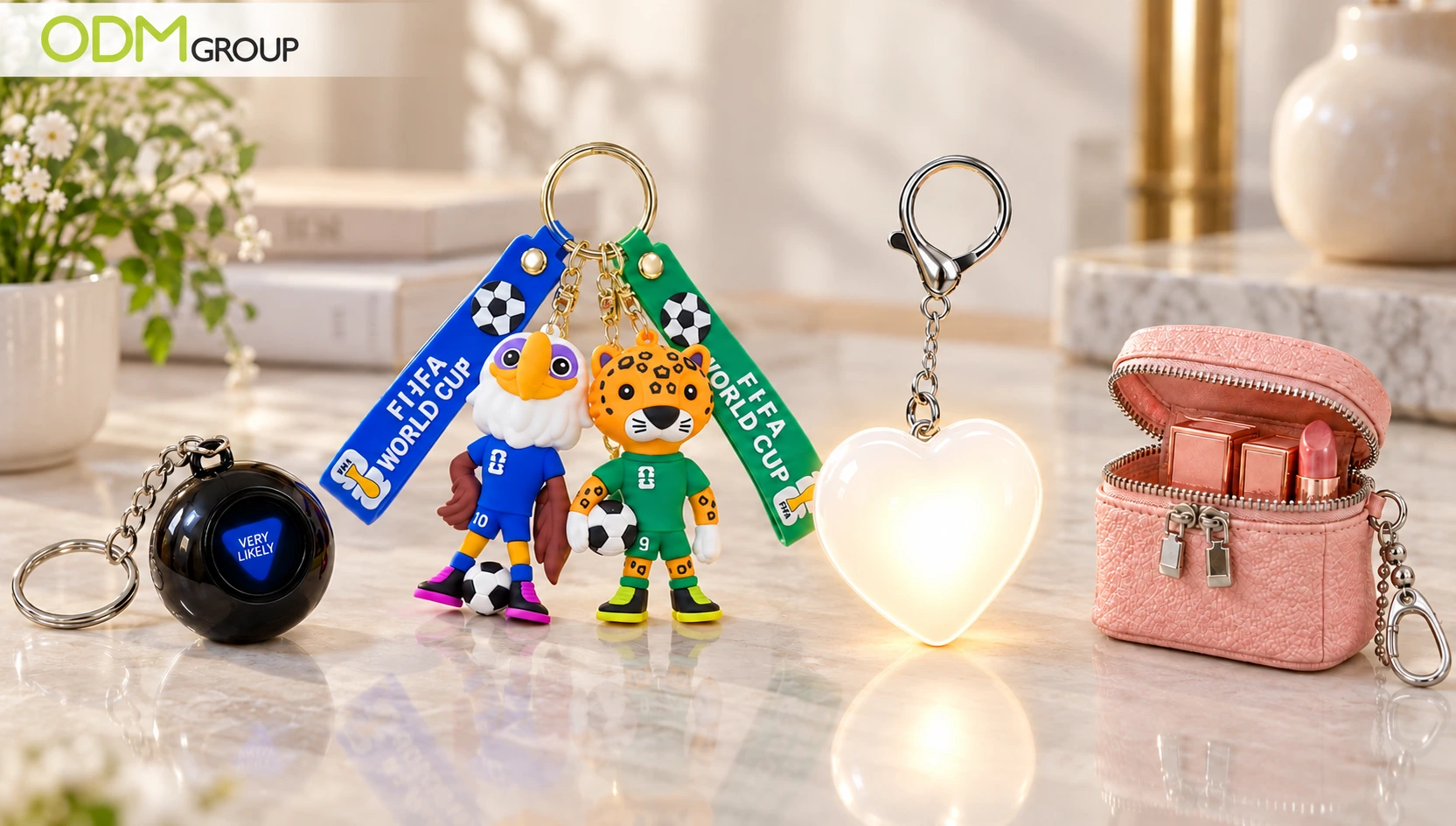
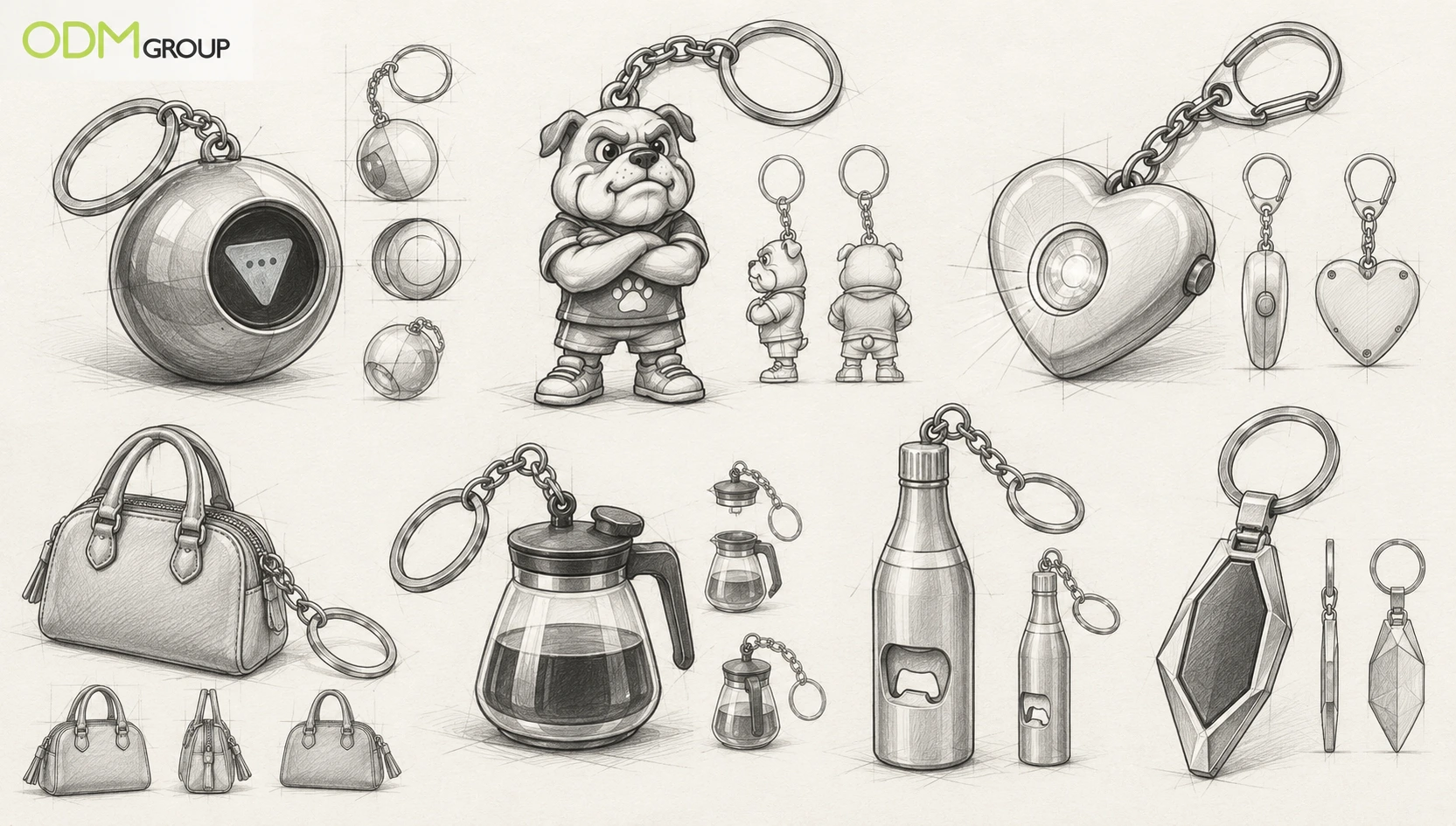
Compact, stylish, and functional, a mini handbag keychain provides convenient storage for everyday essentials such as lipsticks, earbuds, coins, and keys while doubling as a fashionable accessory.
While a purse light keychain delivers strong everyday value, many brands expand into a wider range of functional and collectible keychain products to support different campaign goals.
Solid perfume keychains are not designed for every industry. Their value appears most clearly in categories where sensory experience, aesthetics, and emotional connection matter.
A digital photo keychain is a high-tech, portable device that functions as both a keychain and a display screen. It uses NFC (Near Field Communication) technology, allowing you to transfer data from a smartphone to the keychain wirelessly.
Compact, nostalgic, and completely customizable, this pocket-sized promo isn’t just fun. It’s a powerful brand engagement tool. With every shake, you’re sparking curiosity, creating conversations, and leaving your brand top-of-mind.
How to Develop a Promotional Keychain Collection
Start With the Campaign Objective
Decide what the keychain should help the campaign achieve. Possible objectives include increasing basket value, driving repeat visits, rewarding loyal customers, supporting a product launch, or creating seasonal brand awareness.
The objective will influence the redemption mechanic, number of designs, packaging, and production quantity.
Select the Right Material
Common options include PVC, silicone, metal, acrylic, wood, and fabric. Each creates a different appearance, feel, and cost structure.
PVC and silicone can work well for colorful character-based designs. Metal is suitable for a more premium finish. Acrylic can reproduce detailed printed artwork, while fabric allows brands to create soft embroidered or woven styles.
Material selection should consider the target audience, brand positioning, design detail, expected order quantity, and intended retail environment.
Design the Collection as One Range
Every variation should be distinctive, but the products must still look related. Consistent dimensions, colors, attachments, and packaging help customers recognize the set as one collection.
Brands should also decide whether customers can choose a design or receive one at random. Blind packaging can make collecting more exciting, while visible packaging gives customers greater control. The right approach depends on the campaign and customer expectations.
Consider Packaging and Presentation
Packaging can communicate the collection, redemption rules, and campaign period. Options include printed backing cards, paper sleeves, pouches, small boxes and blind packs.
In-store displays should show customers how many designs are available. A complete collection visual can make the offer easier to understand and encourage participation.
Plan Production Early
Collectible ranges require more coordination than a single design. Each variation may need its own artwork, mould, prototype, and quality checks.
The development schedule should allow time for design approval, sampling, testing, mass production, packaging and delivery. Starting early is especially important for fixed-date holiday campaigns.
How ODM Can Support a Custom Keychain Campaign
ODM helps brands turn campaign themes into practical promotional merchandise. We are not limited to placing a logo on an existing item. Our team can develop product ideas that connect with the brand, promotion, and target audience.
Our services can include concept development, product design, 3D visualization, material recommendations, prototyping, factory selection, production management, quality control, packaging design, and international logistics.
For collectible promotions, we can also help create a coordinated family of designs while considering manufacturability, cost, and branding consistency. This gives marketing and procurement teams one development partner from the first idea through to final delivery.
Planning a promotional keychain campaign? Contact ODM to discuss the concept, target quantity, delivery date, and campaign requirements.
More Product Ideas


FAQs Promotional Keychains
How much do custom promotional keychains cost?
The cost depends on the material, dimensions, design complexity, number of colors, branding method, packaging and order quantity. Custom molds and multiple collectible designs may also affect the budget. A detailed brief is needed before an accurate quotation can be prepared.
Can we create several collectible keychain designs?
Yes. Brands can develop a coordinated set based on products, characters, landmarks, ingredients or campaign themes. Each design should follow a shared visual system so the collection feels consistent.
How long does it take to manufacture custom keychains?
Timing depends on product development, sampling, mold creation, production quantity, packaging and delivery method. Seasonal campaigns should be planned early to allow time for revisions and quality control.
What information is needed for a quotation?
Provide the preferred material, approximate size, number of designs, estimated quantity, branding requirements, packaging format, target budget, delivery location and required arrival date. Reference images or an initial campaign theme can also help guide concept development.
Latest Blogs
Split-Flap Displays for Events, Retail and Brand Activations
Struggling to make your brand stand out in a crowded [...]
Beer Swag Ideas: Lessons from Heineken Silver’s Taiwan Campaign
Beer swag is evolving beyond traditional bottle openers and [...]
Car Tissue Holder: A Creative Automotive Promotional Gift
A car tissue holder can be more than a [...]
6 Tips for a Sustainable and Functional Promotional Travel Kit
A promotional travel kit combines practical travel essentials with [...]
Promotional Products for Pets: Ideas Inspired by SmartHeart Pet’s Homie
During a visit to Vietnam, the ODM team came [...]
15 Promotional Products for Universities to Celebrate World Students’ Day
Promotional products for universities work best when they support [...]
Related posts:
 Custom Metal Keychains: How It Could Strengthen Marketing Efforts
 How Kellogg’s Turned a Promotional Product Spoon Into a Star Wars Collectible
 Freight Custom Promos: Stress Ball Keychains
 Equal Gets Their Message Across with a Promotional Coffee Cup
 Lego Unlocks The Secrets For A Great Custom Cartoon Keychain